
Here is a fact that sounds made up but is not. Buick designed the V6 that powered the Jeep CJ in the late 1960s, sold the whole tooling package to Kaiser Jeep when it did not want the engine anymore, then bought it back less than a decade later because it suddenly needed exactly that engine again. The jeep cj engine dauntless buick return is a business decision playing out twice in opposite directions, and it says more about the 1970s fuel crisis than it does about the Jeep itself.
Car Features
7 min read
Full Circle: When Buick Bought the Dauntless V6 Back
Buick sold its 225 V6 to Kaiser Jeep in the 1960s, then bought the tooling back in 1974 to build the engine that eventually powered the Grand National.
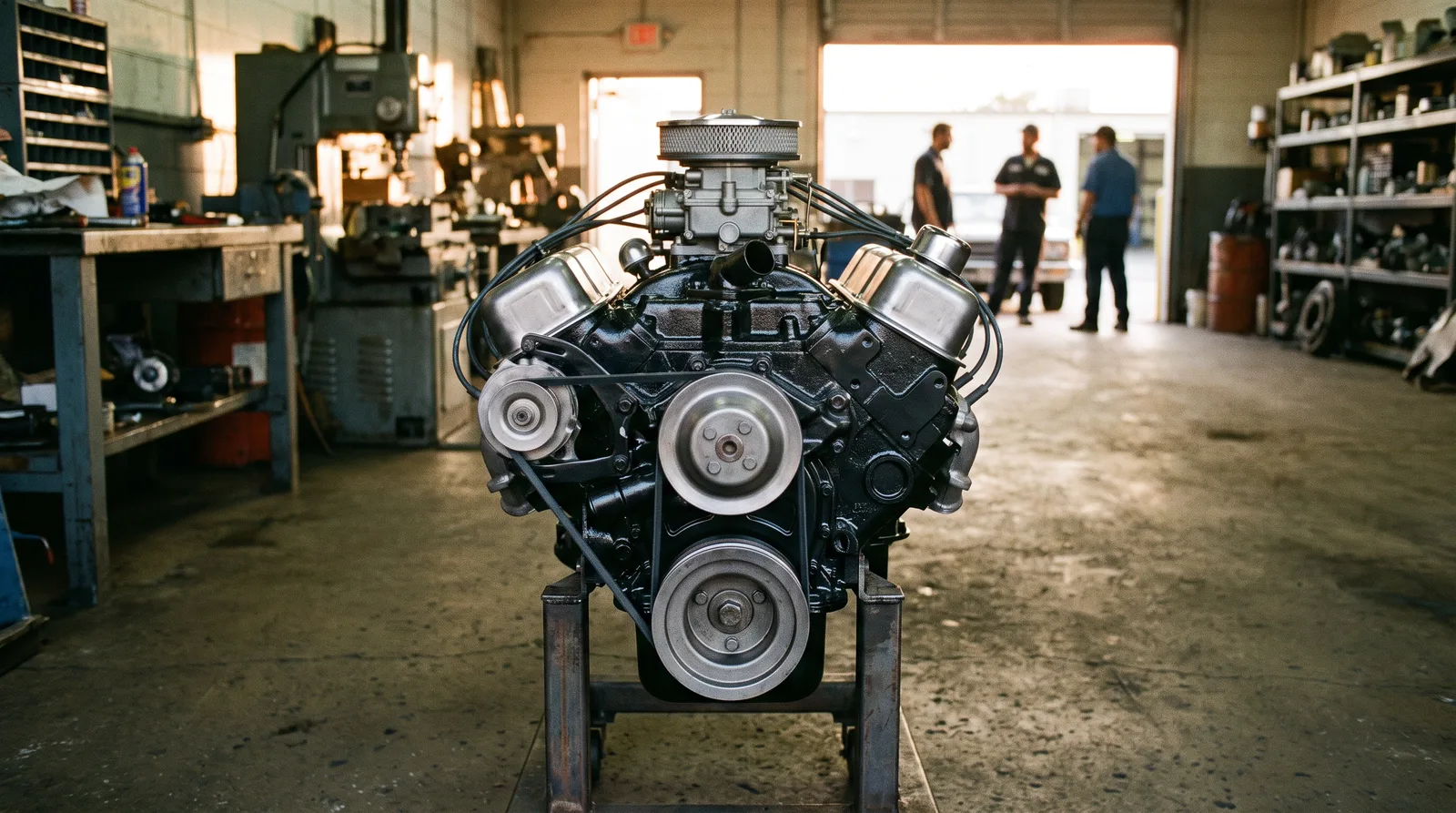
The V6 nobody wanted in 1967
Buick's 225 cubic inch V6 had been a compact-car engine, built to power the Special and Skylark through the early 1960s. When GM restructured its engine lineup toward the end of the decade, Buick decided the V6 no longer fit its plans and discontinued it. Kaiser Jeep saw an opportunity, bought the tooling outright, and rebranded the engine Dauntless for use in the CJ-5 and CJ-6 starting in 1966. For Kaiser it was a cheap, fast way to get six-cylinder power into a Jeep that badly needed it against Ford and International Harvester competition.
The exact purchase price Kaiser paid for the tooling is not well documented today. What matters is the outcome. Buick walked away from a fully engineered V6, and Kaiser kept building it in Jeeps for years afterward.
The 1973 oil crisis changes everything
Fast forward to the early 1970s. Fuel prices spiked after the 1973 oil embargo, and suddenly every American automaker needed smaller, more efficient engines for their compact and mid-size cars. GM in particular found itself without a modern V6 in its own catalog, having let the very engine it once owned go to Kaiser Jeep. Buick's engineers realized the fastest path back to a V6 lineup was not a new design. It was buying their own old engine back.
In 1974 Buick repurchased the tooling from what was by then American Motors, which had taken over Jeep from Kaiser in 1970. AMC had already been phasing the Dauntless out of the CJ line in favor of its own inline sixes, so the timing worked for both sides. Buick took the 225 back to Flint, bored it out to 231 cubic inches, and put it back into production for its own cars.
From Jeep workhorse to Grand National legend
This is the part of the story that surprises most people. The bored-out 231 cubic inch version of the returned engine became a mainstay of GM's compact and mid-size lineup through the late 1970s and 1980s, and by the middle of that decade Buick had turned it into a turbocharged performance engine good enough to power the Grand National and GNX, cars that could outrun contemporary Corvettes in a straight line. An engine that started life pulling a CJ-5 up a trail ended up humbling sports cars a generation later, wearing a different badge but the same basic architecture underneath.
None of that success would have happened on the same timeline without Kaiser Jeep keeping the tooling alive and in production through years when Buick itself had no use for it. To understand how the engine ended up in Jeep hands in the first place, it helps to go back to where this started with the original Dauntless deal in 1966.
"Buick sold that V6 for scrap money in the sixties and bought it back for real money in the seventies. If you want a lesson in how fast an engine can go from obsolete to essential, that is it."
- Dan Reeves
Why AMC let it go without a fight
It is worth asking why American Motors did not simply keep building the Dauntless itself once Buick came calling in 1974. The answer is that AMC had already committed to its own inline-six family for the CJ, with the 232 arriving in 1972 and giving AMC full control over its own tooling and supply chain instead of depending on an outside manufacturer for a core engine. Once AMC had a viable in-house alternative running in production, there was little strategic reason to fight Buick for continued rights to an engine AMC was already phasing out on its own schedule.
GM made its offer to buy the tooling and manufacturing line back from AMC in April 1974, and Buick had engines rolling off the line again by that August, a remarkably fast turnaround because the old machinery's foundations were still in place at the Flint plant. That timing made the handoff unusually clean by the standards of corporate engine deals. Buick got an engine it urgently needed for its own fuel-crisis-era compact cars, and AMC gave up an engine it was already planning to retire in favor of its own design. Neither side had much reason to negotiate hard.
The bore job that changed everything
The engineering step that turned the old Dauntless into a genuinely modern engine again was not glamorous. Buick's engineers bored the existing 225 cubic inch block out to 231 cubic inches, a modest increase that nonetheless gave the engine more low-end torque and better matched the needs of the 1970s compact cars it was returning to power. That relatively small displacement bump, combined with a decade of incremental refinement Buick applied after the return, is what eventually made the architecture strong enough to survive the turbocharging program that produced the Grand National engine a decade later.
None of that later performance pedigree was visible in 1974. At the time, the repurchase looked like a practical fuel-economy move by a company under regulatory and market pressure, not the first step toward building one of the most respected turbocharged American engines of the 1980s.
What it means for CJ history
For CJ shoppers today, the practical takeaway is narrower than the corporate drama suggests. The Dauntless-powered CJ-5 and CJ-6 built between 1966 and roughly 1971 remain a distinct, collectible window in the model's history, powered by an engine that AMC eventually let go and Buick eventually turned into a muscle-car legend under a different name. That gives the Dauntless CJ an odd kind of pedigree few other engine options in the CJ lineup can claim.
Buyers weighing a V6 CJ against later AMC-six or V8 examples should know they are looking at the engine that became the Grand National's ancestor, not just an old Buick unit that happened to end up in a Jeep. Anyone shopping that window of production can browse classic CJ for sale and check the build tag for the 225 Dauntless before assuming every V6 CJ from this era is the same engine under a different name.
The short version
Buick built it, gave up on it, Kaiser Jeep bought it, AMC inherited it, and Buick wanted it back badly enough to buy the tooling a second time. Few engines in American automotive history have made that round trip, and fewer still ended up famous on both ends of the journey.
Sources and notes
- Buick V6 engine - Wikipedia
- The Strange Tale of the Buick Special, Buick-Rover V8, and 3800 V6 - Ate Up With Motor
- The Novak Guide to the AMC / Jeep I6 Engines
- 1972 Jeep CJ-5 232 Six Specs Review - Automobile Catalog
- How Buick's Fireball V-6 birthed one of the most successful engines in history - Hagerty
Related Reading
Have a
Jeep CJ
for Sale?
Reach thousands of serious classic car collectors across the US.
Sell It Here →
Selling a classic? Here's how: where to sell your classic car online
Are You a Classic Car Dealer?
List your full inventory and connect with targeted classic car buyers.
Join as a Dealer →

About the author
Dan Reeves
Performance engine builder from North Carolina's motorsports corridor, focused on swaps, forced induction and making real, repeatable power.
Related Listings - Jeep CJ





Comments
Be the first to comment on this article.