
In 1966 Kaiser Jeep had a problem that no amount of clever marketing could fix. The CJ-5 was still leaning on a four-cylinder engine descended from a design old enough to have fought World War Two, and buyers cross-shopping Ford and International Harvester utility rigs wanted more power under the hood. The jeep cj engine dauntless v6 is the answer Kaiser bought, quite literally, from a competitor that had already given up on it.
Car Features
7 min read
The Dauntless V6: The Buick Cast-Off That Saved the CJ
When Buick abandoned its 225 V6, Kaiser Jeep bought the tooling and turned it into the Dauntless, the first six-cylinder engine ever offered in a CJ.
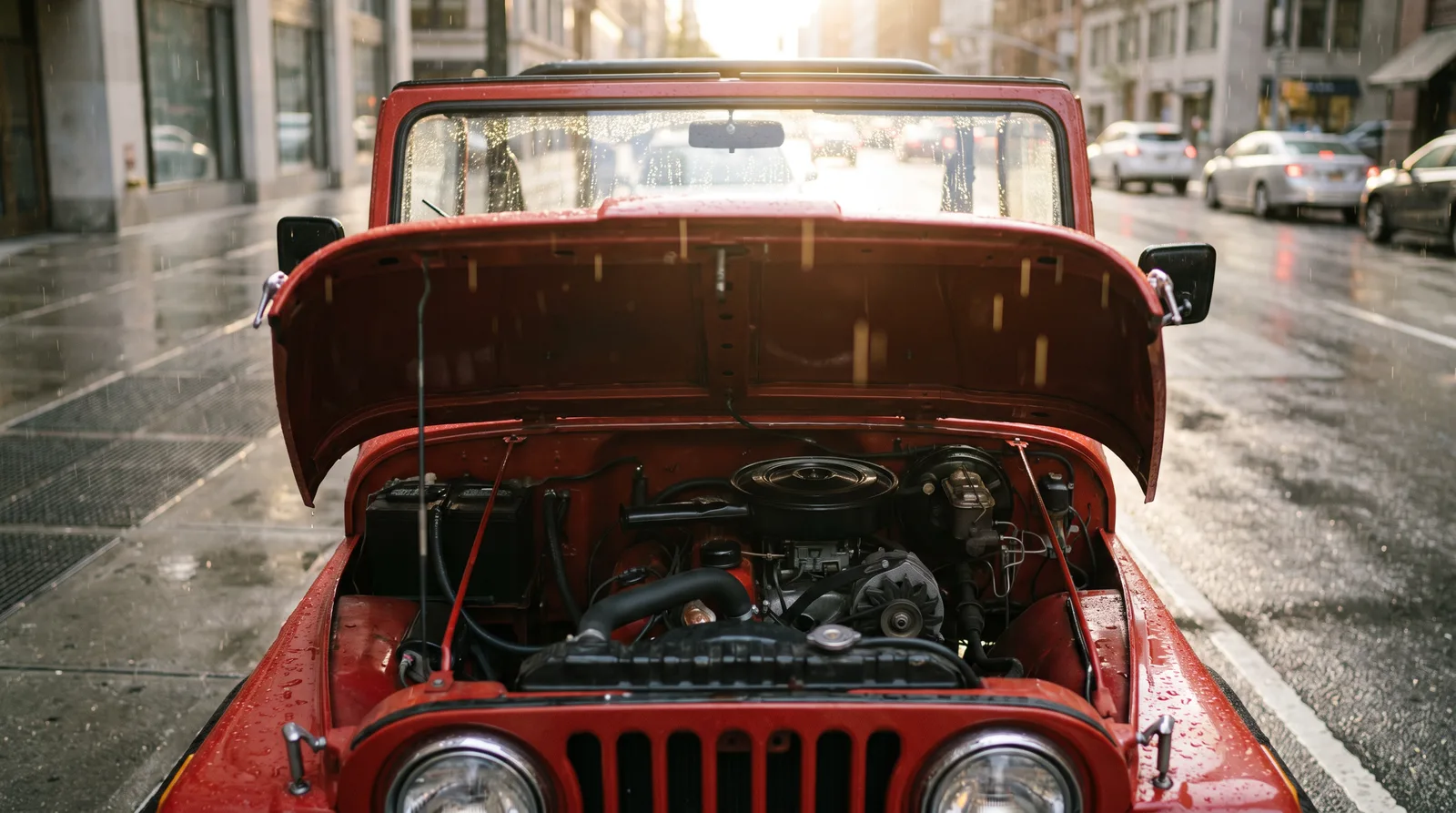
Buick's orphan becomes Jeep's savior
Buick had developed an all-aluminum 198 cubic inch V6 for its compact Special line in the early 1960s, then a cast-iron 225 cubic inch version, but by 1967 General Motors was consolidating engine families and Buick discontinued the V6 entirely. That left a fully developed, production-proven engine with nowhere to go. Kaiser Jeep bought the tooling and the design rights, rebranded the 225 as the "Dauntless" V6, and dropped it into the CJ-5 and CJ-6 starting in the 1966 model year, ahead of Buick's own exit from the engine.
The numbers told the story buyers wanted to hear. Where the F-head four made roughly 75 horsepower, the Dauntless V6 was rated at 160 gross horsepower, more than double the output in the same basic chassis. Torque climbed just as sharply, and for the first time a stock CJ could tow a real trailer or climb a grade fully loaded without the driver planning the run in advance.
The odd-fire quirk
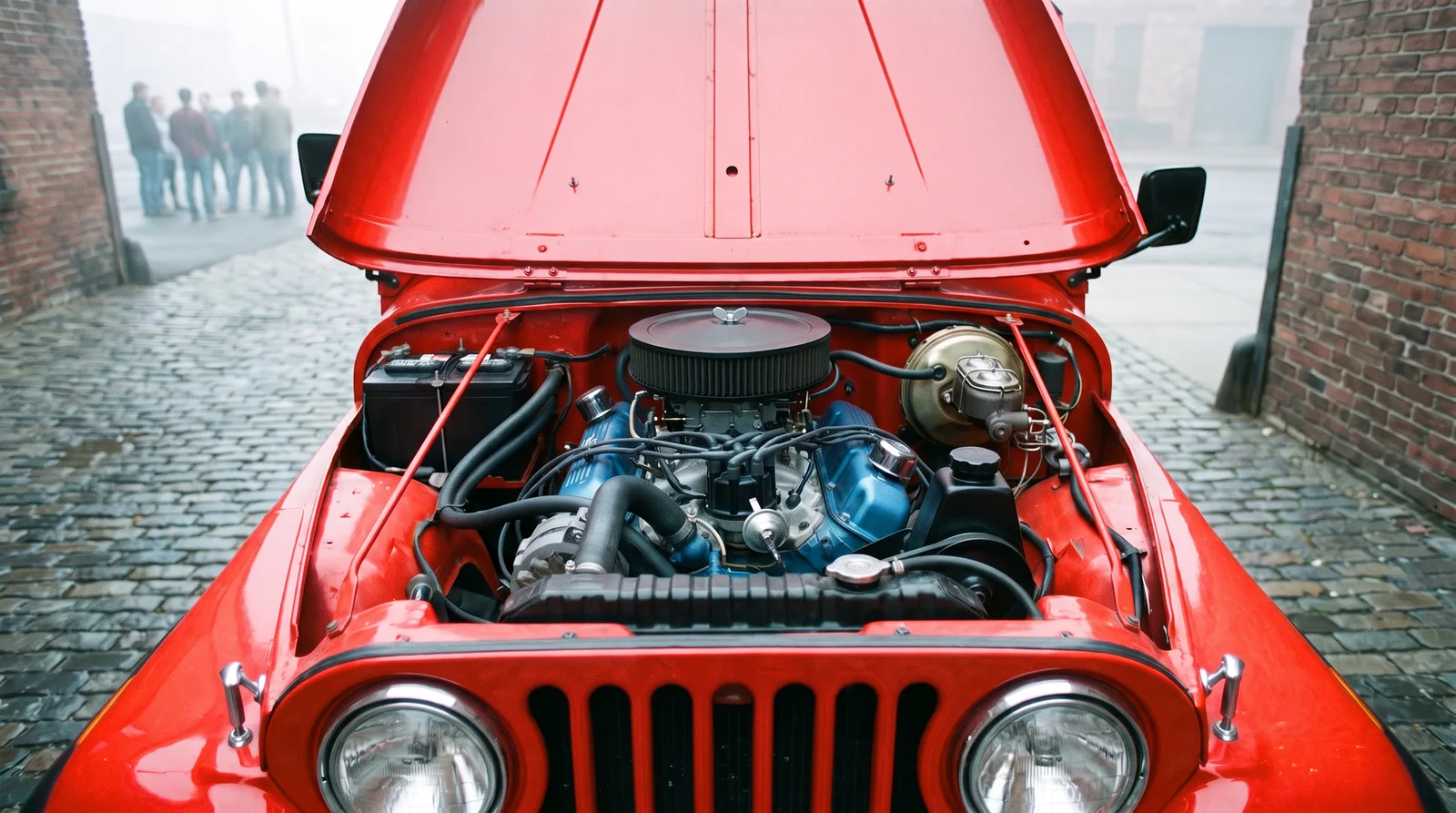
The Dauntless V6 has one mechanical signature that any Jeep mechanic learns fast: it is an odd-fire design. Buick built the block from an existing V8 tooling architecture with two cylinders removed rather than engineering a clean-sheet V6, so the crankshaft throws sit at 90-degree intervals instead of the 120 degrees a true even-fire six would use. That produces an uneven, slightly lumpy exhaust note at idle that owners either love as character or complain about as roughness, depending on who you ask.
The Dauntless was rated at 235 lb-ft of gross torque at 2400 rpm, a real jump over the four-cylinder it replaced as the top option. The odd-fire layout never hurt reliability in any meaningful way. It is simply a quirk buyers should expect and not mistake for a running problem when they hear it for the first time.
Why Kaiser needed it so badly
Context matters here. Kaiser Jeep in the mid-1960s was a smaller player fighting Ford's Bronco and the International Harvester Scout for the same utility-vehicle buyers, and both competitors already offered six-cylinder or V8 power. A four-cylinder CJ, however well proven off-road, was starting to look underpowered on paper next to those options. The Dauntless deal solved that gap almost overnight and without the years of engineering time a from-scratch engine program would have needed.
It also changed who bought a CJ. Buyers who wanted a Jeep for towing a boat or a small camper, not just farm work or trail use, finally had a reason to consider one. Anyone curious how this fits the rest of the engine lineage can find more on the jeep cj engines to see how the Dauntless connects to what came before and after it.
"You can hear a Dauntless idle from across a parking lot if you know what to listen for. That uneven beat is Buick's fingerprint, and it is the sound of Kaiser buying its way out of a horsepower deficit."
- Emily Chen
What the deal actually looked like on paper
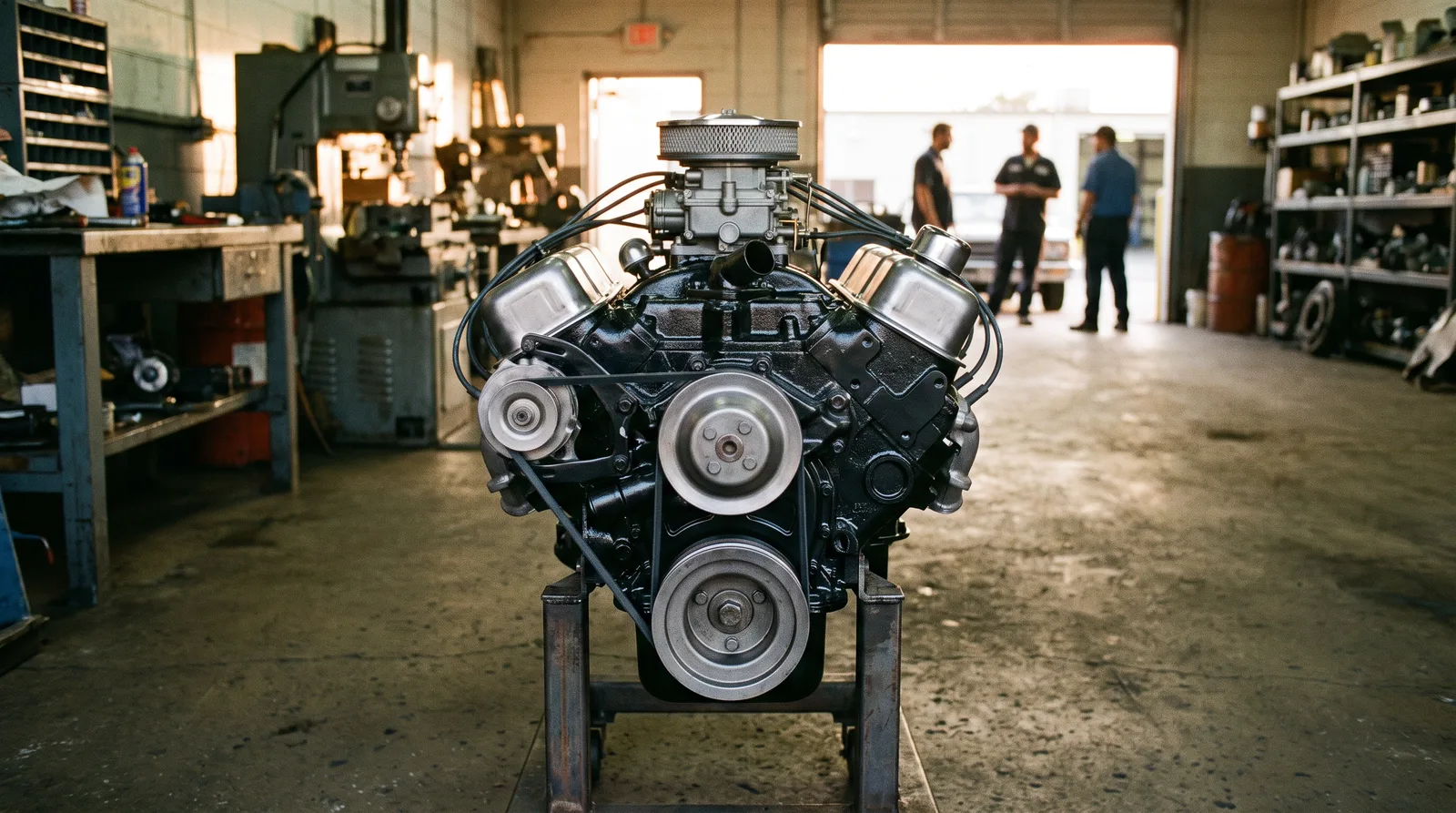
Kaiser did not simply license the Buick V6 design for a royalty on each unit built. It bought the production tooling outright, meaning Kaiser owned the machinery and the manufacturing rights rather than paying Buick a fee for every engine it produced. That distinction mattered enormously for a company Kaiser's size. Owning the tooling meant Kaiser controlled its own supply chain and production schedule for the Dauntless without depending on Buick's factory capacity or Buick's own priorities, which is exactly the kind of independence a smaller automaker needs when it is trying to compete against much larger rivals with deeper manufacturing resources.
Kaiser completed the tooling purchase from Buick in 1967, as GM consolidated its six-cylinder engine lineup and stepped away from the design. The arrangement also meant Kaiser inherited an engine with years of real-world validation behind it already. Buick had built the 225 through several model years in its own cars before discontinuing it, which meant Kaiser was not gambling on an unproven design the way it would have been with a from-scratch engine program. That de-risked the whole decision considerably.
Reading a Dauntless CJ correctly
Not every V6 CJ from this era is running the original Dauntless. Decades of engine swaps, some period-correct and some not, mean buyers evaluating a V6-badged CJ-5 or CJ-6 today need to verify what is actually under the hood rather than trusting a fender badge or a seller's description alone. The distinctive odd-fire idle described above is one of the fastest field checks available, since almost nothing else commonly swapped into a CJ shares that exact exhaust cadence.
Engine casting numbers and Kaiser-era build tags offer a more definitive answer for anyone serious about documenting an original Dauntless installation, particularly for buyers weighing a purchase where the presence of the correct factory engine meaningfully affects value.
Dauntless V6 versus the F-head four it replaced as top option
| Spec | F-head Hurricane four | Dauntless V6 (225) |
|---|---|---|
| Cylinders | 4 | 6 |
| Displacement | 134 cu in | 225 cu in |
| Horsepower (gross) | Approx. 75 hp | Approx. 160 hp |
| Origin | Willys in-house | Buick, tooling bought by Kaiser |
| CJ availability | 1953 onward (CJ-3B) | 1966 to 1971 |
A short run with a long legacy
Kaiser used the Dauntless V6 through 1971, and when American Motors took over Jeep in 1970 it kept the engine in production for another model year before phasing in its own AMC sixes. The Dauntless never dominated the option sheet for more than about half a decade, but it arrived exactly when the CJ needed it most, and it set the precedent that a CJ buyer could reasonably expect more than four cylinders under the hood.
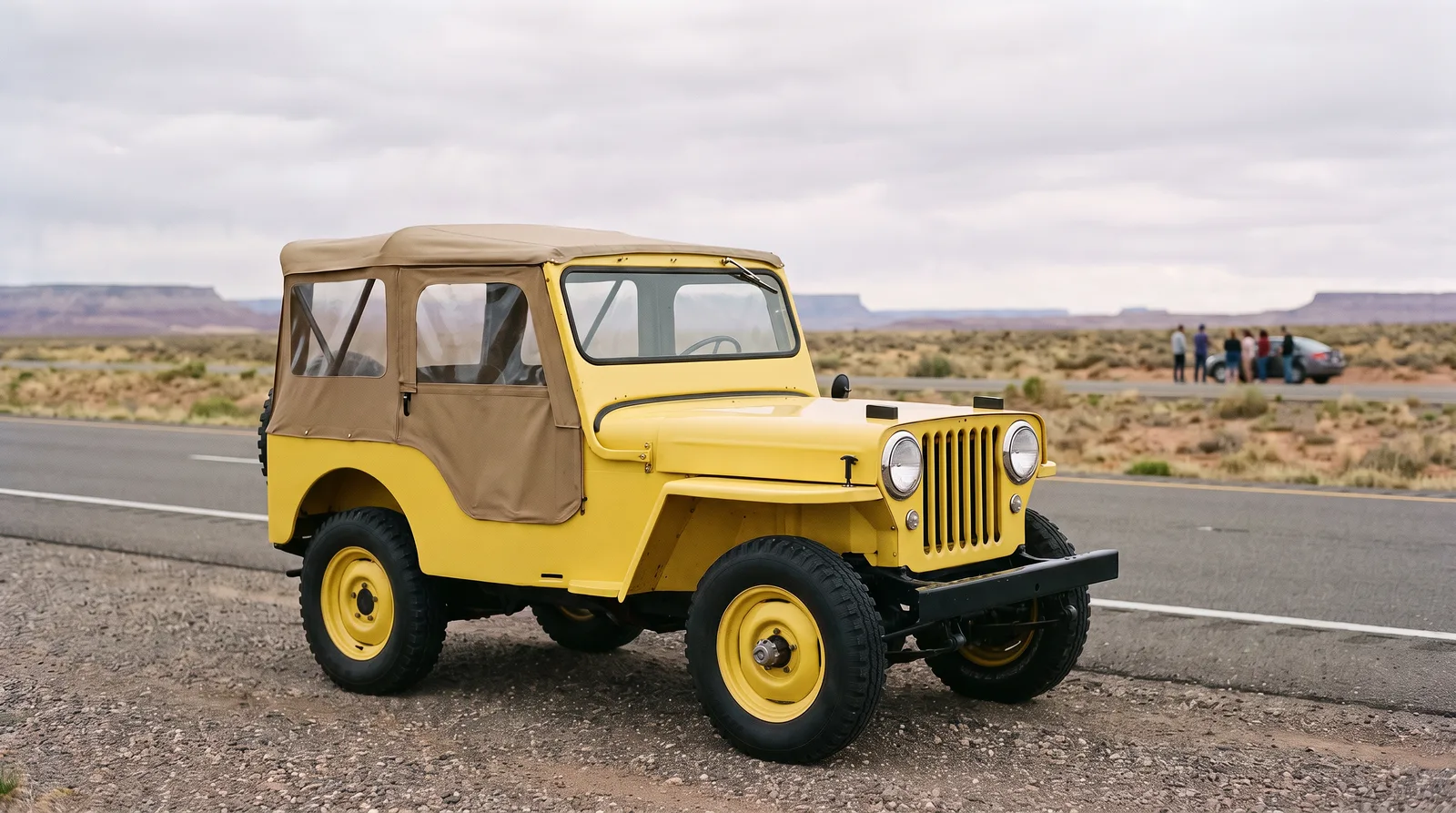
To understand why that mattered, it helps to go back to where this started, when the original CJ was still a stripped-down postwar utility vehicle with no six-cylinder option at all. The gap between that early CJ and the V6-powered CJ-5 of 1966 is really the story of Kaiser trying to keep pace with a market that had moved on without them.
Finding one today
A Dauntless-powered CJ-5 or CJ-6 sits in an interesting spot for today's buyers. It has more usable power than the earlier four-cylinder trucks without the emissions-era compromises that hit engines built after 1972, and the odd-fire idle is a genuine talking point at a car show rather than a flaw to apologize for. Shoppers who want to compare a few examples side by side can look at classic CJs on the market and listen for that distinctive Buick beat before deciding which era of CJ power actually suits how they plan to drive it.
Sources and notes
Related Reading
Have a
Jeep CJ
for Sale?
Reach thousands of serious classic car collectors across the US.
Sell It Here →
Selling a classic? Here's how: sell my classic car
Are You a Classic Car Dealer?
List your full inventory and connect with targeted classic car buyers.
Join as a Dealer →

About the author
Emily Chen
Bay Area engineer with a deep focus on vintage Japanese and European performance cars. Approaches classic car research and restoration with an analytical eye.
Related Listings - Jeep CJ





Comments
Be the first to comment on this article.