
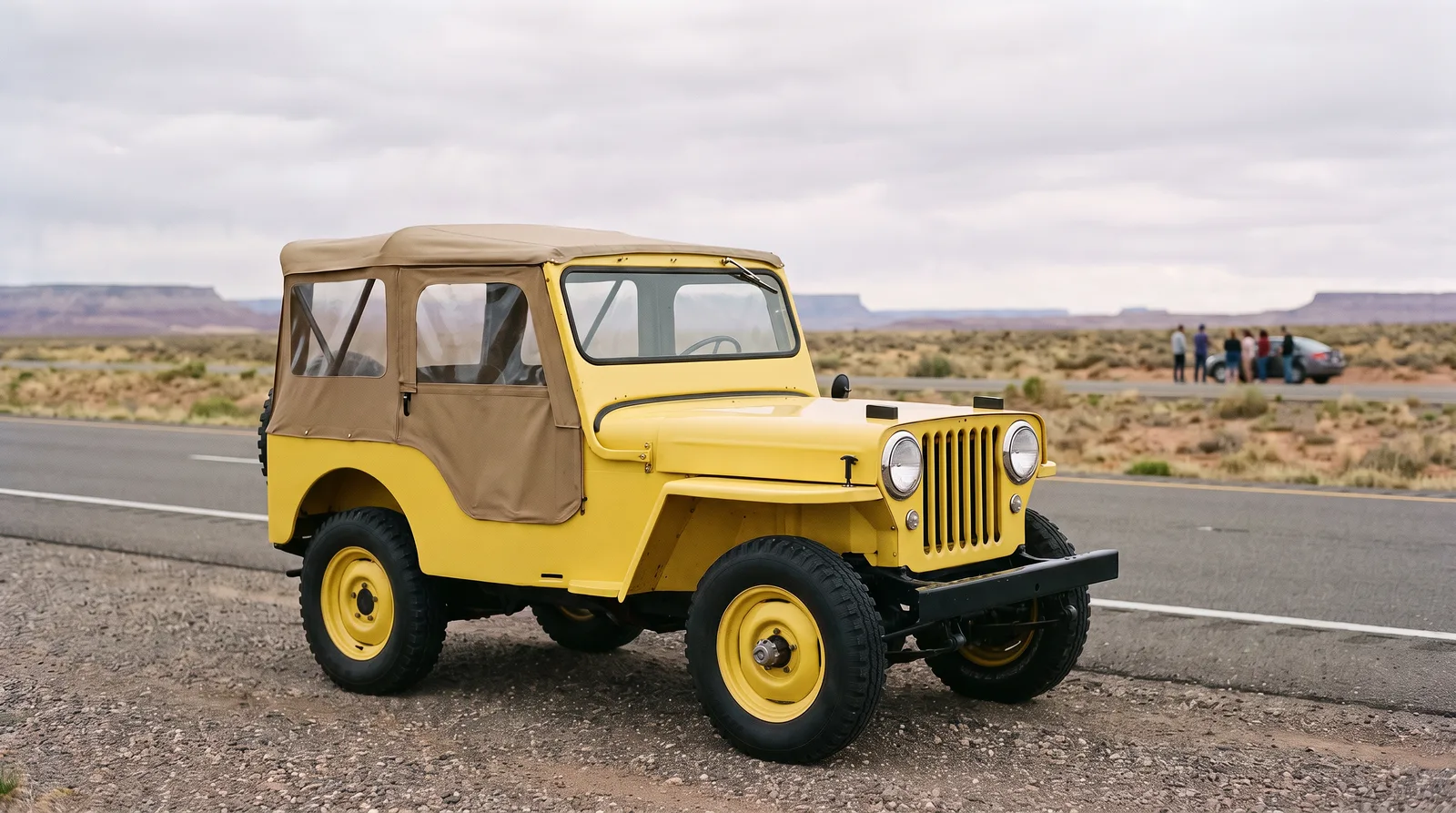
Park a CJ-3A next to a CJ-3B and the difference jumps out before you read a single badge. The hood on the 3B sits higher, the grille climbs with it, and the whole nose looks like it grew an inch overnight. It did. The jeep cj engine hurricane tall hood story is really an engine swap that forced a body change, and it happened because Willys needed more power in a hurry.
Car Features
7 min read
The Engine That Raised the Hood: Hurricane and the CJ-3B
A Korean War contract forced Willys to fit a stronger F-head four into the CJ-3B, and the new engine needed a taller hood to clear it.
Korea forced the issue
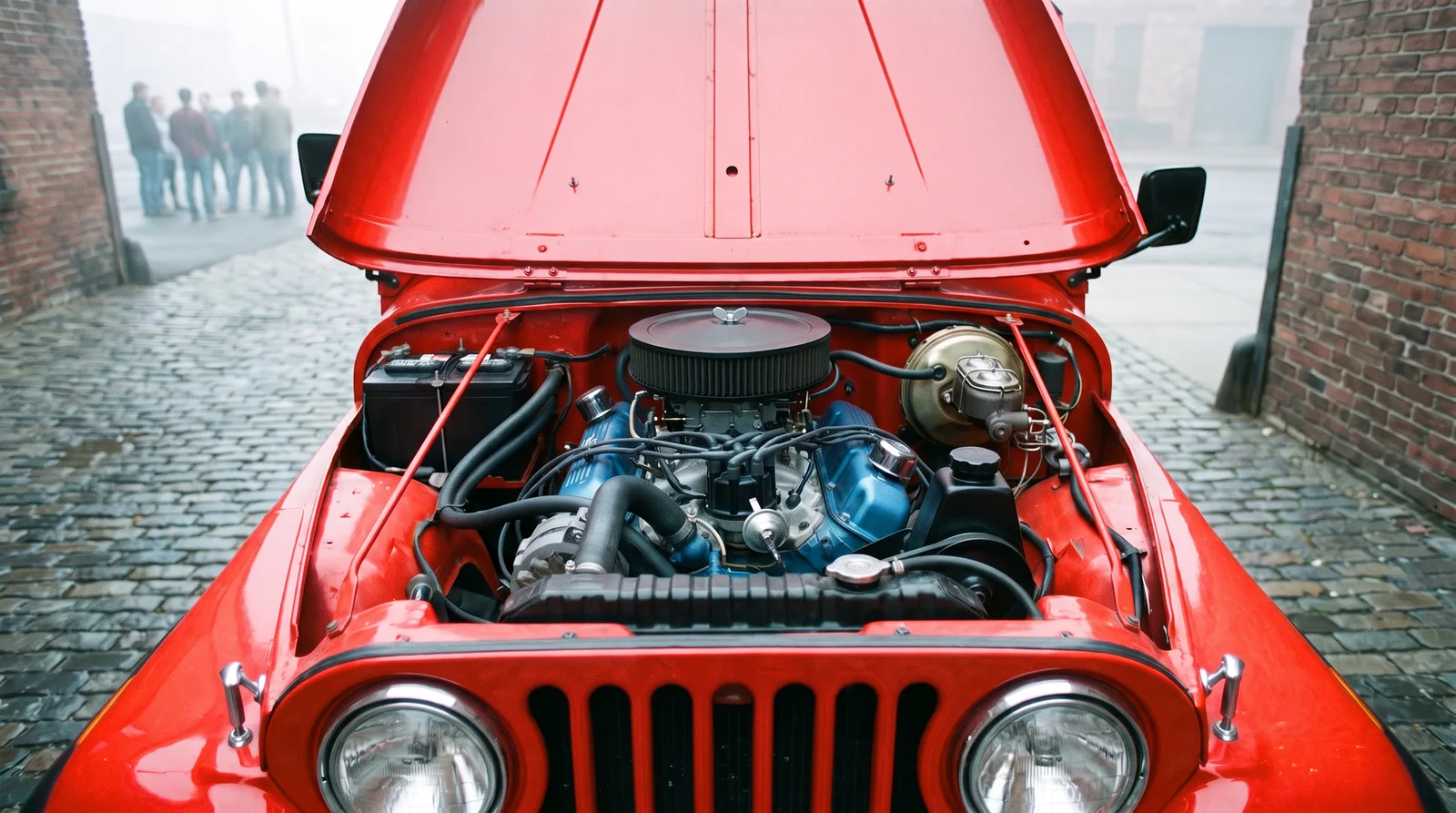
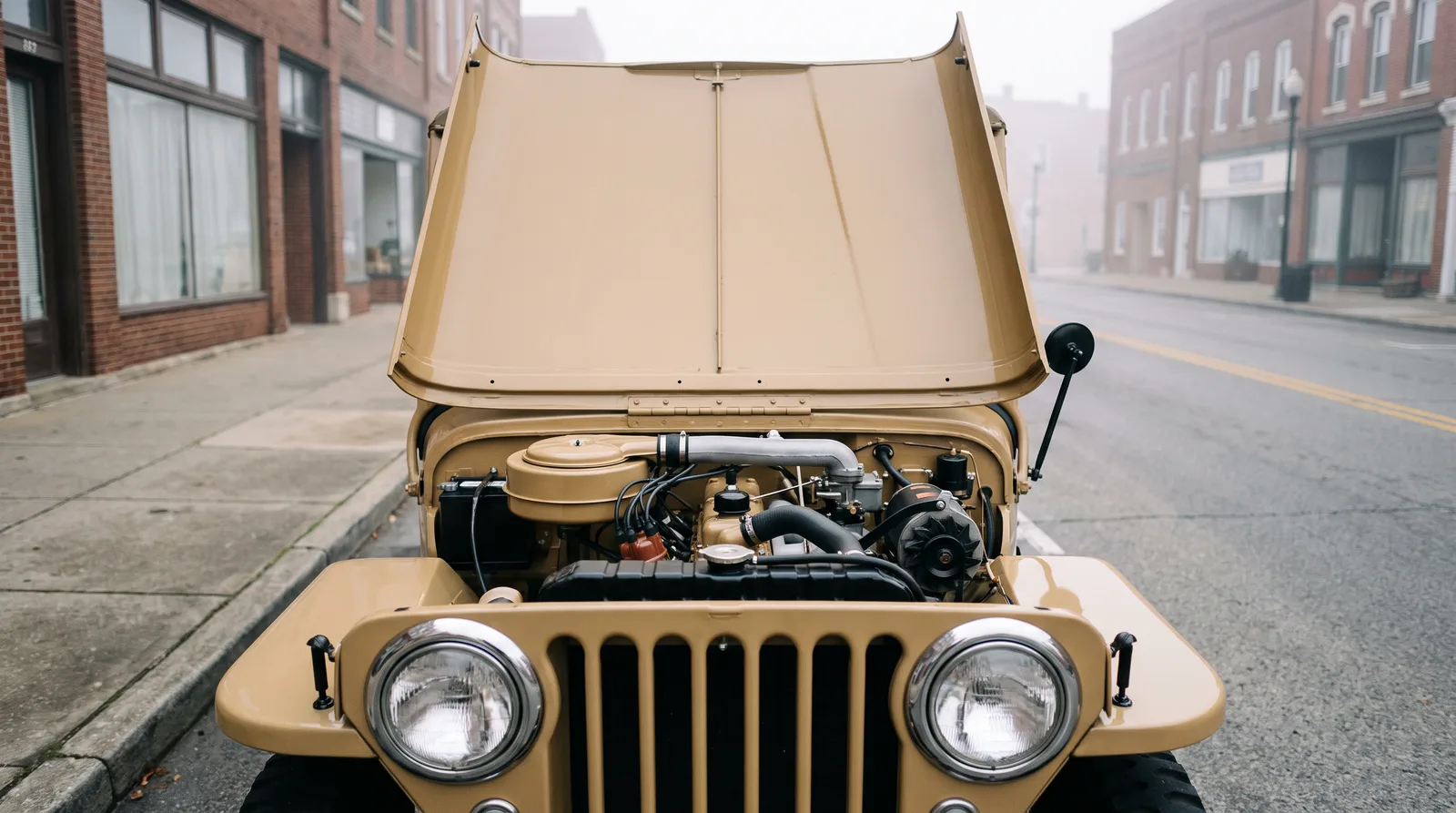
By the early 1950s the flathead Go Devil four, a carryover from the wartime MB, was running out of room to grow. It made a claimed 60 horsepower and had been doing the job since 1941, but the U.S. Army wanted a stronger military Jeep for the M38A1 program during the Korean War, and Willys engineers needed a bump in output without redesigning the block from scratch. Their answer was the F-head Hurricane, a 134 cubic inch four that kept the Go Devil's bottom end but moved the intake valves up into a new cylinder head while leaving the exhaust valves down in the block.
That hybrid F-head layout let the engine breathe better and run a higher compression ratio, and output jumped to roughly 75 horsepower, a real gain for a four-cylinder utility engine of that era. The catch was packaging. The taller valve cover and the new head simply did not fit under the existing hood line, so Willys raised the hood, the grille, and the front fenders to clear it. Anyone who wants the mechanical side spelled out in more depth should read the background on how this fits the wider CJ engine lineup.
Civilian CJ-3B gets the same treatment
The military M38A1 arrived first, but Willys wasted no time putting the Hurricane into the civilian line. The CJ-3B launched for 1953, essentially a CJ-3A chassis wearing the taller hood and the F-head four, and it stayed in U.S. production into the 1960s even as the CJ-5 took over as the flagship model. For a few years Willys built the 3A, the 3B, and the early 3-series simultaneously, and the tall hood became the easiest visual shorthand for telling them apart at a glance.
Dealers and buyers noticed the power difference immediately. A 25 percent jump in horsepower on a light utility vehicle used for farm work, forestry, and light towing was not a rounding error. It meant a Jeep that could pull a loaded trailer up a grade without laboring, and that mattered more to a lot of working owners than a smoother ride or extra chrome.
The engine outlived the American production run
What makes the tall hood Hurricane story unusual is where it ended up. Willys licensed the CJ-3B design to Mitsubishi in Japan and to Mahindra in India, and both companies kept building tall-hood Jeeps with F-head power long after Willys and then Kaiser had moved American buyers on to the CJ-5 and CJ-6. Mahindra in particular ran CJ-3B-based vehicles into the late 20th century, which means this 1953 engineering fix for a Korean War contract was still rolling off an assembly line decades later on the other side of the world.
Mahindra kept building CJ-3B-derived vehicles in India, culminating in the MM540, all the way until 2005, when tightening Bharat Stage emissions rules finally closed out the line. That kind of longevity is rare for any postwar American light vehicle engine, let alone one whose defining feature was a bodywork compromise.
How the Hurricane compares
| Spec | Go Devil L-head | Hurricane F-head |
|---|---|---|
| Displacement | 134 cu in | 134 cu in |
| Valve layout | Side valve (L-head) | Intake overhead, exhaust in block |
| Horsepower | Approx. 60 hp | Approx. 75 hp |
| First CJ application | CJ-2A, CJ-3A | CJ-3B |
| Hood clearance | Standard low hood | Raised hood, new grille |
The M38A1 connection matters more than people think
It is easy to treat the M38A1 as a footnote before the "real" story of the civilian CJ-3B, but the military contract shaped almost every decision Willys made on this engine. The Army was not asking for a marginally better Jeep. It wanted a vehicle that could keep pace with heavier support equipment, carry radio gear and supplies over rough terrain, and do it reliably in combat conditions on the Korean peninsula. A four-cylinder engine making 60 horsepower, adequate for farm and light utility duty a decade earlier, was starting to look thin against those demands.
Willys engineers were also working under a deadline the civilian market never applies. Military procurement timelines do not wait for a clean-sheet redesign, which is exactly why the F-head solution made sense. Reusing the Go Devil's proven bottom end while only redesigning the cylinder head let Willys deliver a meaningfully stronger engine on a schedule the Army could actually use, rather than promising a better engine two or three years down the road. The tall hood was the visible cost of that speed, but it bought Willys an engine program measured in months instead of years.
Why collectors still care
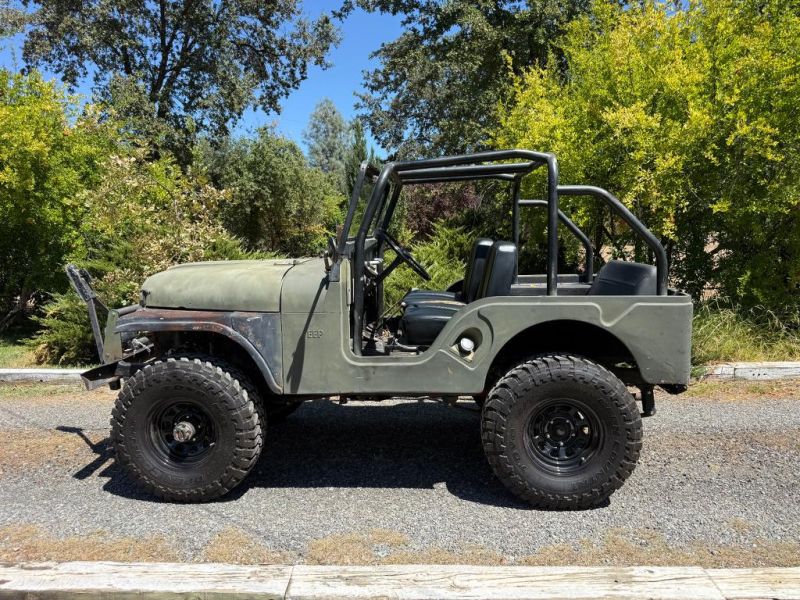
The tall hood is not just a curiosity for people shopping the CJ-3B today. It is the fastest way to spot an original F-head car versus a later flathead survivor that has been dressed up, and it affects parts compatibility since the hood, fenders, and grille are unique to the 3B and its export cousins. Buyers chasing an accurate restoration need to know which sheet metal belongs on which engine before they start swapping panels.
"The tall hood tells you everything before you pop it. Low hood, flathead four, older layout. Tall hood, F-head Hurricane, more power, different fenders. One glance saves you a lot of guessing at a swap meet."
- Dan Reeves
The Hurricane's replacement, the Dauntless V6, is a different story entirely and worth a look too for anyone tracing how Jeep kept adding power through the 1960s. For now, anyone hunting an original F-head CJ-3B or one of its later variants can shop classic CJ listings and compare hood height against the numbers above before making an offer.
The short version
A war contract forced an engineering fix. The engineering fix needed room the existing hood did not have. Willys raised the hood, kept the fix, and sold it to civilians for a decade before licensing it overseas for decades more. That is the whole jeep cj engine hurricane tall hood story in outline, and it is a reminder that some of the most recognizable design details on a classic Jeep started as a solution to a problem nobody outside the engineering department ever saw.
Sources and notes
Related Reading
Have a
Jeep CJ
for Sale?
Reach thousands of serious classic car collectors across the US.
Sell It Here →
Selling a classic? Here's how: where to sell your classic car online
Are You a Classic Car Dealer?
List your full inventory and connect with targeted classic car buyers.
Join as a Dealer →

About the author
Dan Reeves
Performance engine builder from North Carolina's motorsports corridor, focused on swaps, forced induction and making real, repeatable power.
Related Listings - Jeep CJ





Comments
Be the first to comment on this article.