
Close your eyes at a CJ gathering and you can often tell the engines apart before you see them. That is not nostalgia talking, it is real acoustic difference, and the jeep cj engine sound and character story is as much about how these trucks felt to drive as what numbers they put on a dyno sheet. Four decades of engine choices gave the CJ a range of personalities that owners still debate with genuine passion.
Car Features
8 min read
The Voice of the Jeep: How CJ Engines Sounded and Felt
The jeep cj engine sound and character story tracks how the flathead Go Devil, AMC sixes, and V8 swaps each gave the CJ a distinct personality behind the wheel.

The Go Devil's flathead thrum
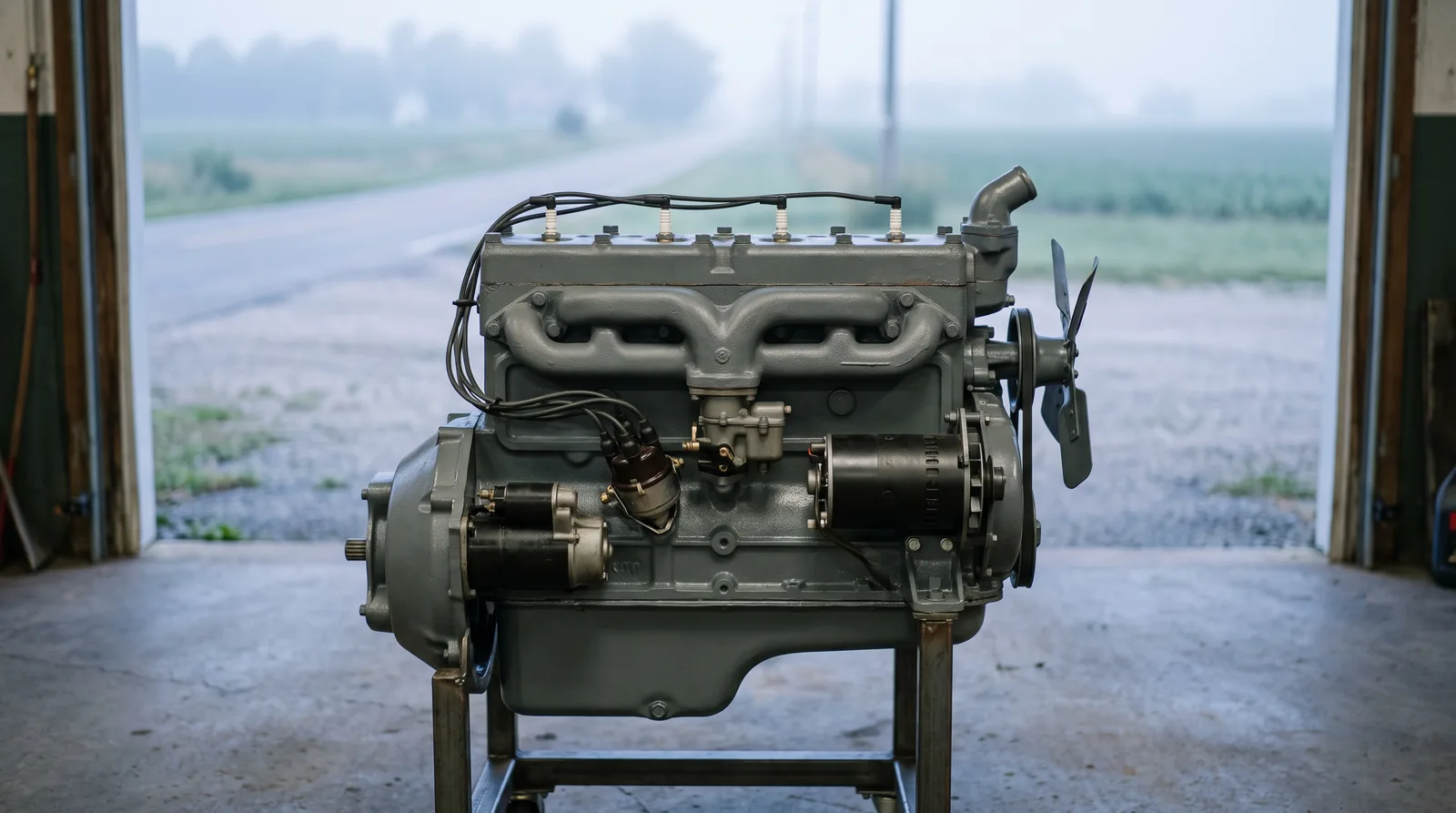
The original Go Devil four-cylinder that launched the CJ-2A in 1945 carries a distinctive flathead exhaust note, a low, mechanical thrum rather than a sharp bark, shaped by its side-valve design and modest compression. It is not a fast engine and it does not pretend to be. What it delivers instead is a mechanical honesty, every rev audible, every load change felt through the seat and the steering wheel, that owners of later, quieter, more insulated CJs consistently describe missing. Driving a Go Devil-powered CJ-2A is a full-body experience in a way modern vehicles, even modern Jeeps, rarely replicate.
This character connects directly to the CJ's wartime lineage. The Go Devil descended from the engine that powered the Willys MB, and that DNA shows up in how the engine sounds and behaves, unhurried, mechanically direct, built for torque over speed. Owners chasing this specific character have their own dedicated resource; keep exploring covers the Go Devil's full story in depth.
The six-cylinder shift
When AMC sixes entered the CJ lineup starting in the late 1960s, the character changed noticeably. The 232 and later 258 straight sixes deliver a smoother, more continuous exhaust note, closer to a hum than the four-cylinder's mechanical chatter. Owners who drove both generations back to back consistently note that the six-cylinder CJ feels more composed at speed and less frantic under load, a direct consequence of the additional cylinders smoothing out the power delivery.
This is not universally seen as an improvement, character-wise, even by owners who acknowledge the practical benefits. Some describe the six-cylinder CJ as friendlier and easier to live with day to day, while missing the raw, unfiltered feedback of the earlier four-cylinder trucks. It is a genuine tradeoff, not a simple upgrade, and it explains why some collectors deliberately seek out earlier four-cylinder examples specifically for the driving character rather than settling for whatever is available.
| Engine | Sound character | Feel under load |
|---|---|---|
| Go Devil four-cylinder | Low mechanical thrum, flathead exhaust note | Direct, unfiltered, full-body feedback |
| AMC 232/258 six | Smoother, continuous hum | Composed, less frantic under load |
| AMC 304 V8 | Deeper, fuller exhaust tone | Confident, effortless pull |
The V8's confident growl
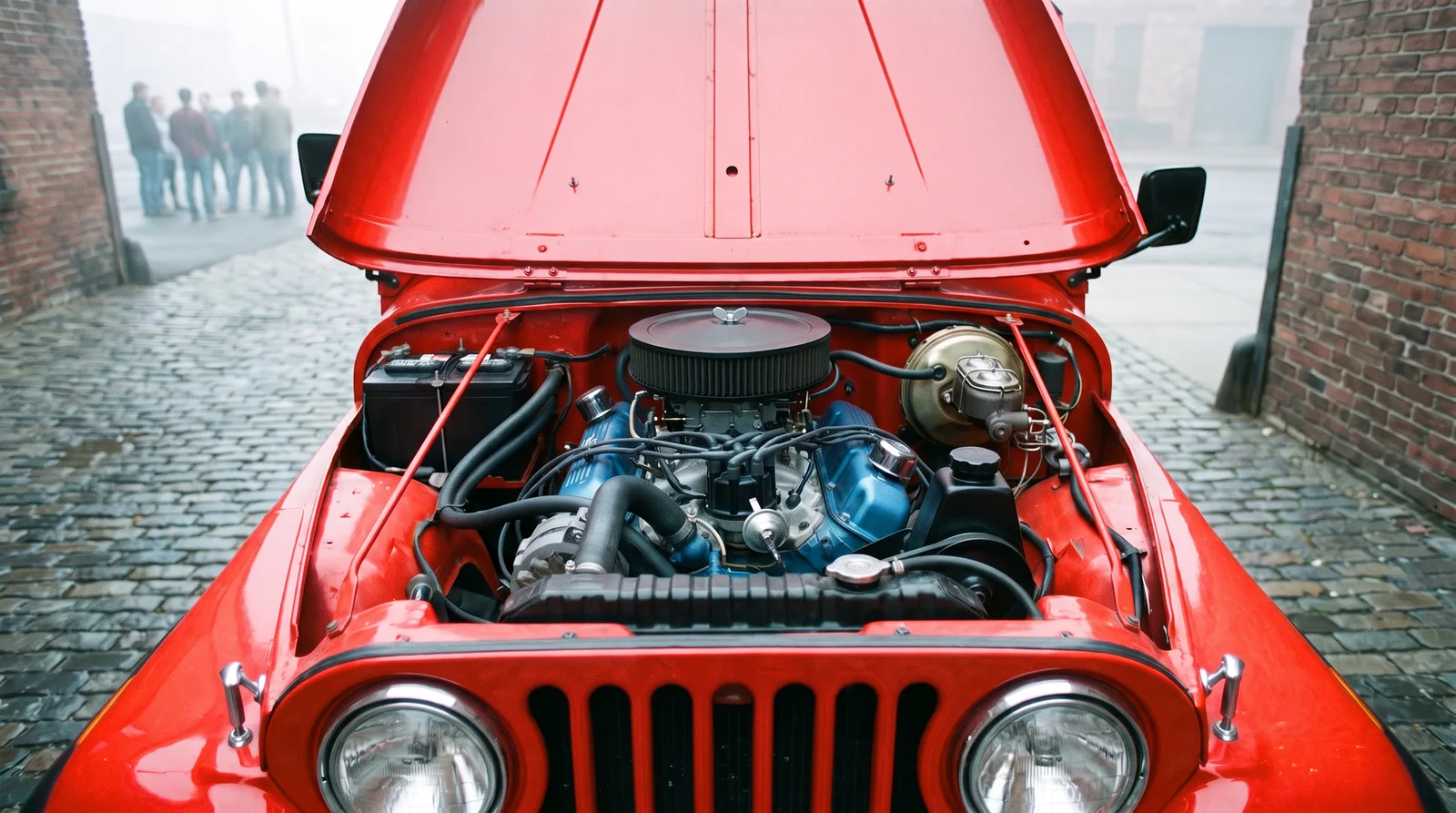
Whether factory-installed as the rare AMC 304 option or dropped in through the long tradition of aftermarket swaps, a V8 changes a CJ's character more dramatically than any other engine choice. The exhaust note deepens and fills out, and the way the truck responds to throttle input shifts from something you coax to something you command. This is the character most associated with the CJ's reputation as a capable, muscular little truck, even though it represents a minority of the actual production run.
For owners who prioritize this feeling above historical originality, the V8's character is worth the tradeoff in factory authenticity, and it is a major reason the aftermarket swap tradition has persisted for so many decades despite the originality premium that stock-engine trucks command among strict collectors.
"You can read every spec sheet ever printed about these engines, and it still won't tell you what they feel like in your hands at forty miles an hour with the top down. That's the part nobody can fully put into words, and it's the part that actually sells these trucks."
- Dan Reeves
Character as a buying factor
Most engine comparisons focus on horsepower, torque, and reliability, and those numbers matter for practical ownership. But CJ buyers, more than buyers of most other classic vehicles, consistently cite driving character and feel as a deciding factor, sometimes ranking it above raw capability. This makes sense given what the CJ represents culturally, a simple, honest, mechanically direct vehicle in a market increasingly dominated by isolation and refinement.
If character matters to your decision as much as it does to most serious CJ shoppers, the only real way to evaluate it is a test drive, since written descriptions and even video cannot fully capture how an engine's personality translates through the seat of a specific truck. The full engine history behind all of these character differences, including production numbers and technical detail, lives in our complete history, which is worth reading before you commit to a specific era.
If a particular engine's character has you convinced, current inventory makes comparison easy. You can browse a classic CJ for sale and use engine type as a filter to narrow toward the specific driving character you have in mind.
How the open body changes everything
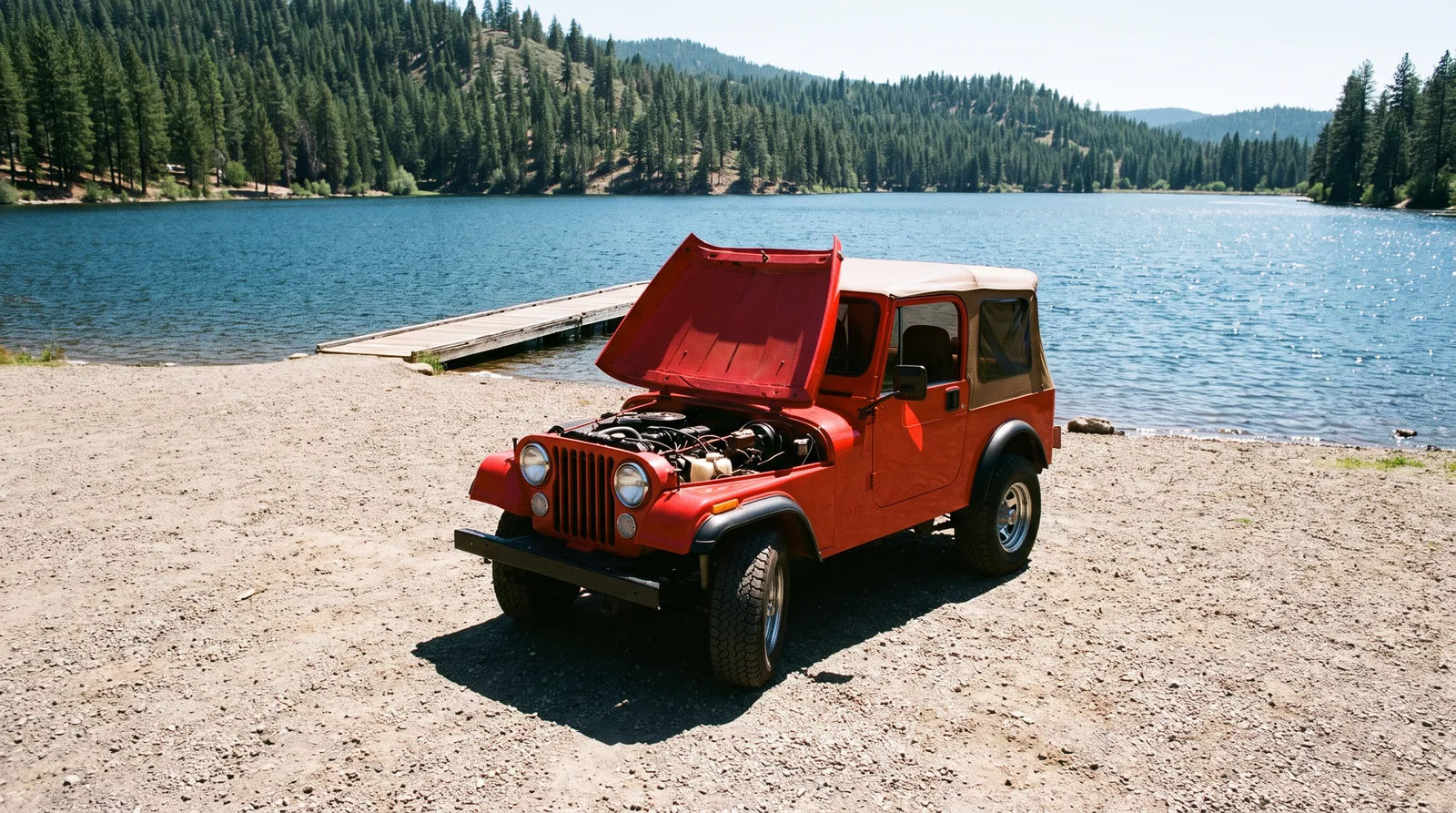
Engine character in a CJ cannot be separated from the fact that most of these trucks spent most of their lives with the top down or off entirely. That is a meaningful difference from evaluating an engine's sound and feel in a closed cabin vehicle, where insulation, sealing, and cabin acoustics filter and shape what the driver actually experiences. In an open CJ, the engine's real voice reaches the driver almost unfiltered, along with wind noise, tire noise, and every mechanical rattle the chassis produces. This is part of why CJ owners describe engine character with such specificity and passion compared to owners of more conventional vehicles; there is simply less between the engine and the driver's ears.
This also explains why some owners who love a particular engine on paper find themselves disappointed by the actual experience, and why others who expected little from a modest four-cylinder come away genuinely charmed. The open-air experience amplifies whatever character an engine has, good or bad, in a way that written specifications and even dyno charts cannot predict.
Cold starts as a character reveal
Nothing exposes an engine's true personality faster than a cold start on a genuinely cold morning, and CJ owners across every engine generation have their own rituals built around this moment. The Go Devil's flathead design, prone to fuel puddling in cold weather, often demanded a specific choke and throttle sequence that owners learned through trial and error rather than reading a manual carefully enough. The AMC sixes, particularly once automatic chokes arrived in the emissions era, behaved more predictably but lost some of the interactive, almost conversational quality that made starting an early four-cylinder CJ feel like a small daily ritual rather than a simple key turn.
Owners who have driven both generations often describe genuine nostalgia for the older, fussier starting process, an odd thing to miss until you understand that the fussiness itself became part of the relationship between driver and truck. A V8 swap, by contrast, usually starts with modern ignition components and none of that ritual, trading character for convenience in a way that some owners embrace and others quietly regret.
Sound as a community signal
Beyond individual driving experience, engine sound plays a genuine social role at CJ gatherings and club events. Members often greet each other by ear before they see faces, recognizing a particular truck's approach from its exhaust note alone. This shared acoustic vocabulary, developed over years of trailhead meetups and club drives, is a small but real part of what holds these communities together, and it is one more reason engine choice carries weight beyond pure mechanical function within CJ culture specifically.
Sources and notes
Related Reading
Have a
Jeep CJ
for Sale?
Reach thousands of serious classic car collectors across the US.
Sell It Here →
Selling a classic? Here's how: sell my classic car
Are You a Classic Car Dealer?
List your full inventory and connect with targeted classic car buyers.
Join as a Dealer →

About the author
Dan Reeves
Performance engine builder from North Carolina's motorsports corridor, focused on swaps, forced induction and making real, repeatable power.
Related Listings - Jeep CJ





Comments
Be the first to comment on this article.