
An engine only tells half the story of how a CJ drives. The jeep cj engine transmission pairings behind it decided whether that engine's character reached the ground as usable power or got lost in a mismatch, and across four decades of production Jeep changed those pairings often enough that two CJs with the same engine can feel like different trucks depending on what gearbox sits behind it.
Car Features
7 min read
Gearboxes and Their Engines: The CJ Drivetrain Story
From the three-speed T-90 behind the Go Devil four to four-speeds and eventual automatics, jeep cj engine transmission pairings shaped how each generation actually drove.
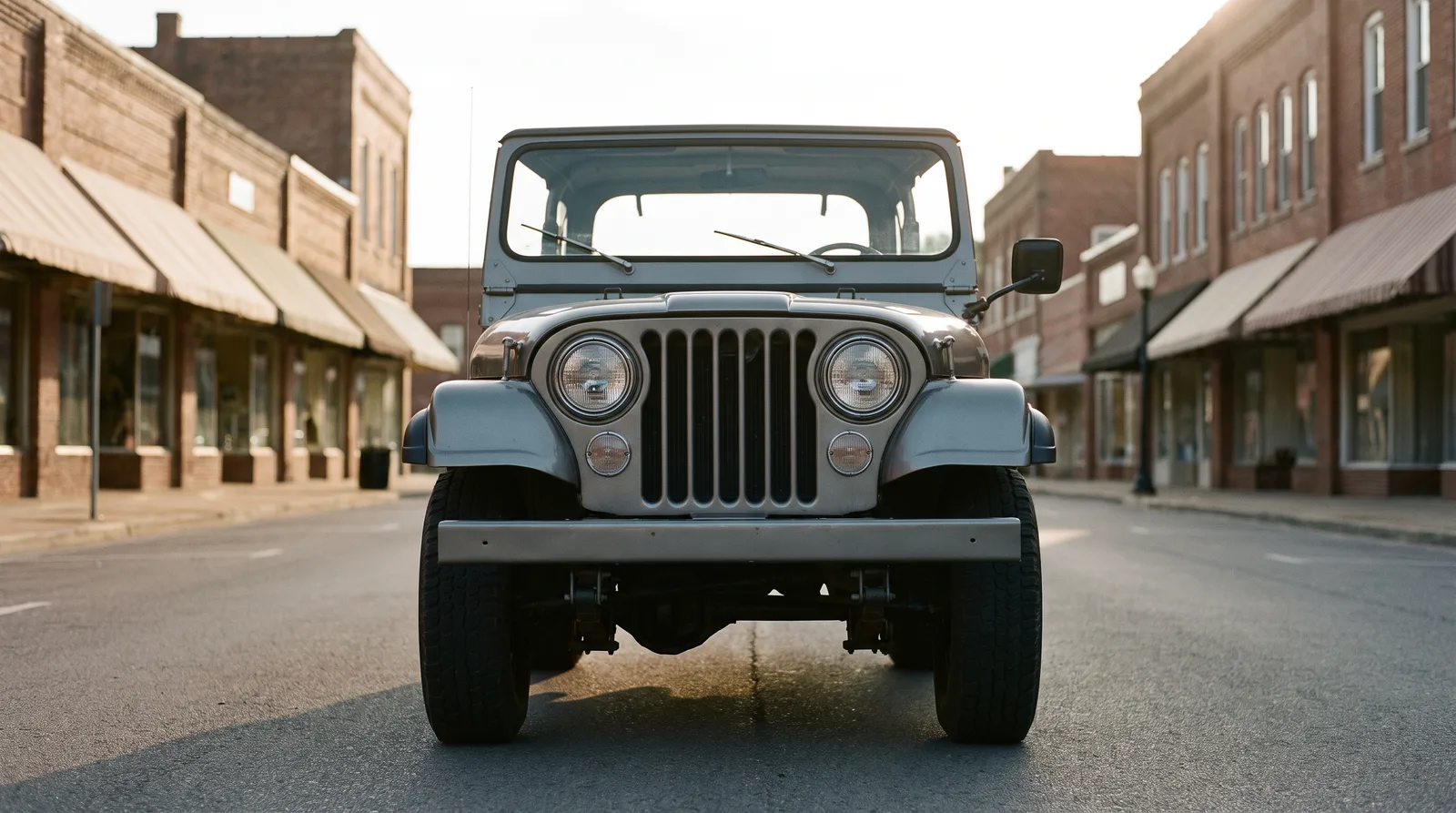
Three-speeds ruled the early decades
The CJ-2A launched in 1945 with a three-speed manual transmission behind the Go Devil four-cylinder, a simple, robust pairing that carried through the CJ-3A and well into the CJ-5's early years. Three forward gears sounds sparse by later standards, but it matched the Go Devil's modest output well enough, and the T-90 three-speed that Jeep used through much of this period earned a reputation for durability that outlasted plenty of the trucks it was installed in. Low gearing in the transfer case compensated for the transmission's limited range, giving these early CJs genuine crawling ability even with only three forward gears to work with.
This pairing philosophy, simple engine, simple transmission, matched the CJ's original mission as an agricultural and light-duty utility vehicle. Nobody buying a 1948 CJ-2A expected highway cruising comfort, and the drivetrain reflected that honestly.
Four-speeds arrive with more power
As engine options grew through the CJ-5 and CJ-6 era, particularly once the AMC 232 and 258 straight sixes entered the lineup in the late 1960s and early 1970s, Jeep introduced four-speed manual transmissions to better handle the added torque and give drivers more usable gearing for both highway and trail work. The T-15 and later T-18 four-speeds became common pairings with the six-cylinder engines, offering a wider spread between low-range crawling gears and a more usable overdrive-adjacent top gear for sustained road speed.
This shift mattered because the six-cylinder engines simply produced more torque than the old four-cylinder units, and a three-speed transmission designed around Go Devil output left that extra torque underutilized. The four-speed pairing let the CJ-5 and CJ-6 actually use what the bigger engines offered, rather than just carrying the extra weight and complexity without a corresponding gain in usable performance.
| Engine | Common transmission pairing | Era |
|---|---|---|
| Go Devil four-cylinder | T-90 three-speed manual | 1945-1965 (approx.) |
| Hurricane F-head four | T-90 three-speed manual | 1953-1971 (approx.) |
| AMC 232/258 six-cylinder | T-15/T-18 four-speed manual | Late 1960s-1986 |
| AMC 304 V8 | T-18 four-speed, later automatics offered | 1972-1981 |
Automatics finally show up
For most of the CJ's life, manual transmissions were the only choice, a fact that surprises buyers used to modern SUVs where automatics dominate. Jeep did eventually offer an automatic transmission option, starting with the CJ-7's introduction in 1976, when the GM-sourced Turbo Hydramatic 400 became available paired most often with the six-cylinder and V8 engines and, most commonly, the optional Quadra-Trac full-time four-wheel-drive system, for buyers who wanted less clutch work, particularly in stop-and-go or heavy trail use where constant shifting became tiresome. The automatic option never dominated sales the way it would in later Wrangler generations, but it existed and gives collectors today a genuine choice between the classic manual-only driving experience and a slightly more relaxed automatic alternative from the same basic era.
The automatic pairing also connects to the transfer case question, since CJs of this era used part-time four-wheel-drive systems that required drivers to manually engage low range regardless of whether the transmission itself was manual or automatic. An automatic CJ still demanded driver attention for off-road gearing, it just removed one pedal from the equation.
What pairing mismatches tell you
Because CJ drivetrains changed hands, engines, and transmissions frequently over long ownership histories, it is common today to find CJs with non-original pairings, an AMC 258 mated to a transmission it never left the factory with, or a later automatic dropped behind an engine that originally paired with a manual. This is not automatically a problem. Plenty of these swaps were done competently by owners chasing better drivability, and a well-matched non-original pairing can outperform a tired original one.
What it does mean is that buyers need to actually ask, rather than assume, what is behind a given CJ's engine. A seller's description of "original driveline" carries different weight depending on documentation, and a truck with mismatched components but honest disclosure is generally a safer purchase than one where the seller has not looked closely enough to know the difference.
"The engine gets all the attention in these conversations, but ask any mechanic who has actually driven a mismatched CJ and they will tell you the transmission is half the personality. Get the pairing wrong and even a strong engine feels disappointing."
- Emily Chen
For a complete accounting of every engine Jeep offered across the CJ's production run, and how each one connects to the transmission choices covered here, the whole picture lays out the full timeline from the 1945 Go Devil four through the AMC-era six and V8 options.
Buying with the drivetrain in mind
Anyone shopping seriously should treat engine and transmission as a single question rather than two separate ones. A strong engine behind a worn or mismatched transmission is not a strong drivetrain, and a modest engine paired well can outdrive expectations. Ask for documentation, ask about any swaps in the ownership history, and if possible, drive the truck through its full gear range before deciding, since a transmission's real condition rarely shows up sitting still in a driveway.
Once you know what pairing you are after, current listings make it easy to compare. You can find a classic CJ and filter through engine and transmission details across available trucks to see how much variation exists in the market today.
Overdrive units and the highway question
A recurring complaint among long-term CJ owners, particularly those who use their trucks for actual road trips rather than trailer-hauled show duty, is highway gearing. Even the four-speed manuals paired with six-cylinder engines were not designed with sustained interstate speed as a primary goal, and cruising at modern highway speeds in a stock CJ means running the engine at higher RPM than most drivers find comfortable for long stretches. This is one reason aftermarket overdrive units became a popular addition for owners who wanted to keep their period-correct engine and main transmission while gaining a taller top gear for highway cruising.
These overdrive additions occupy an interesting middle ground in the originality debate. Unlike a full engine or transmission swap, an add-on overdrive unit typically bolts in without permanently altering the original driveline, which means it can often be removed to restore a fully stock configuration if a future owner or judge cares about strict originality. That reversibility has made overdrive units a relatively uncontroversial modification even among owners who otherwise avoid touching factory-original components.
Reading a driveline honestly at purchase
Because so many combinations exist across the CJ's production run, and because so many trucks have had components swapped over decades of ownership, the single most useful thing a buyer can do is ask for the transmission's identification tag or casting number rather than trusting a seller's verbal description alone. Transmission identification numbers are generally stamped or tagged in a consistent location depending on the specific unit, and cross-referencing that number against known production data is the most reliable way to confirm whether a given transmission actually matches the era and engine a seller claims.
This extra step takes a few minutes and occasionally an internet search or a call to a CJ specialist, but it is far cheaper than discovering after purchase that a truck's advertised original driveline is actually a later replacement with different characteristics and different parts availability than expected.
Sources and notes
Related Reading
Have a
Jeep CJ
for Sale?
Reach thousands of serious classic car collectors across the US.
Sell It Here →
Selling a classic? Here's how: sell my classic car
Are You a Classic Car Dealer?
List your full inventory and connect with targeted classic car buyers.
Join as a Dealer →

About the author
Emily Chen
Bay Area engineer with a deep focus on vintage Japanese and European performance cars. Approaches classic car research and restoration with an analytical eye.
Related Listings - Jeep CJ





Comments
Be the first to comment on this article.