
Ask a CJ owner what engine belongs under the hood and you will get a lecture on four-cylinder simplicity or six-cylinder torque before anyone mentions a V8. That is the point. The jeep cj engine v8 cult was never sanctioned by the factory in any serious volume, and that outsider status is exactly what built the mystique. A V8-swapped CJ is a statement, not a spec sheet entry, and the people who build them will tell you the whole argument in under a minute if you let them.
Car Features
7 min read
The V8 CJ Cult: Why Eight Cylinders Became Legend
Jeep barely offered a factory V8 in the CJ, so owners built their own tradition of swaps that turned a farm rig into a cult favorite.
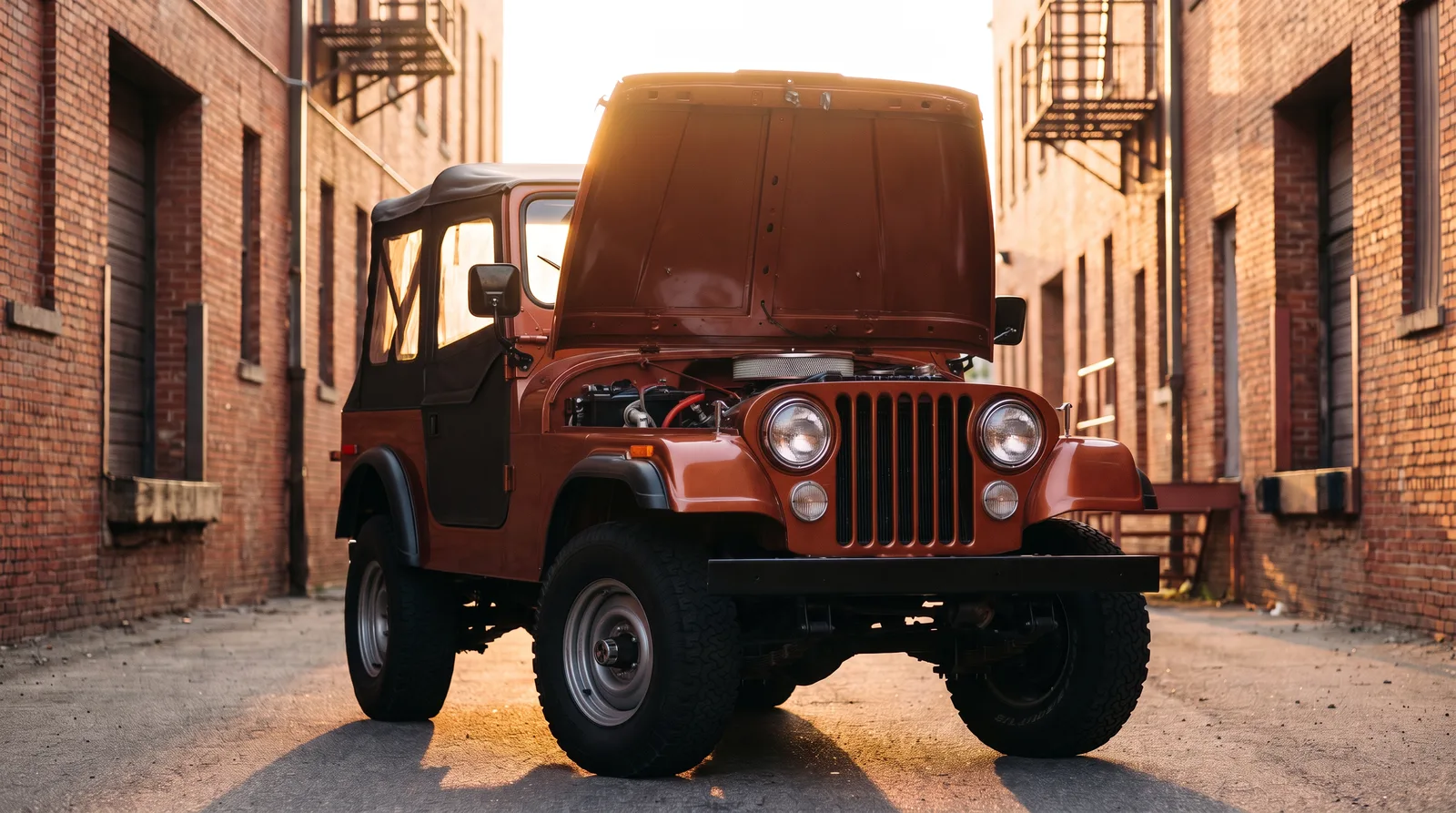
A factory option that barely existed
Jeep did flirt with factory V8 power in the CJ-5 and CJ-7 run, offering the AMC 304 cubic inch V8 as an option from 1972 through 1981, spanning the CJ-5's whole run with it and nearly the entire CJ-7 production once that model arrived in 1976. It made 150 horsepower when the option first reached the CJ in the early 1970s, a figure that eroded to around 125 by the option's final years as emissions rules tightened, which still sounds unimpressive until you remember the F-head four it replaced was making closer to 75. On paper the 304 was a reasonable, even sensible, upgrade for a truck that spent its life towing, plowing, and hauling. In practice, very few buyers checked that box. Most CJs left the factory with the AMC 232 or 258 straight six, and the V8 option quietly disappeared from order sheets by the early 1980s as fuel prices and emissions rules made a thirsty V8 in a light Jeep look like a bad bet to the accountants in Toledo.
That factory rarity is precisely why surviving 304-powered CJ-5s and early CJ-7s carry a premium today. They represent the only period-correct, warranty-backed path to V8 power in a classic CJ, and collectors who care about originality chase them specifically because everyone else went the aftermarket route.
The swap culture fills the gap
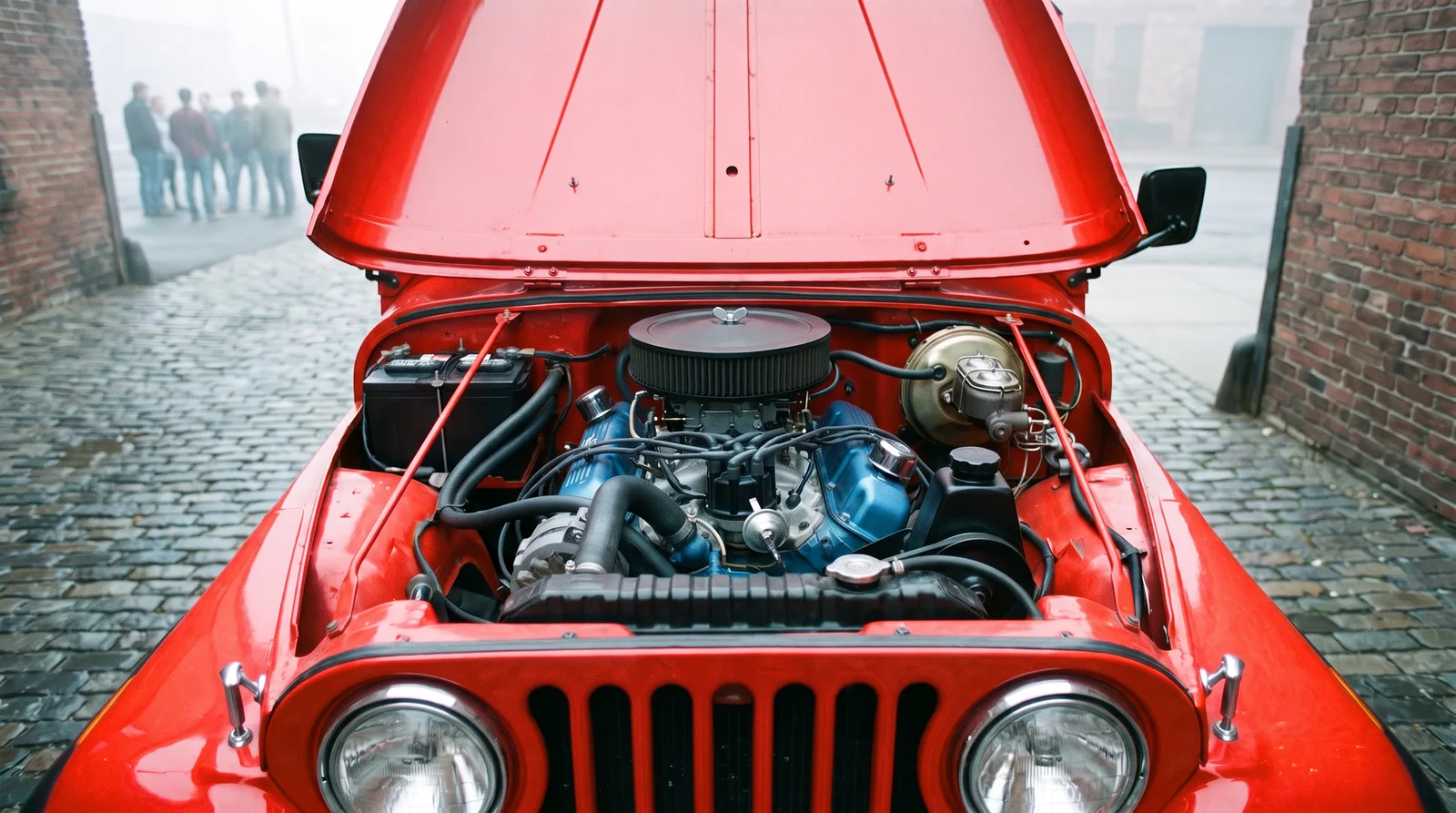
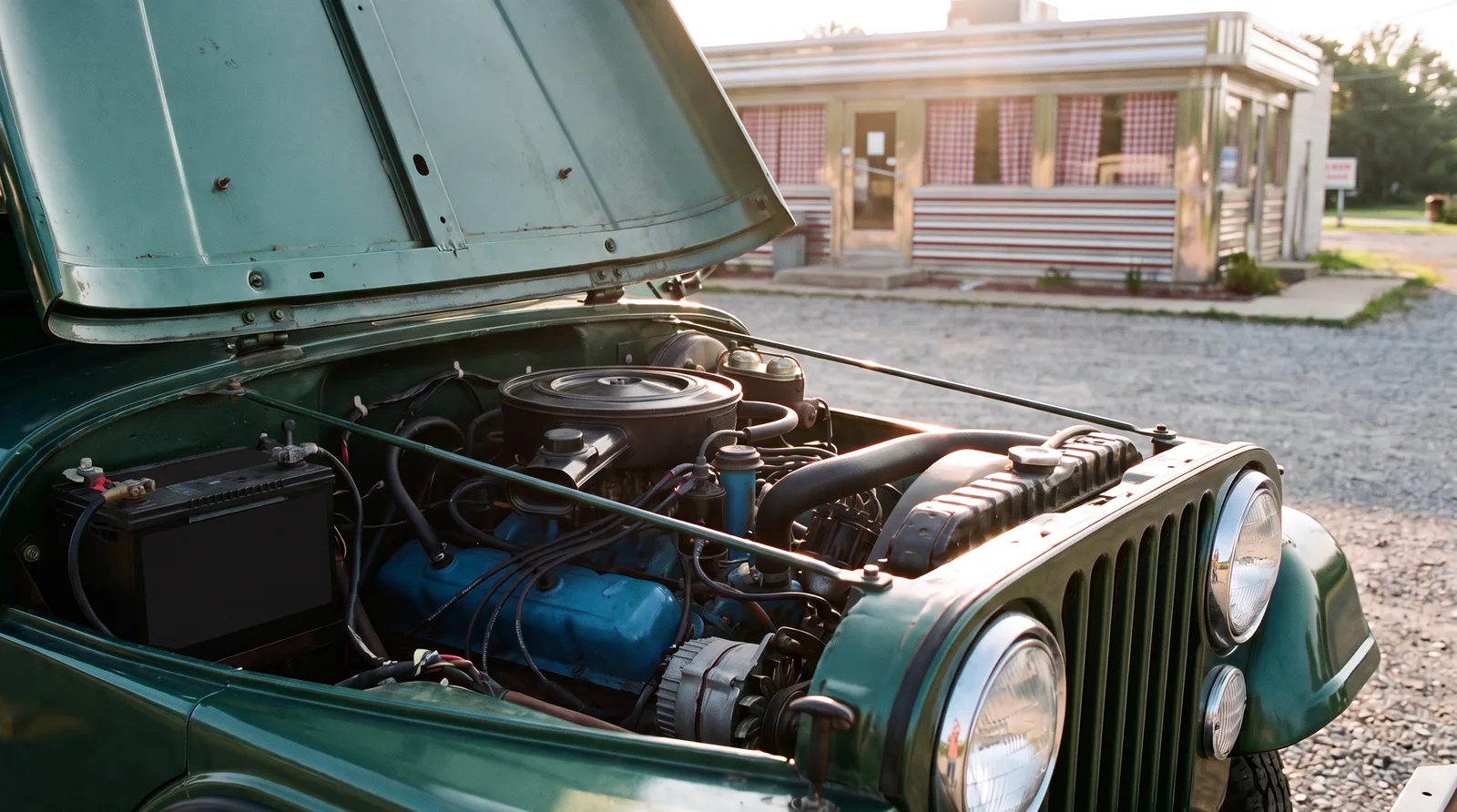
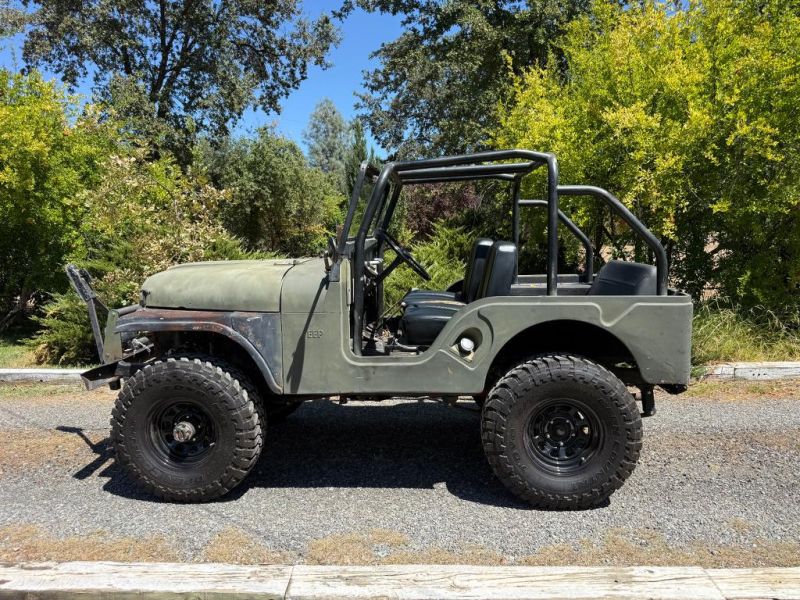
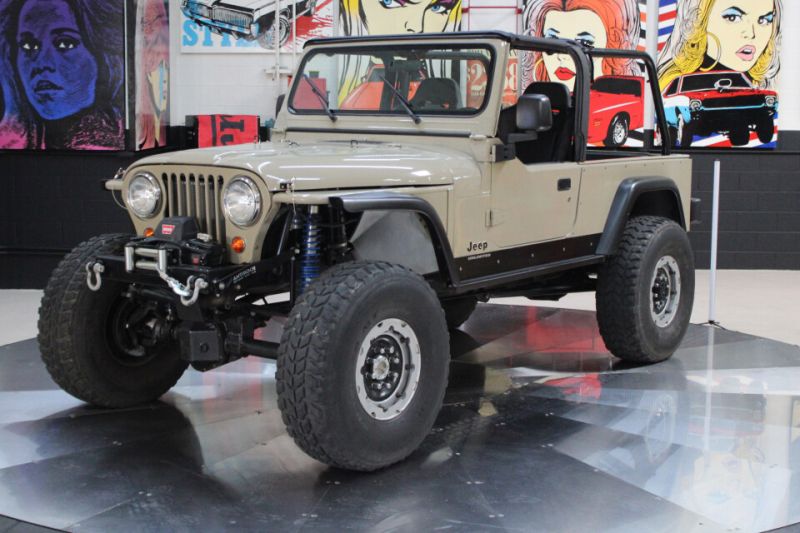
Where the factory hesitated, owners did not. Small-block Chevrolet V8s, Ford 302s, and Buick/Oldsmobile/Pontiac 350s have been dropped into CJ engine bays since the 1960s, long before Jeep offered anything comparable from the factory. The reasons are unglamorous and consistent across five decades of garage builds: more torque for trail work, more parts availability at the local auto store, and a swap that transforms a truck known for being slow into one that can actually keep up with modern traffic. A stock CJ-5 four-cylinder is, by most honest accounts, underpowered for anything but low-range crawling. Add a V8 and the same chassis becomes a different animal.
This is the cult part. It is not one factory decision, it is thousands of individual owners over decades independently arriving at the same conclusion and building it themselves in a driveway. That grassroots consistency is rare in the collector world, where trends usually trace back to a single influential builder or magazine feature. For the earliest documented swaps, credit generally goes to desert racers and rock crawlers in the American Southwest during the 1960s and 1970s who needed low-end grunt more than they needed a warranty.
| Engine | Source | Typical output (period) | Common CJ platform |
|---|---|---|---|
| AMC 304 V8 | Factory option | 150 hp | CJ-5, early CJ-7 |
| Chevrolet 350 | Aftermarket swap | Varies by build | CJ-5, CJ-7, CJ-8 |
| Ford 302 | Aftermarket swap | Varies by build | CJ-5, CJ-7 |
| Buick 350 | Aftermarket swap | Varies by build | CJ-5, early builds |
What the cult actually values
Talk to enough builders and the preferences sort themselves into camps. Some insist on keeping the swap within the AMC family, reasoning that a 360 or 401 at least shares a design lineage with what Jeep put in later Wagoneers and full-size trucks. Others do not care about lineage at all and just want the cheapest, most parts-available V8 they can find, which for decades has meant a small-block Chevy. Neither camp is wrong, and the debate itself is part of what keeps the culture alive at swap meets and CJ club gatherings.
What almost nobody disputes is the transformation in character. A four-cylinder CJ putters. A V8 CJ shoves. That shift in personality, from a workmanlike farm implement to something with genuine urgency, is the entire appeal, and it explains why V8 CJs command attention at shows even when the bodywork is rougher than a numbers-matching six-cylinder example parked next to it.
"Nobody falls in love with a CJ because of its four-cylinder. They fall in love with what it can become, and for a huge number of owners, what it becomes has eight cylinders and a sound that carries across the whole campground."
- Dan Reeves
The collector tension around originality
Here is where the cult creates friction with the broader hobby. A numbers-matching CJ-5 with its factory four or six intact is worth more to a strict originality buyer than the same truck with a swapped V8, full stop. The swap, however well executed, breaks the chain of factory documentation that serious appraisers and concours judges care about. That has not slowed the swap culture even slightly, because the people doing these builds are rarely chasing concours points. They are chasing a truck they actually want to drive, and a numbers-matching trophy sitting in a garage does not scratch that itch.
The result is a split market. One lane values originality above all else. The other values capability and character, and within that second lane a well-documented, cleanly executed V8 swap can actually add value over a tired stock example, because buyers know exactly what they are getting and do not have to plan a swap of their own. For anyone weighing which lane to buy into, the price gap between the two philosophies varies enough by region and build quality that it is worth researching current listings before assuming either direction is the safer bet.
If the drivetrain story interests you further, the full story covers every engine option Jeep put under a CJ hood across four decades, V8 and otherwise, and fills in the six-cylinder and four-cylinder context that the V8 cult defines itself against.
Buying into the cult today
Shopping for a V8 CJ in 2026 means asking different questions than shopping for a stock example. Who did the swap, and when. What transmission and transfer case pairing was used, since a mismatched combination can undo most of the benefit. Is there documentation of the work, or is it a mystery build from three owners ago. A clean, well-documented swap from a known shop or a meticulous individual builder is worth real money to the right buyer. A sloppy weekend job with mismatched wiring and no paperwork is a liability no matter how strong the engine sounds at idle.
The market for these trucks is active and unapologetic about what it is. Nobody shopping a V8 CJ is confused about originality tradeoffs; they know the deal and they are buying anyway. If that description fits what you are after, a classic CJ for sale listing is a reasonable place to start narrowing down whether you want a factory 304 truck or a well-sorted aftermarket build, since both exist on the market in meaningful numbers and both have defenders who will argue their case at length.
The jeep cj engine v8 cult is not going anywhere. It has outlasted the fuel crisis that killed the factory 304 option, survived the emissions era, and kept building trucks through every shift in the collector market since. That kind of staying power, driven entirely by owners rather than marketing, is rare, and it is why a V8-swapped CJ still turns heads decades after the last one rolled off a factory line with a genuine AMC eight under the hood.
Sources and notes
Related Reading
Have a
Jeep CJ
for Sale?
Reach thousands of serious classic car collectors across the US.
Sell It Here →
Selling a classic? Here's how: compare the places to sell classic cars
Are You a Classic Car Dealer?
List your full inventory and connect with targeted classic car buyers.
Join as a Dealer →

About the author
Dan Reeves
Performance engine builder from North Carolina's motorsports corridor, focused on swaps, forced induction and making real, repeatable power.
Related Listings - Jeep CJ





Comments
Be the first to comment on this article.