
I've had guys bring me GTOs thinking they bought a model. They didn't. They bought an option code stapled onto a Tempest LeMans, and understanding that distinction changes how you look at every 1964 and 1965 GTO you'll ever inspect. There was no GTO body shell, no GTO-specific frame, no GTO assembly line. There was a LeMans with a box checked on the order sheet, and that box is the whole reason this car exists.
Car Features
7 min read
The Option-Package Loophole That Created the GTO
The 1964 GTO was never its own model. It was an option code on a LeMans, and that distinction still matters when you're inspecting one today.
What option code 382 actually bought
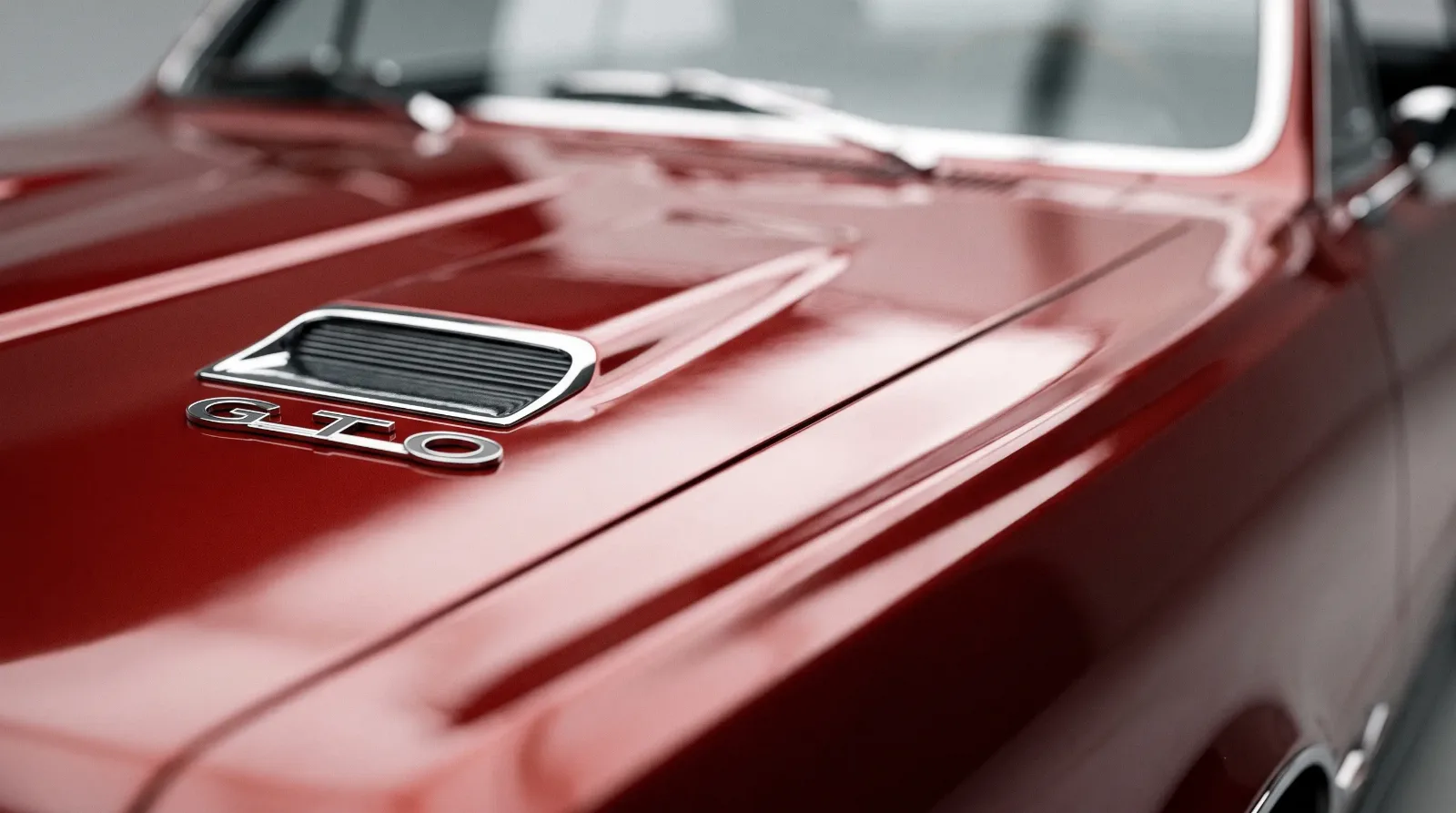
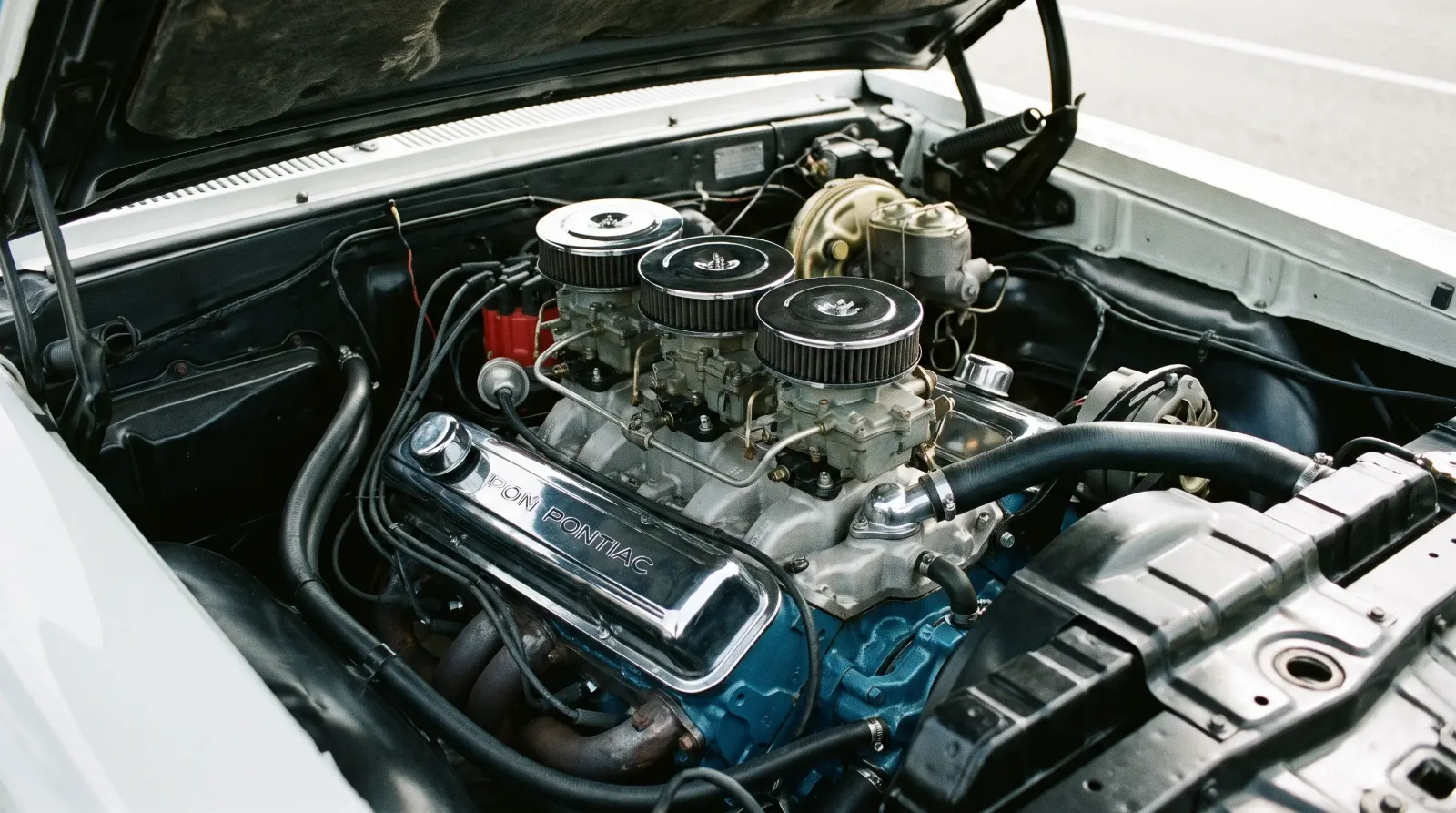
Order a 1964 LeMans with the GTO package and you got the 389 cubic inch V8 out of Pontiac's full-size cars, a heavier-duty three-speed manual as standard with a four-speed or automatic available, dual exhaust, a stiffer suspension package, GTO badging front, rear and on the fenders, and a simulated hood scoop. Tri-Power, three two-barrel carburetors on an aluminum intake, was available as a further option on top of the GTO package itself. None of it required a new body die, a new stamping plant run, or a new nameplate that GM's product planning committee had to bless from scratch. That's the trick, and it's a trick worth understanding on the shop floor before you understand it as history.
The GTO package could be ordered on the LeMans coupe, the two-door hardtop, or the convertible, which meant Pontiac's dealers didn't need a single new line item on the showroom floor plan either. A buyer walked in, pointed at a LeMans on the lot or in the order book, and checked a box. The car that rolled off the line looked, mechanically and structurally, exactly like every other A-body Pontiac built that year except for what was under the hood, in the suspension, and stamped on the fenders.
| Item | 1964 GTO option package detail |
|---|---|
| Base platform | Tempest / LeMans A-body |
| Standard engine | 389 cubic inch V8, single 4-barrel |
| Optional engine | 389 V8 with Tri-Power (3x2-barrel) |
| Standard transmission | 3-speed manual, floor shift |
| Body styles offered | Coupe, hardtop, convertible |
| Option code | RPO 382, $295.90 over base LeMans |
Why an option code was easier to approve than a model
A new model at GM in the early sixties meant tooling budgets, a marketing rollout, and sign-off from people well above divisional chief engineer. An option package on an existing car meant a change order through Pontiac's own engineering and sales departments. That's a fundamentally different approval chain, and it's why how the muscle car was born is really a story about paperwork routing as much as it's a story about horsepower. GM's corporate policy on intermediate-car displacement existed to stop exactly what Pontiac did, but the policy was written for models, not for options bolted onto an existing one.
Pontiac's engineering staff reportedly moved the package through as a running change with minimal fanfare at the corporate level, betting correctly that a line item buried in an option list would draw less scrutiny than a press release announcing a new performance model. By the time the sales numbers made it obvious what had happened, the GTO was already selling faster than Pontiac's own initial production planning had assumed it would, and pulling it back off the order sheet would have cost the division far more than letting the loophole stand.
What that structure means when you're evaluating a car today
Because the GTO wasn't its own model until 1966, verifying a genuine 1964 or 1965 car comes down to reading the LeMans it's built on, not looking for a GTO-specific VIN sequence. There isn't one. You're checking that the body number matches a LeMans coupe, hardtop, or convertible, that the engine code lines up with a factory-installed 389 rather than a later transplant, and that the trim tag reflects the option package rather than a dealer add-on kit sold after the fact. A lot of clone cars out there started life as a plain LeMans and picked up GTO trim decades later. That's not automatically a bad car, but it's not what the seller usually claims it is.
PHS documentation, when it's available for a given car, is the closest thing to a birth certificate a 1964 or 1965 GTO can have, since it ties a specific VIN back to the factory build sheet showing which options were actually ordered. Without it, you're relying on casting dates, trim tag decoding, and a knowledgeable eye, which is why a pre-purchase inspection on an early GTO takes longer than it does on a later car with its own dedicated VIN sequence.
🔧 Inspection Priorities
- Body tag and cowl VIN. Confirm the body style code matches coupe, hardtop, or convertible LeMans production, not a retrofitted trim package. A mismatch here is the single biggest red flag on a claimed original GTO.
- Engine casting numbers. The 389 should carry casting and date codes consistent with 1964 production. A period-correct 389 swapped from a full-size Catalina will pass a glance but fail a documentation check.
- Frame and suspension hardware. The GTO package's stiffer springs and larger front sway bar are checkable against Pontiac's factory service specifications. Soft, mismatched suspension parts suggest a later trim-only clone.
What dealers actually told buyers in 1964
Salesmen on the floor in 1964 weren't briefed on GM's internal displacement politics, they were briefed on how to move product, and the GTO package gave them an easy pitch: the same LeMans a customer might already be considering, with a full-size engine and a genuinely different driving character for a manageable price bump. Because the GTO wasn't a separate model with its own advertising budget yet, a lot of the earliest word-of-mouth came directly from dealers who understood they had something unusual on the lot and leaned into it before Pontiac's national marketing fully caught up.
That gap between what the option package actually was on paper and how dealers sold it in person is part of why so much GTO origin lore gets fuzzy at the edges. Some dealers reportedly built demonstrator cars with options beyond what a typical order sheet listed, using them to show off the package's full potential to walk-in customers, which only adds to the difficulty of pinning down exactly what a "typical" 1964 GTO looked like when it left the factory.
The loophole's short life
Pontiac's use of the option-package route only worked as long as the corporate review process stayed slow enough not to catch it before dealers had cars on lots. Once the GTO's sales numbers made the case for Pontiac internally, the division didn't need the loophole anymore. By 1966 the GTO had its own body designation and its own place on the order form, no longer riding as an add-on to the LeMans. Read on for how GM's own 1963 racing ban set up the conditions that made an option-package workaround necessary in the first place.
What strikes me most, working on these cars decades later, is how little of the loophole actually shows up when you're standing in front of one. The 389 sounds the same whether it arrived through a bold new model launch or a quietly approved option code. But the paperwork trail behind that engine is completely different depending on which route it took, and that trail is exactly what determines whether a car you're looking at is a real early GTO or a very convincing LeMans wearing someone else's badges.
Sources and notes
- Ate Up With Motor: Three Deuces, Four Speeds, the Pontiac GTO history
- HotCars: how a $3,000 Pontiac option package hijacked Ferrari's racing name
- Wikipedia: Pontiac GTO
- GTO Forum: decoding a 1964 GTO cowl tag and PHS documentation
- Hagerty: definitive 1964-67 Pontiac GTO buyer's guide
- Pontiac-Oakland Club International
Related Reading
Have a
Pontiac GTO
for Sale?
Reach thousands of serious classic car collectors across the US.
Sell It Here →
Are You a Classic Car Dealer?
List your full inventory and connect with targeted classic car buyers.
Join as a Dealer →

About the author
Mike Sullivan
Detroit-area muscle car enthusiast and restoration specialist with three decades of hands-on experience working on American iron.
Related Listings - Pontiac GTO


Comments
Be the first to comment on this article.