
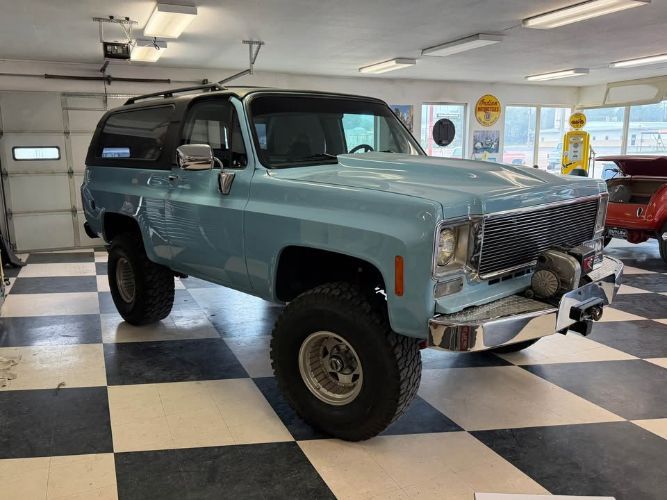
The door on a 1972 K5 Blazer closes with a sound that newer trucks do not make anymore, a flat metal thud with no cushioning behind it, and that sound tells you almost everything about the cabin you are about to sit in. There is no soft-touch plastic, no chime asking you to buckle up, no screen waiting to wake. There is a bench seat, a wide painted dash, and a windshield that sits close enough to touch. Stepping into a 1972 K5 Blazer interior is less like entering a vehicle and more like stepping into a small room that happens to move.
Car Features
7 min read
Inside the 1972 K5 Blazer Cabin
A close look at the 1972 K5 Blazer cabin, from its unadorned dashboard to the compromises built into a removable-top truck.
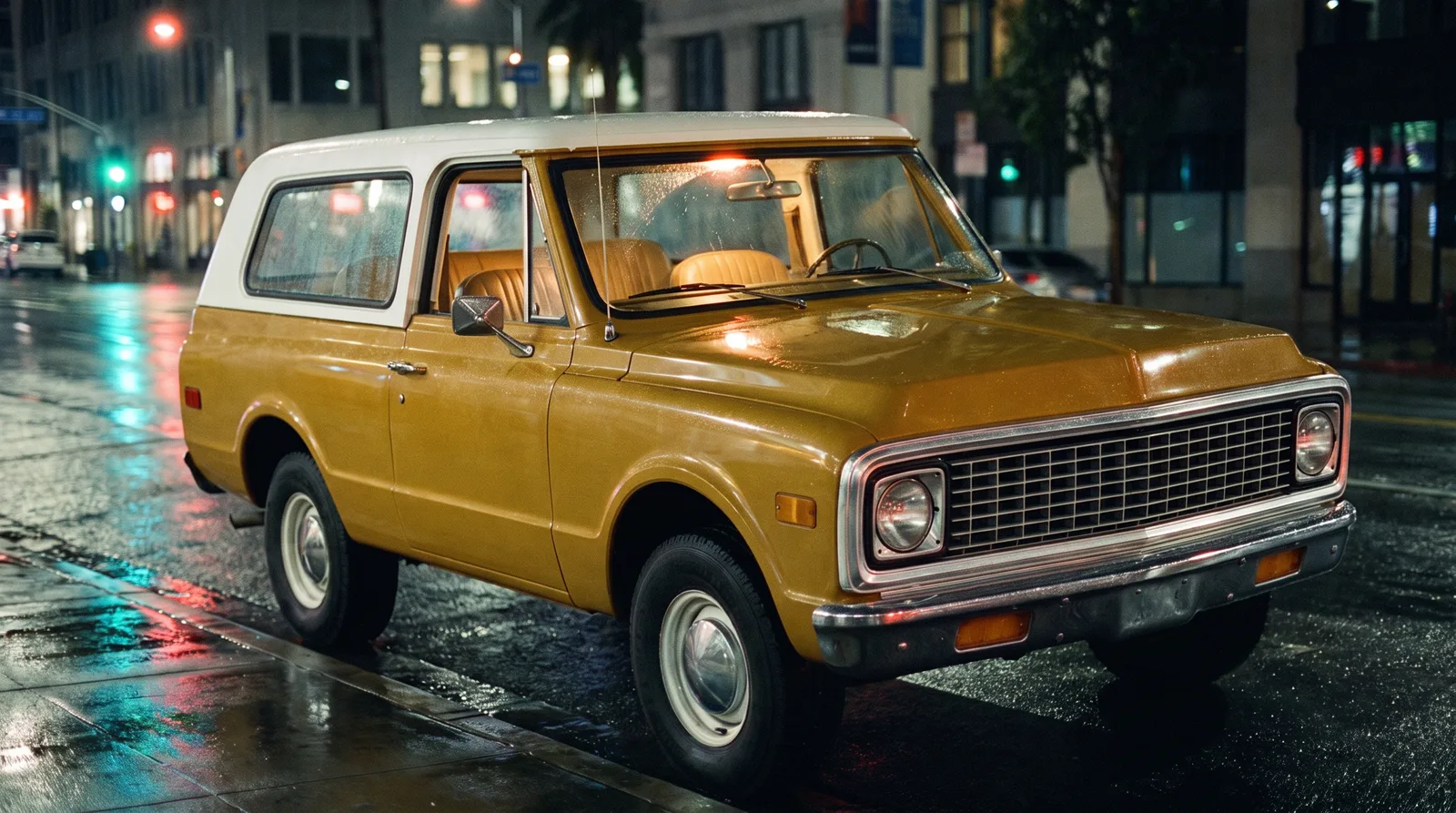
That room was built for people who worked outdoors and did not want to be babied indoors either. Chevrolet's engineers were not chasing comfort the way a passenger car brand would have. They were solving for durability, for a surface that could take mud on a boot heel and still wipe clean, for a seat that could be hosed off if it had to be. The result is a cabin that feels honest in a way modern interiors rarely manage, all function first, decoration second.
The dashboard as a working surface
The 1972 dash is a single wide panel painted to match the exterior lower body color in base trucks, though Custom and Cheyenne buyers could step up to woodgrain-look inserts that tried, with mixed success, to suggest something closer to a station wagon. The gauge cluster sits directly ahead of the driver in a simple rectangular pod: speedometer, fuel, temperature, oil pressure, and amp gauge, no tachometer unless the buyer ordered one, no warning lights doing the thinking for you. You read the gauges because you had to, not because a computer was going to tell you when something failed.
Below the cluster, the heater controls are three sliding levers and a fan switch, about as complicated as adjusting a window. The radio, if the original owner paid for one, is a small AM unit mounted low in the dash, a reminder that in 1972 a stereo in a truck was still something of a luxury rather than an expectation. Everything about the layout says the same thing twice: this is a tool, and the person using it already knows how tools work.
Seats, door panels, and the vinyl question
Base K5 Blazers came with a vinyl bench seat, usually in black, blue, or a dusty saddle tan, stitched in a simple horizontal pattern that held up to decades of ranch dogs and gravel roads better than most people expect. Custom and Cheyenne trims offered a nicer cloth-and-vinyl combination with more pattern detail and, on some orders, a split bench that gave the front passenger a bit more room to lean away from the driver on long trips.
Door panels are simple pressed vinyl over metal, with a pull strap doing the job a padded armrest does today. Roll-up windows, manual of course, with a crank that has a particular resistance to it once the mechanism has thirty or forty years on it. None of it was meant to impress a passenger. It was meant to survive one.
The removable top and what it does to the cabin
Because the entire fiberglass top could be unbolted from a 1972 K5 Blazer, the interior lives with a set of compromises a fixed-roof truck never faces. The headliner is minimal, more of a suggestion than an insulating layer, because a thick one would have added weight and complication to a panel four grown men were expected to lift off by hand. Wind noise at highway speed is honest and constant, not because the truck is poorly built but because the whole cabin is a compromise between an SUV and a convertible, years before anyone used either of those words for a truck like this.
Owners who have driven both a hardtop and a topless K5 Blazer often say the cabin feels like two different vehicles depending on the season, tight and quiet enough for a Montana winter with the top on, open and loud and completely alive with it off. That range is part of what makes the K5 Blazer 1972 interior interesting rather than merely old.
"You sit in one of these and your hand goes for a screen that isn't there, and after about ten seconds you stop missing it. The dash tells you what you need and nothing you don't."
- Nora Beckett
Small details that shaped the daily experience
Sun visors in a 1972 K5 Blazer are thin vinyl-covered pads, barely padded at all, mounted on a simple pivot that squeaks after enough years of use. The steering wheel is a hard plastic ring with a horn button at the center and nothing else, no stalk-mounted controls to fumble for, because there were none to fumble for. Turn signals, wipers, and headlights each get their own dedicated switch or lever, spread across the dash and column in a layout that made sense to an engineer in 1971 and still makes sense to anyone who drives one today, once the initial unfamiliarity wears off.
The glovebox is a simple metal box behind a latch, no lock on base trucks, no lighting, nothing more than a place to keep a map and a registration card. Ashtrays are built into the dash on both sides, a reminder of how routine smoking was in a work truck cab in that era, something almost every surviving example still carries even on trucks whose owners never smoked a cigarette in their life. None of these details were designed to delight anyone. They were designed to work, reliably, for a very long time, and most of them still do exactly that.
Sound inside the cabin comes almost entirely from the drivetrain and the road, since there is so little sound deadening material to filter any of it out. A six-cylinder idles with a distinct clatter you feel through the floor as much as hear, and a V8 announces itself the moment the key turns in a way no modern engine bothers to anymore. Owners who have spent real time in these cabins often describe that noise as part of the experience rather than a flaw to be engineered out, a sensory signature that a quieter, better-insulated modern SUV simply cannot replicate.
What survives, and what usually doesn't
Original dash pads crack from decades of sun, and most surviving trucks have either a replacement pad or a well-worn original with a crack running along the defrost vents. Vinyl seats fade unevenly, darker where a driver's leg blocked the sun for years, lighter everywhere else, a kind of accidental portrait of how the truck was actually used. Carpet, where it was fitted at all, is usually long gone and replaced, since factory carpet in a truck built for ranch work was never expected to outlast the paint.
What tends to survive best is the metal structure underneath all of it, the dash frame, the seat frames, the door skeletons, because Chevrolet built the cabin to take abuse from the outside in, not to look good under a showroom light. Restorers chasing an original-spec interior today are usually rebuilding trim onto bones that were never the weak point to begin with.
Read the full story of the 1972 model year for the context this cabin sat inside of, from the drivetrain choices to the trim ladder that decided whether your interior got woodgrain or plain steel. And if the door thud and the honest gauges have you wanting to sit in one yourself, you can browse classic K5 Blazer listings and see what has survived the last five decades in original or restored form.
Sources and notes
Related Reading
#classic truck interior
#K5 Blazer
#removable top
#1972 Blazer
#Chevrolet interior
#Chevrolet Blazer history

About the author
Nora Beckett
Automotive features writer and photographer who tells the human stories behind the cars, from show fields to cross-country road trips.
Related Listings - Chevrolet Blazer

Comments
Be the first to comment on this article.