
Production records and dealer literature from 1973 make one thing clear about the K5 Blazer 1973 4x4 lineup: four-wheel drive was still the truck's reason for existing, even as the rest of the vehicle grew more civilized. Chevrolet redesigned the cab, the frame, and the roof that year, but the transfer case, the solid front axle, and the low-range gearing stayed exactly where the customer expected them, underneath a truck built to go where a Suburban could not follow.
Car Features
7 min read
The 1973 K5 Blazer 4x4 and Trail Presence
The K5 Blazer 1973 4x4 kept the truck's off-road credibility intact even as the cabin and body went through a full redesign that year.
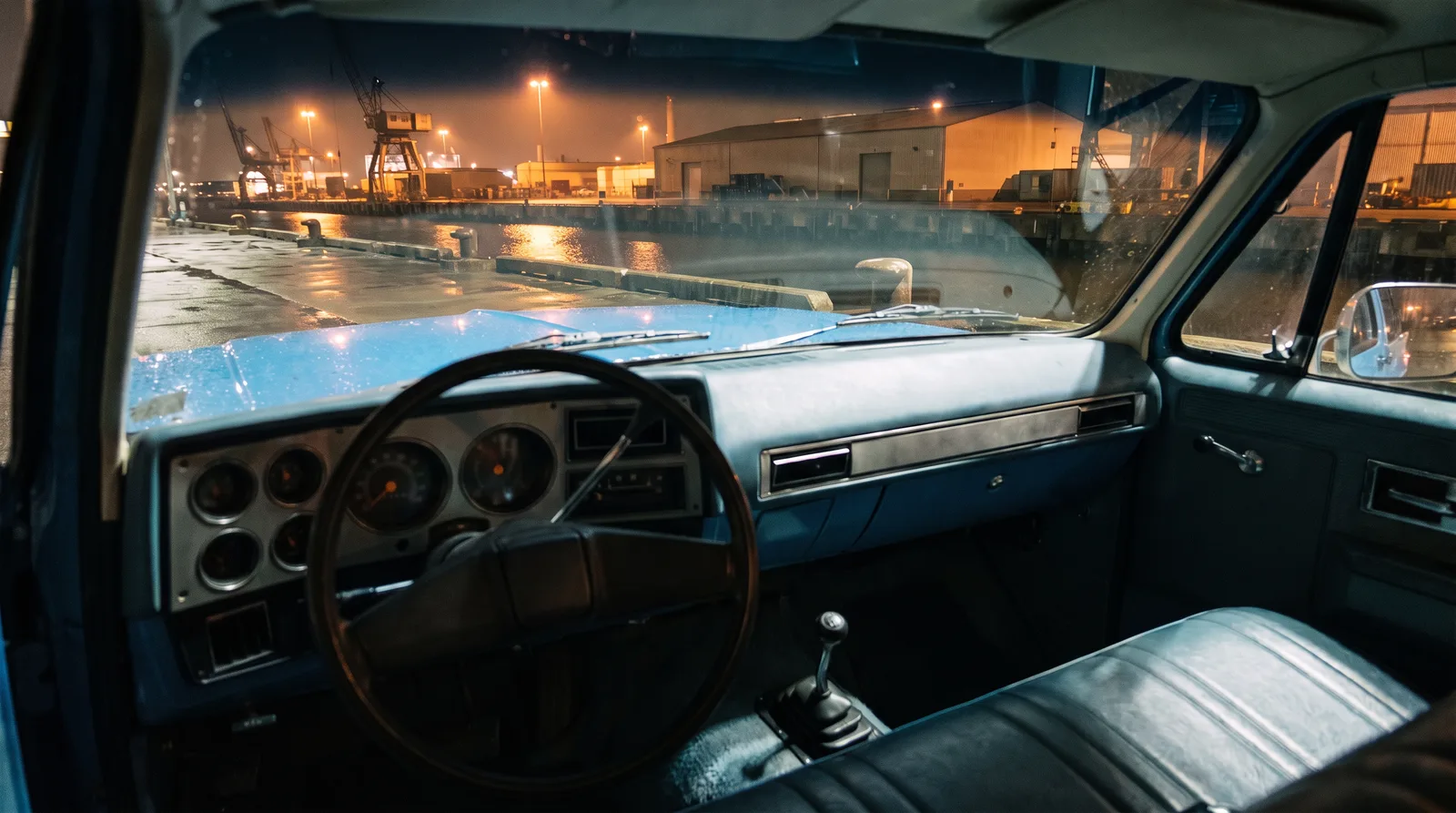
Four-wheel drive as the whole point of the truck
It is easy to read the 1973 redesign as a comfort-focused update, and in the cabin that is largely true. But Chevrolet's own marketing for the K5 that year kept returning to trail capability as the core sales pitch. The Blazer competed directly against the Ford Bronco and the International Scout, both of which built their entire identity around off-pavement capability, and Chevrolet was not about to cede that ground while chasing a more comfortable cabin. The 4x4 K5 Blazer for 1973 paired the new, larger squarebody with a solid front axle, part-time transfer case, and low-range gearing that let the truck crawl terrain a two-wheel-drive Blazer, offered since 1970, simply could not touch.
Documentation from period dealer materials shows Chevrolet positioning the 4x4 as the truck for buyers who needed genuine capability, hunters, ranchers, utility crews, while the two-wheel-drive version, carried into the new body, kept the Blazer nameplate open to buyers who wanted the size and style without ever leaving pavement. That split, capability trim versus comfort trim, is one of the more overlooked strategic moves inside the 1973 redesign.
The running gear underneath
The transfer case and front axle hardware carried forward largely from the late first-generation trucks, proven components Chevrolet had no reason to redesign purely for the sake of change. The 1973 4x4 K5 paired a Dana 44 front axle and a 12-bolt rear with the NP205 part-time transfer case, hardware that stayed the formula on 4x4 squarebody trucks through 1980, before GM moved to the chain-driven NP208 transfer case and 10-bolt front axles for 1981 and later. What did change for 1973 was how that hardware sat within the stiffer, longer frame, which gave the 4x4 system a more stable platform to work from on rough terrain. Owners and period reviewers both noted the 1973 4x4 felt more planted on washboard roads and uneven trail sections than the shorter first-generation trucks, a byproduct of the wheelbase increase as much as any specific driveline change.
Front and rear axle ratios were offered across a range depending on intended use, with lower numerical ratios suited to highway cruising and higher ones favored by buyers who prioritized low-speed crawling and towing over fuel economy. That flexibility on the order sheet meant two 1973 K5 4x4 trucks could feel meaningfully different to drive depending on how the original buyer specified them.
Suspension and ground clearance in the new body
The 1973 redesign brought revised leaf spring rates front and rear to handle the added weight of the larger squarebody, and the 4x4 trucks in particular needed that recalibration to keep articulation and ground clearance where off-road buyers expected. Chevrolet's engineers were balancing two competing goals with this generation, a smoother highway ride for the comfort-focused buyer and enough suspension travel for the 4x4 to still earn its reputation on a trail. Period road tests generally credited Chevrolet with landing closer to that balance than competitors managed, though the taller, heavier body did raise the center of gravity slightly compared to the first-generation truck, a tradeoff that came with the bigger cabin.
Skid plating and underbody protection remained available as factory or dealer-installed options, aimed squarely at the buyer who intended to actually use the 4x4 system rather than simply enjoy the styling.
"The paperwork from 1973 tells a clear story. Chevrolet built a nicer cabin, but they never let the K5's off-road credentials slip. The 4x4 hardware in that truck was every bit as serious as what came before it."
- Tom Ramirez
How the 4x4 shaped the Blazer's reputation
The decision to keep four-wheel drive credible while modernizing the rest of the truck paid off for Chevrolet across the entire squarebody run. Later K5 Blazers through 1991 built directly on the 4x4 architecture established in 1973, refining rather than replacing it. That continuity is part of why the K5 nameplate holds the reputation it does today among off-road enthusiasts, a truck that never really abandoned its working-vehicle roots even as it picked up creature comforts year after year.
For collectors and buyers today, the 1973 4x4 models occupy an interesting position. They carry the more comfortable, more usable squarebody cabin while still representing the first year of the properly modernized 4x4 platform, before running changes and cost-cutting crept into later production years. That combination makes well-documented 1973 4x4 trucks a point of particular interest for anyone researching the model's factory history.
For the complete account of everything Chevrolet changed that year, the whole picture covers the redesign beyond just the drivetrain. And if the 1973 4x4's trail credentials have you looking to buy, you can shop classic K5 Blazer listings currently available.
Reading a factory-correct 1973 4x4 today
Verifying an original 4x4 configuration on a surviving 1973 truck means checking build sheet codes against the axle, transfer case, and suspension components actually present, since decades of use and repair have moved plenty of parts between trucks over the years. For a factory historian, that documentation trail is the difference between a truck that is genuinely correct to its original specification and one that merely looks the part. The best 1973 K5 4x4 survivors are the ones where paperwork and hardware still agree.
What the trade press said at the time
Automotive trade publications covering the 1973 truck lineup treated the redesigned K5 as a significant story, not a minor update buried in the back pages. Reviewers who drove the 4x4 model came away noting that Chevrolet had managed something competitors struggled with, a genuinely more comfortable cabin that did not cost the truck its off-road identity. That was not a guaranteed outcome. Manufacturers across the industry have a long history of softening a rugged model in the name of broader appeal and losing the enthusiasts who built the nameplate's reputation in the process. Chevrolet's engineering team avoided that trap with the 1973 K5, and the trade coverage from that year reflects real relief on that point rather than routine praise.
Dealer training materials from the period also emphasized the 4x4 system specifically as a selling point against the Bronco and Scout, instructing sales staff to walk skeptical off-road buyers through the transfer case and axle specifications rather than leading with cabin comfort. That approach tells you who Chevrolet still considered the core Blazer customer even as the truck grew more mainstream.
Regional demand and how it shaped surviving trucks
Sales records suggest 4x4 K5 Blazers sold in noticeably higher proportions in mountain, ranch, and rural markets compared to the two-wheel-drive variant, which found more of its audience in suburban and coastal regions. That regional split matters today for anyone hunting for a well-preserved 1973 4x4, since trucks that spent their working lives in drier, less corrosive climates tend to have survived with less structural rust than those that saw harsh winters or coastal salt air. Factory build data combined with regional climate history is a useful, underused tool for narrowing a search toward trucks more likely to have honest, unmolested frames and floors.
Sources and notes
Related Reading
Have a
Chevrolet Blazer
for Sale?
Reach thousands of serious classic car collectors across the US.
Sell It Here →
Selling a classic? Here's how: the best sites to sell a classic car
Are You a Classic Car Dealer?
List your full inventory and connect with targeted classic car buyers.
Join as a Dealer →

About the author
Tom Ramirez
Corvette researcher and historian based in Bowling Green, Kentucky. Two decades documenting Corvette production history from original factory records.
Related Listings - Chevrolet Blazer

Comments
Be the first to comment on this article.