
The 1973 K5 Blazer is the year the truck stopped being an experiment. Everything before it was Chevrolet finding out whether people would buy a pickup with the bed cut off. Everything after it was Chevrolet building the same excellent vehicle for eighteen more model years, because they got it right the first time. If you have ever wondered why so many of these trucks are still on the road, 1973 is the answer.
Car Features
9 min read
The 1973 K5 Blazer: The Squarebody Arrives
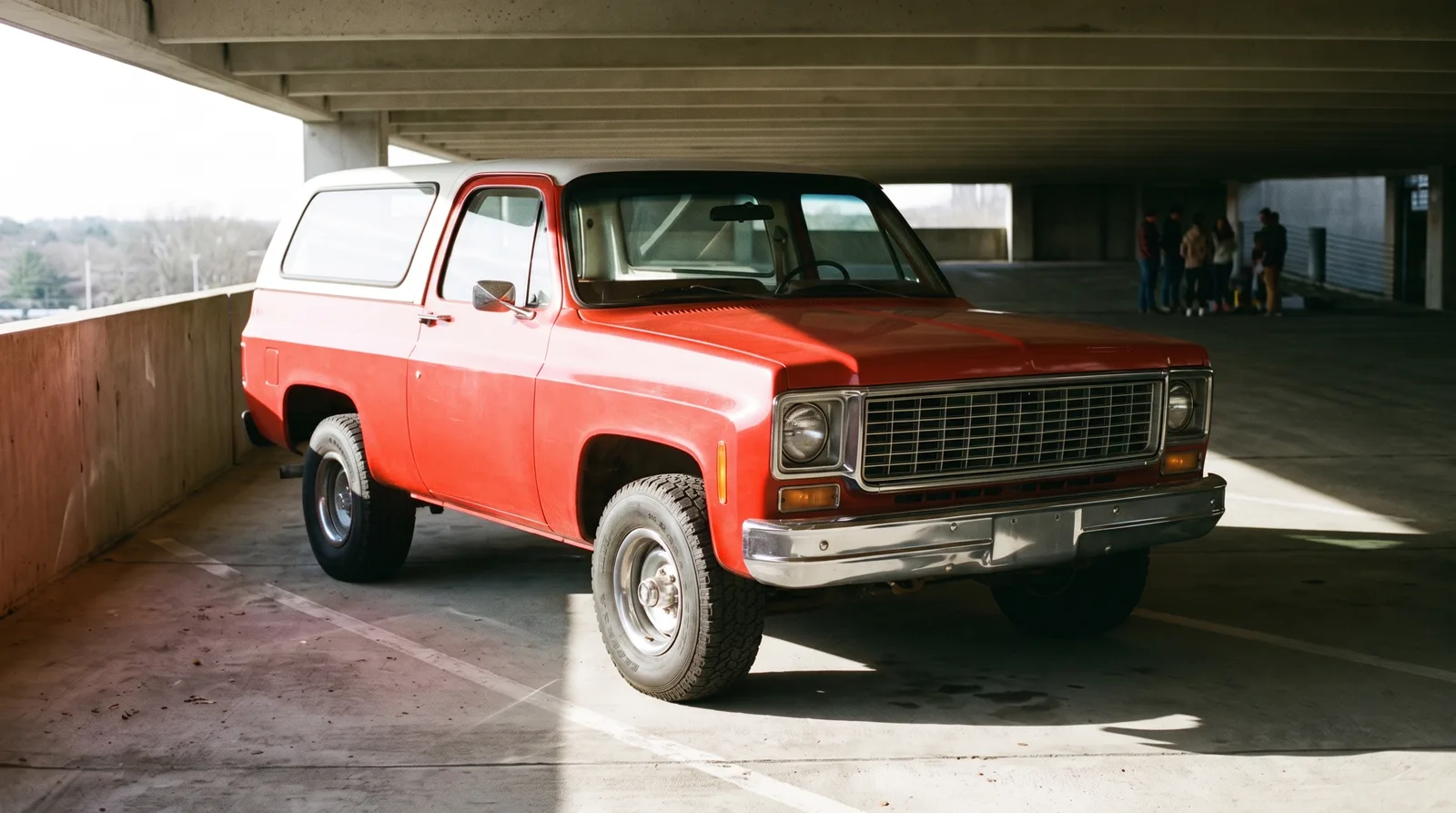
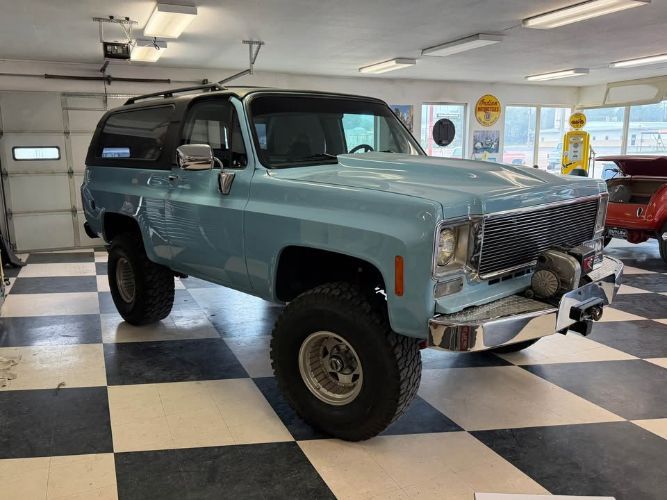
The 1973 redesign made the K5 Blazer bigger, roomier and easier to see out of, added full time four wheel drive, and kept the roof that came all the way off. It is the year the truck grew up.
What actually changed
All of it. This was not a facelift. GM replaced the entire C/K truck line for 1973 with a new generation the company internally called Rounded Line, which everybody outside GM has called the squarebody for about forty years now. New cab, new frame, new glass, new interior, new proportions.
The Blazer's wheelbase grew from 104 inches to 106.5. The track widened. The doors got noticeably larger and the side glass got taller, which does more for how a truck feels from the driver's seat than any horsepower figure. The cab was engineered with far more analytical work behind it than the 1967 design had received, and the difference shows in how solid it feels when you shut the door.
What you notice first, though, is the visibility. The 1969 through 1972 trucks have a high beltline and a fairly narrow greenhouse. The 1973 has a windshield you could show a film on. Chevrolet marketed that hard, and for once the marketing was accurate. If you want the run up to this moment and everything that came afterward in one piece, there is more on the k5 blazer covering the whole 1969 to 1991 arc.
Bigger, and better for it
Nobody in 1973 was asking for a bigger Blazer. Chevrolet built one anyway and it turned out to be the correct call. The extra 2.5 inches of wheelbase and the wider body gave the truck a calmer ride on pavement without hurting it much where it mattered, and the interior went from adequate to genuinely spacious.
The trim ladder was reorganised too. Custom Deluxe sat at the bottom, then Cheyenne, then Cheyenne Super at the top for 1973 and 1974 before the naming shifted again mid decade to Scottsdale and Silverado. A Cheyenne Super interior from this window is a nicer place to sit than plenty of cars from the same year, and that was the entire point. Chevrolet had worked out by 1973 that a large share of these buyers were not going anywhere near a jobsite.
The gain came with a cost that owners paid at the pump. The 1973 is heavier than the truck it replaced, the aerodynamics of a brick did not improve much, and fuel economy in the low teens was normal even before the emissions equipment of the later 1970s got involved. The October 1973 oil embargo arrived within months of the launch, which was terrible timing for a vehicle like this and did not stop it from selling.
| Item | 1973 Chevrolet K5 Blazer |
|---|---|
| Generation | Second, 1973 to 1991, GM Rounded Line |
| Wheelbase | 106.5 inches |
| Body | Steel cab with full removable fiberglass top |
| Drivetrain | K5 four wheel drive or C5 rear drive |
| Four wheel drive system | Full time, New Process 203 transfer case |
| Base engine | 250 cubic inch inline six |
| V8 options | 307, 350, 400 small block (400 four wheel drive only) |
| Trim levels | Custom Deluxe, Cheyenne, Cheyenne Super |
| Top style | Full convertible, retained through 1975 |
Full time four wheel drive
Here is the mechanical change that defines the early squarebody Blazer, and the one that causes the most arguments. For 1973 GM adopted full time four wheel drive using the New Process 203 transfer case, which meant the truck drove all four wheels all the time through a differential in the transfer case rather than locking the axles together.
The reason was drivability. On a part time system you cannot leave four wheel drive engaged on dry pavement without the driveline binding, so the average owner never used it until conditions were already bad. Full time removed that decision entirely. You got traction on a wet on ramp without thinking about it, and the truck behaved better on mixed surfaces.
The cost was complexity and fuel consumption, and once the fuel crisis bit, that mattered. GM went back to part time systems at the start of the 1980s. In the meantime the NP203 acquired a poor reputation that it only partly deserved, largely because a lot of them were run for decades on unsuitable fluid and neglected until they complained. A healthy one works exactly as intended, and a 1973 with an original full time system is increasingly the version collectors want because it is correct for the year.
"Everybody wants to tell you the full time transfer case was a mistake. What it actually was is a system that got no maintenance for thirty years and then got blamed for it."
- Mike Sullivan
The engines, including the big one
The 250 cubic inch six was still the base engine, and it was still the wrong choice in a truck this heavy. The 292 six existed for buyers who wanted torque and did not care about anything else. Above them the small block V8s did the real work, with the 350 as the volume seller and the 400 available for people who wanted more.
The big block Chevrolet 454 never made it onto the K5 Blazer's own order sheet. That is a common point of confusion because the 454 was available in heavier duty C/K pickups and in full-size Chevrolet cars and vans of the same era, and people assume the Blazer got the same option. It did not. The 400 cubic inch small block, offered on four wheel drive trucks starting in the mid 1970s, was the largest engine Chevrolet ever put in a K5 Blazer, and a genuine 400 short wheelbase Blazer from this window is still one of the more entertaining things you can find with a Chevrolet badge on it.
Power figures across the board were quoted in net terms by 1973, which is the honest measurement, and they were already sliding as emissions equipment arrived. A 350 rated in the neighbourhood of 160 net horsepower for much of the decade does not sound like much. In a truck with this much low speed torque and this much gearing it feels fine, right up until you try to overtake something.
The roof still came all the way off
This is the detail that separates a 1973 from the squarebodies most people picture. Through 1975 the K5 kept the full convertible arrangement, meaning the entire fiberglass top from the windshield header rearward lifts off and leaves you with an open bodied truck. From 1976 GM fixed the front section of the roof in steel and only the rear portion came away.
So the 1973, 1974 and 1975 trucks are a very specific proposition. They have the size, comfort and visibility of the second generation combined with the full open air experience of the first. That is a genuinely rare combination and the market has worked it out. Trucks from this three year window carry a premium over the half cab years that has widened considerably over the last decade.
The catch is the same one that applies to any removable roof on a fifty year old vehicle. Seals dry out, water finds the cab corners and the floors, and a truck stored outdoors with a leaking top has usually paid for it in steel. That is the first thing to look at, and it is more informative than the paint.
Where the 1973 sits in the market
For a long time the first generation trucks took all the attention and the money, and the early squarebodies were the sensible alternative for people who actually wanted to drive one. That has changed. The three convertible top years, 1973 to 1975, have pulled clear of the rest of the squarebody run, and clean documented examples now sit much closer to first generation money than they did ten years ago.
Restomods complicate the picture. A large share of the best presented squarebodies at auction have modern fuel injection, upgraded brakes and a suspension that works. Those trucks sell well and they sell on build quality, not on year. If you want an original 1973 you are shopping in a smaller and quieter part of the market, and patience pays. There is more from this era worth reading before you commit to a year, and when you are ready to compare real trucks you can find a classic K5 Blazer across the whole run rather than fixating on one model year.
The verdict
The 1973 K5 Blazer is the best version of this truck to actually use. It is roomier than a first generation, it rides better, you can see out of it, and it still has the roof that made the Blazer worth having in the first place. It is slower than the numbers on a 1970 brochure suggest and it drinks fuel like it is being paid to, and none of that matters much when the top is in the garage and the weather is good.
What it does not have is the novelty of being first. That belongs to 1969, and the market will keep paying for it. If you care about which one is nicer to own on a Saturday, though, this is the year the K5 Blazer grew into the vehicle it had been trying to be since the beginning.
Sources and notes
Related Reading

About the author
Mike Sullivan
Detroit-area muscle car enthusiast and restoration specialist with three decades of hands-on experience working on American iron.
Related Listings - Chevrolet Blazer





Comments
Be the first to comment on this article.