
Park a 1972 K5 Blazer next to a 1973 model and you are looking at two different engineering philosophies wearing the same badge. The K5 Blazer 1973 vs 1972 comparison is not a matter of trim tweaks or a new grille. It is the line between the original first-generation Blazer and the squarebody generation that would carry Chevrolet's full-size SUV for nearly two decades. As someone who documents these trucks for concours judging, I treat that model year boundary as one of the sharpest in the whole Blazer timeline.
Car Features
7 min read
1973 Versus 1972: The Generational Leap
K5 Blazer 1973 vs 1972 is not a simple facelift comparison. The fixed roof, longer frame, and new front sheet metal mark a true generational break.
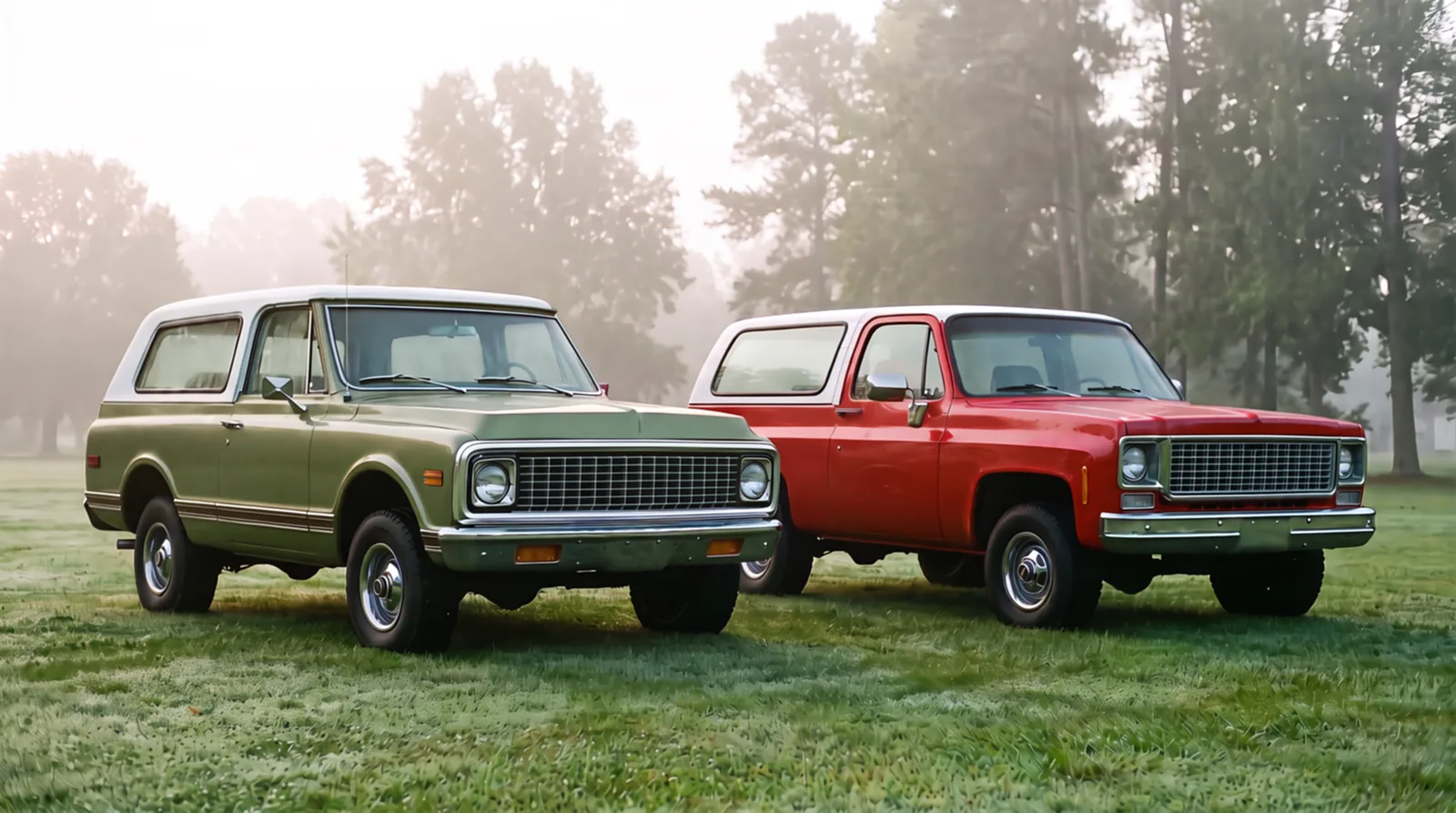
A new body, but the removable top hangs on
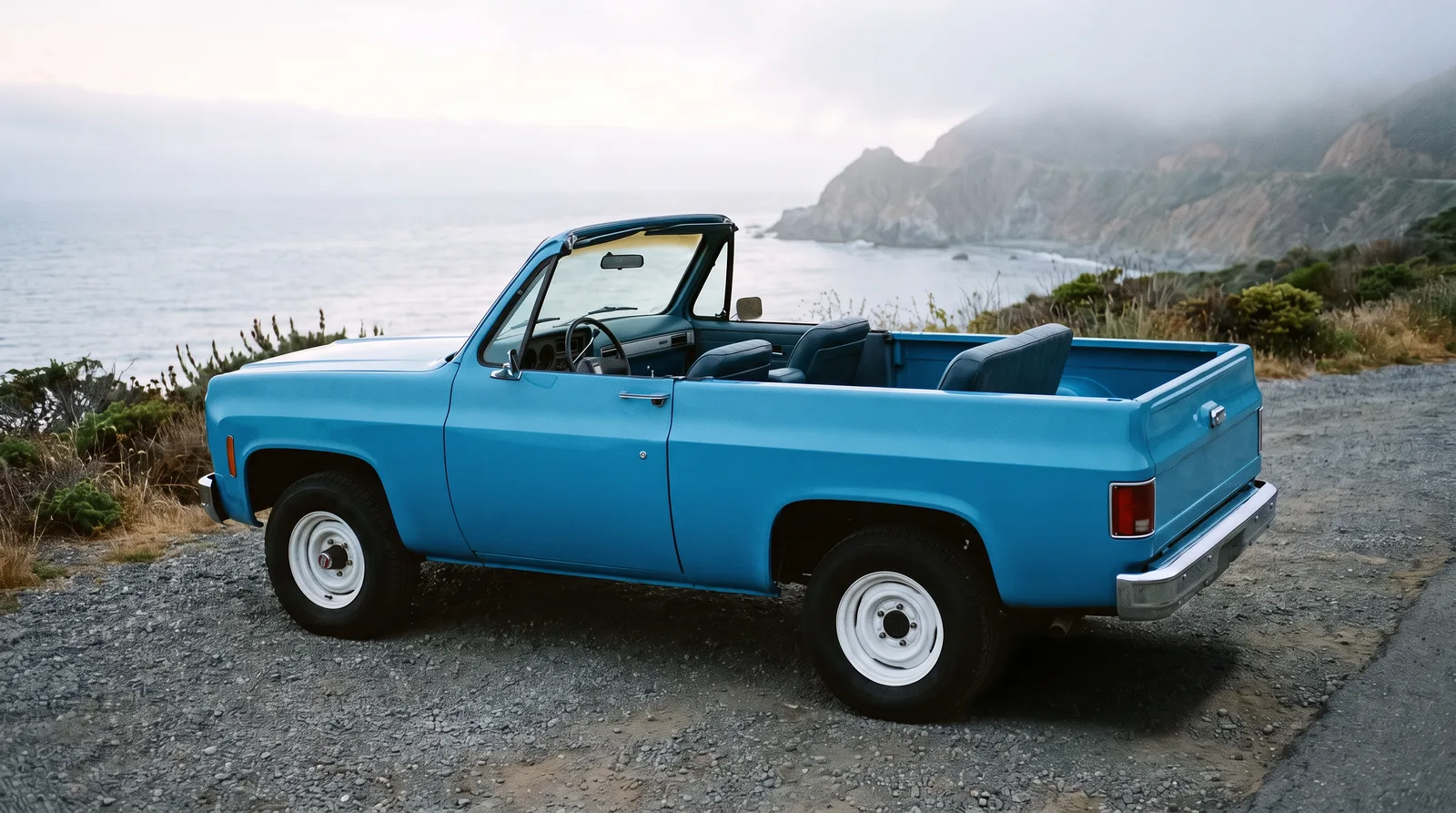
The single defining trait of the 1969-72 K5 Blazer was its removable steel top, a feature that made the truck genuinely convertible in a way no competitor offered at that size. Two people with basic tools could pull the top off entirely, turning the Blazer into an open-air truck for a weekend. That flexibility came with real costs. Sealing a removable roof against wind noise and water intrusion is difficult, and original owners lived with both. For 1973, Chevrolet did not drop that option. The removable top carried over onto the new squarebody body and stayed available through 1975, before Chevrolet finally switched to a fixed half-cab steel roof for 1976. What changed for 1973 was everything around it: a larger cab, revised sheet metal, and a body structure engineered for the long run rather than the top mechanism itself.
Documentation from the period shows this was treated internally as a genuine second generation, not a running change. Body dies, glass, and weatherstripping all changed to support the new squarebody structure, which is a level of retooling well beyond a typical model year refresh, even with the removable top still on the options sheet.
A longer wheelbase and a heavier frame
The 1973 Blazer also grew. Wheelbase stretched over the 1969-72 trucks, and the frame gained stiffness to match the larger cab and the growing expectations for towing and payload. The 1969-72 trucks shared much of their chassis DNA directly with the contemporary C/K pickup, but the 1973 redesign pushed the Blazer toward its own identity within that shared platform, distinct in proportion even though the mechanical bones stayed related. For a researcher cataloging build sheets, the wheelbase difference, 104 inches on the 1969-72 trucks versus 106.5 inches on the 1973 and later squarebody, is one of the clearest data points separating the two generations on paper, well before you even look at the sheet metal.
Front sheet metal and the new face of the truck
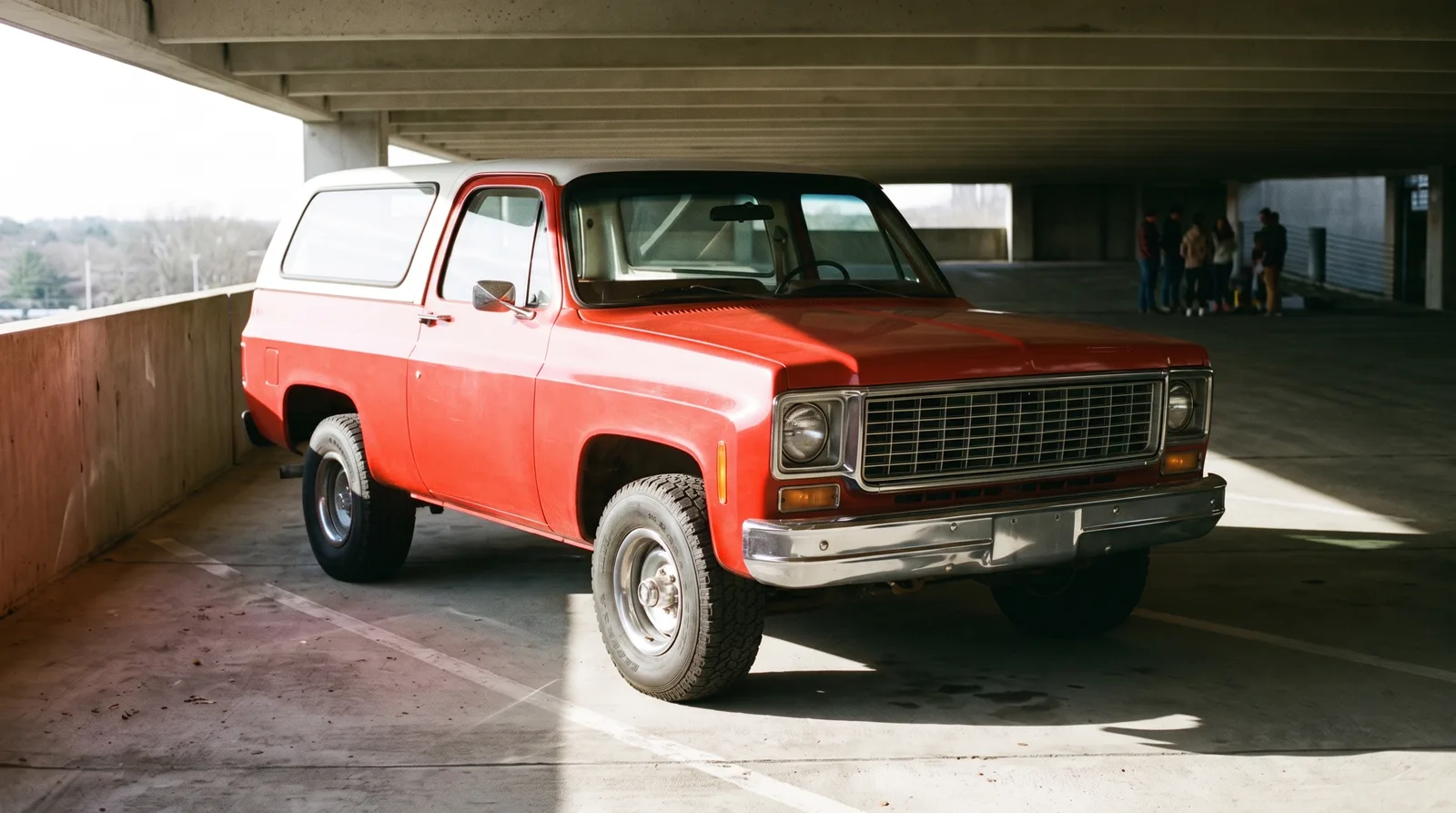
Visually, the 1973 Blazer shares its front clip with the redesigned C/K pickup line for that year, a single-headlight grille treatment replacing the earlier design's simpler face. This was a deliberate cost and parts-sharing decision as much as a styling one. By aligning the Blazer's front sheet metal with the pickup, Chevrolet reduced tooling costs and gave dealers a more unified truck lineup to sell as a family of vehicles rather than a truck and a separate SUV cousin.
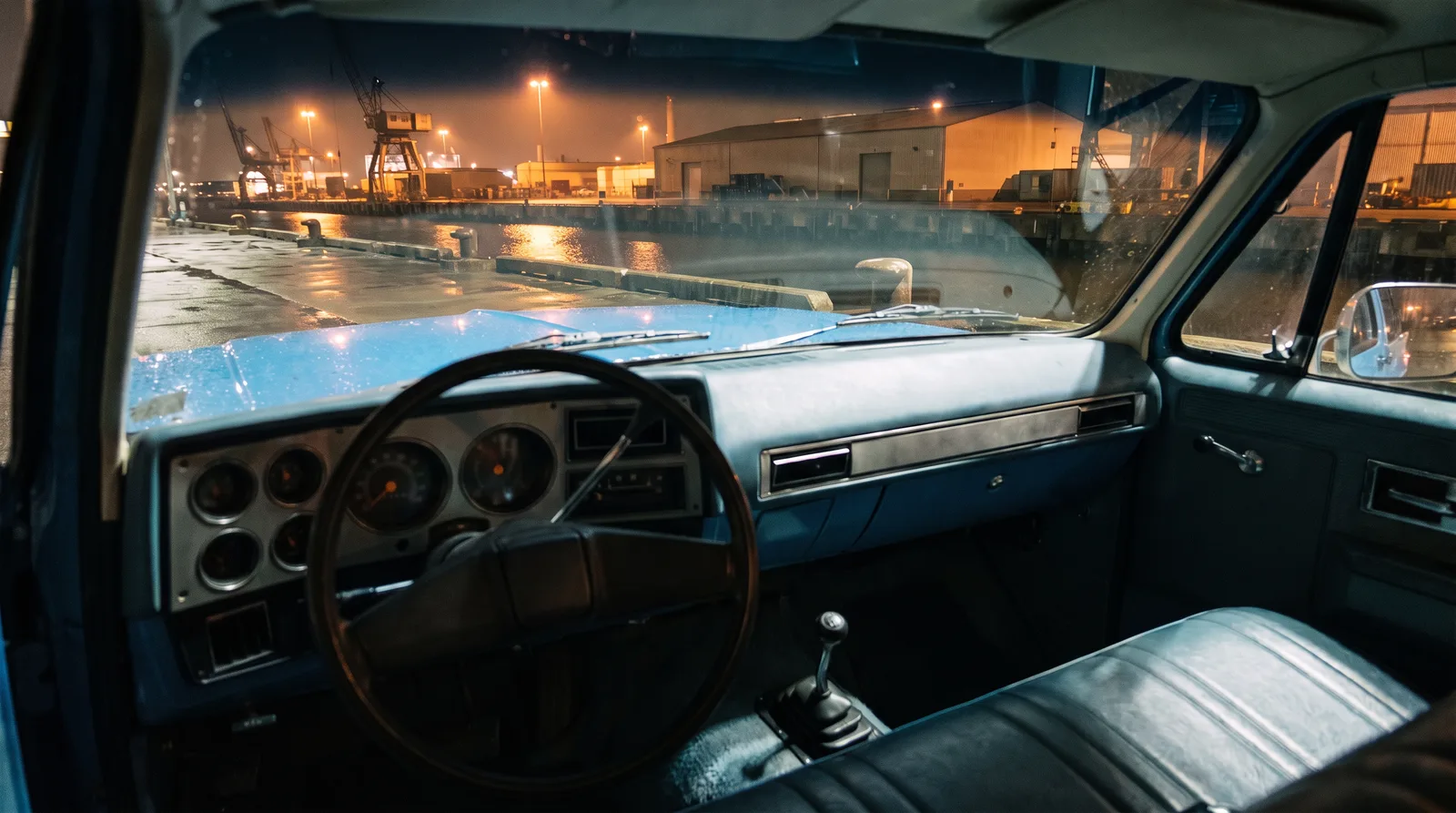
The interior followed the same logic, with dash and control layouts pulled largely from the pickup cab rather than developed as a standalone Blazer design. Buyers moving between a Chevy pickup and a Blazer in 1973 would have found the transition far more familiar than someone doing the same comparison with a 1972 truck.
Ride, refinement, and what changed for the driver
Owners and period road tests both note that the 1973 truck rode and handled differently, a byproduct of the stiffer frame, the longer wheelbase, and revised spring rates suited to the added weight. The 1969-72 trucks, especially with the top removed, could exhibit more body flex, which some enthusiasts today actually prefer for the character it gives the driving experience. The 1973 truck trades some of that raw, unfinished feel for a more composed, more civilized ride, which is exactly what Chevrolet was targeting with a buyer who cross-shopped station wagons.
"When you catalog these trucks side by side, 1973 is not an evolution of 1972. It is a different engineering brief entirely, built for a buyer who wanted comfort and daily usability instead of a part-time convertible."
- Sarah Whitfield
What this means for buyers today
The distinction matters well beyond trivia. First-generation 1969-72 Blazers, with their removable tops on the shorter chassis, have carved out their own collector niche, and that same removable-top option carried forward on early squarebody trucks through 1975 before the fixed half-cab roof took over for 1976. Squarebody 1973-91 trucks, meanwhile, are prized for daily usability, parts availability, and a cabin that holds up better to modern use. Neither is objectively the better collector truck. They are answering different questions, and knowing which generation you are looking at, and why the split happened where it did, changes how you should evaluate condition, originality, and price.
For the deeper history of what Chevrolet built for 1973 specifically, read the background on the full redesign. And if this comparison has you shopping, you can find a classic K5 Blazer from either generation currently on the market.
Documenting the transition correctly
For anyone researching or judging these trucks, the practical takeaway is simple. Do not assume a 1972 and a 1973 K5 Blazer are close cousins that only differ in badges and colors. They differ in wheelbase, frame dimensions, front sheet metal, and cabin design, and every one of those differences traces back to a single, deliberate decision Chevrolet made about what kind of truck the K5 Blazer needed to become. Get the generation right first, and every other judgment about originality and value follows from there.
Powertrain carryover versus what actually changed underneath
It would be a mistake to assume everything changed for 1973. The engine lineup carried over in large part from the late first-generation trucks, with the same family of inline sixes and V8s available depending on configuration and region. What changed was how that powertrain sat in the chassis and how it was expected to perform. The heavier body and stiffer frame of the 1973 truck meant the same engines were now moving more mass, a tradeoff buyers accepted in exchange for the improved ride and cabin comfort. Transmission and transfer case options followed a similar pattern, largely shared components wrapped in a substantially revised vehicle.
This is a detail that matters for anyone judging matching numbers on a restoration. A 1973 Blazer with a drivetrain that reads correctly for its year can still share part numbers with a late 1972 build sheet, which is exactly the kind of overlap that trips up buyers who assume every component changed at the generational line. The body, frame, and roof are where the real 1973 break happens. The drivetrain tells a more gradual story.
Why collectors weigh the two generations differently
Judging events and price guides both treat the 1969-72 and 1973-91 Blazers as related but distinct categories, and that distinction shows up in how originality is scored. A first-generation truck with its original removable top hardware intact, properly sealed and functional, is judged on the shorter first-generation body and chassis. A 1973 through 1975 squarebody with a factory removable top is its own smaller niche within the squarebody run, while a fixed half-cab 1976-and-later truck is judged on roof fit and finish instead. Buyers chasing investment-grade first-generation trucks are often paying a premium specifically for surviving top mechanisms and the correct associated hardware on that shorter body. Meanwhile later squarebody buyers are usually weighing options packages, trim level, and drivetrain matching more heavily, because the basic body architecture stayed consistent across nearly two decades of production after 1973.
Sources and notes
Related Reading
Have a
Chevrolet Blazer
for Sale?
Reach thousands of serious classic car collectors across the US.
Sell It Here →
Selling a classic? Here's how: the best sites to sell a classic car
Are You a Classic Car Dealer?
List your full inventory and connect with targeted classic car buyers.
Join as a Dealer →

About the author
Sarah Whitfield
Third-generation classic car collector specializing in pre-war American and European coachbuilt automobiles. Researcher and concours enthusiast.
Related Listings - Chevrolet Blazer
Comments
Be the first to comment on this article.