
Summer has a way of turning ordinary trucks into something people remember for decades, and the K5 Blazer with its top off is one of those images that keeps showing up in old photographs, home movies, and the memories people share at car shows. The k5 blazer convertible top summer icon status did not come from an advertising campaign or a single famous owner. It came from thousands of ordinary Saturdays when someone pulled a few bolts, lifted the roof off, and drove somewhere with the sky open above the front seats.
Car Features
7 min read
The K5 Convertible as a Summer Icon
How the K5 Blazer's removable top turned a full-size truck into a lasting image of open air summer driving for the families who owned one.
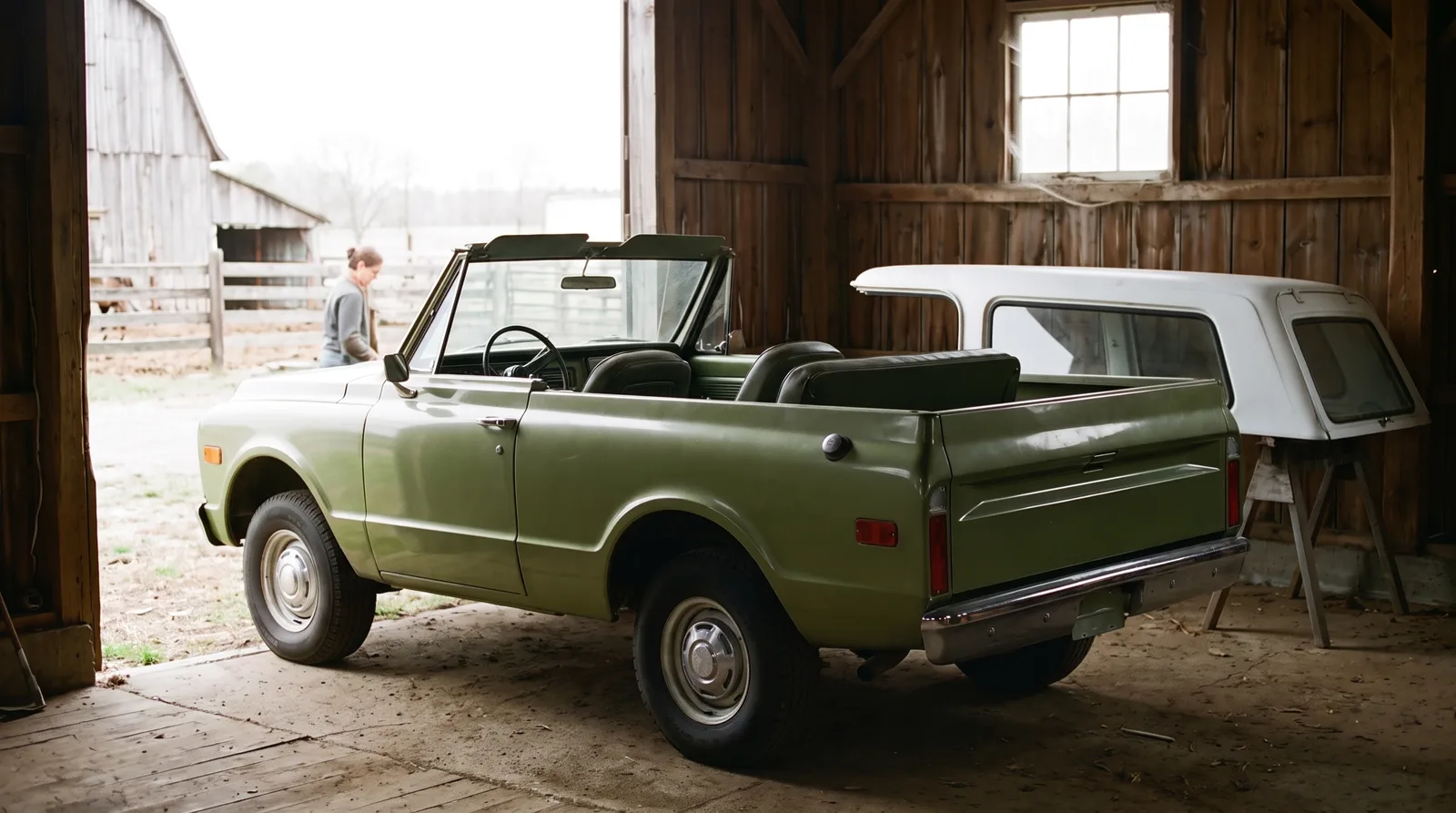
An idea built for the season
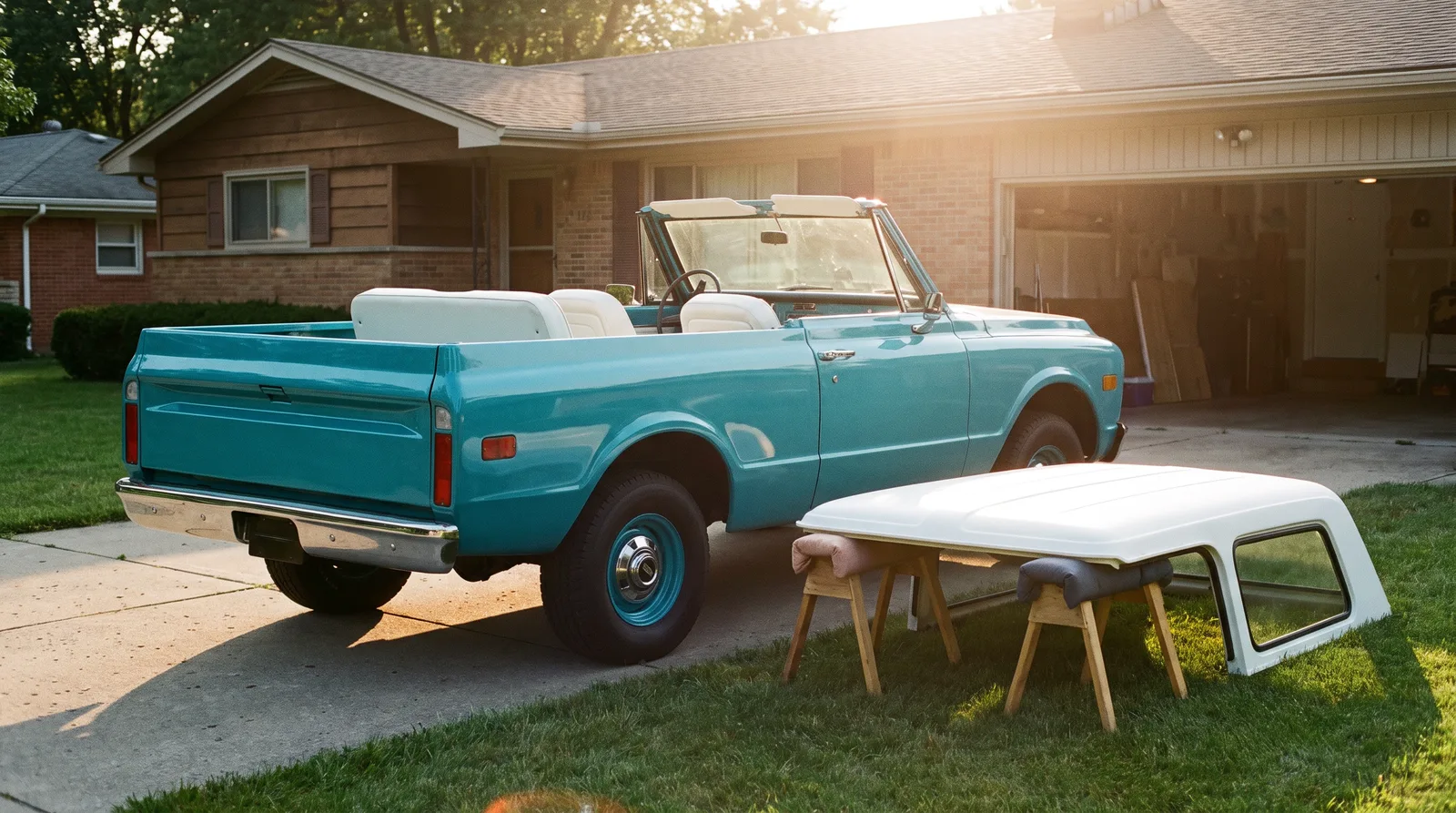
Chevrolet introduced the K5 Blazer in 1969 with a roof designed to come off entirely, not just fold back like a soft convertible top. That distinction matters. A K5 without its top is not a truck with the windows down. It is a completely different vehicle, open from the windshield frame back, with nothing but a rollbar and open sky over the cargo area and rear seats. For a certain kind of family in the early 1970s, that transformation happening every June was practically a ritual, timed to the first genuinely warm weekend of the year.
The truck's size made it useful in a way a smaller open vehicle could not match. Where a Jeep or an early Bronco offered open air motoring in a compact package, the K5 offered it with a full-size bed's worth of cargo room and enough seating for a whole family, plus whatever gear a summer weekend required. That combination, genuine capability paired with an open roof, is what let the K5 slide so naturally into camping trips, beach runs, and small town parades where the truck itself became part of the occasion rather than just transportation to it.
The photographs that built the reputation
Flip through enough old family albums from Blazer owning households and a pattern appears. The truck shows up loaded with coolers and folding chairs, top off, parked at a lake or a fairground or simply in a driveway with kids climbing over the tailgate. Nobody staged those photographs for a magazine. They happened because the truck was genuinely part of how a family spent its warm months, and that everyday presence is exactly what built the K5's summer reputation more durably than any period advertisement could have.
Owners today talk about chasing that same feeling, sometimes explicitly, when they finally get a restored K5 running well enough to drive top off for the first time in a season. There is a particular kind of quiet that settles into a truck with no roof, road noise and wind replacing the usual cabin hush, and it seems to be exactly what people are looking for when they take on the work of keeping one of these trucks roadworthy.
Weekends built around the roof coming off
For a lot of families who owned a K5 in the early 1970s, taking the top off was not an occasional novelty, it was a small seasonal ceremony that marked the real start of summer. Some owners timed it to a specific holiday weekend, others waited for the first stretch of consistently warm days, but either way the moment carried weight. Kids remember it. Parents remember it. And that shared memory, repeated across thousands of households that had nothing else in common except owning the same truck, is a big part of why the image outlasted the era that produced it.
Regional car clubs still lean on that same ritual today, often scheduling a season opening drive specifically for members with topless K5s, treating the removal of the roof as a genuine community event rather than a private chore. Watching a dozen of these trucks roll in together, all open to the sky, gives a modern observer a small taste of what that same scene must have looked like fifty years ago on a much larger scale.
Why the feeling still sells trucks
Ask a K5 owner why they bought a topless project instead of an easier, complete truck, and the answer often circles back to this same seasonal image. People are not just buying a vehicle. They are buying back a specific kind of afternoon they remember, or one they only saw in a photograph but wanted for themselves anyway. That emotional pull is unusually durable for a truck built more than fifty years ago, and it shows up in how owners talk about their Blazers at shows, less like equipment and more like a particular kind of summer they are keeping alive.
It also explains why so many restoration projects prioritize the top over almost anything else on the truck. An engine rebuild matters. Fresh paint matters. But for a lot of owners, the truck does not feel finished, does not feel like itself, until that roof comes off cleanly on a warm day and the whole point of the design becomes obvious again.
"I've talked to owners who can tell you the exact summer they remember riding in one of these as a kid, top off, gravel road, no real destination. That memory is the whole reason a lot of these trucks get restored at all."
- Nora Beckett
Passing the image down to a new generation
Younger buyers discovering the K5 today rarely arrive with a direct childhood memory of one in the driveway. Instead, they inherit the image secondhand, through a grandparent's photo album, a parent's old story about a specific summer trip, or simply through repeated exposure at shows where older owners talk openly about what the truck meant to their own families decades ago. That secondhand inheritance is a big part of why the summer icon reputation has not faded the way a lot of period specific trends eventually do.
It helps that the actual experience still delivers on the promise once someone finally drives a topless K5 for themselves. The size, the openness, the particular sound of wind and road noise replacing a closed cabin, none of that requires nostalgia to appreciate. A first time driver with no personal history with the truck can still feel exactly why it earned the reputation in the first place, which is part of why the image keeps recruiting new believers even as the generation that built it ages out of the hobby.
A reputation that outlasted the design
The irony of the K5's summer icon status is that Chevrolet itself moved away from the removable top faster than most people expect, closing out that chapter after the 1975 model year. Yet the image stuck, passed along through owner clubs, faded photographs, and the trucks themselves as they got restored decade after decade by people who never experienced the original marketing but understood the appeal instantly the first time they saw one with the top off.
That is really the quiet power behind this whole story. A design choice that lasted only seven model years on the assembly line became a defining image for an entire truck lineage, outliving the very feature that created it. Anyone curious about the full story of how that removable top came together, and why Chevrolet let it go so soon, will find a lot of the context behind why the summer image endures the way it does. For anyone drawn in by that same pull, there is no substitute for finding classic K5 Blazer for sale and experiencing the open roof for yourself rather than just reading about it.
Sources and notes
Related Reading
Have a
Chevrolet Blazer
for Sale?
Reach thousands of serious classic car collectors across the US.
Sell It Here →
Selling a classic? Here's how: sell my classic car
Are You a Classic Car Dealer?
List your full inventory and connect with targeted classic car buyers.
Join as a Dealer →

About the author
Nora Beckett
Automotive features writer and photographer who tells the human stories behind the cars, from show fields to cross-country road trips.
Related Listings - Chevrolet Blazer




Comments
Be the first to comment on this article.