
There is a photograph that circulates among K5 Blazer owners, faded and a little sun bleached, of a family pulled over on some highway shoulder in the early 1970s with the top off their Blazer and the whole back of the truck loaded with camping gear. Nobody remembers who took it or where it was going. But it is the picture people show each other when they talk about why a k5 blazer convertible top restoration matters so much to the people who take it on. It is not really about the sheet metal. It is about getting that feeling back.
Car Features
7 min read
Restoring the Full Convertible K5 Experience
Inside the slow, patient world of bringing a K5 Blazer's rare removable top back to life, and what it means to owners when the roof finally goes back on.
Why the top disappears first
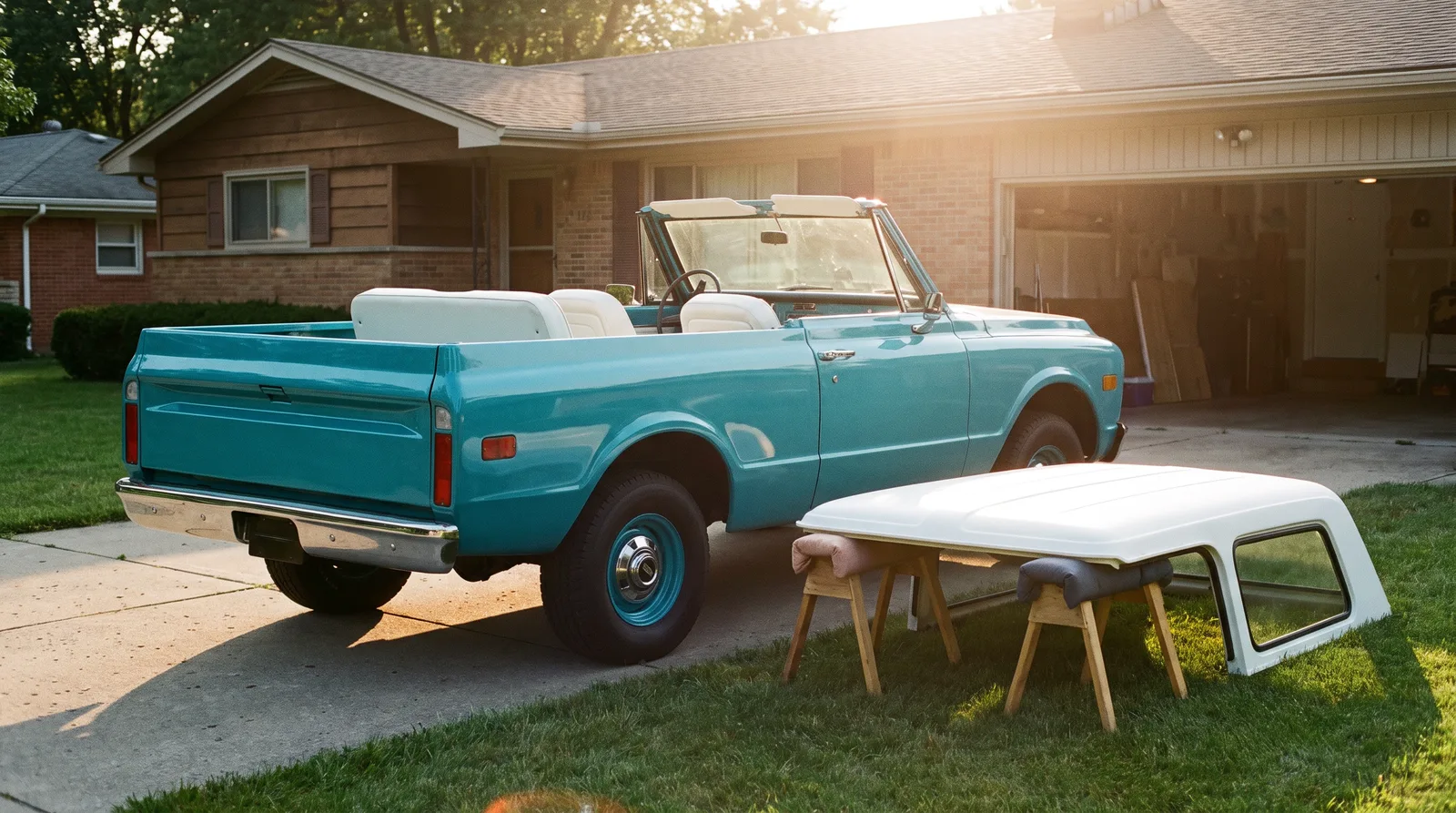
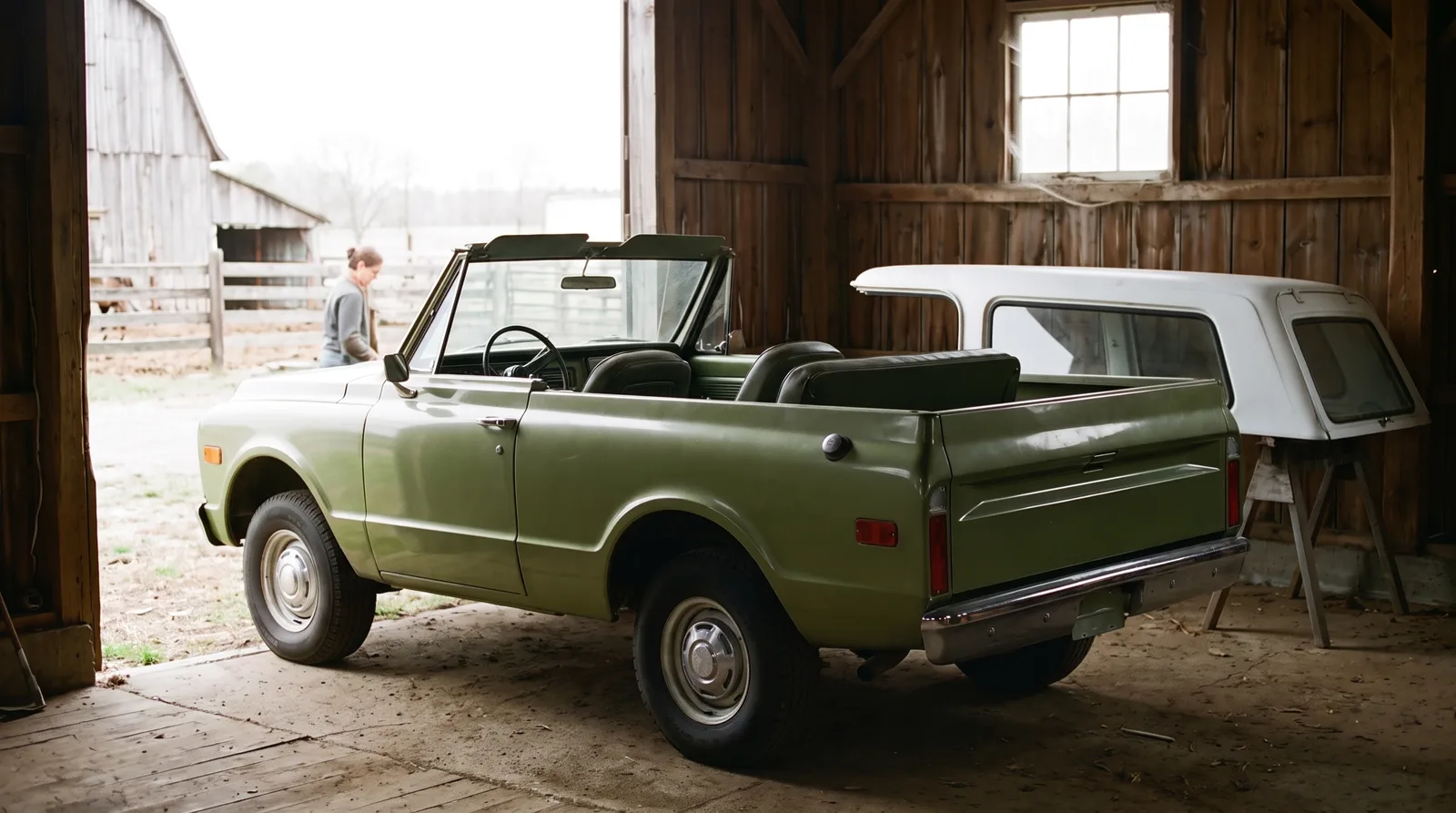
Of all the parts on a first generation K5 Blazer, the removable steel top is often the first thing to go missing entirely. Decades ago, plenty of owners simply took the top off, set it in a barn corner or against a fence line, and never put it back. Some tops got scrapped outright once rust set in around the gasket channels. Others were separated from their original trucks generations ago and now live with a different Blazer, or nowhere at all. That scarcity is the first hard truth anyone starting a restoration has to accept: finding a top in usable condition can take longer than restoring the truck underneath it.
When a top does survive with its original truck, it usually shows the same wear pattern. Rust creeps in along the bottom edge where the gasket trapped moisture against bare metal for years. The mounting bolts seize from decades of Michigan winters or coastal salt air. And the gasket rubber itself, if it is even still there, has usually hardened into something closer to a crumbling seal than a functional one. None of this is a surprise to anyone who has spent time around these trucks, but it still takes patience to work through properly rather than rushing a fix that will fail again in five years.
A restoration measured in seasons, not weekends
Owners who have been through a full top restoration describe it less as a single project and more as a slow negotiation with time. The rust along the lower lip and rear corners, where water sat longest for decades, tends to reveal itself gradually, one hidden pocket at a time, so a job that looked like a weekend of patch work often stretches into a full winter. The people who do this well talk about patience the way a woodworker talks about grain, learning to read where the metal wants to be saved and where it has simply given out.
The gasket system carries its own kind of quiet drama. A seal that looks fine on the bench can still let weather through once the top is bolted back onto a truck that has settled and shifted over fifty years, so getting it right is as much about persistence as skill. And the final color match, blending a restored top back into a body that has its own decades of sun and touch up history, is often the last thing to fall into place, the moment a top stops looking like a separate piece and starts looking like it never left.
What it means to finish one
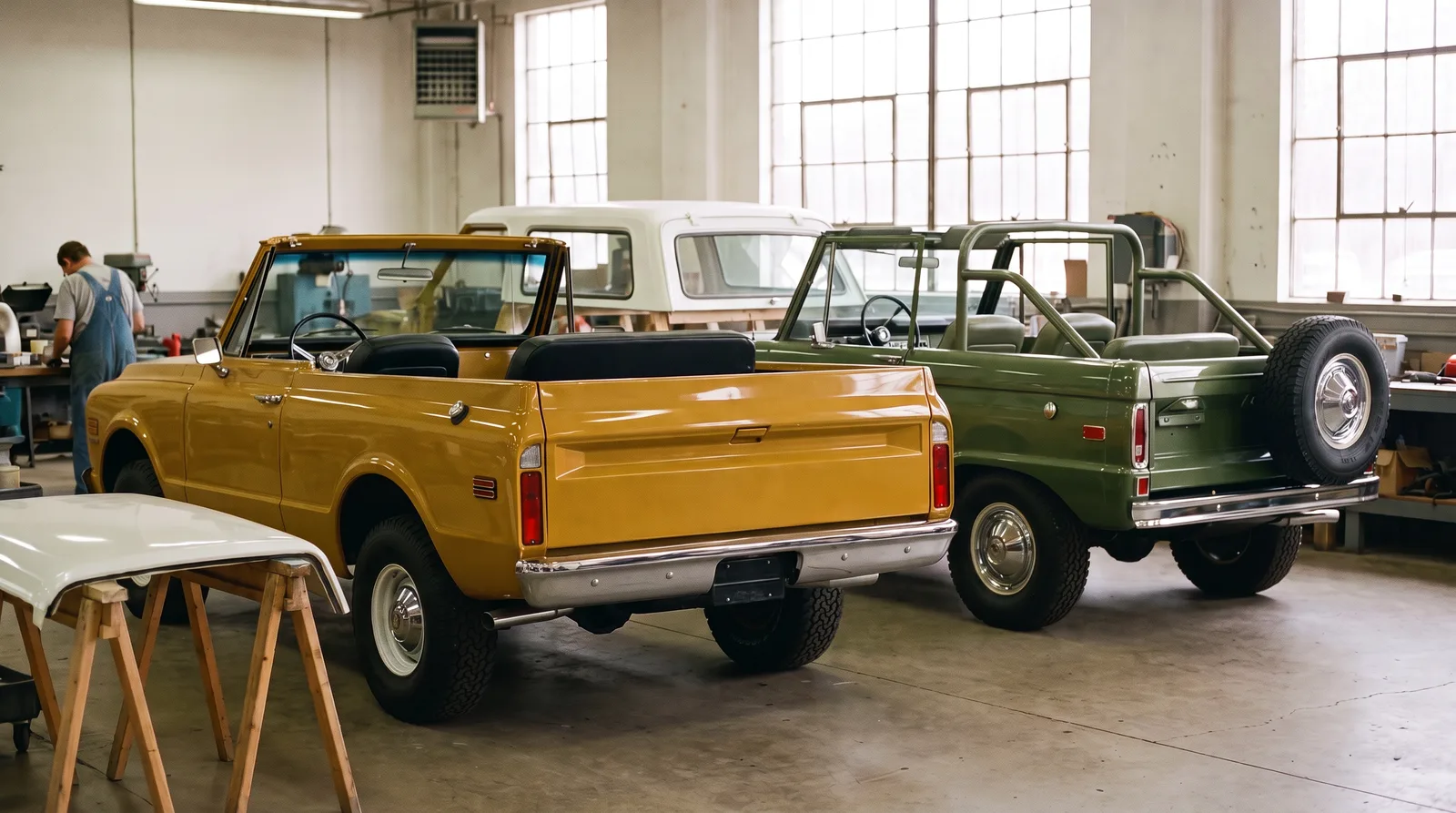
There is a particular quiet that settles over a shop when a restored top gets set back onto a K5 for the first time in years. It is heavier than people expect, and it usually takes a small crew and a lift or engine hoist to lower it into place without scratching fresh paint. But when the bolts line up and the gasket compresses evenly along the whole perimeter, something clicks that is hard to describe to anyone who has not done it. The truck stops being a project with a hole in the roof and starts being the vehicle it was supposed to be all along.
That moment is really what the k5 blazer convertible top restoration is chasing. Not just a functional seal or a truck that passes a show judge's inspection, but the return of an idea that Chevrolet sold starting in 1969 and then walked away from after the 1975 model year, once the fixed half-cab roof took over for 1976. Anyone who wants the deeper context behind why that window closed so quickly should read the k5 blazer convertible story from the beginning, because the restoration only makes emotional sense once you understand how short lived the original top really was.
"You spend months chasing rust and gasket fit, and then one afternoon the top goes on clean and the whole truck feels different. That's the payoff nobody tells you about going in."
- Nora Beckett
Sourcing parts nobody makes anymore
Original gasket rubber for the K5's removable top has not been in production for decades, which forces most restorers into one of two paths. Some track down old dealer stock, unopened boxes found in the back rooms of shops that closed decades ago, treating that rubber like a small treasure when it turns up at a swap meet. Others work with small specialty suppliers who reproduce the profile from an original sample, accepting that the fit will be close but rarely identical to what left the factory in 1969. Neither path is easy, and both usually cost more in time than the restoration budget originally accounted for.
Hardware presents a smaller but similar challenge. The bolts, brackets, and mounting clips that hold a K5 top in place are not the kind of parts a general hardware store carries, and reproduction quality varies enough that experienced restorers develop strong opinions about which supplier to trust and which to avoid. That kind of specialized knowledge tends to pass person to person within owner clubs rather than showing up in any catalog, which is part of why a first time restorer benefits so much from finding an experienced mentor before starting this particular project.
Living with a restored top
Once a K5's top is back in good order, owners quickly learn that keeping it that way takes more discipline than keeping the rest of the truck presentable. The gasket needs periodic conditioning so it does not dry out and crack again. The mounting bolts benefit from an anti-seize treatment before they ever get reinstalled, a small step that saves enormous frustration the next time the top comes off. And storage matters more than most people expect. A top left resting unevenly on a stand for a winter can warp just enough to throw off the seal come spring, undoing months of careful work over a single season of neglect.
None of that discourages the people who take this project on. If anything, it deepens the attachment, because a K5 with a properly restored top represents a kind of patience that is increasingly rare in the classic truck world. For readers who want to understand where this whole story fits inside the broader K5 Blazer history, the full story covers the truck's entire run, not just the years the top survived. And for anyone whose search for a top of their own has come up empty, sometimes the more practical path is simply to look for a truck that already has one intact among classic K5 Blazers on the market.
Sources and notes
Related Reading
Have a
Chevrolet Blazer
for Sale?
Reach thousands of serious classic car collectors across the US.
Sell It Here →
Selling a classic? Here's how: compare the places to sell classic cars
Are You a Classic Car Dealer?
List your full inventory and connect with targeted classic car buyers.
Join as a Dealer →

About the author
Nora Beckett
Automotive features writer and photographer who tells the human stories behind the cars, from show fields to cross-country road trips.
Related Listings - Chevrolet Blazer




Comments
Be the first to comment on this article.