
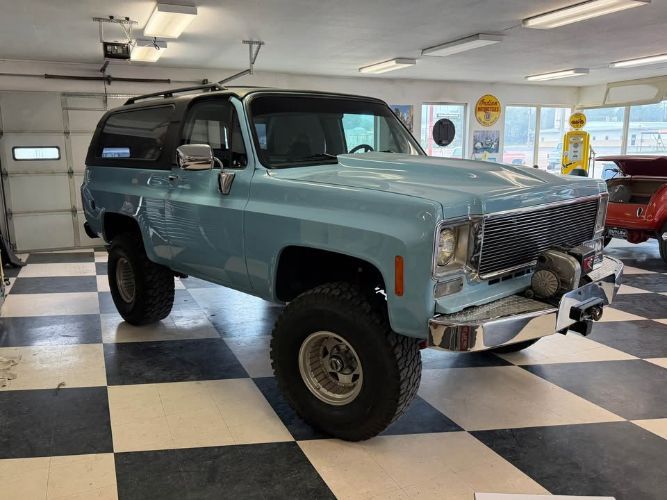
The 6.2 liter diesel option in the GMC Jimmy is one of those footnotes that rewards closer inspection more than almost any other configuration in the lineup. It was never fast. It was never smooth by modern standards. And yet the K5 blazer jimmy diesel remains one of the more talked-about variants among owners who actually understand what GM was trying to accomplish by offering it, and why the engine's flaws never fully undermined its appeal.
Car Features
6 min read
The 6.2 Diesel GMC Jimmy and Its Odd Appeal
The 6.2 liter diesel Jimmy traded speed for efficiency and endurance, and its honest tradeoffs still earn it a small but dedicated following today.
What GM was solving for
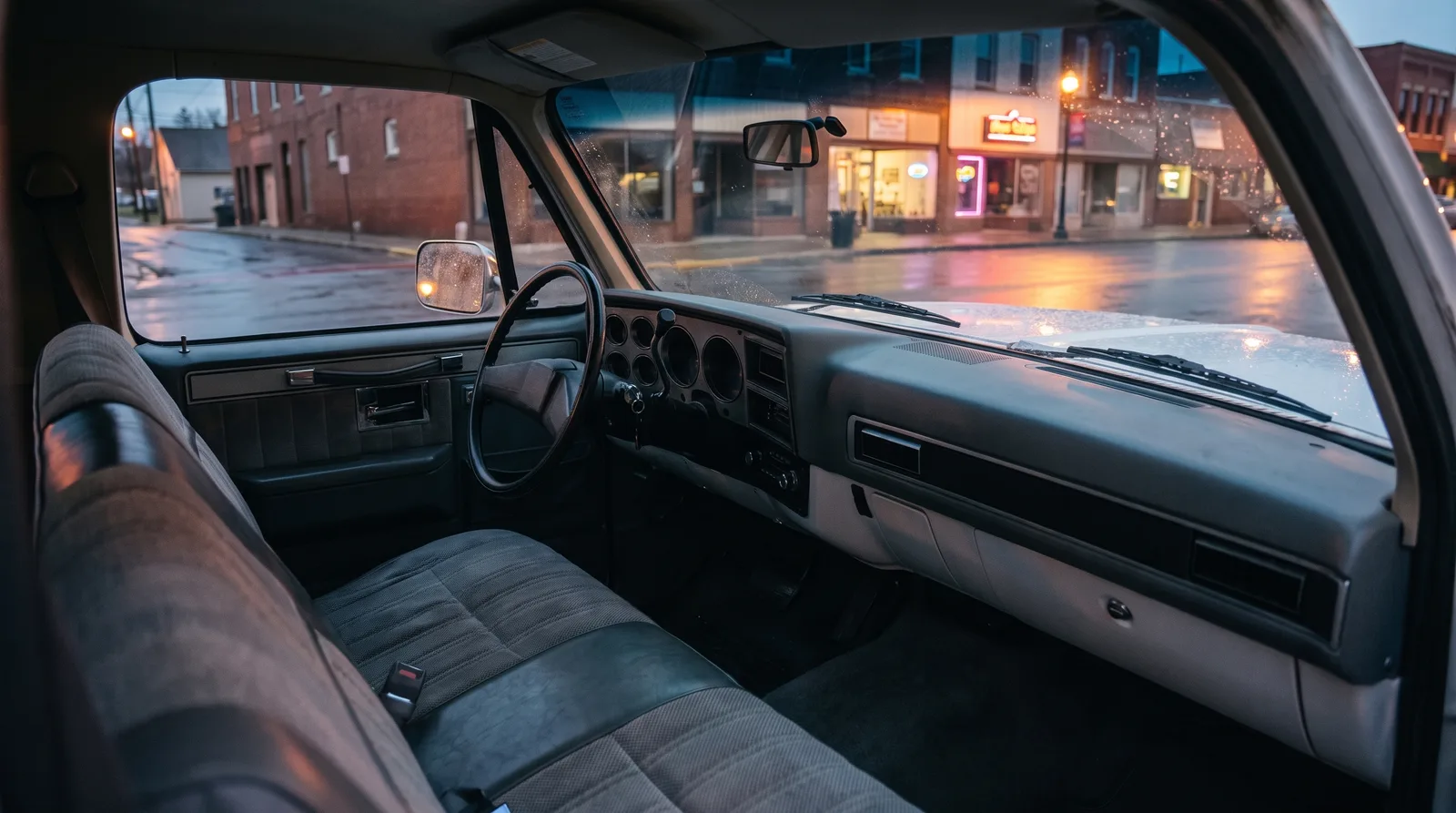
By the early 1980s, fuel economy had become a real purchasing consideration rather than an afterthought, and GM's answer across several truck lines was the Detroit-built 6.2 liter diesel V8. It was not a high-output engine by any measure, producing modest horsepower compared to the gas V8s it sat alongside on the order sheet, but it delivered meaningfully better fuel economy and the kind of low-end torque that suited a heavy four wheel drive truck doing real work. For buyers who spent long hours behind the wheel or who covered serious mileage in a work truck, that tradeoff made sense on paper and largely delivered in practice.
The engineering logic was straightforward. Diesel combustion is inherently more efficient than gasoline combustion at converting fuel into usable work, and a naturally aspirated diesel, while slow to rev, produces strong torque at low RPM exactly where a loaded truck needs it most. GM was not chasing performance with this engine. It was chasing operating cost, and for a specific slice of buyers that math worked.
The honest performance tradeoffs
Numbers tell the real story here better than reputation does. The 6.2 diesel produced noticeably less horsepower than the gas V8 options available in the same trucks, and acceleration suffered accordingly. A diesel Jimmy pulling away from a stop light was never going to win a race against its gas-powered sibling, and drivers who bought the engine expecting V8 muscle with diesel economy were setting themselves up for disappointment.
What the engine gave up in speed, it largely made up in the kind of steady, unglamorous capability that matters on a long haul. Sustained highway cruising, towing over distance, and cold-morning reliability in the right climate were all areas where the diesel's low-stress operating characteristics paid off. It was not the engine you wanted for a quick errand. It was the engine you wanted for six hours on an interstate with a loaded trailer behind you.
"Every engine is a set of tradeoffs somebody decided were worth making. The 6.2 diesel traded speed for endurance, and it is honest about that trade in a way a lot of engines from this era were not."
- Emily Chen
Why the failure modes matter to today's buyer
Any honest evaluation of this engine has to address where it actually broke down, because pretending otherwise does buyers no favors. Cold-weather starting could be genuinely difficult without proper glow plug function, and injection pump issues were not uncommon on higher-mileage examples that had not received consistent maintenance. None of these problems were unique to GM's diesel or evidence of a fundamentally flawed design, but they are exactly the kind of issues a buyer evaluating a diesel Jimmy today needs to understand before assuming the engine will simply run forever with no attention.
The engines that survive in good condition today tend to be the ones that received consistent care throughout their service life, not the ones that happened to avoid hard use. That distinction matters more with this engine than with most of the gas options in the same trucks, because diesel-specific components age differently and a neglected fuel system shows its problems in ways that are not always obvious during a quick test drive.
How the diesel compared across the GM lineup
The 6.2 diesel was not exclusive to the Jimmy. GM spread it across several full-size truck and SUV lines through the 1980s, which means the engine's reputation was shaped by a much larger sample size than the Jimmy application alone. That wider deployment cuts both ways for evaluation purposes. It means parts commonality and shared knowledge among owners across multiple GM platforms, which has helped keep the engine serviceable decades later. It also means the engine's known weak points were well documented early, since problems that showed up in one platform quickly became common knowledge across owners of the others.
Compared to diesel options offered by competing manufacturers during the same years, the 6.2 held a reputation for being mechanically simpler and, in stock form, somewhat more forgiving of inconsistent maintenance than some rivals, even if it never matched them on outright refinement. That relative simplicity is part of why the engine still has defenders today among owners who value predictability over outright power.
The appeal that outlasted the flaws
Despite the honest limitations, the 6.2 diesel Jimmy has built a small but genuinely dedicated following. Some of that appeal is practical, since a well-maintained example still delivers real fuel economy advantages over its gas counterparts even decades later. Some of it is simply the appreciation for an unusual, low-volume configuration that most casual observers do not even know existed. The engine's odd appeal is not despite its flaws. It is partly because of them, the same way a mechanically honest, unglamorous tool earns respect precisely for doing its job without pretending to be something it is not.
Readers curious how the diesel option fits into the Jimmy's broader model history can find the whole picture covered in detail, including how GM positioned the engine alongside its gas alternatives across the full-size truck lineup. For buyers specifically interested in tracking down a diesel example, it is worth taking time to find a classic K5 Blazer with documented maintenance history rather than assuming any example that still runs is a safe bet, since this is one configuration where paperwork matters as much as the engine's condition on paper.
None of this is an argument that the 6.2 diesel Jimmy is the right choice for every buyer. It is an argument that the engine deserves evaluation on its actual, documented tradeoffs rather than on reputation alone, whether that reputation leans toward unfair dismissal or uncritical nostalgia. The numbers say what they say. Modest power, real efficiency, honest torque, and a set of known failure points that a careful buyer can plan around rather than discover the hard way. That is not a glamorous pitch, but it is an accurate one, and accuracy is worth more than hype to anyone actually planning to drive the truck rather than just admire it. The engine earned its odd, lasting appeal the slow way, one honest mile at a time.
Sources and notes
Related Reading

About the author
Emily Chen
Bay Area engineer with a deep focus on vintage Japanese and European performance cars. Approaches classic car research and restoration with an analytical eye.
Related Listings - Chevrolet Blazer





Comments
Be the first to comment on this article.