
The GMC Jimmy went on sale for the 1970 model year, twelve months after Chevrolet put the K5 Blazer in front of buyers, and that twelve month gap is the single most useful fact about the truck. It tells you the Jimmy was never a separate idea. It was the same short wheelbase utility on the same pickup chassis, sold through a different dealer network to a slightly different customer, wearing a name GMC had been sitting on for decades. Almost everything else people repeat about the Jimmy, that it was tougher, that it was the professional grade version, that it used its own engines, deserves a look at the paperwork before it gets passed along again.
Car Features
10 min read
The GMC Jimmy: The Full-Size K5 Blazer Twin
The full-size GMC Jimmy arrived a year after the K5 Blazer and spent two decades being described as the other one. The build records tell a more interesting story about trim ladders, production ratios and why the badge no longer costs you money.
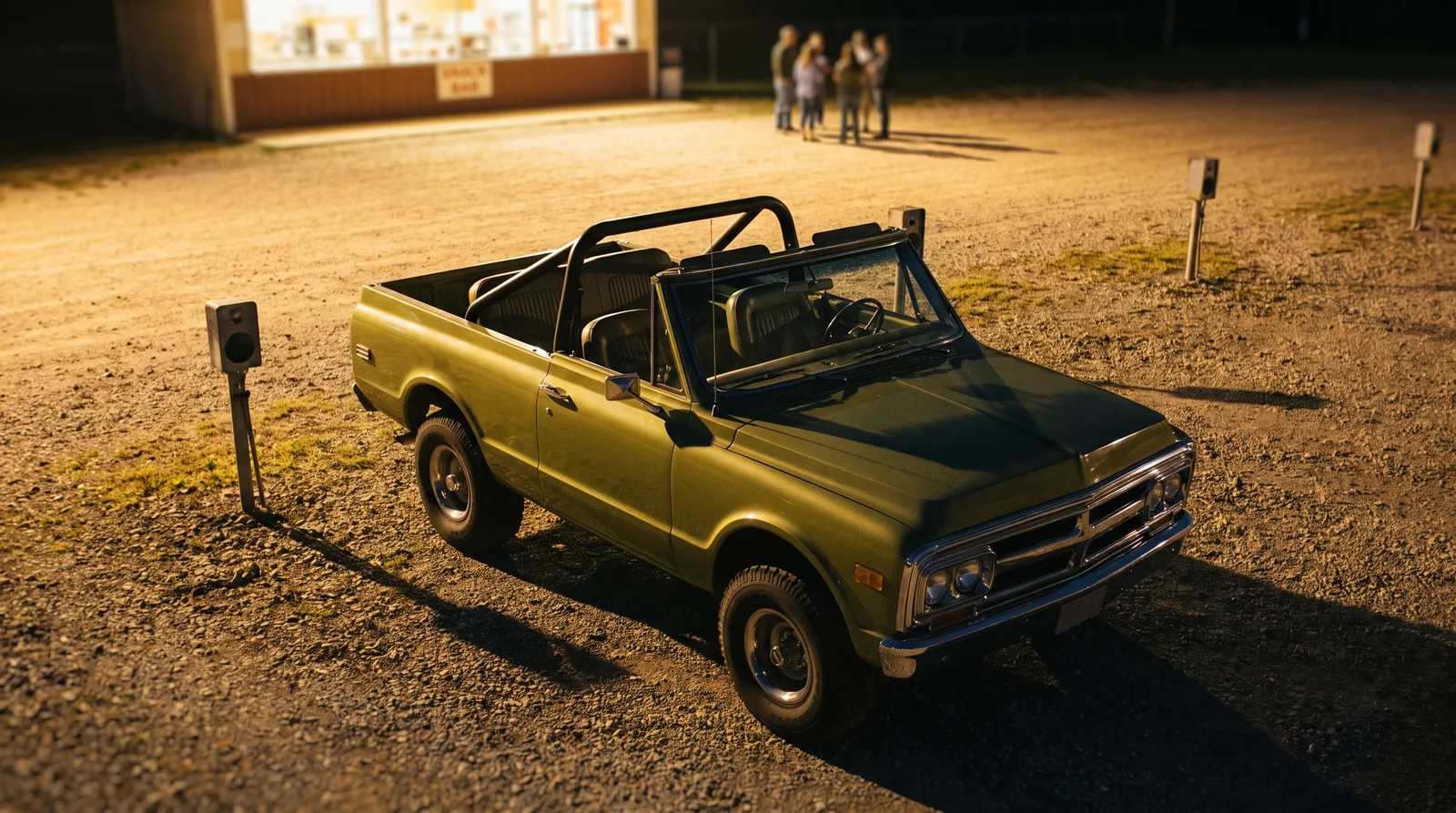
Why GMC came second
Chevrolet and GMC trucks had shared sheet metal since the 1967 model year, when the C/K series arrived with the styling GM internally called Action Line. Sharing bodies was normal by then. What was not normal, at least from a GMC dealer's point of view, was watching Chevrolet launch an entirely new body style in 1969 and not getting a version of it until the following autumn.
The reasoning was ordinary corporate caution. The K5 Blazer was an experiment. Chevrolet had taken a K10 pickup chassis, cut the wheelbase to 104 inches, dropped a fiberglass top over everything behind the windshield header and called it a sport utility. Nobody at GM knew whether buyers would pay for a pickup with no bed. Chevrolet had the volume to absorb a failure. GMC, selling roughly a third of Chevrolet's truck numbers in most years of the period, did not. So GMC waited, watched the 1969 order books, and joined for 1970 once the concept had proven itself.
The name came out of GMC's own vocabulary. Truck people had been slurring the initials G.M.C. into Jimmy since at least the Second World War, when GMC built the CCKW cargo trucks that carried the American army across Europe. Using the nickname officially was a rare bit of marketing honesty. If you want the full picture of what GMC was joining, the k5 blazer history covers the Chevrolet side of the same story from the beginning.
What the badge actually bought you
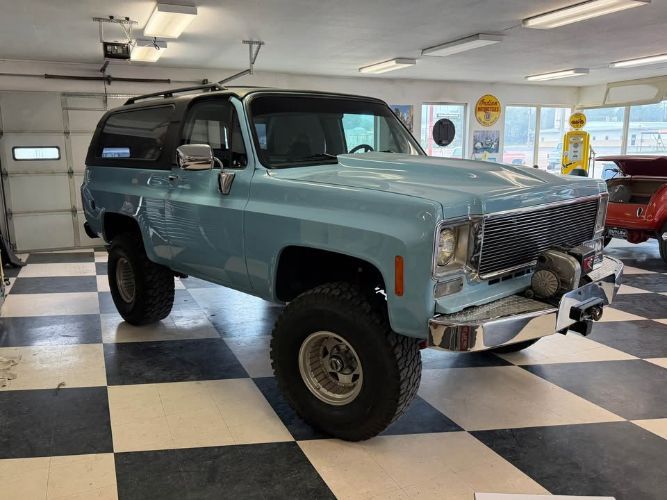
Strip a 1970 Jimmy and a 1970 Blazer down to bare frames and you have two identical trucks. The differences sat where buyers could see them: the grille, the tailgate lettering, the hood emblem, the trim nomenclature, and in later years the taillamp treatment and the wheel covers.
The naming ladder is where most confusion starts. Chevrolet sold the Blazer as a base truck with a Custom option, then added CST, short for Custom Sport Truck, as the upper level package. GMC used its own words. Jimmys came as base trucks or with Sierra, and from the middle 1970s the ladder ran Sierra, High Sierra, Sierra Classic. Those names map roughly onto Chevrolet's Custom Deluxe, Scottsdale, Cheyenne and Silverado, but they do not map exactly, and a Sierra Classic is not automatically the equivalent of a Silverado in every model year. Anyone comparing two trucks at auction should read the option codes rather than the badges.
Powertrains are where the myth is thickest. GMC did build its own V6 engine family through the early 1970s, and that fact has bled into Jimmy folklore for fifty years. The short wheelbase Jimmy leaned on the corporate inline sixes and small block V8s that the Blazer used, and GMC's own V6 line was discontinued in 1974, after which every gasoline GMC light truck used Chevrolet-sourced sixes and V8s. By the squarebody years the two trucks shared engines completely. A 350 in a Jimmy is a 350 in a Blazer.
1973 and the squarebody Jimmy
For 1973 GM replaced both trucks at once with the generation everyone now calls the squarebody, though GM's own internal name for the styling was Rounded Line. The wheelbase went to 106.5 inches. The body got wider, the glass got bigger, the doors got a curved lower edge and the cabin became genuinely comfortable rather than merely tolerable.
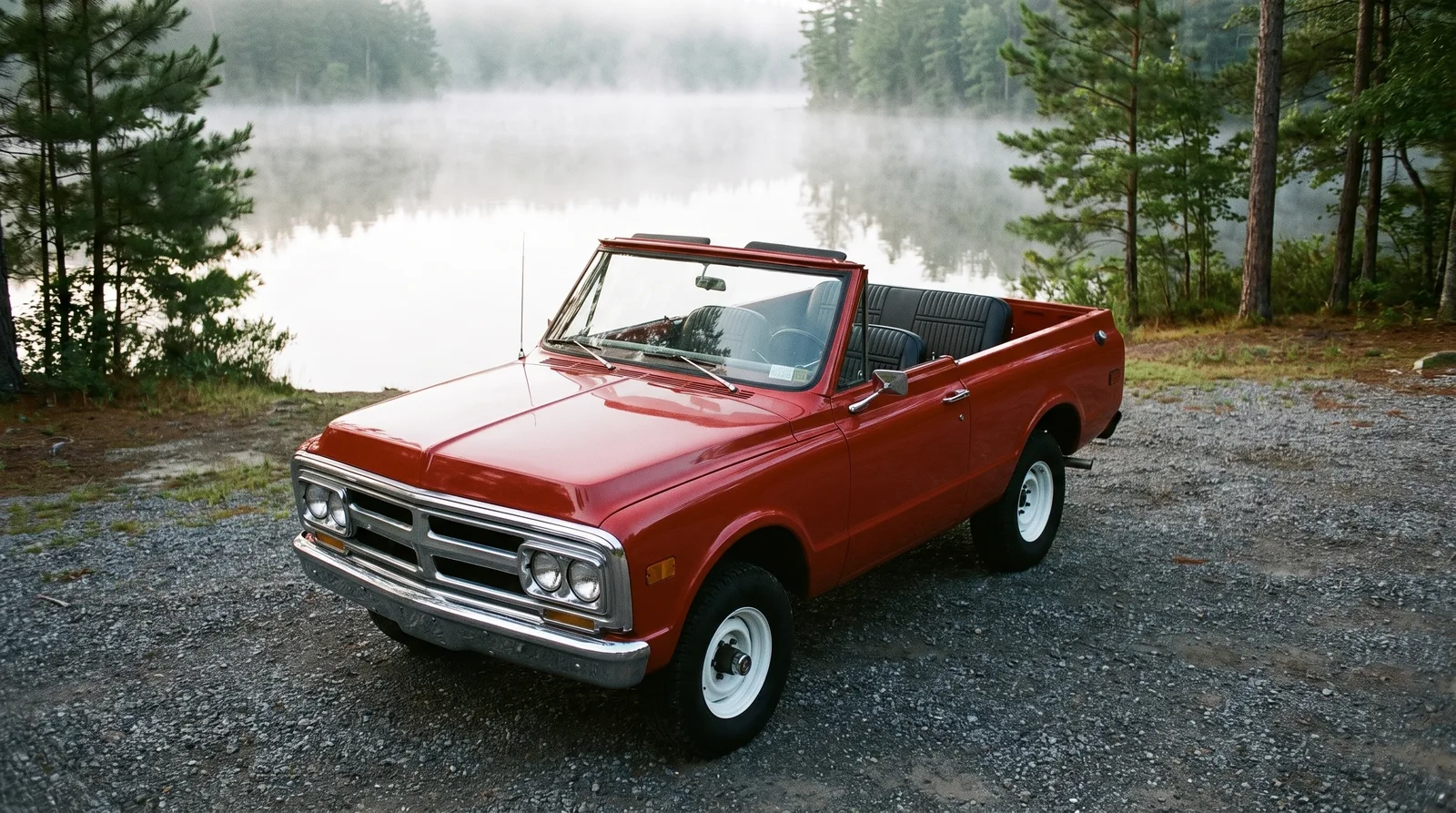
Two changes mattered most to the way a Jimmy drove. The first was full time four wheel drive, delivered through the New Process 203 transfer case, which let owners leave the truck engaged on pavement without chewing up the driveline. The second came in 1976, when GM gave up on the full convertible roof. Through 1975 the entire top lifted off behind the windshield. From 1976 the roof over the front seats was fixed steel and only the rear section came away, a change made for structural and rollover reasons that purists have complained about ever since.
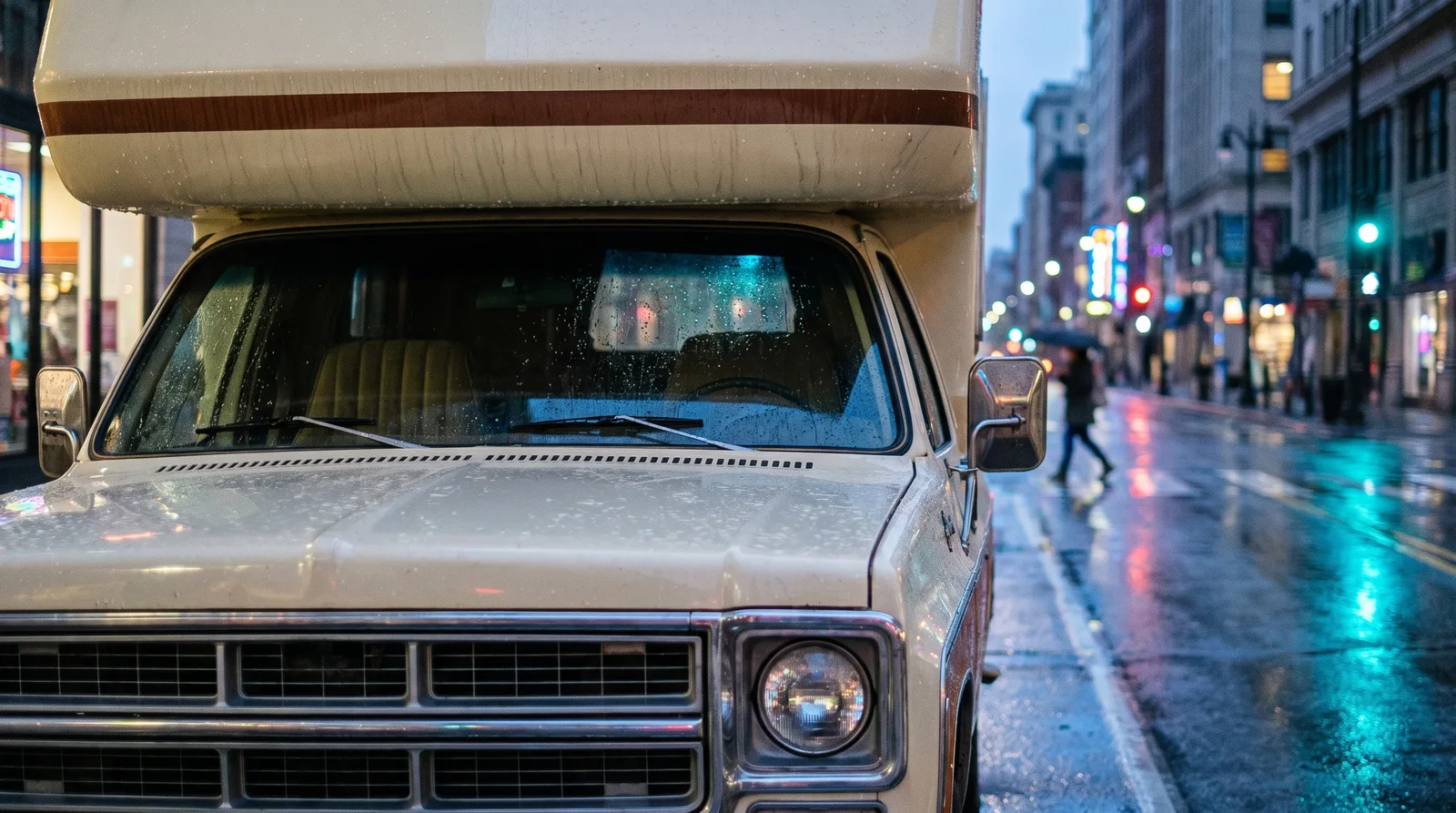
GMC also got its own version of the camper conversion craze. Where Chevrolet dealers could order the Blazer Chalet with a Chinook built pop top camper unit, GMC offered the equivalent as the Casa Grande for the same brief window in the middle 1970s. Both are rare, both are strange, and both now bring money that would have astonished the original buyers.
| Item | Full-size GMC Jimmy |
|---|---|
| Model years | 1970 to 1991 |
| First generation | 1970 to 1972, 104 inch wheelbase, full removable top |
| Second generation | 1973 to 1991, 106.5 inch wheelbase |
| Top style change | Full convertible through 1975, half cab from 1976 |
| Drive | Rear drive or four wheel drive, K and later V designations |
| Trim ladder | Base, Sierra, High Sierra, Sierra Classic |
| Notable options | Casa Grande camper conversion, 6.2 litre diesel from 1982 |
| Chevrolet equivalent | K5 Blazer |
Engines, diesel and the long decade
The engine list reads like a history of GM truck power. Inline sixes of 250 and 292 cubic inches sat at the bottom for buyers who wanted a work truck and nothing more. Above them came the 307 and then the 350 small block V8, which became the default choice and stayed that way for the rest of the run. The 400 cubic inch small block joined the sheet in the squarebody years, and earlier still, on the first-generation short wheelbase trucks, GM offered a 396/402 cubic inch big block V8. A big block Jimmy from that early window is a genuinely uncommon truck.
Then came the emissions decade, and the numbers went the wrong way. A 350 that had been quoted around 250 gross horsepower at the start of the 1970s was rated at roughly 160 net horsepower through most of the squarebody run, from 1973 into the mid-1980s. GM's answer in 1982 was the 6.2 litre diesel V8, an engine that has been unfairly maligned for decades. It was never quick and it was never meant to be. It was built for fuel economy at a moment when that mattered enormously, and a well kept diesel Jimmy is one of the more interesting things in the squarebody world.
Throttle body fuel injection arrived on the 5.7 litre V8 for 1987, which is the point at which these trucks became genuinely easy to live with. By then GM had also switched the four wheel drive naming from K to V, so the last of them wear V1500 badges rather than K1500. The full-size Jimmy carried on until 1991, three model years after the C/K pickups had already moved to the new GMT400 body, and was replaced for 1992 by the first Yukon.
The production math that makes a Jimmy rarer
This is where the collector case sits. GMC's truck output ran well below Chevrolet's across the whole period, and that gap held for the full-size Jimmy against the Blazer in nearly every model year. Apply that ratio to a body style that was already a niche within the truck line and the survivor pool for any given Jimmy year is small.
Rarity does not automatically equal money, and the Jimmy is a good illustration. For years a Jimmy sold at a modest discount to an equivalent Blazer, purely because the Blazer name carried more recognition with buyers who were not truck people. That gap has narrowed considerably as the squarebody market matured, and in the first generation cars it has effectively closed. Some collectors now actively prefer the GMC precisely because fewer people show up at a cruise night with one.
"The Jimmy is the same truck with a smaller production run and a quieter reputation. That combination used to make it cheap. It does not any more, and the paperwork explains why."
- Tom Ramirez
Reading a Jimmy the way an archivist would
The single most common error in the full-size Jimmy world is conflating it with the compact S-15 Jimmy that GMC launched in 1983. They shared a name for nine model years and nothing else. Listings still get this wrong, auction catalogues still get this wrong, and a buyer working from a phone photograph can absolutely get it wrong. The full-size truck is the one that shares its cab with a pickup.
The second error is assuming trim badges tell you what a truck left the factory with. Sierra Classic emblems are inexpensive and a great many base trucks have been dressed up over the decades. The build sheet, the cowl tag and the option codes are the record that matters, and on a truck this heavily modified over fifty years they are often the only honest witness left. Anyone shopping should treat documentation as part of the purchase rather than a bonus, whether they are looking at a Jimmy or at any classic K5 Blazer for sale.
Where the Jimmy sits now
The full-size Jimmy spent most of its life as an afterthought in the collector conversation, a truck people described by pointing at a Blazer. That is no longer a fair description. The squarebody boom pulled every version of these trucks up together, and the market now prices a Jimmy on condition and documentation rather than on which division sold it.
What the Jimmy still has, and what the Blazer cannot offer, is the pleasure of owning the version fewer people can identify. It is the same excellent truck, built to the same standard, on the same line, and it comes with a badge that makes people walk over and ask. For anyone whose interest in these trucks has just been switched on, there is plenty more to keep exploring in the years on either side of the 1973 changeover.
Sources and notes
Related Reading
Article
The Chevrolet K5 Blazer Story: The Full-Size 4x4 That Defined an Era
Article
The 1972 K5 Blazer: The Most Wanted First-Generation Blazer
Article
K5 Blazer vs Ford Bronco: The Full-Size 4x4 Rivalry
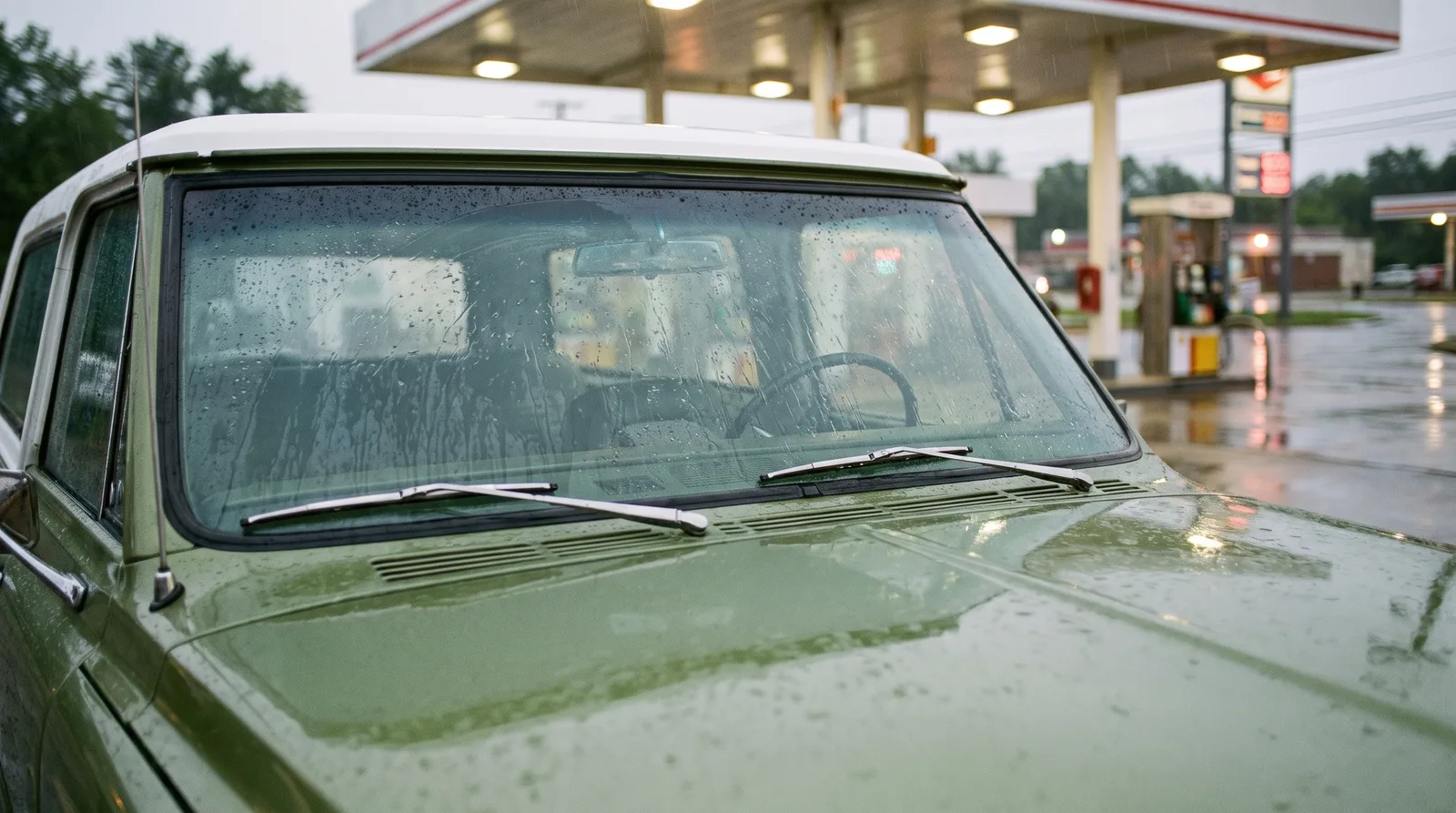
Article
How the 1970 GMC Jimmy Arrived as the K5 Blazer Twin
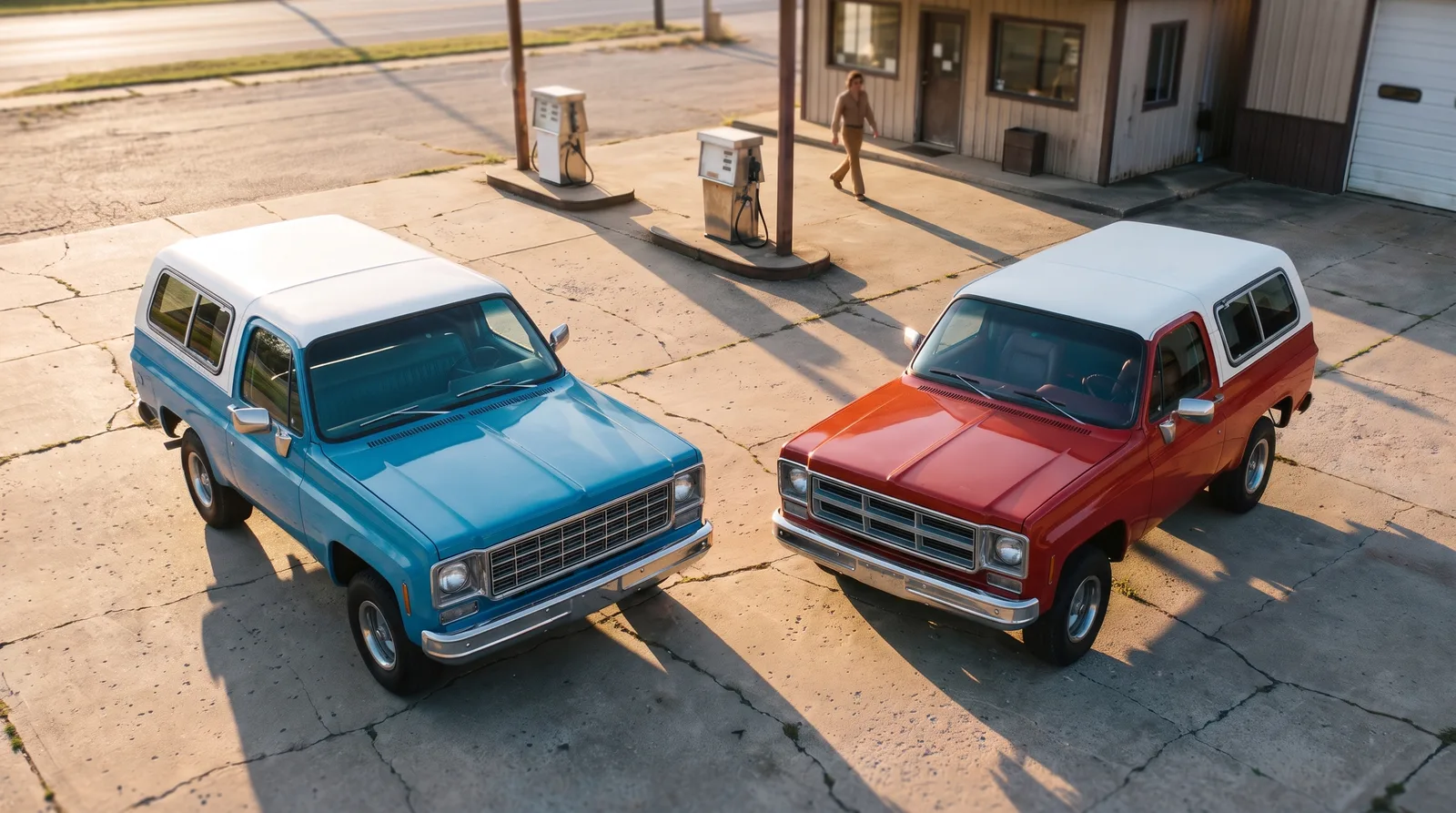
Article
Jimmy or Blazer: The Same Truck Under Two Badges
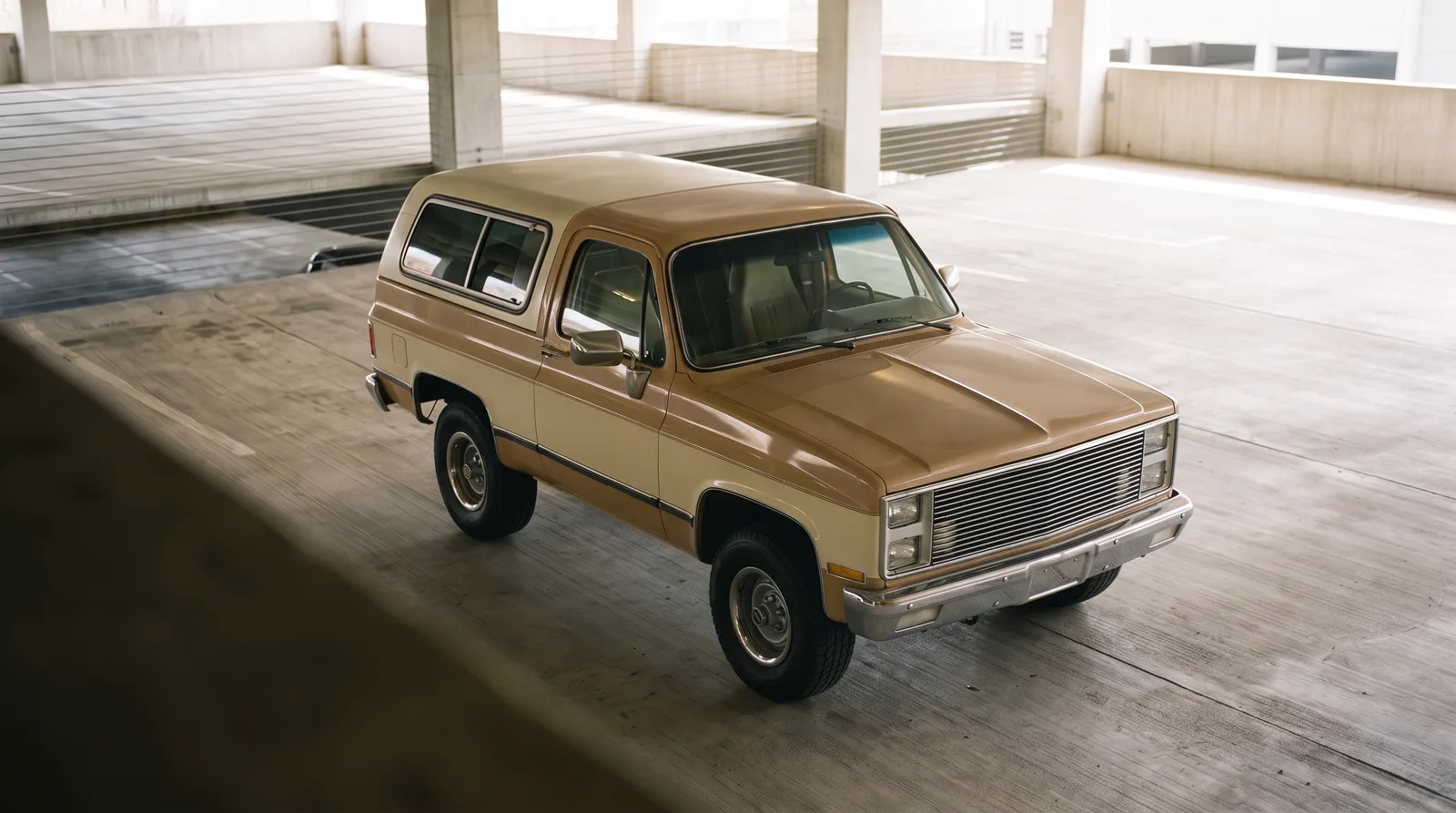
Article
The GMC Jimmy Sierra Trim and What Set It Apart
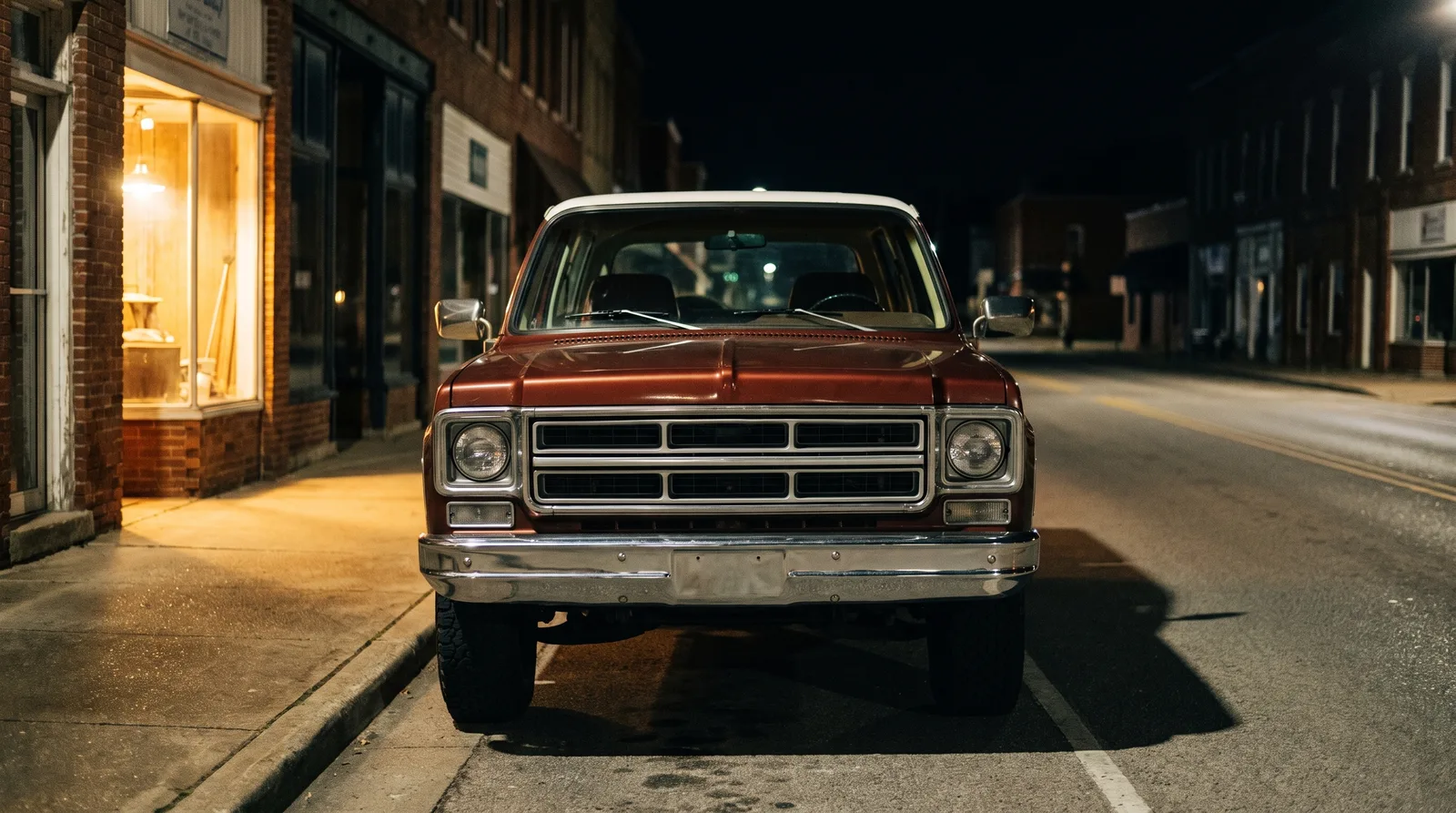
Article
High Sierra: The GMC Jimmy at Its Most Loaded
Article
Casa Grande: The Forgotten Luxury GMC Jimmy
Article
1971 GMC Jimmy: The Rare First Full Year
Article
The Squarebody GMC Jimmy Era 1973 to 1991
Article
The Full Convertible Top on the Early GMC Jimmy
Article
The GMC Jimmy in Four Wheel Drive Culture
Article
Why Survivor GMC Jimmys Are Harder to Find
Article
The Rising Collector Value of the Full-Size Jimmy
Article
The GMC Jimmy Restomod and LS-Swap Scene
Article
The GMC Jimmy Against the Ford Bronco
Article
The 6.2 Diesel GMC Jimmy and Its Odd Appeal
Article
Jimmy: The Nickname That Became a Nameplate
Article
Two-Tone Paint and the Look of the Classic Jimmy
Article
1991: The Last Full-Size GMC Jimmy
Article
Notable Full-Size GMC Jimmys Worth Knowing
Article
The M1009 CUCV: The Military K5 Blazer

About the author
Tom Ramirez
Corvette researcher and historian based in Bowling Green, Kentucky. Two decades documenting Corvette production history from original factory records.
Related Listings - Chevrolet Blazer




Comments
Be the first to comment on this article.