
Ask ten people why GMC called its truck a Jimmy and you will get ten different answers, most of them wrong. The K5 blazer jimmy naming question sounds like a trivial bit of marketing history, but it actually says something real about how GMC positioned itself against its own sister division for decades. GMC trucks were built alongside Chevrolet trucks, shared platforms with them, and needed a name that could stand on its own instead of just reading as a badge-engineered copy.
Car Features
6 min read
Jimmy: The Nickname That Became a Nameplate
GMC needed its own identity apart from Chevrolet's Blazer, and the casual nickname Jimmy did decades of quiet branding work that outlasted flashier rival names.
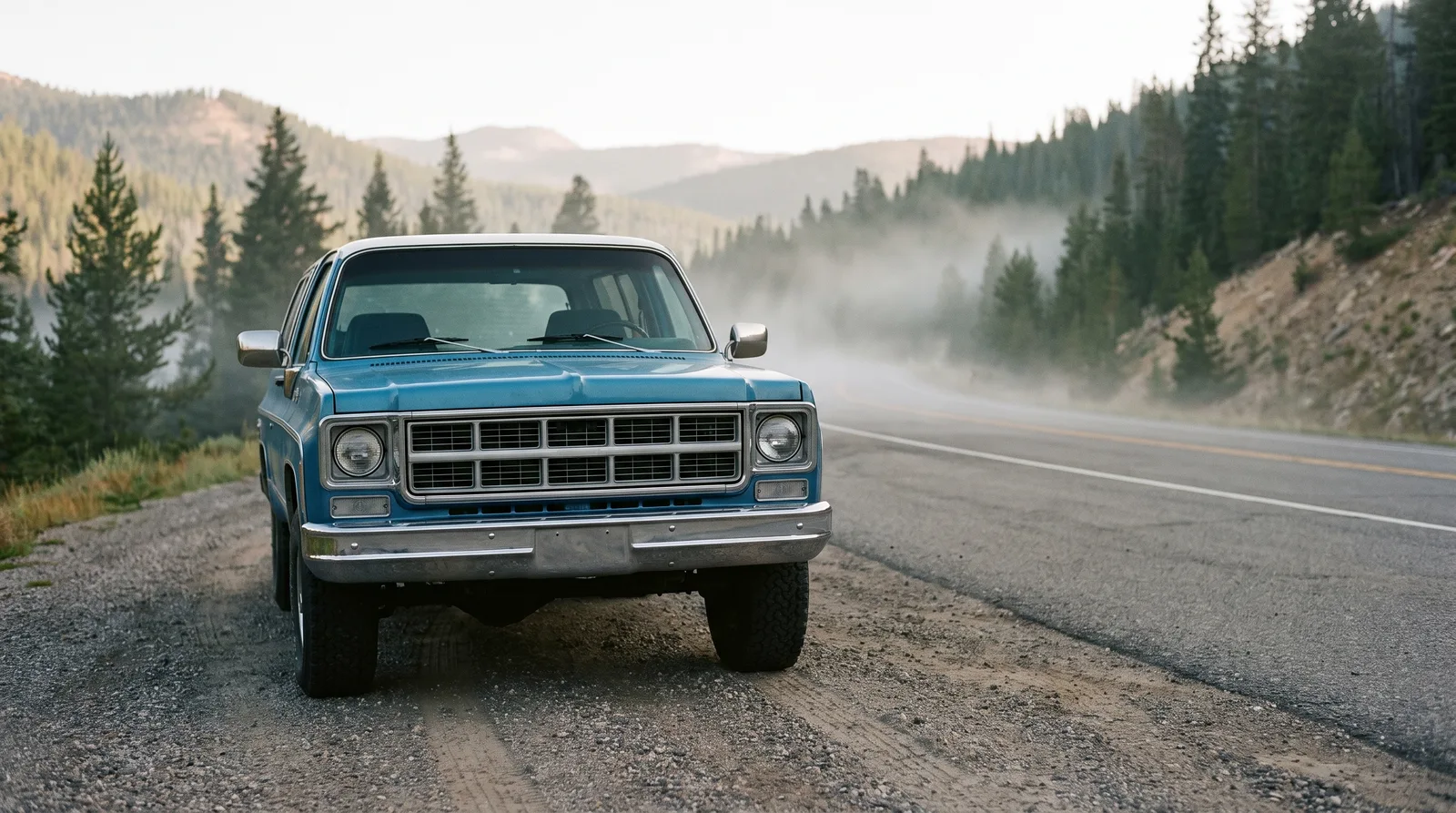
GMC needed its own identity, not a translation
By the time GMC introduced its full-size four wheel drive wagon to compete alongside Chevrolet's Blazer, the division had a real branding problem to solve. GMC trucks were mechanically close cousins to their Chevrolet counterparts, built on shared platforms with shared engineering, and a badge that just copied Chevrolet's naming convention would have reinforced the idea that GMC was simply Chevrolet's more expensive twin rather than its own brand with its own personality.
Jimmy solved that problem cleanly. It was short, memorable, distinctly separate from Blazer, and it carried a working-class, informal quality that fit GMC's positioning as the truck brand built for people who used their trucks rather than showed them off. GMC had also used variations of the Jimmy name informally in earlier years for other truck applications, so by the time it landed on the full-size four wheel drive wagon, the name already had some familiarity inside the brand rather than arriving completely out of nowhere.
A nickname doing a brand's heavy lifting
What makes the Jimmy name interesting from a branding standpoint is how much work a simple, casual word ended up doing. Chevrolet's Blazer name evokes fire and boldness, an assertive kind of marketing language typical of the era. GMC's Jimmy name evokes something closer to a person, a nickname you would use for a coworker rather than a product you would advertise on a billboard. That distinction mattered to GMC's identity as the more understated, work-focused half of the GM truck lineup, and it is not an accident that the name stuck around for as long as it did.
Names that survive decades of corporate reshuffling and rebranding tend to do so because they capture something real about how a product is used, not just how it is marketed. The Jimmy name outlived multiple redesigns, multiple body styles, and eventually got carried forward onto GMC's compact S-10-based Blazer competitor after the full-size trucks were discontinued, a decision that shows how much brand equity the name had actually built over its original run.
"A good truck name has to survive being yelled across a parking lot. Blazer works that way. Jimmy works that way. Half the names GM tried on other trucks over the years did not, and you can tell because nobody remembers them now."
- Mike Sullivan
How owners actually use the name today
Walk through any GMC-focused truck show and listen to how owners talk about their trucks. Chevrolet owners tend to say Blazer. GMC owners tend to say Jimmy, full stop, rarely bothering with the full model designation. That casual, first-name-basis relationship between owner and nameplate is exactly what GMC's marketing team was hoping to build back when the name was first chosen, and five decades later it is still working the way it was designed to.
The informality also shows up in how the trucks get discussed in enthusiast circles. Nobody refers to their truck as a Gimmick or gets confused about which platform they own. Jimmy is specific enough to avoid ambiguity while staying casual enough to use in conversation the way you would use a person's name, which is a harder balance for a corporate naming team to strike than it might look from the outside.
Comparing it to how rivals named their trucks
Look across the rest of the industry during the same years and the naming pattern gets more interesting by contrast. Ford went with Bronco, a name built around wild energy and untamed character. International went with Scout, evoking exploration and frontier utility. Both names lean into adventure marketing, selling a feeling rather than a relationship. GMC's choice to go with a human nickname instead stands out precisely because it did not try to sell excitement. It sold familiarity, the sense that this was a truck you already knew somehow, even the first time you saw one on a lot.
That approach was a quieter kind of marketing, and it took longer to build the same cultural recognition that a name like Bronco achieved almost immediately through motorsport and media exposure. But it also aged differently. Names built on excitement can feel dated once the marketing campaign that launched them fades from memory. A name built on familiarity does not really age at all, because a nickname does not need cultural momentum to keep making sense. It just needs people willing to keep using it, generation after generation of owners.
Where the name fits in the bigger story
Understanding the naming decision helps explain a lot about how GMC positioned itself against Chevrolet more broadly during this era, treating the full-size truck lineup as a chance to build genuine brand separation rather than just badge-swapping the same product. For readers interested in where this started, the full model history covers how that broader positioning played out across the entire production run, engine options, and trim levels.
For anyone who has read this far and finds themselves wanting to actually own a piece of that branding history, it is worth taking time to shop classic K5 Blazer listings and paying attention to how sellers themselves refer to the trucks in their listings. The name still does its job, drawing a clear, immediate line between a GMC truck and its Chevrolet cousin, more than fifty years after a small branding decision turned into a lasting piece of truck culture.
It is worth remembering, too, that plenty of good products carry forgettable names, and plenty of forgettable products carry great ones. What made Jimmy work was the truck backing it up, decades of dependable service that gave the name something real to attach to. A nickname only earns its staying power if the thing it describes deserves to be talked about long after the showroom floor is gone, and the full-size GMC Jimmy clearly did. That is the real lesson buried in this bit of naming trivia, and it holds up better than most marketing history ever does, especially the kind that ages out of relevance the moment the ad campaign behind it stops running.
Sources and notes
Related Reading

About the author
Mike Sullivan
Detroit-area muscle car enthusiast and restoration specialist with three decades of hands-on experience working on American iron.
Related Listings - Chevrolet Blazer




Comments (1)
K
Kenny
5 hours ago
Wasn't Jimmy just how folks said G-M-C real fast?