
Every fall, the parking lot at our chapter's swap meet turns into an accidental comparison test. Somebody rolls in with a squarebody K5 Blazer, somebody else parks a early Bronco three spots down, and within ten minutes a crowd has gathered arguing about which one is the "real" sport utility. I have had this argument at least forty times over the years, and it always comes back to the same starting point: size. The Chevrolet K5 Blazer vs Bronco size question is not really about which truck feels bigger on a trail. It is about two different companies making two very different bets on what a truck-based SUV should be.
Car Features
7 min read
Why the K5 Went Big Where the Bronco Stayed Small
Chevrolet stretched an existing half-ton truck frame to build the K5 Blazer, while Ford drew up a dedicated small platform for the early Bronco. The size gap that resulted still shapes how these trucks drive today.
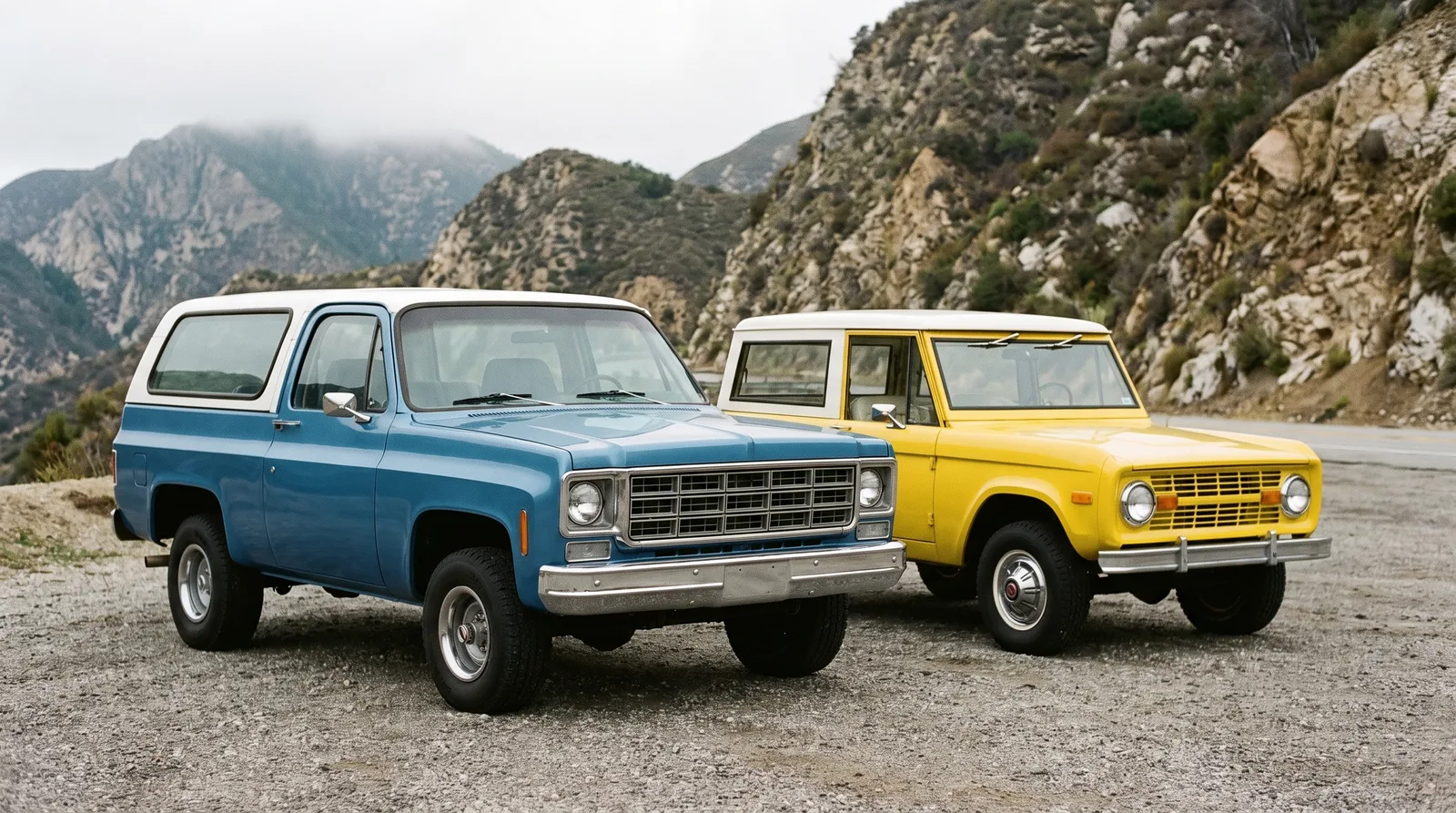
Ford built a truck within a truck
Ford's first Bronco, launched for 1966, was its own animal. It did not share a frame with the F-100 half-ton pickup. Ford's engineers drew up a dedicated short-wheelbase platform, about 92 inches between the axles, specifically so the Bronco could be nimble in the way a dedicated off-roader needs to be. That decision made the early Bronco compact, light, and eager on a tight trail. It also meant Ford was carrying the cost of an entirely separate chassis line just for one model.
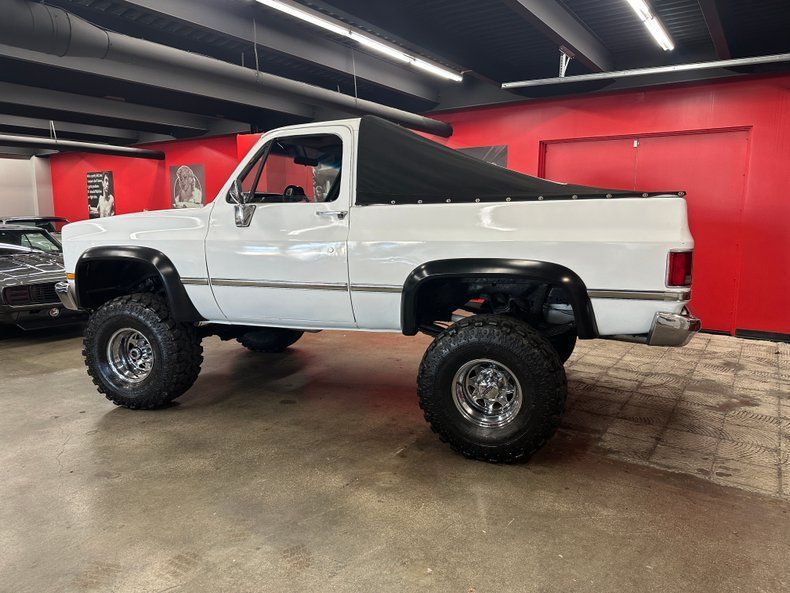
Chevrolet took the opposite bet. When the K5 Blazer arrived for 1969, it rode on a shortened version of the existing C/K half-ton pickup frame, about 104 inches of wheelbase, with the same front clip, the same running gear, and a lot of the same parts bins as the trucks already rolling out of Chevrolet plants. That is the whole story in one sentence, and it is why old-timers at the swap meet always land on the same conclusion once the argument settles: Chevrolet did not build a sport utility vehicle from scratch, it adapted one out of a pickup truck it was already building by the hundreds of thousands. Ford built a purpose-built small SUV. Chevrolet built a shrunk-down full-size truck with a removable top.
What that platform choice meant on the ground
Longer wheelbase does two things immediately. It smooths out the ride over washboard roads, because the axles are farther apart and the truck pitches less. And it eats into your ability to twist through a tight, rutted trail, because the frame has more length to clear obstacles with. Bronco owners in the early years liked to remind Blazer owners of exactly that second point, usually right after a Blazer high-centered on a rock ledge a Bronco had just walked over.
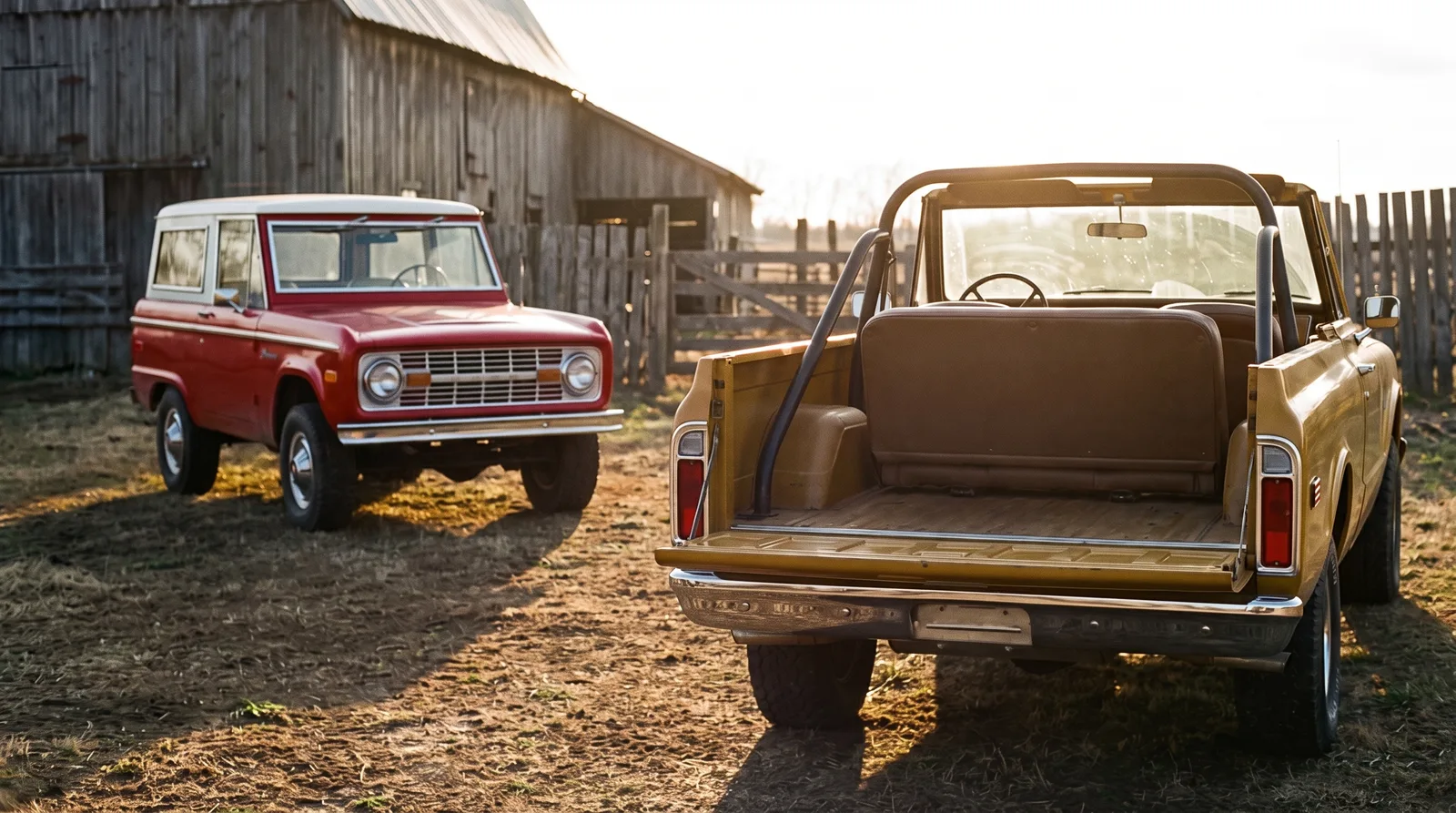
But the K5's size bought Chevrolet something the early Bronco could not touch: real cargo capacity and a genuine half-ton payload rating, because under the skin it was still substantially a pickup truck. A family that needed to haul a load of firewood on Saturday and take the kids camping on Sunday found the K5 did both jobs without complaint. The Bronco, tidier and quicker in the tight stuff, gave up some of that hauling confidence for its compactness.
1978 changes the whole conversation
Ford eventually agreed with Chevrolet's logic, just about a decade late. For 1978, the Bronco was completely reworked onto a shortened version of the F-Series half-ton frame, gaining a foot of wheelbase (to 104 inches, matching the K5) overnight and jumping into direct size competition with the K5. Once that happened, the argument at the swap meet gets more complicated, because a 1978-79 Bronco and a squarebody K5 of the same years are much closer in footprint than people expect. The real size gap, the one that actually defines the K5 Blazer vs Bronco size debate for most enthusiasts, belongs to the 1966-77 first-generation Bronco against the K5 that outsized it from day one.
I have a friend in the club, Earl, who has owned both generations of Bronco and a 1974 K5. He put it about as plainly as I have ever heard it put at a meeting: he said the early Bronco felt like driving a Jeep with better manners, and the K5 felt like driving a pickup truck that had learned to take its shirt off in the summer. That image stuck with me because it gets at something real. One truck was conceived small and stayed that way until Ford changed its mind. The other was conceived big, on purpose, from a company that already knew how to sell trucks by the millions and saw no reason to reinvent that formula for an SUV.
"The K5 never pretended to be a trail toy first. It was a half-ton truck that Chevrolet decided should also seat six comfortably and lose its roof in July, and that decision is written into every inch of its wheelbase."
- Wayne Coburn
Why this still matters to buyers today
Size differences from over fifty years ago still show up in how these trucks live today. A K5, with its longer frame and pickup-derived running gear, tends to ride better on the highway and carries a trailer with more composure. An early Bronco rewards a driver who wants to feel every inch of a technical trail and does not mind a firmer, choppier ride to get there. Neither answer is wrong. They are simply two different engineering philosophies that got frozen into sheet metal in the same model year window and never fully reconciled, even after 1978 brought the two trucks closer in dimension.
For the fuller version of how this rivalry played out generation by generation, our chapter newsletter has leaned on our complete history of the two trucks more than once when a new member asks where to start. And if the size argument has you leaning toward the Chevrolet side of the fence, there is no substitute for standing next to one in person. Plenty of clubs keep a running list of members ready to sell, but if you want to skip the waiting list, you can go find a classic K5 Blazer and see the wheelbase difference for yourself.
The GMC twin nobody forgets to mention
One thing the swap meet crowd never lets me skip is the GMC Jimmy. Chevrolet's K5 got a badge-engineered sibling a year later, for the 1970 model year, sold through GMC dealers on the same full-size half-ton platform, same wheelbase, same removable top in the first generation, same squarebody bones after 1973. The Jimmy never sold in the numbers the K5 did, but it proves the point about Chevrolet's strategy even further. General Motors was not building one bespoke SUV. It was stretching a single truck architecture across two brands, two dealer networks, and a badge difference on the tailgate. Ford, running the Bronco as a solo model through 1977, did not have that luxury of scale until the platform-sharing 1978 redesign arrived.
The verdict from the parking lot
Nobody at our swap meet ever fully settles the argument, and I suspect that is the point. The K5 Blazer's size was not an accident or an afterthought, it was Chevrolet leaning into a platform it already knew worked, and that choice shaped everything from ride quality to payload to how the truck feels parked next to a Bronco fifty years later. Size, in this case, is not just a spec on a sheet. It is the whole personality of the truck, decided the day Chevrolet chose which frame to build it on.
Sources and notes
Related Reading
Have a
Chevrolet Blazer
for Sale?
Reach thousands of serious classic car collectors across the US.
Sell It Here →
Selling a classic? Here's how: the best sites to sell a classic car
Are You a Classic Car Dealer?
List your full inventory and connect with targeted classic car buyers.
Join as a Dealer →

About the author
Wayne Coburn
Longtime Corvette owner, judge and club figure who knows the cars, the records and the people behind them.
Related Listings - Chevrolet Blazer
Comments
Be the first to comment on this article.