
In the parking lot of any decent truck show you will eventually find two men in their sixties standing between a Chevrolet K5 and a full-size Ford, having a conversation they have been having since high school. The K5 Blazer vs Bronco argument is one of the oldest in American four wheel drive, and what makes it worth revisiting is that both sides are correct. These two trucks were built to answer the same question and they arrived at it from opposite directions, twelve years apart, with completely different ideas about what a family should be able to do on a Saturday.
Car Features
11 min read
K5 Blazer vs Ford Bronco: The Full-Size 4x4 Rivalry
Ford got to the sport utility idea first and Chevrolet got there bigger. Three decades later the collector market has quietly reversed the showroom result.
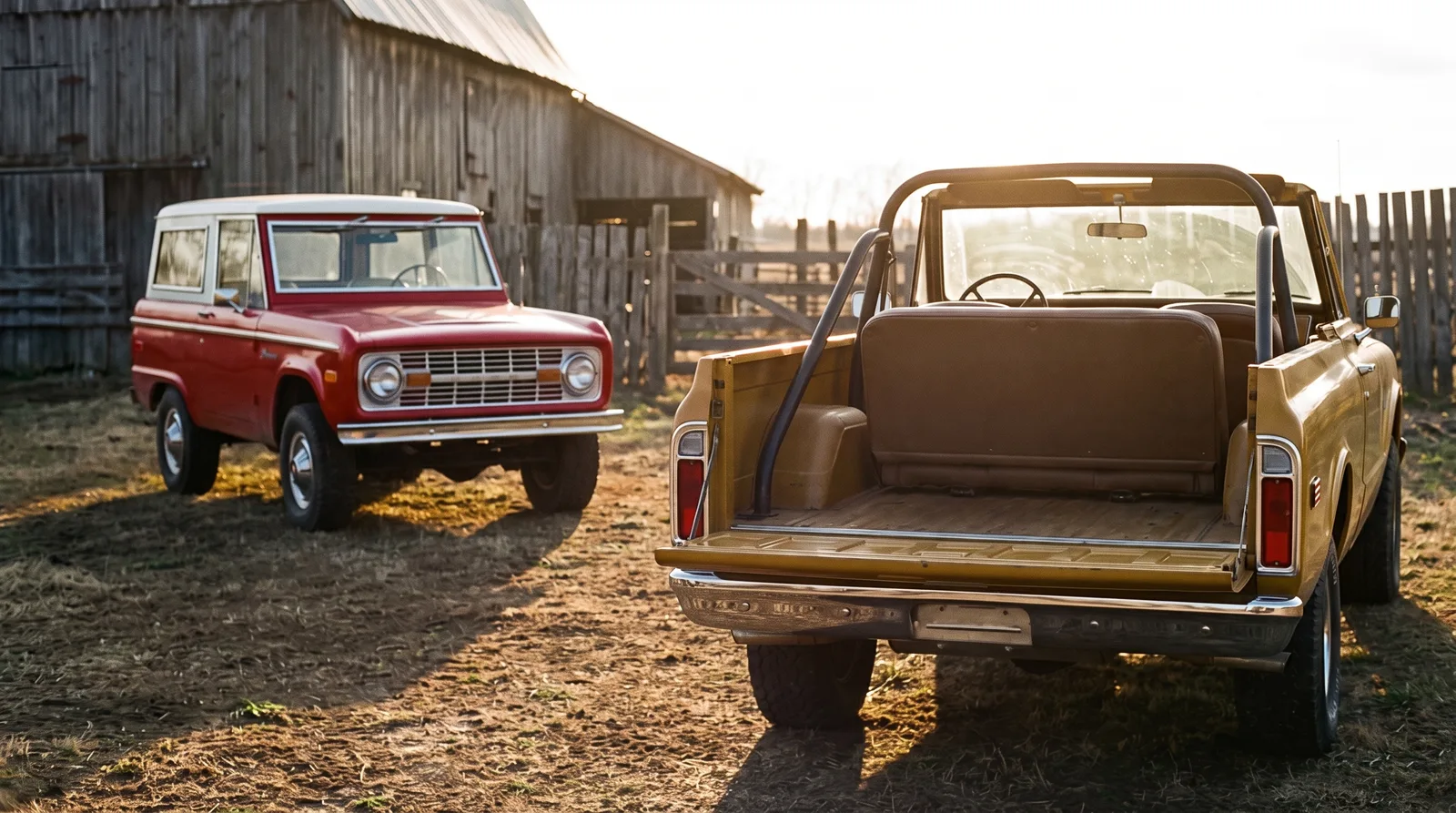
The short version is that Ford got there first and Chevrolet got there bigger. Everything after that is detail, and the details are where the fun lives.
Two answers to the same question
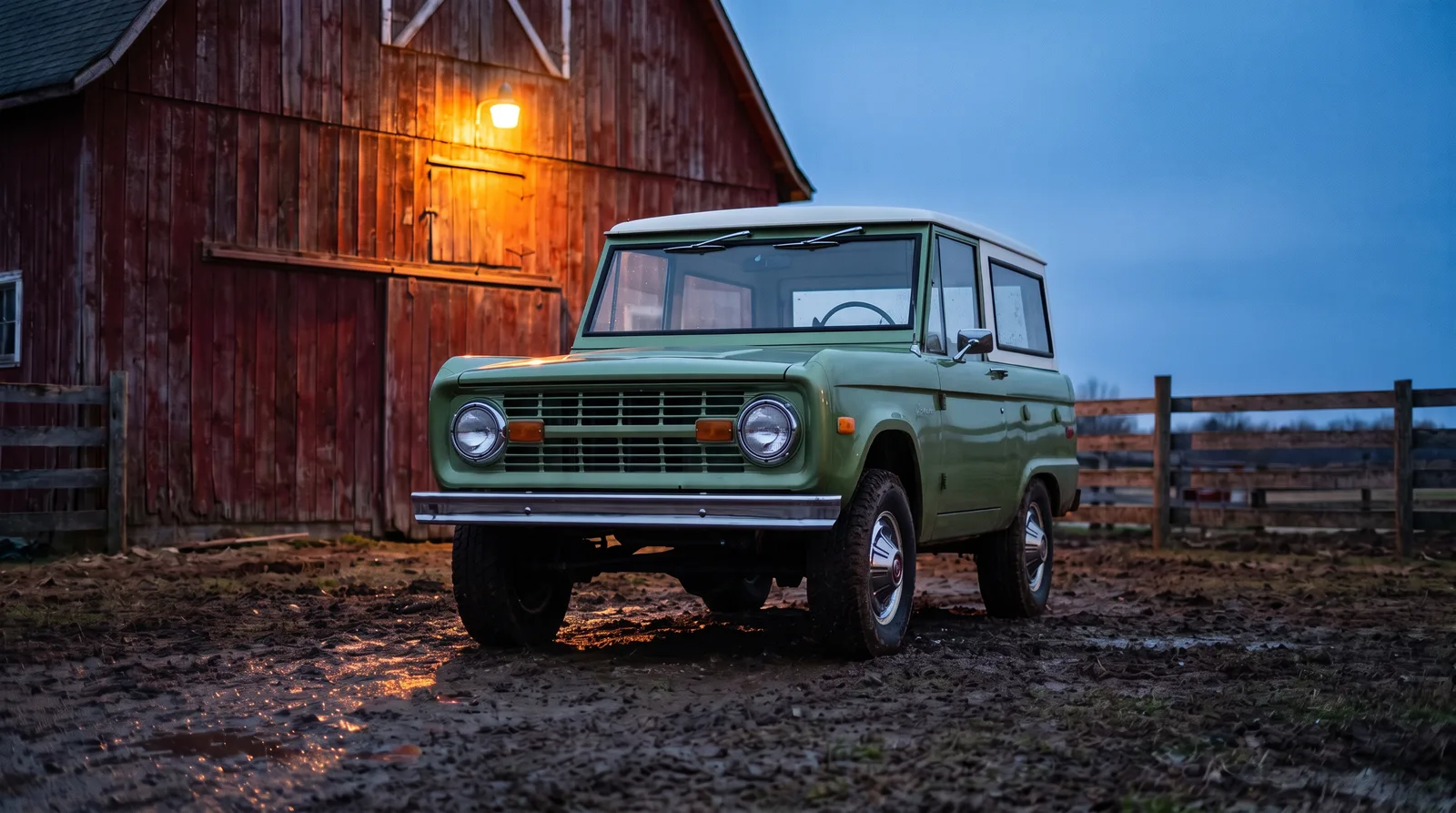
Ford launched the Bronco for the 1966 model year on a purpose built platform with a 92 inch wheelbase, a straight six or a small V8, and a design brief aimed squarely at the Jeep CJ and the International Scout. It was compact, honest and deliberately unglamorous. Ford engineered it as its own thing rather than shortening a pickup, which is a decision that cost money and earned respect.
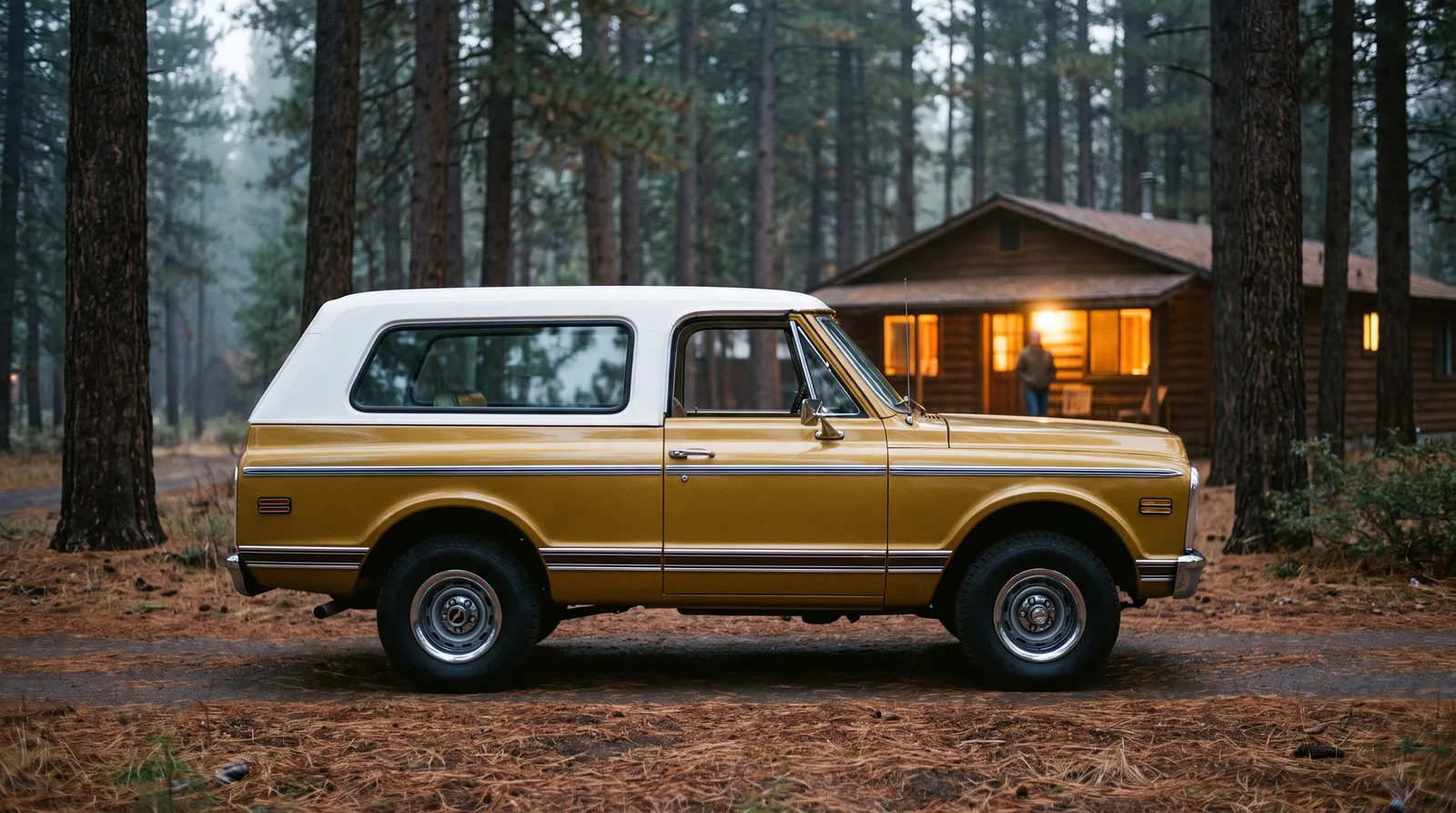
Chevrolet arrived three years later and refused to play the same game. Rather than build a small purpose designed vehicle, GM took a C/K pickup, cut the wheelbase down, put a lift off roof on it and called it the Blazer. That approach was cheap for the company, fast to market and enormously effective for the customer, because the Blazer came out of the box with a full-width cab, real bench seating, pickup running gear and a V8 in a class where the competition offered a jump seat and an apology.
The gap was not subtle. The Bronco was a trail vehicle you could take the family in if the family was small. The Blazer was a family vehicle you could take on the trail. Twelve years passed before Ford answered directly, and by then the shape of the market had been set by somebody else.
1969, when Chevrolet changed the rules
The K5's first year was four wheel drive only, and the two wheel drive C5 followed for 1970. Volume built quickly because the truck did something no rival could match: it was comfortable. Buyers could tick option boxes off the pickup list, get carpet and a decent heater and air conditioning, and still have a genuine transfer case underneath.
GMC sold the same vehicle as the Jimmy from 1970, which effectively doubled the dealer network attacking Ford's segment. If the twin badge story interests you, that is another one worth knowing, because the two divisions handled the same truck in quietly different ways.
The economics behind that decision are worth stating plainly, because they explain the whole rivalry. Ford had tooled a unique platform for a vehicle selling in modest numbers, which meant every engineering improvement had to be paid for by Bronco buyers alone. Chevrolet had tooled nothing extra. Every improvement to the pickup line arrived on the Blazer automatically, and every Blazer sold helped amortise a pickup investment GM was making anyway. One approach produced a purer vehicle. The other produced a business that could improve itself for free every year.
By the mid seventies the Blazer was outselling the compact Bronco by a wide margin, and Ford's own decision to finally build a full-size competitor for 1978 is the clearest evidence of how uncomfortable that gap had become in Dearborn. Ford was selling a competent small truck into a market that had decided it wanted a big one.
Ford's long wait and the 1978 answer
The full-size Bronco finally arrived for 1978, built on F Series underpinnings with a 104 inch wheelbase and V8 power in the 351 and 400 cubic inch sizes. It was, in every meaningful way, Ford doing what Chevrolet had done in 1969. The delay had been caused by fuel crisis nerves and a cancelled earlier programme, and when the truck finally landed it sold out almost immediately.
The 1978 and 1979 Broncos are now the most desirable of the full-size cars by a wide margin, partly because they only ran two model years before the 1980 redesign, and partly because they got the styling exactly right. Big round headlamps, a deep grille, an upright stance and a removable rear top over a fixed forward roof.
What Ford did bring to the fight was a chassis advantage that owners still argue about. The full-size Bronco used Ford's twin traction beam independent front suspension from the 1980 redesign onward, an unusual choice for a four wheel drive of the period and one that gave a different ride quality from the solid front axle under the Chevrolet. Purists preferred the axle for its simplicity and its behaviour under articulation. Families preferred the Ford on pavement. Both positions were defensible then and both still get defended loudly on any given Sunday.
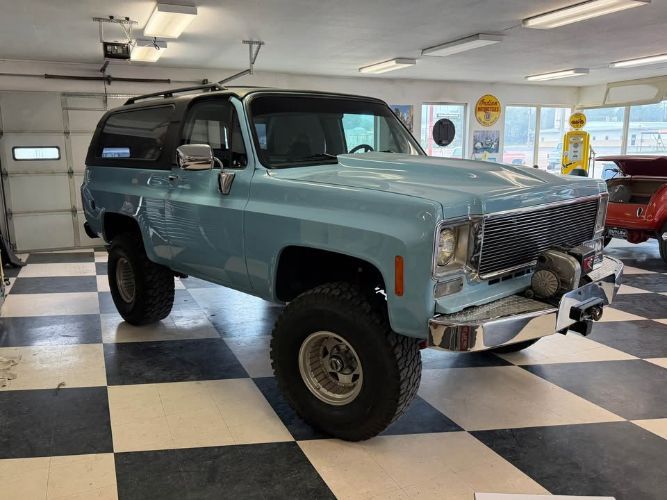
Note that last part. Ford never offered a full removable roof on the big Bronco. It launched with the half cab arrangement because by 1978 that was simply how these vehicles were built, which means Chevrolet's 1969 to 1975 trucks remain the only mainstream American full-size four wheel drive you could genuinely take the entire roof off. That is a specific, verifiable win for the Blazer, and it explains a real chunk of the price gap between the two at the top of the market.
| Comparison point | Chevrolet K5 Blazer | Ford Bronco |
|---|---|---|
| Introduced | 1969, full-size from the start | 1966 compact, full-size from 1978 |
| Platform approach | Shortened C/K pickup | Purpose built to 1977, F Series based from 1978 |
| Full removable roof | Yes, 1969 through 1975 | No, half cab only on full-size models |
| Twin badge version | GMC Jimmy | None |
| Diesel option | 6.2 litre from 1982 | Not offered |
| Final model year | 1991 | 1996 |
| Replaced by | Chevrolet Tahoe and GMC Yukon | Ford Expedition |
Size, roof and philosophy
Line the two full-size trucks up and they are closer than the rivalry suggests. Similar wheelbase, similar weight, similar mission, similar thirst. The differences that matter to an owner are smaller and stranger than the marketing ever admitted.
The Bronco has the better rear seat access and, to many eyes, the better interior architecture in its later years. The Blazer has the wider parts availability, a consequence of sharing so much with the most common pickup in America, and that single fact has kept more Blazers on the road than any styling decision ever could.
Ford leaned harder into the outdoors identity and it stuck. The Bronco name carried enough weight that Ford could revive it decades later to genuine excitement. Chevrolet quietly retired the Blazer name from the full-size class and then reused it on a crossover, which enthusiasts have not stopped complaining about since. Brand stewardship is not an engineering issue, but it absolutely affects what a forty year old truck is worth today.
Trim strategy diverged too. Chevrolet ran the Blazer up the same ladder as its pickups, so a loaded Silverado package put the truck in territory that felt close to a personal car. Ford answered with named packages of its own, the Ranger XLT and later the Eddie Bauer treatment among them, which leaned on outdoor imagery rather than pickup luxury. Both companies were selling the same fantasy of escape. Chevrolet framed it as capability with comfort attached, Ford framed it as adventure with a badge attached, and buyers sorted themselves accordingly.
"Ford built the idea and Chevrolet built the business. That is the whole rivalry in nine words, and both companies would probably agree if you caught them on the right afternoon."
- Patrick Walsh
Who actually won at the dealership
Chevrolet won the volume war and it was not close over the full run. The K5 had a nine year head start in the full-size class, a second badge selling the same truck, and a dealer body that could put a customer into anything from a stripped work unit to a loaded Silverado. Annual Blazer production climbed steadily through the decade, from around 44,000 units in 1972 to nearly 91,000 by 1979, a run rate the compact Bronco never approached before Ford finally fielded a full-size answer.
Ford won the endurance war. The Bronco stayed in production five model years longer than the K5, right through to 1996, and it left the market on a high with a strong final generation. It also had the more famous, more uncomfortable moment in the popular imagination, which is a kind of fame nobody at Ford asked for.
If you are weighing the two now, sales history matters less than survival rates and parts supply. On both counts the Blazer has the advantage in the middle of the market, while the 1978 and 1979 Bronco has the advantage at the very top. For anyone wanting the deeper background on the Chevrolet side of the argument, there is more on the k5 blazer covering the full 1969 to 1991 run.
Where the money is now
The collector market has sorted this rivalry into a clear order, and it does not follow the old showroom results at all.
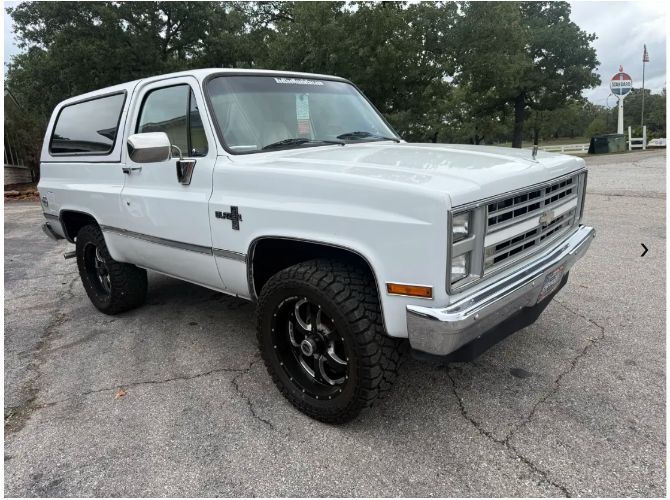
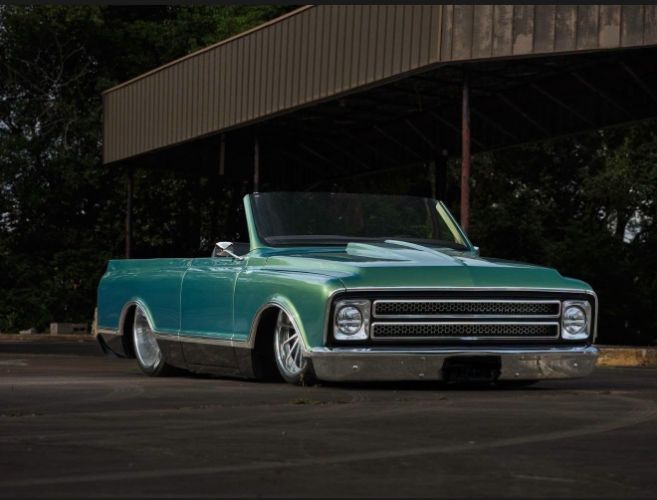
At the peak sit the 1966 to 1977 early Broncos, which climbed to genuinely serious money on the back of the restomod boom and have stayed there. Next come the 1978 and 1979 full-size Broncos, scarce because of the two year run and adored for the styling. Then the early K5 Blazers, with the 1969 to 1975 full convertible trucks leading and the 1973 to 1975 examples generally strongest of all. Below that, the enormous and much more affordable pool of 1976 to 1991 half cab Blazers, where most people actually shop.
That last group is the reason the K5 Blazer vs Bronco question still gets asked by people who are actually buying rather than dreaming. A usable, honest full-size Blazer remains reachable in a way that an equivalent Bronco largely is not, and the running costs favour the Chevrolet because the mechanical parts are still stacked on shelves nationwide. Before you settle the argument in your own driveway, it is worth taking time to browse classic K5 Blazer listings and see what condition actually costs this month.
Living with either one
Both trucks drive like what they are, which is a 1970s pickup with a shorter back half. Steering is vague by modern standards, braking requires forethought, and fuel economy is a punchline. Neither is a commuter and anyone selling you one as a commuter has not driven it far.
What both do superbly is make an ordinary trip feel like something. Take the top off, put the windows down, drive somewhere with gravel on it and the appeal becomes obvious within about four minutes. Forty years of rivalry, thousands of arguments in parking lots, and the two sides agree completely on that part.
The practical differences show up over months rather than minutes. Blazer owners tend to talk about how easy it is to keep one running, because the parts counter treats it like a pickup and always has. Bronco owners tend to talk about how good theirs looks parked, and about a specialist supply chain that has grown enormously as values climbed. Neither community is short of knowledge or short of opinions, and both will help a newcomer at length, usually while explaining why the other badge was the wrong choice.
Sources and notes
Related Reading
#Ford Bronco
#classic 4x4
#chevrolet k5 blazer
#k5 blazer vs bronco
#truck rivalries
#collector suv market

About the author
Patrick Walsh
Automotive journalist covering classic car shows, events, and the enthusiast community across North America.
Related Listings - Chevrolet Blazer

Comments (1)
M
M22Rockcrusher
1 day ago
Full removable roof settles it for me.