
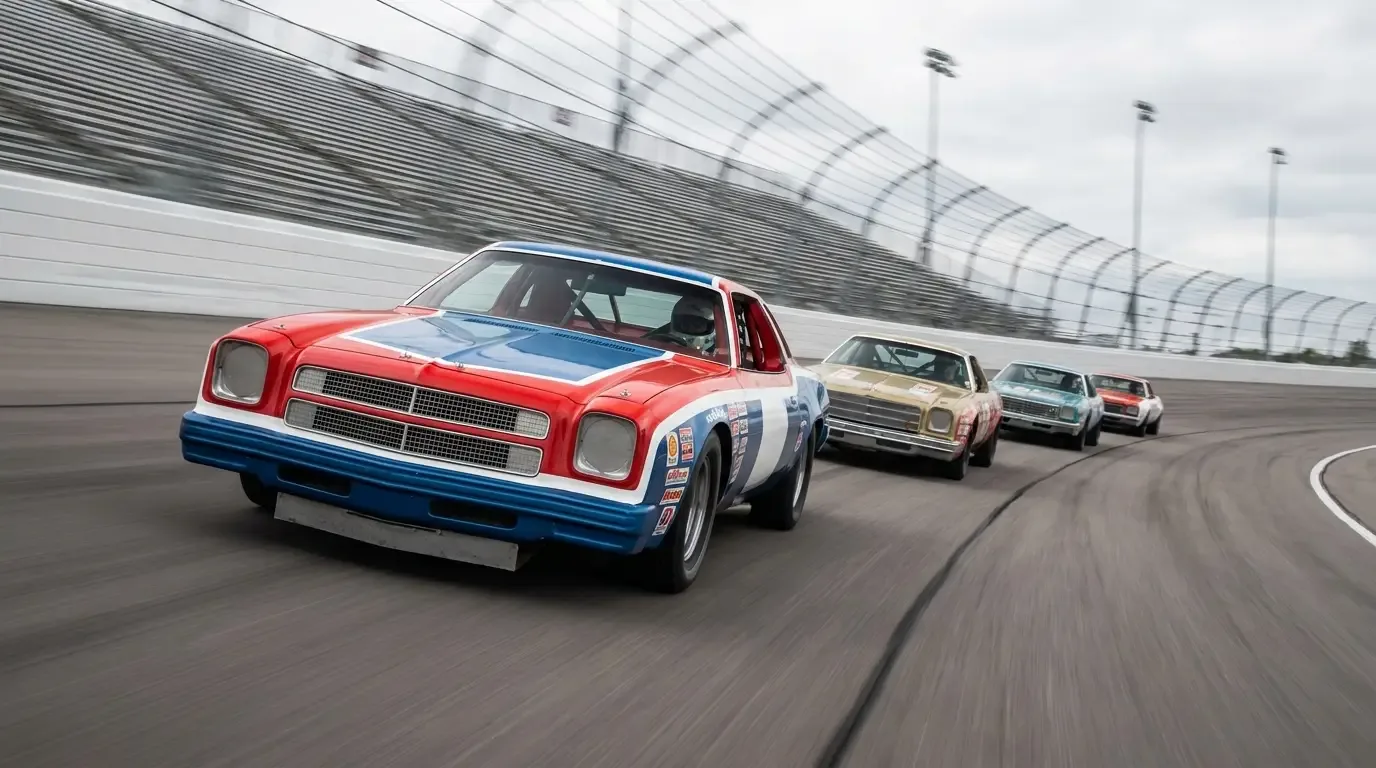
The Laguna S-3 doesn't look like a compromise, but it was one. Chevrolet needed a nose that would slice through the air on the superspeedways where Ford's Torino Talladega and the Mopar wing cars had already rewritten what a stock car body needed to look like. The answer was a sloped, urethane-covered front end grafted onto the Colonnade-era Chevelle starting with the 1975 model year, homologated just enough to run in NASCAR's Grand National ranks, and run hardest by Junior Johnson's team with Cale Yarborough behind the wheel. The standard 1973 and 1974 Lagunas that came before it kept a conventional upright grille. The slant nose is what made the S-3 its own animal.
Car Features
6 min read
The Laguna S-3 Aero Wars: Cale Yarborough's NASCAR Chevelle
How Chevrolet answered Ford and Mopar's aero specials with the Laguna S-3, and why Cale Yarborough and Junior Johnson made it work on NASCAR's fastest tracks.
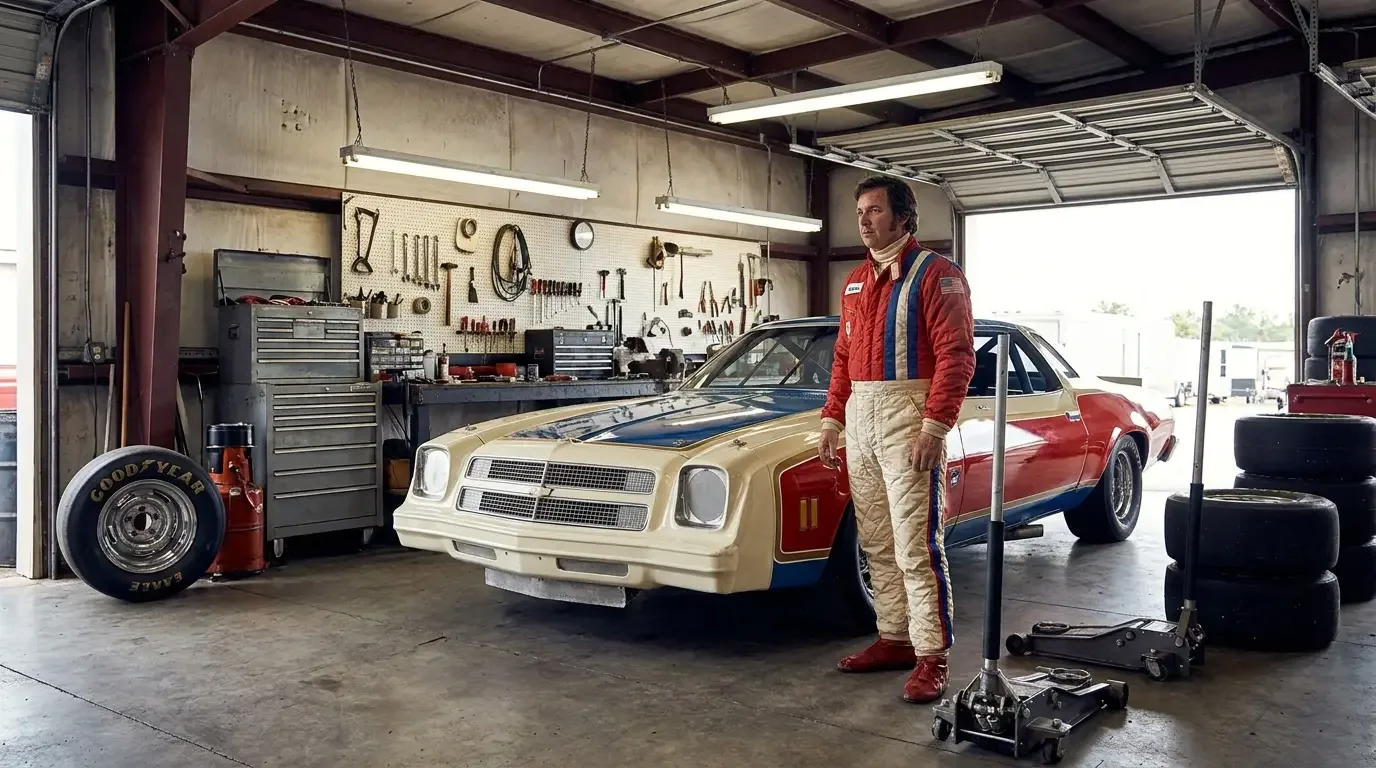
Yarborough came into the Chevrolet camp in 1973, driving a Richard Howard-owned Chevelle Laguna with Junior Johnson serving as the team's manager, well before the aero nose existed. Johnson bought the team outright partway through the 1974 season, added Carling Brewery sponsorship, and it was under that ownership that Yarborough and the Chevelle Laguna became a serious NASCAR force, still running the standard nose that year. The aero-nose Laguna S-3 itself didn't arrive until 1975. It wasn't pretty in the way a showroom Chevelle was pretty. It was pretty in the way a wind tunnel result is pretty, all business, built to keep the air attached to the sheet metal instead of tumbling off the nose and dragging the car down on the straights.
Why the aero package existed at all
NASCAR's late-1960s and early-1970s aero wars had already proven that a few degrees of nose rake and a smoothed-over grille were worth several miles an hour at top speed, and several miles an hour at Daytona or Talladega was the difference between leading and getting lapped. Ford answered with the Torino Talladega and the Cyclone Spoiler. Chrysler answered with the Daytona and Superbird wings that are still the most recognizable cars of the era. Chevrolet's answer had to come through the Chevelle, since that's what the intermediate racing rules called for, and the Laguna S-3's slanted nose and integrated bumper were the direct result of that pressure.
The changes weren't subtle once you know what to look for. The standard Chevelle's more upright grille and bumper were replaced with a smoother, wedge-shaped front clip designed specifically to cut drag at sustained high speed. It's the same engineering logic that drove Chevelle in racing programs across the whole muscle car era: whatever the rulebook allowed, teams pushed it as far as it would go, and the Laguna S-3 pushed the nose treatment about as far as a production-based intermediate could go without turning into a dedicated aero special like the wing cars.
Cale Yarborough and the Junior Johnson Chevrolet
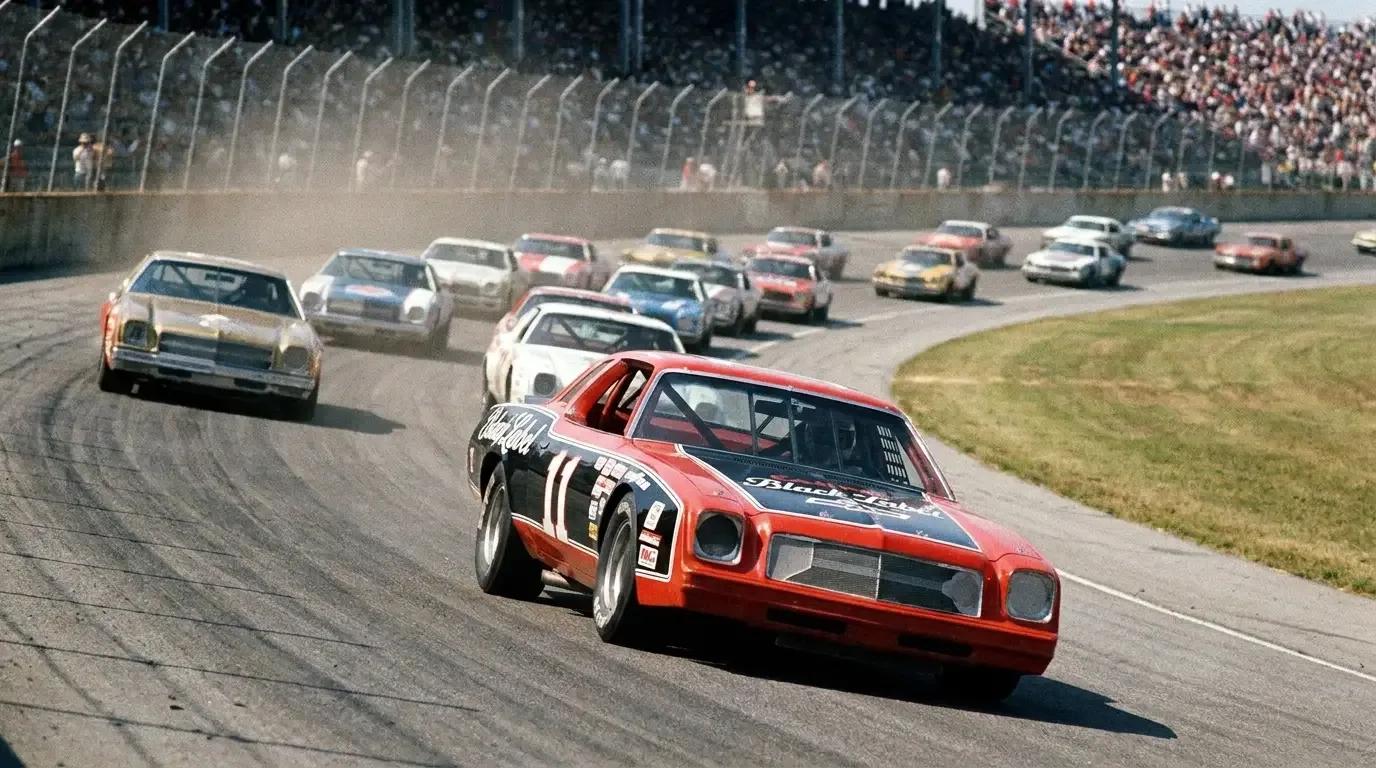
Johnson's shop had a reputation for finding an edge nobody else had noticed, and pairing that with Yarborough, a driver who ran hard on both short tracks and superspeedways, gave Chevrolet a legitimate contender through the mid-1970s. In 1974, before the aero nose existed, Yarborough already won a career-high ten races in the standard-bodied Laguna as Johnson took full ownership of the team mid-season. The S-3's first year on track, 1975, was actually a step back for raw win totals: the Laguna nameplate managed six wins across the whole season, four of them Yarborough's, including the Coca-Cola 500 at Pocono and the National 500 at Charlotte, and he finished fourth in the final points standings. The aero package hit its stride after that. Laguna S-3s won 13 races in 1976 and 15 in 1977, and Yarborough rode that speed to the first two of an eventual three consecutive Winston Cup championships, in 1976 and 1977, the first driver in NASCAR history to pull that off. NASCAR effectively ended the S-3's run as a factory aero weapon by mandating a restrictor plate for 1978.
🔧 Inspection Priorities
- Nose panel authenticity. Genuine Laguna S-3 front clips are scarce, and reproduction or modified panels from later restorations are common. Check panel gaps and mounting points against factory photos before trusting a seller's description.
- Race history documentation. A car claimed to have Junior Johnson or Cale Yarborough provenance needs a verifiable chain of ownership and period photography, not just a story passed down at a swap meet.
- Chassis reinforcement. NASCAR-spec Chevelles carried significant frame and roll cage work beyond street cars. A car missing this reinforcement, or carrying it inconsistently, is worth a harder look before assuming genuine competition history.
| Detail | Laguna S-3 NASCAR package |
|---|---|
| Model years raced | 1975-1977 Colonnade-era Laguna S-3 (restrictor plate mandated for 1978) |
| Key change from stock | Sloped, urethane-covered front clip for reduced drag |
| Primary team | Junior Johnson & Associates |
| Lead driver | Cale Yarborough |
| Yarborough championships in the S-3 | 1976, 1977 (first two of an eventual three straight) |
What makes the Laguna S-3 story worth telling on its own, separate from the broader sweep of Chevelle in racing history, is how narrow its window really was. Aero-specific NASCAR bodies had a short shelf life before the sanctioning body clamped down on the arms race, and the Laguna S-3 caught nearly the tail end of that window. It's a snapshot of a very specific moment when a production intermediate car got a genuinely purpose-built race nose, backed by one of the best crew chiefs in the sport and one of its toughest drivers.
"You can tell a lot about how seriously a manufacturer takes a rules window by how ugly they're willing to make the front of the car. Nobody designed that Laguna nose to look good in a showroom. They designed it to disappear at 190 miles an hour, and that's exactly what it did."
Patrick Walsh
The other side of the same story
Yarborough and Johnson weren't the only Chevrolet effort running a Laguna S-3 during this period. Benny Parsons, driving for a separate team, campaigned the same body style with a very different racing style and a different set of results, and that parallel effort deserves its own telling rather than a footnote here. The short version: two drivers, two teams, one aero nose, and two distinct approaches to making the Chevelle work on NASCAR's biggest tracks.
Reading the Laguna S-3 story as a whole means following both threads, and the Benny Parsons side of it picks up right where this one leaves off, with a superspeedway fight that tested the aero package under a different driver's hands and a different crew's setup philosophy. That comparison is where the Laguna S-3's real versatility becomes clear, and it's covered in next: The Laguna S-3 Aero Wars.
Sources and notes
Related Reading
Have a
Chevrolet Chevelle
for Sale?
Reach thousands of serious classic car collectors across the US.
Sell It Here →
Are You a Classic Car Dealer?
List your full inventory and connect with targeted classic car buyers.
Join as a Dealer →

About the author
Patrick Walsh
Automotive journalist covering classic car shows, events, and the enthusiast community across North America.
Related Listings - Chevrolet Chevelle
Comments
Be the first to comment on this article.