
I've pulled apart enough race history to know that two cars can share a body style and still be built by completely different philosophies. Cale Yarborough's Laguna S-3 got the Junior Johnson treatment, tight and aggressive, built for a driver who wanted to lead every lap he could. Benny Parsons ran the same aero nose on a different chassis, built by a different crew, tuned for a different kind of race. That's the part of the Laguna S-3 story that doesn't get told enough. The nose was the same. Everything under it was a different argument about how to win a 500-mile race.
Car Features
6 min read
The Laguna S-3 Aero Wars: Benny Parsons and the Superspeedway Fight
Same Laguna S-3 aero nose, a completely different setup. How Benny Parsons built a Chevelle for 500-mile consistency instead of one-lap speed.
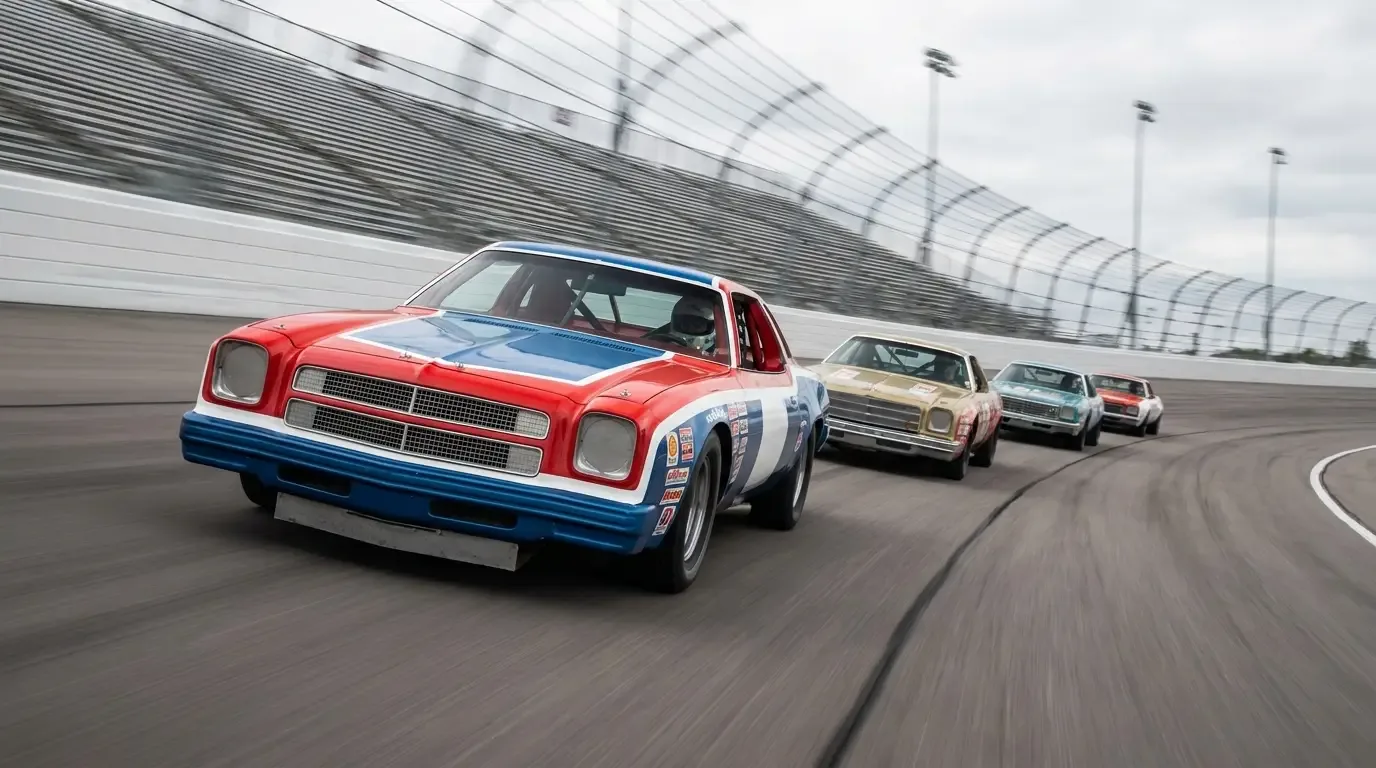
Parsons came up through NASCAR's short tracks and modified ranks before landing a superspeedway ride, and by the time the Laguna S-3 was on track, he'd already built a reputation as a driver who finished races instead of wrecking them. That matters more than it sounds like it should. Superspeedway racing in this era chewed up equipment fast, and a car built to survive 500 miles at speed without shaking itself apart was worth more than one built purely to qualify fast and lead early.
Setting up a car for the long haul
The Laguna S-3's aero nose bought back the drag a stock Chevelle body gave up at high speed, but the nose alone doesn't win a superspeedway race. What wins it is a chassis that holds its line for 500 miles without the driver fighting it in the closing laps, and that's where the setup philosophy behind Parsons' car diverged hard from a car built purely for one-lap speed. Conservative gearing and a chassis tuned to stay consistent as tire wear and fuel load changed through a long green-flag run mattered more than outright qualifying speed, all of it built around finishing strong rather than leading early and fading.
That's a completely different engineering conversation than qualifying speed. A car that's fastest for ten laps and a car that's fastest for five hundred miles are not the same build, even wearing the same sheet metal. The crews that understood this trade-off, and built their Chevelles around it, are the ones who put superspeedway wins on the board instead of just fast qualifying times. It's the same discipline that runs through the Chevelle's competition history across every era of the car, on the drag strip as much as the superspeedway.
What actually broke, and why
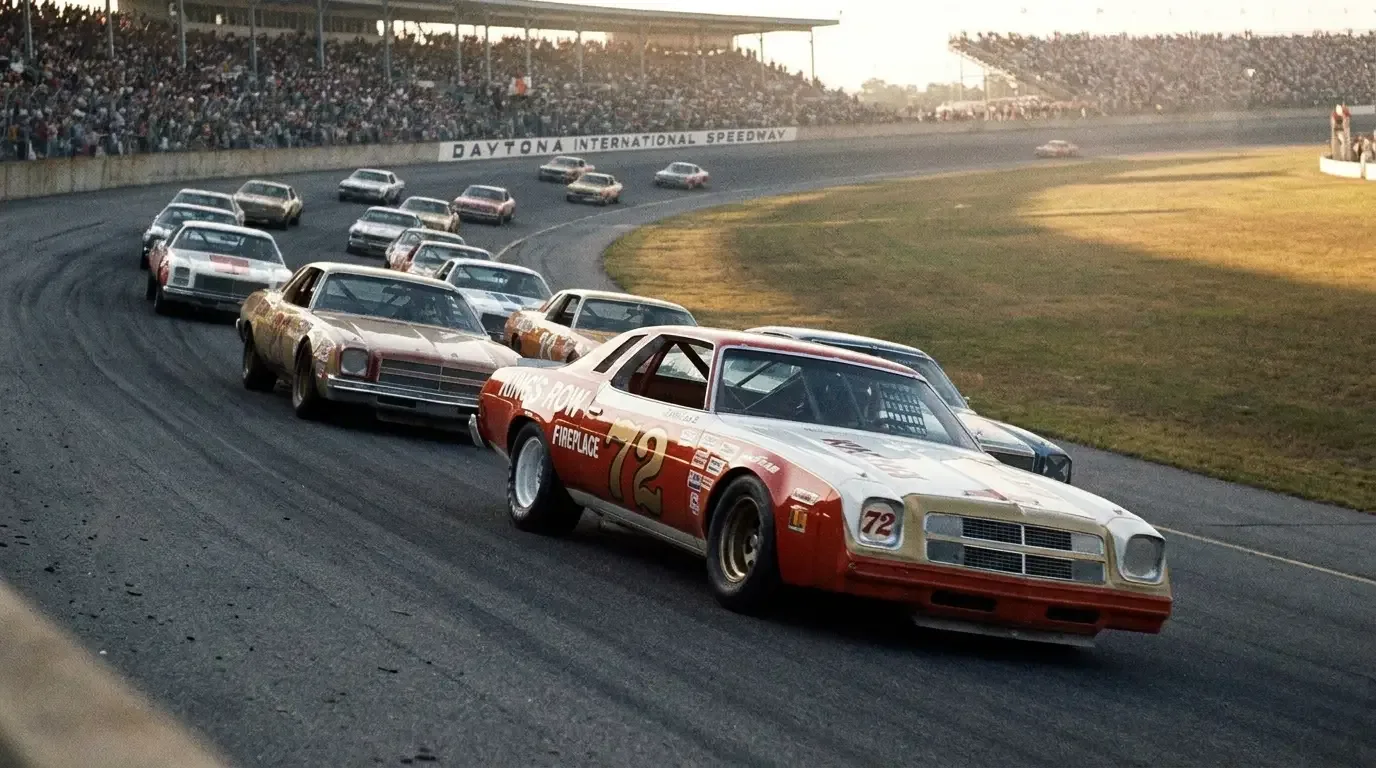
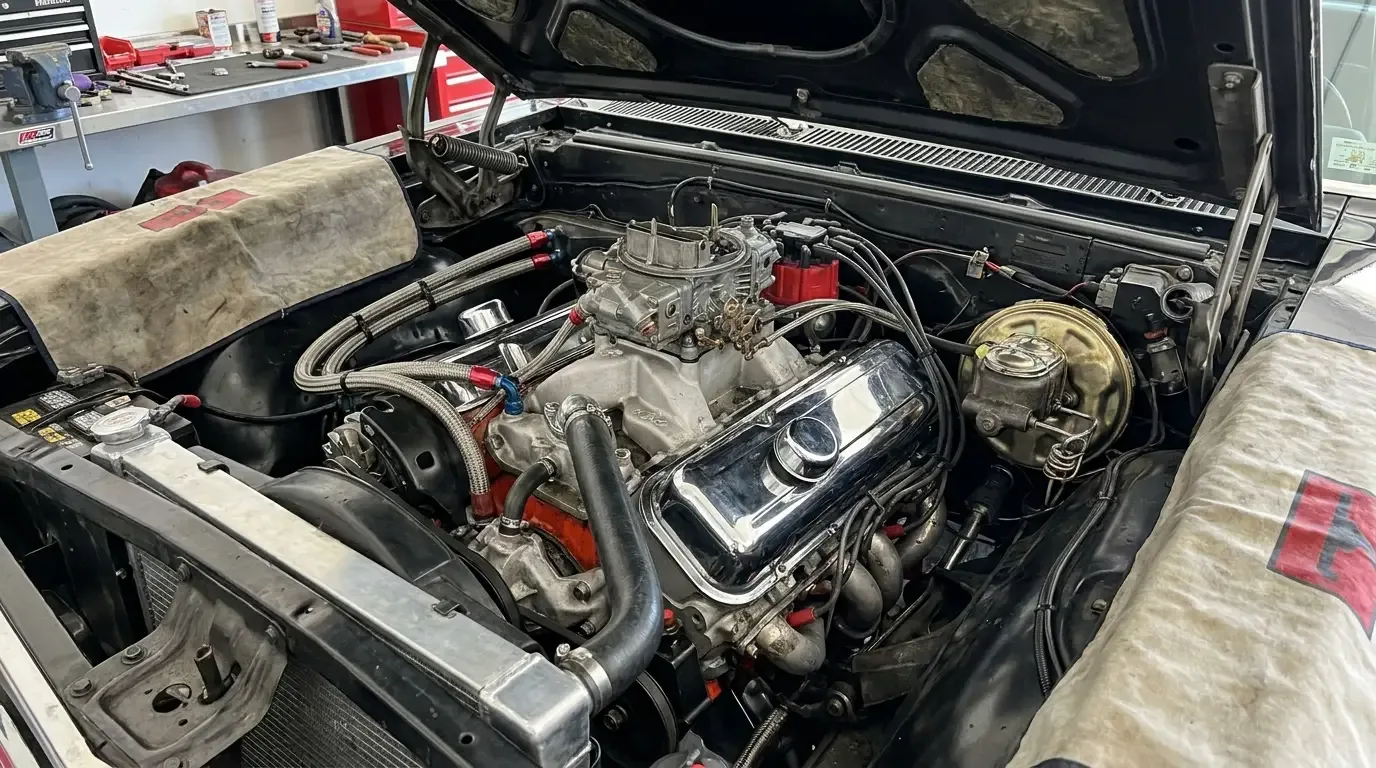
Superspeedway racing in the aero-war years was hard on everything. Tires, gears, and engines all took a beating running sustained high speed, and the teams that stayed competitive were the ones who understood exactly where their equipment's limits were before the car found them the hard way in front of a grandstand. Cooling was a constant fight with the blocked-off nose treatments these aero cars ran, since a smoother front clip meant less air getting to the radiator, and crews had to balance the drag reduction against keeping the engine temperature where it needed to stay for 500 miles.
🔧 Inspection Priorities
- Cooling system modifications. Any genuine period race Chevelle running an aero nose needed reworked ducting to compensate for the restricted airflow. Missing or inconsistent ducting on a car claiming this history is a red flag.
- Gearing and differential. Superspeedway-spec rear ends are set up entirely differently than a short-track car. Check that the drivetrain specification actually matches the track history claimed for the car.
- Chassis fatigue. A car that actually ran 500-mile races shows it in the frame and subframe welds. Fresh, unworn structural components on a car with a claimed racing history deserve a harder look before you believe the story.
| Detail | Benny Parsons' Laguna S-3 |
|---|---|
| Body style | Colonnade-era Chevelle Laguna S-3, aero nose package |
| Racing focus | Superspeedway consistency, long-run durability |
| Championship context | 1973 Winston Cup title (standard-nosed Laguna) then 1975 Daytona 500 win in the actual S-3 aero nose car, both for L.G. DeWitt |
Here's the thing about comparing these two cars side by side. Yarborough's Chevelle and Parsons' Chevelle prove the same body could be built two completely different ways and still both be right, depending on what the driver and the race actually called for. That's not a contradiction, that's just good engineering. Read the classic Chevelle story and you'll see this same pattern show up again and again: one platform, multiple valid answers to the same problem.
"I've seen guys build the fastest car in the field and finish sixteenth because it couldn't hold together. Parsons' cars were built by people who understood that a race isn't won on lap one, it's won on the last one, and everything in between has to survive to get there."
Mike Sullivan
The drag strip picks up the story
Superspeedway racing wasn't the only place the Chevelle proved itself in this era. While Yarborough and Parsons were chasing 500-mile finishes on NASCAR's biggest tracks, a completely different breed of Chevelle was tearing up quarter-mile strips across the country, built for a race that lasted about thirteen seconds instead of three and a half hours. That world runs on its own rules, its own engine combinations, and its own definition of what makes a car fast, and it deserves its own look, covered in next: Super Stock Drag Racing Chevelles.
Two different disciplines, same platform underneath. That's the Chevelle's real racing legacy: a car flexible enough to win a long, grinding superspeedway battle and a short, violent drag race, sometimes in the same model year.
What sticks with me looking back at this stretch of racing is how little credit gets handed to the crews who never got their name on a trophy. Parsons drove the car, but the setup that let him run consistent 500-mile races without the equipment failures that took other teams out of contention came from a shop full of guys turning wrenches on a tight budget, week after week, with no factory blank check behind them. That's the same story that runs through most of the Chevelle's competitive history, whether it's a superspeedway or a quarter mile. The car earned its reputation through people who understood it, not through corporate money thrown at the problem.
Sources and notes
Related Reading
Have a
Chevrolet Chevelle
for Sale?
Reach thousands of serious classic car collectors across the US.
Sell It Here →
Are You a Classic Car Dealer?
List your full inventory and connect with targeted classic car buyers.
Join as a Dealer →

About the author
Mike Sullivan
Detroit-area muscle car enthusiast and restoration specialist with three decades of hands-on experience working on American iron.
Related Listings - Chevrolet Chevelle
Comments
Be the first to comment on this article.