
Ask ten Chevelle guys about NASCAR history and eight of them will start talking about Cale Yarborough and the Laguna S-3 without ever mentioning what came before it. That's the part of the story that gets skipped, and it's the more interesting part. Before the Chevelle had an aero package or a factory-backed ride, it had to fight its way onto the Grand National track at all, against a corporate parent that had officially walked away from racing.
Car Features
7 min read
Chevelle in NASCAR Grand National: The Early Years
Before the Laguna S-3 aero wars, the Chevelle fought for Grand National wins with no factory backing. Here's how that scrappy era set up everything after.
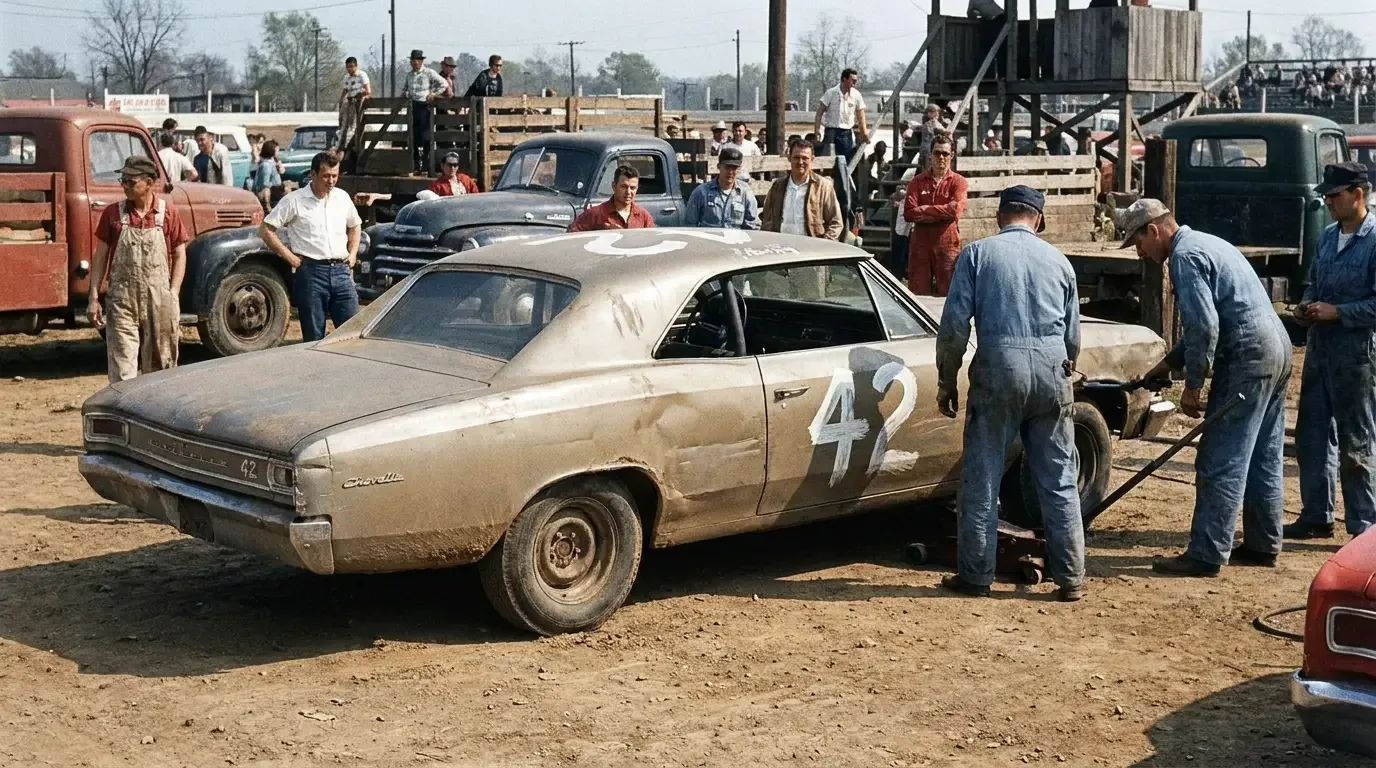
Chevrolet pulled out of factory-supported motorsports in January 1963, signing on to the same "safety and responsibility" resolution the other Detroit makers had put their names to a few years earlier and then quietly ignored. This time it stuck, at least on paper. So when the Chevelle arrived for the 1964 model year as a mid-size alternative to the full-size Impala and Bel Air, it showed up on short tracks and superspeedways with almost no help from General Motors at all. Everything that got a Chevelle to Grand National victory lane in the mid-1960s came from a private team's own shop, a friendly parts counter, and word passed quietly between engineers who weren't supposed to be involved.
A mid-size car for a changing series
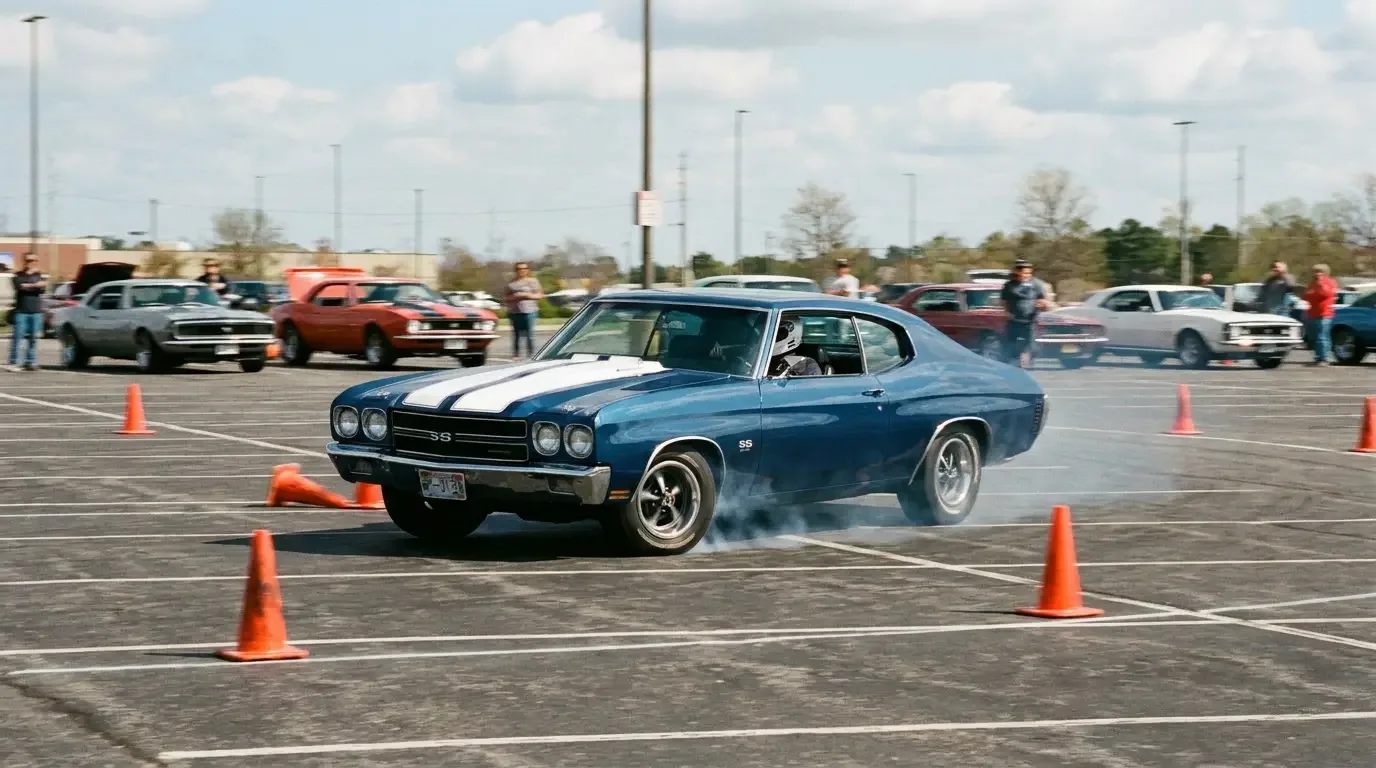
The Grand National series in the mid-1960s was still built around full-size stock cars, but the intermediate class was already reshaping what teams wanted to run. The Chevelle was lighter than the Impala it shared showroom space with, and lighter meant an edge on tracks where handling mattered as much as straight-line speed. Teams that had spent years wringing performance out of full-size Chevrolets started looking at the smaller body as the next logical platform, especially once the SS396 package gave the car a genuinely competitive big-block under the hood by 1965.
None of that came easy. With Chevrolet's front office officially uninvolved, privateer teams did the fabrication and the testing themselves. Chassis setup, gearing, and aerodynamic tweaks were figured out at the track, not in a wind tunnel. That's part of why the Chevelle's early Grand National record reads more like grassroots persistence than a factory conquest story. The cars that ran well did it because somebody in a small shop knew the platform cold, not because a stack of engineering reports told them where to start.
🔧 Inspection Priorities
- Chassis provenance. Genuine mid-60s Grand National Chevelles are rare enough that documentation matters more than the car's appearance. A period-correct roll cage and reinforced subframe tell a very different story than a street car dressed up later.
- Modified sheet metal. Cars fabricated in small independent shops often carry non-factory bracing and patch panels around the shock towers and rear frame rails. Look for consistent weld quality, not concours finish, since these were built to survive a race, not a judging stand.
- Drivetrain substitutions. Privateer teams swapped rear ends, transmissions, and even engine blocks between seasons. A car's current drivetrain may have nothing to do with what it ran when it actually competed.
Smokey Yunick's Daytona Beach shop is the name most often connected to Chevrolet's underground racing effort of that era, and while his most famous work is tied to full-size Chevrolets and later the Chevelle-based cars of the early 1970s, the culture he represented, an engineer who kept building competitive stock cars whether the corporation officially blessed it or not, is exactly the environment the Chevelle grew up in. It's worth reading the Chevelle's racing legacy as a whole to see how that underground period set up everything that followed, including the aero-war Chevelles a decade later.
Short-track proving ground
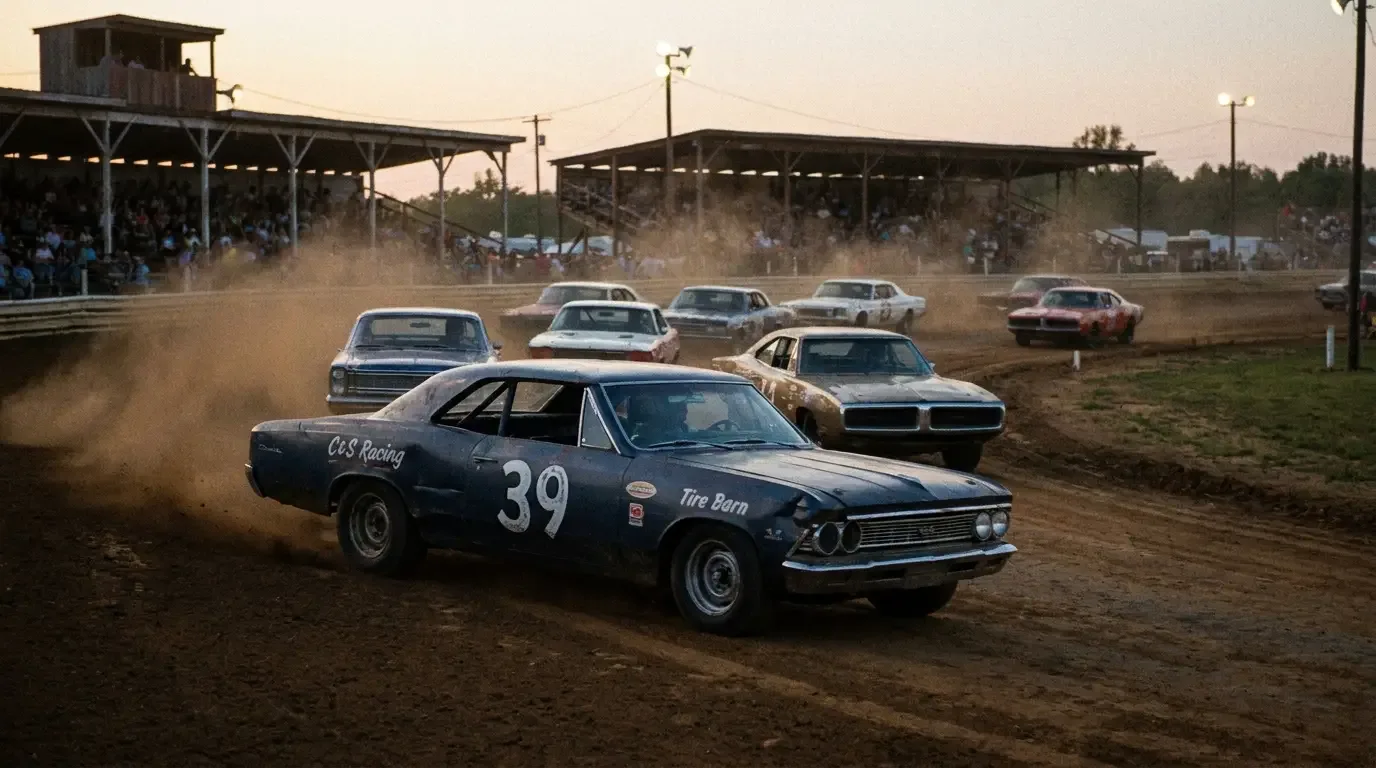
Superspeedway wins were hard to come by for Chevelles in this stretch. The cars that put up strong results tended to do it on the shorter, tighter tracks where the intermediate's weight advantage counted for more than top-end horsepower, and where a well-sorted chassis from a shop that understood the car beat a bigger budget from a team still learning the platform. That short-track foundation matters, because it's the same foundation that let the Chevelle transition into a genuine superspeedway contender once the Colonnade-era aero cars arrived. The car didn't jump straight from showroom to superspeedway. It earned its way up the ladder one bullring at a time.
Drivers who ran Chevelles in this period were rarely the headline names chasing the championship. They were regional talents and independent operators who found a competitive car within their budget, and win or lose, they built a body of knowledge about what made an intermediate stock car work that bigger, better-funded programs would draw on later. That knowledge transfer, informal as it was, is part of why the classic Chevelle story reads less like an overnight muscle car sensation and more like a slow, deliberate climb.
| Era | Chevelle NASCAR status | Typical venue |
|---|---|---|
| 1964-1965 | Early intermediate entries, no factory support | Short tracks, regional Grand National events |
| 1966-1968 | SS396-based privateer builds gain traction | Mixed short track and superspeedway |
| 1969-1971 | Grand National transitions toward Winston Cup era | Superspeedway emphasis grows |
By the time NASCAR's top series took on Winston Cup sponsorship in 1971, effectively ending the Grand National-only era, the groundwork for a serious Chevelle aero effort was already in place, built by people who'd spent years figuring out the car with almost no corporate help. The result was a genuinely fast Chevelle body, one that could hold its own against Ford and Mopar's aero specials, and it's the direct ancestor of the car covered in the next chapter of this story.
"Nobody handed these guys a Chevelle race program. They built one out of whatever Chevrolet would quietly let them have, and that scrappy, do-it-yourself period is exactly why the car was ready when the real aero war started."
Patrick Walsh
The Chevelle's short-track apprenticeship paid off. When Chevrolet finally leaned back into stock car racing, the platform already had a decade of hard-won lessons behind it, and drivers who'd cut their teeth on those early cars carried that knowledge straight into the next era. If you want to see where that investment led, Chevelles built to run from this whole span show up regularly in the collector market, and the story continues directly in next: The Laguna S-3 Aero Wars, where the same platform finally got the factory attention it had been racing without for a decade.
Why this chapter still matters
It's easy to skip past the early Grand National years because there's no marquee win to point to, no single photograph that sums it up. But the reason the Chevelle became a legitimate NASCAR contender in the 1970s traces straight back to this unglamorous stretch. Teams learned what the chassis wanted, what broke under load, and how to keep an intermediate car stable at speed, all without a factory engineering department writing the playbook. That's a different kind of legacy than a trophy case, but it's the one that actually built the car's reputation on the track.
Sources and notes
Related Reading
Have a
Chevrolet Chevelle
for Sale?
Reach thousands of serious classic car collectors across the US.
Sell It Here →
Are You a Classic Car Dealer?
List your full inventory and connect with targeted classic car buyers.
Join as a Dealer →

About the author
Patrick Walsh
Automotive journalist covering classic car shows, events, and the enthusiast community across North America.
Related Listings - Chevrolet Chevelle
Comments
Be the first to comment on this article.