
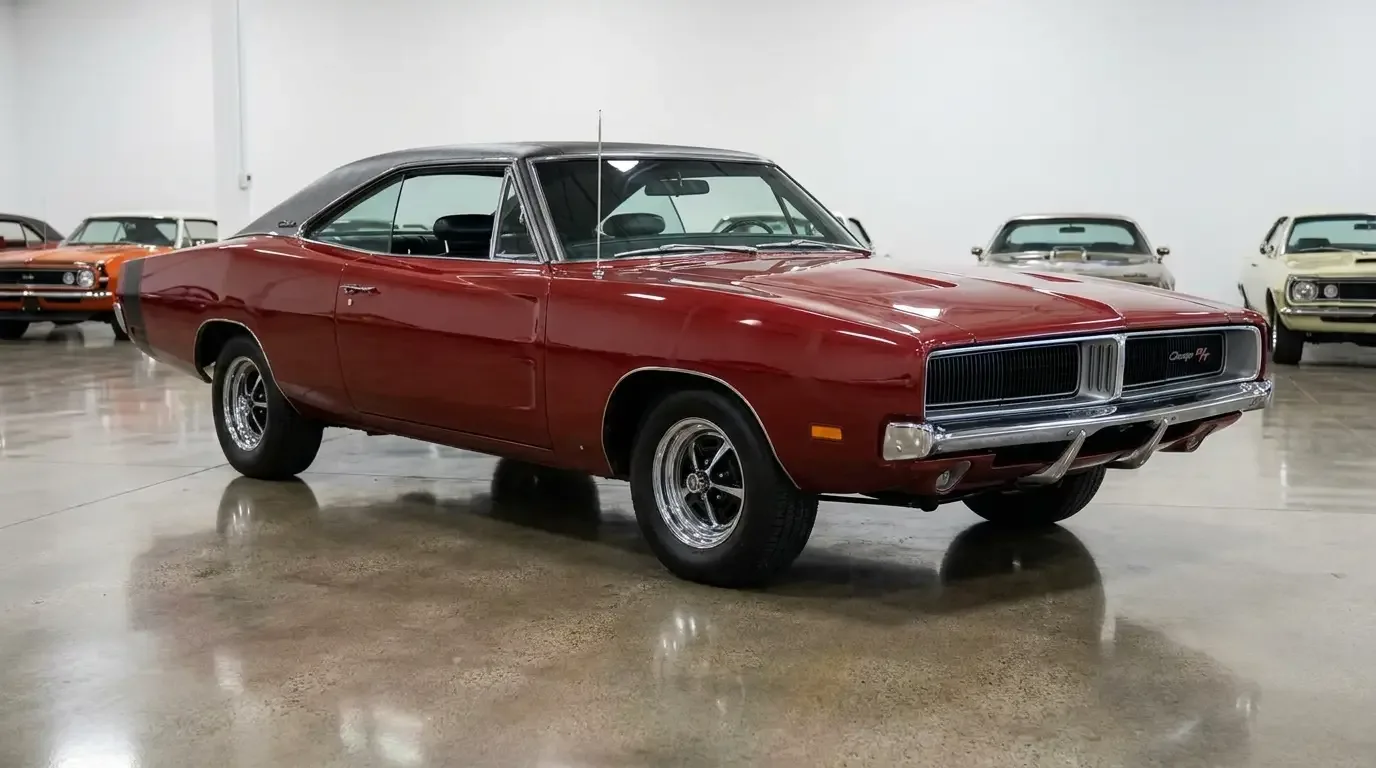
The guy at the Mopar show in Springfield had brought his 1971 Charger R/T a hundred and forty miles on a trailer, backed it off with the engine already warm from idling in the parking lot, and stood next to it all afternoon answering the same question. Is that the last one. Not the last Charger built, he'd explain, the last one that mattered in the way the dodge charger rt had mattered since 1968. After 1971, the badge kept going for a couple more years, but the car underneath it stopped being what it was.
Car Features
7 min read
The Last R/T: 1971 and the End
1971 gave the Charger R/T its best-looking body and its last real muscle-era production run before the badge disappeared.
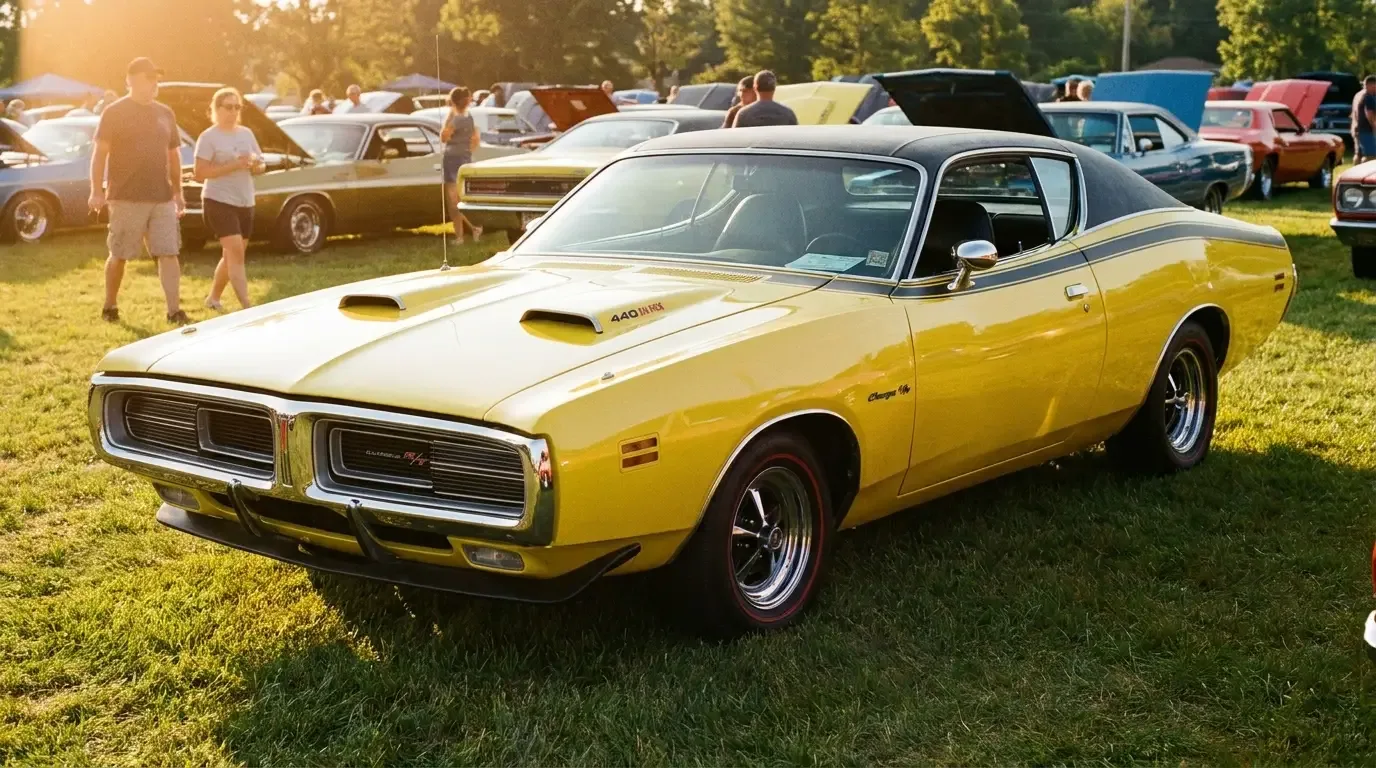
That distinction, between a nameplate surviving and a car surviving, is the whole story of 1971. Dodge redesigned the Charger for that year into the fuselage-bodied car that's now its own chapter, the 1971 dodge charger that traded the coke-bottle sheet metal of 1968 to 1970 for a longer, lower, more sculpted shape with hidden headlights and a split grille. It looked like nothing else on the road that year. It also arrived at the exact moment the market that had built it started disappearing underneath it.
1971 was the peak of the shape, not the muscle
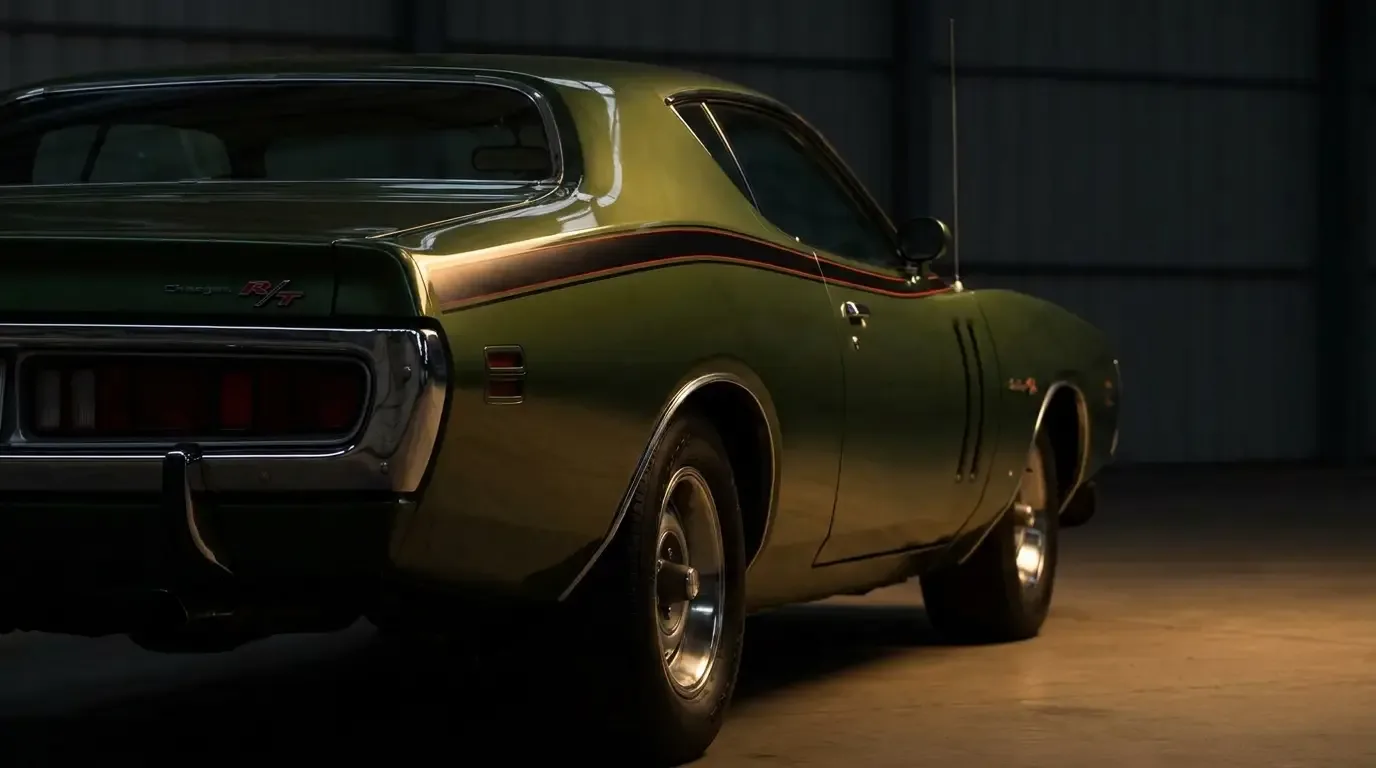
Visually, the 1971 Charger R/T is arguably the best-looking Charger Dodge ever built. The double loop bumper, the twin scoops on the hood, the R/T's signature stripe running down the flank, all of it landed. Underneath the styling, though, the numbers had already started their decline. The 440 Magnum still came standard on the R/T that year, rated at 370 hp, down from the 375 hp the same basic engine had carried a year earlier as compression ratios dropped to meet tightening emissions rules and cheaper fuel. The 426 Hemi was still technically available in 1971, its final model year in the Charger, but take rates had cratered. Just 63 Hemi Charger R/Ts left the factory that year, a number small enough that most dealers never saw one.
The insurance companies had noticed the muscle car boom too, and by 1971 premiums on anything with a big engine and a young owner's name on the title had climbed high enough to push buyers toward smaller engines or away from performance cars entirely. Dodge still built the R/T package, still offered the 440 and the Hemi, but the audience that had made 1968 to 1970 the golden years was shrinking fast.
"The guy I talked to at Carlisle had owned his car since 1974. Drove it there every single year, even the time the water pump let go outside Harrisburg."
Patrick Walsh
The last real R/T numbers
Production of the 1971 Charger R/T dropped sharply from the prior year, and the drop wasn't a blip, it was the start of a slide that never reversed. Dodge built roughly 3,118 R/Ts for 1971, a fraction of what the R/T package had moved just two or three seasons before. Anyone who wants the full year-by-year breakdown should read the R/T Production Numbers by Year story, because the collapse only makes sense in the context of what came before it and what came right after.
What came after was 1972, the year the R/T name itself disappeared from the lineup entirely, replaced by lower-compression engines and a Rallye package that borrowed some of the visual cues without the same mechanical teeth. That's the real dividing line. Not a styling change, not a corporate decision made in a boardroom for its own sake, but the simple fact that the car people wanted to build kept getting harder to sell once you added up insurance, emissions, and fuel costs for the buyer standing on the lot.
| Spec | 1971 Charger R/T |
|---|---|
| Standard engine | 440 Magnum, 370 hp (gross) |
| Optional engine | 426 Hemi, 425 hp (gross) |
| Estimated R/T production | 3,118 units (63 with the Hemi) |
| Body style | Fuselage-era two-door hardtop |
| Last year of the R/T badge | 1971 |
Why the styling change gets more credit than it deserves
There's a persistent idea in Mopar circles that the 1971 redesign itself somehow killed the R/T's momentum, that buyers didn't take to the new fuselage look the way they had to the earlier body. That doesn't really hold up. The 1971 Charger sold reasonably well across the whole lineup, and the R/T's specific decline tracks almost exactly with what happened to every other performance package that year, from the Road Runner to the Chevelle SS. The market turned, not the styling. If anything, the 1971 shape has aged into being the most sought-after Charger body style among collectors who came to the hobby in the last fifteen years, which says something about how wrong the contemporary read on a car's looks can turn out to be decades later.
What a 1971 R/T buyer needs to know now
For anyone shopping one of these today, the practical concerns are the same ones that show up across most early 1970s Mopars, rust in the trunk floor and rear quarters, a build sheet that either exists or doesn't, and an engine that may or may not still be the numbers-matching unit that left the factory. Because the surviving population is small, documentation carries even more weight than it does on a 1968 or 1969 car. A fender tag and broadcast sheet that confirm R/T equipment turn a nice driver into a car worth genuinely more, and their absence should always shave a number off whatever the seller is asking.
The end of an era, and why it still matters
Nobody at Dodge in 1971 was thinking of the R/T badge as something they were retiring for good. It just stopped making sense to keep building a low-volume, high-insurance performance package as the rest of the industry pivoted toward smog pumps and lower compression across the board. But that quiet, unceremonious ending is exactly why the 1971 car has become what it is now, the last Charger R/T built before the muscle era actually ran out of road. For a deeper look at how the whole nameplate got here, our in-depth Charger feature traces the entire arc from 1966 through the final fuselage years, and it's worth reading against this one to see exactly how narrow that window at the top really was.
Standing next to that trailered R/T in Springfield, it was easy to see why owners treat these cars the way they do. Not as museum pieces, but as the last examples of something Dodge built on purpose before the accountants and the insurance actuaries took the decision out of anyone's hands.
Sources and notes
- 1971 Charger R/T Registry - production numbers - confirmed 3,118 total R/Ts, of which 63 had the 426 Hemi and 178 the 440 Six Pack.
- Silodrome - 1971 Charger R/T 440 Six Pack - confirmed the 1971 440 Magnum's 370 hp gross rating and the model's status as the last R/T year.
- Curbside Classic - 1971 426 Hemi horsepower - confirmed the 426 Hemi's 425 hp gross rating in its final Charger year.
- Dodge Garage - the 1971 Hemi Charger R/T - corroborated the tiny 1971 Hemi take rate and end-of-era context.
- Wikipedia - Dodge Charger - background on the 1971 fuselage redesign and the R/T badge being dropped after 1971.
Related Reading
Have a
Dodge Charger
for Sale?
Reach thousands of serious classic car collectors across the US.
Sell It Here →
Are You a Classic Car Dealer?
List your full inventory and connect with targeted classic car buyers.
Join as a Dealer →
#426 hemi
#muscle car decline
#440 magnum
#charger production numbers
#fuselage charger
#1971 charger r/t
#dodge charger
#charger rt history

About the author
Patrick Walsh
Automotive journalist covering classic car shows, events, and the enthusiast community across North America.
Related Listings - Dodge Charger
Comments
Be the first to comment on this article.