
Luxury did not disappear when the war ended, but it changed shape. The pre-war grandees had built their prestige on coachbuilt bodies and hand-finished individuality, one car at a time, for a client who wanted nothing anyone else had. The late-1940s luxury cruiser kept the wealth and the presence but delivered it through a factory production line instead of a coachbuilder's workshop. That shift is worth taking seriously as a piece of automotive history, not just a footnote before the tailfin decade.
Car Features
6 min read
Luxury Cruisers of the Late 1940s
Luxury did not vanish after the war, it changed shape. How late-1940s cruisers carried coachbuilt-era prestige onto the factory line.
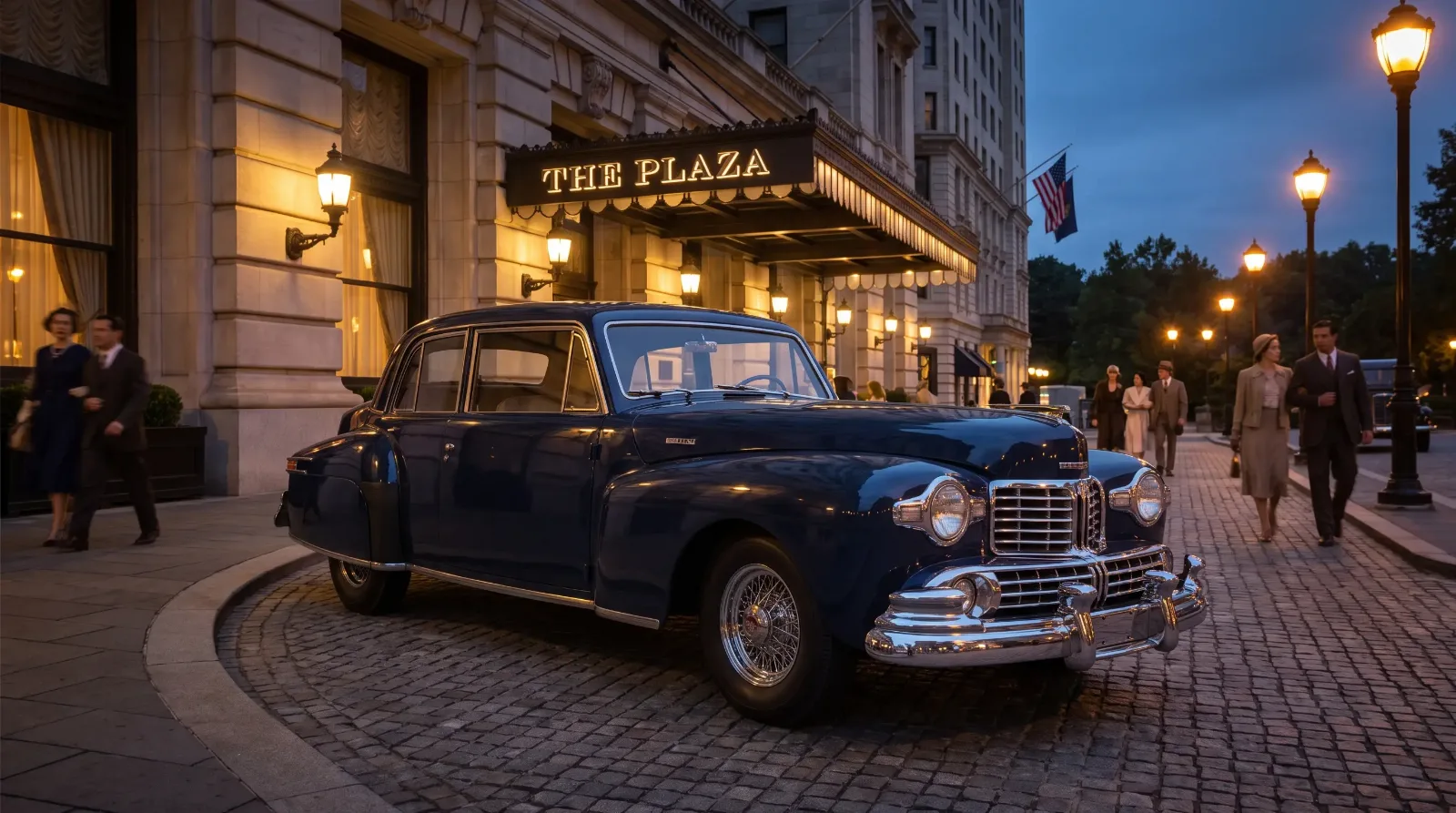
These cars were the transition. They carried the size and formality their buyers expected from a luxury automobile while adapting to a world where hand-built coachwork was becoming an expensive anachronism. For the fuller decade this fits into, the 1940s luxury cars story is worth reading alongside this one.
What made a luxury cruiser in this era
Size and presence mattered enormously. These were substantial cars, long wheelbases, wide bodies, and a visual weight meant to signal status from across a parking lot. Cadillac, Lincoln, Packard, and Chrysler's Imperial line all competed for the same buyer, one who wanted a car that looked expensive because, quite plainly, it was.
Interior appointments carried the rest of the argument. Leather upholstery, wood trim, and increasingly sophisticated accessories, power windows and seats among them, distinguished a luxury cruiser from the mainstream models sharing the same basic chassis engineering underneath. The engineering itself had genuinely advanced during the war years, since automakers had spent that period building military hardware rather than cars, and some of that wartime metallurgy and manufacturing precision found its way into postwar civilian production.
The coachbuilt tradition, fading but not gone
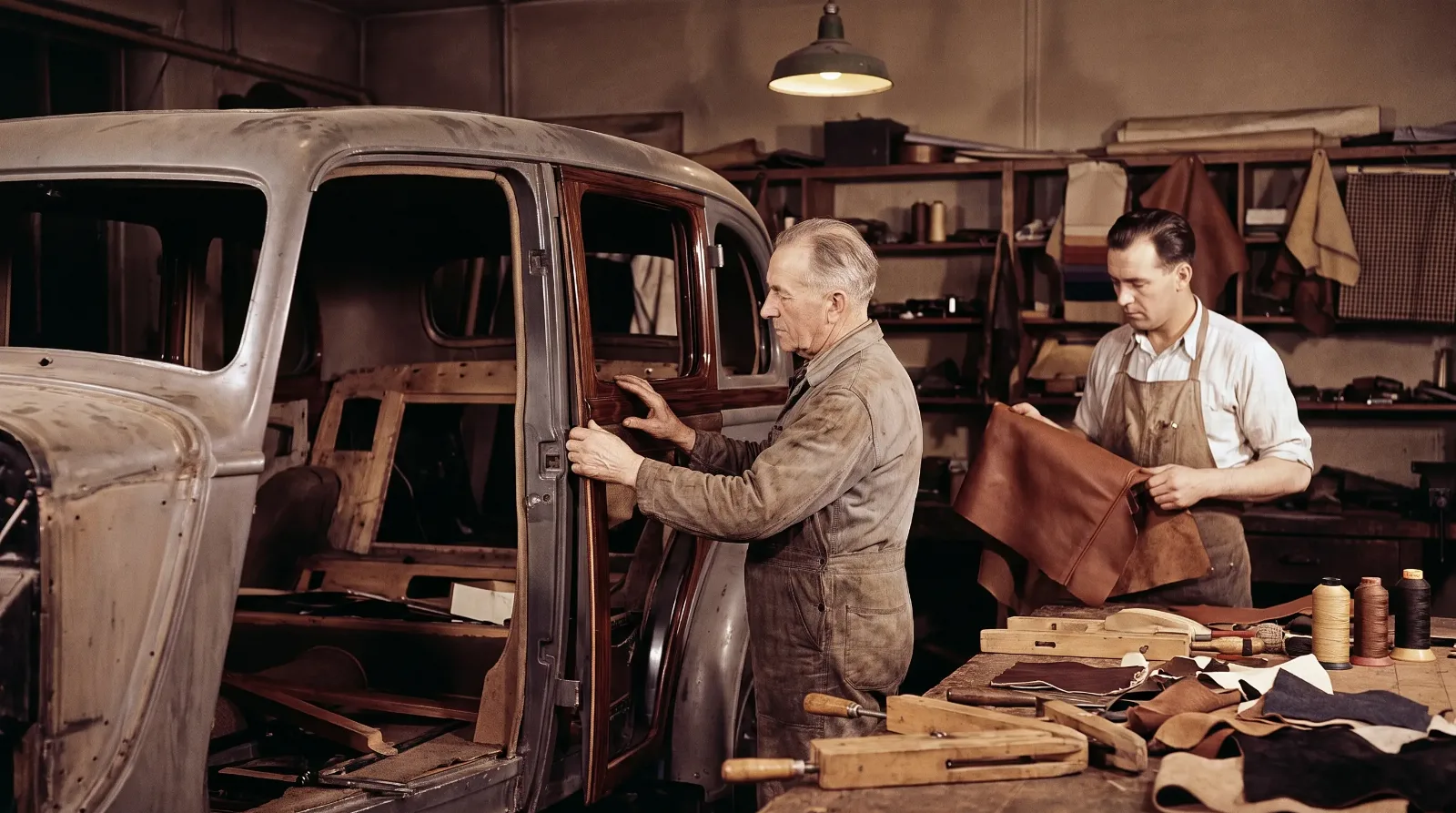
A handful of manufacturers still offered custom coachwork in the late 1940s, though the practice was clearly in decline. The economics no longer worked the way they had before the war. Hand craftsmanship on that scale required time and skilled labor that postwar manufacturing costs made difficult to justify for anything beyond the most exclusive, lowest-volume models.
What replaced true coachbuilding was a factory approximation of it, well-executed trim packages and formal body styles built on the regular production line rather than assembled individually by a separate coachbuilder. The distinction matters to anyone studying the period closely, because a factory formal sedan and a genuinely coachbuilt car from a decade earlier are different categories of object, even when they sit side by side and look, to the casual eye, similarly grand. If you want the full story of what a true coachbuilt car actually was and how it was made, read on for that history in depth.
The Lincoln Continental's design legacy
The Lincoln Continental deserves particular attention for how well its proportions have aged. Its long hood, low beltline, and restrained ornamentation stood apart from the more heavily chromed competition, and that restraint is exactly why the design still reads as sophisticated rather than dated. It is a case study in how understatement, done with real conviction, outlasts the flashier choices its contemporaries made.
The car's continued influence on American design language is worth noting as well. Later designers studied its proportions as a reference point for how a formal American luxury car could avoid looking overwrought, a lesson the industry did not always heed but never entirely forgot either.
| Model | Signature feature | Design legacy |
|---|---|---|
| Lincoln Continental | Low beltline, restrained chrome | Reference point for postwar American elegance |
| Cadillac Sixty Special | Formal roofline, factory custom trim | Bridge between coachbuilt tradition and volume luxury |
| Packard Custom Super Clipper | Pre-war prestige carried forward | Faded slower than the brand's later fortunes |
| Chrysler Crown Imperial | Long wheelbase formal sedan | Favored for limousine and formal duty |
How the mainstream makes answered the same brief
Not every manufacturer chasing this market had a Continental or a Sixty Special in its lineup, and the mid-tier response is worth studying too. Chrysler's Crown Imperial pushed formality to an extreme with a genuinely long wheelbase aimed squarely at limousine and livery buyers, a niche that overlapped with luxury but was not quite the same thing. Buick and Oldsmobile fielded their own top-trim models, dressed with more chrome and better interior materials than their mainstream siblings, without pretending to compete directly with Cadillac or Lincoln on prestige.
That layered market, formal limousine-adjacent cars at the top, true luxury cruisers in the middle, and dressed-up mainstream models filling out the bottom of the category, gives collectors today a wider entry point than the marquee names alone suggest. A well-kept top-trim Buick from this era carries genuine period detailing at a price well below what a comparable Cadillac commands, which makes it a sensible way into the look and feel of the era without chasing the most sought-after nameplates.
Buyers of this era, and why it matters to collectors now
The buyer of a late-1940s luxury cruiser was often someone who remembered the pre-war coachbuilt era and expected some echo of it, even as the industry moved toward standardized production. That expectation shaped everything from the interior materials chosen to how dealers presented these cars to their most valued customers. Understanding that buyer's mindset helps explain design choices that can otherwise look purely decorative.
"These cars are transitional objects, and I mean that as praise, not a diminishment. They carried real weight from the coachbuilt era into a factory production world, and the best of them did it with genuine restraint rather than empty imitation."
Sarah Whitfield
For today's collector, that transitional status is exactly the appeal. A well-preserved late-1940s luxury cruiser offers scale and presence that later, more compact luxury cars simply cannot match, along with a direct visual link back to the coachbuilt tradition without the acquisition cost or fragility of an actual pre-war custom body. It is luxury history you can still drive on a Sunday, which is more than can be said for most of what came before it.
The story of what came after these cars is a different chapter entirely, one where a very different set of builders started reshaping American automobiles from the ground up. The next story picks up with that shift.
Sources and notes
- Wikipedia: Packard Clipper and Custom Super Clipper history
- Conceptcarz: 1947 Packard Custom Super Clipper Eight specifications
- Wikipedia: Chrysler Imperial and Crown Imperial production history
- The Truth About Cars: Crown Imperial limousine history
- Wikipedia: Lincoln Continental design and postwar production
- Hagerty: 1947 Packard Super Clipper valuation tool
Related Reading
Have a
Classic Car
for Sale?
Reach thousands of serious classic car collectors across the US.
Sell It Here →
Are You a Classic Car Dealer?
List your full inventory and connect with targeted classic car buyers.
Join as a Dealer →

About the author
Sarah Whitfield
Third-generation classic car collector specializing in pre-war American and European coachbuilt automobiles. Researcher and concours enthusiast.




Comments
Be the first to comment on this article.