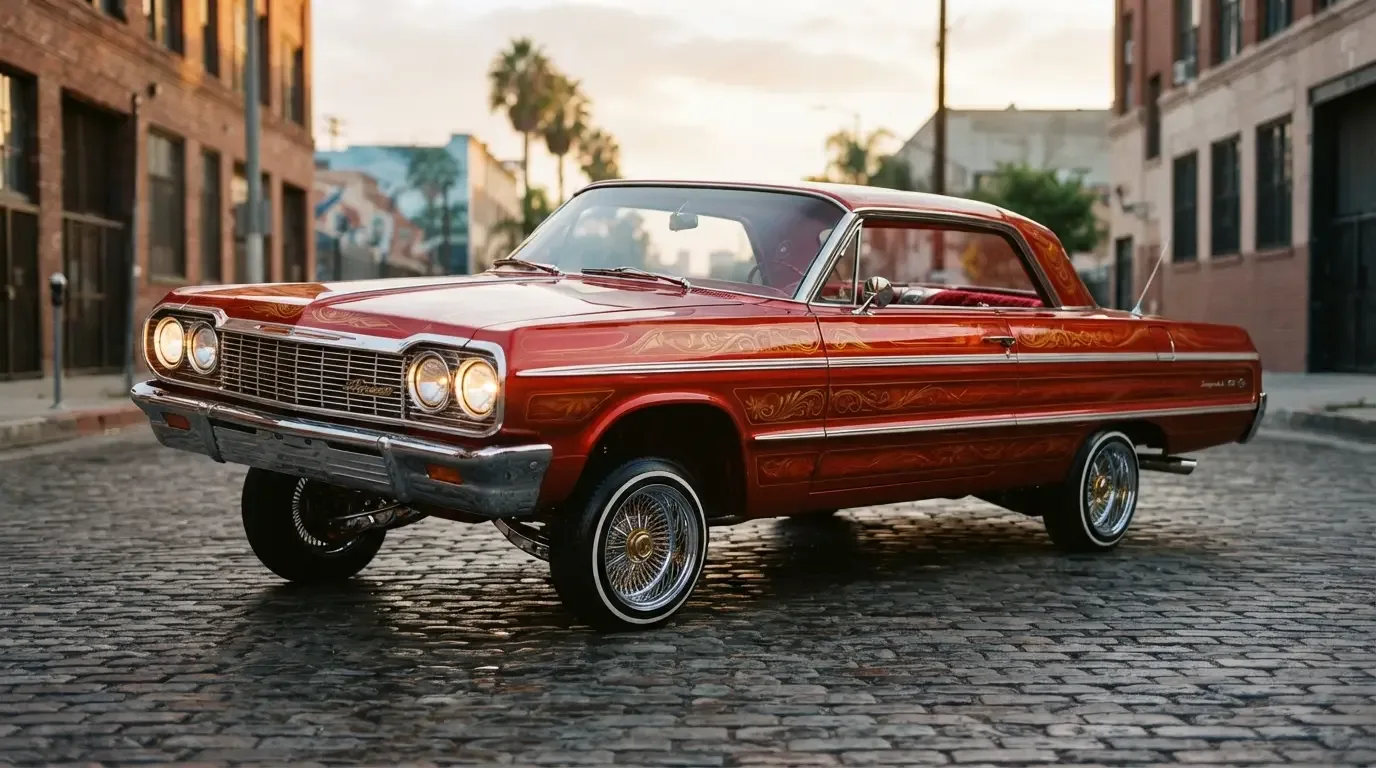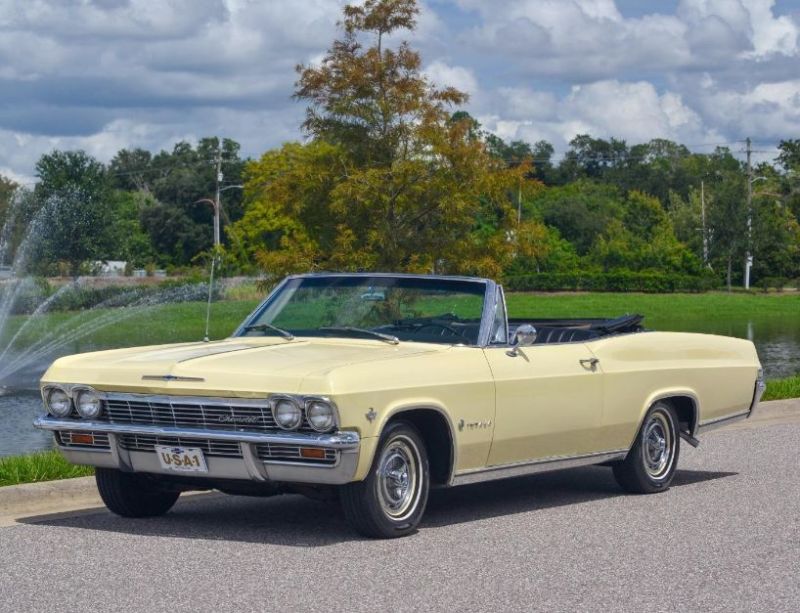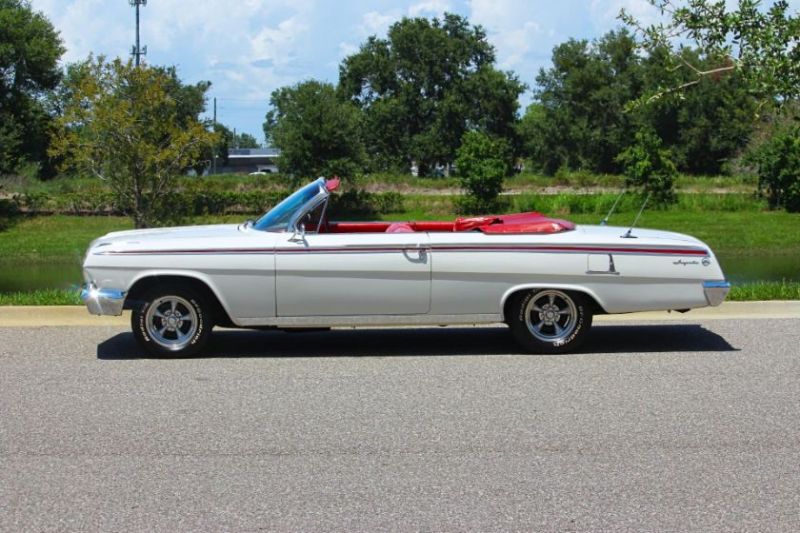
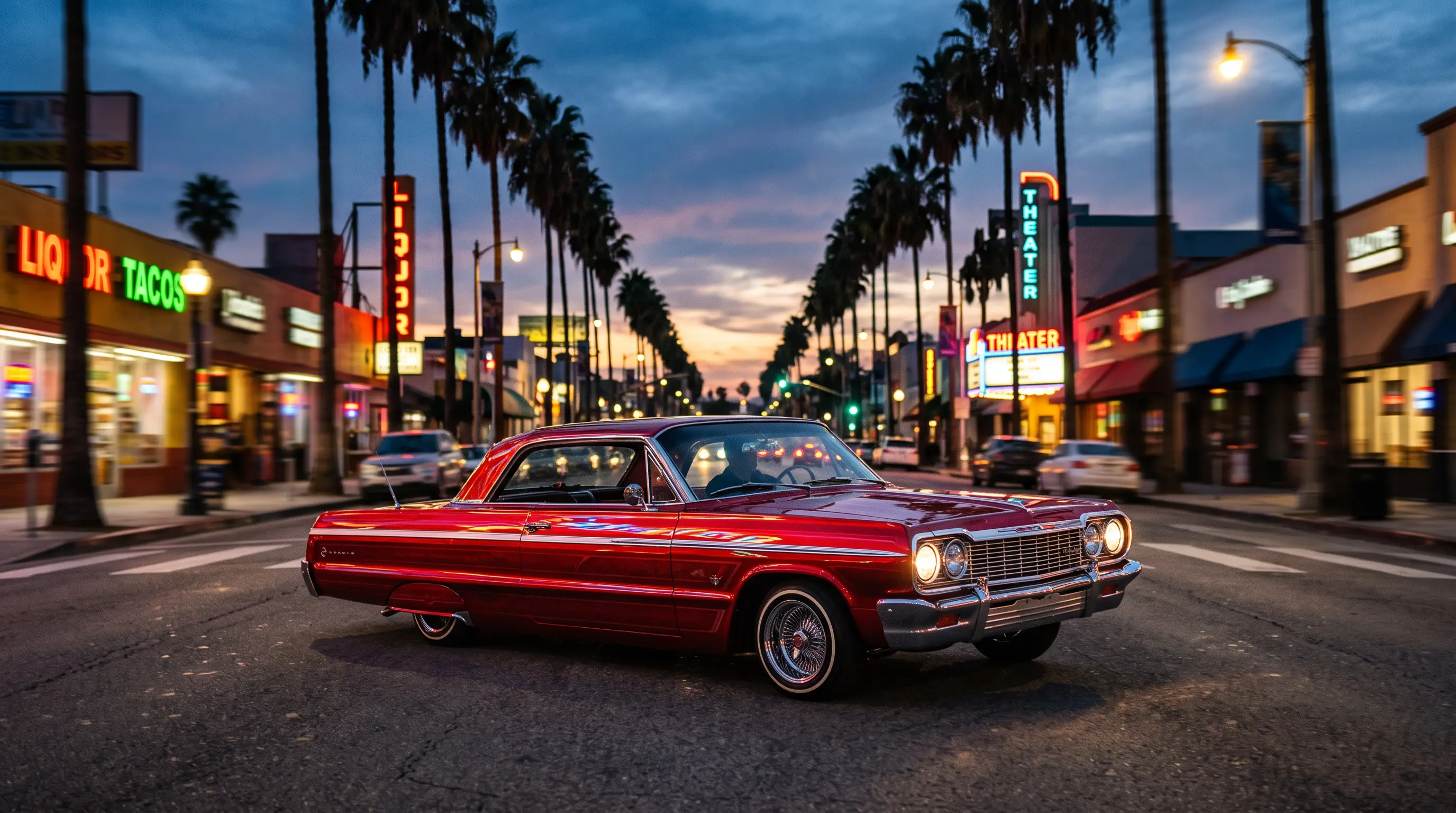
Saturday night on Whittier Boulevard in the early 1970s did not look like anywhere else in the country. Bumper to bumper, engines idling low, a river of chrome and candy paint crawling past storefronts at a pace that had nothing to do with getting somewhere and everything to do with being seen. Somewhere in that river, more often than not, sat a Chevrolet Impala, hydraulics ticking, whitewalls gleaming under the streetlights, moving slower than a man could comfortably walk. That was cruising, and it was never really about the destination.
A ritual, not a drive
Cruising grew up alongside the lowrider movement itself through the 1960s and into the 1970s, mostly in Mexican American neighborhoods across Los Angeles, with Whittier Boulevard becoming its most famous stretch. Families and car clubs would gather on weekend nights, park along the curb, walk between cars to talk and admire work, then slide back behind the wheel and inch forward with the rest of the procession. The whole event functioned almost like a rolling block party, except the block moved at three miles an hour and everyone involved had spent months, sometimes years, preparing their car to be part of it.
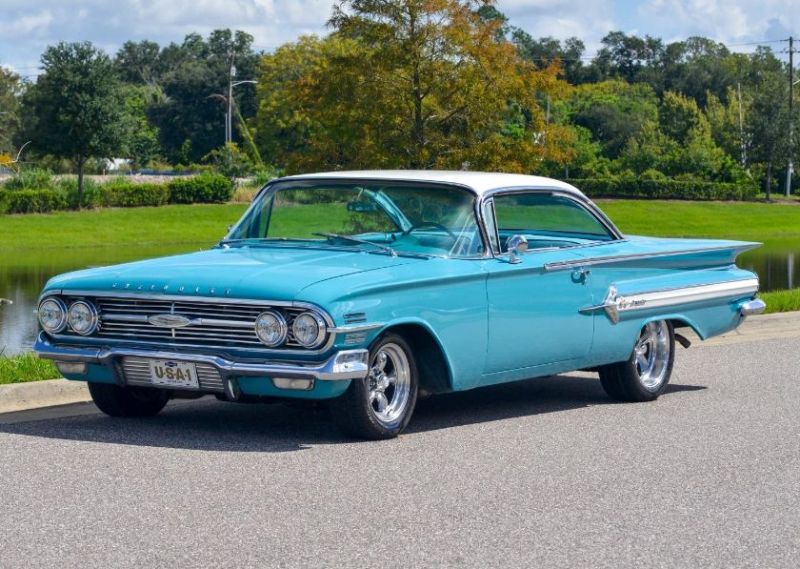
The Impala fit this ritual almost perfectly. Long and low even before any customization, with body panels wide enough to carry a mural and a stance that hydraulics could drop to a crawl, it gave builders exactly the canvas cruising culture wanted. A car built for cruising was built to be looked at from the sidewalk as much as driven from the seat, and few American sedans of the era offered that combination the way the Impala did.
The hydraulics changed the choreography
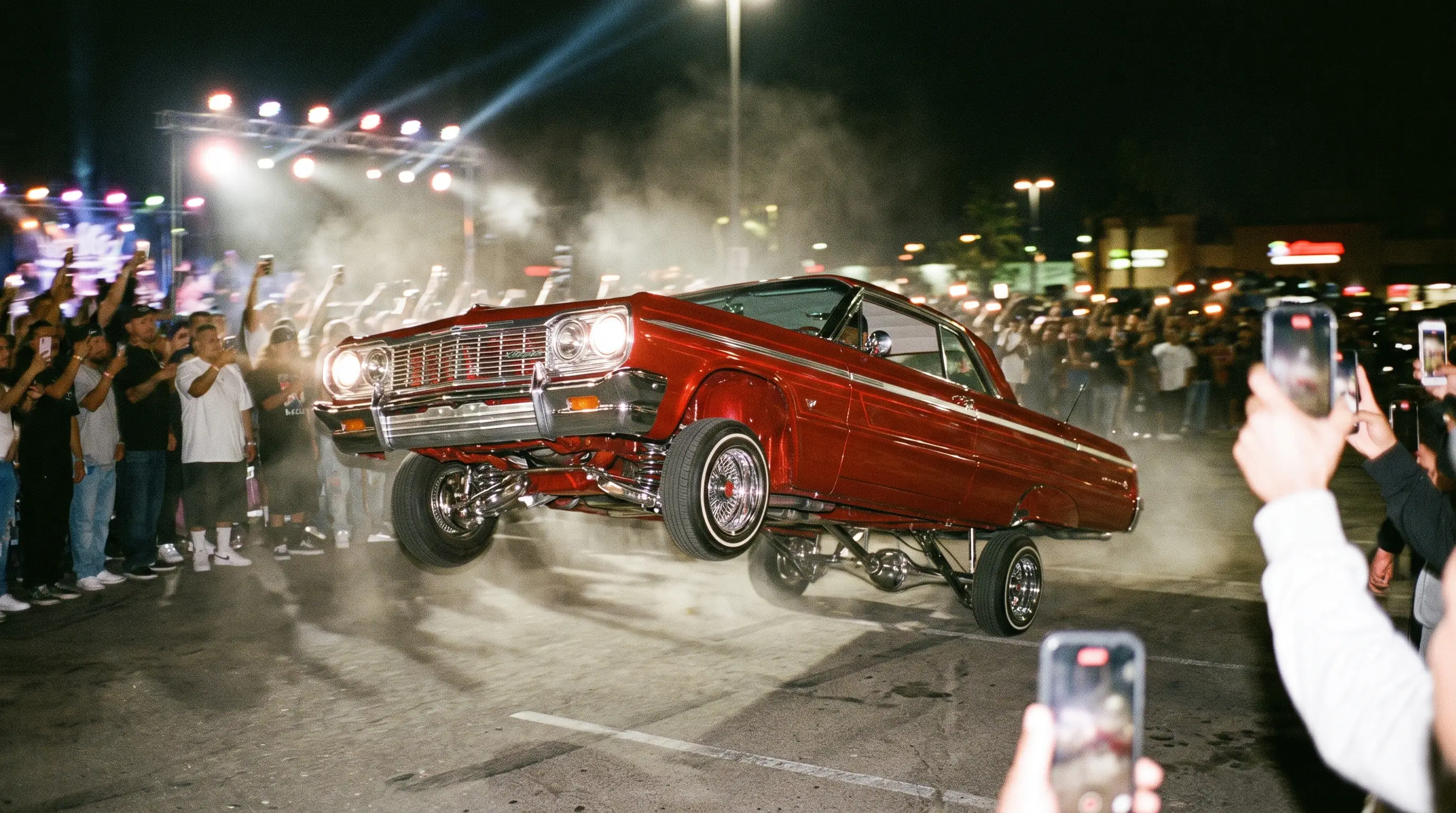
Once hydraulic suspension systems became common through car clubs in the late 1960s, cruising picked up a performance element it had not had before. A car could drop to the pavement at a stoplight, then rise back up as the light changed, and skilled drivers learned to work the switches in rhythm with the crowd's reaction. This was showmanship built directly into the act of driving, something that had never existed in quite this form on American streets before, and the Impala's factory suspension geometry made it a favorite platform for builders adapting hydraulic setups to a full size body.
Car clubs organized the whole scene more than people outside it usually realize. Clubs kept members accountable to build standards, planned which nights a stretch of boulevard would fill up, and often served as the social backbone for entire neighborhoods, hosting picnics and charity runs alongside the cruise nights themselves.
A culture that outlasted the crackdowns
Those ordinances, and the police attention that came with them, pushed cruising indoors in a sense, moving much of the scene toward sanctioned car shows, club meets, and eventually into a national and even international lowrider movement that spread the Impala's status far beyond Los Angeles. Cities in Texas, the Midwest, and eventually Japan developed their own lowrider scenes, all tracing a direct line back to those Saturday nights on Whittier Boulevard. The Impala remained the model most associated with the whole tradition through every one of those transplants, largely because the cars that had defined the original cruising scene were Impalas, and later builders wanted to honor that lineage rather than reinvent it.
Anyone wanting the lowrider impala story in full will find that cruising sits right at the center of it, not as a footnote but as the actual reason the culture organized itself around this particular car in the first place. And for readers curious how the Impala got to this point at all, going back to the full story fills in the decades before lowrider culture claimed the model as its own.
"Nobody cruised Whittier Boulevard to get somewhere. The whole point was arriving nowhere, slowly, in front of everybody who mattered."
- Patrick Walsh
Music that moved with the traffic
Nobody cruised in silence. Oldies and soul records rolled out of open windows, and the pace of the traffic meant a song could carry across three or four cars before it faded, layering into whatever was playing from the next Impala down the line. Certain records became so tied to the scene that hearing them today still conjures the boulevard for anyone who was there, and the music choices were as much a marker of taste and identity as the paint job rolling past. Radio stations in Los Angeles took notice of the connection and leaned into it, and some of the clearest documentation of the era comes from DJs who understood exactly what soundtrack belonged to a slow moving line of customized Impalas.
Dress mattered too, in a way that got coordinated without anyone writing rules down. Club jackets, pressed shirts, a certain unhurried posture behind the wheel, all of it was part of presenting the car correctly. A spotless Impala driven by someone who looked like they had somewhere urgent to be missed the point entirely. The whole performance depended on looking like you had nowhere better to go, because for that night, on that boulevard, there genuinely was not.
What the boulevard actually meant
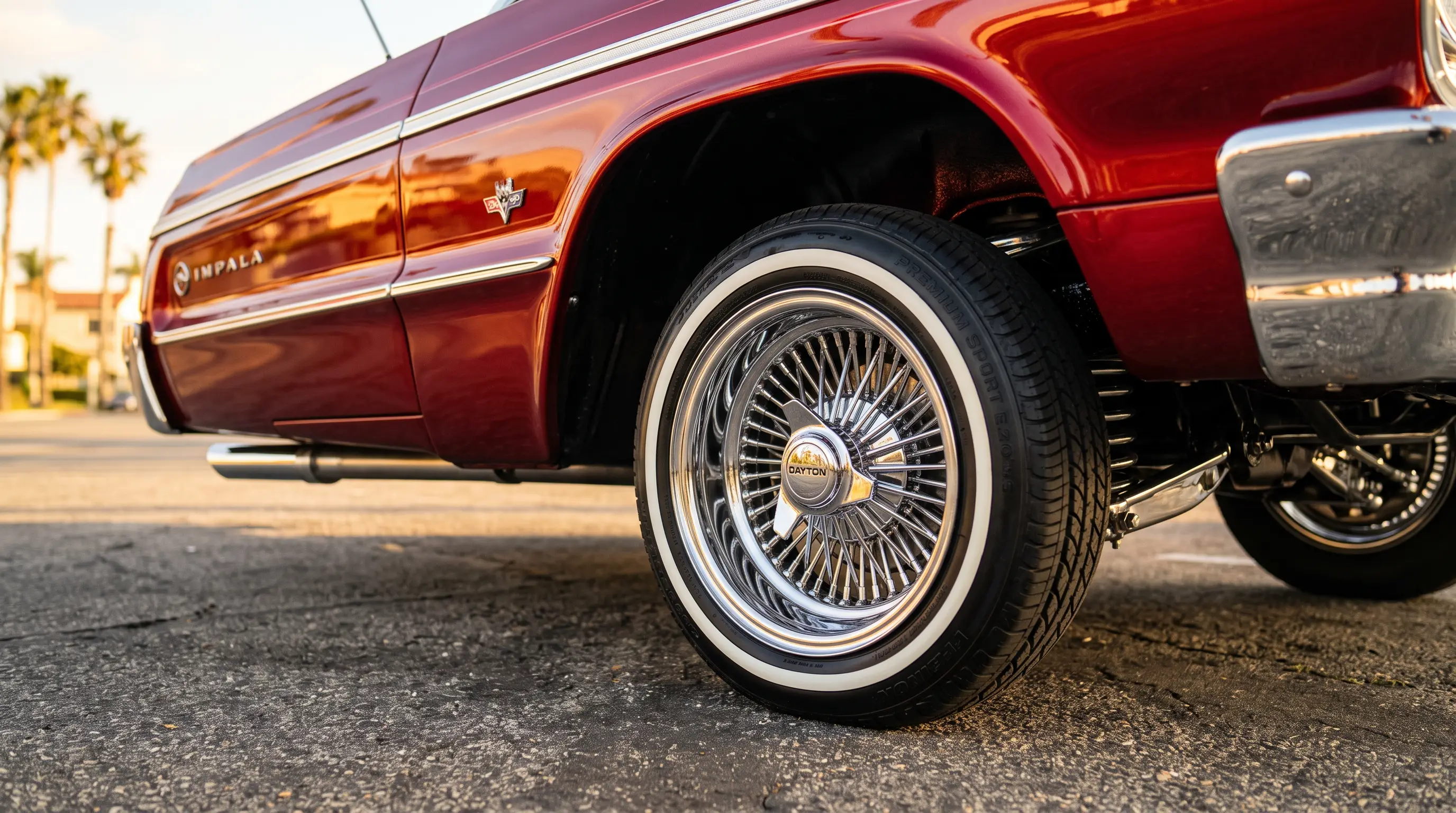
It is easy from a distance to read cruising as a car show that happened to move, but that undersells what the boulevard did for the neighborhoods that built it. In an era when a lot of media coverage of Mexican American communities in Los Angeles leaned negative, cruising was a weekly demonstration of craftsmanship, patience, and pride that the community controlled entirely on its own terms. A family that had put a year of savings into a candy paint job and a set of Daytons was not asking for anyone's approval. They were showing the neighborhood, and each other, what they had built. That distinction, between performing for outsiders and gathering for each other, is part of why the tradition has been so durable even as the streets it happened on kept changing.
Sources and notes
- Lowrider - Wikipedia
- The history of lowrider culture and its multigenerational reach - NPR
- Lowriders roll down Whittier Boulevard as California lifts ban on cruising - ABC7 Los Angeles
- California Vehicle Code Section 24008 - California Legislative Information
- Going "Low and Slow" in East Los Angeles - Golden State
Still rolling
Modern cruise nights, revived in cities across the country over the last two decades, still gravitate toward the same combination that made the original scene work, a hydraulic equipped Impala moving at walking pace in front of a crowd that knows exactly what it is looking at. The boulevards have changed, the cars have gotten older and more valuable, but the choreography holds. If you are looking to be part of that lineage rather than just read about it, there are classic Impalas on the market right now built or ready to be built for exactly this kind of Saturday night. The ritual survived police crackdowns, changing neighborhoods, and half a century of automotive fashion because it was never really about the car alone. It was about a community that decided a slow, deliberate Saturday night parade mattered, and picked the Impala to carry it.