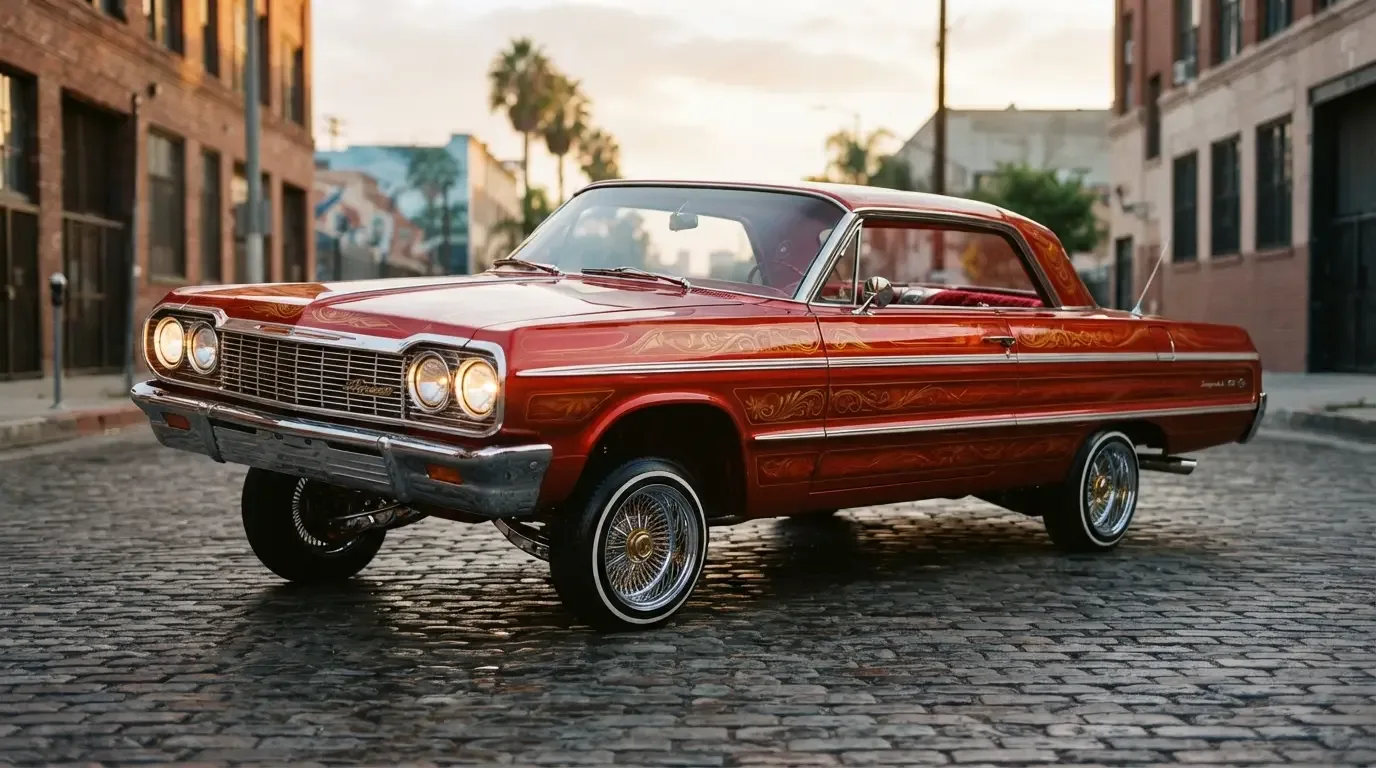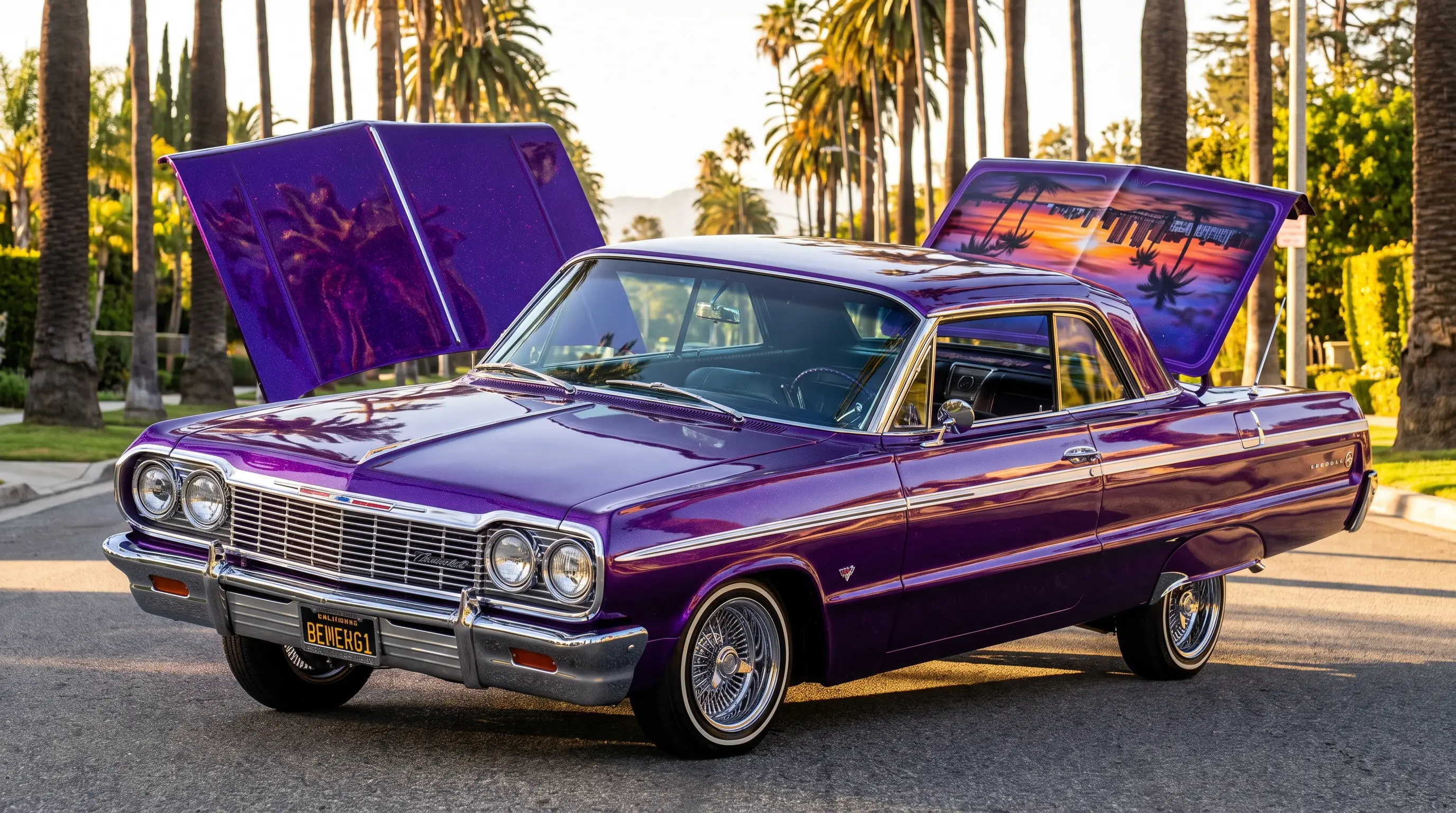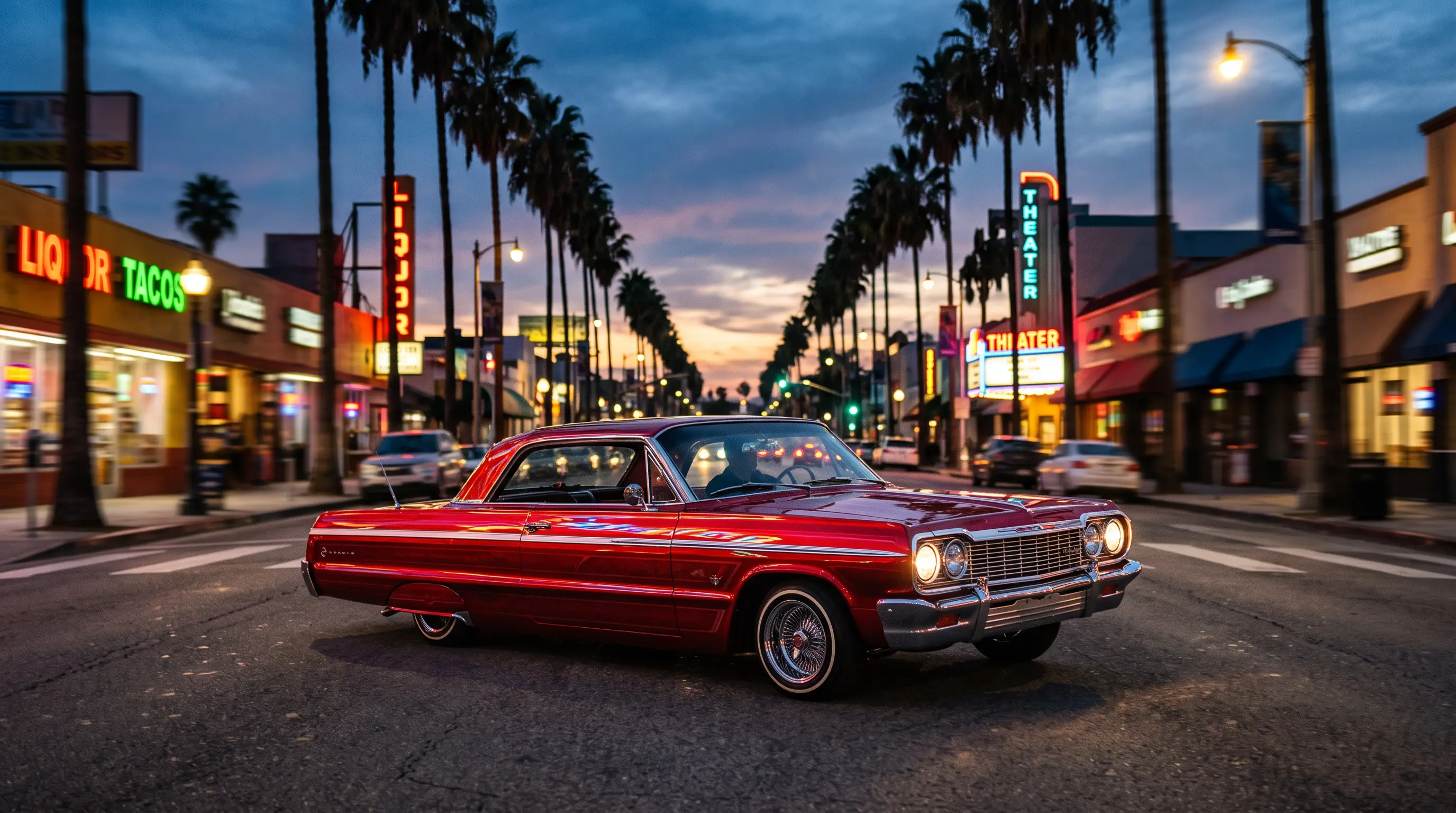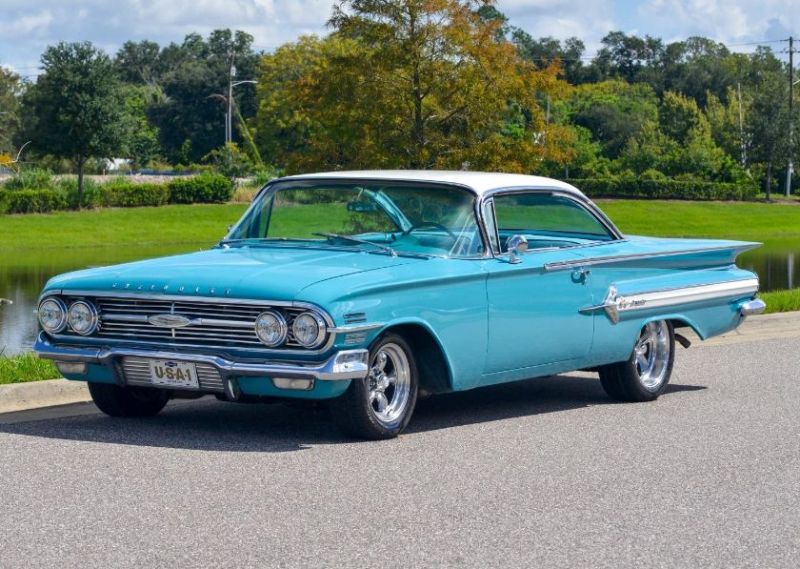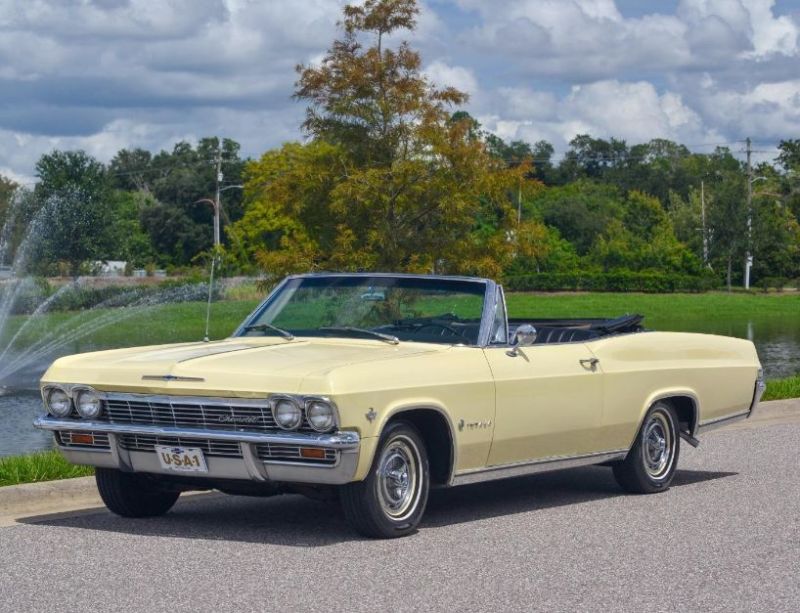
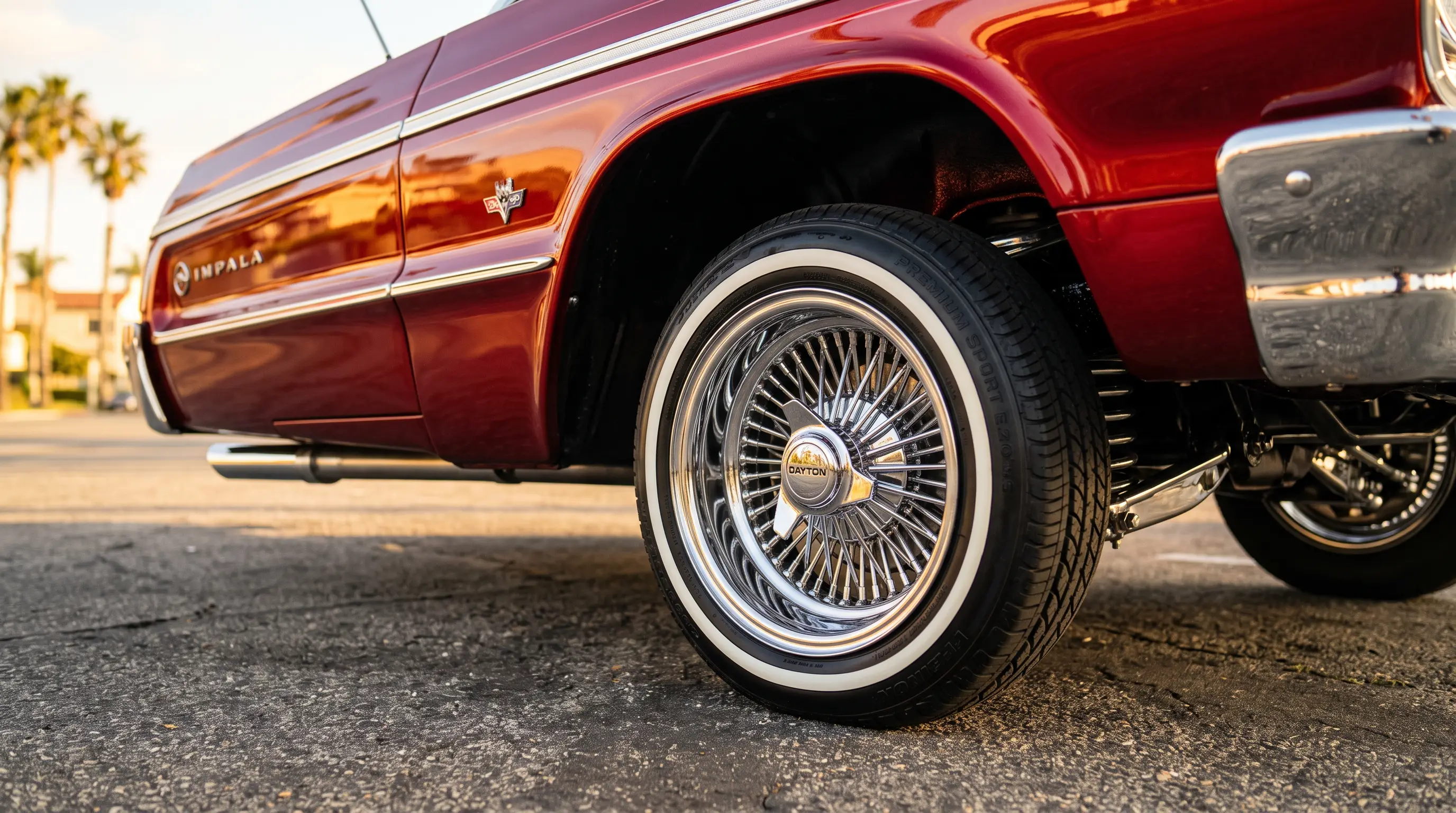
Nothing announces a lowrider Impala faster than the wheels. Before you notice the paint, before you catch the hydraulics doing their work, your eye goes to the spokes, thin wire crossing thin wire in a tight pattern, and a whitewall tire so wide and so clean it looks like it was never driven. Wire wheels on a Chevrolet Impala are not an accessory in this culture. They are close to the whole point, and understanding why takes you back further than most people expect.
Borrowed from an unlikely source
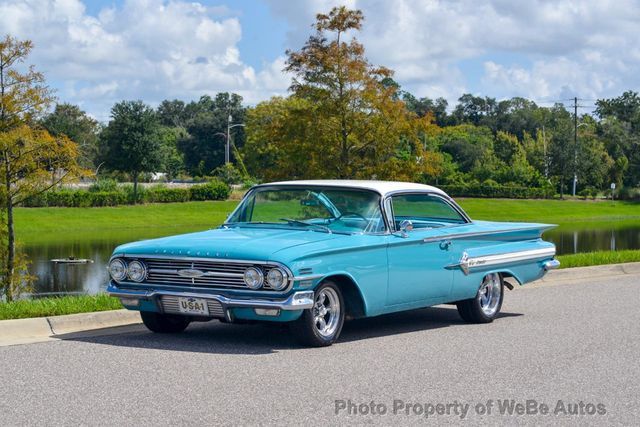
Wire wheels did not start on American muscle cars or Impalas at all. They came from British sports cars, MGs and Jaguars and the like, where thin spokes were a genuine engineering answer to keeping a wheel light. When custom builders in Southern California started looking for a way to make a heavy American sedan look lighter and more delicate on the road in the 1960s, wire wheels were sitting right there as an option, already familiar from imported sports cars showing up on local streets. Bolting a set onto a Chevrolet Impala created a visual contradiction that the scene loved immediately, a big American car carrying wheels associated with small European roadsters, and that contradiction became part of the appeal rather than something to hide.
Dayton Wire Wheel, an Ohio company that had been making wire-spoke wheels since 1916, built a reputation specifically around lowrider wire wheels once Lowrider magazine connected the company with builders in East Los Angeles in the 1980s, and a genuine set of Daytons became a status marker on its own, separate from the rest of the build. Getting a set chromed and knock off spinners installed correctly was not cheap, and everyone in the scene knew it, which is exactly why people paid for it.
The whitewall did half the work
A wire wheel by itself only tells half the story. Pair it with a tall, wide whitewall tire and the whole wheel and tire package changes the way an Impala reads from the sidewalk. The white band draws a second frame around the wire spokes, and the combination reads as clean and deliberate in a way that a blacked out modern wheel never quite manages. Builders learned to match whitewall width to wheel diameter carefully, because get that ratio wrong and the whole package looks unfinished no matter how much money went into the chrome.
Knock off spinners, the eared metal caps at the center of the wheel that you tap loose with a mallet rather than unbolt with a socket, became their own small showpiece. A chromed spinner catching light at a cruise or a car show is a detail that gets photographed almost as often as the paint job itself.
Function fought with fashion
Wire wheels were never the practical choice for a car that also carried hydraulics and got driven regularly. Thin spokes are more fragile than a solid alloy wheel, and a heavy Impala body bouncing on a hydraulic setup put real stress on a wheel designed originally for a much lighter British sports car. Builders accepted that tradeoff without much argument, because a lowrider Impala was never built around durability as the top priority. It was built to be looked at, to communicate something about the owner and the club, and a wire wheel did that job better than anything more sensible would have.
Maintenance became part of the culture too. Keeping spokes true, chrome polished, and knock offs tight took real time, and that upkeep became a point of pride passed between older and younger builders at shows and picnics, the kind of knowledge that got taught hands on rather than read off a page.
"A lowrider wire wheels setup done right takes more upkeep than the engine does, and that's kind of the point. Anybody can buy a car. Keeping a set of Daytons true and chromed for twenty years, that's a relationship."
- Hector Morales
Rims got bigger, the spirit stayed the same
Through the 1980s and into the 1990s, wheel sizes crept upward as builders looked for a bolder statement, moving from smaller diameters up toward thirteen and fourteen inch wire wheels that left less tire showing and put more chrome spoke on display. Some builders went further still, chasing larger diameters for shows where the wheel itself became the main event rather than a complement to the paint. Purists in the scene sometimes pushed back on the biggest sizes, arguing that a proper lowrider stance depended on a certain proportion between wheel and tire that got lost once the whitewall shrank down to almost nothing. That argument never fully settled, and it still comes up at shows today between builders who favor the classic look and those chasing something more extreme.
Regional taste played a role too. Cars built and shown around Los Angeles tended to favor a more restrained wheel and whitewall balance, while builders in other parts of the country sometimes leaned harder into bigger chrome. None of it was wrong exactly, it was just a different dialect of the same visual language, and a builder's choice of wheel size often told you almost as much about where a car came up as the plaque bolted to the dash did.
Still the signature look
Modern lowrider builders still reach for wire wheels first when they want a car to read as authentic rather than just customized. The look survived decades of changing wheel trends elsewhere in the automotive world because it was never really about following a trend. It was about a specific visual language that grew up around Impalas, Monte Carlos, and other Southern California cruisers, and that language has not needed updating because it still communicates exactly what it always did. If you want the whole picture of how this culture built itself around the Impala in the first place, that story fills in a lot of the context around why the wheels matter as much as the paint. And for anyone chasing that look themselves, you can shop classic Impala listings to find a car that already wears it, or the right starting point to build it.
What has held steady through all of it is the standard. A wire wheel that is not true, chrome that has gone dull, a whitewall gone gray, these things get noticed at a show faster than almost anything else on the car, because this is a detail the whole community learned to read closely a long time ago, and nobody has forgotten how.