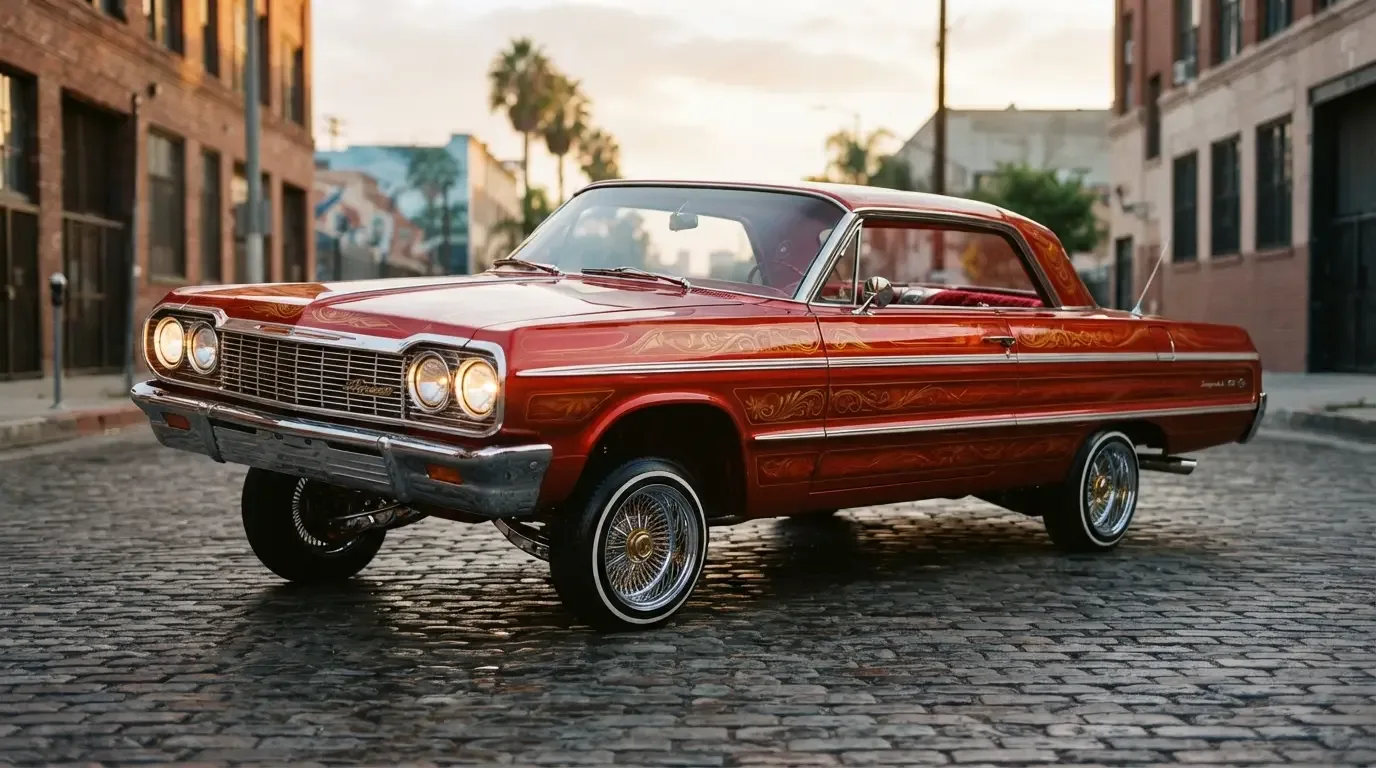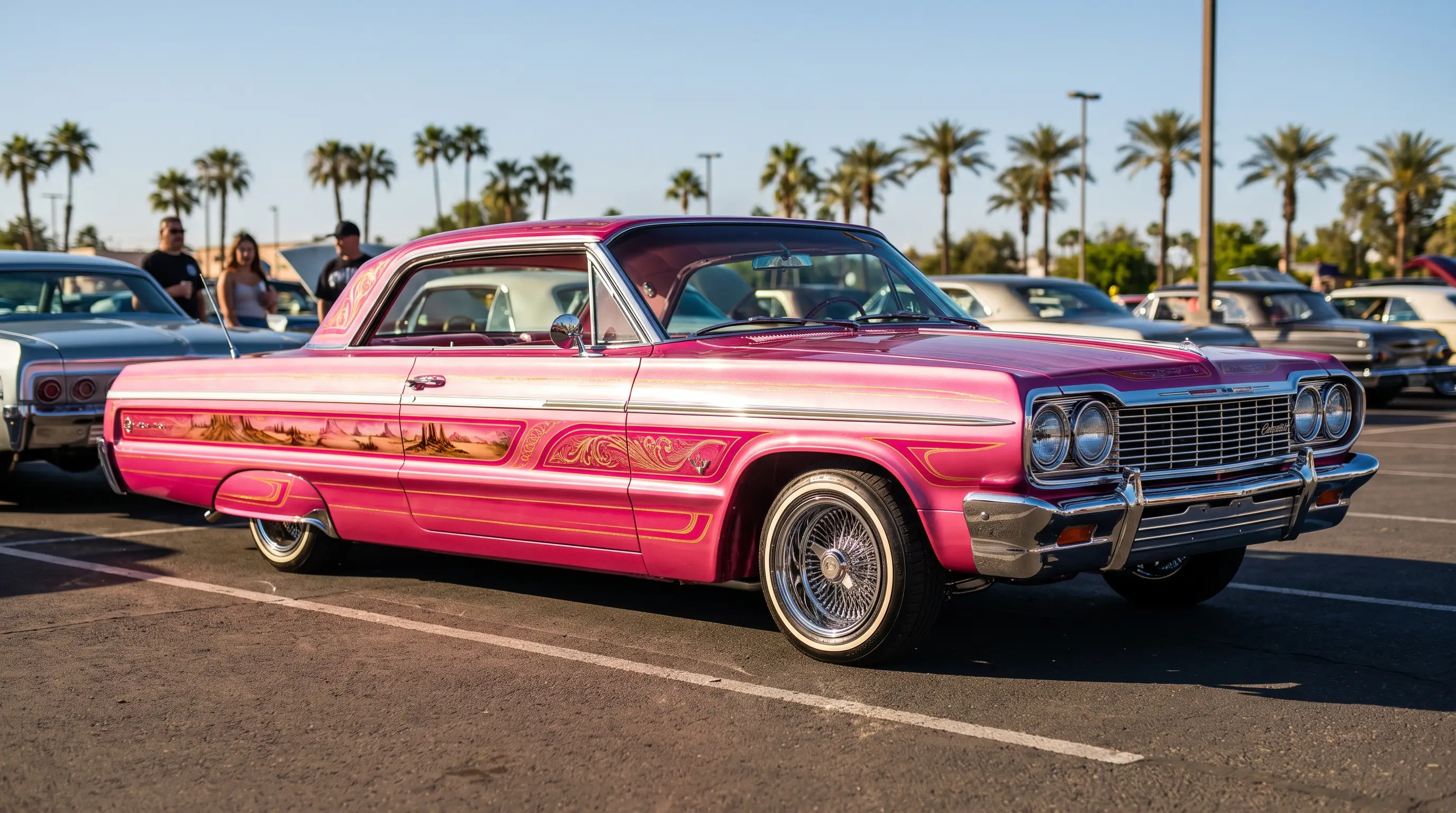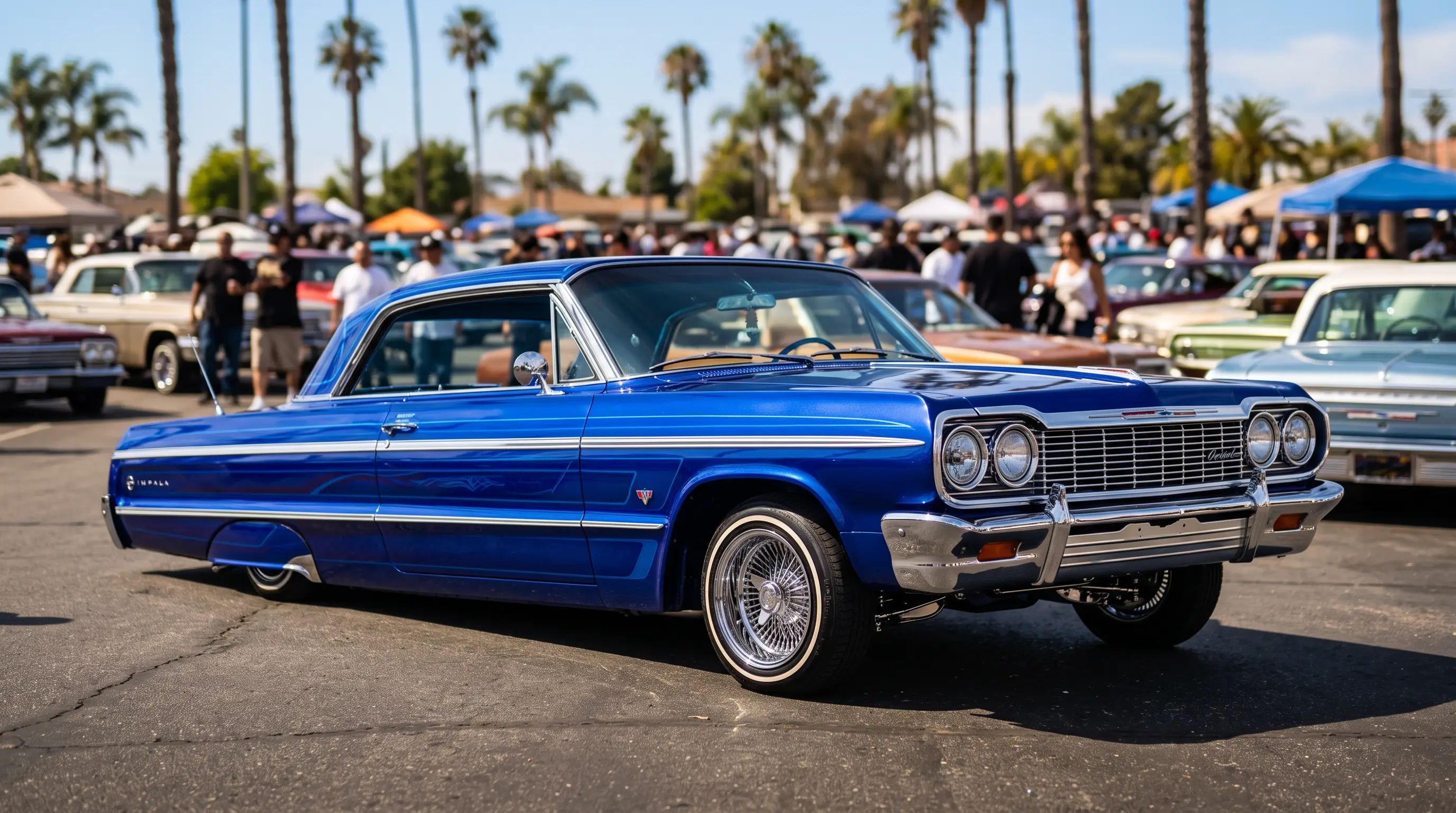
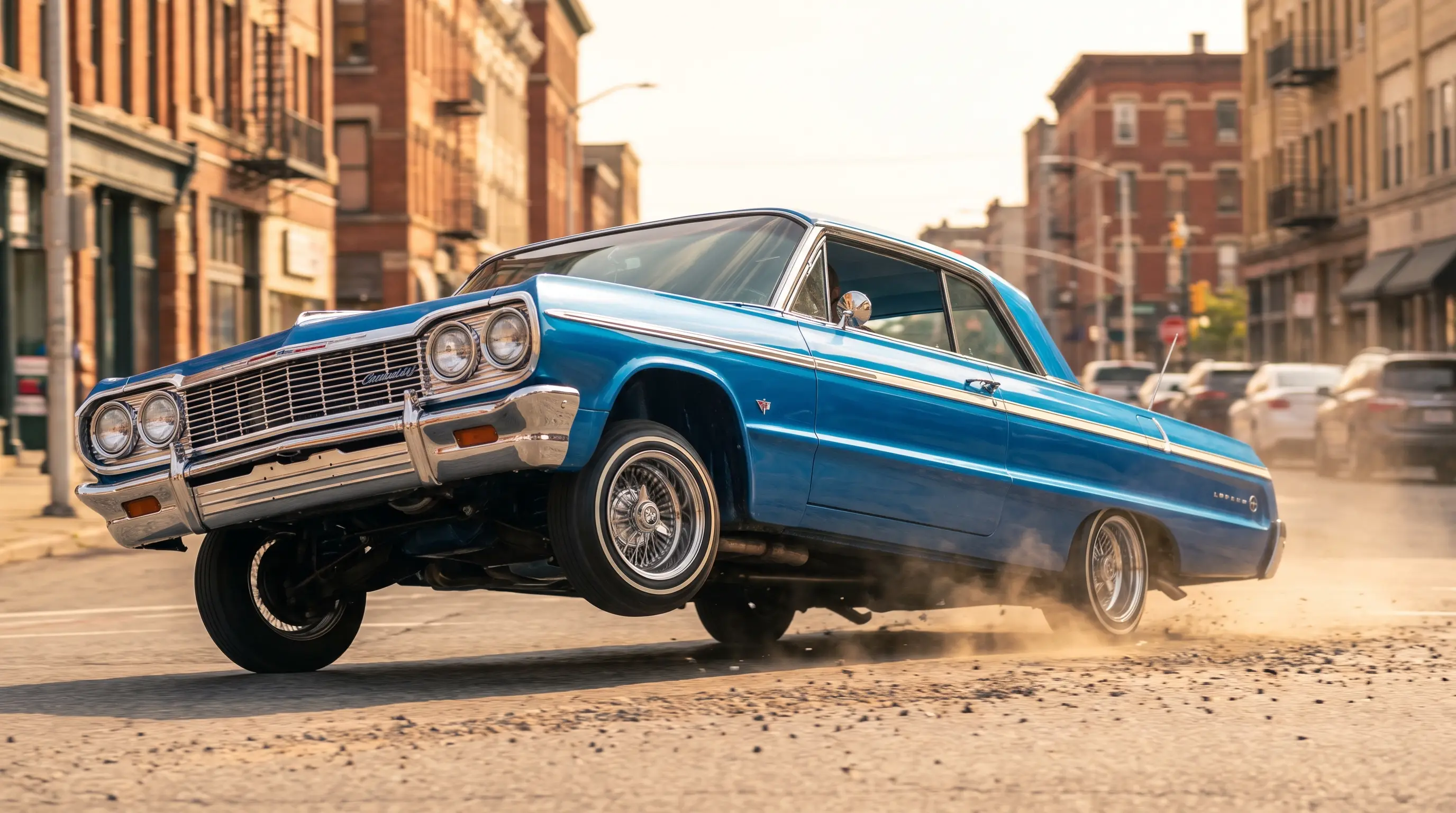
Before hydraulics, lowering a car meant cutting coils, heating springs, or shoving cinder blocks in the trunk, and every one of those tricks came with the same problem. California had laws against riding too low on a public street, and a fixed suspension gave the police an easy ticket. Lowrider hydraulics history really begins with builders solving that exact problem, figuring out how to sit an Impala on the ground for a photo and then legally raise it back up the moment a patrol car rolled by. What started as a workaround became the defining technology of an entire culture.
The problem hydraulics actually solved
Law enforcement in California targeted lowered cars specifically, and static suspension modifications left builders with no way around a citation once a car was measured too close to the ground. Aircraft surplus hydraulic pumps, the kind used to move flaps and landing gear, gave inventive builders in the late 1950s and early 1960s a way to raise and lower ride height on demand. Flip a switch, the car lifts to a legal height, flip it back, the car drops to the ground. That flexibility turned a legal loophole into a mechanical showcase almost by accident.
Once builders realized the same system that let them dodge a ticket could also make a car bounce, dance, and hop for a crowd, hydraulics stopped being purely functional and became performance. Car shows started rewarding the builds that could hop highest or dance most dramatically, and that competitive pressure pushed the technology forward fast, with builders adding more pumps, more batteries, and more sophisticated switch setups every year.
Why the Impala became the preferred platform for this technology
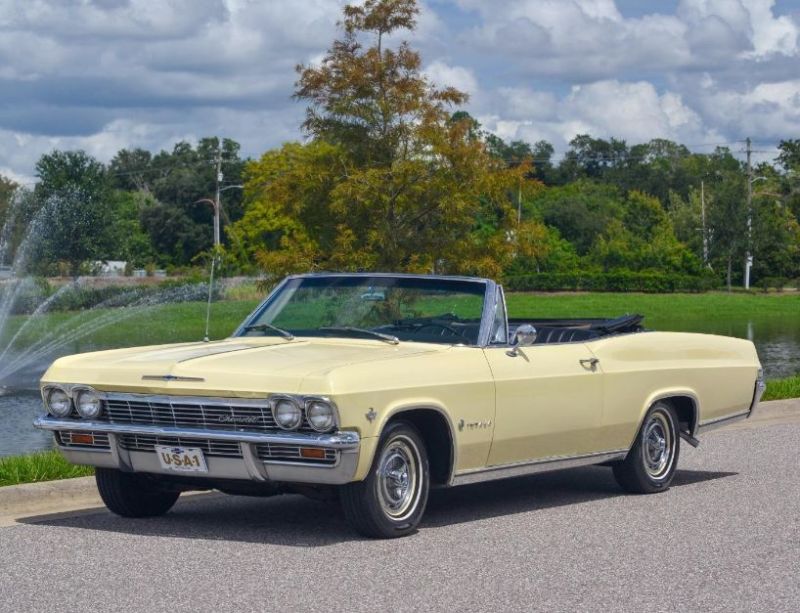
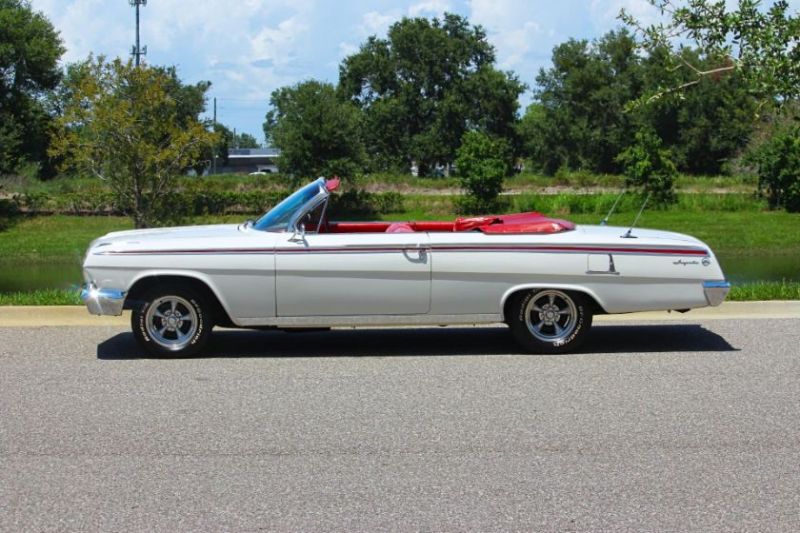
Not every car handled hydraulic installation equally well. The full frame construction under Chevrolet's big full size cars, especially the Impala, gave hydraulics something solid to lift against without the body flexing or cracking under repeated cycling. Lighter unibody cars from other manufacturers just could not take the punishment of daily hopping and dropping the way a full frame Impala could. Builders noticed this quickly, and word spread through clubs and shops that Impalas held up where other bodies gave out.
How the systems evolved over the decades
The earliest setups were simple, a pump, a battery, and basic valves controlling two or four points on the car. As competition between builders intensified through the 1970s and beyond, systems grew more elaborate, with multiple batteries wired for higher voltage bursts, dedicated switch boxes mounted inside the cabin, and reinforced frame points designed specifically to handle the stress of aggressive hopping. What started as a way to avoid a ticket turned into a genuine engineering discipline within the culture, with builders trading knowledge about pump specifications and battery configurations the way hot rodders traded carburetor jetting tips.
This evolution never happened in isolation from the rest of lowrider culture. The clubs that organized shows and cruises were the same clubs pushing hydraulic technology forward, because a club's reputation depended partly on how well its cars performed at competitions. A builder chasing status within a club had every incentive to refine a hydraulic setup rather than leave it stock, and that competitive environment is a big part of why the technology advanced as quickly as it did.
"Hydraulics started as a way to beat a ticket and turned into the whole point of the build. That is the story of this culture in one sentence, we take something practical and make it into art."
- Hector Morales
The wiring and battery work nobody sees
What looks like magic from the outside, a heavy sedan dropping to the pavement and then leaping back up on command, is actually the product of careful electrical planning hidden entirely from view. Builders wire multiple deep-cycle batteries in series to generate the voltage bursts a pump needs for aggressive hopping, and every connection has to be secured against the vibration and impact that comes with the car slamming down repeatedly. A poorly wired setup does not just underperform, it can fail outright at a show in front of a crowd, which is exactly the kind of embarrassment that pushed builders to take this side of the craft as seriously as the paint and the bodywork.
Battery placement also became its own discipline. Early builders often relocated batteries to the trunk for weight distribution, then had to reinforce the trunk floor to handle the added mass without cracking under hydraulic stress. That kind of structural thinking, reinforcing exactly where the added weight and force would concentrate, separates a lowrider built to last from one that looks right for a single afternoon and then falls apart under real use.
What hydraulics mean to the culture today
A hydraulic setup on a lowrider is not just a mechanical system anymore, it is a statement about craftsmanship and heritage. Builders today still favor the same full frame Impala bodies that made this technology practical in the first place, decades after the original legal pressure that started it all eased up. The systems now are far more refined, but the core idea, a car that can sit on the ground and then rise on command, traces directly back to those early builders solving a very specific California problem with whatever surplus parts they could find.
Competitions built around hydraulic performance, hopping contests where cars are judged on how high they can bounce, remain a fixture at lowrider shows, connecting today's builders directly to that early era of experimentation. The technology has moved forward, but the spirit behind it, using mechanical ingenuity to turn a restriction into a showcase, has not changed at all.
If you want the fuller context on how this all ties together with the Impala specifically, read the background on how this Chevrolet became the defining body of the entire movement. And if the club side of this story interests you as much as the mechanics, it is worth a look too, since the clubs and the hydraulics evolved together, each pushing the other forward across decades of competition and craftsmanship.
Looking for a car with this kind of history
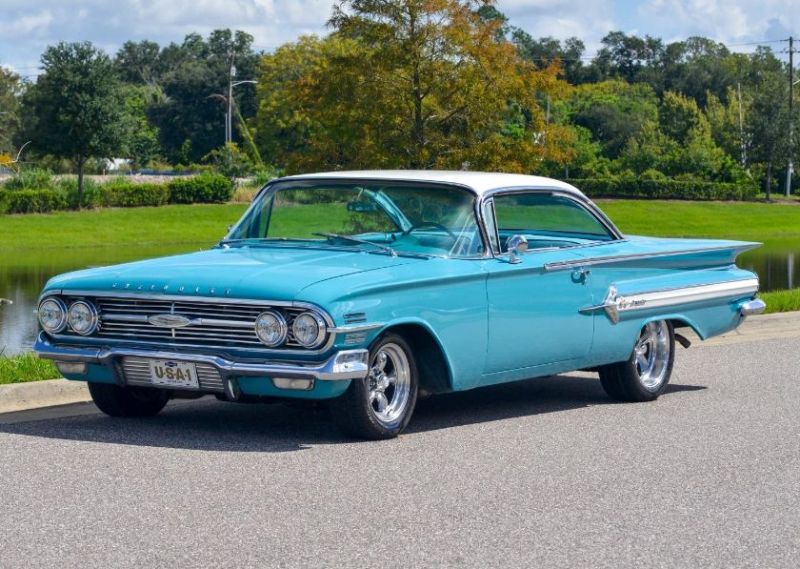
Anyone drawn to this story is usually drawn to the platform underneath it as well, and the Impala remains the most common starting point for builders working within this tradition today, for the same structural reasons that made it the choice back when hydraulics were brand new. If that history has you thinking about starting your own project or adding a piece of it to your garage, it is worth taking a moment to shop classic Impala listings and see what full frame candidates are actually available right now, since the right starting point matters just as much today as it did to the builders who invented this whole approach decades ago.