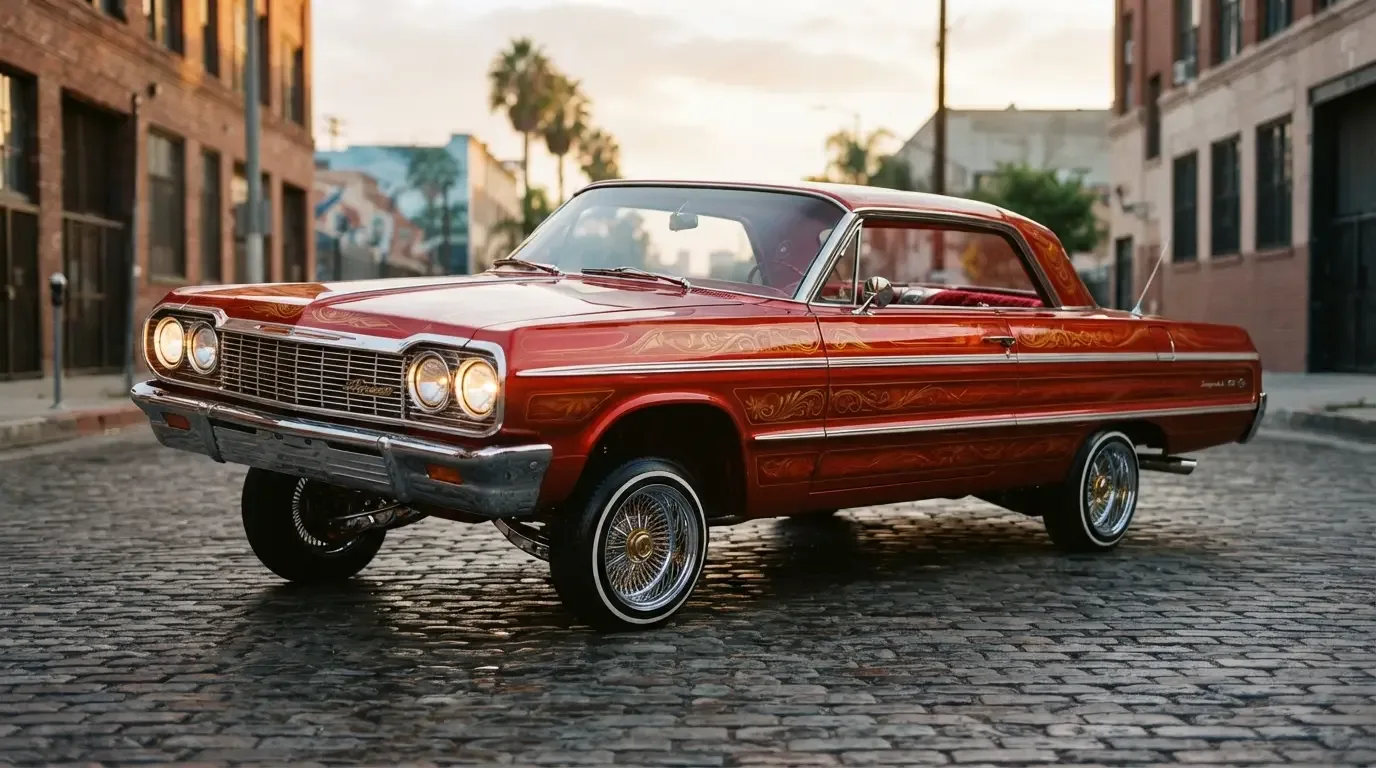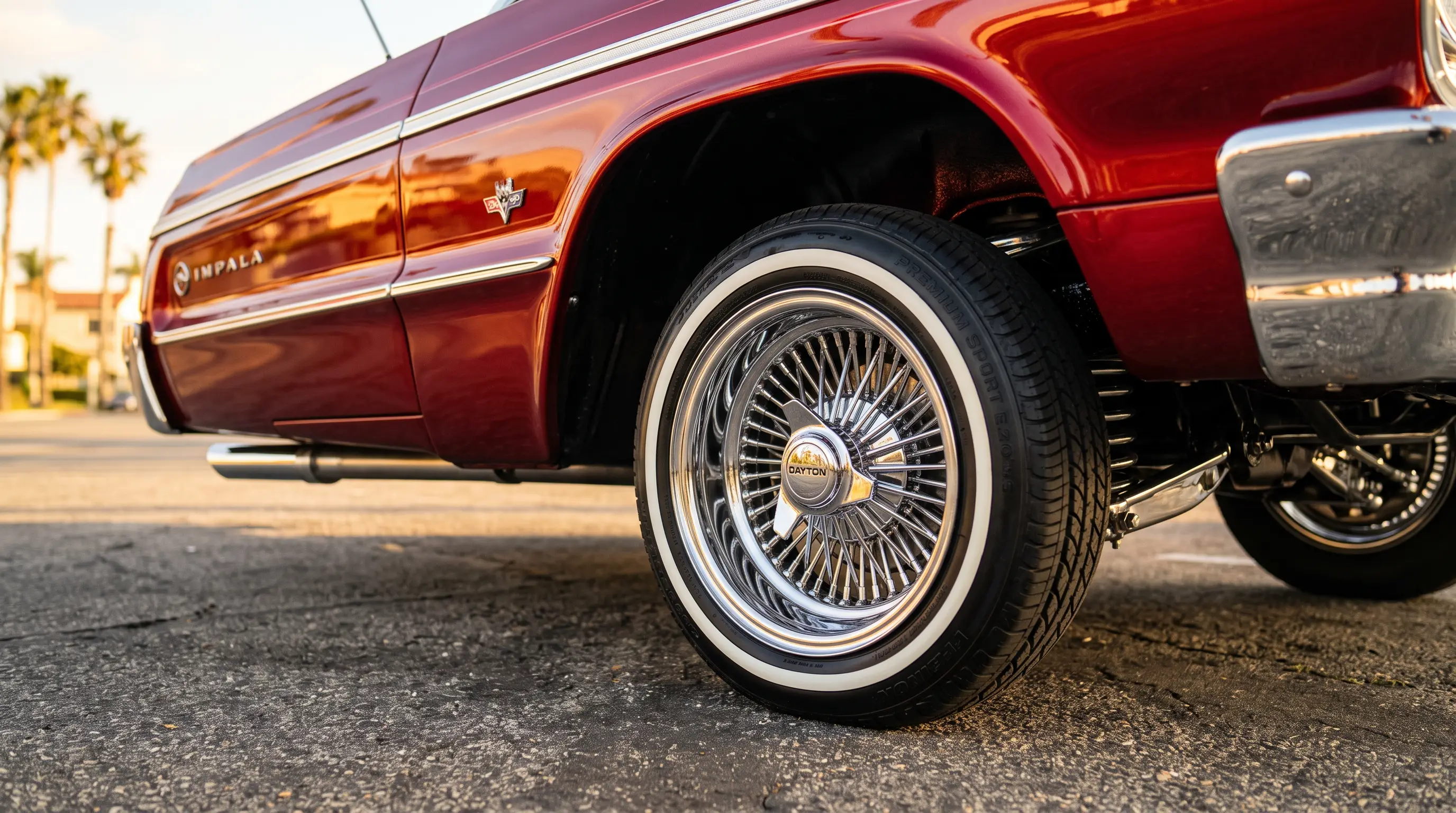
There is a moment every lowrider builder knows, standing under the shop lights with a freshly cleared panel, tilting it an inch to the left and watching the whole surface change color. That shift, gold to green to a flash of copper, is what metalflake and candy paint do to a Chevrolet Impala, and it is why the paint job on a lowrider Impala gets talked about the same way people talk about a good song. It is not just protection for sheet metal. It is the part of the car that tells you who built it and what they were thinking about when they did.
Where the shine came from
Metalflake paint started as a hot rod trick in the late 1950s, tiny chips of aluminum or mylar suspended in clear lacquer so the panel threw light back at you instead of just reflecting it. Southern California painters picked it up fast, and by the early 1960s it had crossed into the lowrider scene forming around East Los Angeles and the Impala had become the favorite canvas. The car's long, flat flanks gave a painter more room to work than almost anything else on the road, and its curves were gentle enough that flake and candy could lay down evenly instead of pooling in a crease.
Candy paint came in right behind flake, and the two got combined constantly. A candy coat is translucent color laid over a metallic or gold base, so the base shows through and shifts as the light angle changes. Painters like Larry Watson and, a little later, the Los Angeles shops that grew up around car clubs, built reputations on getting that shift just right on a 1963 or 1964 Impala hood. Get the base too dark and the candy looks flat. Get it too light and the color washes out. The good ones knew the difference by eye, not by a formula written down anywhere.
Murals as a second language
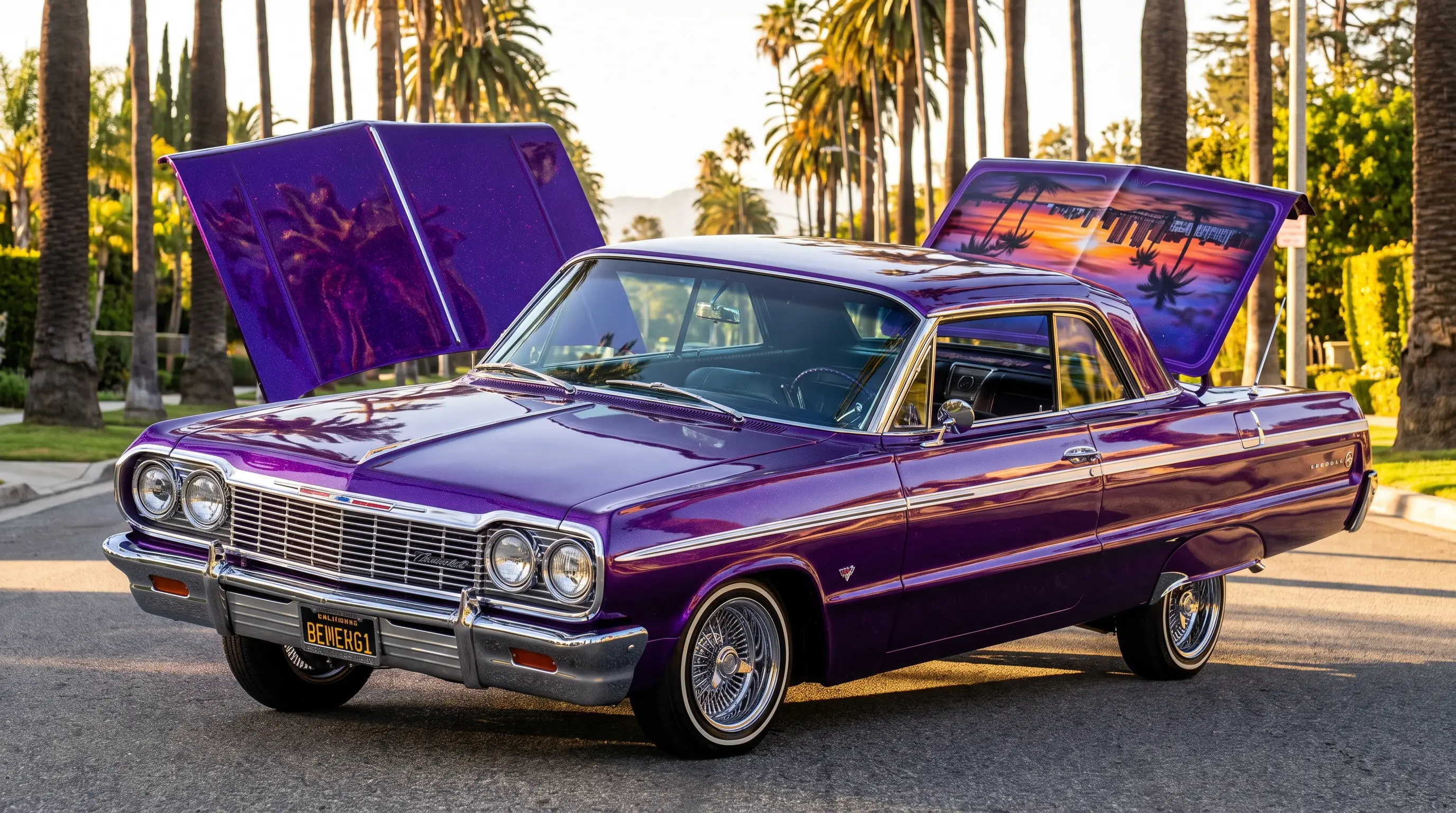
Once the base coat and candy were down, murals became the next layer of the story. Trunk lids and hoods turned into small paintings, Aztec warriors, religious scenes, portraits of family members, sometimes a scene from the owner's own life rendered in airbrush across sixteen square feet of steel. This was not decoration for its own sake. A mural on an Impala said something specific about the builder's identity and community, the same way a patch on a jacket says something about a club. Artists who could do this work well, painting a face that actually looked like someone's grandmother, became known by name within the scene long before any of them had a website or a following outside it.
The trunk was often treated as the real showcase, since a lowrider spends a lot of its life at a cruise or a show with the trunk propped open, chrome hydraulic setup on display and a mural lit from underneath. Builders would spend as much time and money on that trunk as on the drivetrain, because the drivetrain was never really the point of the build.
Why the Impala held onto the crown
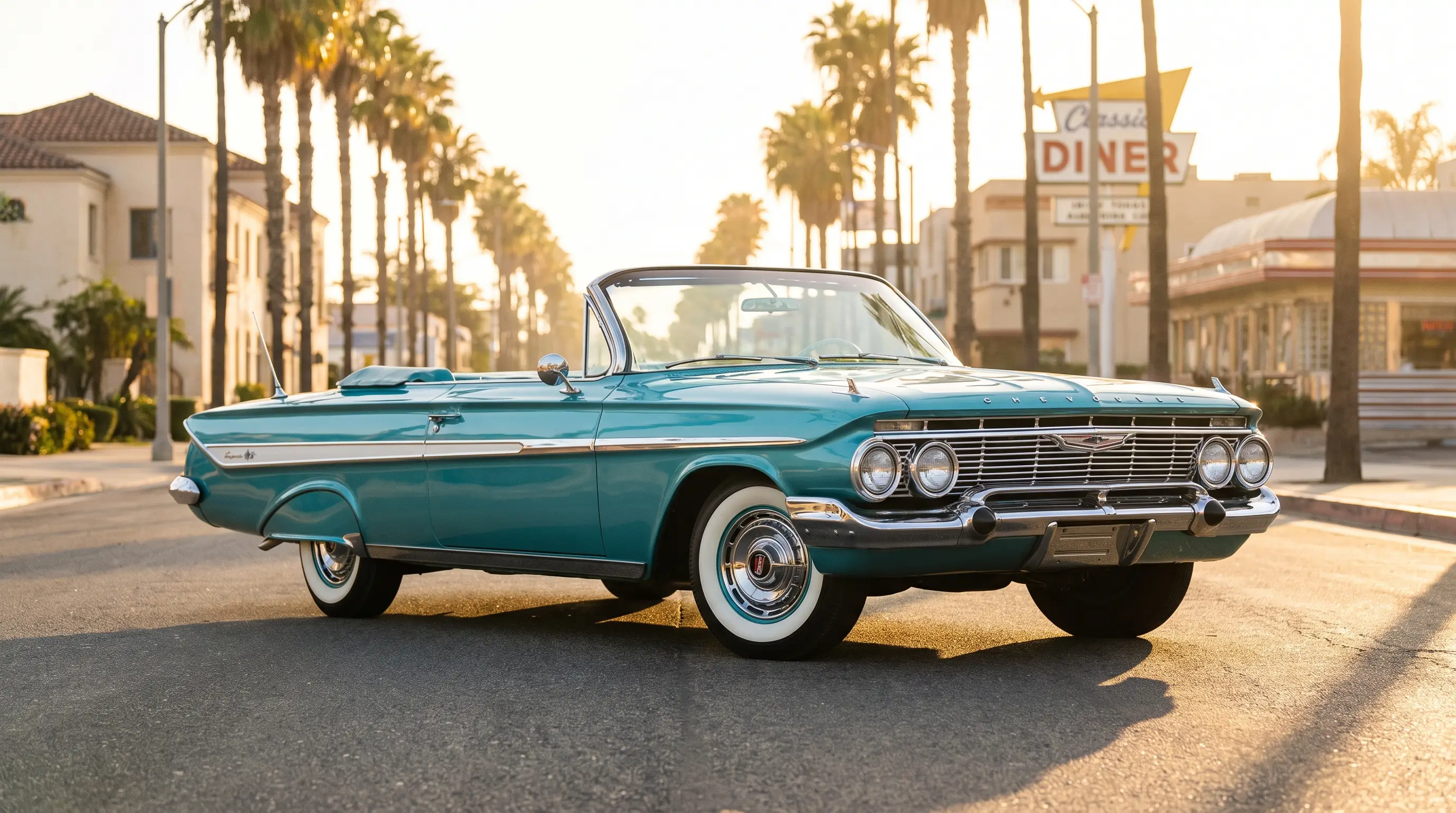
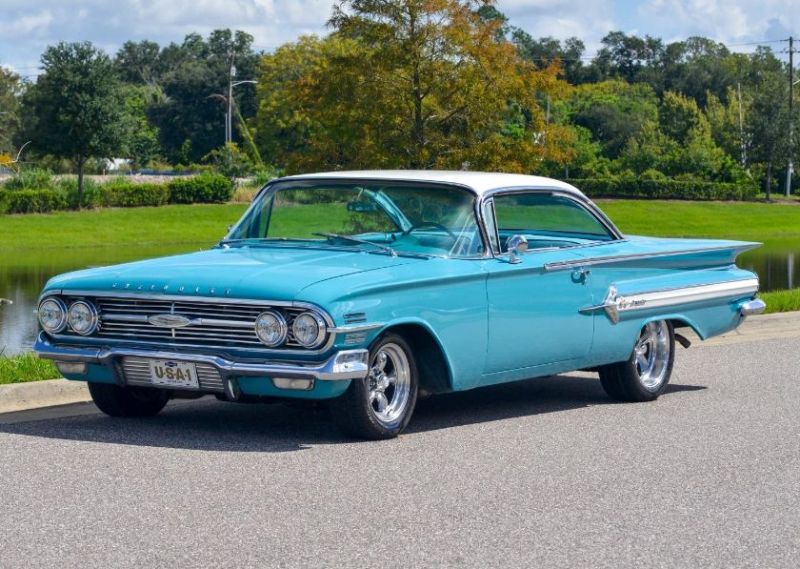
Other cars got painted this way too, Chevrolet Monte Carlos, Buick Rivieras, the occasional Cadillac. But the Impala kept its position at the center of lowrider paint culture for decades because of simple geometry. Its body panels were large and mostly flat, which is exactly what a painter wants when laying metalflake evenly or building a mural with real detail. A 1964 Impala hood gives an airbrush artist working room that a smaller car just does not offer. That practical fact, more than any marketing, kept the model in front of painters generation after generation.
Prices for a full custom paint job with flake, candy, and murals could run into thousands of dollars by the 1970s and far more today, which meant a car wearing one was making a statement about commitment as much as taste. Nobody puts that kind of work into a car they plan to trade in two years later.
"You can slap a fresh clear coat on anything. Lowrider paint metalflake work is different, it's a relationship between the painter and the car that takes weeks, and everybody in the neighborhood knows whose hands did it before you even ask."
- Hector Morales
The color choices meant something too
Beyond flake and candy technique, color itself carried weight in this scene. Deep purples and burgundies became associated with certain clubs and certain cities, teal and turquoise showed up heavily out of Northern California, and a rich gold base under candy red became something close to a signature look tied to specific builders working out of East Los Angeles garages in the late 1960s and early 1970s. None of this was written down as a rule anywhere, it was learned by going to enough car shows and enough cruises that you started to recognize a club's cars from two blocks away just by the paint before you could even read the plaque on the dash.
Two-tone work added another layer of choice. A roofline painted a contrasting candy over a different base than the body, sometimes separated by a thin pinstripe, gave a car a second identity depending on the angle you caught it from. Pinstripers worked alongside the painters as a matter of course, and a good pinstripe job could take a full day on its own, wrapping around trim, door handles, and badges with a steadiness that still gets studied by younger painters trying to learn the trade without a formal apprenticeship system to teach it.
Keeping it alive today
Modern painters still chase that same effect, though the materials have changed. Waterborne basecoats and better clear coats have replaced a lot of the old lacquer, and digital airbrush reference makes murals more precise than the freehand work of the 1960s. But the goal has not moved an inch. A Chevrolet Impala rolling into a car show today with deep candy paint over dense metalflake, a mural glowing under the trunk light, is still doing exactly what it was doing sixty years ago, turning a factory car into something personal. If you want read the background on how the Impala became the model of choice for this entire movement, that history explains a lot about why the paint matters as much as it does. And if a car wearing this kind of work is what you are after, you can find a classic Impala that already carries some of that craftsmanship, or the right bones to start it.
What has not changed is the audience. Lowrider paint was never really meant to be judged by strangers at a stoplight. It was built to be seen up close, at a cruise, at a picnic, at a show, by people who understood exactly how many hours and how much money and how much trust in a painter it took to get that shine right. The Impala just happened to be the car with the right canvas at the right time, and the culture built around it never let go.