
In 1914, in the first months of the war, the American Hospital at Neuilly, just outside Paris, needed a way to bring wounded men in from the front. Its first 10 ambulances were Model Ts, built and donated by Ford's French plant. Harold White, Ford's manager in France, arranged it. That small gift was the start of something much bigger: the Model T World War 1 ambulance, a light, plain car with an ambulance body on the back that carried wounded soldiers until the Armistice and became the car most closely tied to the American volunteer drivers in France.
Car Features
6 min read
The Model T Ambulance in World War I
From 10 donated cars at Neuilly in 1914 to 5,745 Ford-built ambulances for the Allies: the Model T at war.
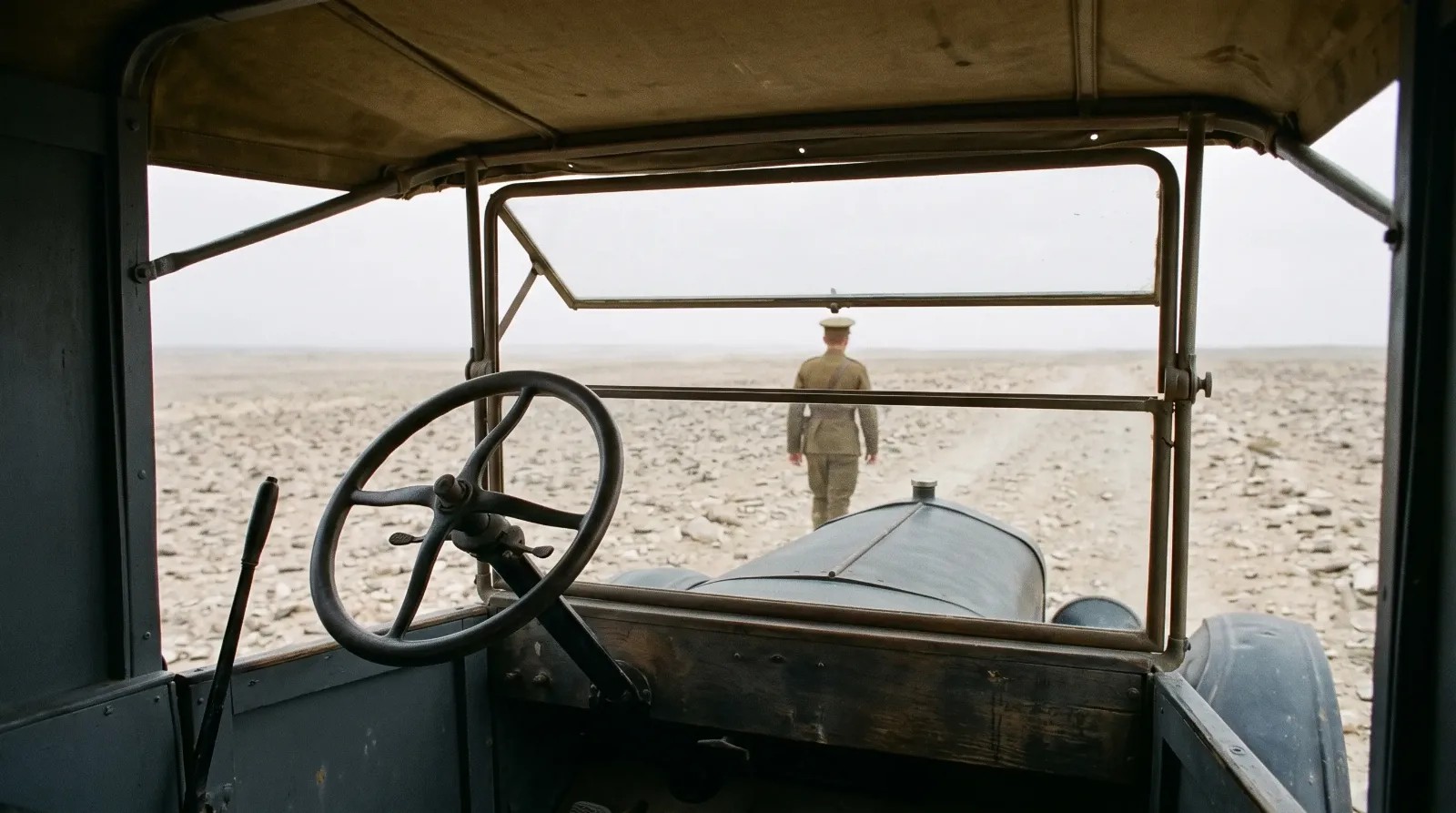
This is the story of that car: who drove it, why it was chosen, and how Ford came to build it in the thousands. For the wider picture of the car underneath, start with our Model T history.
Volunteers before soldiers: the American Field Service
The United States did not enter the war until April 1917. Americans were driving ambulances in France long before that. In April 1915, A. Piatt Andrew formed the American Field Service, with French approval, to put volunteer drivers and their cars at the service of the French army.
The numbers grew fast. By the time the US entered the war, almost 2,000 men were serving in 33 AFS sections. By October 1917, more than 3,500 Americans had served in 43 volunteer stations across the various services. In all, about 2,500 drivers served with the AFS itself.
Many of them drove Fords. How many Model Ts the AFS used in total is a number nobody has pinned down well, so it is better left unsaid than guessed.
"Picture it: a college kid, a few weeks off the boat, nursing a Ford along a shelled road at night with three men on stretchers behind him. The car was humble. The work was not."
Patrick Walsh
Why the Model T World War 1 ambulance worked
On paper the Model T was an odd choice for a war. It had 20 horsepower and a light body built for country roads, not battlefields. Yet the volunteers kept choosing it, and a museum that keeps one of these cars puts the reason simply: the Ford was picked for its reliability and its ease of repair.
That makes sense once you look at the mechanical side. The Model T's ignition ran from a low-voltage magneto on the flywheel, so the car did not need a charged battery to run. Spare parts were common and simple. A driver with basic tools could keep a T going where a more complex car might sit waiting for a mechanic. These were cars that had to be started by hand, too: the electric starter did not reach the Model T until the 1919 model year, so the drivers of 1915 to 1918 cranked.
Ford designs an ambulance for the Army
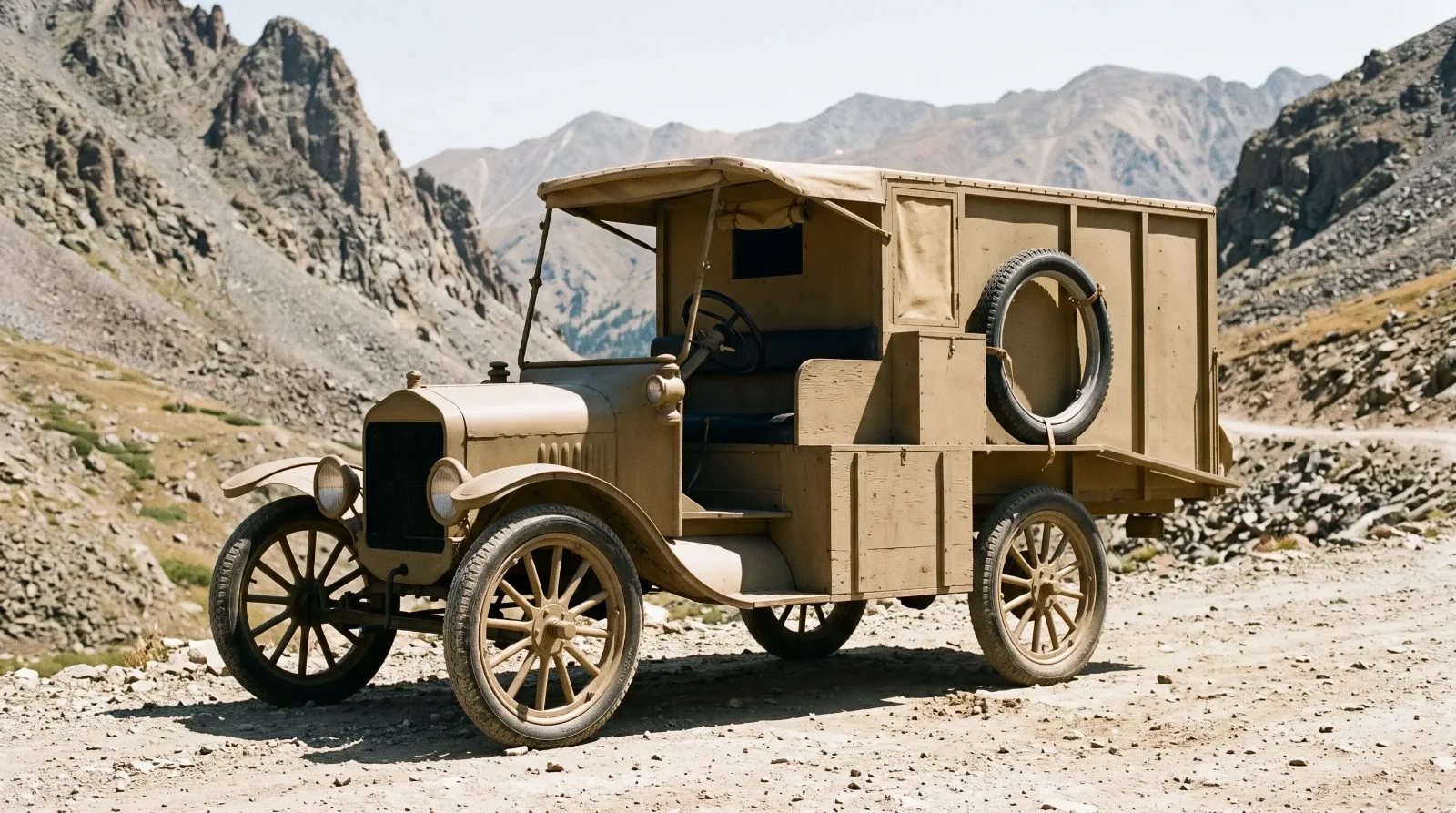
Once the United States joined the war, the work became more organized. In 1917 Ford worked with the US Surgeon General's Office, and with drivers back from the front, to design a Model T ambulance. A photograph of the result carries the date June 17, 1917.
The ambulance body sat on the rear of the chassis, with the driver up front. It carried three stretcher patients or four seated ones, and two more people could ride up front with the driver. Bodies varied: one museum describes its AFS-style car as carrying two stretchers, so not every surviving example matches the standard figure.
In autumn 1917, in October, the US Army absorbed the volunteer services into the US Army Ambulance Service. The volunteer era ended, and the Ford ambulance became an Army vehicle.
| Item | Detail |
|---|---|
| First Model T ambulances in France | 10 cars for the American Hospital at Neuilly, 1914, built and donated by Ford's French plant |
| American Field Service founded | April 1915, by A. Piatt Andrew, with French approval |
| AFS drivers | About 2,500 |
| Ford design partners | US Surgeon General's Office and returning drivers, 1917 |
| Load | Three stretcher patients or four seated |
| Army takeover | October 1917, into the US Army Ambulance Service |
| Ford-built military ambulances | 5,745 for the Allied Powers, plus 107 for the Red Cross |
5,745 ambulances, and the other Fords at war
The production figure comes from The Henry Ford museum: Ford built 5,745 Model T ambulances for the Allied Powers, plus 107 for the Red Cross. That is a small number next to the millions of Model Ts sold to civilians, but each of those cars did hard, dangerous work.
Add the two figures together and Ford built 5,852 ambulances on the Model T chassis for military and relief use. The split matters to anyone trying to identify a survivor. A Red Cross car and an Allied military car share the same basic chassis, so the paperwork and the body details, not the running gear, are what tell them apart.
The ambulance was not the only Model T in uniform. Model Ts served as light patrol cars, and some even worked as rail tractors. And Ford's one-ton truck, the Model TT, went to war as well: the first 12,000 or so TTs reportedly went to the US military in 1917 and 1918.
The war also cost Ford at home. Production was disrupted, and materials that went to the war effort became costlier and harder to get for civilian carmakers. The ambulance and truck orders were part of a larger shift in what Ford's plants were doing.
What the war ambulance left behind
The Model T ambulance did not change the course of the war. What it did was carry wounded men from the front to the dressing stations and hospitals behind the lines, again and again, with volunteers and then soldiers at the wheel. It proved in the worst conditions what American owners already knew: that a light, simple car could be kept running almost anywhere.
Surviving examples are rare, and most are in museums. They are worth a close look if you meet one. The chassis is a Model T, and the controls are the same pedals and levers any farmer used at home. That ordinariness is the point. The Model T went to war without being redesigned for it, and it did the job anyway.
Sources and notes
- Ford Model T ambulance photograph, 1917, The Henry Ford
- American volunteer ambulance services in World War I, Military Postal History Society
- 1917 American Ambulance, Pioneer Flight Museum
- Ford Model T, Wikipedia
- The 1917 to 1927 Ford Model TT, Mac's Motor City Garage
- 1919 Ford Model T, The Henry Ford
Related Reading
Have a
Ford Model T
for Sale?
Reach thousands of serious classic car collectors across the US.
Sell It Here →
Selling a classic? Here's how: sell my classic car
Are You a Classic Car Dealer?
List your full inventory and connect with targeted classic car buyers.
Join as a Dealer →

About the author
Patrick Walsh
Automotive journalist covering classic car shows, events, and the enthusiast community across North America.
Related Listings - Ford Model T
Comments
Be the first to comment on this article.