
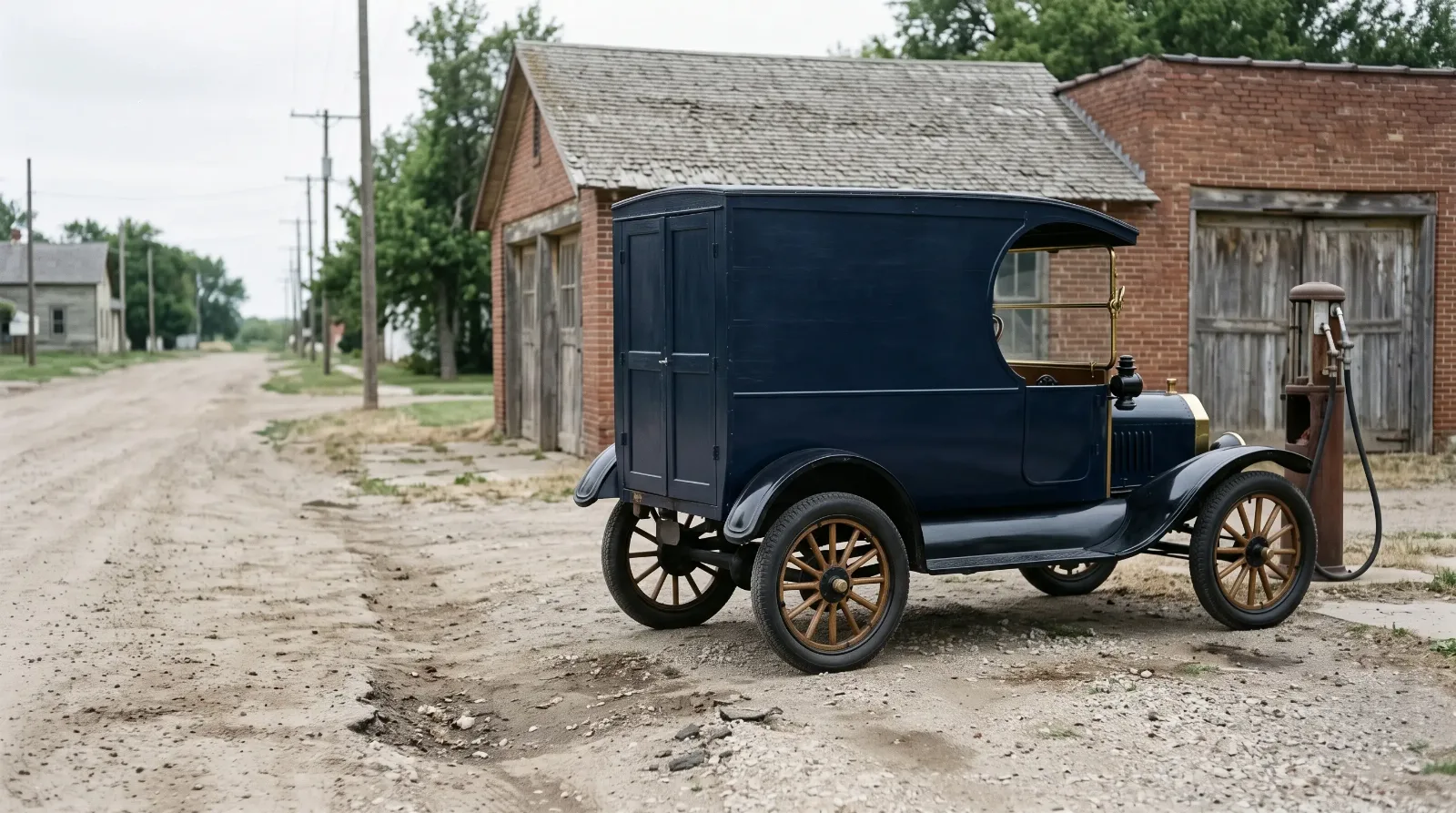
A Model T depot hack did one job, and it did it a few times a day. A train pulled in, a handful of guests stepped down with their trunks and hatboxes, and somebody from the hotel loaded the whole lot into a wooden box on a Ford chassis and drove it back up the hill. Nobody at the time thought of it as a special vehicle. It was a work truck that happened to carry people. That is exactly why it matters now: the depot hack is the plain, practical grandfather of the station wagon.
Car Features
8 min read
Model T Depot Hacks: Hotel Shuttles Before the Station Wagon
Hotels met the trains with wood-bodied Fords built by local coachbuilders. What a Model T depot hack was, how it led to the station wagon, and what to check.
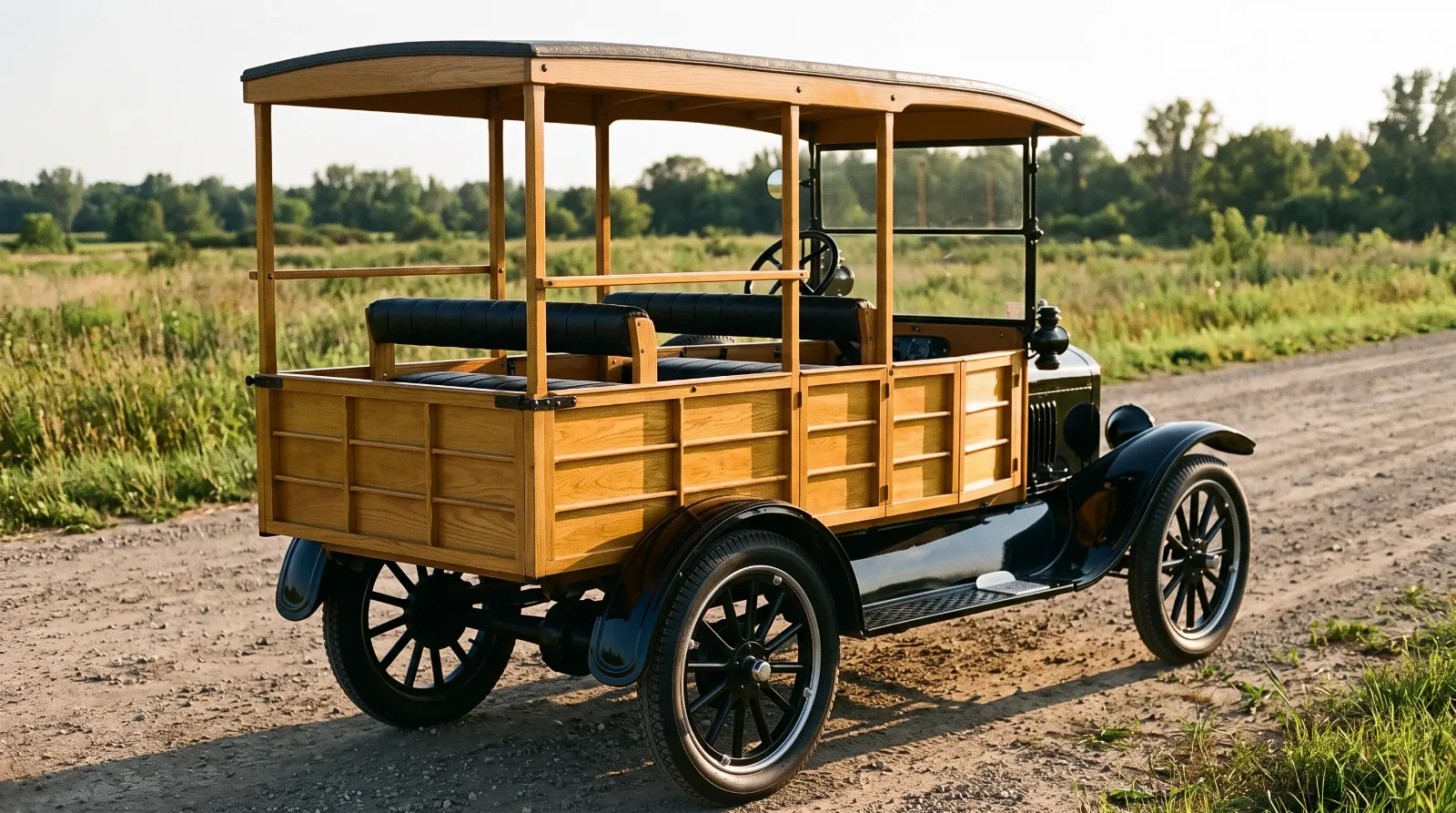
What a depot hack was for
In the 1910s and 1920s, hotels and resorts needed a way to get guests and their luggage between the railway station and the front desk. The railroad stopped where the railroad stopped, and a lakeside resort or a mountain lodge might sit miles from the nearest depot. So the hotel kept a vehicle that met the trains. People and bags went in together, and the driver made the run as often as the timetable demanded.
The word came first, before the motor. "Hack" is short for "hackney," a hired horse-drawn vehicle, and horse-drawn depot hacks were doing this work long before anybody bolted a wood body onto a Ford. When owners swapped the horse for a four-cylinder engine, the name rode along with the job. So the Model T did not invent the depot hack. It just made the motorized version cheap enough that a small-town hotel or a summer camp could own one.
The name of the later vehicle came from the same place. Railroad depots gradually came to be called stations, and the term "station wagon" grew out of that shift around 1910. A depot hack and an early station wagon were, for most practical purposes, the same machine with a different label painted over the door.
How a Model T depot hack got built
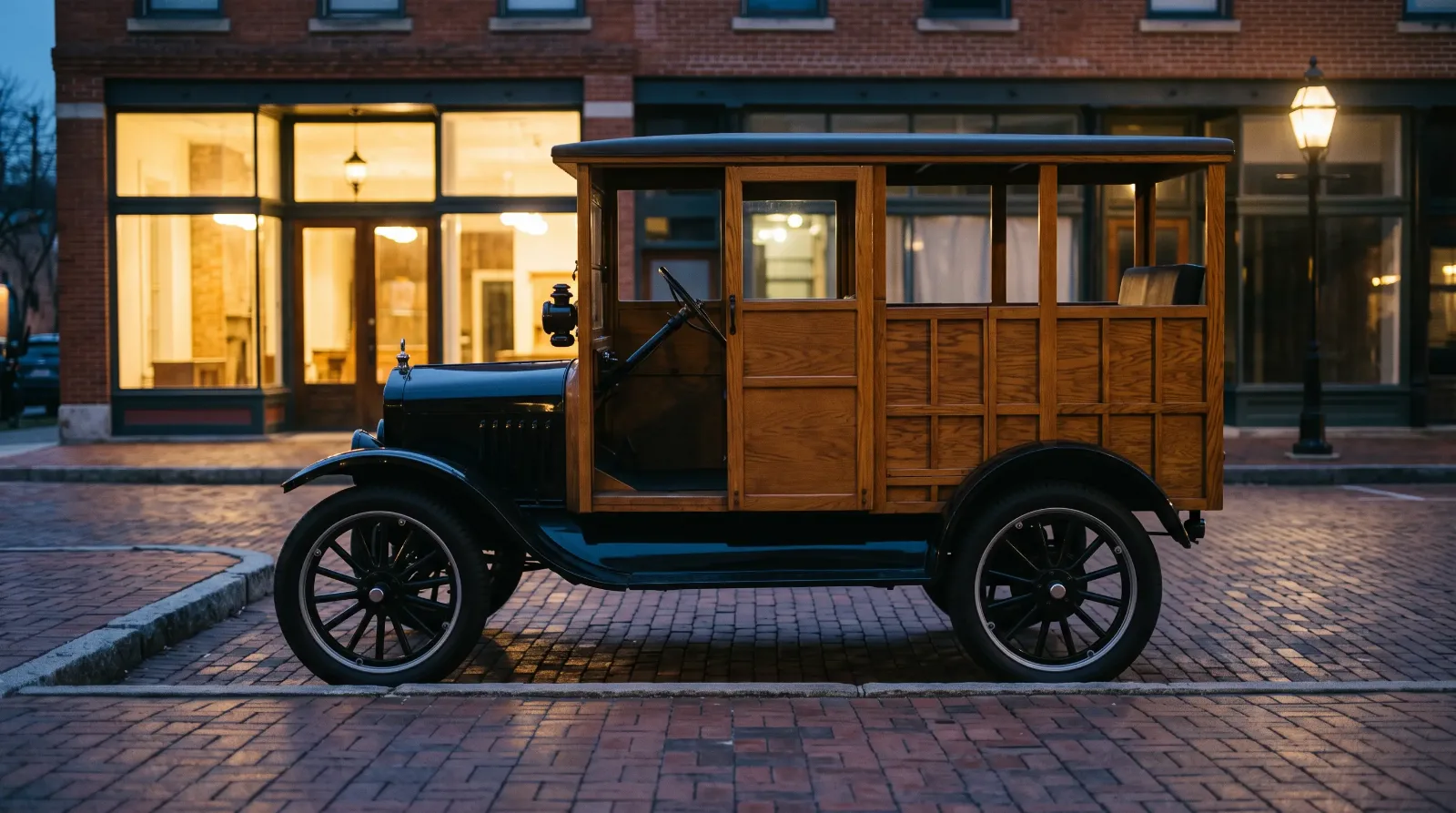
Ford did not sell a depot hack. Not in the Model T years. What Ford sold was the chassis, and everything behind the cowl was somebody else's business. The usual route was simple: an owner bought a Ford chassis (some went with a Buick) and had a coachbuilder make a wooden body for it. That body might come from a regional wagon works, a carriage shop that had been building for horses a few years earlier, or the local carpenter who was handy with ash and a drawknife.
Not every hack met trains on the East Coast. The Martin Auto Museum shows a 1915 Model T depot hack that carried visitors from the train depot at Yosemite National Park to the hotels nearby, and the museum makes the same point: the body was not in Ford's catalogue but came from independent firms.
That arrangement is why you should not expect two surviving hacks to match. Seat count, roof, side curtains and luggage space were whatever the owner ordered and the shop could build. The Ford parts underneath are the common thread. The wood on top is a one-off almost every time, and that matters when you go looking for one. Ford's own commercial bodies, like the C-cab vans, came out of the same habit of putting a working box on a car chassis.
Underneath, it was plain Model T. The 177 cubic inch four, rated at 20 hp, and the two-speed planetary transmission with its floor pedals. On a hack loaded with six or eight adults and their trunks, that power went a short way. Nobody was racing to the depot. The run was short, the roads were slow, and the Ford's light weight and simple running gear were the selling point, not its speed.
"People ask me what these things were worth new. Wrong question. The chassis was cheap and the body was whatever the local shop charged that spring. What you really want to know is who built the wood and whether any of it is still original."
Robert Halloran
A surviving example
One good place to see what the real thing looked like is a 1922 Model T depot hack held by the Audrain Automobile Museum. It still wears its original wood body, and it put in its working life in a Boston train yard, which is about as close to the job description as you can get. The museum lists it with the standard Model T figures: 20 hp at 1,600 rpm, 83 lb-ft of torque at 900 rpm, a top speed of 42 mph and a weight of about 1,600 lb.
That weight figure is worth a second look. It is light for a vehicle built to haul a load of passengers, and it tells you how much of the Model T's appeal was in what it left out. Any body builder had to respect that. Every pound of wood and every extra passenger came out of the same 20 hp.
| Item | Depot hack (Model T era) |
|---|---|
| Job | Guests and luggage, rail station to hotel or resort |
| Who built the body | Local coachbuilders on a bought Ford (or Buick) chassis |
| Engine | 177 cu in four, 20 hp |
| Transmission | Two-speed planetary, pedal shifted |
| Seat layout | Forward-facing rows ("hack") or side benches ("jitney") |
| Example | 1922 Model T, original wood body, Audrain museum |
From hack to factory station wagon
The depot hack stayed a coachbuilder's product right through the Model T years. Ford only took the idea in-house after the Model T was gone. For the 1929 model year Ford became the first of the Big Three to offer a factory-built station wagon, body style 150-A, on the Model A chassis. The wood (maple, birch and basswood) came from Ford-owned forests in Michigan's Upper Peninsula, and Ford built a big sawmill at Iron Mountain to handle it. Murray of Detroit built the body.
That was a real change for anyone who ran one. A factory wagon came with a catalog price and parts from the dealer. In 1931 the Model A station wagon listed at $625, f.o.b. Detroit. The old hack had come with whatever the local body shop could supply and a bill for the wood. The rest of Ford's truck line went through the same shift from outside bodies to Ford bodies in the same few years, and there is more on that here. The pickup took the same road, from a bolted-on box to a factory cab, and you can read about that here.
Buying and keeping one today
Here is the plain truth about a Model T depot hack. The Ford part is the easy part. Engines, transmissions, axles and wheels for a Model T are about as well supported as anything from that era, with reproduction parts and club knowledge everywhere. If the chassis is tired, it can be fixed without heroics.
The wood is where the money goes. A body built by a local shop a century ago has no reproduction catalog behind it. If the framing is rotten at the joints, somebody has to pattern it off the old pieces and make new ones, and that is skilled hours, not parts. Wood bodies also need regular attention. One dealer's history of Ford's own Model A wagon says proper care called for re-varnishing the wood every year, and a hack that lives outside will tell you quickly whether anybody kept up with that.
Be careful with provenance stories too. A hack with a hotel name painted on the side is a nice thing to own, but paint is easy and paperwork is hard. A body built new by a restorer who wanted the look is not a sin, but it should be priced as what it is. An original body with a known working history is a different animal from a fresh one on an old chassis.
For a working man's vehicle, the depot hack has aged into something people stop and look at. It is a reminder that before the station wagon was a family car, it was a hotel's truck, built by a local craftsman on the cheapest chassis he could buy.
Sources and notes
- Audrain Automobile Museum: 1922 Ford Model T Depot Hack
- Fountainhead Antique Auto Museum: The first station wagons
- Martin Auto Museum: 1915 Ford Model T Depot Hack
- SlashGear: Ford's Model T depot hack, history and details
- HSMC: 1930 Ford Model A Station Wagon (wood upkeep)
- The Henry Ford: Ford Model A station wagon
Related Reading
Have a
Ford Model T
for Sale?
Reach thousands of serious classic car collectors across the US.
Sell It Here →
Selling a classic? Here's how: sell my classic car
Are You a Classic Car Dealer?
List your full inventory and connect with targeted classic car buyers.
Join as a Dealer →
#coachbuilders
#ford model t
#Model T depot hack
#station wagon history
#wood bodies
#Model T commercial bodies

About the author
Robert Halloran
Texas-based classic truck enthusiast with decades of experience buying, restoring, and writing about American pickups from the 1940s through the 1980s.
Related Listings - Ford Model T




Comments
Be the first to comment on this article.