
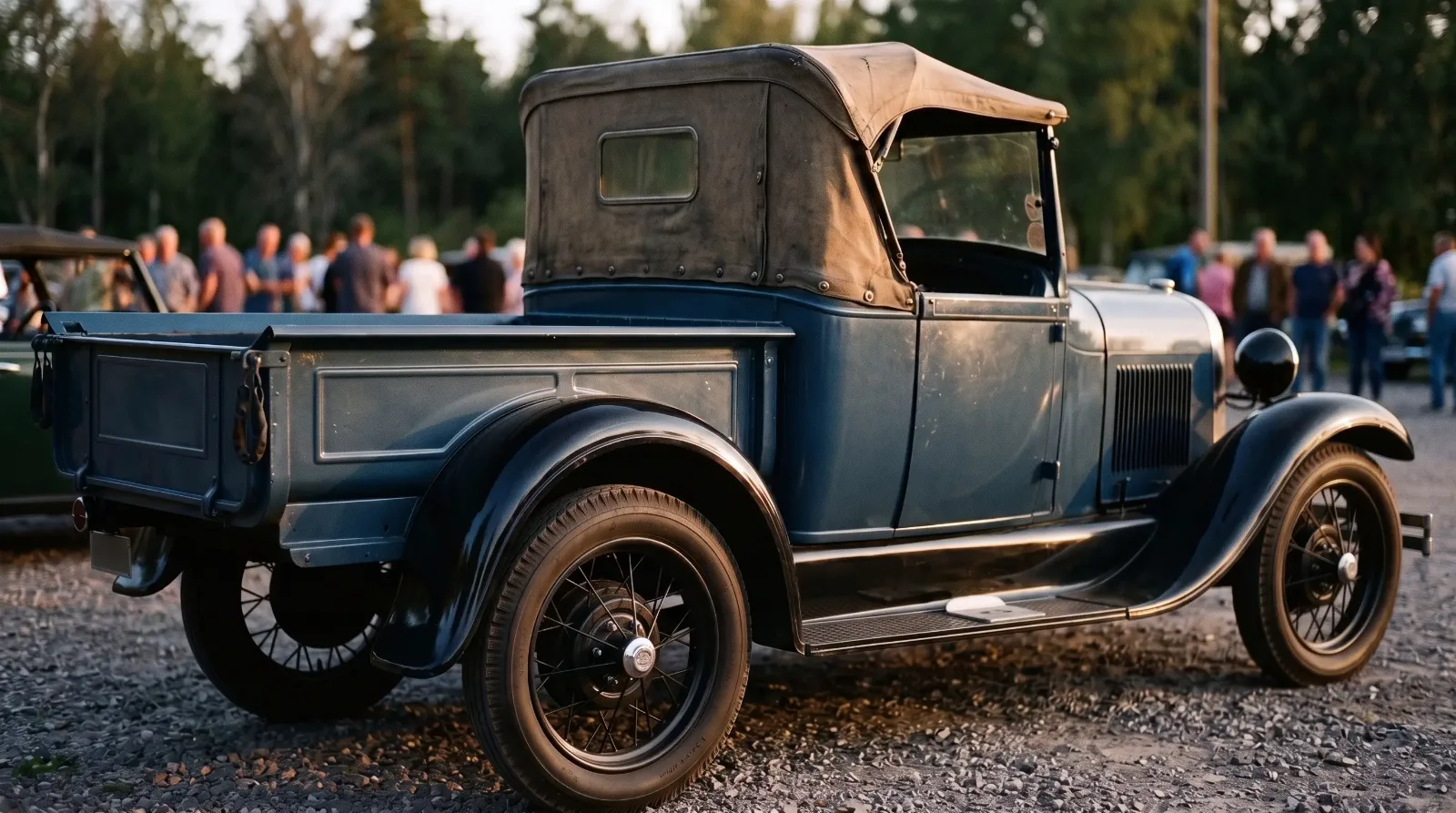
The first Ford Model A pickup a farmer could buy had an open cab with a fixed top and no outside door handles. That was not a design choice so much as a shortage. Ford needed every closed cab it could build for the new Model AA truck, so the light pickup went out with an open cab until the factory caught up. The story of the Ford Model A pickup from 1928 to 1931 is the story of that cab going from open to closed, and of the closed cab becoming the truck most people actually bought.
Car Features
6 min read
The Ford Model A Pickup: Open Cab to Closed Cab
Why the first Model A pickups had open cabs, when the closed cab arrived, the body codes by year and what that means for buyers.
This piece sticks to the light half-ton pickup. The heavier trucks have their own history, covered in the TT and AA trucks.
The 1928 Ford Model A pickup: open cab only
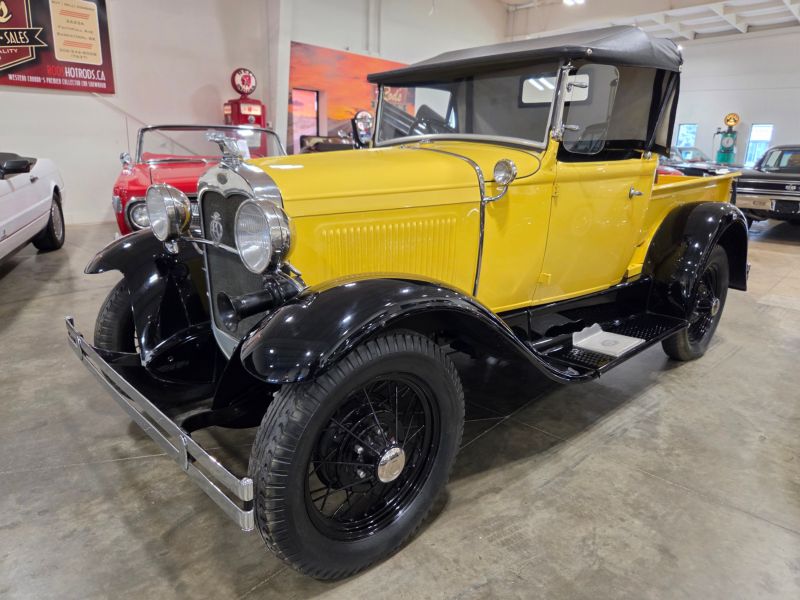
When the Model A arrived, the pickup came with an open, roadster-style cab, and the bed behind it was carried over from the Model T pickup. Ford had been selling a factory pickup since April 1925, when the Model T runabout with pickup body went on sale for $281, so the bed design was already proven. Using it again saved tooling at a time when Ford was building an entirely new car.
The reason for the open cab was simple supply. Through August 1928, the Model AA truck line used all the closed cabs Ford had on hand. The pickup got what was left, and what was left was the open cab. Early open cabs had a fixed top and no outside door handles.
It sold anyway. Ford built 23,972 open cab pickups for 1928, more than any other Model A commercial body that year. The list price started at $395 f.o.b. Detroit, the same as the Phaeton and $10 more than the Roadster car.
August 1928: the closed cab arrives
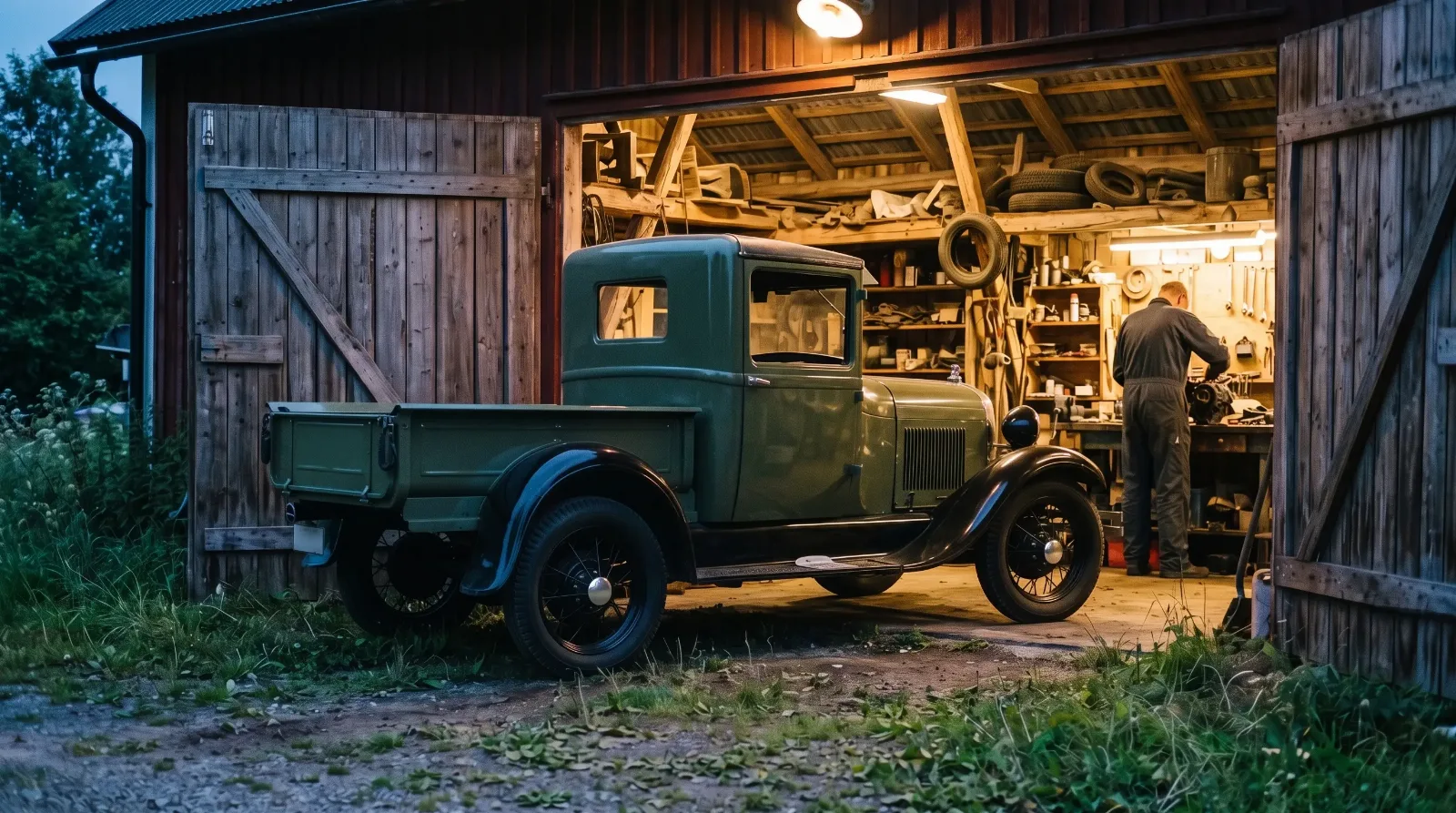
In August 1928 the closed cab reached the pickup. Hobbyists call that first closed cab the phone booth, and one look explains the name: it is tall, square and upright, with a flat roof and a windshield that stands straight up. It was a real cab with glass, and it cost more. The closed cab pickup started at $445 against $395 for the open cab. One market guide quotes a list price trimmed from $445 to $430 by mid-year, though it does not say which cab that applies to.
For 1929, buyers had the choice of either cab. One market guide puts total 1929 pickup output, open and closed together, at 77,917, but other sources give very different figures and some of them clearly count all trucks, AAs included. I would call it about 78,000 and treat that as a rough number. What is not in dispute is the direction: once a closed cab was on offer, buyers moved to it.
The cabs carried Ford body codes, and the codes were shared with the AA truck cabs, which is worth knowing when you are hunting parts.
| Body | Ford code | Dates |
|---|---|---|
| Open cab | 76-A | From May 1928 |
| Open cab, revised | 76-B | From June 1930 |
| Closed cab | 82-A | December 1927 to June 1930 |
| Closed cab, new style | 82-B | June 1930 to 1932 |
| DeLuxe Pickup | 66-A | 1931 only |
| Wide-bed pickup box | 78-B | 1931 only |
1930: a new cab, and closed becomes standard
For 1930 every Model A truck got a new cab. It was lower and less boxy, styled to follow the restyled closed cars, and the closed cab became the standard pickup. The open cab did not disappear, but it became an extra-cost option. That is a full reversal from 1928, when the open cab was the only way to get a pickup.
The open cab picked up some refinement in the change: for 1930 it got outside door handles for the first time. Ford built 2,730 of them that year. If you want the full story of that body, read about the roadster pickup on its own.
1931: the DeLuxe pickup and the wide bed
The last year brought two things you will only find on a 1931. The 66-A DeLuxe Pickup was one. The 78-B wide-bed pickup box was the other, and for a working truck the bed is the part that matters. Both codes appear in no other Model A year.
It was a strong year for pickups even as car sales fell. Ford built 98,116 Model A pickups in 1931. Only 2,637 of them were open cab roadster pickups, under 3 percent. In three years the open cab had gone from the only choice to a footnote.
Mechanically, the pickup was a Model A car underneath. Same 40 hp four, same three-speed sliding-gear transmission, same four-wheel mechanical brakes. That is good news for anyone keeping one on the road, because engine and driveline parts are shared with every Model A passenger car. If you are comparing it against the cars, the guide to every Model A body style shows where the pickup cab and bed fit among them.
"Nobody at Ford planned an open cab pickup to be a collector's car. Ford ran out of closed cabs. Nearly a century later the one he built by necessity is the one that brings more money. Trucks have always had a sense of humor."
Robert Halloran
Buying a Model A pickup today
The open cab versus closed cab question is also a money question. A market guide that tracks these trucks says open cabs are worth slightly more than closed cabs for 1928 and 1929, and markedly more for 1930 and 1931, when the open cab was the rare option. A 1928 open cab sold for $20,160 at RM Sotheby's from the Guyton Collection. A 1929 roadster pickup sold for $9,350 at a Worldwide auction in Auburn, Indiana, in September 2017. Those are two sales, years apart, so use them as reference points, not a price list.
Restoration economics on a pickup are kinder than on a lot of Model A bodies. The driveline is shared with millions of cars, cab and bed parts have been reproduced for years in my experience, and a pickup does not need the trim and upholstery money a closed sedan does. The expensive surprise is usually a rotten bed or a bent frame from a hard working life.
Start with a solid truck, decide whether you want the open cab history or the closed cab practicality, and look at the current Model A pickups for sale with the code table above in your pocket.
Sources and notes
- Sports Car Market: Model A roadster pickup profile, production and values
- RM Sotheby's: 1928 Ford Model AR open cab pickup, Guyton Collection
- AA Fords: Model A and AA cab body codes, dates and counts
- The Henry Ford: Model A pickup collection record
- MAFCA: Model A new car prices
- MAFCA: Model A body codes
Related Reading

Have a
Ford Model A
for Sale?
Reach thousands of serious classic car collectors across the US.
Sell It Here →
Selling a classic? Here's how: where to sell your classic car online
Are You a Classic Car Dealer?
List your full inventory and connect with targeted classic car buyers.
Join as a Dealer →

About the author
Robert Halloran
Texas-based classic truck enthusiast with decades of experience buying, restoring, and writing about American pickups from the 1940s through the 1980s.
Related Listings - Ford Model A




Comments
Be the first to comment on this article.