
A stock 1998 Z28 was rated at 305 hp. A stock 1998 SS was rated at 320. The 15 hp between them came from a hood that fed the engine cold air and an exhaust that let it out more freely, and that is the first rule of the modified 4th gen Camaro: the LS1 answers air in and air out before you ever pull a valve cover. Chevrolet and SLP proved it on the window sticker. Everything below is the order to do the work in, what the numbers on file actually say, and where the car runs out of parts before the engine runs out of power.
Car Features
7 min read
Modifying a Fourth-Gen Camaro: The LS1 Bolt-On Path
The LS1 bolt-on path for a 1998 to 2002 Camaro: what the factory ratings prove, the order to do the work, and where the drivetrain pushes back.
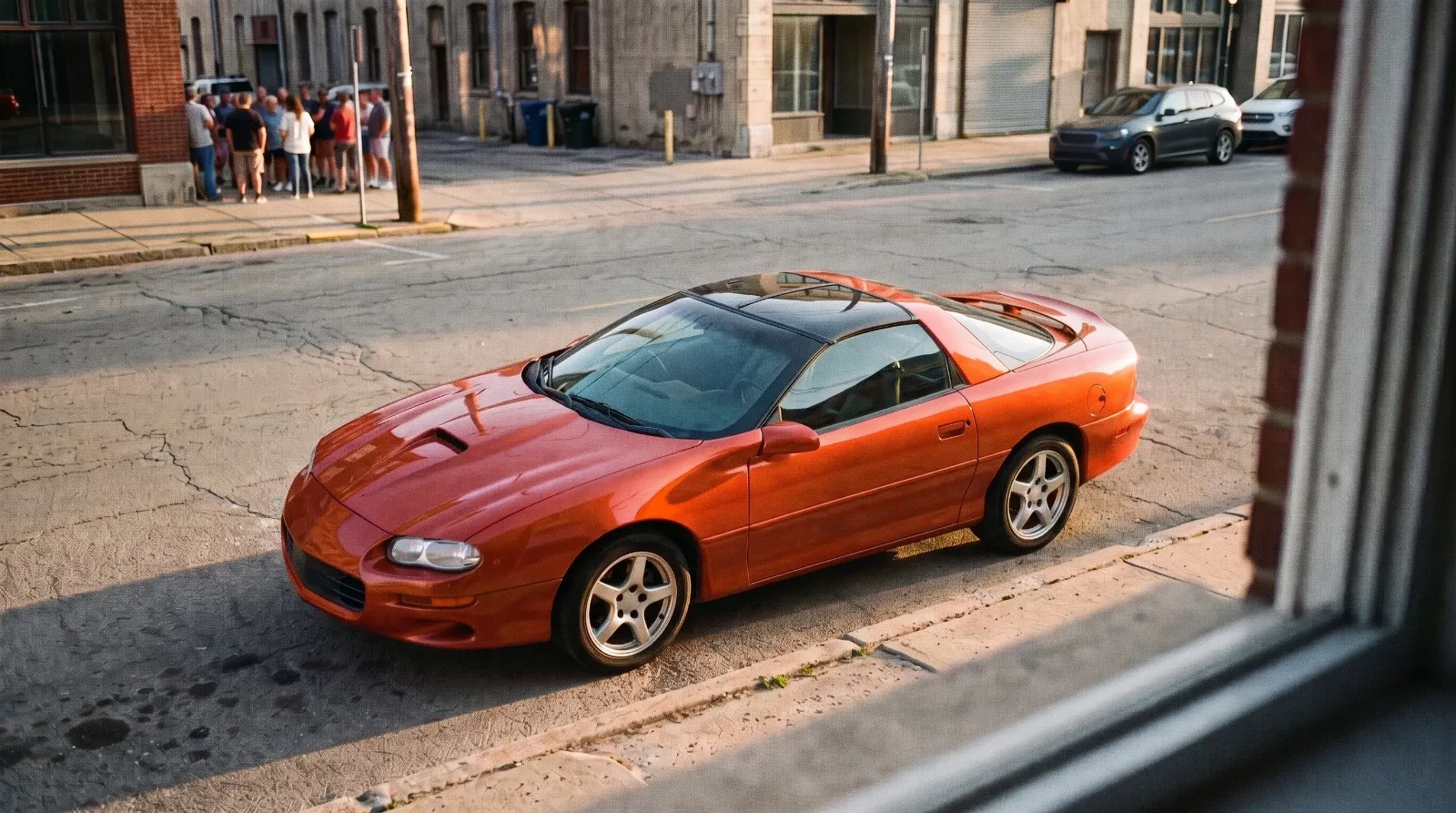
If you want the whole generation first, the background runs from 1993 to 2002. This piece stays on the 1998 to 2002 cars, the ones with the aluminum engine.
What the LS1 Camaro started with
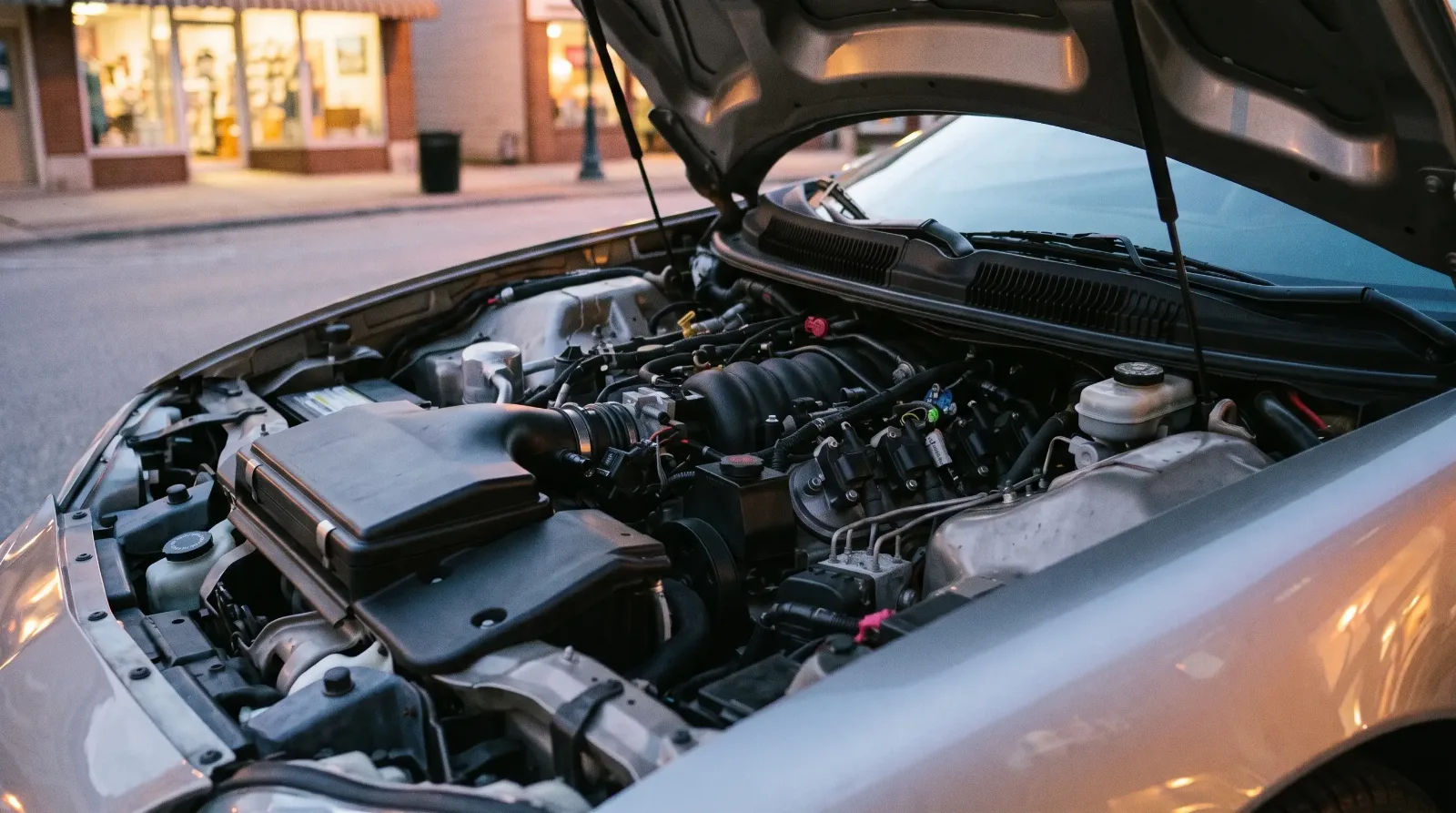
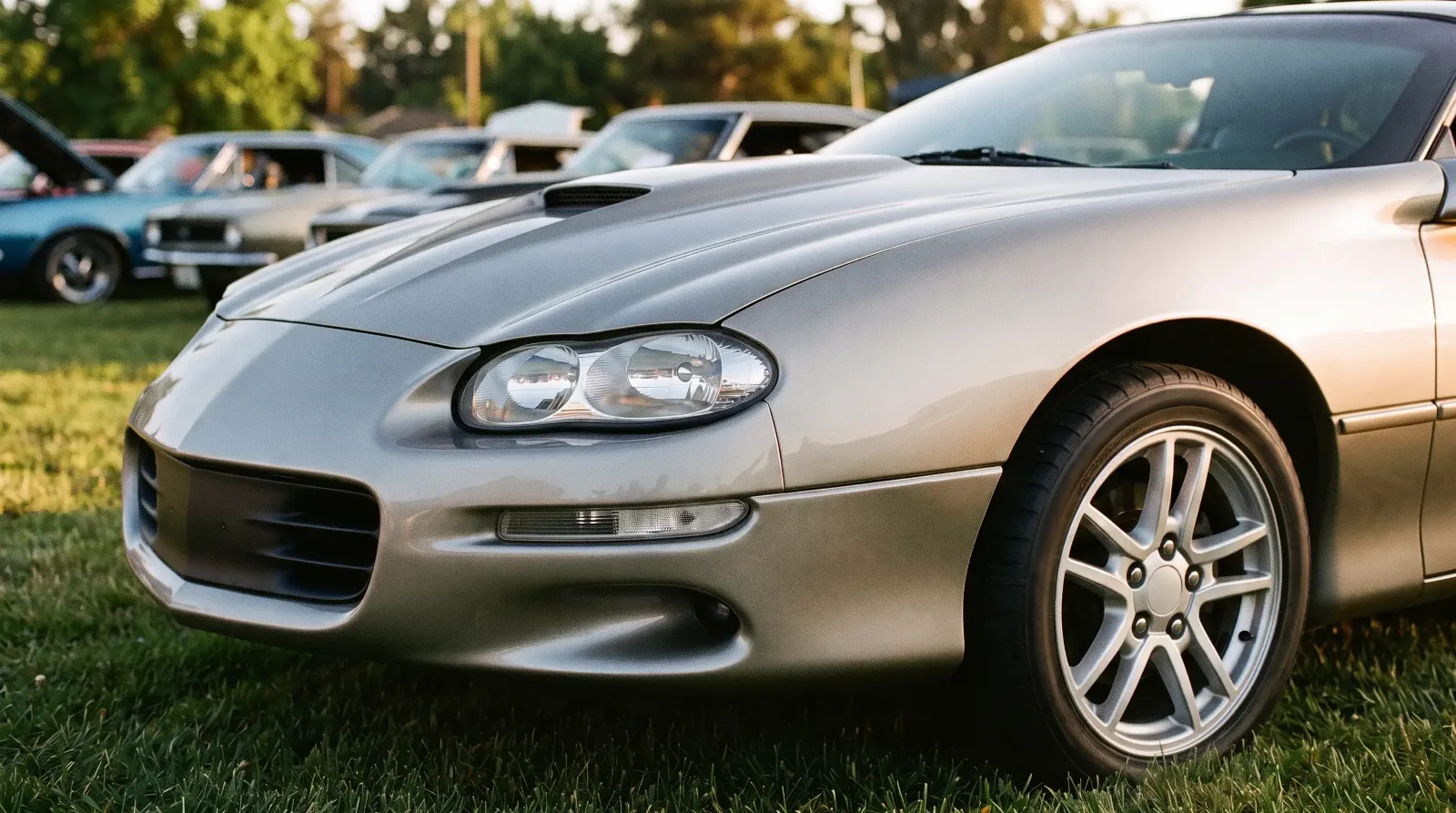
For 1998 the all-aluminum 5.7 liter LS1 replaced the iron-block LT1, a year after it debuted in the C5 Corvette. It weighed about 95 lb less than the engine it replaced. It was not a straight Corvette transplant. The F-body got its own oil pan, a relocated accessory drive to fit the Camaro engine bay, and a cable throttle where the Corvette used drive-by-wire.
The ratings are the starting line. The 1998 to 2000 Z28 was rated 305 hp at 5,200 rpm and 335 lb-ft. For 2001 GM fitted the LS6 intake manifold and a revised camshaft and deleted the EGR system, and the Z28 went to 310 hp. The SS went from 320 hp to 325 hp over the same change.
Now the lore. You will read that the LS1 really made 350 hp and was marketed at 310. That claim sits uncited on Wikipedia and nowhere else I trust, so it is not a fact. What is documented is the rating, plus a remark from John Heinricy, quoted by Hagerty: he denied the engine was underrated, but said little more than tuning software separated a Camaro LS1 from a Corvette LS1. For a modder, that is the useful half of the sentence. The hardware has headroom. The calibration is the leash.
| Car | What changed | Rated output |
|---|---|---|
| 1998 to 2000 Z28 | Stock LS1 | 305 hp, 335 lb-ft |
| 1998 to 2000 SS | Forced-air hood, freer exhaust | 320 hp |
| 1998 SS | Plus optional SLP exhaust | 327 hp |
| 2001 to 2002 Z28 | LS6 intake, revised cam, no EGR | 310 hp |
| 2001 to 2002 SS | Same engine update plus SS induction | 325 hp |
| 2001 to 2002 SS | Stock intake plus SLP exhaust | 335 hp |
| 2001 to 2002 SS | SLP 345 hp option | 345 hp |
Read that table as a price list for air. The factory and SLP spent their effort on induction and exhaust, and each step bought a few horsepower on paper. That is the same path an owner walks with a parts catalog.
The bolt-on order for a modified 4th gen Camaro
Step one costs nothing in parts: put the car on a chassis dyno stock. I am not going to quote you a stock rear-wheel figure for an LS1 Z28, because every one I have found comes from a vendor or a forum, and none came with a dyno sheet. Your car, your fuel, your dyno, your number. Without it, every gain you claim later is a guess.
Step two is intake. The SS hood is the factory answer to cold air, and it is the reason the SS out-rated the Z28. One warning if you are shopping parts across the generation: LT1 and LS1 cars use different front clips, and a stock LT1 hood will not close over the LS1 engine and its factory airbox. Parts listed as "fourth-gen" are not all interchangeable.
Step three is exhaust, cat-back first. SLP's exhaust is the one bolt-on with a factory-backed rating attached: 320 hp to 327 hp on a 1998 SS, and 325 hp to 335 hp on a 2001 to 2002 SS. That is 7 to 10 hp on paper from a part you can fit in a driveway. Long-tube headers are the bigger exhaust step, but the gains published for them are vendor claims, so I will not print one. Check your state's emissions rules before you cut anything ahead of the converters.
Step four is the tune. If Heinricy is right that software is most of what separates the Camaro and Corvette versions of the engine, then the calibration is where intake and exhaust work gets turned into power you can measure. Tune after the hardware, not before, and dyno again.
Step five, for 1998 to 2000 owners, is the LS6 intake. GM put it on the 2001 cars as part of the update in the table, and it bolts straight onto an earlier LS1, which makes it one of the most popular intake swaps for those cars. The gains quoted for it come from vendors, so treat them as a guess until your own dyno says otherwise. Step six is the camshaft, which is where bolt-ons end and engine work begins. LSX Magazine says a new cam can be worth "nearly 40" rear-wheel horsepower, though it printed no dyno sheet. Its example was a 2002 Z28 getting a Comp Cams XE grind of 216/226 duration, .569/.571 in lift and a 116 degree lobe separation, with new valve springs. Note the springs. A cam without them is a short-lived cam.
Where the drivetrain pushes back
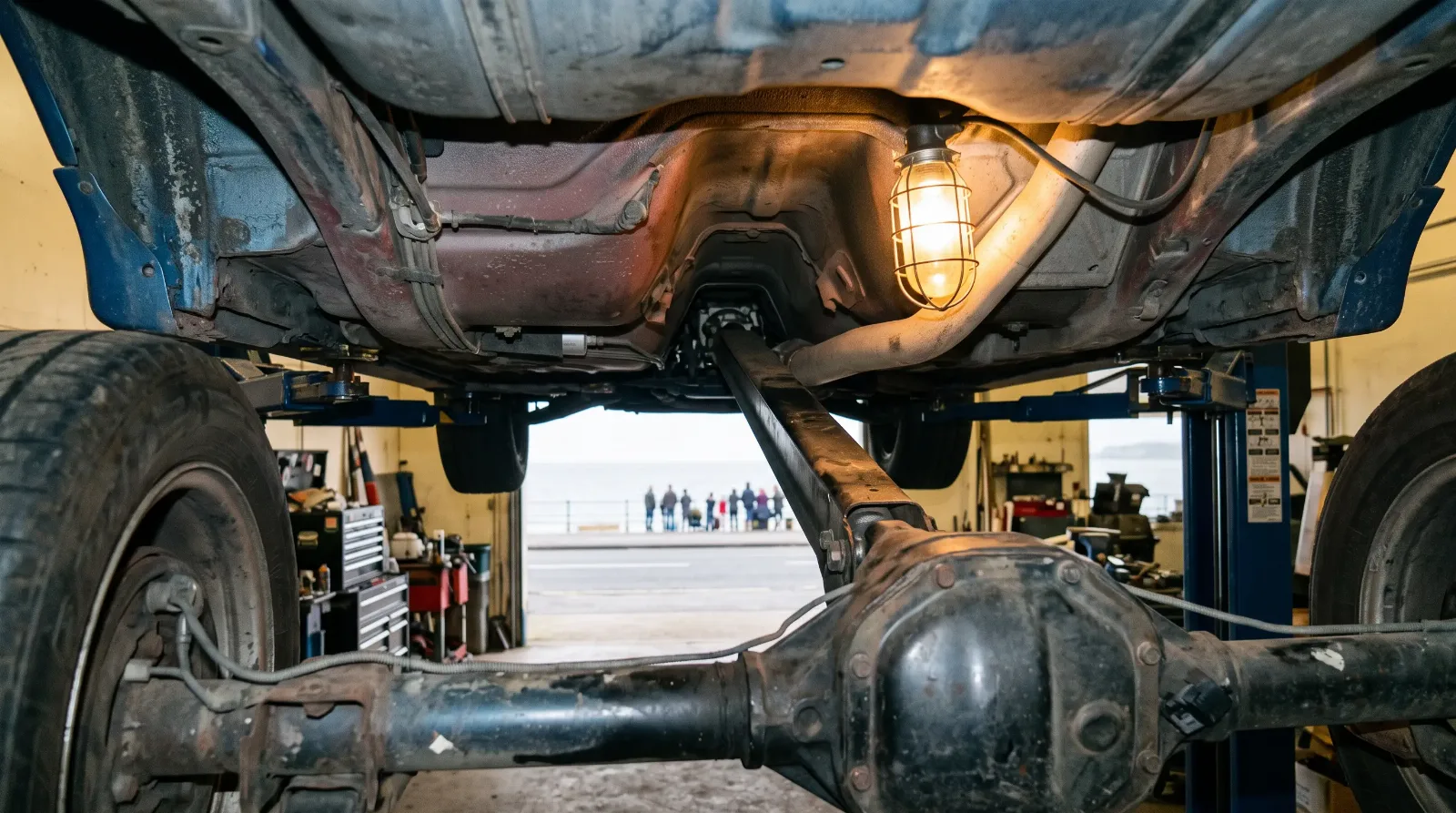
More power finds the weak link fast. The LS1 cars came with a Borg-Warner T56 six-speed or a 4L60E four-speed automatic, and from 1997 the automatic was standard while the manual had to be ordered. On the manual cars the hydraulic clutch is slow to release, which is hard on the synchros and on the 10-bolt rear axle. The 10-bolt, a 7.625 inch, 28-spline axle on these cars, is the part most owners worry about once the tune and headers are in. If you launch hard on sticky tires, budget for the axle before you budget for the cam.
Brakes improved for 1998: four-wheel discs became standard on all Camaros, the front calipers went from single-piston to two-piston, and the rotors grew front and rear. That was enough for 305 hp on street tires. It is a starting point for a car making more, and the same goes for bushings and shocks. If your plan goes past the drag strip, start with the pro-touring basics before you buy more engine.
Stock benchmarks help you judge your slips. Car and Driver ran a 1999 SS to 60 mph in 5.3 seconds and to 100 mph in 12.8, with a 160 mph top speed. MotorWeek ran a 2002 SS 35th Anniversary with the manual to 60 mph in 5.2 seconds and through the quarter mile in 13.5 seconds at 108 mph. If your bolt-on car is not beating those numbers, you have a tune, traction or driver problem, not a parts shortage.
"A rating is a promise on paper. A dyno slip is the receipt. Get the receipt before you buy the next part."
Dan Reeves
Bolt-ons and what the car is worth
Here is the blunt part. Not every LS1 Camaro should be modified. SS production was 3,025 in 1998, 4,829 in 1999, 8,913 in 2000, 6,332 in 2001 and 11,191 in 2002. The 2002 35th Anniversary package, ordered on top of the SS option, went on 3,369 cars and added no horsepower. Hagerty notes that more low-mile, collector-grade cars exist with the LS than with the LT1, which means a clean, original SS is not rare, but it is the car buyers pay up for. A low-mile documented one is worth more stock than with your headers on it.
The car to modify is a driver Z28. It came new at $20,995 in 1998 and $22,870 in 2002, and it has the same engine family and the same 305 to 310 hp starting point. Keep every stock part you remove in labeled boxes. Bolt-ons are reversible only if the originals still exist.
Order of operations, once more: baseline, intake, exhaust, tune, measure, then decide whether the axle and brakes are ready before the cam. For how bolt-ons fit into deeper builds on every generation, the full story covers restomods from mild to wild. And if you are shopping for a starting car, browse fourth-generation Camaros for sale and buy the straightest, most original Z28 you can afford. Power is easy to add to an LS1. A straight body and clean paperwork are not.
Sources and notes
Related Reading

Have a
Chevrolet Camaro
for Sale?
Reach thousands of serious classic car collectors across the US.
Sell It Here →
Selling a classic? Here's how: the best sites to sell a classic car
Are You a Classic Car Dealer?
List your full inventory and connect with targeted classic car buyers.
Join as a Dealer →
#camaro z28
#camaro ss
#chevrolet camaro
#ls1
#fourth-generation Camaro
#1990s cars
#Bolt-on modifications

About the author
Dan Reeves
Performance engine builder from North Carolina's motorsports corridor, focused on swaps, forced induction and making real, repeatable power.
Related Listings - Chevrolet Camaro

Comments
Be the first to comment on this article.