
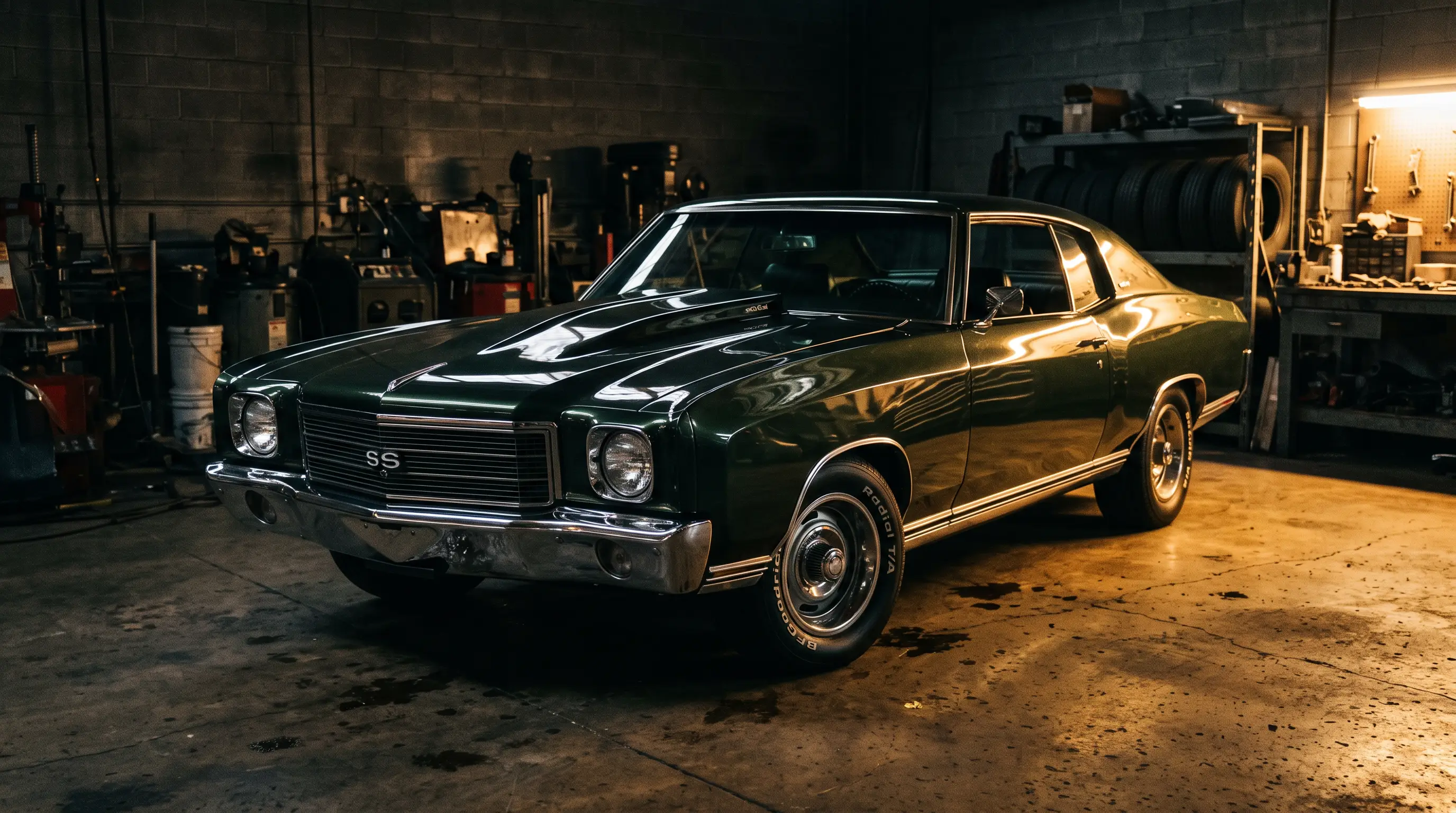
Here is the number that matters about the 1970 Chevrolet Monte Carlo SS 454: 360 horsepower and 500 lb-ft of torque, out of an LS5 big block that cost extra money on a car most people bought for the vinyl roof and the plush bench seat. The monte carlo 1970 ss 454 ls5 combination is the reason this car gets talked about at all fifty-plus years later. Everything else about the first-year Monte Carlo, the Chevelle-based chassis, the formal roofline, the woodgrain dash, is pleasant. The LS5 is the part that is actually interesting.
Car Features
7 min read
The 454 LS5 and How It Made the 1970 SS a Heavyweight
The 1970 Monte Carlo SS454 hid a 360-horsepower, 500 lb-ft big block under a luxury coupe body, and the numbers explain why documented cars are worth chasing today.
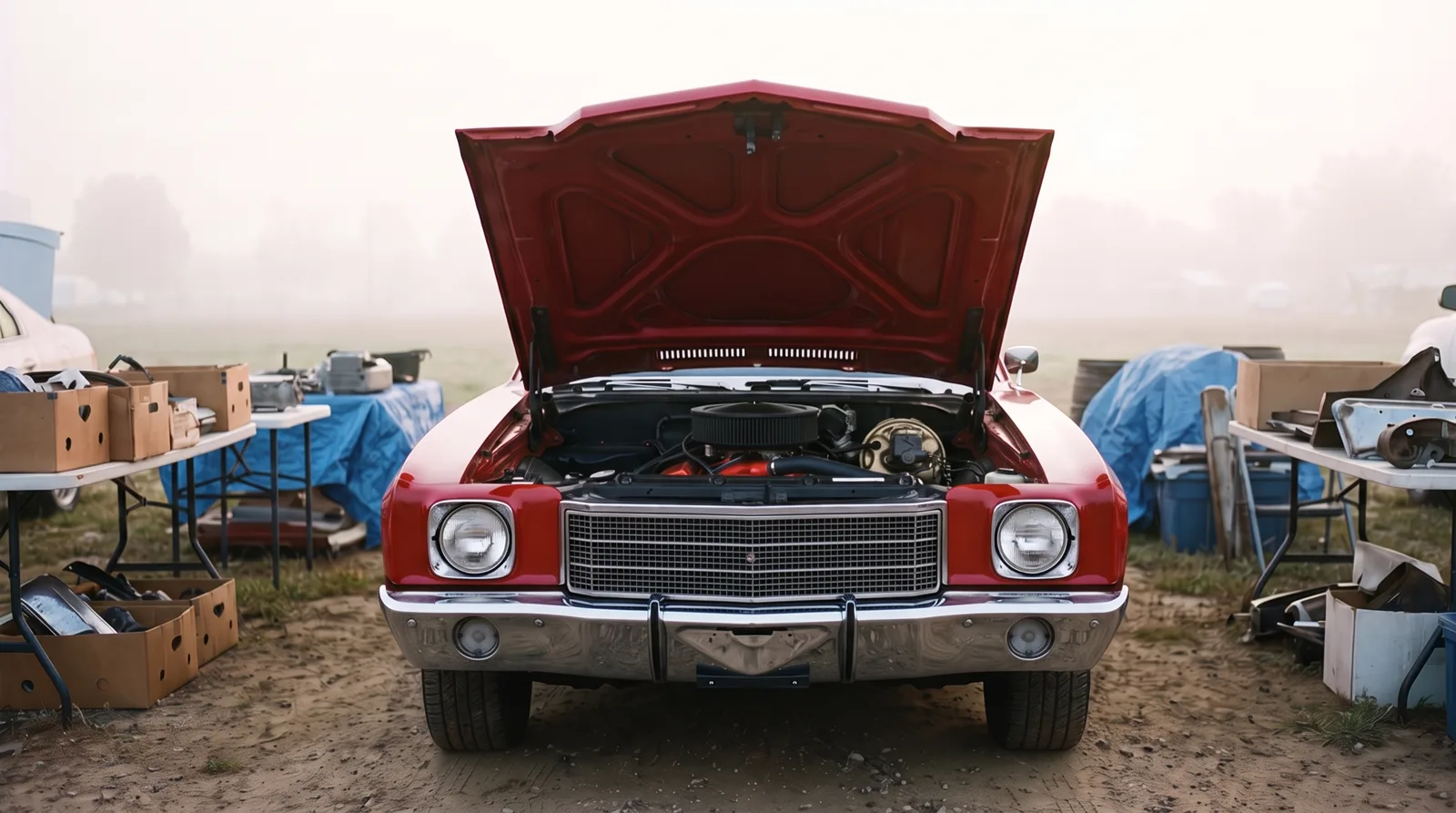
A personal-luxury car with a big block hiding under it
Chevrolet built the 1970 Monte Carlo to compete with the Pontiac Grand Prix and the Ford Thunderbird, not with the Road Runner. The brochure copy was about comfort. The base engine was a 350 small block making a modest 250 horsepower, and most buyers stopped right there. But the option sheet had a Z20 code that swapped in the LS5 454, the same rated-360-horsepower big block that also powered the Chevelle SS 454 that same year, and that single option turned a boulevard cruiser into something with real teeth.
The number worth sitting with is the torque, not the horsepower. 500 lb-ft at low rpm is what makes a heavy car feel fast off the line, and the Monte Carlo was heavy. Curb weight on an LS5 car ran close to 3,800 pounds, noticeably more than a Chevelle coupe with the same drivetrain. The big block did not care. It shoved the car forward regardless of what was hanging off the frame rails.
Why Chevrolet let a luxury coupe carry a 454
This was not an accident of engineering, it was a business decision. GM had already learned from the Chevelle and the Grand Prix that buyers wanted a car that looked restrained in the driveway and did not look restrained at a stoplight. The Monte Carlo SS 454 sold that idea better than almost anything else on the market in 1970, because nobody expected a formal-roof personal coupe to run mid-14s in the quarter mile. It was a sleeper before anyone used that word the way people use it now.
Production numbers back up how narrow this window was. Chevrolet built 3,823 Monte Carlos with the SS454 option in 1970, out of well over 130,000 total Monte Carlos that year. That means the overwhelming majority of first-year Monte Carlos left the factory with small blocks and soft suspension tuning. The 454 car was always the exception, which is exactly why it commands the attention and the money today.
The compression ratio that made it work on pump gas, barely
The LS5 ran 10.25:1 compression, high by later standards but not the highest Chevrolet offered that year. That distinction belonged to the LS6 454, a 450-horsepower version reserved mostly for the Chevelle and the Corvette, and it never appeared in a Monte Carlo. Chevrolet kept the Monte Carlo's big block one notch below the wildest option on purpose. This was still supposed to be a gentleman's car, and a 450-horsepower personal coupe was a bridge the division was not ready to cross in 1970.
That restraint is part of what makes the LS5 Monte Carlo interesting rather than just fast. It was tuned to be driveable, with a broad torque curve instead of a narrow, cammy powerband that only worked above 4,000 rpm. Buyers who wanted a weekend cruiser that could also embarrass a Pontiac at a stoplight got exactly that, without giving up the ability to idle smoothly in traffic.
"People assume horsepower numbers are the whole story. With the 1970 SS454, the story is the torque curve. That car does not need to rev to feel strong, and that is the whole point of a big block in a heavy coupe."
- Dan Reeves
Where the SS454 sits in Monte Carlo history now
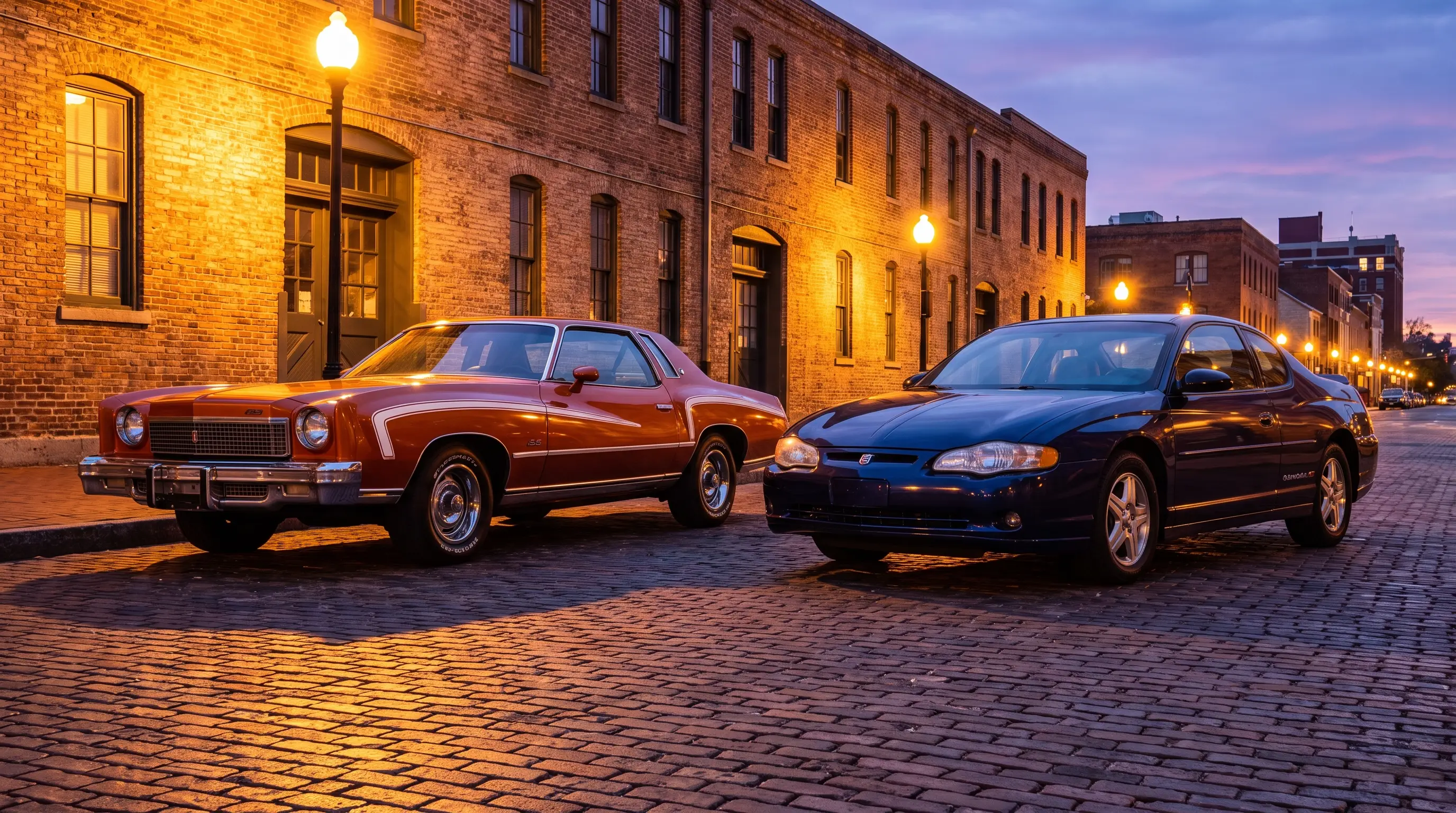
The 1970 SS454 was the high point of a specific idea, a formal luxury coupe with genuine muscle car underpinnings, and it did not last long in that pure form. Within a couple of years the horsepower numbers across the entire industry started dropping because of emissions rules and lower-octane fuel, and the Monte Carlo's big block option followed that trend down. For a full account of how the SS badge came and went across the model's history, monte carlo ss history covers the whole arc, and there is a related story ranking every SS generation against the 1970 original.
What has not changed is the basic math. A documented LS5 car from 1970, with the Z20 code confirmed on the build sheet, is a different animal from a small block Monte Carlo with cosmetic SS badging added later. Buyers looking at the market today should verify the code before paying a premium, because the badge alone proves nothing. If the goal is finding one, or finding a small block car to build into something else entirely, Monte Carlos for sale now is the place to start comparing what is actually out there against what a seller claims is under the hood.
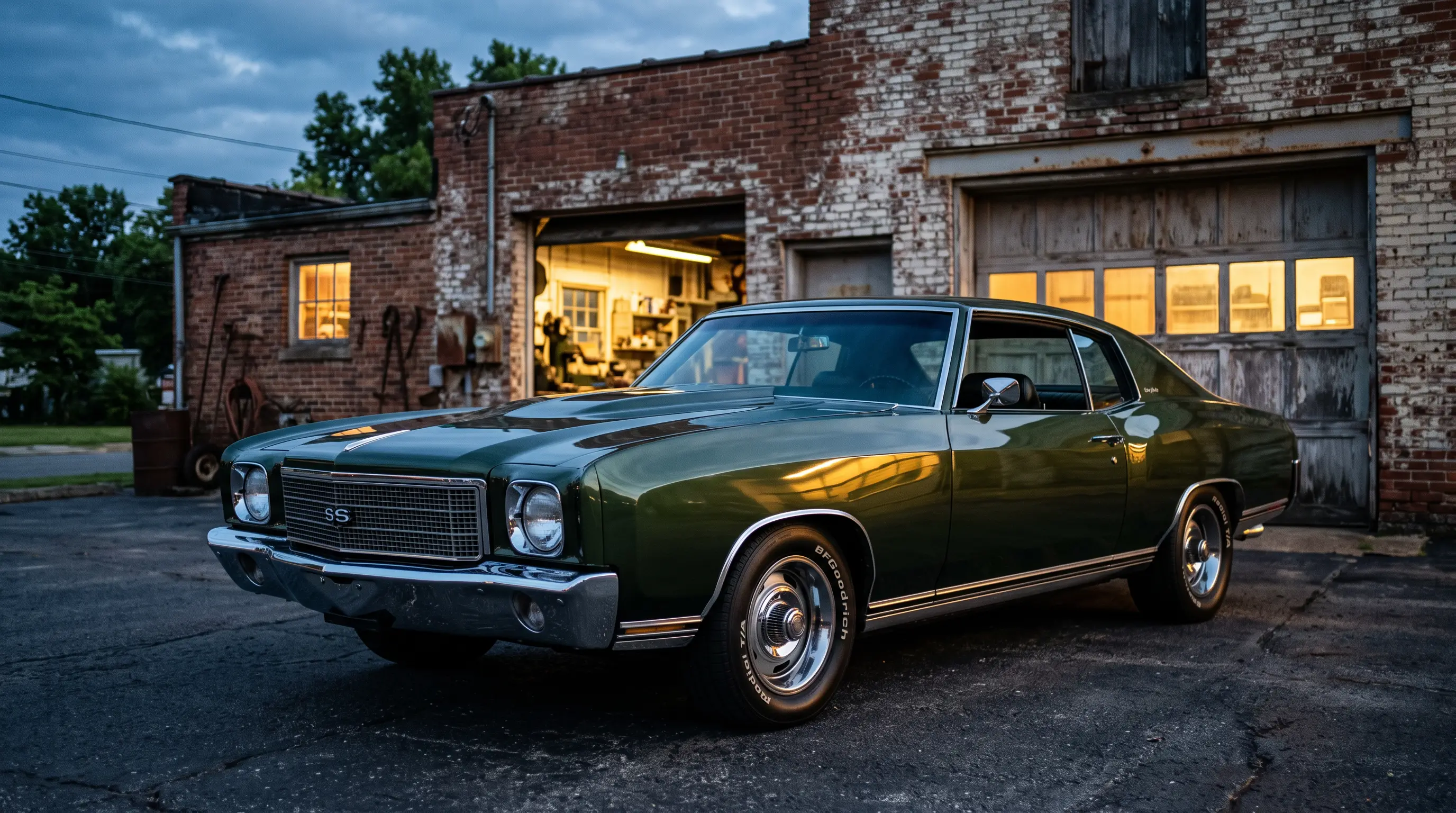
The bottom line on the 1970 SS454 is simple. It was the heaviest hitter the first-generation Monte Carlo ever offered, it existed for a short window before compression ratios and horsepower numbers started sliding, and it proved a personal luxury coupe could carry a genuine big block without losing its identity. That combination has not been repeated in quite the same way since.
What a real one costs and why documentation is everything
Values on documented 1970 SS454 cars have climbed steadily as buyers figured out how few genuine examples exist compared to how many badges were slapped on later. A numbers-matching LS5 car with the M22 four-speed and the correct 3.31 or 4.10 rear gear commands a real premium over an automatic small block car, sometimes double or more depending on condition and originality. That gap exists because the drivetrain combination is rare, not because the sheet metal is any different.
Buyers should ask for the cowl tag, the trim tag, and ideally a Protect-O-Plate before treating any SS454 claim as fact. Engine stampings can be decoded against known Chevrolet sequences, and a seller who cannot produce documentation, or who gets vague when asked, is usually selling a clone. That is not automatically a dealbreaker if the price reflects it, but it should never be priced like a numbers-matching original.
The other thing worth knowing is how the SS454 fits against its own stablemates. A 1970 Chevelle SS454 with the same LS5 or the wilder LS6 will usually out-value the Monte Carlo version, partly because muscle car buyers gravitate toward the more aggressive Chevelle styling. That price gap has made the Monte Carlo SS454 something of a bargain relative to its performance, at least for now, since it delivers nearly identical numbers under a body that a smaller slice of collectors are chasing.
Sources and notes
Related Reading
Have a
Chevrolet Monte Carlo
for Sale?
Reach thousands of serious classic car collectors across the US.
Sell It Here →
Selling a classic? Here's how: sell my classic car
Are You a Classic Car Dealer?
List your full inventory and connect with targeted classic car buyers.
Join as a Dealer →

About the author
Dan Reeves
Performance engine builder from North Carolina's motorsports corridor, focused on swaps, forced induction and making real, repeatable power.
Related Listings - Chevrolet Monte Carlo




Comments
Be the first to comment on this article.