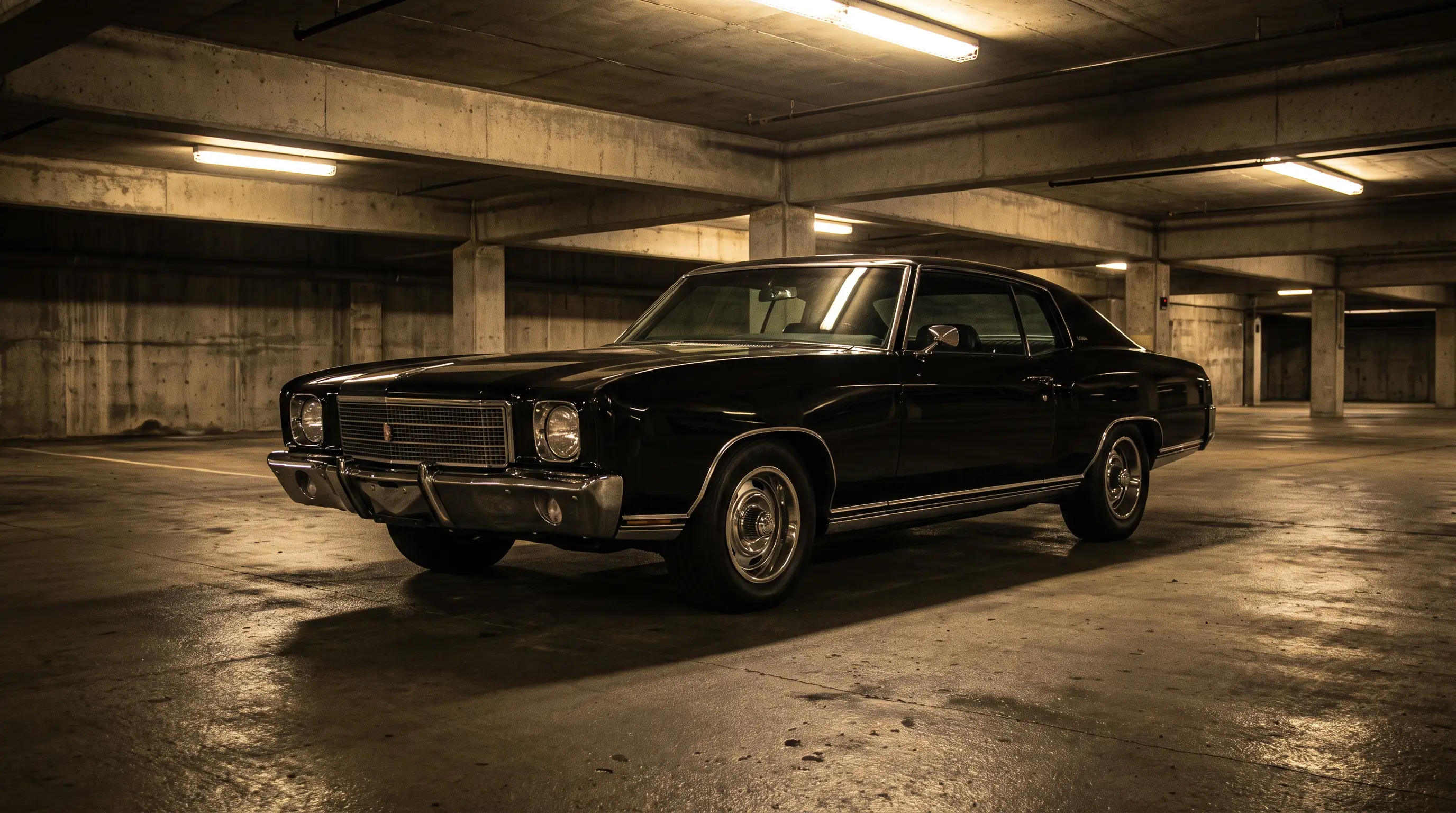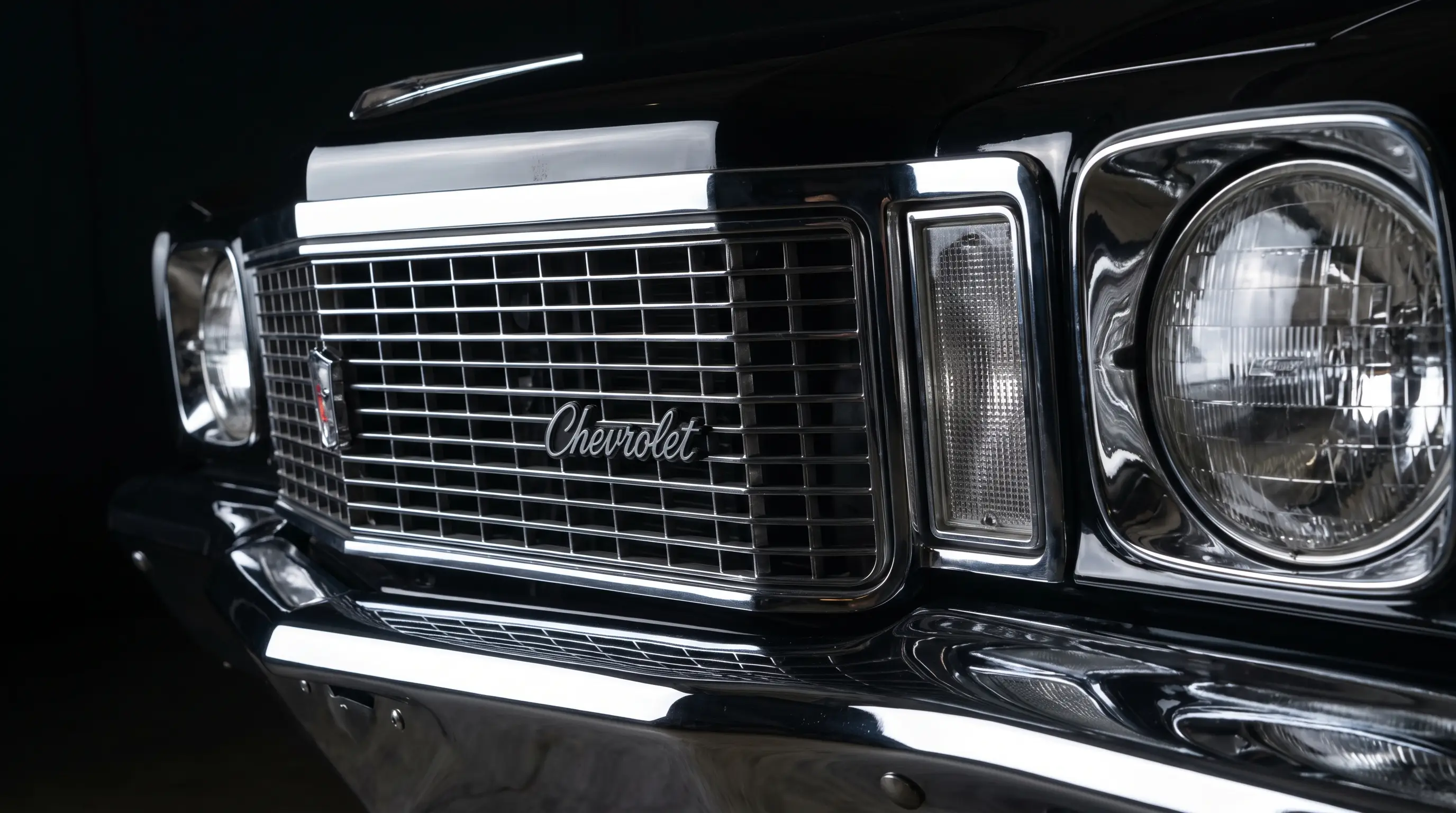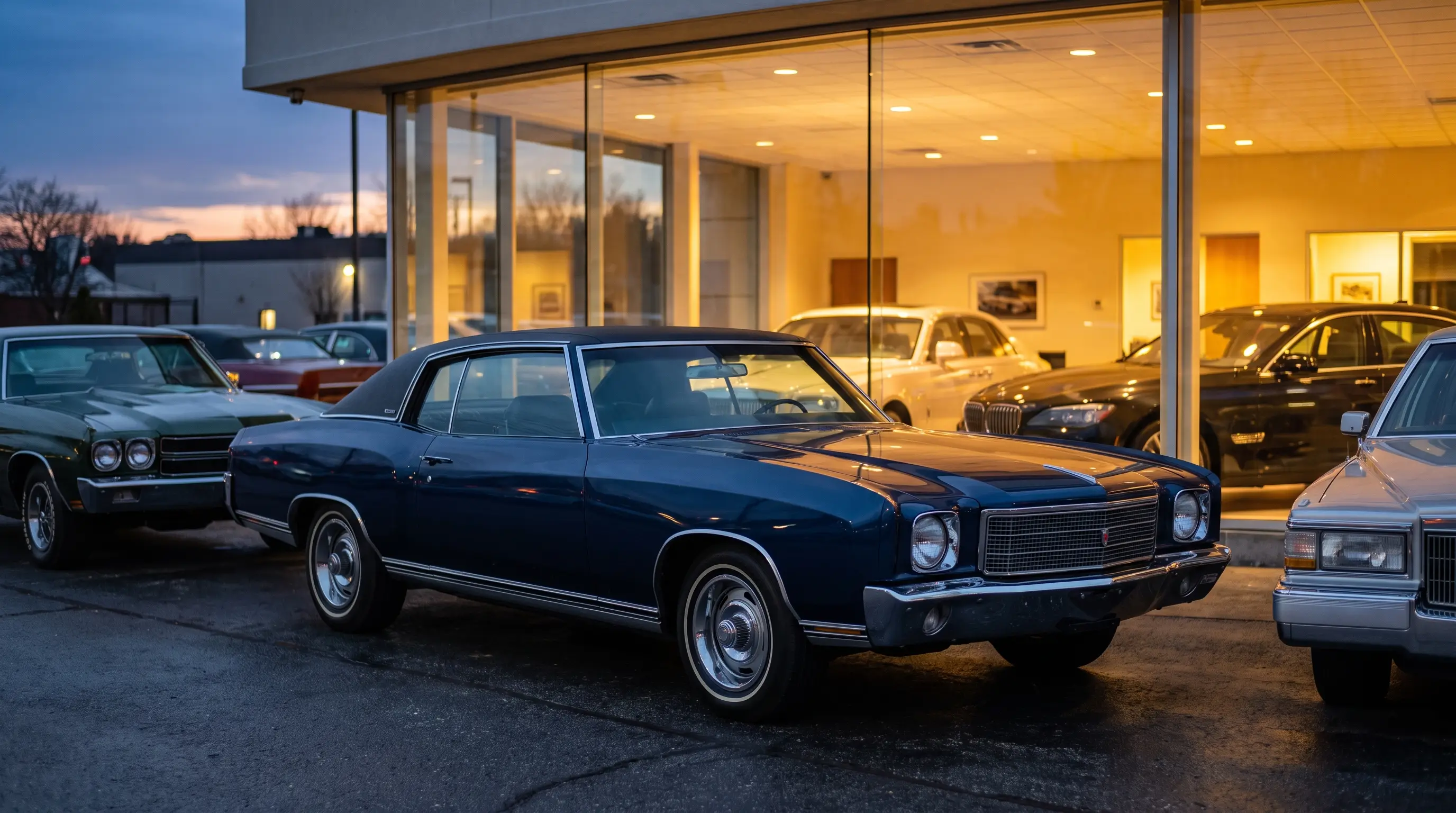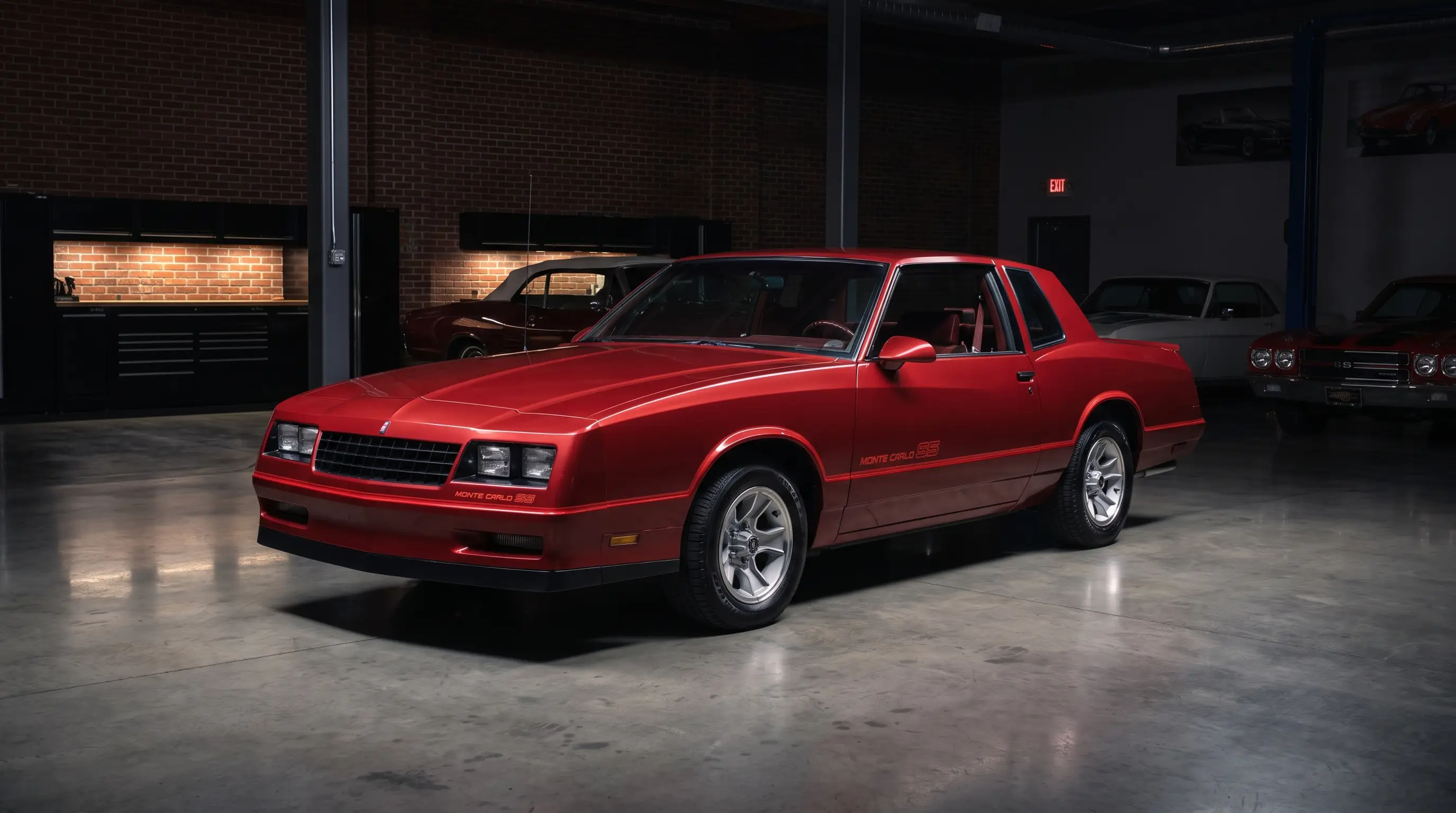
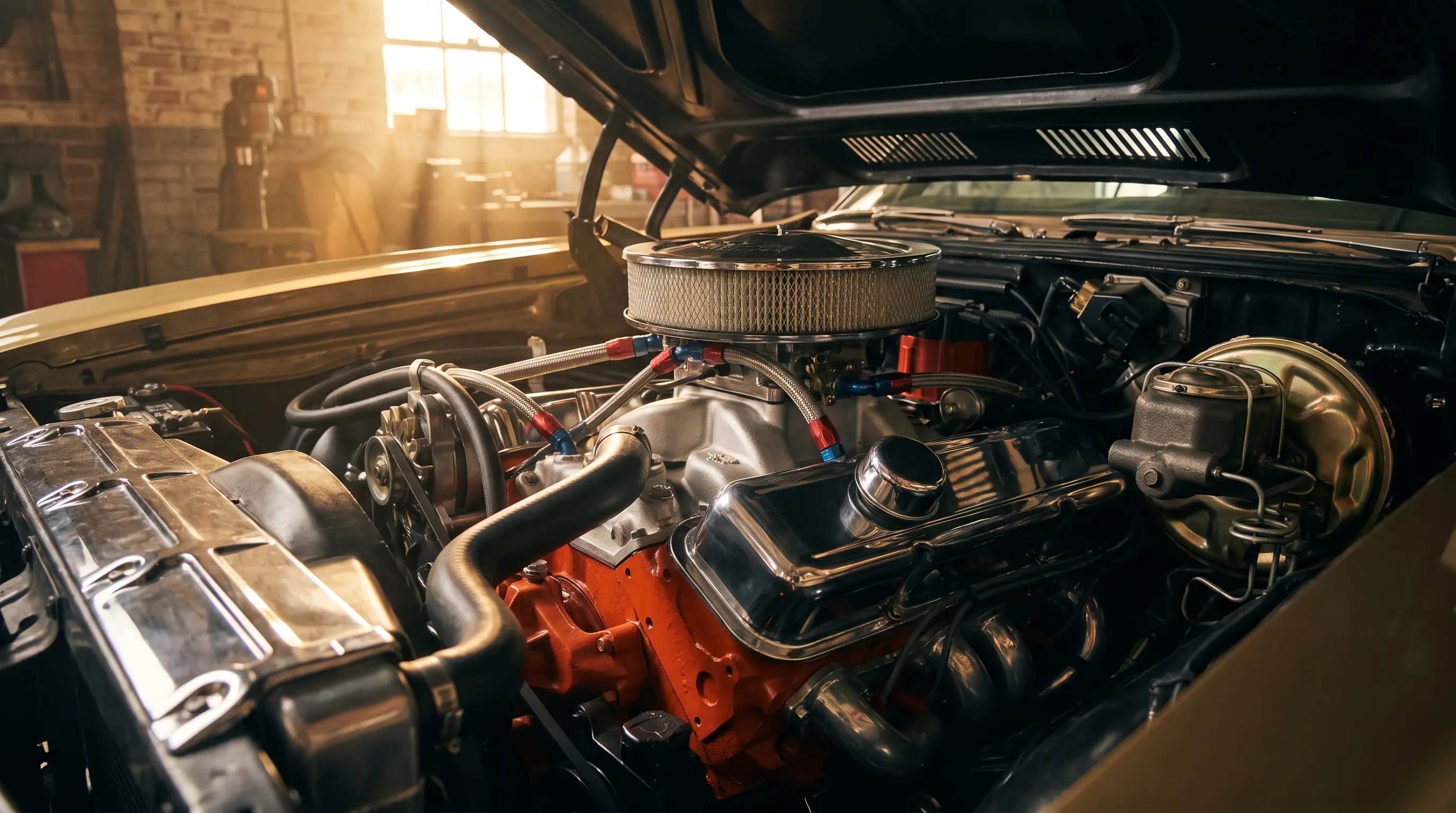
Two engines did most of the work in the 1971 Monte Carlo lineup: the 350 small-block and the 402 big-block, the latter badged by Chevrolet as the "Turbo-Jet 400" in the Monte Carlo even though its actual displacement was 402 cubic inches, an overbore of the familiar 396 block. Buyers who understand what each engine actually delivered, and what the badge does and does not tell you, are the buyers who avoid overpaying for the wrong assumption.
The 350: the engine most 1971 Monte Carlos actually had
The 350 cubic inch small-block was the volume engine in the 1971 Monte Carlo, offered in more than one horsepower tune depending on carburetor and compression package. This is the engine that shows up in the majority of surviving cars, and for good reason. It offered adequate performance for a personal luxury coupe, reasonable fuel economy for the era, and lower ownership and maintenance costs than the big-block alternative. Rated output sat below the big-block's figures, at 245 gross horsepower with the two-barrel carburetor and 270 gross horsepower with the optional four-barrel, reflecting a compression ratio trimmed along with the rest of the 1971 lineup as Chevrolet adjusted engines fleet-wide for lower-octane fuel.
None of that makes the 350 a lesser choice for most buyers today. A well-sorted 350 Monte Carlo is generally easier and cheaper to maintain, easier to insure, and in most cases delivers a more balanced driving experience for a car built around comfort rather than acceleration numbers. The result is a car that does exactly what it was designed to do without demanding a premium for an engine most owners never fully exploit.
The 402: bigger than the badge admits
The big-block option, marketed by Chevrolet in the Monte Carlo as the "Turbo-Jet 400" despite an actual displacement of 402 cubic inches, is the engine collectors chase harder. The Chevelle version of this same overbored 396 block kept the "SS 396" name for brand recognition, but in the Monte Carlo the badge read 400, not 396, which is its own small trap for anyone assuming the two nameplates used identical engine badging. Verification runs through casting numbers and engine codes, not fender script.
Output on the big-block sat meaningfully above the 350, rated at 300 gross horsepower, with more torque available lower in the rev range, the kind of pull that suited a heavier personal luxury coupe better than a peakier engine would have. Like every 1971 Chevrolet engine, the 402's compression ratio came down from 1970 levels as part of the industry-wide shift toward lower-octane fuel tolerance, a detail covered in more depth elsewhere but worth flagging here because it directly affects the horsepower figure printed on any given spec sheet.
The gap between them, and why it matters at resale
Set the two engines side by side on paper and the gap looks modest. Set them side by side in ownership cost, insurance premium, and resale ceiling, and the gap turns into three separate decisions that a buyer needs to make consciously rather than by accident. Too many shoppers pick an engine based on which one sounds better at a cruise night and figure out the actual cost and documentation burden afterward. That order should be reversed.
The practical gap between the two engines is not just a horsepower number on a brochure. It shows up in weight distribution, in fuel consumption, in insurance cost, and eventually in resale value, since big-block cars with verified original engines consistently command stronger prices than small-block equivalents in comparable condition. That premium exists because 402-equipped cars were built in smaller numbers relative to the small-block volume, and because confusion over the Turbo-Jet 400 badge and its true 402 cubic inch displacement makes documented, verified examples genuinely scarcer than casual shoppers assume.
A buyer chasing a big-block car for the resale premium needs the paperwork to back it up. A matching casting number, a correct engine code, and ideally a build sheet or window sticker referencing the option turn a claim into a fact. Without that documentation, a 402-badged car is a story, not a specification, and the market increasingly prices that difference correctly.
Transmission pairing is part of this calculation too. Both engines could be ordered with a column-shift automatic or, in some configurations, a manual gearbox, and the specific pairing on a given car affects both period accuracy and modern usability. A big-block paired with the correct heavy-duty transmission and rear axle ratio for that engine is a different proposition than one that has been mixed and matched over the decades with whatever parts were available at the time of a repair. Buyers should confirm the drivetrain as a complete package, not engine alone, before treating a car as fully documented.
Fuel and maintenance costs diverge sharply between the two as well. A big-block Monte Carlo drinks noticeably more fuel in daily use than its small-block counterpart, a real consideration for anyone planning to drive the car regularly rather than trailer it between shows. That gap was a genuine factor for original buyers choosing between the two options in 1971, and it remains one for owners today, regardless of which engine ultimately commands the higher price at resale.
None of this is complicated once it is laid out plainly. Two engines, two very different ownership experiences, and one badge that lies about displacement if you take it at face value. Everything else about deciding between them follows from those three facts.
What this means for a buyer today
Choosing between these two engines in a 1971 Monte Carlo is less about which one is objectively better and more about matching the car to what a buyer actually wants. The 350 is the sensible daily choice with lower running costs. The 402 is the collector's engine with a real premium attached, provided it can be verified. Readers wanting the fuller context on the 1971 model year, including the compression changes that affect both engines' rated output, should read where this started for the complete picture before deciding which engine option fits their goals.
| Engine | Displacement | Positioning |
|---|---|---|
| Small-block V8 | 350 cubic inches | Volume engine, lower running cost, balanced daily driver |
| Big-block V8 | 402 cubic inches (marketed as "Turbo-Jet 400") | Collector premium, requires casting number verification |
"A fender badge is marketing. A casting number is a fact. Buy the fact, not the badge, and you will not overpay for a 402 that turns out to be a 350 with better fender scripts."
- Dan Reeves
The 1971 Monte Carlo's engine choice comes down to a straightforward tradeoff. The 350 costs less to own and covers what most drivers actually need. The 402, wearing its "Turbo-Jet 400" badge, brings a real collector premium if, and only if, the paperwork confirms it. Buyers weighing both options against real inventory can browse current classic Monte Carlo for sale listings and compare documented big-block examples directly against small-block cars before making a call.
Sources and notes
- 1971 Monte Carlo Body Style, Engines, and VIN Decoder - ChevyHardcore
- 1970-1971 Chevrolet Monte Carlo SS 454: Specs and History
- Chevrolet Monte Carlo - Wikipedia
- Disco-Era Darling: The Chevrolet Monte Carlo - Ate Up With Motor
- A New Dimension in Luxury: The 1978 Chevrolet Monte Carlo - Mac's Motor City Garage