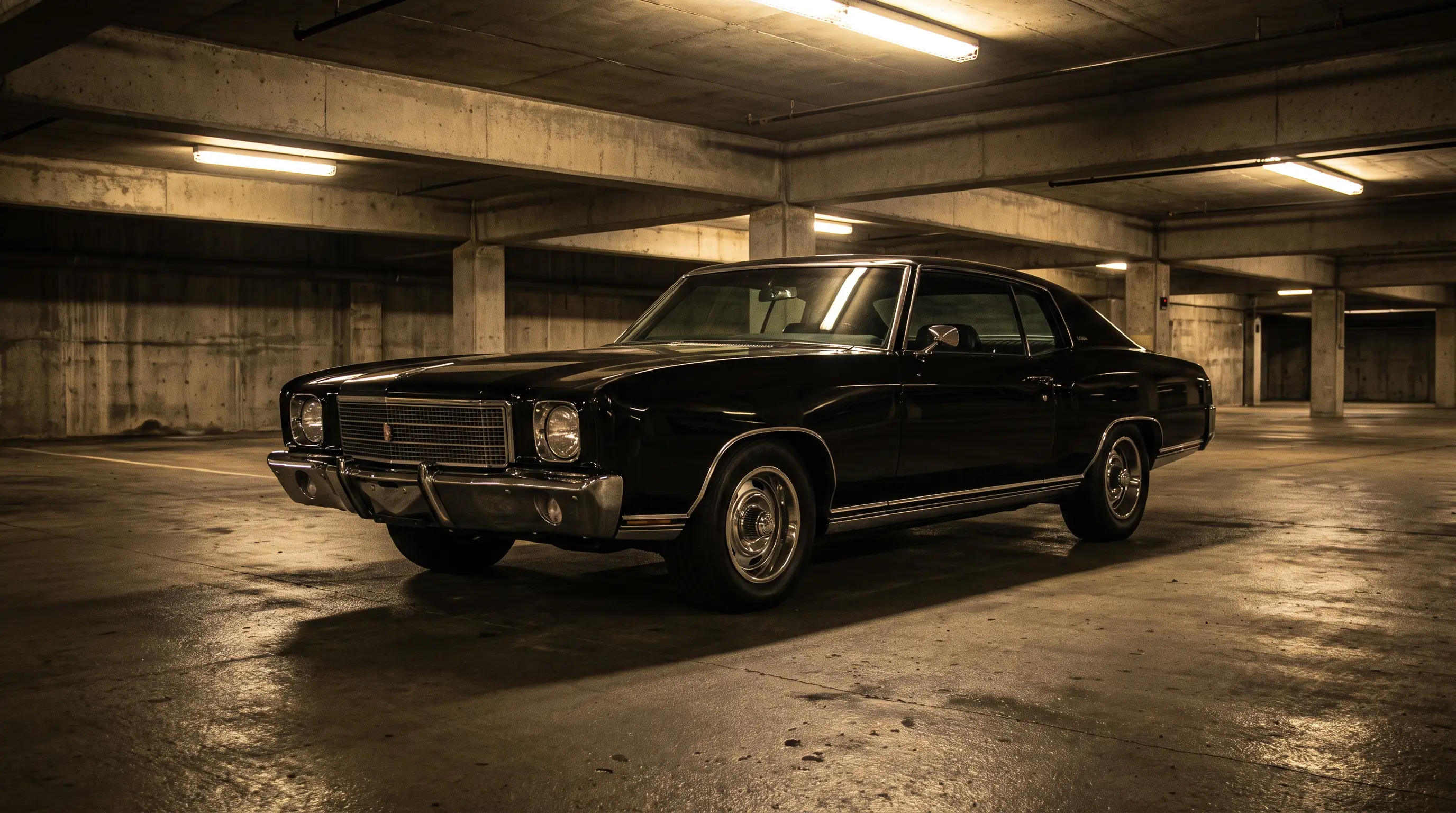
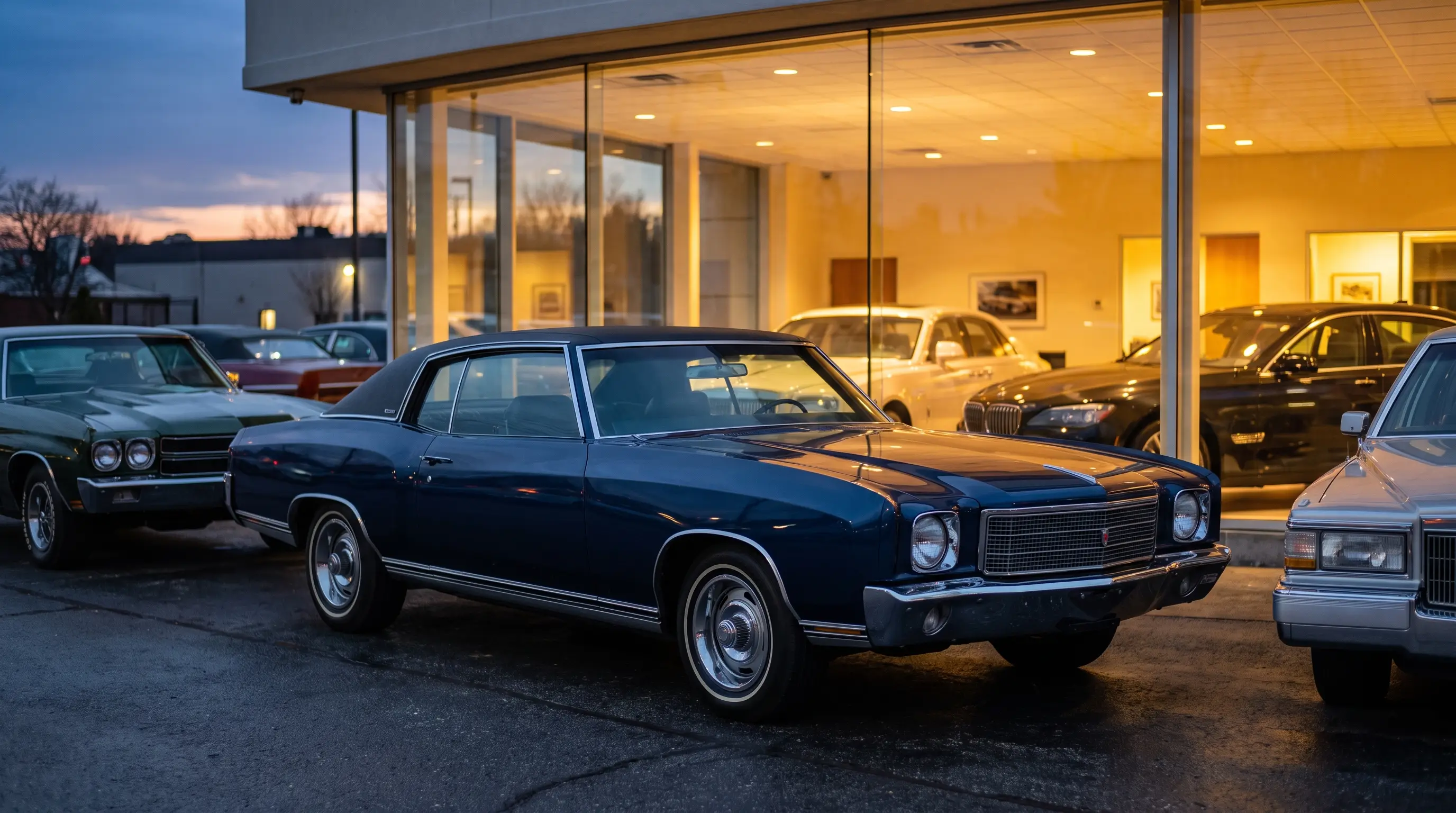
Chevrolet had a specific price and status gap to fill when it built the Monte Carlo, and the 1971 model year is where that positioning got tested for the first time against a full year of competitive response. The question worth asking is not whether the car looked luxurious. It did. The question is whether the pricing and market data from that period, and the auction results decades later, actually support the luxury positioning Chevrolet was selling.
The gap between a Chevelle and a Cadillac
Chevrolet's product strategy in 1971 placed the Monte Carlo deliberately above a Chevelle and well below a Cadillac Eldorado or a fully loaded Buick Riviera. This was not an accident of pricing. It was a calculated slot aimed at a buyer who wanted the appearance and comfort of a luxury coupe without the acquisition cost or ongoing expense of an actual luxury-brand nameplate. The Monte Carlo's base price sat meaningfully above a comparable Chevelle coupe, and options packages could push a well-equipped example close to entry-level luxury territory without ever touching Cadillac money.
That positioning worked commercially. Chevrolet's sales figures through the early 1970s show the Monte Carlo holding a consistent place among the division's stronger nameplates, evidence that the price gap it was built to fill was real and that buyers were willing to pay for the perception of luxury without the brand premium attached to it.
What "luxury" actually meant on the window sticker
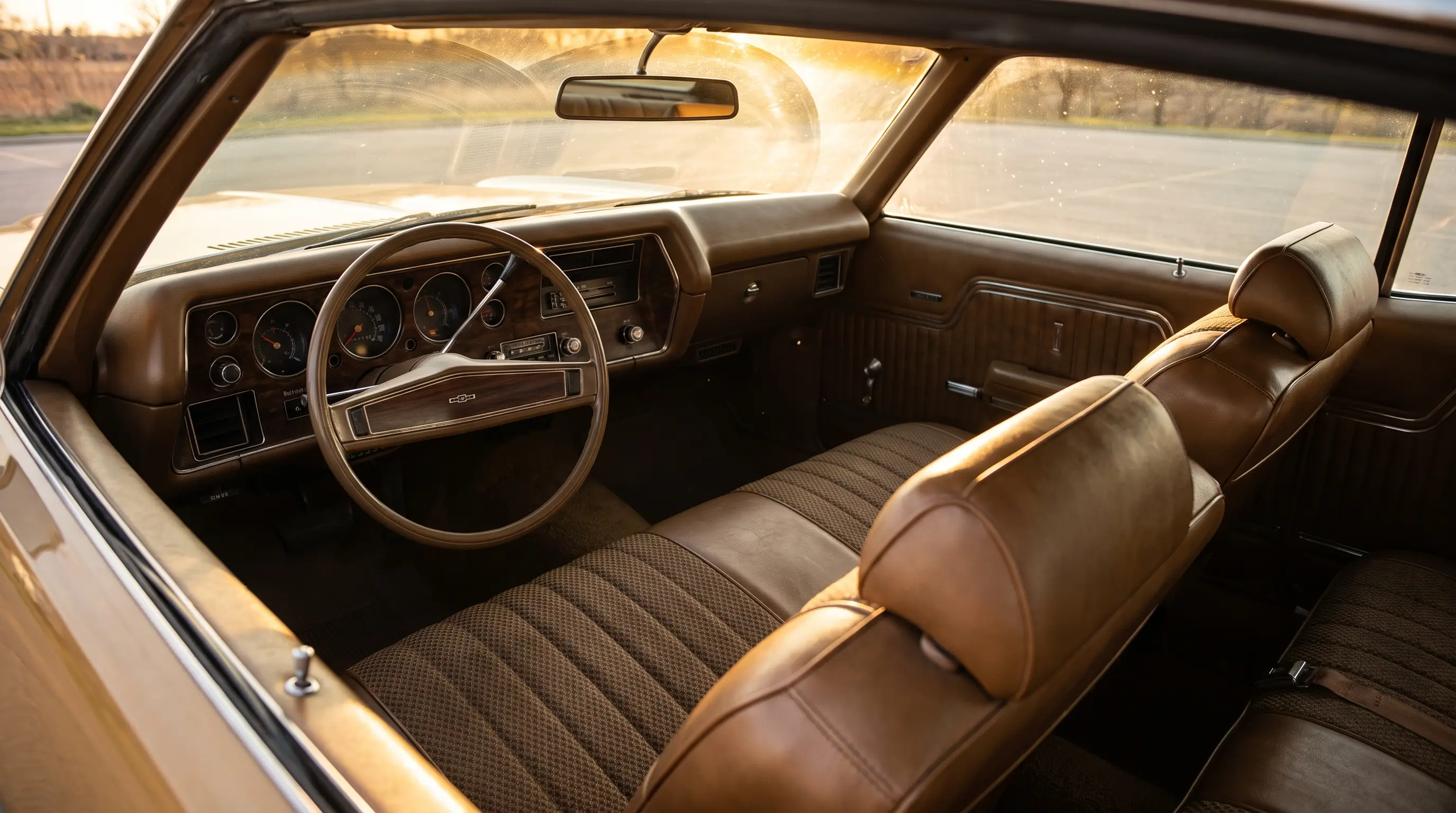
It is worth being precise about what buyers were actually paying for. The 1971 Monte Carlo delivered a formal roofline, a quieter cabin than a standard Chevelle, available bucket seating and center console options, simulated wood trim, and a ride tuned softer than the division's performance-oriented models. None of that is luxury in the sense a Cadillac buyer would recognize it. It is luxury adjacent, a set of comfort and styling cues borrowed from higher-priced segments and packaged at a mid-market price point.
This distinction matters for anyone evaluating the car's positioning honestly rather than through nostalgia. The Monte Carlo was never competing on the same terms as a genuine luxury brand, and Chevrolet never pretended otherwise in its own marketing. The pitch was accessible luxury cues, not luxury-brand substance, and the pricing data from the period reflects that positioning consistently.
How that positioning shows up in today's auction results
Decades later, the auction market has effectively confirmed how Chevrolet's original positioning has aged. Well-documented, clean 1971 Monte Carlos, particularly SS and big-block variants, generally trade at prices that sit above comparable Chevelle coupes of the same year but well below genuine luxury-brand equivalents from the era, broadly mirroring the price relationship Chevrolet engineered when the cars were new. Public auction results from houses like Mecum, along with Hagerty's price guide data, support this pattern, though exact figures shift with condition, documentation, and the broader collector market. That consistency across five decades is a meaningful data point. It suggests the market has continued to value the Monte Carlo as what it always was, an accessible, comfort-oriented coupe rather than a genuine luxury car, and prices it accordingly.
Base small-block cars without significant options tend to sit at the lower end of this range, while documented big-block and SS-equipped examples with strong provenance command the premium end. That spread itself is informative. It shows a market that is pricing documentation and engine rarity more aggressively than it prices the base luxury trim package that defined the car's original positioning.
Regional variation also plays a role that a national average price range tends to hide. Sun Belt markets with a deeper pool of unmolested, rust-free examples generally see tighter pricing bands than colder climates where survivors are scarcer but condition is often more compromised. A buyer comparing two listings priced similarly should weigh regional supply and body condition before assuming they are looking at equivalent cars simply because the asking prices match.
Financing and insurance costs deserve a mention too, since they factor into the real cost of luxury positioning as much as the sticker price does. A well-documented 1971 Monte Carlo insured as a collector vehicle through an agreed-value policy typically costs a fraction of standard coverage, which meaningfully changes the ownership math compared to what a buyer might assume from daily-driver insurance rates. That gap is part of why the car's original accessible-luxury pitch still functions decades later, not just as a styling exercise but as an actual cost equation that continues to favor the buyer over a genuine luxury-brand alternative.
The buy case, stated plainly
Strip away the styling language and the case for a 1971 Monte Carlo comes down to a spreadsheet, not a feeling. Acquisition cost sits well below comparable luxury-brand classics. Insurance and financing costs favor the buyer once the car is documented as a collector vehicle. Parts availability, thanks to shared GM architecture across several divisions, remains better than a genuine luxury nameplate from the same era. Every line item in that comparison supports the same conclusion Chevrolet was selling in the first place, that this is where accessible luxury actually lives in the classic market. That is not a nostalgic verdict. It is what the numbers say.
For a buyer evaluating a 1971 Monte Carlo today, the honest read is this: buy it for what it actually is, a well-styled, comfortable personal luxury coupe with genuine period charm and a reasonable entry price relative to true luxury-brand classics from the same years. Do not buy it expecting Cadillac-level engineering or materials, because that was never the promise Chevrolet made, and the pricing data across both the original market and today's auction results confirms it. Judged against that realistic standard, a clean, well-documented 1971 example remains a reasonable buy in the current market, particularly for a buyer prioritizing style and comfort over outright collectibility ceiling.
Readers wanting the complete picture of the 1971 model year, including the engineering and styling changes that supported this positioning, should read the full story before making a purchase decision based on price alone.
"The Monte Carlo was never trying to out-luxury a Cadillac. It was trying to give a Chevelle buyer a taste of that world at a price they could actually justify, and the auction data still bears that positioning out today."
- David Mercer
The 1971 Monte Carlo's luxury positioning holds up under scrutiny because it was never overreaching in the first place. Chevrolet built a comfort-focused, style-forward coupe priced deliberately below genuine luxury brands, and the market has priced it consistently with that intent for five decades. Buyers who understand this positioning going in are far less likely to feel disappointed by the car's actual materials and engineering once they own it. Those ready to compare current pricing across trims and engine options can browse classic Monte Carlo listings and see how this positioning plays out in today's market.
Sources and notes
- Disco-Era Darling: The Chevrolet Monte Carlo - Ate Up With Motor
- Chevrolet Monte Carlo - Wikipedia
- 1970-1971 Chevrolet Monte Carlo SS 454: Specs and History
- 1971 Monte Carlo Body Style, Engines, and VIN Decoder - ChevyHardcore
- A New Dimension in Luxury: The 1978 Chevrolet Monte Carlo - Mac's Motor City Garage