I have pulled more than a few 1971 Monte Carlo interiors apart down to the door panels, and what strikes me every time is how much restraint Chevrolet showed. This was not a car trying to look like a Cadillac. It was a car trying to feel like a step up from a Chevelle without shouting about it, and the cabin they built pulls that off with materials and details that hold up better than people expect once you actually get your hands on them.
Seat materials that were built to be sat in, not just photographed
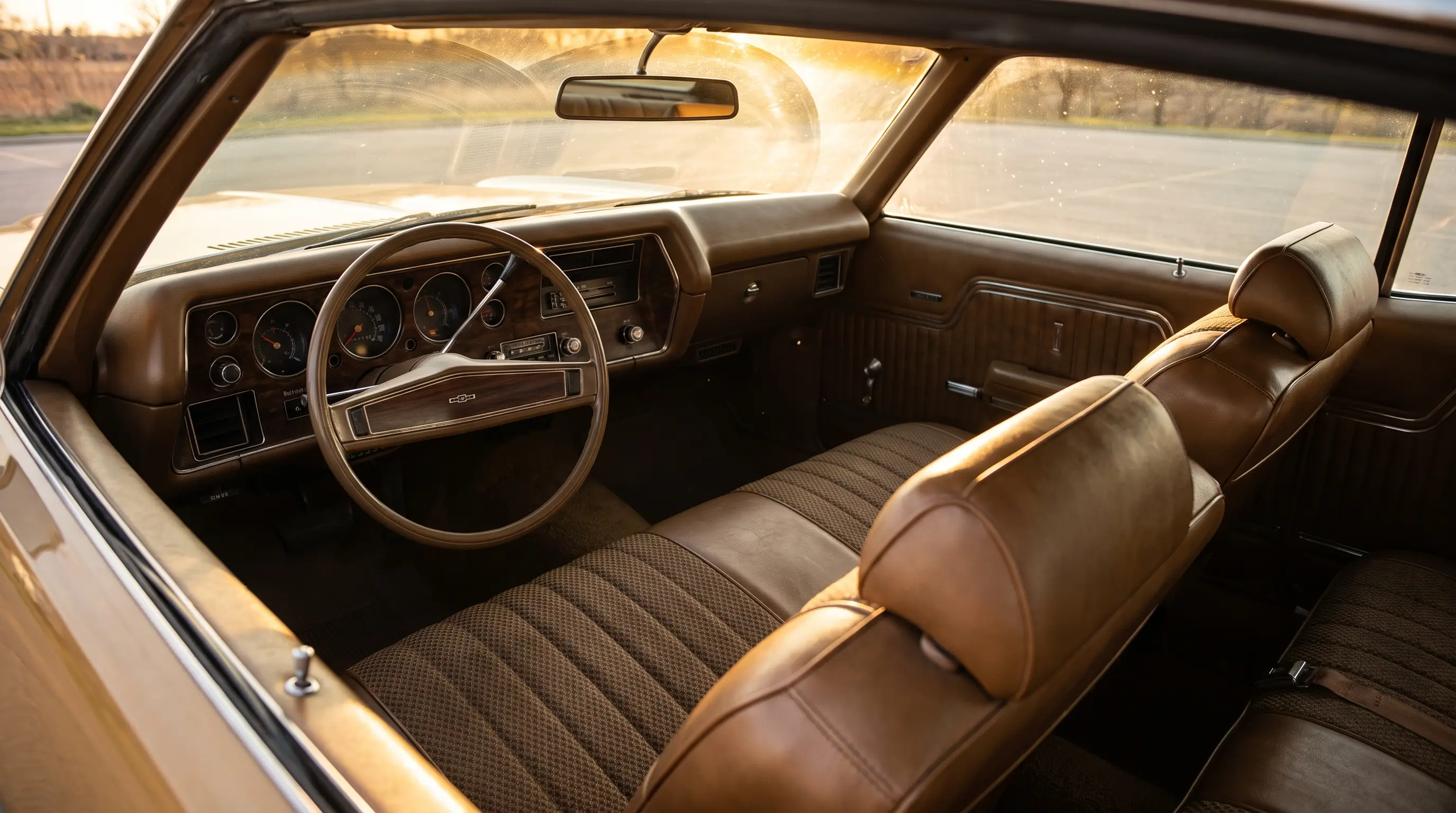
The base cloth and vinyl combinations Chevrolet offered in the 1971 Monte Carlo were genuinely durable, the kind of material that shows up in survivor cars today with far less wear than you would expect from fifty years of use. The optional all-vinyl and higher-grade cloth trims stepped things up without going soft. Bucket seats with a center console were available for buyers who wanted a more personal, driver-focused layout, and that option is one of the details serious buyers should check for when evaluating originality, since a lot of cars have had seats swapped or reupholstered over the decades in patterns that were never factory-correct for the year.
Getting the upholstery pattern right matters more than most casual buyers realize. I have seen plenty of "restored" interiors that look sharp from three feet away but use a stitch pattern or a grain that never came out of a Chevrolet plant in 1971. If you are paying a premium for originality, know what the correct pattern looks like before you hand over money for someone else's guess.
Dashboard and trim detailing done with real intent
The dashboard layout in the 1971 Monte Carlo used simulated wood trim across the instrument panel, a detail that was doing real work to signal a step up in perceived quality without the cost of actual wood. Gauge cluster design stayed straightforward and legible, no gimmicks, which tells you Chevrolet's interior team understood their buyer wanted the appearance of luxury more than a technical showpiece. Door panels carried matching trim treatment, and the overall cabin design held together as one coherent statement rather than a collection of mismatched luxury cues bolted on to hit a price point.
What I respect about this dashboard, working on them now, is how well it was built to actually last. The plastics used in the trim pieces have generally aged better than a lot of 1970s domestic interiors, and original dash pads that have not been sun-baked in a Southwest driveway for three decades are still out there in usable condition. That is not something you can say about every car from this era.
What separates a correct interior from a poseur job
Here is where I get particular. A period-correct 1971 Monte Carlo interior uses specific carpet colors, specific door panel patterns, and specific seat trim combinations that Chevrolet documented in its build records that year. A poseur job splits the difference, using whatever reproduction carpet or seat cover kit is easiest to source today regardless of whether it actually matches what left the factory. Both can look good in photos. Only one of them is actually correct, and the difference matters if you care about the car's documentation or its eventual resale to a buyer who knows what to look for.
I tell people the same thing every time: if someone is selling you a "correct" 1971 interior, ask them to show you the color and trim codes from the build sheet, not just a photo of the finished seats. Anyone who has actually restored one of these to factory spec will have that paperwork or know exactly where to point you. Anyone who does not is guessing, and you should price the car accordingly.
Headliners are another spot where I see corners cut constantly. The correct 1971 headliner material and pleat pattern is not the same as what most generic reproduction kits ship with off the shelf, and installers who do not know the difference will happily sell you a close-enough job and call it factory-correct. I have re-done more than one headliner a previous shop had already "restored" once the owner realized the pleat spacing was wrong under good light. It is not a cheap fix to do twice, so it pays to ask questions before the first install, not after.
Carpet is the same story with a different material. Factory-correct loop carpet in the right color and weight is out there if you look for the right supplier, but plenty of restoration jobs use a generic cut-pile substitute because it is easier to source and install. It looks fine in a listing photo. It does not look or feel right once you know what the original texture is supposed to be underfoot, and a judge or a knowledgeable buyer will notice within seconds of opening the door.
Why this cabin has aged well
Five decades on, the 1971 Monte Carlo's interior still does what it was built to do. It presents a genuine step up in comfort and perceived quality over a base Chevelle without pretending to be something it was not. The materials were chosen for durability as much as appearance, and the design restraint Chevrolet showed means the cabin still reads as tasteful today rather than dated in the way some more aggressively styled interiors from the same era have become. For the full picture on what else changed and stayed the same across the 1971 model year, our 1971 monte carlo retrospective covers the ground beyond just the cabin, and the color and trim palette that pairs with these interior options is covered in a related story worth reading before committing to a full restoration plan.
"Anybody can put nice-looking seats in an old car. Getting the stitch pattern, the door panel trim, and the carpet color to match what actually left the factory in 1971, that is the part that separates a real restoration from a good-looking guess."
- Jim Vasquez
The 1971 Monte Carlo's interior appointments were never meant to fool anyone into thinking they had bought a Cadillac, and they do not need to. What they deliver, honestly and durably, is a real step up in comfort and trim quality over a standard Chevelle, executed with materials that have held up better than most of their era. Buyers evaluating a car's interior should ask for build documentation before assuming what they are looking at is correct, and anyone shopping the model right now can check Monte Carlos for sale now to compare original and restored cabins across multiple listings.
Sources and notes
- Disco-Era Darling: The Chevrolet Monte Carlo - Ate Up With Motor
- Chevrolet Monte Carlo - Wikipedia
- 1970-1971 Chevrolet Monte Carlo SS 454: Specs and History
- 1971 Monte Carlo Body Style, Engines, and VIN Decoder - ChevyHardcore
- A New Dimension in Luxury: The 1978 Chevrolet Monte Carlo - Mac's Motor City Garage