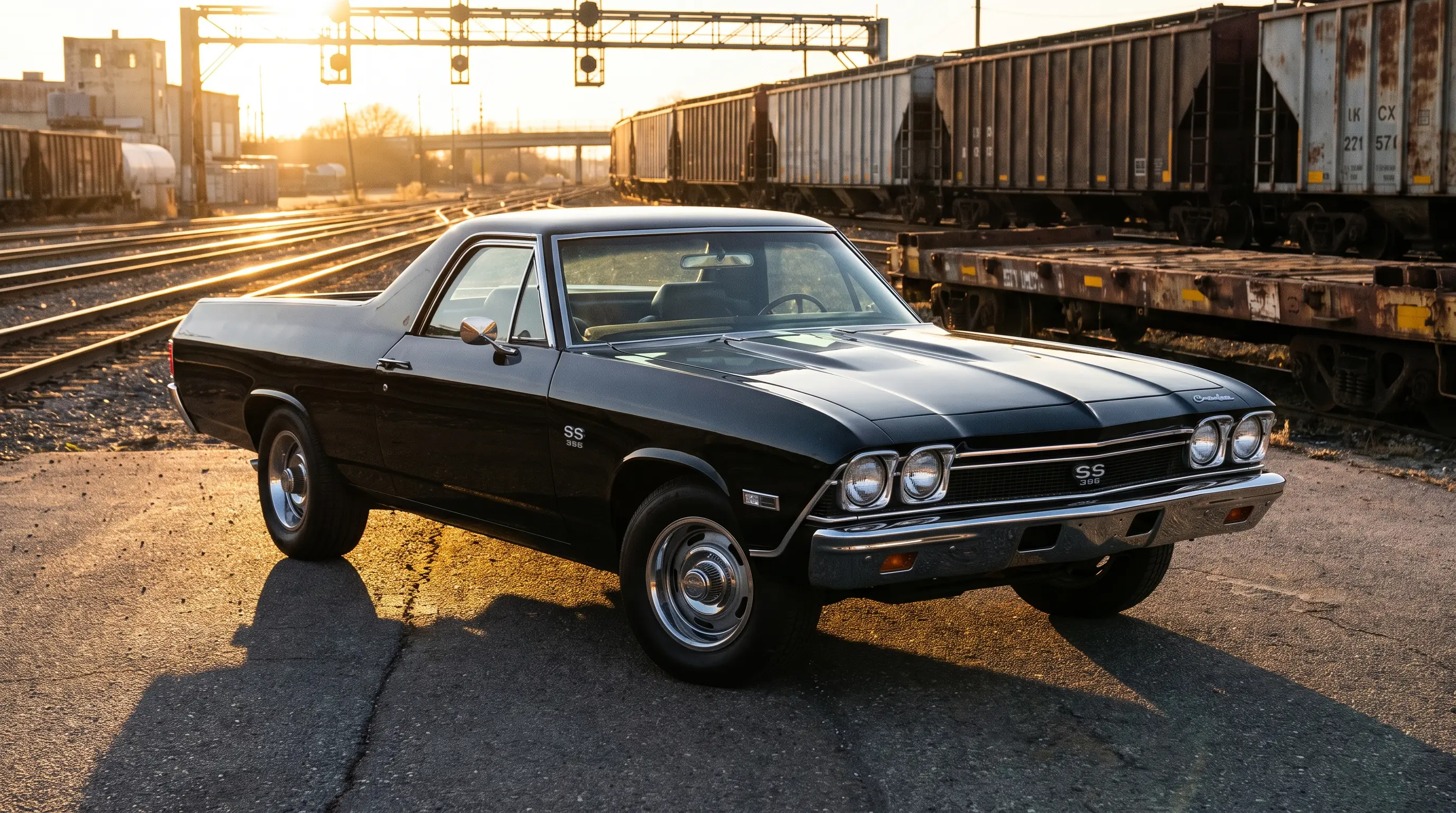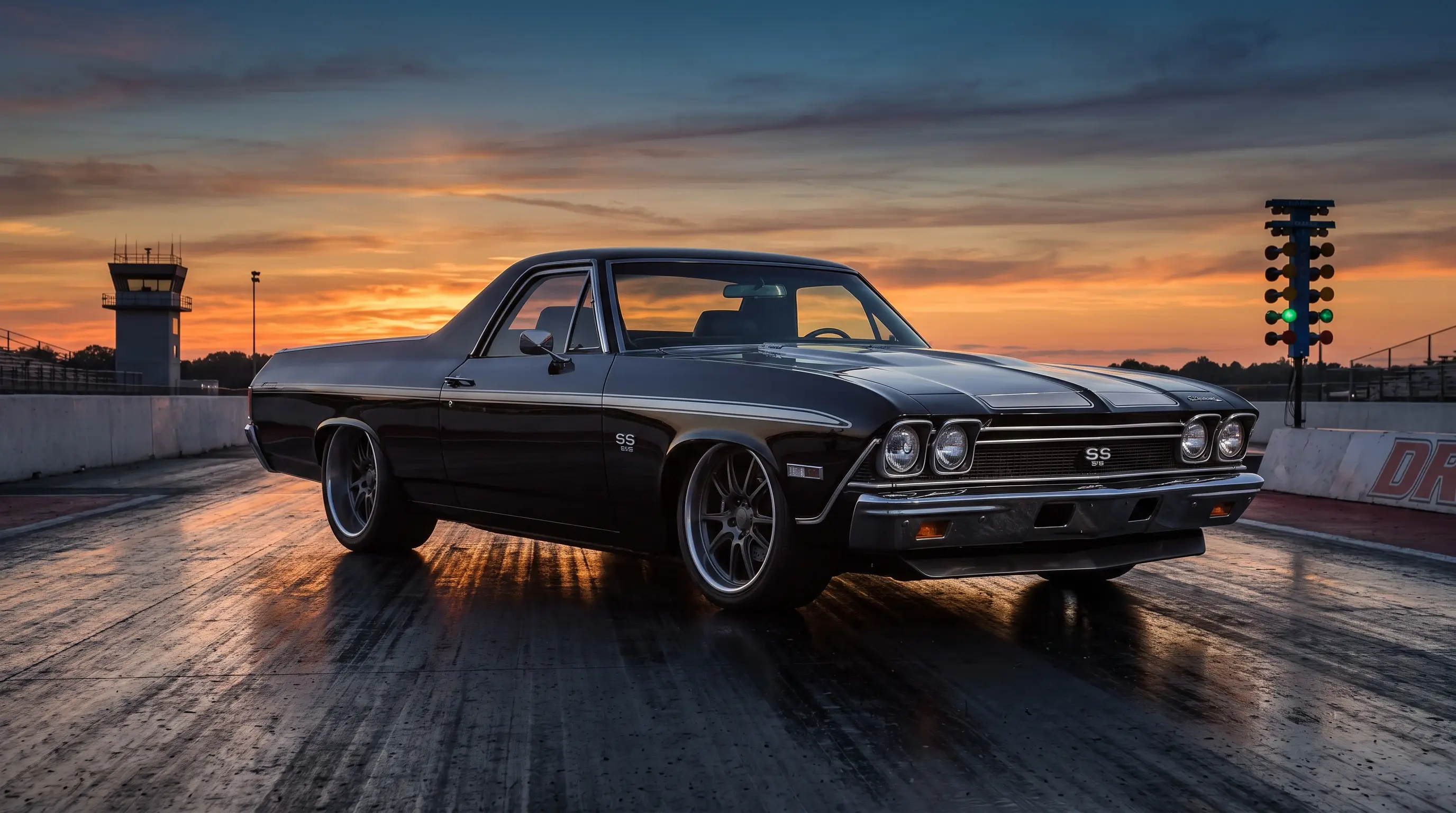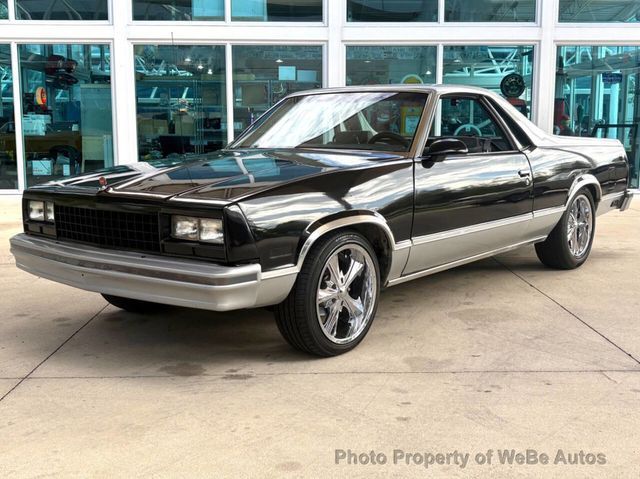
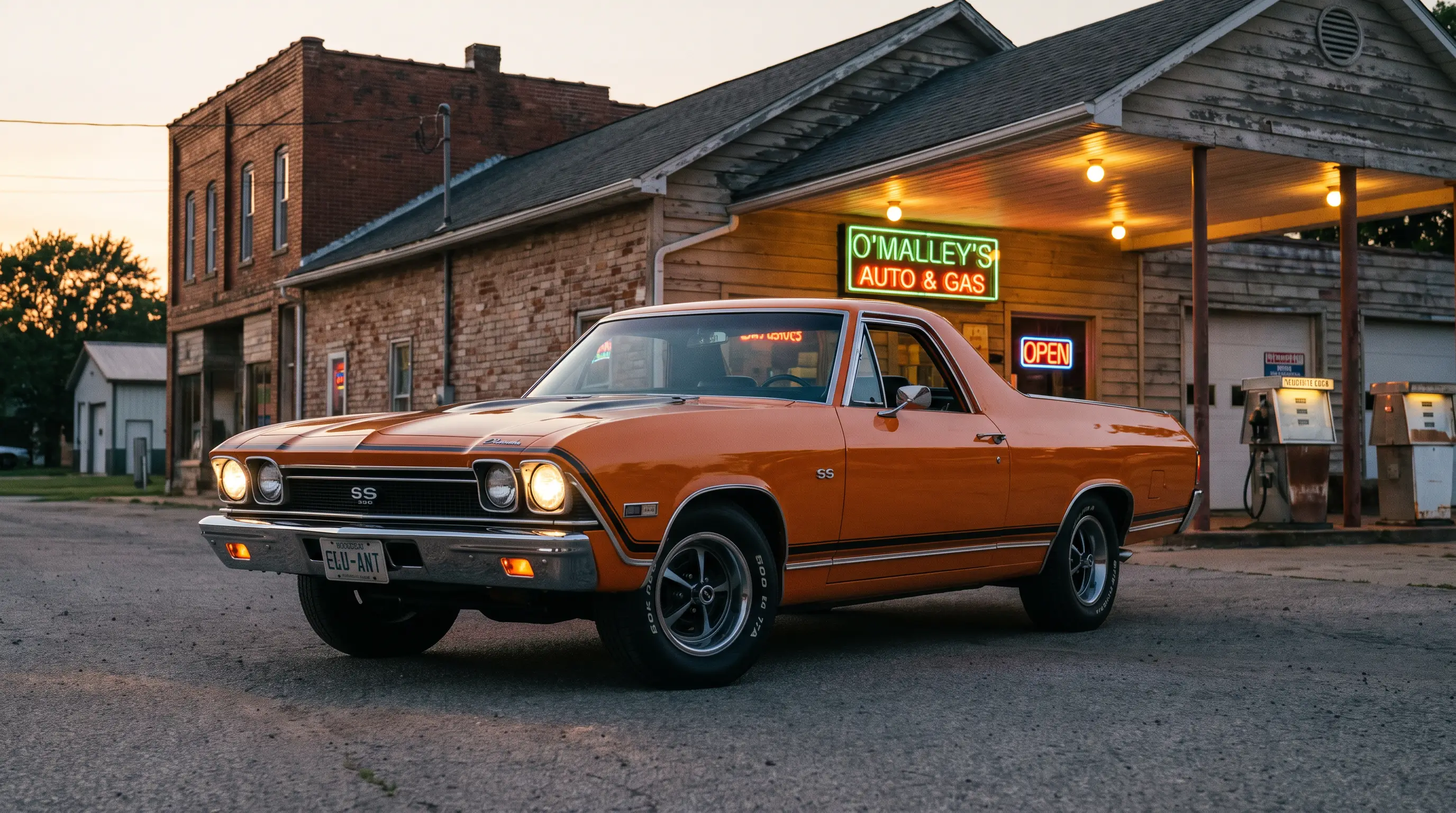
The Super Sport badge had already earned its reputation on the Chevelle before it ever touched an El Camino, and that existing reputation is exactly why Chevrolet's decision to extend the SS package to the truck for 1968 carried real weight rather than reading as a marketing gimmick borrowed from a more respected sibling. It was not a marketing sticker applied to an unchanged vehicle. It arrived alongside the all-new 1968 body, and together the two changes turned the El Camino into something the muscle car crowd could no longer dismiss as a novelty.
Why 1968 was the right moment for it
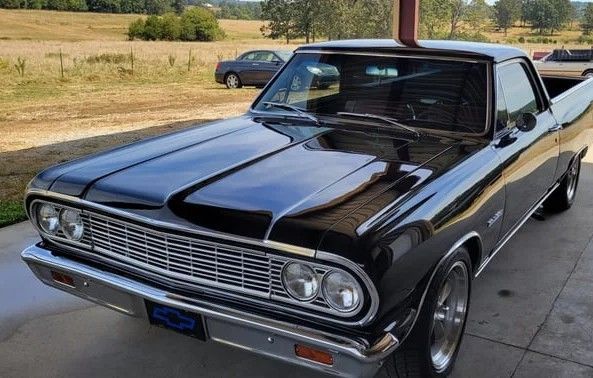
Chevrolet had offered performance-oriented El Caminos before 1968 in a more limited sense, mostly through small-block engine upgrades that never came bundled with a distinct visual identity, but the formal SS package, with its distinct badging, suspension tuning, and big-block engine availability, arrived that year as part of the broader mid-size redesign. The timing was not incidental. The new 1968 body's longer hood and lower stance finally gave the truck the visual language a performance package needed to be credible. Bolting SS badges onto the boxier pre-1968 body would have looked like exactly what it was, a sticker package. On the new body, it looked like the real thing.
The engine lineup backed up the visual claim. The 1968 SS could be ordered with a 396 cubic inch big-block, available in multiple states of tune: the L35 rated at 325 hp, the L34 (actually 402 cubic inches despite the 396 badge) rated at 350 hp, and the rare, largely unadvertised L78 rated at 375 hp, all figures quoted in the SAE gross standard used before the industry-wide 1972 switch to net ratings. That range gave buyers a genuine choice between a comfortable big-block cruiser and a genuinely aggressive performance truck, all under the same SS badge.
Suspension and chassis tuning mattered just as much as the engine bay, even though it draws far less attention today. The SS package brought heavier-duty springs, upgraded shock valving, and a front sway bar arrangement tuned specifically to handle the added weight and power of the big-block engines. Without that underlying chassis work, the extra horsepower would have simply overwhelmed a suspension designed for a base six-cylinder truck. Chevrolet's engineers understood that a genuine performance package had to be engineered from the road up, not just bolted on at the engine bay, and that attention to the whole vehicle rather than just the powertrain is a large part of why the 1968 SS holds up so well against its contemporaries.
How it landed with buyers and the press
Period reception treated the 1968 SS El Camino as a legitimate entrant in the muscle car conversation rather than a curiosity. Buyers who wanted both cargo capacity and genuine performance credentials finally had a factory-built answer, and that dual appeal is a large part of why the model built a loyal following that persisted through the rest of the A-body run. The truck occupied a category no other manufacturer had fully committed to at the time, a real big-block performance package on a vehicle that could still haul a load of lumber the next morning.
Sales figures reflected that reception, with the SS package finding a steady audience among buyers who wanted the specific combination the model offered rather than settling for a plain base truck or stretching their budget toward a dedicated muscle coupe that could not carry cargo at all. Period road tests generally treated the truck's performance credentials seriously rather than as a footnote to its utility, which was itself a shift from how the pre-1968 El Camino had typically been covered in the enthusiast press.
| Element | 1968 SS El Camino |
|---|---|
| Body | All-new 1968 A-body redesign |
| Available big-block | 396 cubic inch V8, multiple tune levels |
| Package significance | First formal SS trim offered on the El Camino |
| Market position | Only true big-block performance pickup-style vehicle of its era |
"A performance badge only means something when the vehicle underneath it has already earned the right to wear it, and 1968 is the year the El Camino finally did."
- Sarah Whitfield
What the first SS set in motion
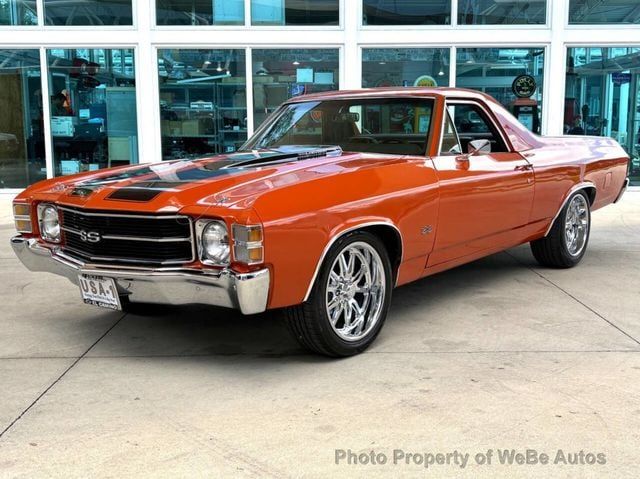
Once the SS package existed, Chevrolet kept refining it rather than treating it as a one-year experiment. The 1970 model pushed the formula to its factory peak with the LS6 454, and even the 1972, the final year of this body style, still carried a genuine big-block SS option. None of that trajectory happens without the credibility the 1968 truck established first. For the broader context of how the model evolved that year beyond just the SS package, our complete history of 1968 covers the full picture.
Collectors today treat the 1968 SS as historically significant precisely because it is the origin point, the truck that proved a Chevrolet pickup could wear a genuine performance badge and back it up.
Why the first year still carries special weight with collectors
First-year cars in any performance lineage tend to attract a specific kind of collector interest that later, more powerful examples cannot fully replicate. There is a difference between owning the year that perfected a formula and owning the year that proved the formula could exist at all. The 1968 SS El Camino falls firmly into the second category, and that origin-point status gives it a historical significance that runs deeper than raw horsepower numbers ever could. Later years refined the recipe. 1968 is the year someone had to decide the recipe was worth writing down in the first place.
That significance shows up in how restoration-minded owners approach these trucks. Getting a 1968 SS back to its correct factory specification, down to the right suspension components and badging details for that specific debut year, is treated by serious restorers as a different and in some ways more demanding project than restoring a later, better-documented model year, simply because fewer surviving reference examples exist from the package's actual first season on the market.
That scarcity of reference material cuts both ways for a prospective buyer. It makes a genuinely correct, well-documented 1968 SS more valuable as a historical artifact, but it also raises the stakes considerably for verifying originality before committing serious money to a purchase. A trim tag, cowl tag, and any surviving build sheet should all be cross-checked against known factory specifications for that debut year specifically, rather than assumed to match later years simply because the SS package continued largely unchanged in concept through 1972. A buyer who skips that step risks paying origin-year prices for a truck that is, underneath its badges, no different from a far more common and far less valuable later model.
Anyone interested in owning a piece of that specific moment can currently find a classic El Camino from the year the SS story actually began.
Sources and notes
- Chevrolet El Camino overview and generations, Wikipedia
- 1968-1972 Chevrolet El Camino SS engine and generation guide, MotoGallery
- L78-powered 1968 El Camino SS 396 feature, GM Authority
- 1968 El Camino SS L34 production numbers discussion, Team Chevelle Forum
- 1968 Chevrolet El Camino SS 396 discussion, El Camino Central Forum