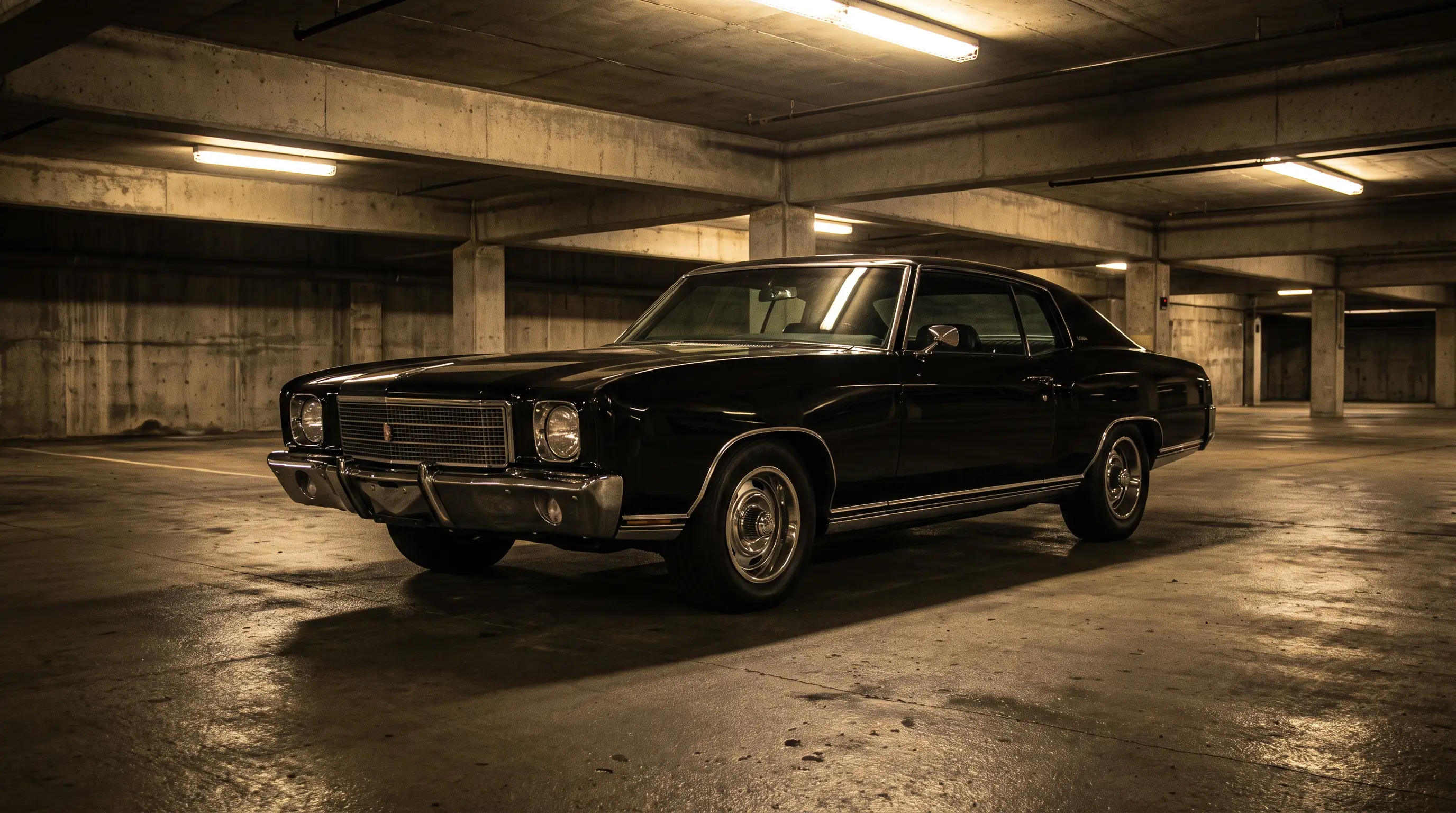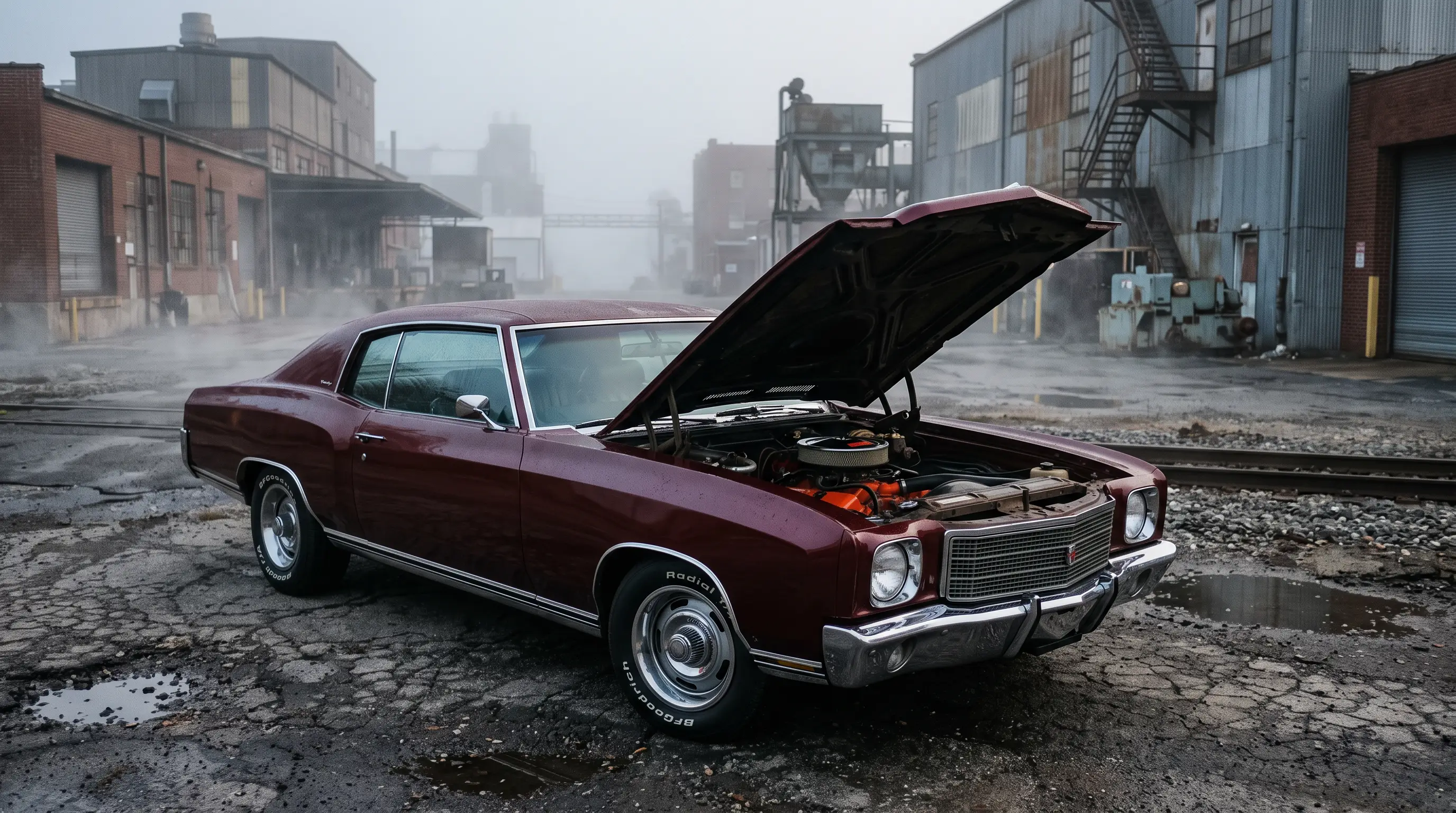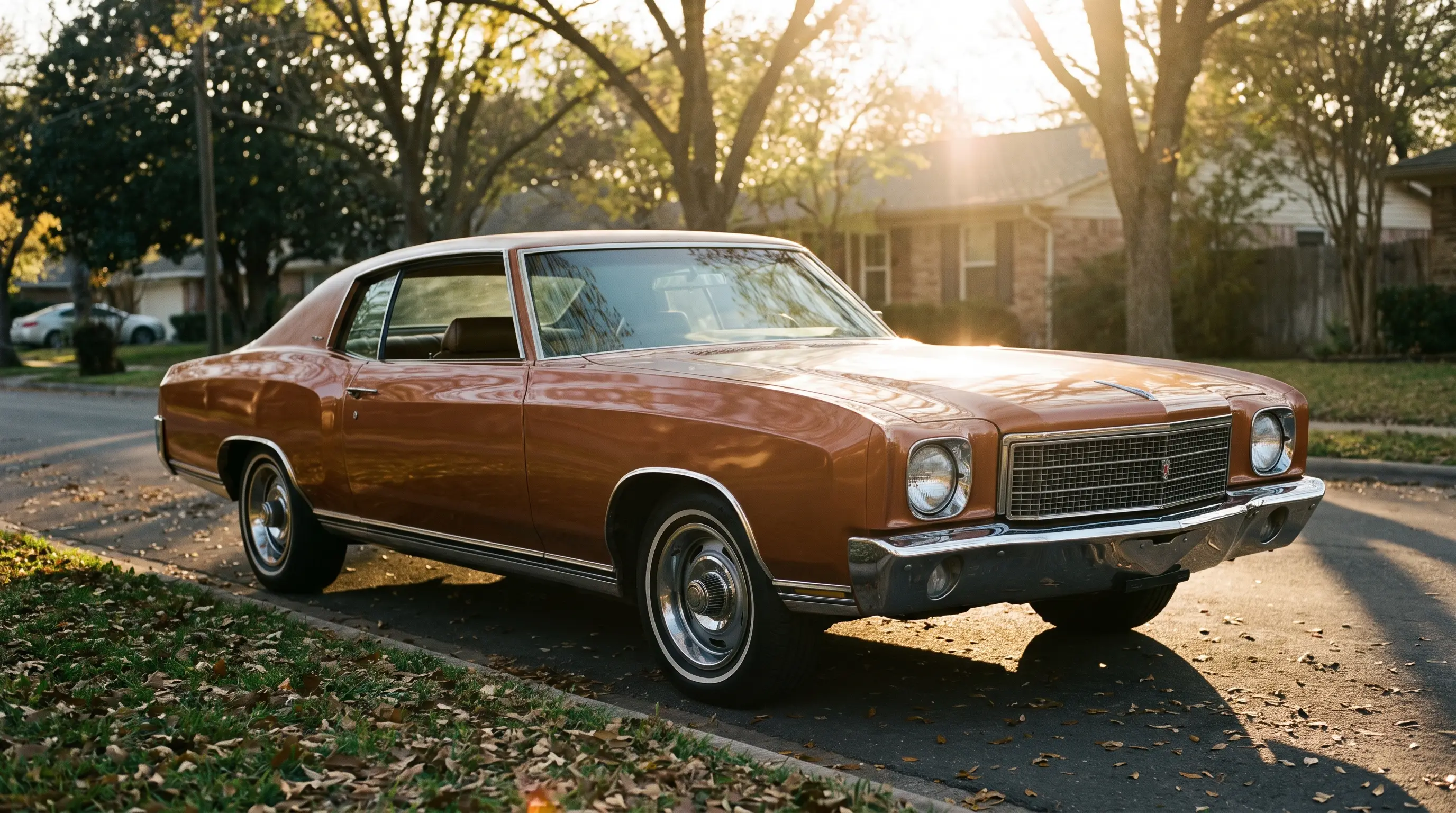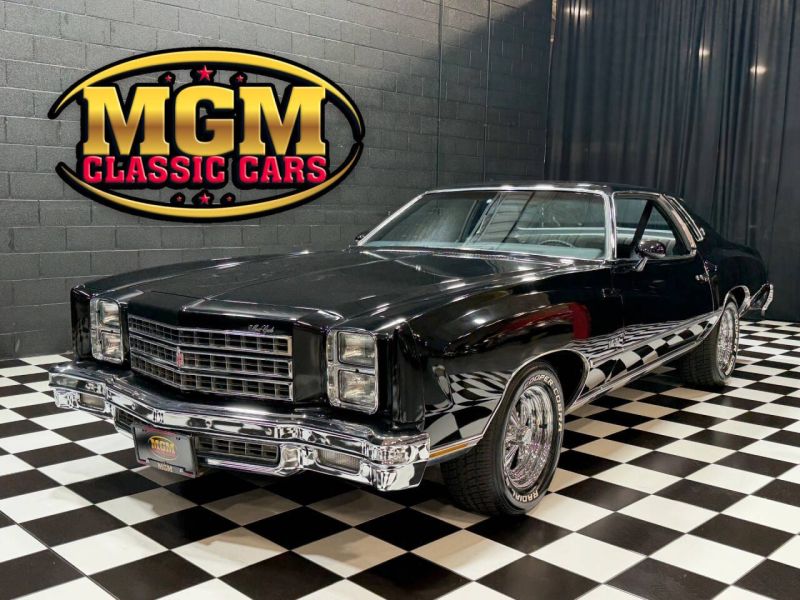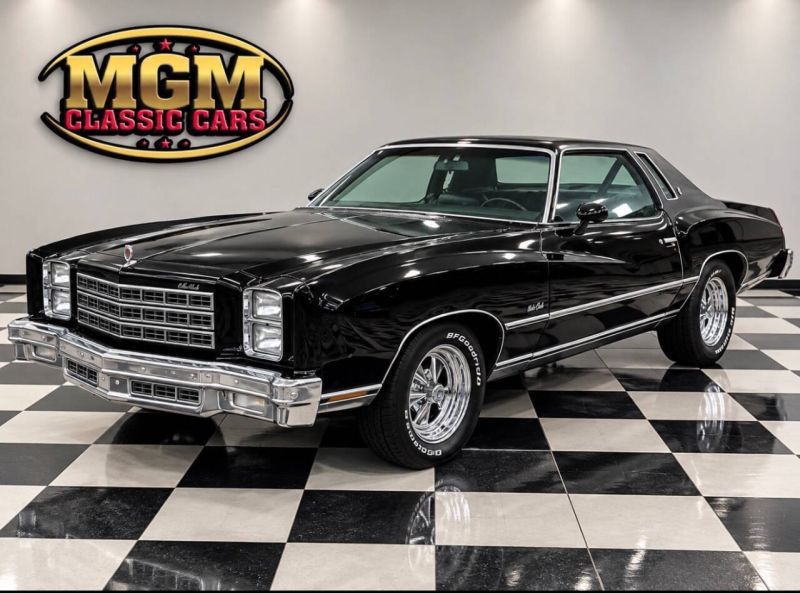
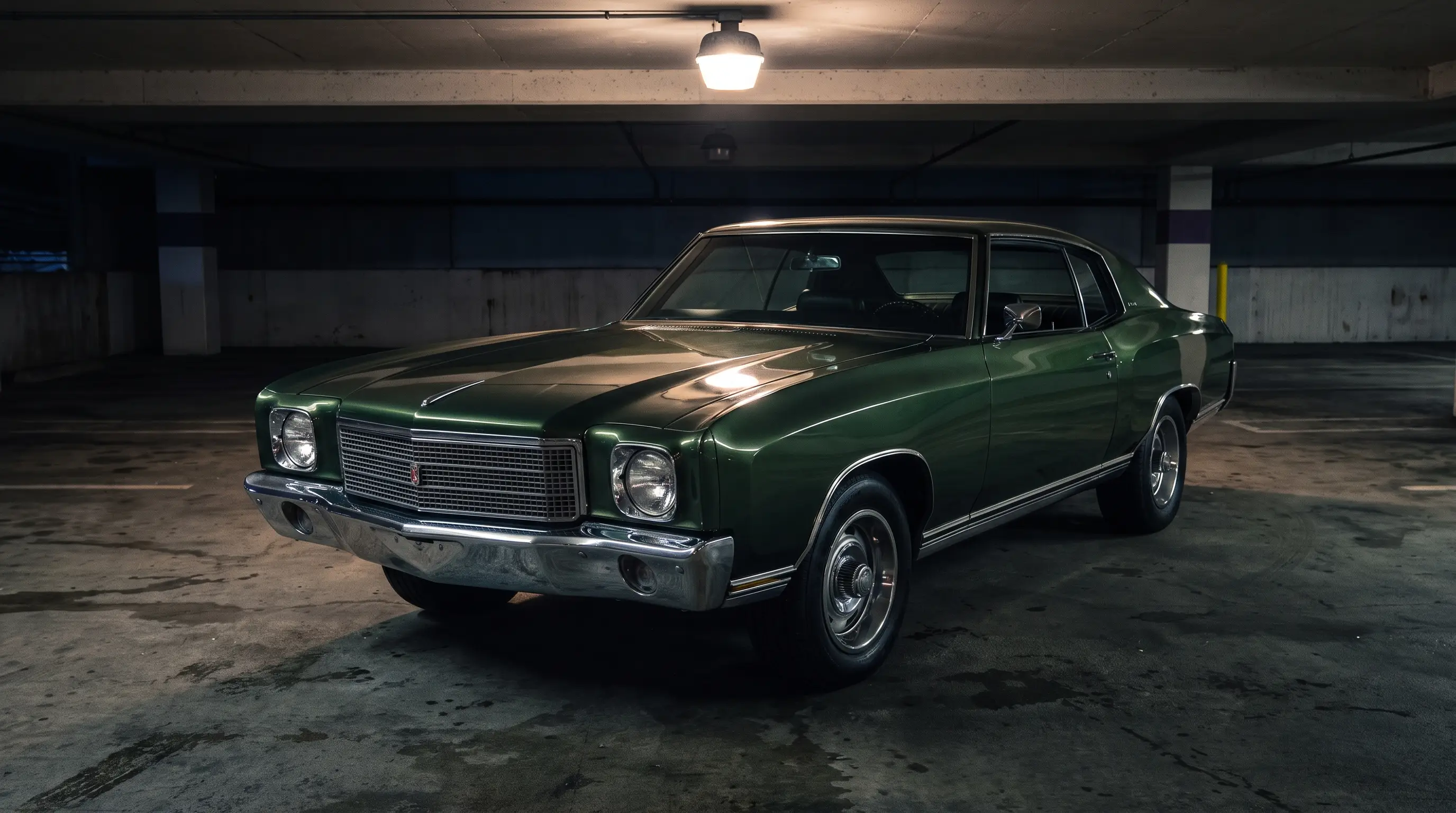
The 1971 Monte Carlo SS 454 with the LS5 engine option is a car that gets undersold in most muscle car conversations, and that is a mistake. This was Chevrolet putting a 454 cubic inch big-block into a car built for comfort, not quarter-mile bragging rights, and the combination worked better than it had any right to.
The number that matters: 365 gross horsepower
The LS5 454 in the 1971 Monte Carlo SS was rated at 365 horsepower and 465 lb-ft of torque, gross figures measured under the old SAE standard before the industry switched to the more conservative net ratings the following year. That torque number is the one worth remembering. This was never a high-revving engine built to impress at 6,000 rpm. It made its case at low rpm, in a straight line, from a stop.
Compare that to the base Monte Carlo's 350 small-block and the gap is obvious. The SS 454 package added real weight over the front axle and real cost on the window sticker, and Chevrolet only built it in limited numbers for exactly that reason. It was an expensive option on an already mid-tier priced car, not a mass-market performance play.
A big-block bolted into a luxury car, not a muscle car
Here is where the SS 454 gets interesting. The Monte Carlo it lived in was a personal luxury coupe first. Bucket or bench seating trimmed in cloth or vinyl, a formal roofline, sound insulation, and a ride tuned soft enough for a highway cruise. Chevrolet did not chop the springs or gut the interior to save weight the way it did with a Chevelle SS or a Camaro Z28. The LS5 went into essentially the same car a buyer could option with a base six-cylinder, just with a heavier front clip and a stiffer suspension package to keep the extra weight in check.
That combination, big torque and a quiet cabin, is the entire pitch. A driver could run a stoplight hard and then cruise the next thirty miles without a headache from road noise or a jarring ride. Few 1971 performance cars split that difference as cleanly. Most either committed fully to stripped-down speed or fully to comfort. The Monte Carlo SS 454 tried to do both, and for a specific kind of buyer, one who wanted a big engine but had outgrown a Chevelle, it landed.
1971's low-compression wrinkle
The timing of this engine matters as much as the specification. Chevrolet dropped compression ratios across its 1971 lineup to run on lower-octane, lead-reduced fuel ahead of the emissions rules that would tighten further in 1972 and beyond. The LS5 454 was not exempt. Its compression ratio came down from the prior year's figure, which softened the horsepower rating somewhat compared to what a 454 could have produced under the old, higher-compression regime. Chevrolet's own literature and dealer materials from the period reflect the change plainly, and it lines up with what happened across the rest of the model line, a subject covered in more depth in a related story on this site.
The net effect is that 1971 sits at an odd hinge point in Monte Carlo history. It is the last year before compression ratios and horsepower numbers started their real slide through the mid-1970s, but it already carries the first cuts of that slide. A 1971 LS5 is not the strongest 454 Chevrolet ever built. It is, in a real sense, the last one built before the numbers started shrinking on purpose.
Rarity and what it means for buyers today
Production numbers on the 1971 SS 454 package were low relative to the Monte Carlo lineup as a whole, and documented, numbers-matching examples with the LS5 engine and its correct build sheet command real premiums at auction today. Buyers should be blunt with themselves about verification here. A 454 badge on a fender does not confirm an LS5 under the hood, and plenty of cars have been re-badged or re-engined over five decades. Cowl tag decoding and a matching build sheet are not optional steps if the LS5 designation is part of the asking price.
Price data on these cars has been climbing steadily as the broader early-1970s muscle and personal luxury market has matured. That climb is not uniform. A well-documented, numbers-matching LS5 with a clean cowl tag and original build sheet sits in a different pricing tier than a car with a period-correct engine that cannot be tied to the original build. Buyers who skip the paperwork step are effectively betting that nobody else will ever ask the same questions they did not bother asking. That is a bad bet in a market where documentation increasingly drives the final number more than cosmetic condition does.
There is also a mechanical reality worth stating plainly. A 454 in a Monte Carlo body adds real weight over the front wheels, and it changes braking distances and handling balance compared to a small-block car. Chevrolet's suspension package for the SS 454 was calibrated to manage that weight, but it did not erase physics. Anyone cross-shopping an LS5 car against a small-block SS should drive both before deciding. The bigger engine is not automatically the better daily choice, even if it is the more collectible one.
None of this diminishes what Chevrolet built. It just means the SS 454 LS5 needs to be judged for what it actually is, a comfort-oriented big-block coupe, not a stripped drag strip special.
For anyone shopping this specific variant, or comparing it against the broader 1971 Monte Carlo range, the background on the model year is worth reading in full. Chevrolet made several changes across the board that year beyond the engine bay, and understanding 1971 monte carlo history puts the SS 454 package into proper context rather than treating it as an isolated option code.
Sources and notes
- 1970-1971 Chevrolet Monte Carlo SS 454: Specs and History
- 1971 Monte Carlo Body Style, Engines, and VIN Decoder - ChevyHardcore
- Chevrolet Monte Carlo - Wikipedia
- Disco-Era Darling: The Chevrolet Monte Carlo - Ate Up With Motor
- A New Dimension in Luxury: The 1978 Chevrolet Monte Carlo - Mac's Motor City Garage
| Spec | 1971 Monte Carlo SS 454 (LS5) |
|---|---|
| Engine | 454 cubic inch V8, LS5 |
| Horsepower (gross) | 365 hp |
| Torque (gross) | 465 lb-ft |
| Body style | Two-door personal luxury coupe |
| Positioning | Optional big-block package, not a stripped performance trim |
"Torque wins arguments at a stoplight. Horsepower wins arguments on paper. The LS5 in this car was built for the first kind of argument, and it still is."
- Dan Reeves
The bottom line on the 1971 SS 454 LS5 is simple. It is a big-torque engine in a comfort-first body, built at the exact moment Chevrolet started trimming compression across its lineup, and it is rare enough today that documentation matters more than the badge. Buyers looking at this specific combination should treat the paperwork as half the purchase. For anyone shopping the broader field of 1971 examples, whether SS-equipped or not, current Monte Carlos for sale now is the fastest way to see how pricing on this generation actually breaks down.