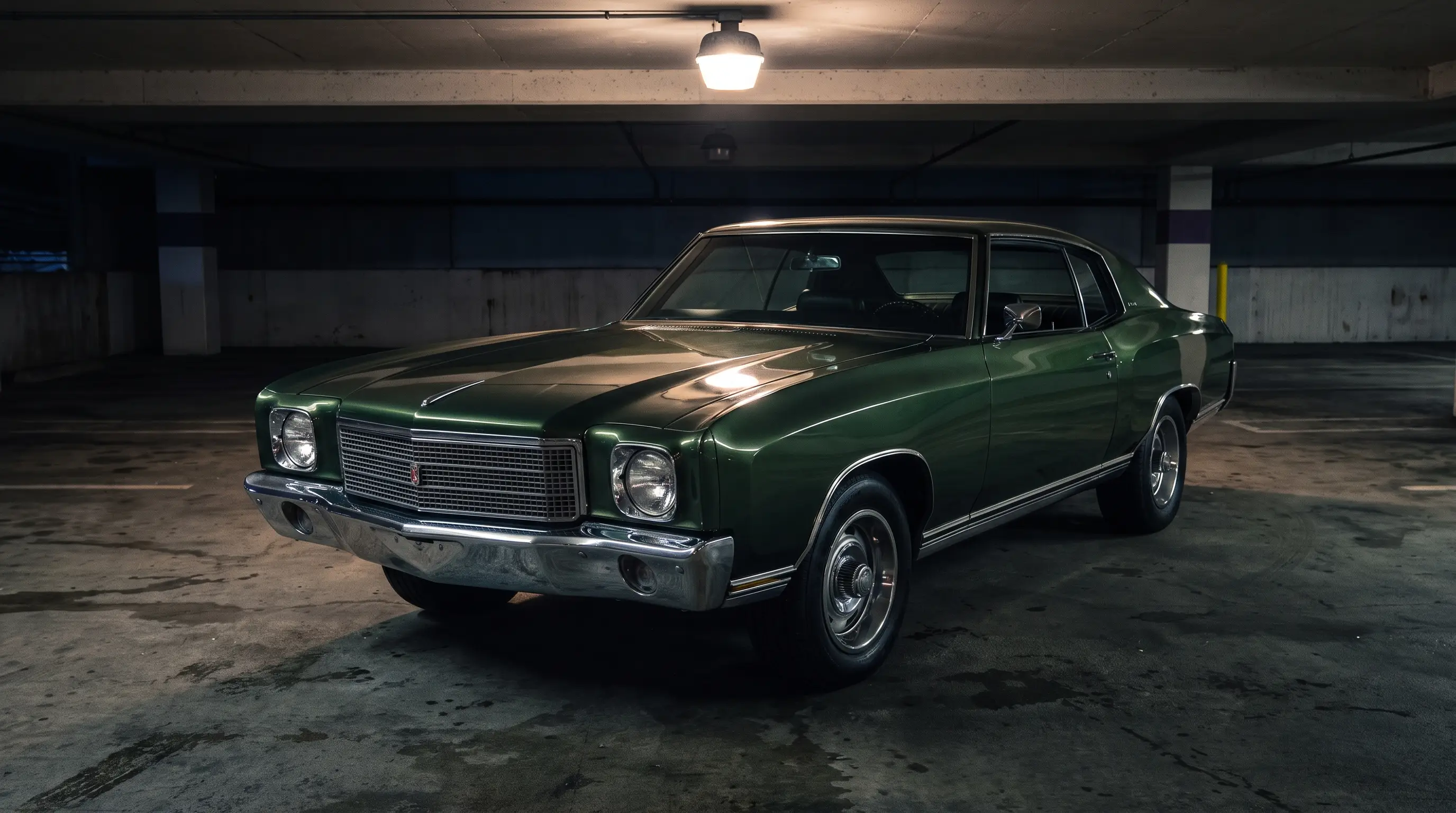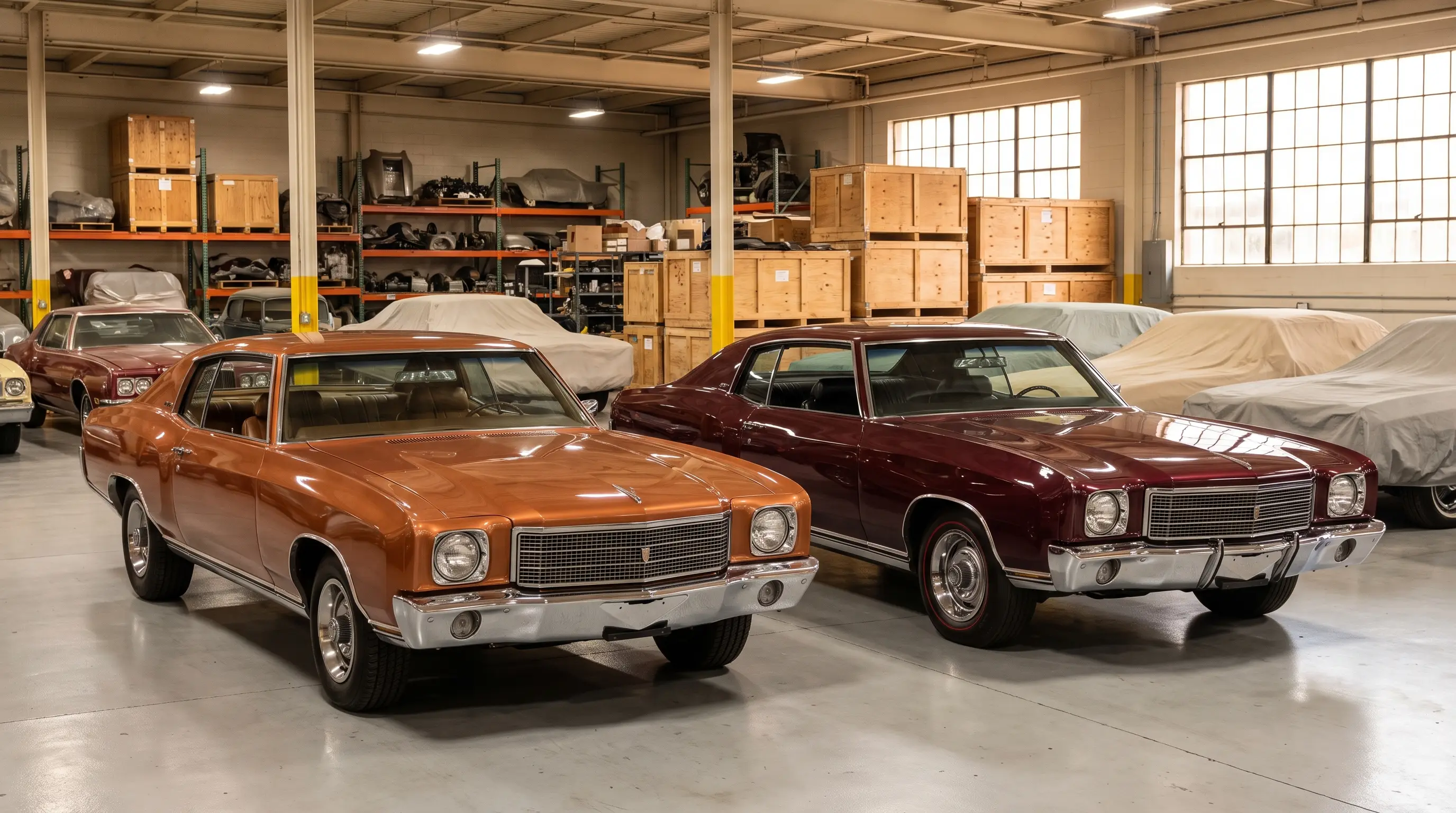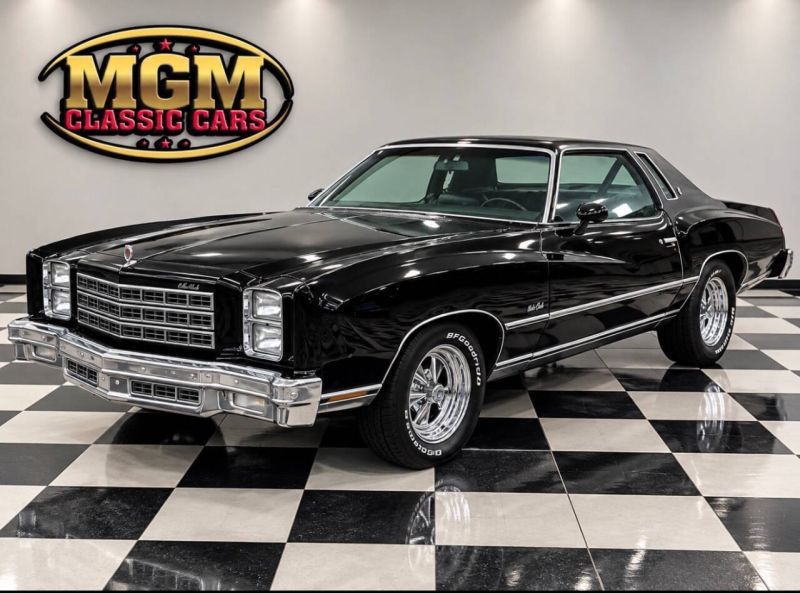
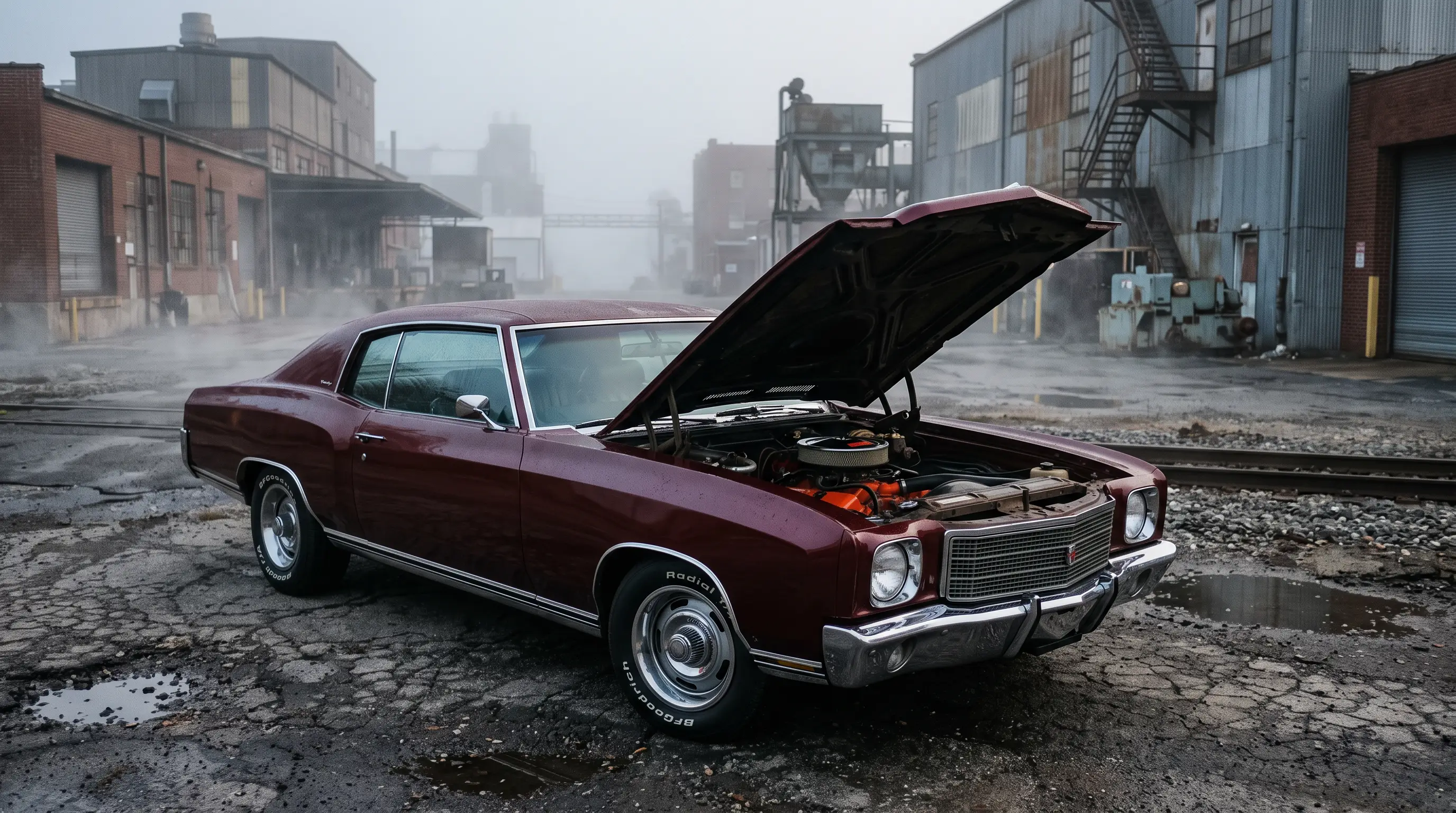
Every 1971 Monte Carlo carries a quiet artifact of its moment that is easy to overlook on a spec sheet: lower compression ratios across the entire engine lineup. This was not a Chevrolet styling decision or a marketing choice. It was an industry-wide response to regulation, fuel chemistry, and a federal emissions timeline that was closing in fast, and the 1971 Monte Carlo sits right at the point where that shift became unavoidable.
Why compression ratios dropped industry-wide in 1971
Leaded, high-octane fuel had allowed automakers to run high compression ratios through the 1960s, squeezing more power out of a given displacement by packing the air-fuel mixture tighter before ignition. That approach ran directly into two converging problems by the start of the new decade. Federal regulators were phasing in emissions standards that leaded fuel additives complicated, and public health concerns about lead in gasoline were becoming impossible to ignore. General Motors, along with Ford and Chrysler, made the decision to lower compression ratios across most of its 1971 lineup so engines could run reliably on lower-octane, reduced-lead fuel as that transition unfolded over the following several years.
The Monte Carlo's engine options, from the base V8 up through the 454 big-block, all reflect this change to some degree. Documented factory literature from the period shows compression figures coming down from their 1970 counterparts, a fact that period-correct restorers and concours judges treat as a defining characteristic of the model year rather than a minor footnote.
What actually changed under the hood
The compression drop was achieved through a combination of piston design changes, cylinder head revisions, and in some cases altered camshaft timing, all aimed at the same target: an engine that could tolerate lower-octane fuel without pinging or detonation under load. The tradeoff was a measurable reduction in rated horsepower and torque compared to the same nominal engine the year before, even where displacement stayed identical.
This is where accuracy matters for anyone documenting or restoring a 1971 car. A correct 1971 engine will show different internal specifications than a visually identical 1970 unit of the same displacement, and swapping parts between the two years, intentionally or through decades of prior repair work, can create a car that looks period-correct on paper but is not actually built to either year's original specification. Concours judging in particular has grown more attentive to this distinction as more original documentation has surfaced and been cross-referenced against factory records.
Reading the numbers correctly
A collector comparing a 1971 Monte Carlo's advertised horsepower against a 1970 model of the same nominal engine will often see a lower figure and assume something is wrong with the car. Nothing is wrong. The engine is doing exactly what Chevrolet built it to do that year, running on the era's changing fuel supply rather than chasing the previous year's peak output. Judging a 1971 car against 1970 power figures without accounting for the compression change is a common and avoidable mistake, one that shows up regularly in casual online discussions of the model.
The reality is that 1971 marks a genuine inflection point in Chevrolet's engineering history, not a step backward. The engines built that year were designed for a fuel and regulatory environment that did not exist two years earlier, and they represent a deliberate, documented engineering response rather than a decline in quality or ambition. Readers wanting the fuller picture of how this fits into the model year as a whole should consult our complete history of the 1971 Monte Carlo, which places the compression change alongside the styling and trim updates Chevrolet made that same year.
Why this matters to buyers and restorers today
For anyone evaluating an original or restored 1971 Monte Carlo, the compression specification is a legitimate authenticity checkpoint, not a trivia footnote. A seller advertising numbers that match a 1970 engine's higher compression figures on a car titled as a 1971 is either mistaken about the car's history or presenting a modified engine as original, and either scenario is worth investigating before money changes hands. Original casting numbers, date codes, and factory documentation remain the most reliable way to confirm what is actually under the hood, regardless of what a repainted valve cover or a reproduction decal claims.
This level of scrutiny is not pedantry for its own sake. It reflects how the collector market has matured around this generation of Monte Carlo. Buyers increasingly expect documentation that ties a specific engine to a specific build, and sellers who can provide it consistently command stronger prices than those who cannot.
There is also a practical driving difference worth noting for anyone who owns or is considering a 1971 example. Lower compression engines of this era tend to be more tolerant of modern pump fuel than their higher-compression 1970 counterparts, which can actually simplify ownership for a driver who wants to use the car regularly rather than trailer it to shows. That tradeoff, slightly reduced peak output in exchange for broader fuel tolerance, is worth weighing honestly rather than treated purely as a loss.
Restoration shops that specialize in this era have grown accustomed to the questions this generates. A customer bringing in a numbers-matching 1971 block sometimes expects a rebuild to 1970-spec compression, assuming higher numbers are inherently more correct. A careful shop will explain why that assumption is backward for this specific year, and why returning the engine to its as-built 1971 specification, rather than an earlier year's higher-compression configuration, is what actually preserves the car's documented history and its value at judging.
None of this is a minor technicality reserved for concours specialists. It shapes how the car drives, how it should be maintained, and how its authenticity should be judged against the factory record Chevrolet actually produced that year.
| Detail | 1971 Monte Carlo |
|---|---|
| Industry context | Compression ratios lowered fleet-wide ahead of emissions and unleaded fuel transition |
| Engine range affected | Base V8 through 454 big-block options |
| Common misconception | Lower rated output mistaken for reduced engineering quality |
| Authentication method | Casting numbers, date codes, factory build documentation |
"A lower compression ratio in a 1971 engine is not a flaw to be explained away. It is a fingerprint of the year the car was built, and treating it as anything less does a disservice to the engineering record."
- Sarah Whitfield
Approaching the 1971 Monte Carlo compression drop as a documented engineering fact, rather than a performance downgrade to apologize for, is the correct way to understand this specific model year. It reflects a fuel supply and regulatory environment in genuine transition, captured precisely in the engines Chevrolet built that season. Anyone researching or shopping this generation should treat the compression specification as part of the car's identity, and those ready to compare original examples against each other can find a classic Monte Carlo currently listed for sale to see how the details play out across individual cars.
Sources and notes
- 1970-1971 Chevrolet Monte Carlo SS 454: Specs and History
- 1971 Monte Carlo Body Style, Engines, and VIN Decoder - ChevyHardcore
- Chevrolet Monte Carlo - Wikipedia
- Disco-Era Darling: The Chevrolet Monte Carlo - Ate Up With Motor
- A New Dimension in Luxury: The 1978 Chevrolet Monte Carlo - Mac's Motor City Garage