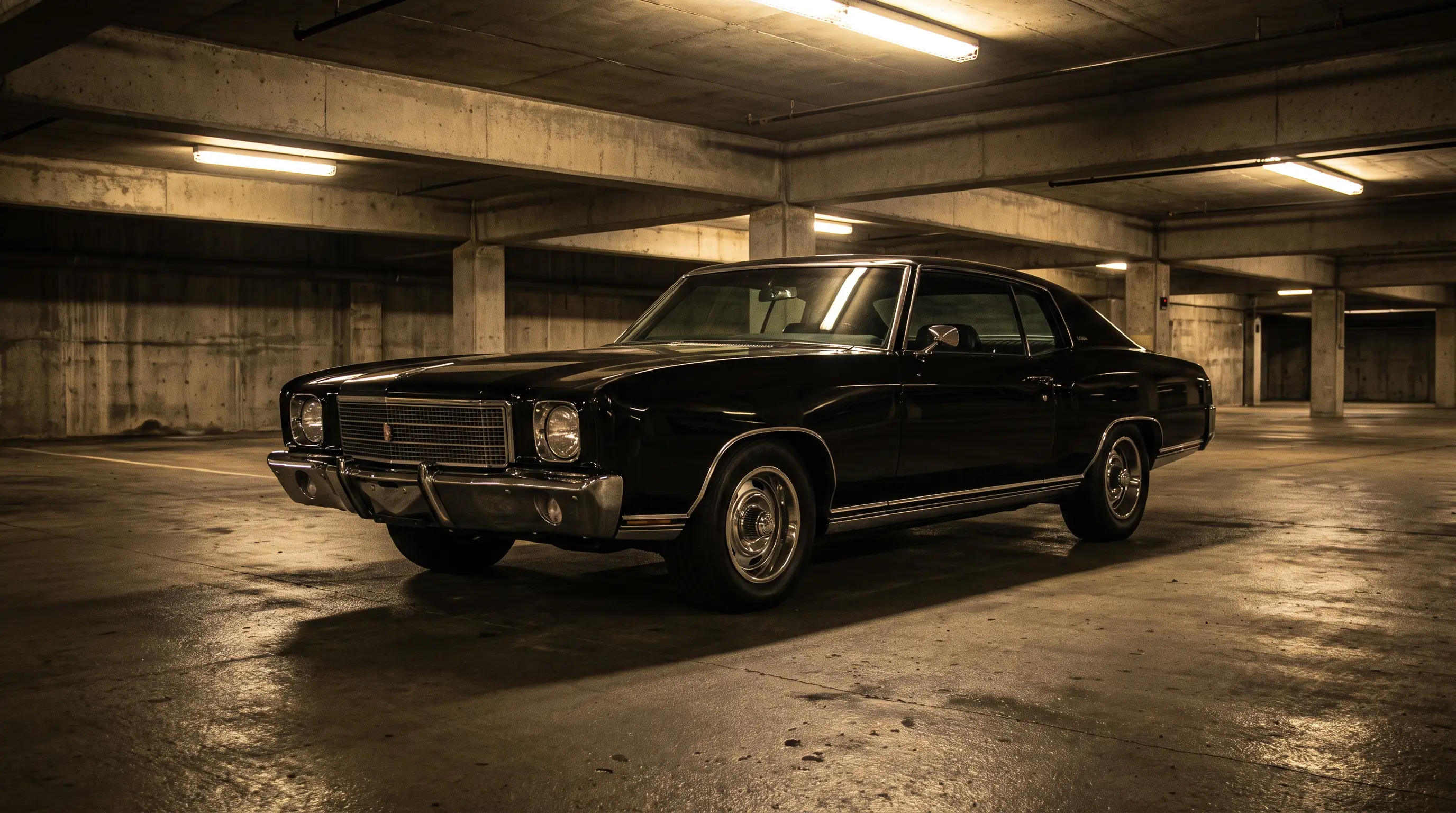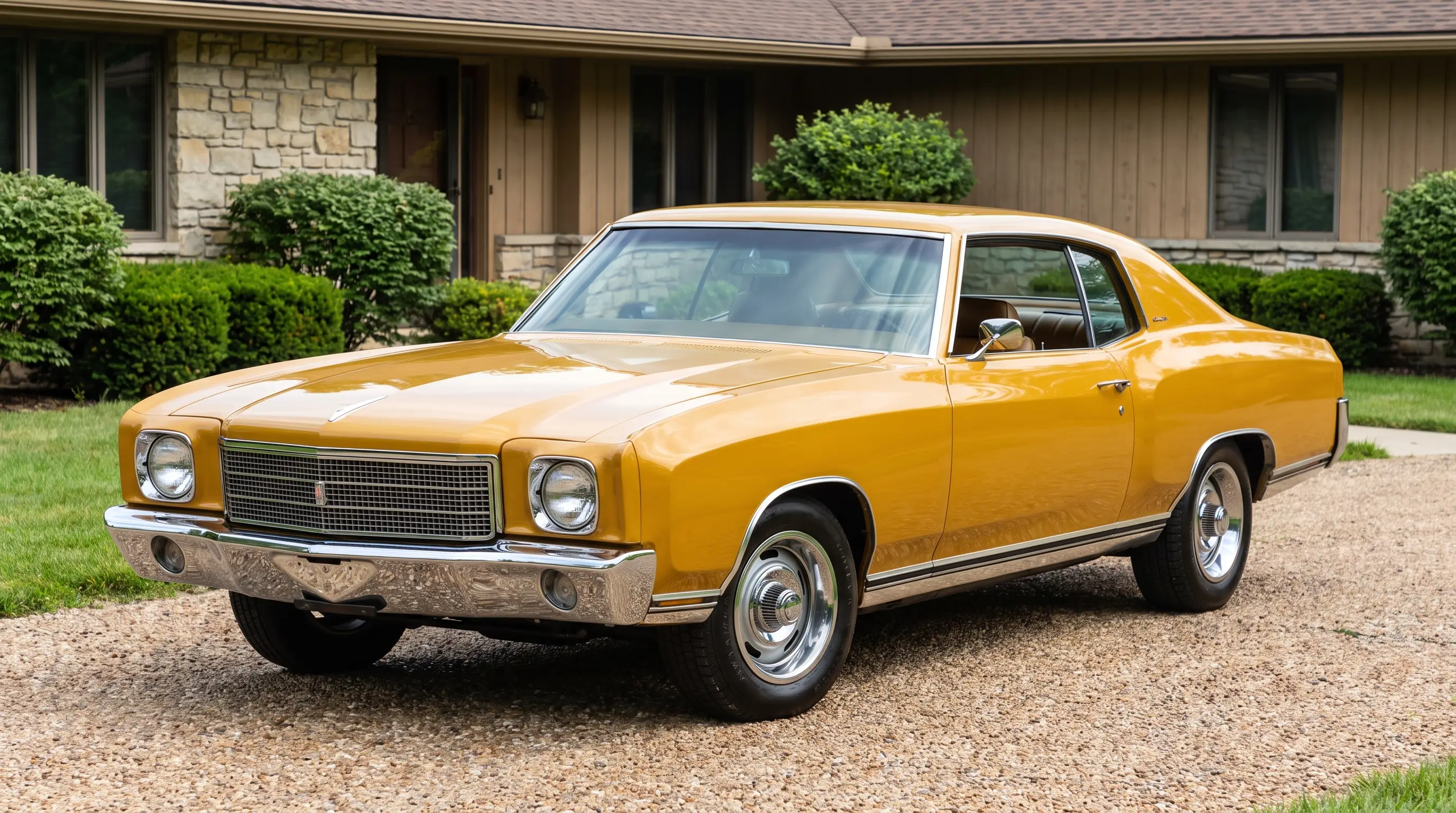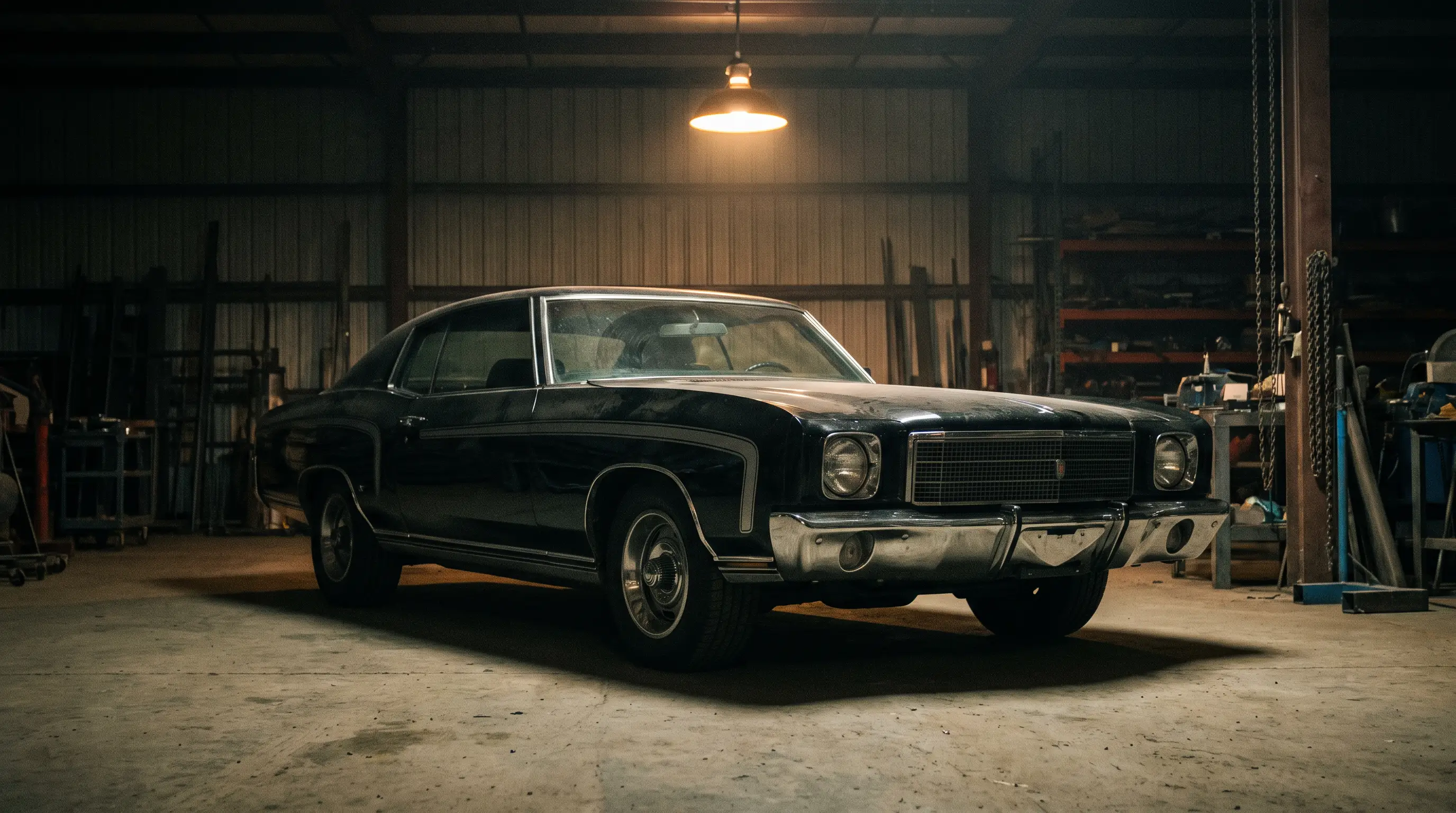
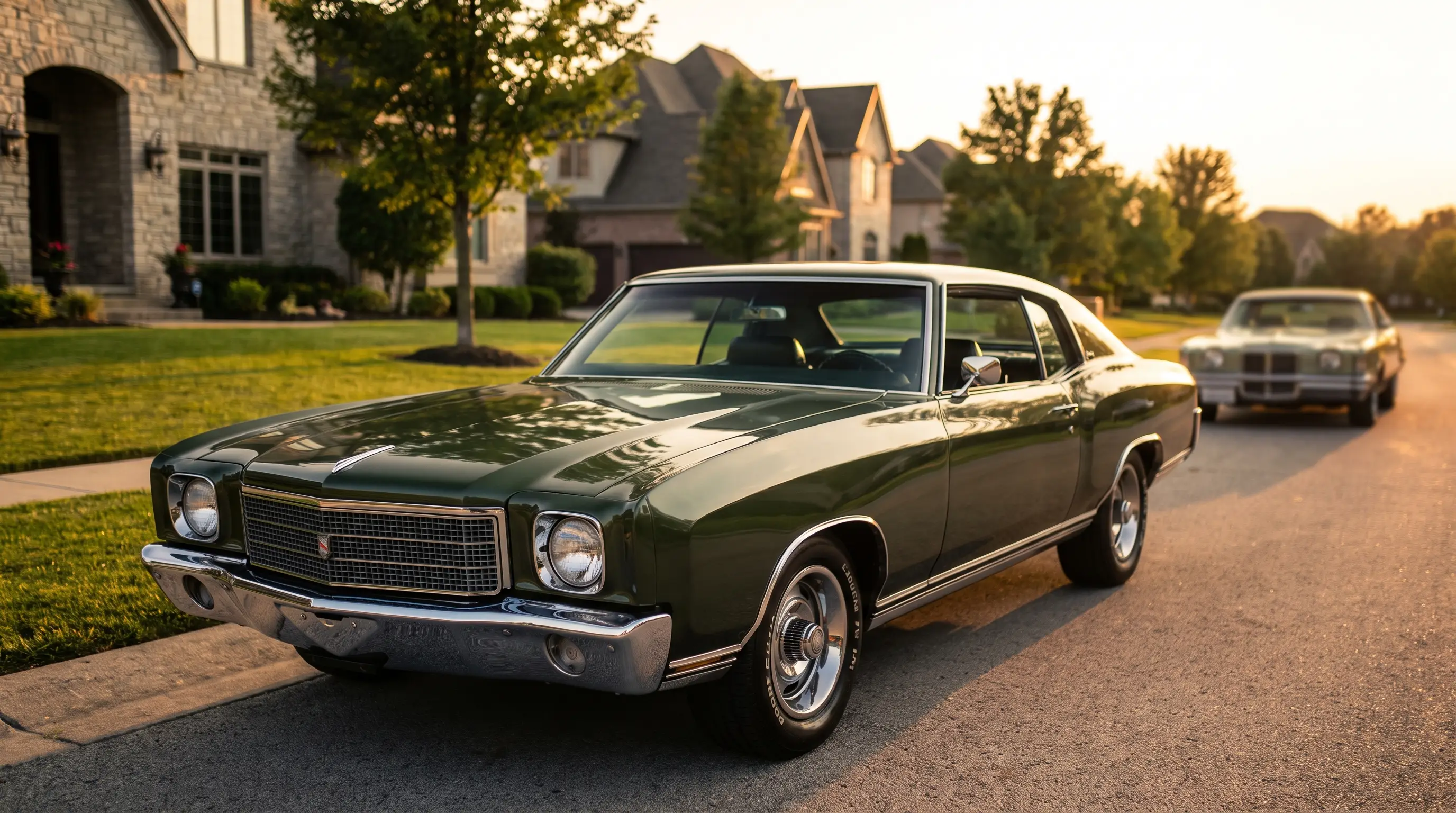
Every few years someone repeats the claim that the 1971 Chevrolet Monte Carlo and the Pontiac Grand Prix were the same car wearing two different grilles. The build records say otherwise, and untangling the monte carlo 1971 vs grand prix comparison properly means going back to what GM actually engineered under each division's badge rather than what showroom folklore has turned it into.
Two divisions, one platform, different intentions
Both cars rode on GM's A-body architecture, and both were aimed at the same buyer: someone who wanted the size and presence of a full-size coupe without actually stepping up to Cadillac or Lincoln money. Pontiac had gotten there first, relaunching the Grand Prix on a stretched A-body in 1969 with a long hood, a formal roofline, and an interior built around a cockpit-style dash that felt genuinely different from anything else on a Pontiac lot. Chevrolet answered for 1970 with the Monte Carlo, built on the same corporate architecture but tuned by Chevrolet's own engineering and styling teams to Chevrolet's own brief. By 1971, refinements on both sides had sharpened the contrast rather than blurred it.
The record on this era gets covered in the whole picture of how the Monte Carlo's second model year came together, and it is worth reading before assuming the Pontiac and Chevy were interchangeable twins. They were cousins, not siblings.
Where the sheet metal actually diverged
The Monte Carlo's 1971 update kept its own grille, its own hood stamping, and its own rear quarter treatment, distinct from the Grand Prix's shark-nose front end and its own set of body dies. Wheelbase numbers were close between the two cars but not identical, and neither division shared exterior sheet metal with the other, contrary to a persistent myth that gets repeated in forum threads every year. What they did share was underlying A-body chassis engineering and suspension architecture, along with the kind of quiet cost-sharing on smaller hardware that GM practiced across every division in this era.
Inside, the difference was sharper still. Pontiac's Grand Prix wrapped its driver in a wraparound dash with full instrumentation that Car and Driver and other period books praised as one of the better cockpits in Detroit. Chevrolet's Monte Carlo interior was handsome but more conventional, closer in feel to a well-trimmed Chevelle than to anything trying to look like a sports sedan.
Engines told two different stories
Under the hood, both cars offered a range of V8s scaling up to big-block performance options, and both could be ordered with genuine muscle if a buyer checked the right boxes. The Monte Carlo's SS 454 package put a big-block under the hood of a car that otherwise looked entirely like a well-dressed grandfather's coupe, a deliberate contradiction that Chevrolet leaned into. The Grand Prix took a slightly different approach, offering strong V8 options without building its identity around a single hero package the way the Monte Carlo SS did. Neither car was marketed primarily as a performance machine in 1971, and that is precisely the point: both were selling comfort and image first, with performance as an option rather than the headline.
Production numbers separated the two more than most people expect. Chevrolet built 128,600 Monte Carlos for 1971 against 58,325 Grand Prix units for Pontiac, a gap of more than two to one that surprises people who assume Pontiac's reputation for engineering flair automatically translated into higher volume.
"The paperwork settles most of these arguments before you even need an opinion. Pull the build sheets and the two cars stop looking like twins and start looking like what they actually were, close cousins built by two divisions competing for the same buyer."
- Tom Ramirez
What the sticker price actually bought
Base pricing for the two cars landed close enough that a shopper in 1971 genuinely had to decide on feel rather than budget. A Monte Carlo could be optioned up quickly once air conditioning, a vinyl roof, power windows, and a bigger V8 got added to the base sticker, and the same was true of a Grand Prix loaded with its own comparable options list. Neither division was undercutting the other on price as a strategy. Both were betting that buyers who wanted this kind of car would pay close to what it cost to build it properly, and both were largely right, since neither model struggled to find buyers in these years.
Dealers reported that trade-in customers moving up from a standard Impala or Catalina were the primary audience for both cars, not buyers cross-shopping from other luxury brands entirely. That detail matters for understanding the whole segment: the Monte Carlo and Grand Prix were not fighting Cadillac and Lincoln for customers. They were fighting each other, and every other full-size division coupe, for a buyer who had already decided a big American coupe with some extra polish was the answer and just needed to pick a badge.
Why the comparison still matters to buyers today
Collectors cross-shopping these two cars today are essentially replaying the original 1971 sales floor decision, and the same factors apply. A Grand Prix rewards someone who wants a more distinctive cockpit and doesn't mind Pontiac's smaller parts and club network. A Monte Carlo rewards someone who wants Chevrolet's much larger surviving parts supply, a bigger national club presence, and generally easier access to trim and mechanical pieces when something needs replacing. Neither is the objectively correct choice. Both are legitimate personal luxury cars from the same GM family tree, built with different priorities, and both deserve to be judged on what their own engineers actually intended rather than on a myth about shared identity.
There is also a documentation angle that separates the two hobbies in practice. Monte Carlo owners benefit from Chevrolet's enormous factory records and a network of researchers who have spent decades cross-referencing build sheets, cowl tags, and dealer invoices, which makes verifying a specific 1971 car's original options far easier than it sounds. Grand Prix owners have their own dedicated research community, but the sheer scale of Chevrolet production means more surviving paperwork exists for the Monte Carlo side of this comparison, and that paperwork is exactly what separates a car with a story from a car with only a guess.
If the history has convinced you the Monte Carlo side of that argument is the one worth pursuing, you can go shop classic Monte Carlo listings and see what the market currently has to offer, paperwork and all.