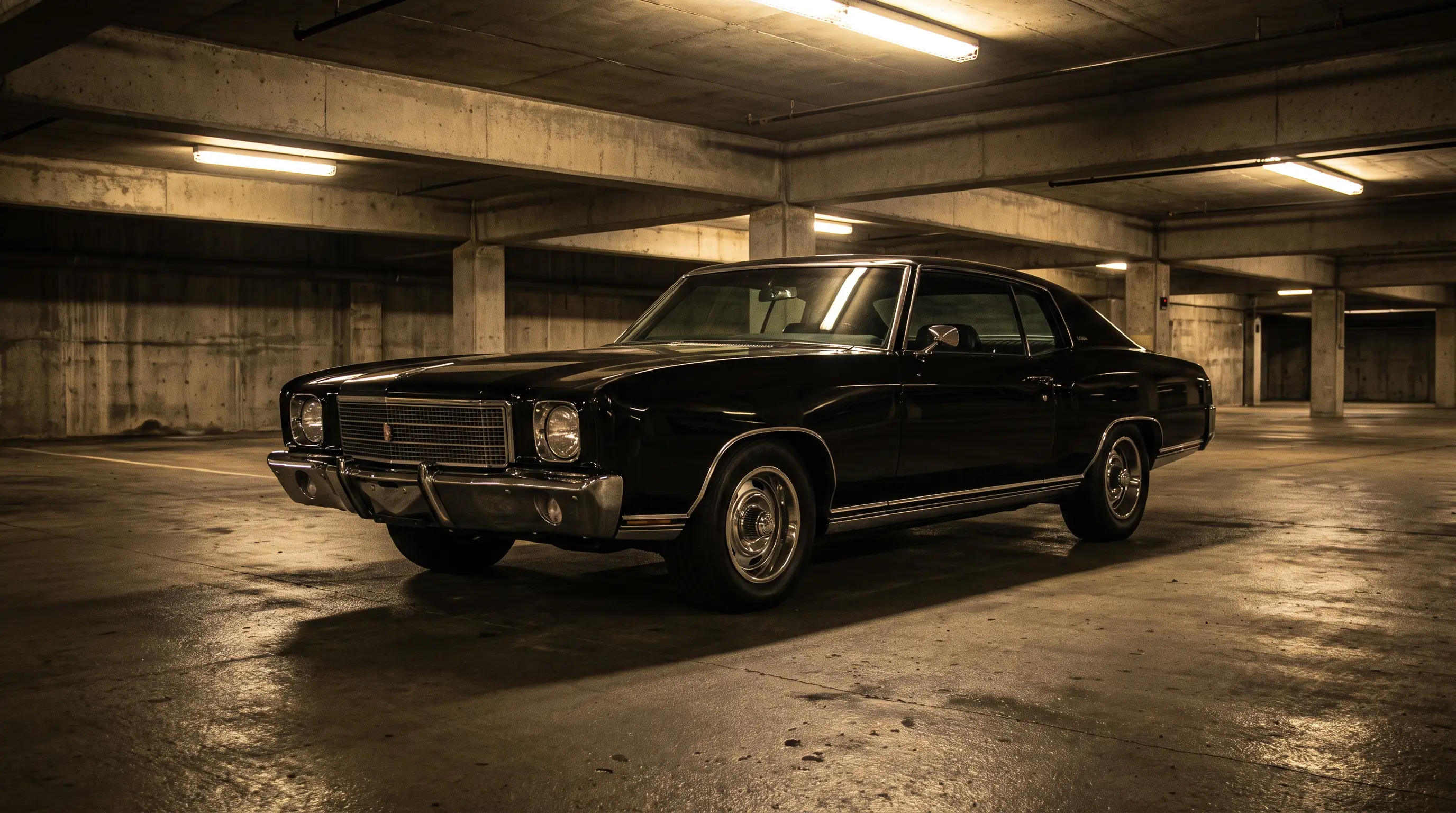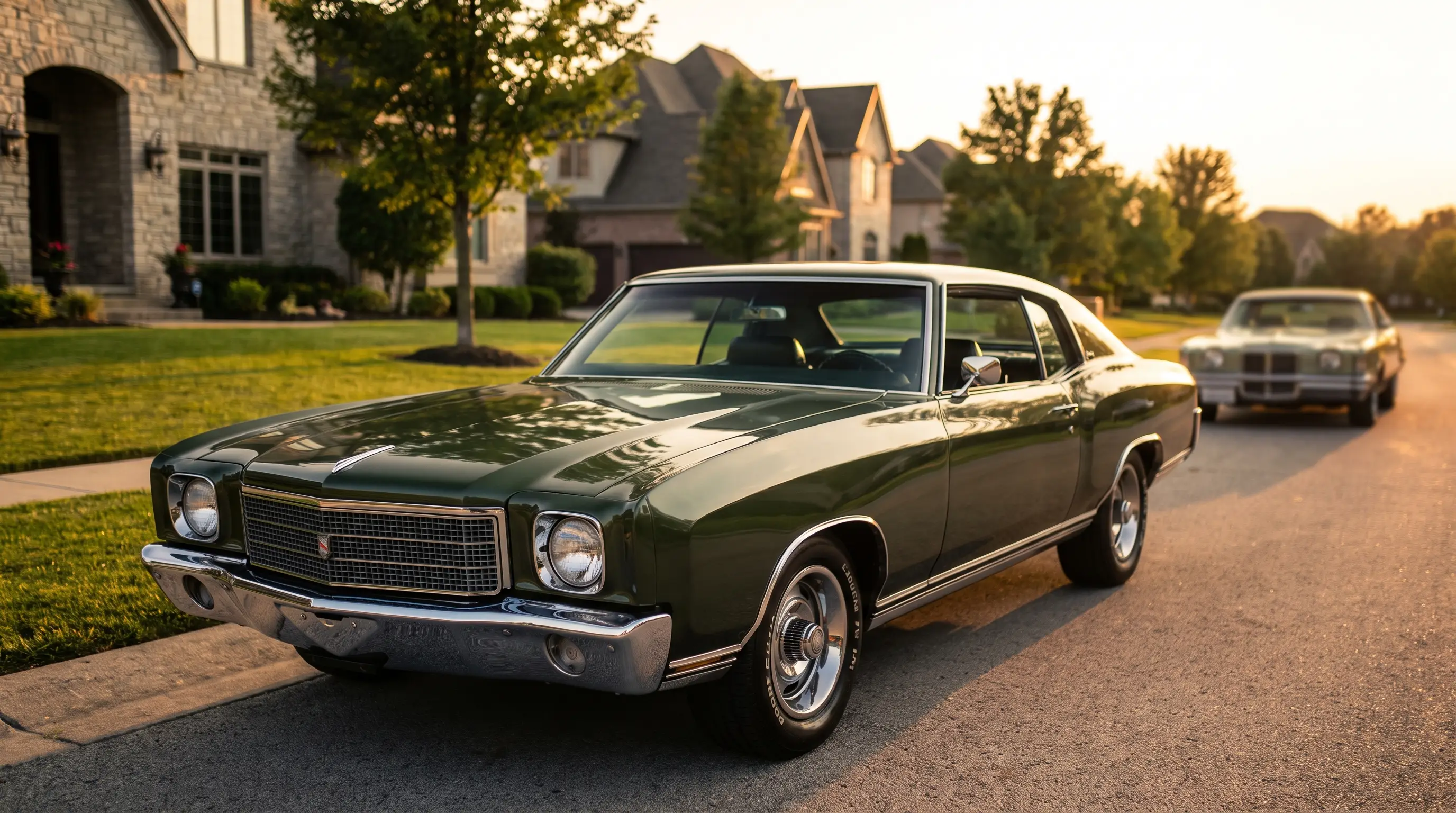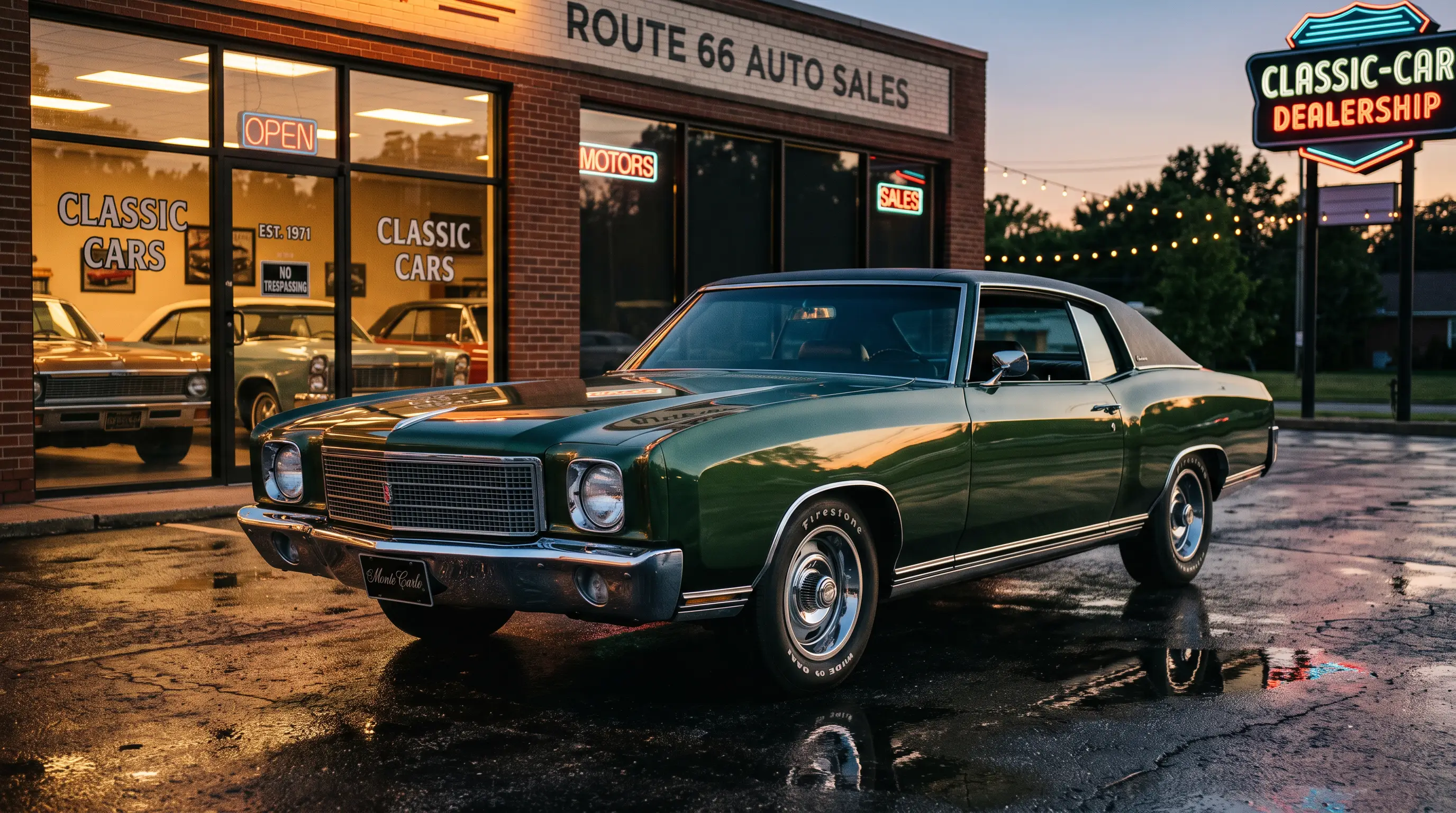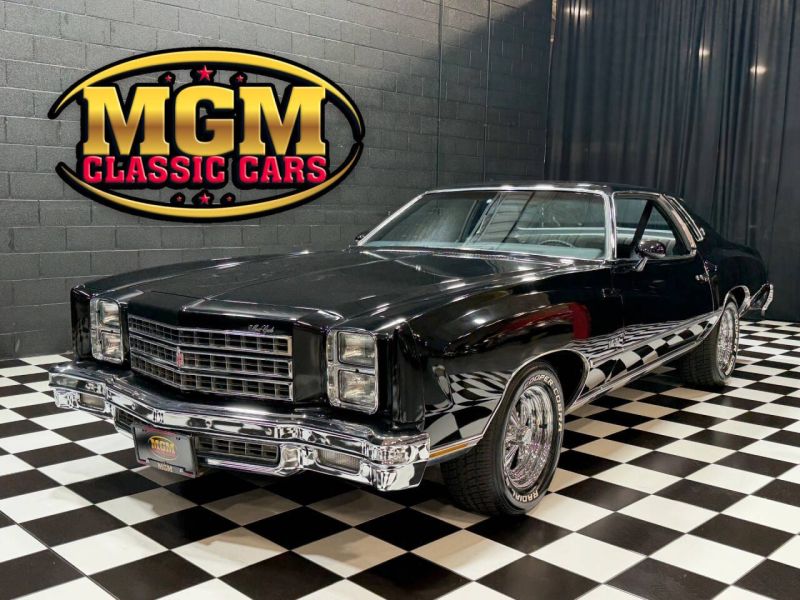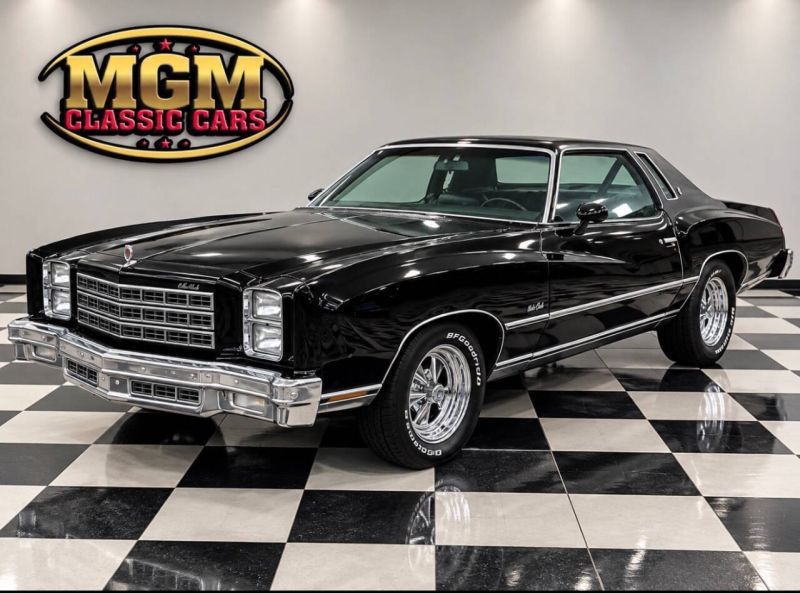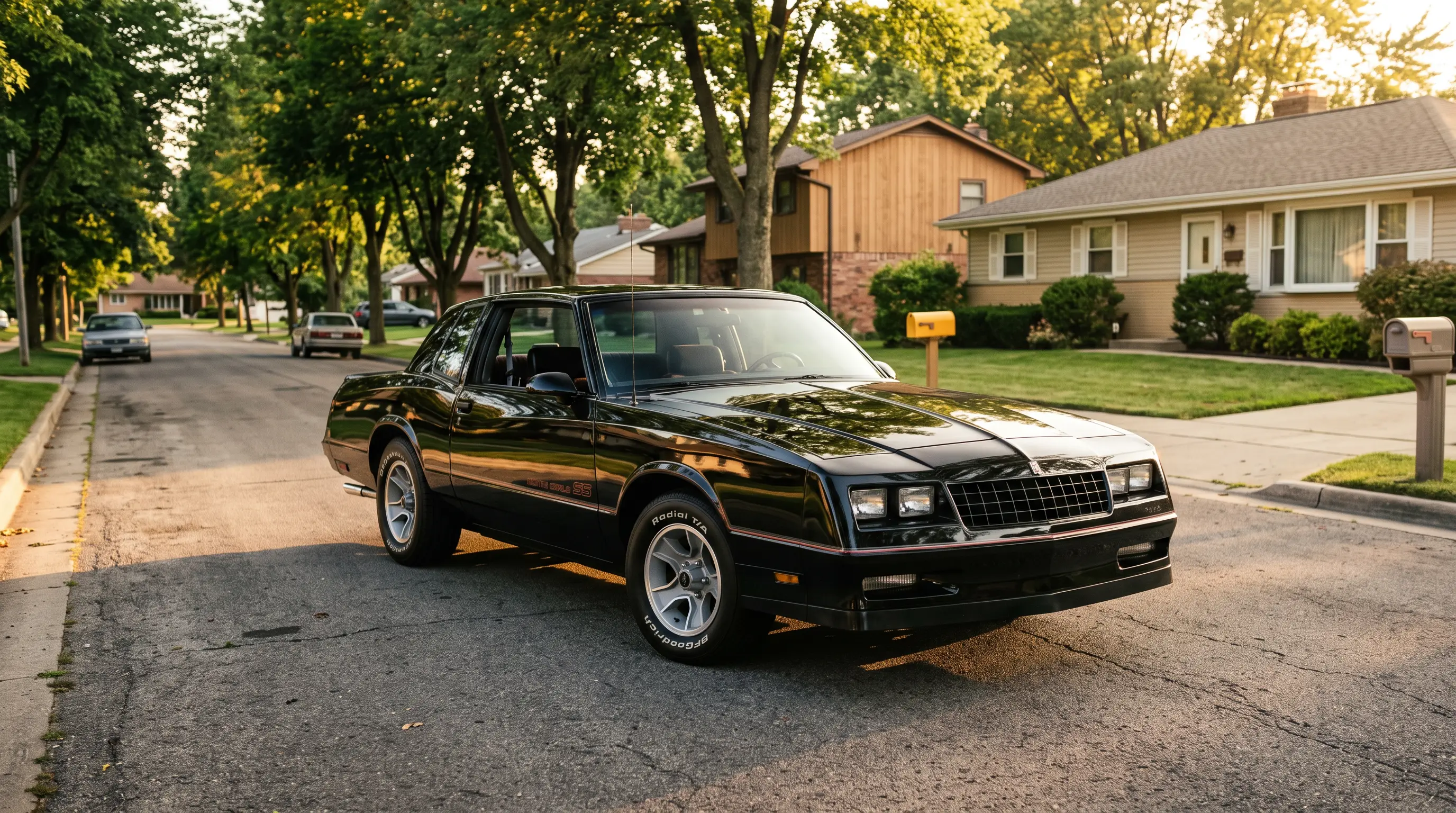
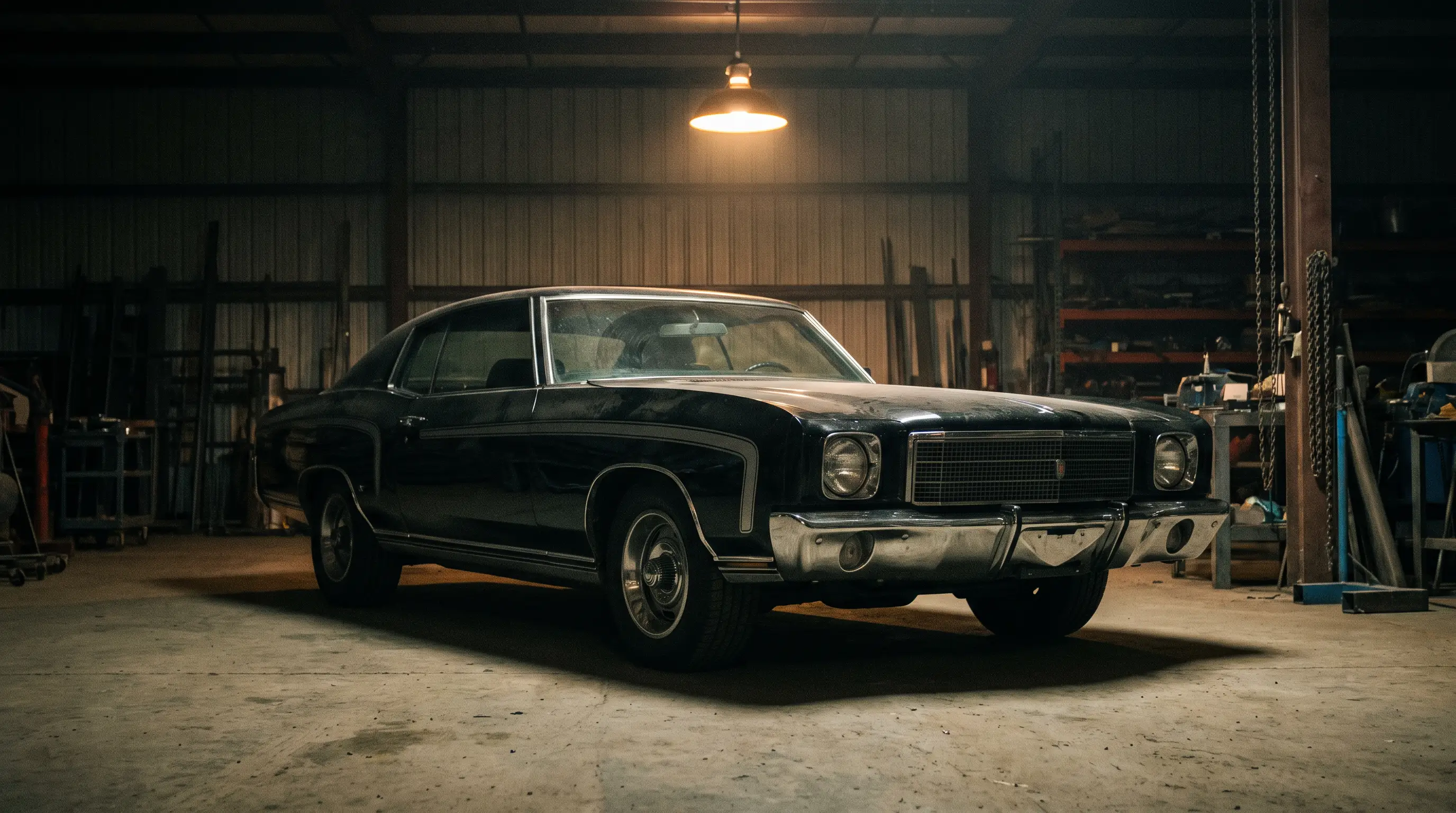
Run the numbers on any big-block muscle coupe from 1971 and you will find a familiar pattern: low production, a strong engine, and a market that took thirty years to catch up to what the car actually was. The 1971 Monte Carlo SS 454 fits that pattern almost exactly, and monte carlo 1971 ss454 collectibility is not hype, it is a case study in how a slow-burn personal luxury car became a legitimate blue-chip collectible.
The numbers that actually matter
Chevrolet built the SS 454 as an option package on top of the Monte Carlo rather than a standalone model, and only 1,919 cars carried the RPO Z20 SS 454 package in 1971, a small fraction of the roughly 128,600 Monte Carlos Chevrolet built that year. Low relative volume alone does not make a car valuable, plenty of rare options from this era are rare because nobody wanted them, but the SS 454 combines scarcity with a genuinely desirable engine, the LS5 454 cubic inch big-block rated at 365 hp gross (285 hp SAE net). That combination, scarce and good, is the exact recipe collectors chase, and it is why this option has appreciated at a different rate than the standard Monte Carlo coupes built the same year. The full background on the platform itself sits in the 1971 monte carlo story, which is worth reading before pricing any specific car.
What the auction data shows
Documented, numbers-matching SS 454 cars have consistently outperformed standard Monte Carlo coupes at auction over the past two decades, with well-preserved or professionally restored examples reaching well into five figures at major sales, while rougher driver-quality cars still trade at a fraction of that. The spread between a documented, numbers-matching car and an undocumented clone with a swapped engine is enormous, often the difference between a car worth showing at a national meet and one worth using as a weekend driver and nothing more. That spread is the single most important number in this entire market, more important than any individual sale price, because it tells you where the real value lives, and it tends to widen further every year rather than close.
Why documentation decides the price more than the paint
The clone problem is real in this segment. Because the SS 454 package could be added to a comparatively affordable base Monte Carlo, and because decades of parts interchangeability made cloning straightforward for anyone with the right big-block and the right badges, the market has learned to be skeptical of any car claiming SS 454 status without paperwork to back it up. Buyers who skip verification and pay clone prices for a genuine-sounding story routinely find out later that the numbers do not match, and by then the money is already spent. Anyone serious about this segment treats the cowl tag decode and the build sheet as a non-negotiable first step, not an optional nicety.
Read the full story of how the Monte Carlo nameplate developed across its entire run, and the SS 454's place in that arc becomes clearer: it was never the sales volume leader, but it was always the car the rest of the lineup got measured against.
"I have watched clean, documented SS 454 cars double in value while comparable base coupes barely moved. The market figured out the scarcity math a long time ago. The only question left is whether the paperwork on any specific car actually backs up the claim."
- David Mercer
Reading the condition tiers correctly
Not every SS 454 on the market sits at the same tier, and lumping them together is where a lot of buyers go wrong. At the top sits the fully documented, numbers-matching, unmolested original, the car every serious collector wants and few actually own. One step down is the correctly restored car, matching numbers but with a professional restoration in its history, which still commands strong money but trades at a discount to an untouched survivor because originality carries its own premium separate from cosmetic condition. Below that is the driver-quality car with mismatched or replaced components, honest and usable but priced accordingly. At the bottom is the clone, built from a lesser Monte Carlo with a period-correct or reproduction big-block installed later, which can look identical in photographs but carries a fraction of the value once an expert inspects the tag numbers.
Buyers who understand which tier they are shopping in avoid the single most common and most expensive mistake in this segment: paying tier-one money for a tier-three car because the seller's description used the right words without the paperwork to support them. Sellers, for their part, rarely misrepresent a car outright. More often it is optimistic language, a car described as "SS 454 style" or "big-block equipped" that a hurried buyer reads as a stronger claim than it actually is.
The buy call
If the paperwork checks out, a numbers-matching 1971 Monte Carlo SS 454 in solid condition is a legitimate buy in this market, not a speculative gamble. The combination of genuine scarcity, a desirable big-block, and steady collector demand gives it a floor that most personal luxury coupes from this era simply do not have. What it is not is a bargain hunt. Prices already reflect the scarcity, and anyone expecting to find an undervalued numbers-matching SS 454 sitting quietly at a local show is more likely to find a well-built clone wearing the badge instead. Budget for verification costs before you budget for the car itself, because a clean-looking SS 454 without documentation is a different asset entirely from one with it, no matter how identical the two look in a driveway.
Liquidity matters as much as sticker price for anyone treating this as an actual investment rather than a passion purchase. Documented SS 454 cars sell reliably at major auctions and through specialist dealers because demand is broad enough to support a real market, not a handful of enthusiasts trading among themselves. That liquidity is part of what separates a genuine blue-chip collectible from a car that is merely rare. Rarity without a buyer base is just a car nobody wants to pay up for, and the SS 454 has spent enough years proving there is a real buyer base behind it that the label has become earned rather than aspirational.
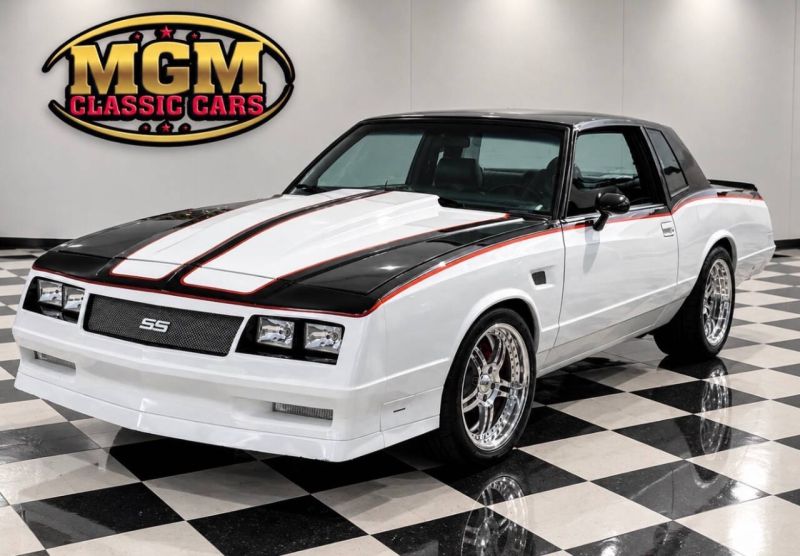
For buyers ready to shop with that discipline in mind, there are classic Monte Carlos on the market worth comparing side by side before committing to any single car, documentation folder in hand.