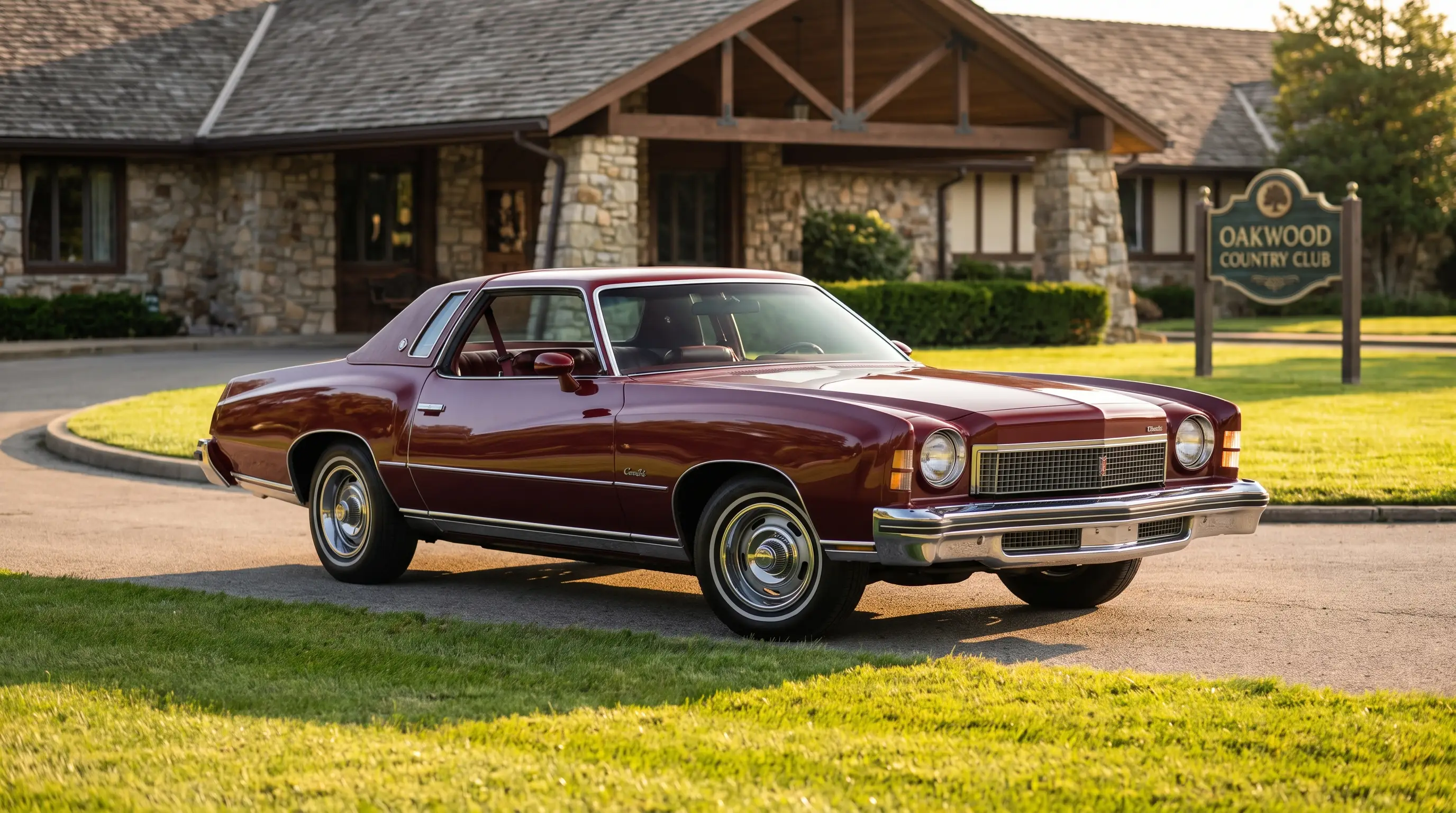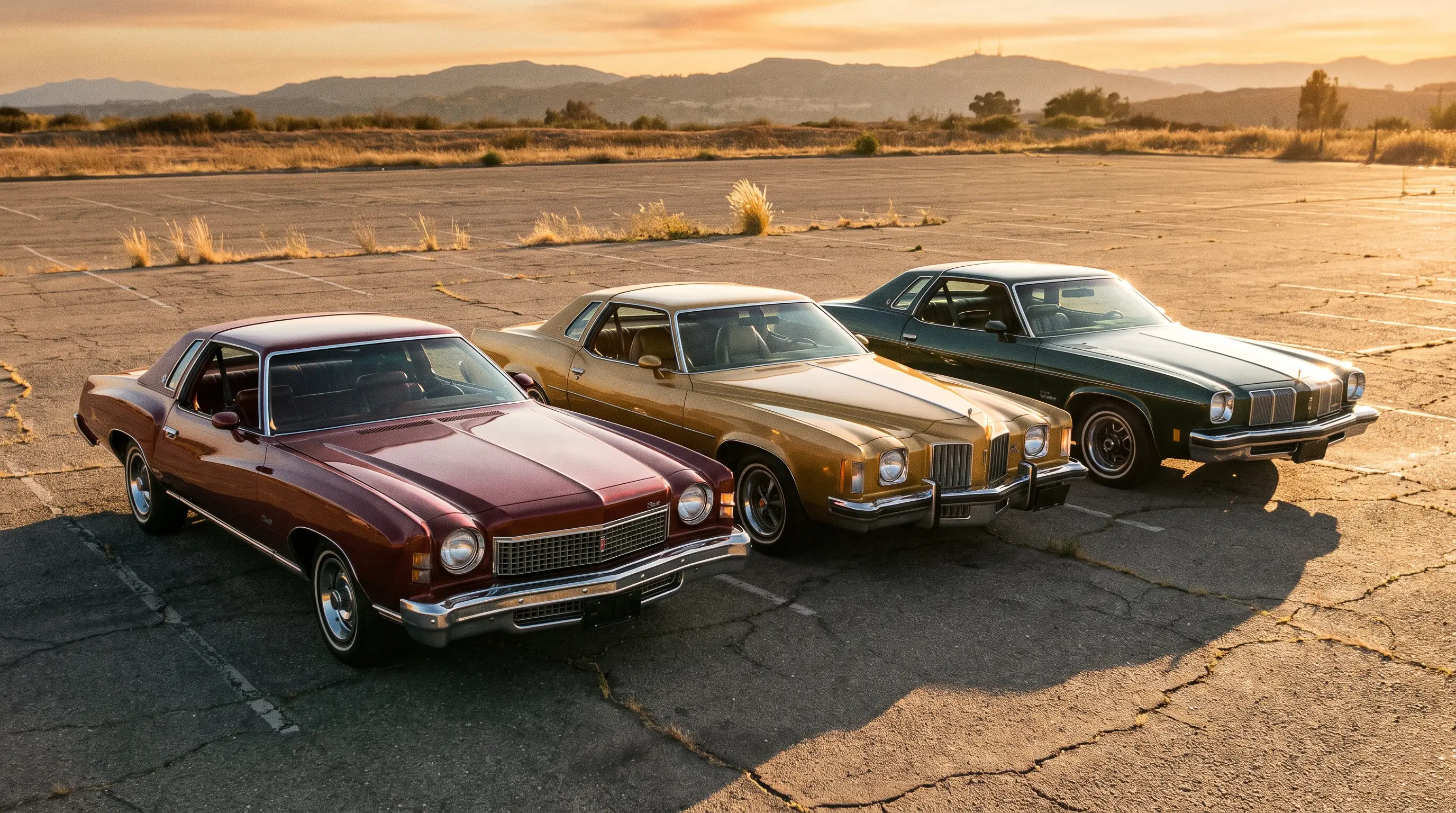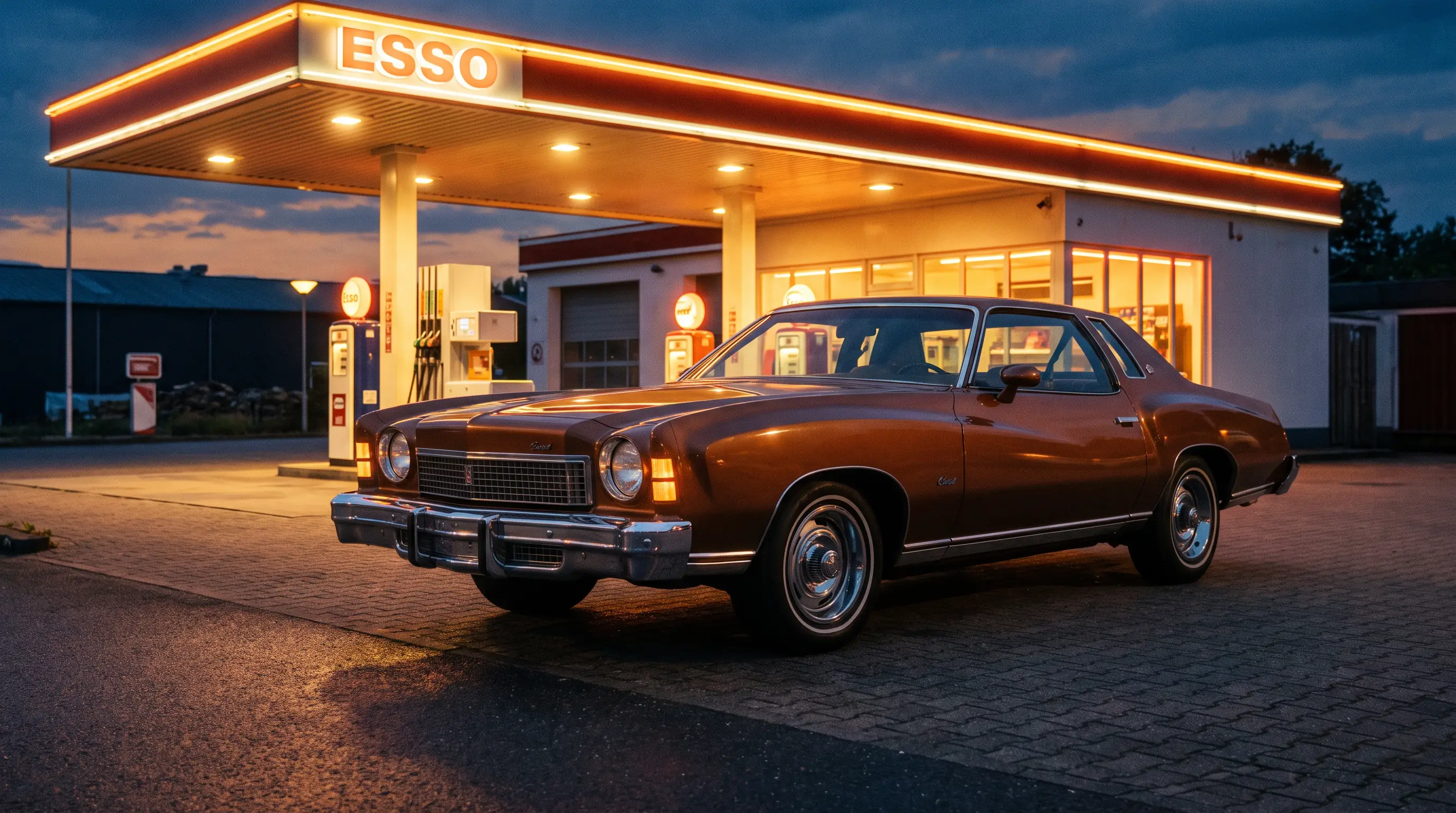
Open the door of a well-kept 1973 Monte Carlo and the outside world changes tone before the engine even turns over. That is the whole point of the Monte Carlo 1973 interior luxury mood Chevrolet built into this car: a cabin designed to feel like an escape from an ordinary sedan, wrapped around a driver who wanted to feel like the trip mattered.
A dashboard built to feel expensive
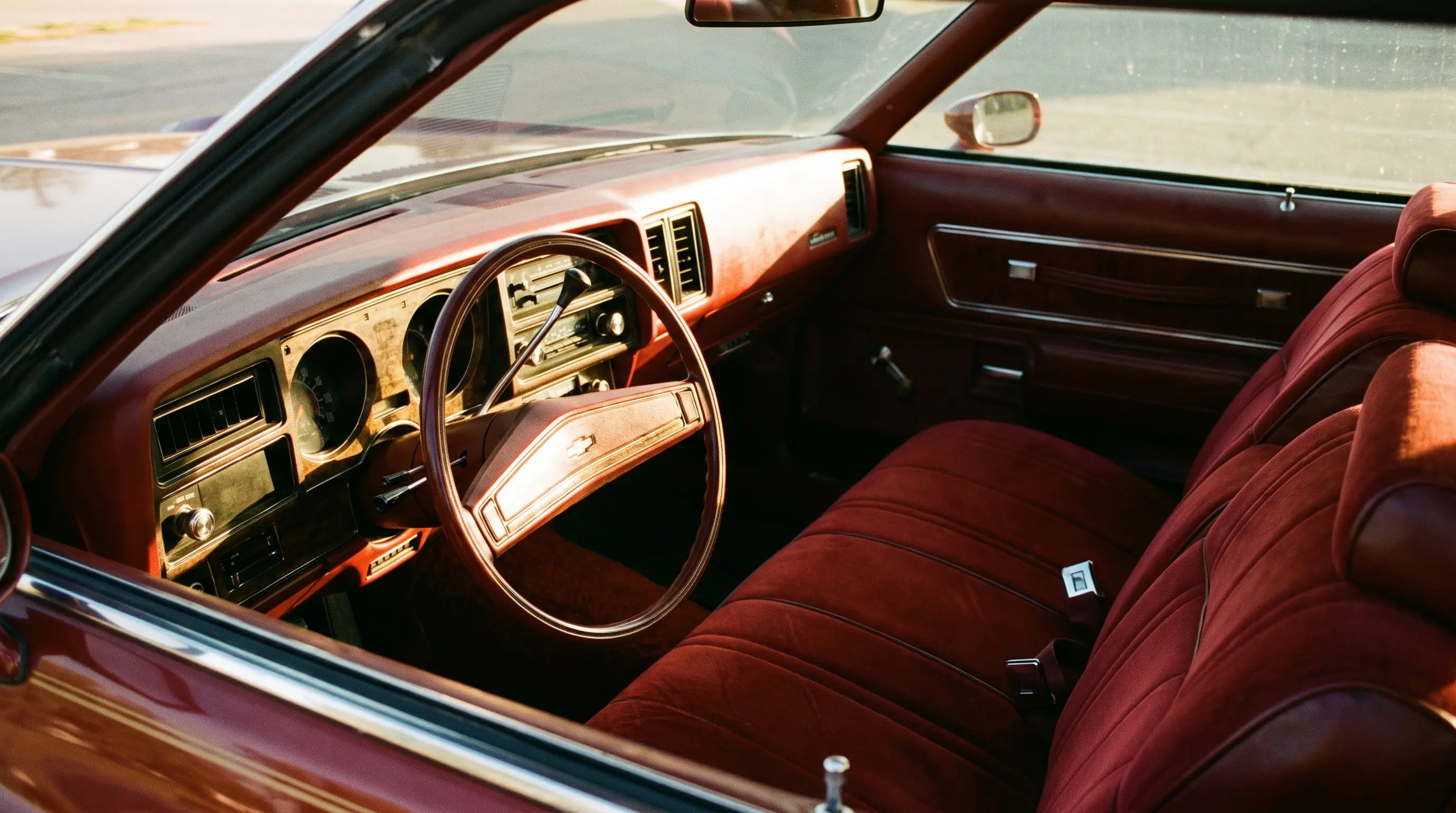
Step inside and the instrument panel curves toward the driver in a way that first-generation Monte Carlos never quite attempted, wood-grain accenting spread across a wide sweep of dash and door panel that catches afternoon light differently depending on where the car is parked. It is a small detail, but it is the kind of detail a family noticed on a Sunday drive in 1974, the dashboard warming under sunlight through a windshield built wider and more upright than the sportier coupes competing for the same buyer.
The seats told their own story too. Available in cloth or vinyl combinations with a distinct pleating pattern, they sat a little higher and a little softer than a standard Chevrolet sedan, built for comfort over long highway stretches rather than lateral grip through a corner. Chevrolet's designers understood exactly who was buying this car and what they wanted from forty-five minutes behind the wheel on the way to visit family.
Quiet was a feature, not an accident
Sound insulation packages on the 1973 Monte Carlo went noticeably beyond what a comparable Chevelle offered that same year, and the difference is still audible in a well-preserved example today. Road noise fades into the background in a way that surprises people who assume 1970s American cars were universally loud and unrefined. That hushed cabin was deliberate engineering investment aimed squarely at a buyer cross-shopping against Cadillac and Lincoln on comfort terms, even while shopping at a Chevrolet price point.
People who grew up riding in the back seat of one of these cars remember that quiet specifically. Conversations happened at a normal volume on the highway in a way they simply could not in an older family sedan, and that small comfort shaped a lot of memories that have nothing to do with horsepower or styling awards.
A cabin that photographs beautifully and ages honestly
What strikes people looking at period photography of these interiors now is how warm the color palette reads compared to modern cars: deep golds, rich greens, and warm browns that would look garish in a contemporary showroom but feel entirely of their moment in a 1973 Monte Carlo. That warmth was intentional, tied to broader design trends across the entire personal luxury segment that treated a car's interior as a place to relax rather than purely a place to perform driving tasks.
Original, unmodified interiors from this specific model year are genuinely rare to find in excellent condition now. Vinyl cracks under decades of sun exposure, wood-grain trim fades unevenly, and cloth seating wears through at the bolsters faster than most people expect. A car that has kept its factory interior intact for fifty years has usually had a caretaker who understood what they were protecting.
"People remember these cars less for how they drove and more for how it felt to sit in one on a long trip. That is not a small thing. That is the whole reason someone bought a Monte Carlo instead of something plainer for the same money."
- Nora Beckett
Small details that carried outsized weight
The little touches are what people describe most vividly decades later, not the big picture items. A courtesy light that faded in gently rather than snapping on. Door panels with a padded upper section that gave slightly under a resting arm instead of the hard plastic a base sedan offered. A steering wheel rim with a texture designed to feel substantial in hand rather than slick and thin. None of these individually would sell a car today, but stacked together across an entire cabin, they built a coherent sense of occasion that a family noticed the moment they climbed in for a Sunday drive.
Climate control on well-equipped examples added to that sense of occasion too, with factory air conditioning delivering a genuinely comfortable cabin on a hot afternoon in a way that many contemporaries, especially at a comparable price point, could not match consistently. That small mechanical detail meant a family could take a long summer trip in genuine comfort, windows up, without the compromise a lot of period cars still demanded of their occupants.
Why the mood still resonates
For the full story of how the 1973 redesign came together, the interior work sits alongside the exterior sculpting and structural engineering as part of one coordinated vision, but it is the cabin that people who actually owned these cars tend to describe first when asked what they remember. Nobody opens a conversation about their grandfather's Monte Carlo with the engine displacement. They open it with what it felt like to ride in the back seat on the way to a summer cookout, windows up, radio on, and the outside world somewhere else entirely.
Anyone drawn to that feeling rather than pure performance numbers should browse classic Monte Carlo listings with the interior as a priority, because a tired, sun-baked cabin cannot be restored to that original mood without significant, often expensive, work.
That expense is worth budgeting for honestly rather than discovering halfway through a project. Correct reproduction wood-grain trim, period-accurate cloth or vinyl in the right color, and a properly sourced Landau-style headliner all cost real money to get right, and shortcuts show up immediately to anyone who has spent time around an original example. A buyer who understands what made this cabin feel special in 1973 is in a much better position to judge whether a given car's interior is worth preserving as-is or worth the investment to bring it back to that original mood.
There is a real difference, too, between a car that has simply survived and one that has been cared for with that specific mood in mind. A survivor with sun-faded but structurally sound original upholstery, uncracked dash pad, and intact wood-grain trim carries a kind of quiet authority that even the best modern reproduction cannot fully replicate. Patina in this specific context is not a flaw to be corrected. It is evidence that the mood the factory built into this cabin was real enough that someone spent five decades protecting it, one careful cleaning and one covered parking spot at a time.
That is ultimately the argument for taking this interior seriously as a piece of design history rather than dismissing it as simple period decoration. Chevrolet's engineers and stylists made deliberate choices about texture, sound, light, and color specifically to produce a feeling, and it is a feeling that a great many people who rode in these cars as children can still describe in specific sensory detail decades later. Few interiors from any era manage that kind of lasting imprint.