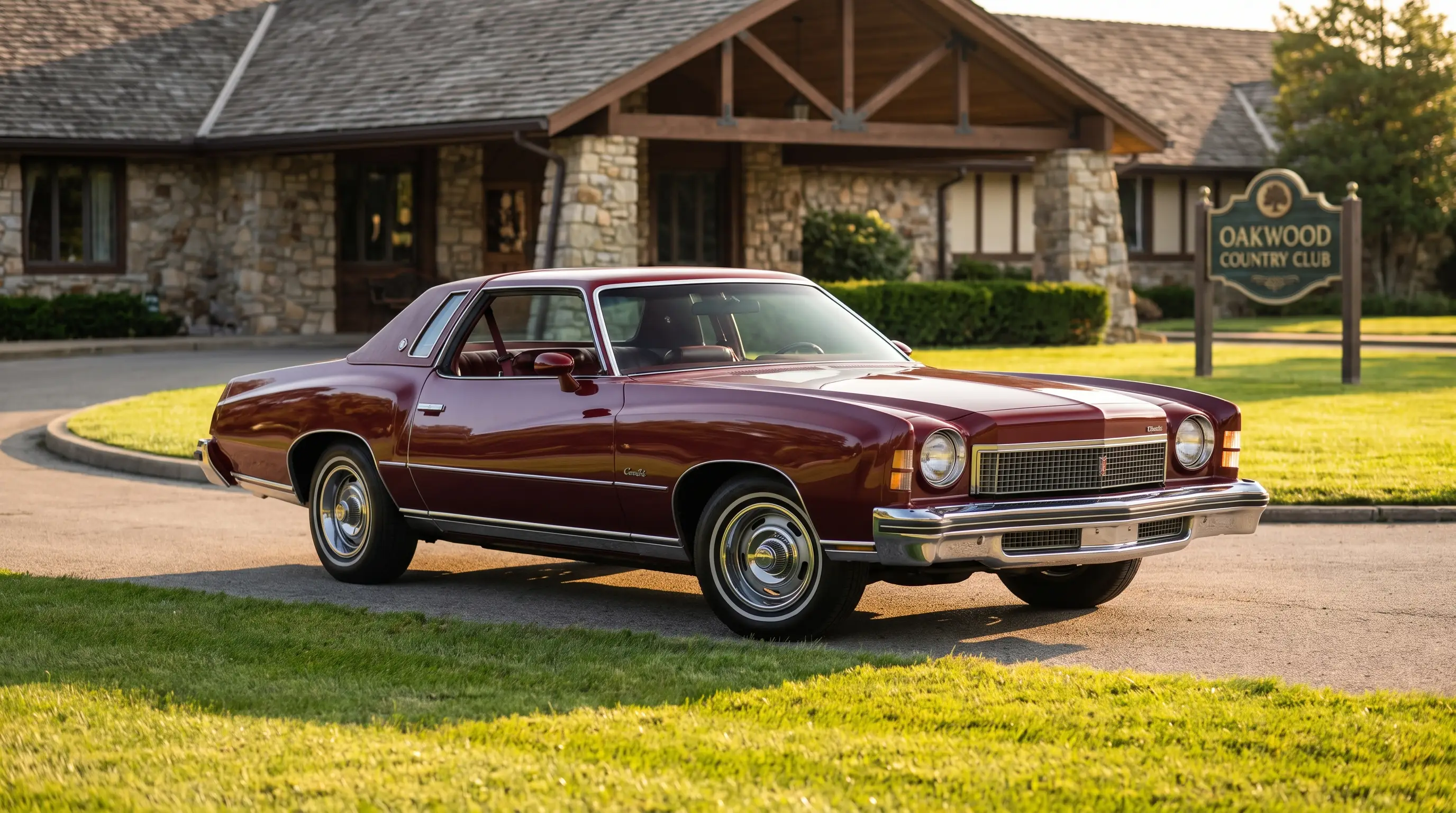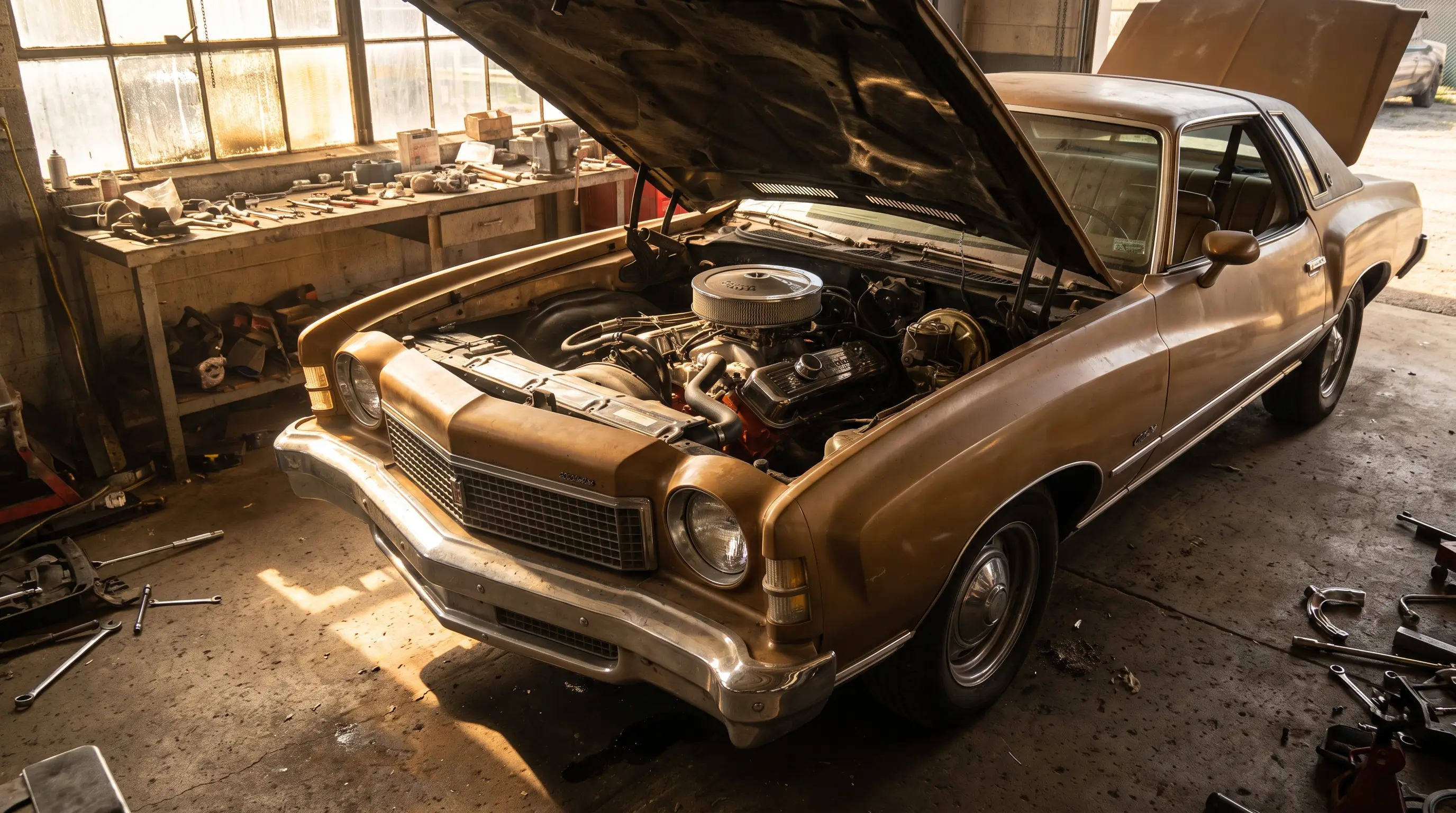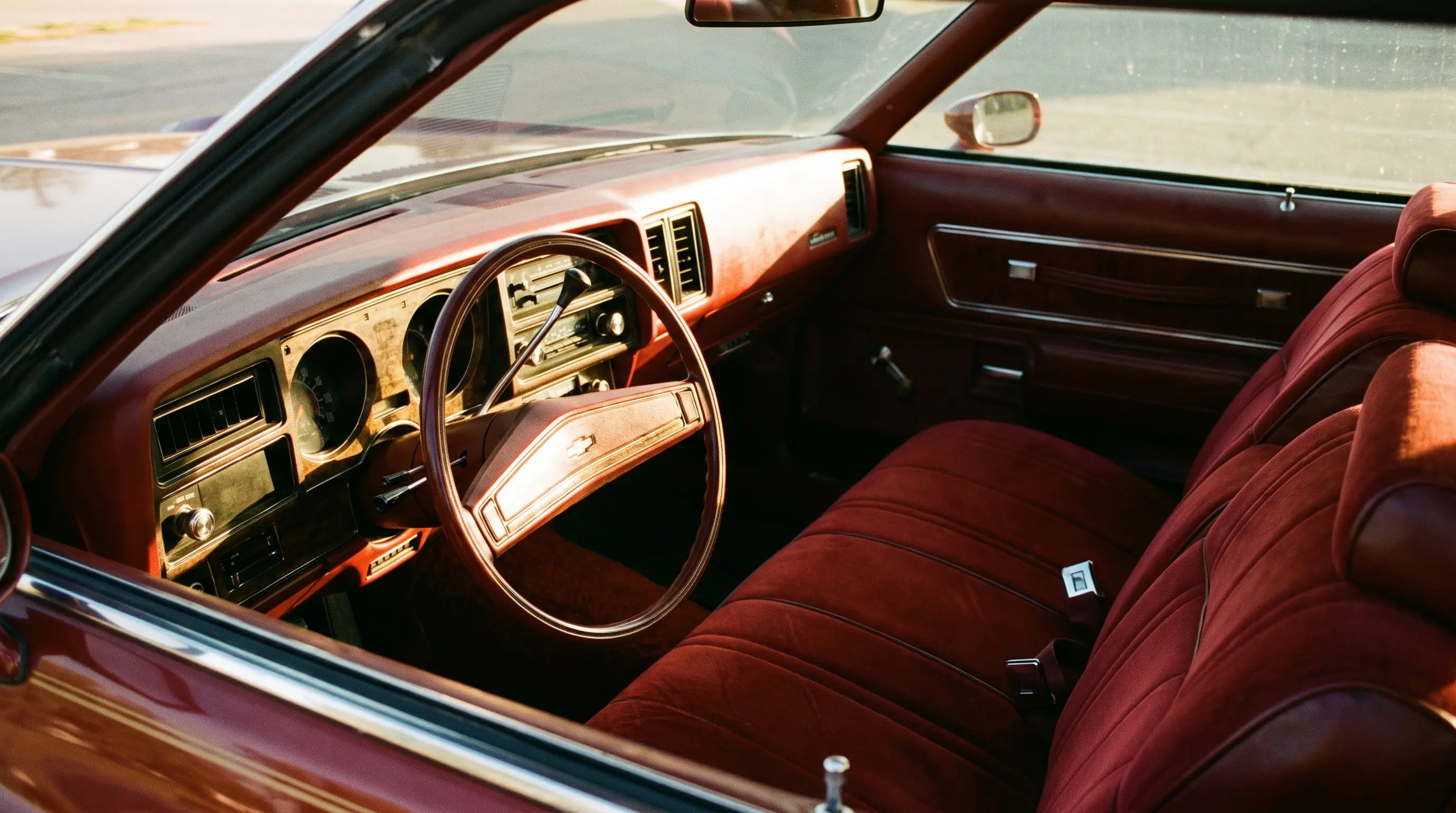
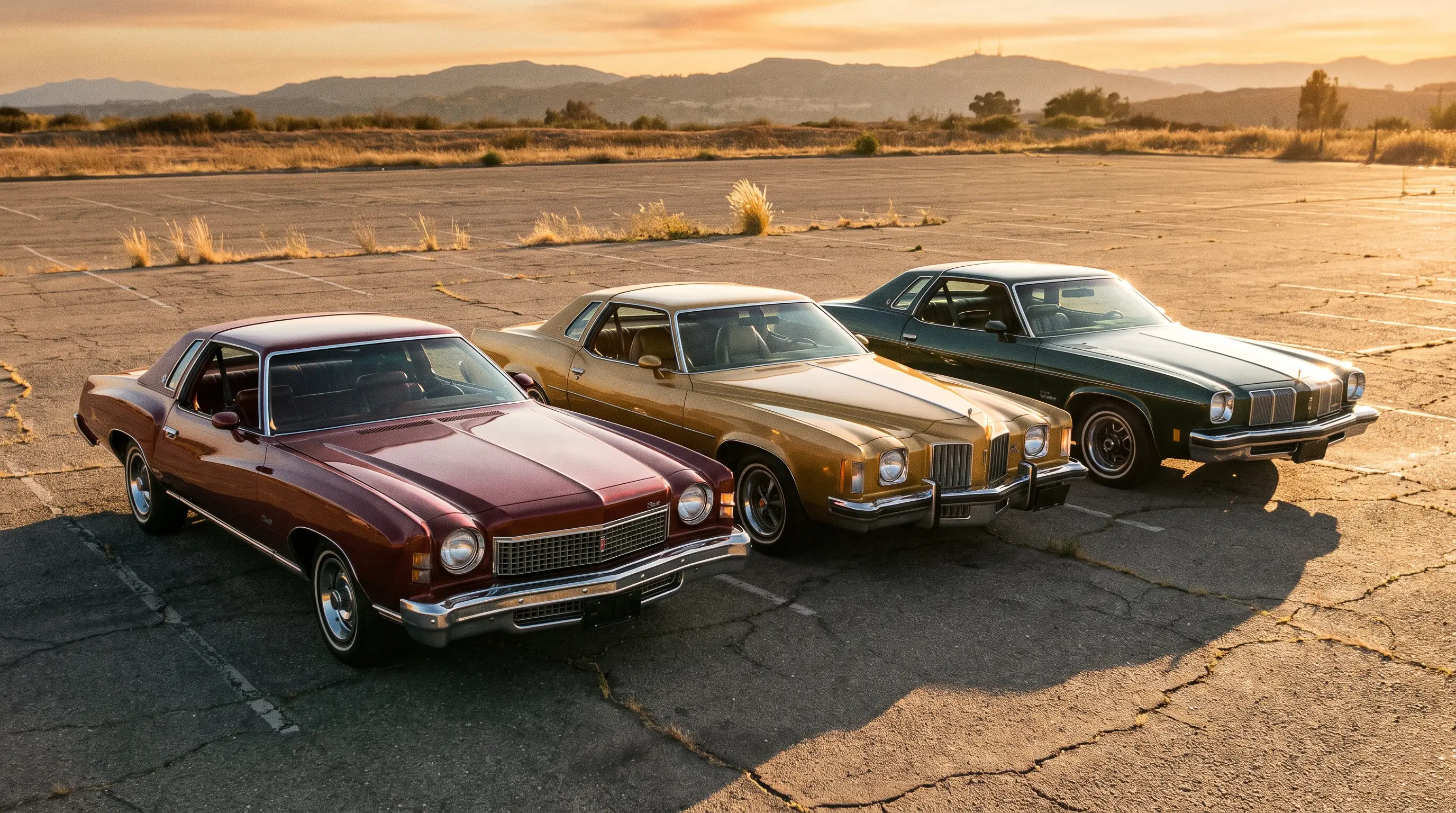
Factory records and period sales literature tell a clearer story than nostalgia usually allows, and the Monte Carlo 1973 vs Grand Prix Cutlass comparison is a good example. All three cars were built on closely related General Motors architecture that same model year, sold to overlapping buyers, and marketed by internal divisions that were, whatever the brochures implied, competing for the same corporate sales targets.
Shared bones, deliberately different personalities
The 1973 Monte Carlo, Pontiac Grand Prix, and Oldsmobile Cutlass Supreme all rode on General Motors' A-body and related intermediate platforms that year, engineered under the same corporate umbrella but assigned to divisions with very different marketing mandates. Production records show Chevrolet, Pontiac, and Oldsmobile were each instructed to differentiate their personal luxury coupe rather than let the shared underpinnings show through, and the styling divergence between these three cars is a documented case of that mandate working as intended.
The Grand Prix leaned into a driver-focused cockpit layout with a distinctive wraparound dashboard, positioning itself as the more performance-conscious choice within the segment. The Cutlass Supreme softened its lines further than either competitor, prioritizing a plush ride and conservative styling that appealed to a slightly older, more traditional buyer. The Monte Carlo split the difference with its aggressive Colonnade fender sculpting paired against a formal roofline, and internal Chevrolet marketing materials from the period specifically positioned it as the choice for buyers who wanted presence without the Grand Prix's sportier posture.
How the sales figures actually broke down
Production numbers for 1973 show all three nameplates selling in substantial volume, reflecting just how large the personal luxury coupe segment had become by the early 1970s. The Monte Carlo held a meaningful edge in total units over the Grand Prix that year, aided partly by Chevrolet's broader dealer network and partly by the Motor Trend Car of the Year recognition the redesign earned, which gave dealers a concrete talking point the competing brands could not match in 1973 specifically.
The Cutlass Supreme, folded into Oldsmobile's larger Cutlass family sales figures, is harder to isolate cleanly in the historical record, but period trade publications consistently treated it as the Monte Carlo's closest rival in both price positioning and target demographic, more so than the Grand Prix, which skewed toward a buyer wanting a sportier image.
Where the Monte Carlo actually won the comparison
Reviewing period road tests and dealer literature side by side, the Monte Carlo's advantage over its two closest rivals came down to a specific combination: styling that photographed and displayed well on a dealer lot, a broader range of engine options including the 454 big block that neither the Grand Prix nor the Cutlass Supreme offered in the same displacement, and pricing positioned to undercut both competitors slightly while offering comparable content. That last point mattered enormously to a segment where buyers were extremely price-sensitive despite shopping in a luxury-adjacent category.
For where this started, the full redesign story explains why Chevrolet was positioned to make these specific competitive choices in 1973 rather than simply carrying the previous generation forward, which is exactly what several competing nameplates did that same model year while Chevrolet invested in an entirely new structure.
"The factory paperwork does not lie about who was actually competing with whom. Chevrolet built the Monte Carlo specifically to take buyers from Pontiac and Oldsmobile, and the sales numbers show it worked."
- Tom Ramirez
Pricing strategy as a documented competitive weapon
Factory price sheets from 1973 show Chevrolet positioning the base Monte Carlo below comparable Grand Prix and Cutlass Supreme trim levels while still offering a similar content package, a pricing gap dealers were specifically trained to highlight during a showroom comparison. That gap was not accidental. Chevrolet's broader manufacturing scale gave the division more room to compete on price even while matching, and in several equipment categories exceeding, what Pontiac and Oldsmobile offered at a higher entry cost. Sales training materials from the period instructed Chevrolet dealers to walk prospective buyers through a direct feature and price comparison against both rivals, something GM rarely encouraged this explicitly between its own divisions in other segments.
That documented pricing strategy explains a lot of why the Monte Carlo outsold its closest sibling rivals that year despite entering a genuinely crowded field. Buyers were not simply choosing on styling preference alone. They were responding to a value proposition Chevrolet had built deliberately into the car's market position from the very start of the 1973 planning process.
What this rivalry means for collectors now
The three-way rivalry between these nameplates shapes how collectors value surviving examples today. Grand Prix models tend to draw buyers specifically hunting sportier trim and instrument-heavy interiors. Cutlass Supreme examples attract a buyer prioritizing ride comfort and conservative presentation. Monte Carlo examples split that difference, and the model's broader factory production combined with genuinely diverse engine options, from economical small blocks up through the 454, gives today's buyers more configuration variety to choose from than either rival typically offers.
Anyone cross-shopping this era of personal luxury coupe should look directly at the documented differences rather than relying on brand reputation alone, and a good place to start is available classic Monte Carlo for sale listings to see how that factory variety plays out in the current market.
It is also worth noting how differently these three nameplates have aged in terms of parts support and enthusiast community size. The Monte Carlo's stronger factory production numbers translated directly into a larger surviving population, which means better reproduction parts availability and a more active owner community today than either the Grand Prix or the Cutlass Supreme from the same model year typically enjoys. That practical advantage, easier ownership decades later, traces directly back to the same competitive sales strategy that made the Monte Carlo the volume leader among the three cars when they were new.
None of this diminishes what the Grand Prix and Cutlass Supreme achieved in their own right. Both remain genuinely well-regarded personal luxury coupes with loyal followings and their own distinct engineering strengths, and a Grand Prix's cockpit-focused dashboard or a Cutlass Supreme's plush ride quality are legitimate reasons to prefer either car over a Monte Carlo depending on what a given buyer values most. The point of understanding the factory-documented rivalry is not to crown a single winner for every buyer, but to recognize that these three cars were never simply parallel products built in isolation. They were designed, priced, and marketed directly against each other, and that competitive context explains details in each car's specification that otherwise look arbitrary.
Anyone building a collection around this specific era of General Motors personal luxury coupes would do well to own examples of all three rather than treat them as interchangeable. Each represents a genuinely different answer to the same market brief, and seeing them together in one garage makes the subtle differences in proportion, interior philosophy, and engineering priority far easier to appreciate than reading about them separately ever could.