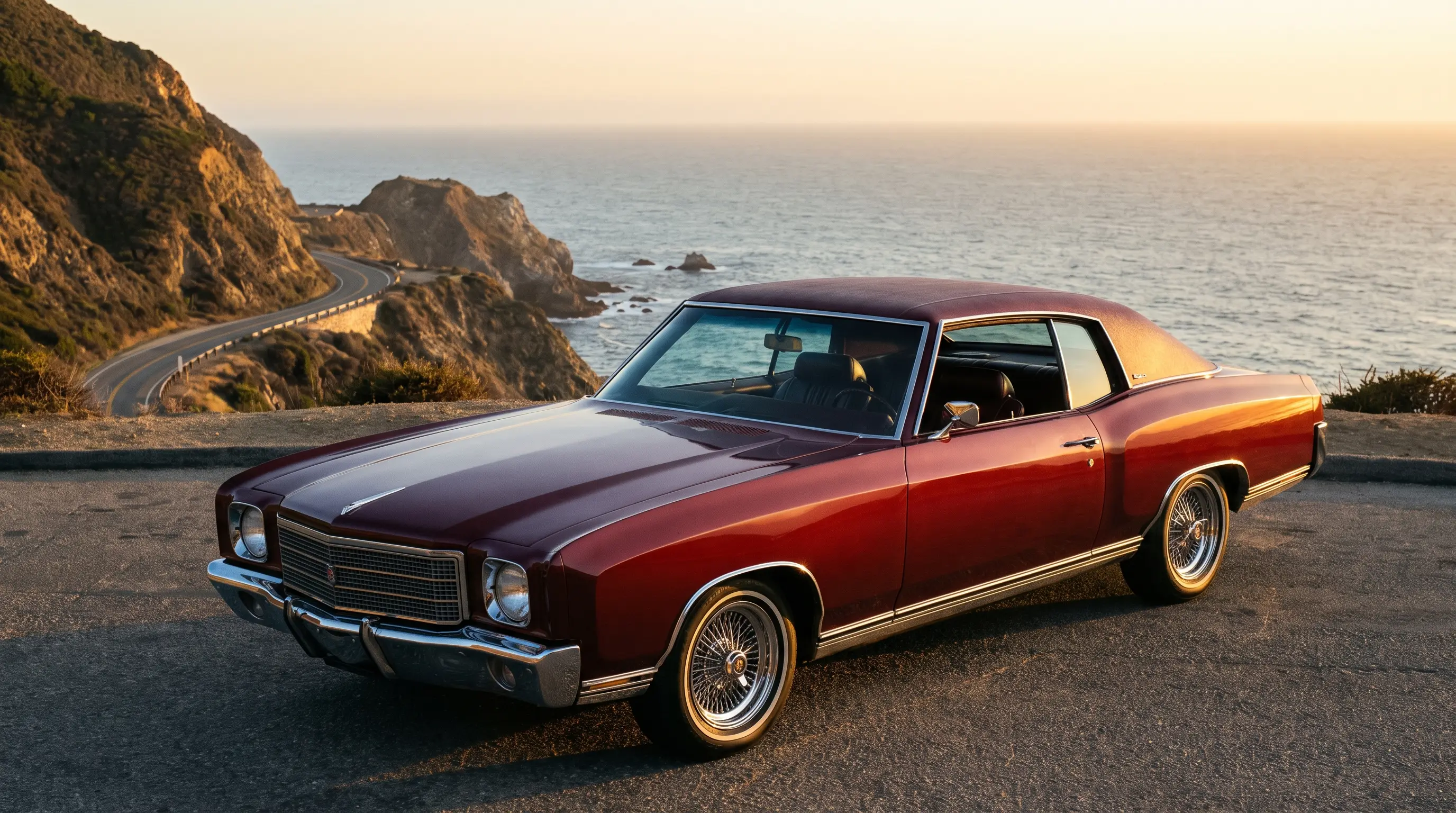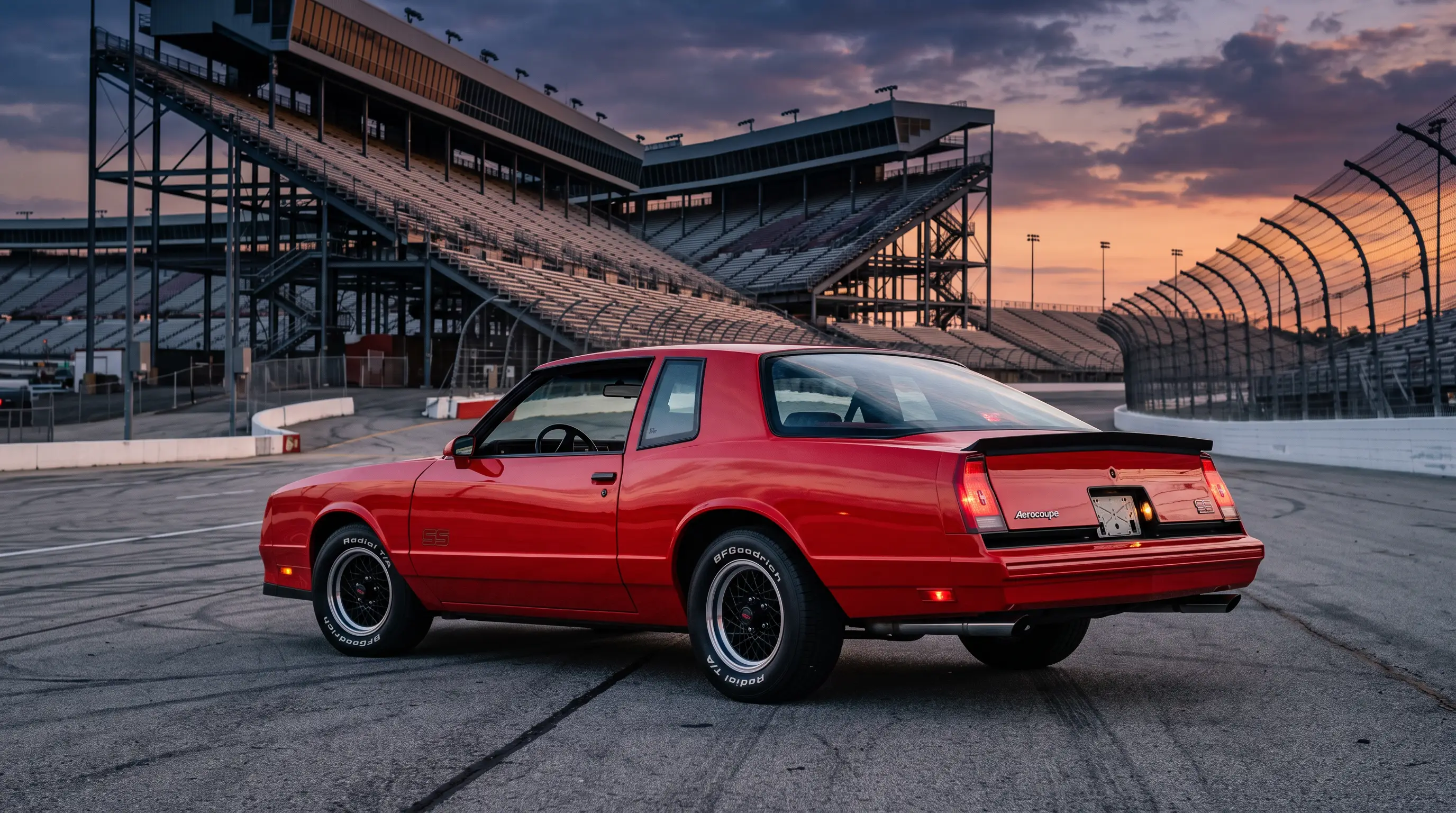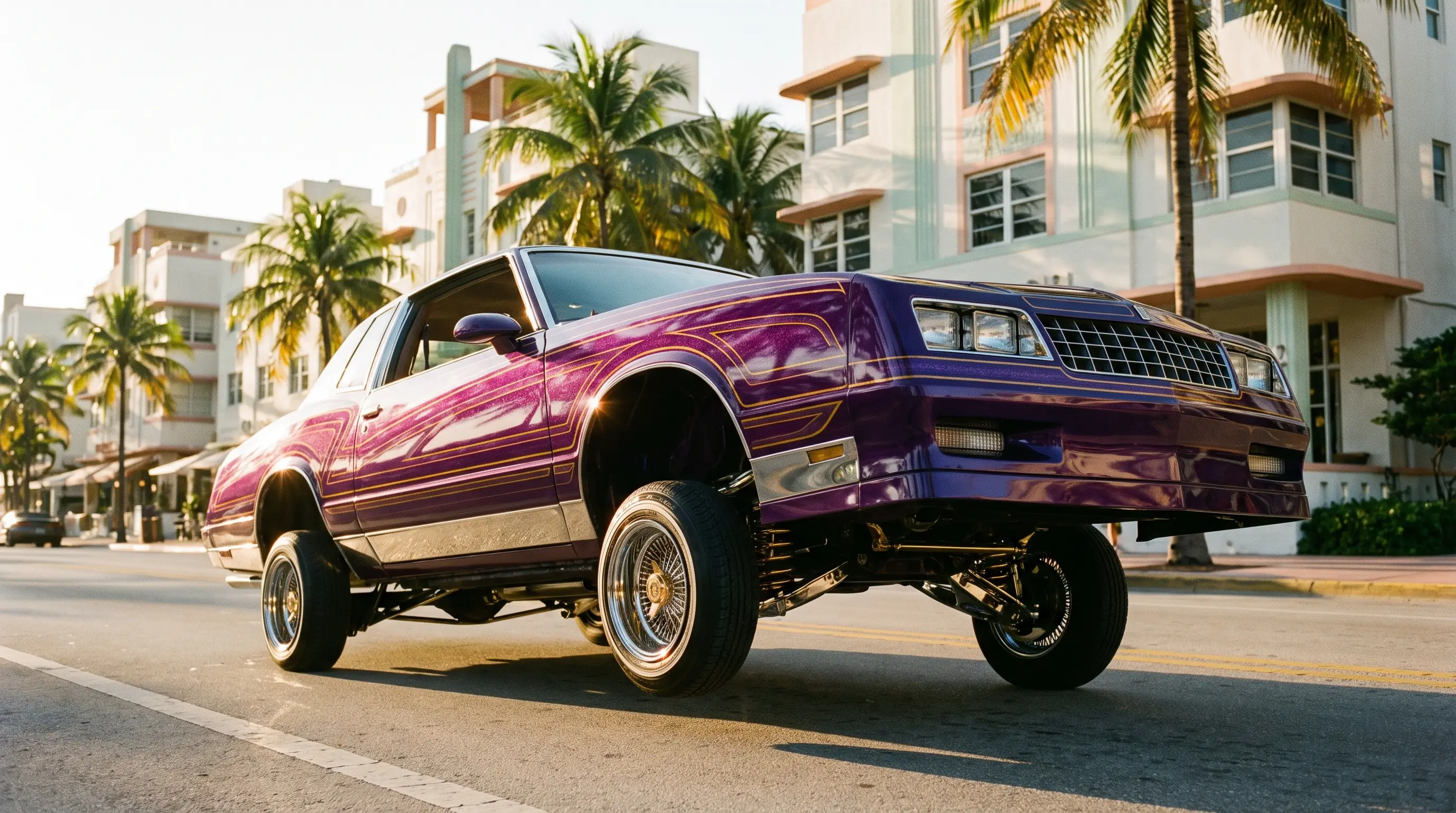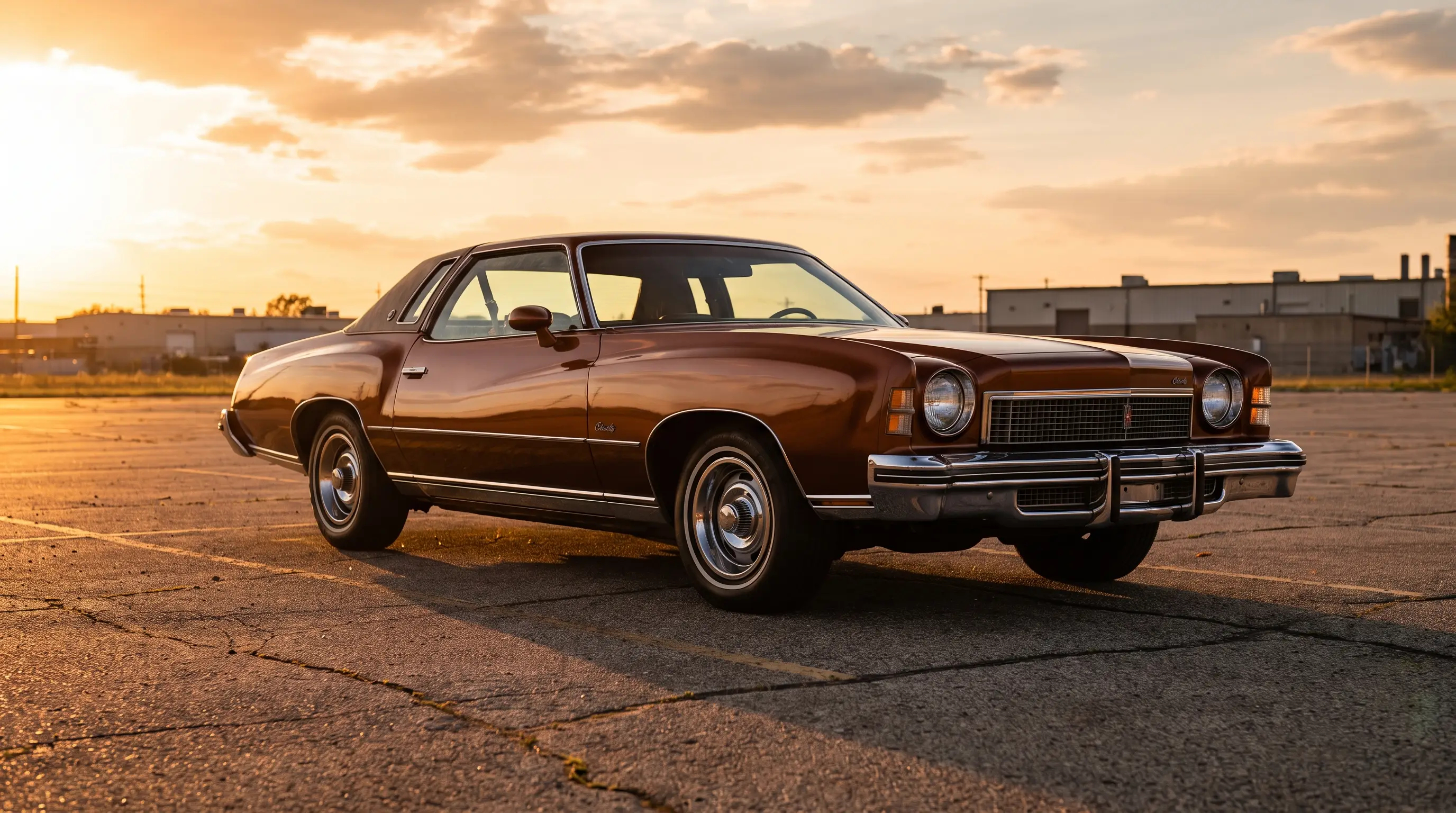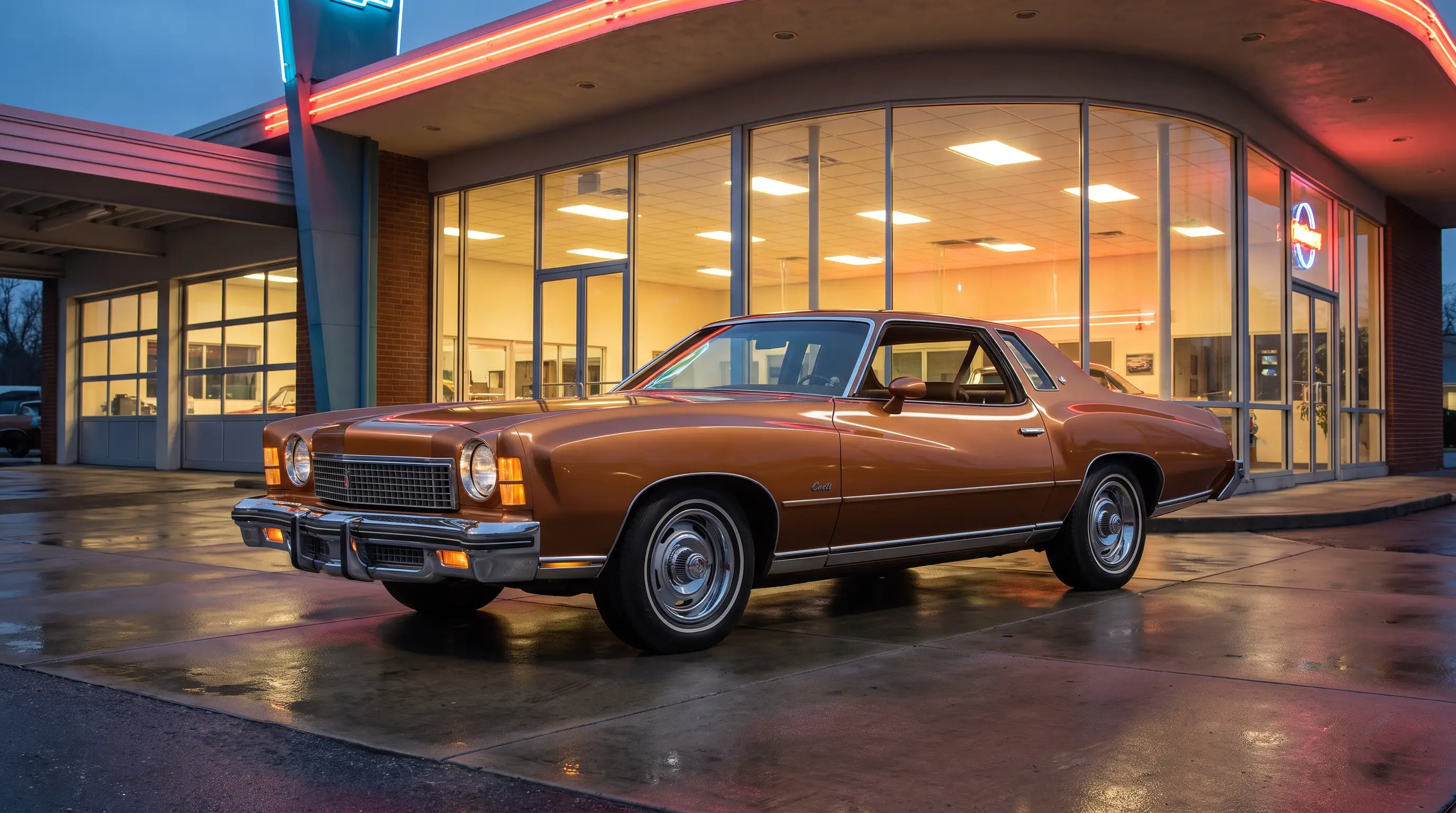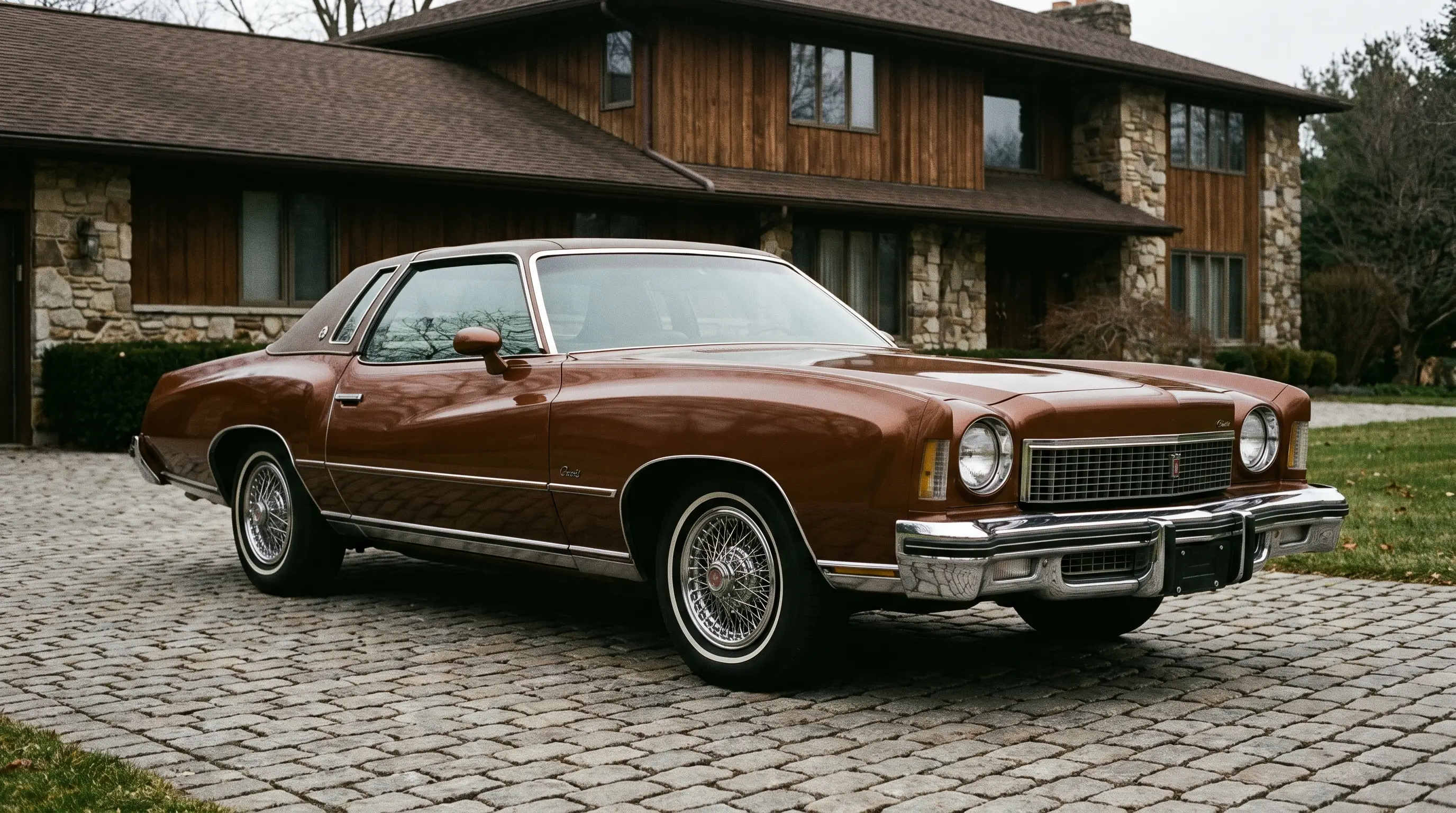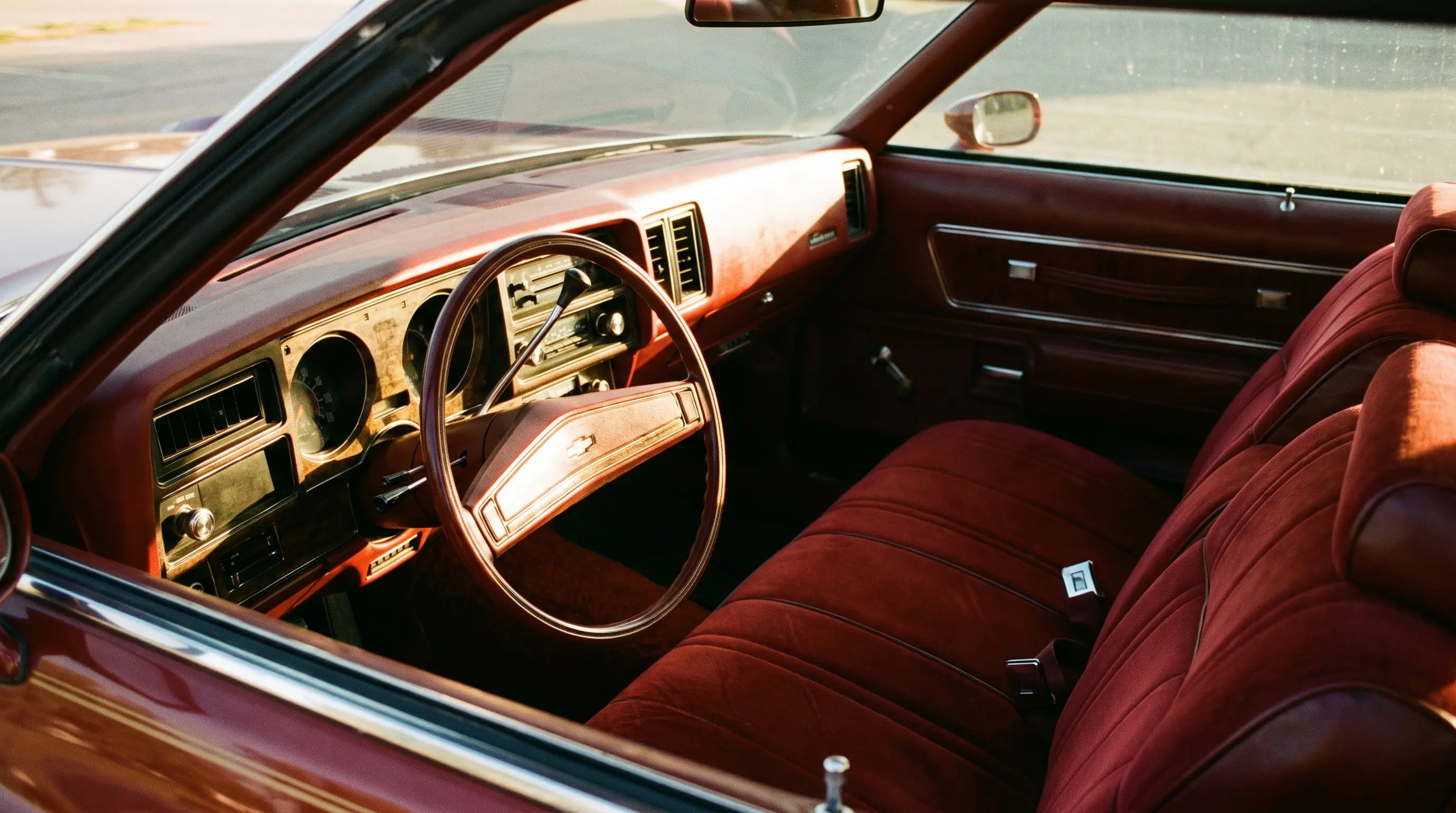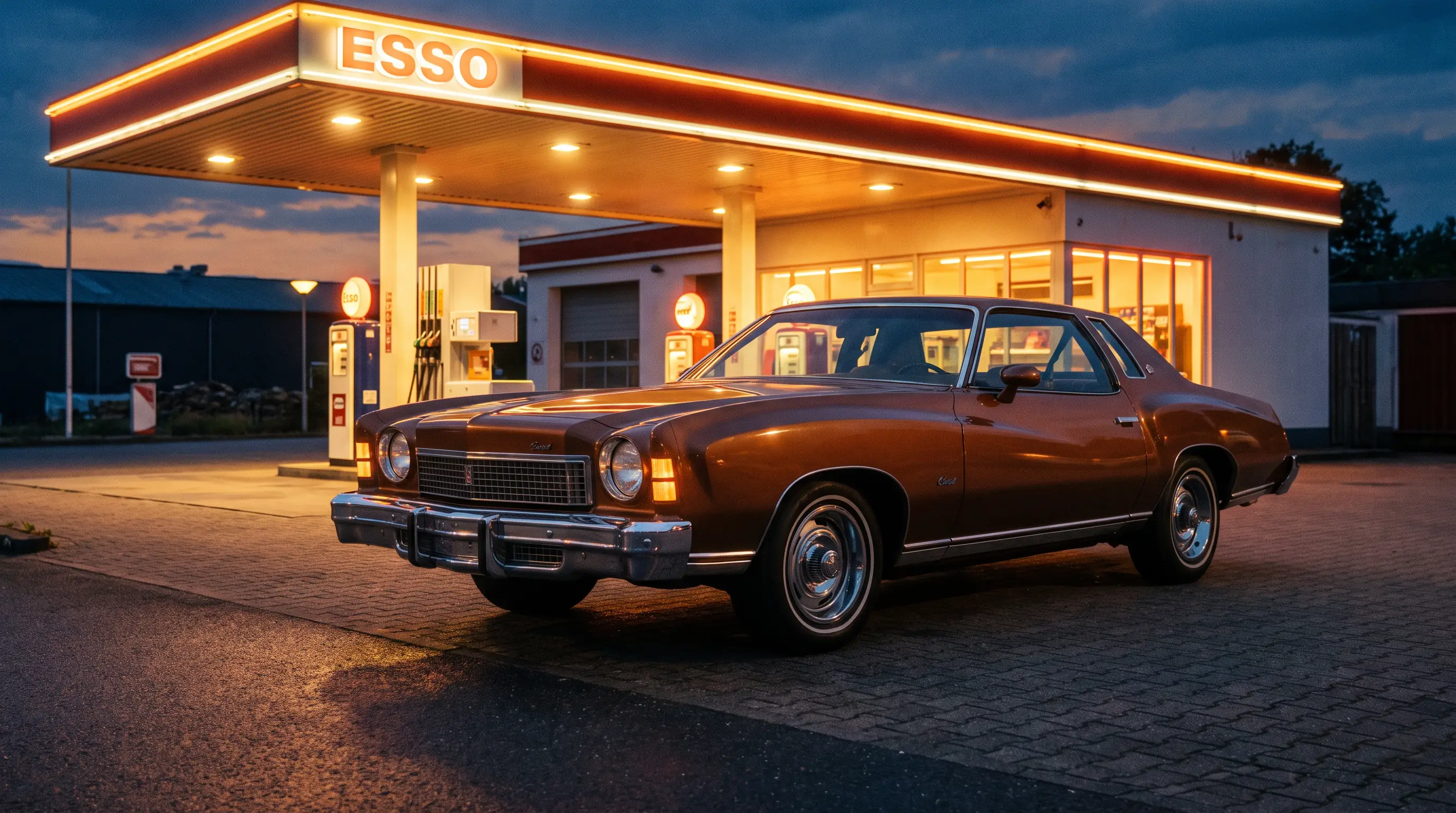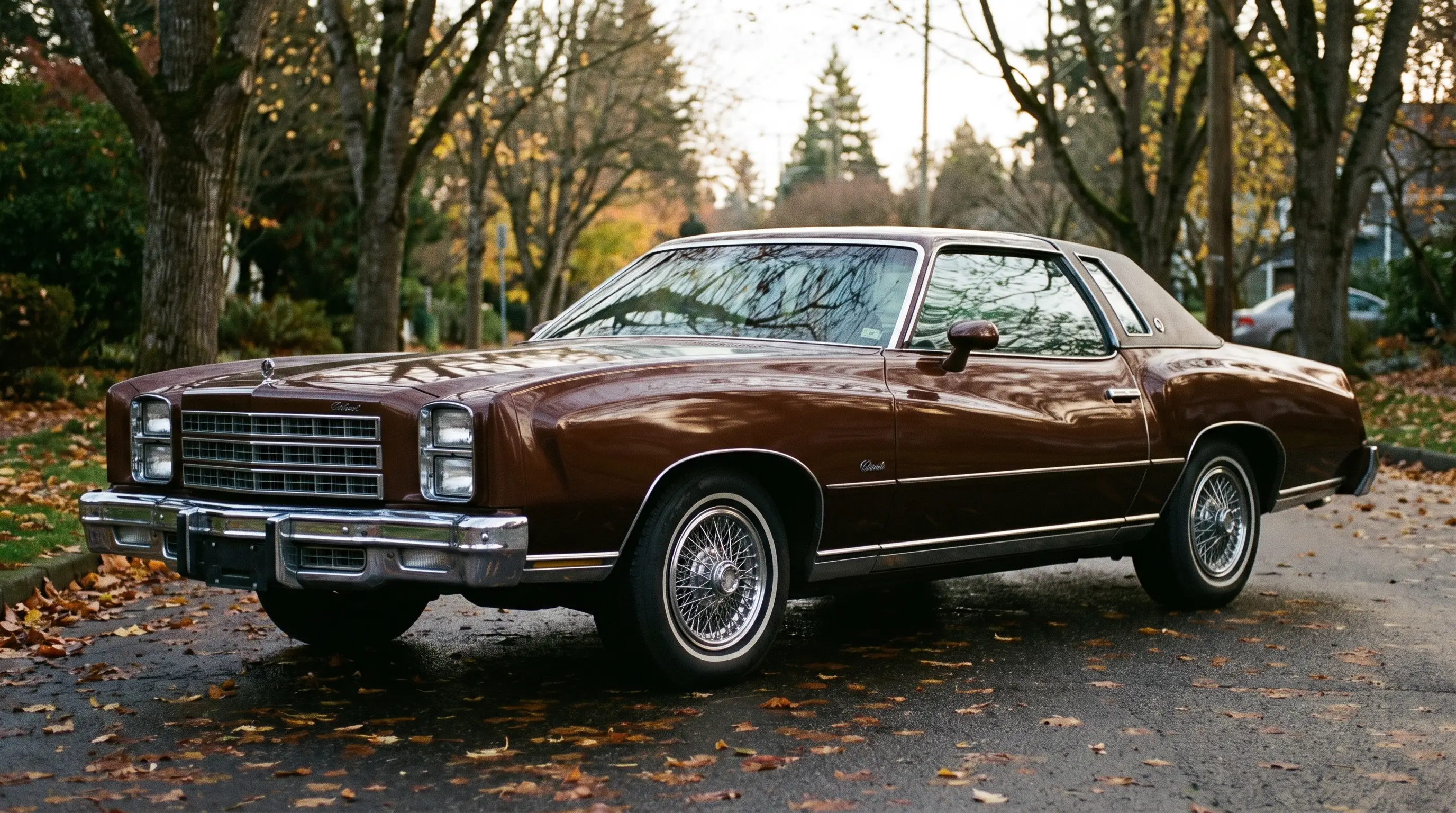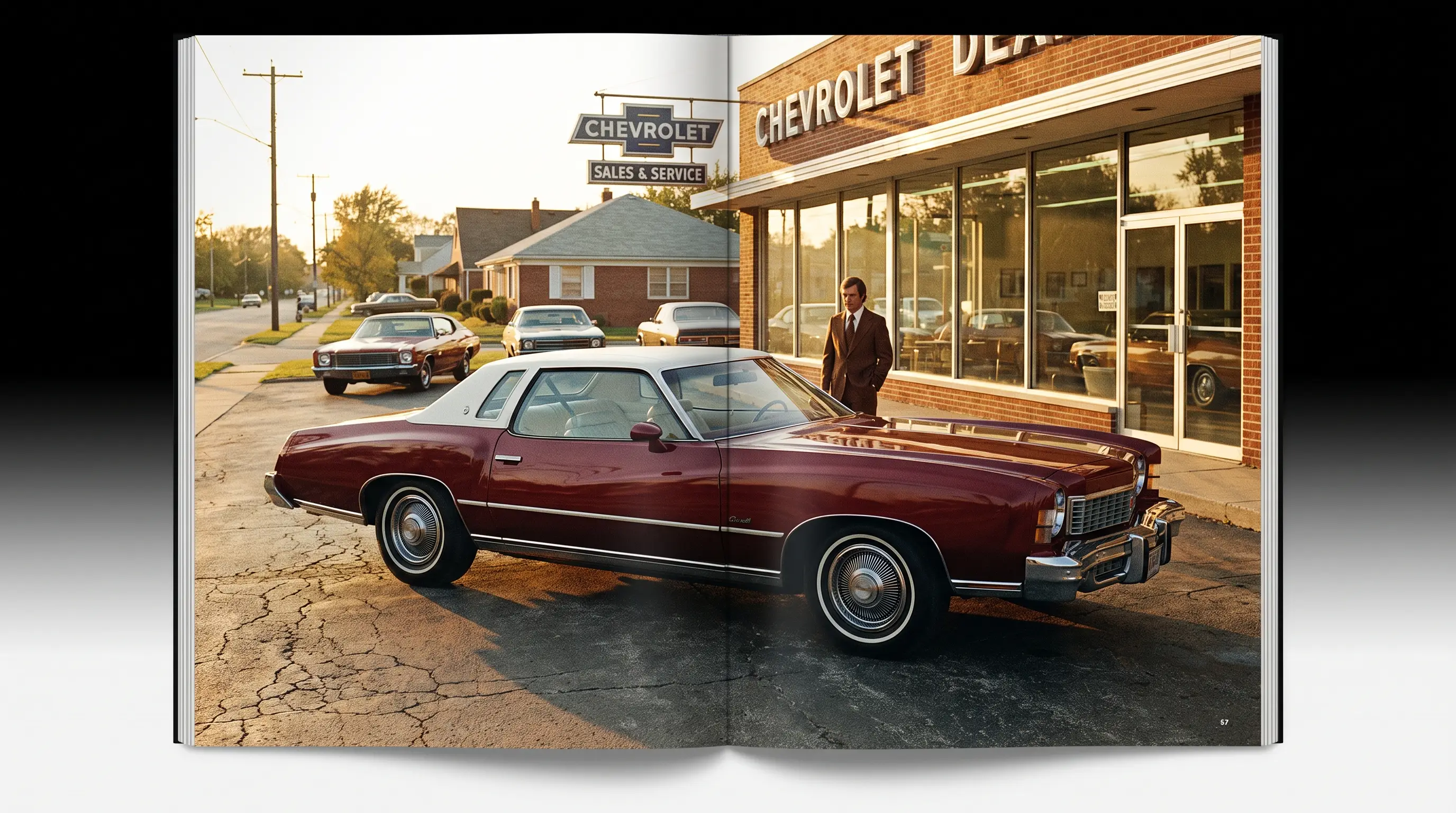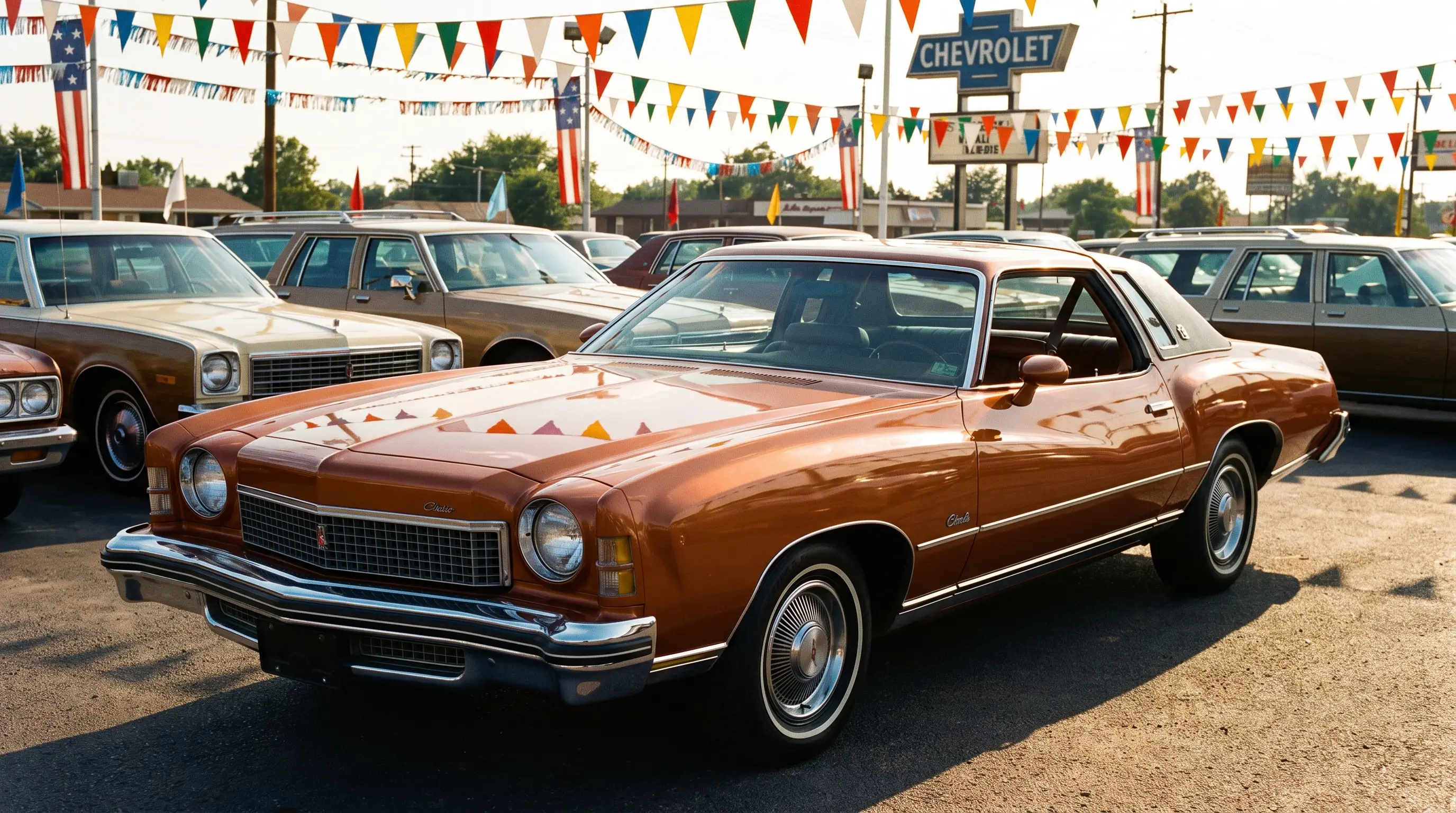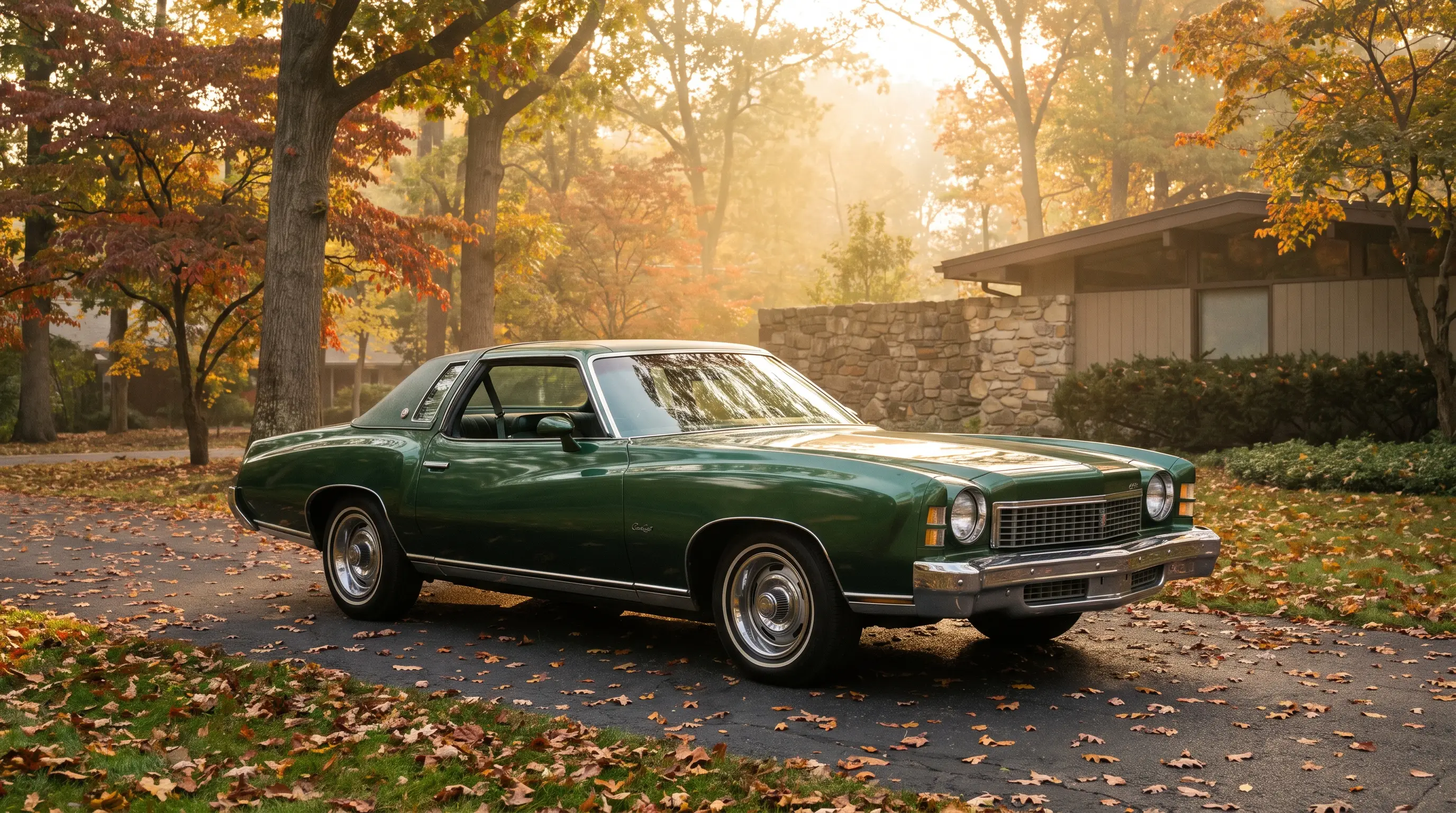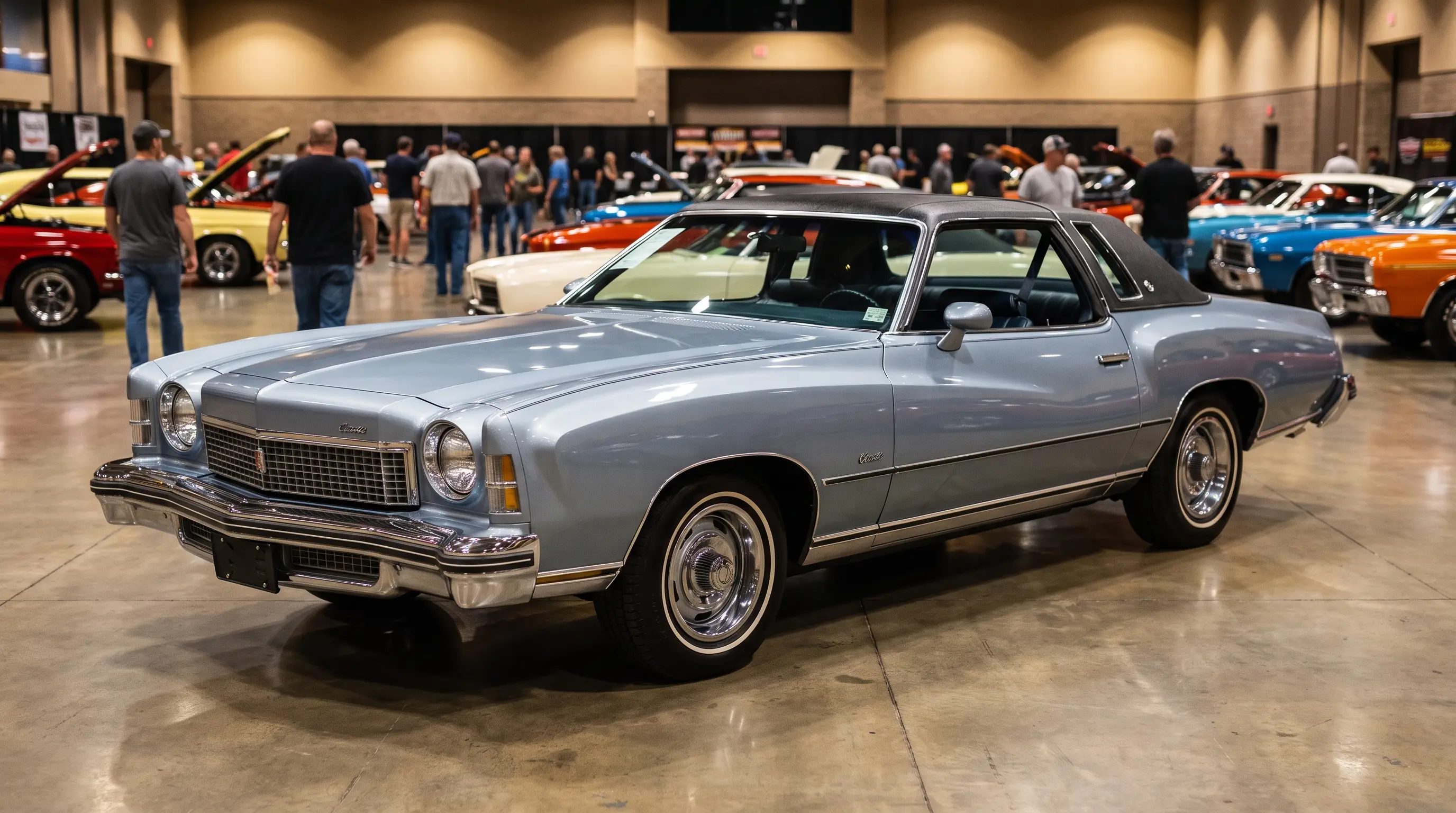
The 1973 Monte Carlo arrived as a fully redesigned car, and the redesign told you exactly where the American market was heading. Gone was the crisp long-hood coupe of 1970 to 1972. In its place stood a larger, softer, more ornamented machine built on General Motors' new Colonnade architecture. It was heavier, curvier, and unapologetically aimed at buyers who wanted the look of luxury without the price of a Cadillac. As a study in period taste, few cars document the early 1970s as precisely as this one.
To read the second-generation Monte Carlo correctly, you have to set aside muscle-era expectations. This was not a performance statement. It was a personal-luxury statement, and by that measure it succeeded on a scale Chevrolet had not planned for. The 1973 Monte Carlo helped define an entire class, and the numbers that followed proved the formula.
What "Colonnade" actually meant
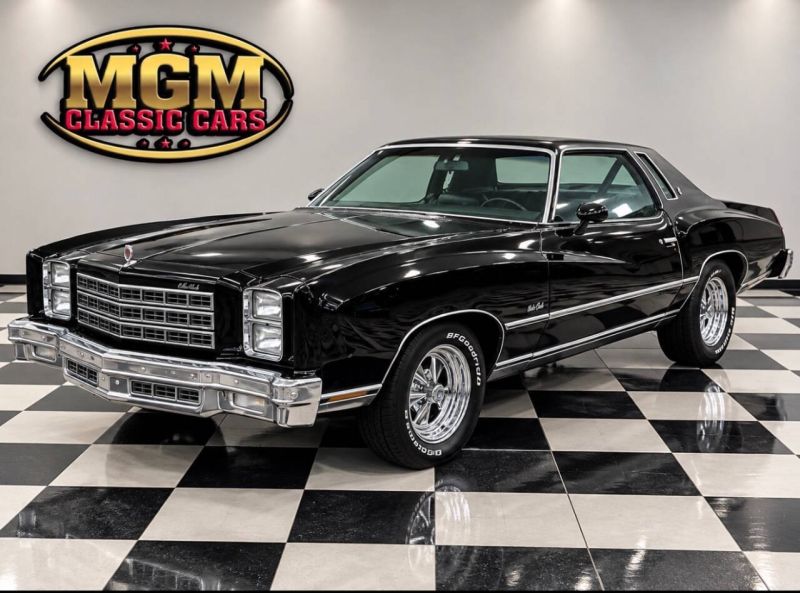
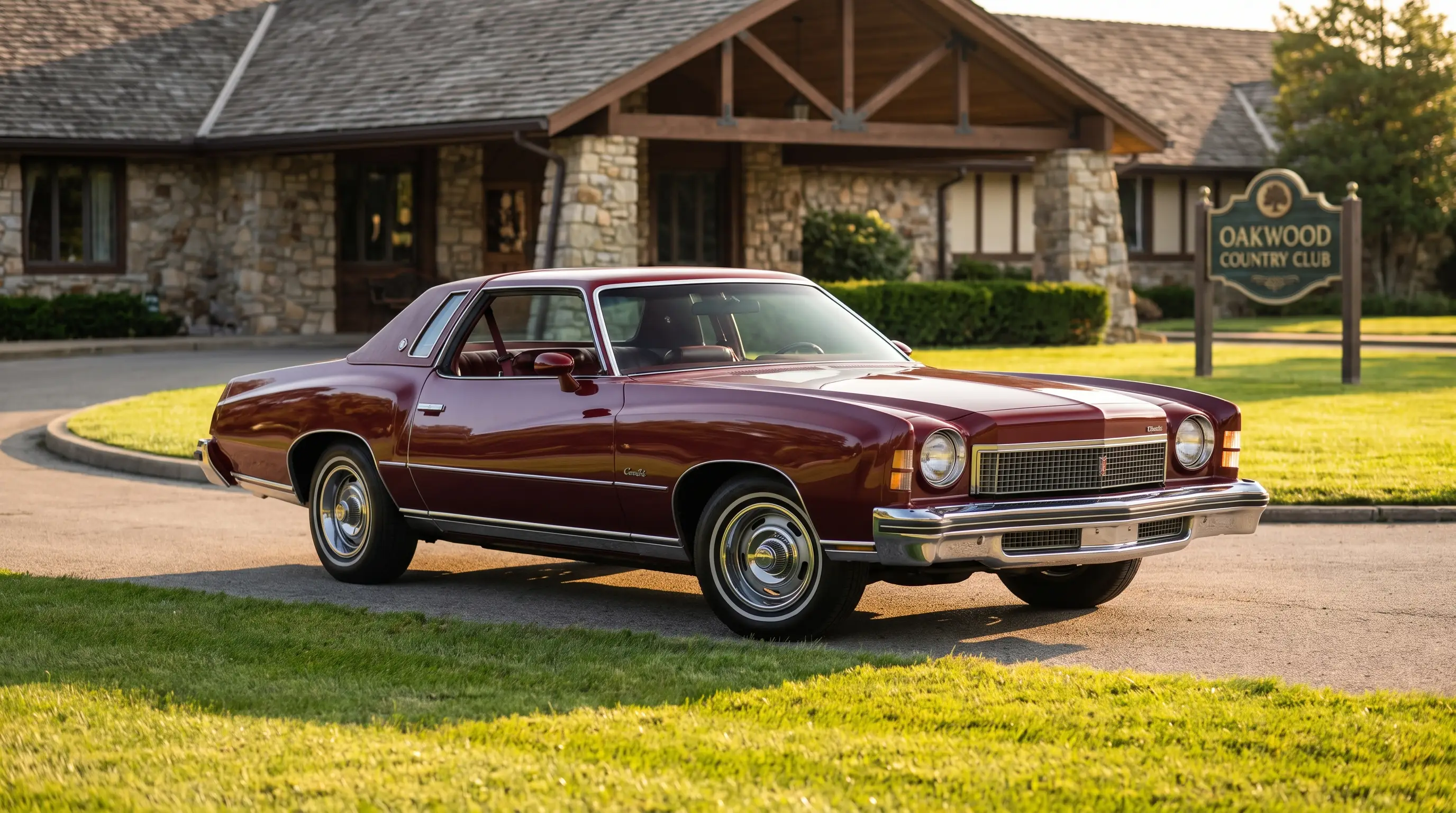
The term Colonnade described a specific body engineering solution GM adopted across its 1973 intermediate range. Rising federal rollover and crash standards, some of them proposed and some anticipated, pushed the industry away from the true pillarless hardtop. The Colonnade answer kept frameless door glass for an airy look but added a fixed B-pillar for structure. The result on the Monte Carlo was a formal roofline, large quarter windows, and a substantial, planted stance.
Chevrolet's stylists leaned into formality. The 1973 car wore a tall, upright grille, prominent bumpers meeting the new five-mile-per-hour front standard, and body sides with a pronounced curve that GM called the design's defining line. Optional features told the same story: a Landau vinyl roof, opera-style detailing over time, and swivel bucket seats that turned outward to ease entry. These were comfort and status cues, not sporting ones, and they were exactly what the intended owner wanted.
Engines as furnishings, not weapons
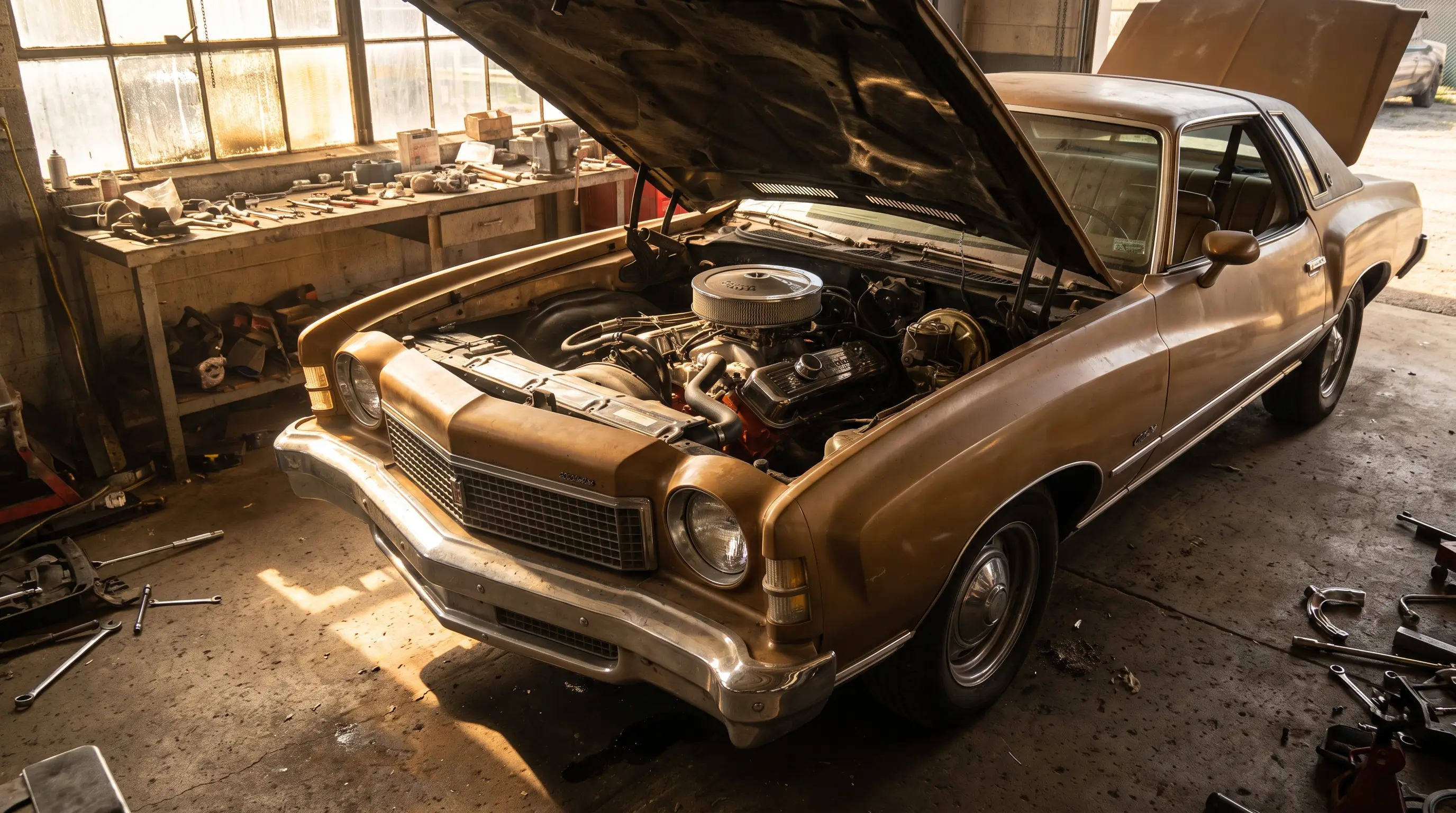
The powertrain catalog for the 1973 Monte Carlo reflected the emissions and insurance realities of the moment. A 350 cubic inch small-block served as the sensible standard V8. Buyers wanting more relaxed effort could order a 400 cubic inch engine, and the top option remained a 454 cubic inch big-block, though rated in the softer net figures of the new era rather than the gross numbers of 1970. Power was there for effortless cruising, not for the drag strip.
This is where careful period context matters. Comparing a 1973 454 to a 1970 454 on paper alone misleads. Compression ratios had fallen, emissions hardware had arrived, and the rating method itself had changed from gross to net. The 1973 Monte Carlo was engineered to glide, to isolate its occupants from road and engine, and to deliver the quiet, cushioned experience its class demanded. It did that job well. Anyone tracing how the nameplate moved from muscle intent to luxury intent will find the whole progression in the broader the chevrolet monte carlo story.
| Detail | Specification |
|---|---|
| Generation | Second generation, Colonnade platform |
| Model years | 1973 to 1977 |
| Body style | Two-door personal-luxury coupe |
| Standard V8 | 350 cu in small-block |
| Optional engines | 400 cu in, and 454 cu in through 1975 |
| Signature options | Landau roof, swivel bucket seats |
| Design theme | Formal roofline, curved body sides |
A sales phenomenon that reshaped Chevrolet
The commercial record is the strongest evidence of what the 1973 Monte Carlo represented. Chevrolet moved 233,689 units for the 1973 model year, a dramatic increase over the first-generation car, and volume kept climbing through the mid-1970s to a production record of 411,038 in 1977. Those figures put the Monte Carlo among the most successful personal-luxury coupes of its time and confirmed that Chevrolet had read the buyer correctly.
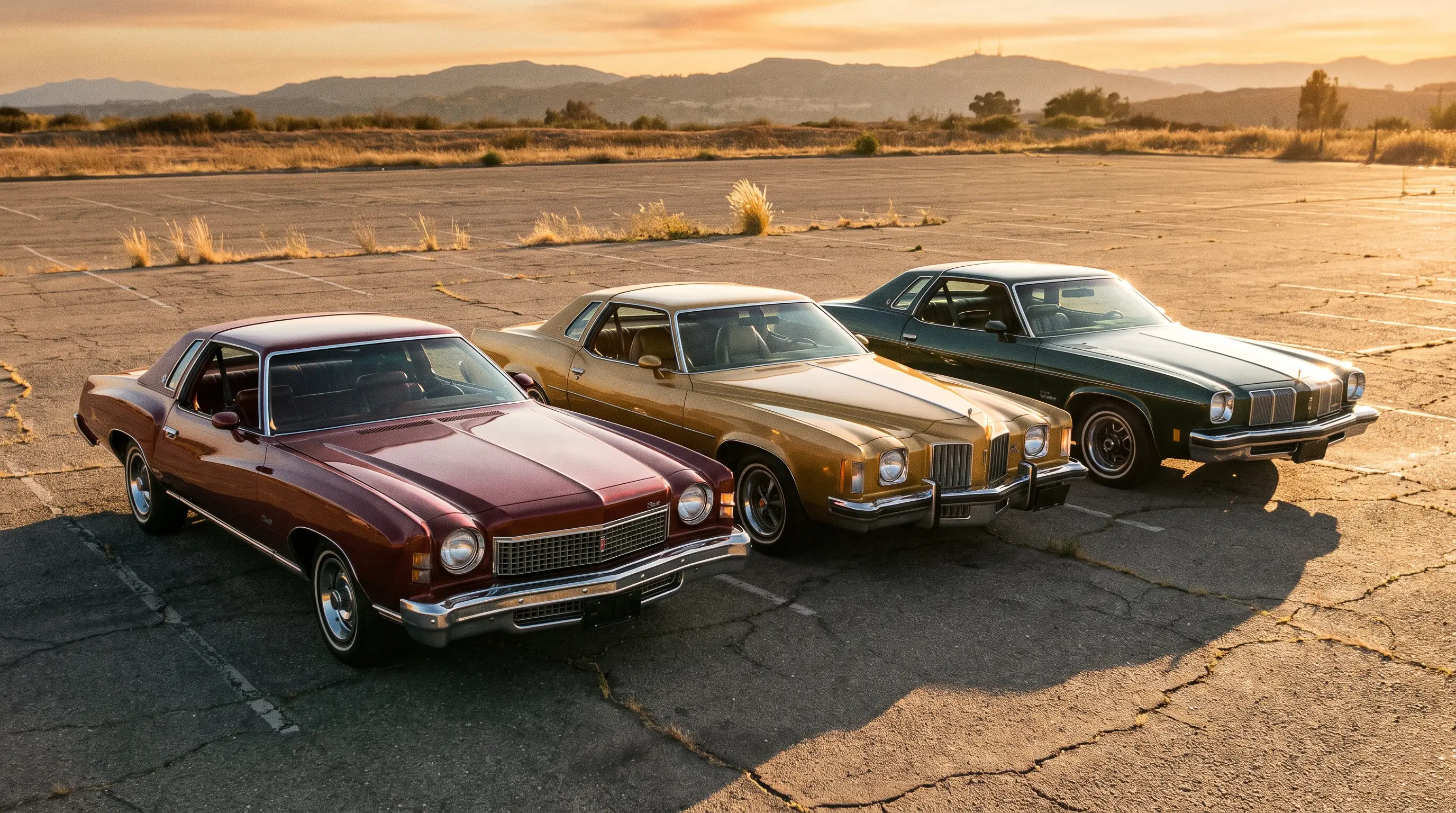
What makes the achievement notable is the competitive field. The Monte Carlo was answering the Pontiac Grand Prix within its own corporate family while facing outside rivals from Ford and Chrysler. It won on styling and on value, offering Cadillac-adjacent presence at a Chevrolet price. For collectors and historians, that positioning is the key to understanding why so many were built and why survivors today range from base coupes to heavily optioned Landau examples.
The scale of production also shaped the model's afterlife in ways worth noting. Because Chevrolet built the Colonnade Monte Carlo in such quantity, it entered the used market cheaply through the late 1970s and 1980s, which put it within reach of buyers who modified rather than preserved. That accessibility is why so many of these cars were customized rather than kept original, and why a genuinely unmolested survivor carries a documentary value out of proportion to its modest place in the collector hierarchy. Abundance in the showroom eventually produced scarcity of originality, a pattern common to high-volume cars of the era.
The evolution across five model years
The second-generation car did not stand still. Studying the 1973 through 1977 run year by year reveals how quickly regulation and taste reshaped a design. The 1973 model wore relatively restrained chrome bumpers integrated into the front. For 1974 the federal five-mile-per-hour standard extended to the rear, and the bumpers grew heavier and more prominent at both ends, altering the car's proportions in a way a careful eye can date at a glance.
Trim and ornamentation escalated as the years passed. Later cars in the run leaned harder into the formal-luxury vocabulary with more elaborate grilles, revised taillamps, and an expanding menu of vinyl-roof and interior options. The 1976 and 1977 cars represent the mature expression of the Colonnade idea, the point at which Chevrolet had refined the formula to its commercial peak just before the dramatic downsizing of 1978 changed the model entirely. For the collector, these distinctions are not trivia. They determine originality, and originality is the whole question.
Engine availability shifted too, tracking the tightening emissions rules of the mid-1970s. The big-block option that opened the generation did not survive the full run in the same form, and outputs across the range drifted downward as compression fell and control hardware multiplied. A survivor's drivetrain, therefore, is itself a dated document. Matching an engine to its correct model year is part of reading one of these cars honestly, and it separates a preserved original from a car that has been quietly updated over the decades.
Reading a survivor as an artifact
Approached as a historical object, a 1973 to 1977 Monte Carlo rewards close inspection. Original interiors document period material choices, from the crushed-look velour to the swivel seat mechanisms. Factory paint and vinyl-roof combinations record the color culture of the decade, which favored earth tones, deep reds, and metallics that have since become shorthand for the era. An unmolested example preserves data that restored or modified cars lose.
Documentation elevates any of these cars. Build sheets, original literature, and dealer paperwork transform a common coupe into a legible record of how it was ordered and equipped. Because production was enormous, condition and originality, rather than rarity, usually determine which examples matter most to serious collectors. A well-kept, correct car with its history intact tells a fuller story than a repainted one with unknown provenance.
There is a further layer that rewards the patient student. The optional equipment on these cars documents the aspirations of the middle-class buyer of the moment with unusual precision. A cornering-lamp, a power window switch, an eight-track player, a set of swivel buckets in a period velour: each option was a small statement of status, and the combination on any given survivor reads almost like a fingerprint of its first owner. To a researcher, an original build is not just a car. It is a preserved consumer choice from a specific year, complete and legible.
This is why originality carries such weight in serious circles even for a car built in the hundreds of thousands. A restored example, however beautiful, represents a modern interpretation of how the car should look. An unrestored survivor represents how it actually was. Both have value, but only one is primary evidence. For the historian, the unrestored Colonnade Monte Carlo is the more important object, precisely because it cannot be reproduced once it is gone.
"Judge the 1973 Monte Carlo against its own intentions and it is faultless. It set out to deliver formal luxury at a mainstream price, and the sales ledger shows how completely the public agreed."
- Sarah Whitfield
The Colonnade car in the longer arc
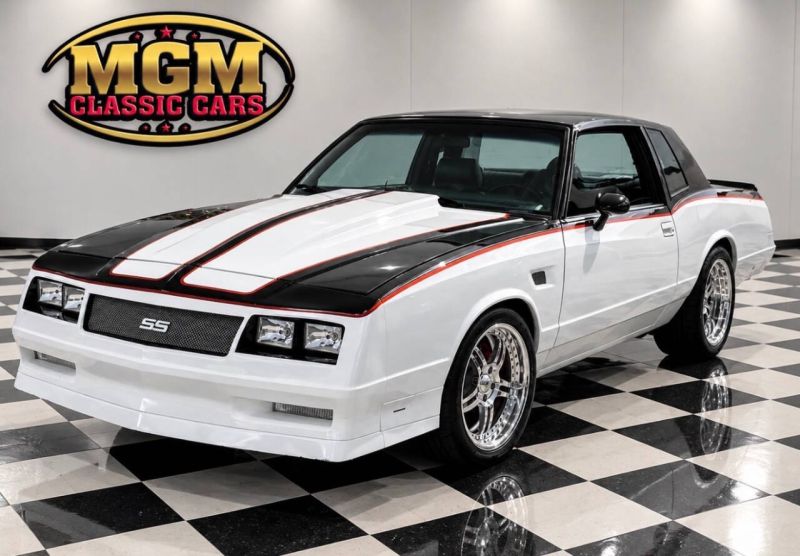
The second-generation Monte Carlo occupies an important seam in the model's biography. It moved the name decisively away from the lean early-1970s coupe and toward the padded, formal idiom that would carry through the downsized 1978 redesign and into the G-body years. Understanding the Colonnade car explains why later Monte Carlos looked and felt as they did, and why the nameplate eventually became a canvas for customizers who prized its long hood and generous proportions. That later evolution, from showroom cruiser to street icon, is the next chapter in the story.
For anyone assembling a collection or simply searching for an honest driver, the 1973 to 1977 range offers accessibility that rarer models cannot. Values remain reasonable relative to the muscle-era first generation, and the supply of survivors means a patient buyer can hold out for originality. Browsing classic Monte Carlos on the market shows how widely condition and equipment spread the field, from projects to preserved originals.
Why the 1973 car still matters
The 1973 Monte Carlo is often overlooked by enthusiasts chasing horsepower, and that oversight is a mistake for anyone interested in how American cars actually evolved. This was the model that proved the personal-luxury coupe could sell in enormous numbers to ordinary buyers. It captured a precise moment when comfort, status, and styling mattered more than acceleration, and it did so with a coherence that makes it easy to read decades later.
Its quiet importance is also a matter of numbers that reward a second look. A model that sells in the hundreds of thousands and then survives in far smaller original condition tells you something about how ordinary people actually used their cars. They drove them, customized them, and eventually let them go. The few that escaped that cycle intact now carry a weight their modest sticker price never suggested, and that quiet reversal is part of what makes the Colonnade Monte Carlo rewarding to study.
As an artifact of its decade, the Colonnade Monte Carlo has few equals. It documents changing safety regulation through its structure, changing emissions policy through its engines, and changing taste through its ornamentation. A thoughtful collector does not buy one expecting a muscle car. He buys one because it preserves, more honestly than most survivors, exactly what the American middle-market wanted in 1973.