
Federal regulation shaped more of the classic Monte Carlo's appearance than most casual observers realize, and the Monte Carlo 1974 1975 bumper era changes are the clearest documented example in the whole Colonnade run. What looks like a styling decision in period photographs was, according to the factory record, a direct compliance response to new government standards that hit the entire American auto industry within the same two-year window.
The regulation that rewrote the front end
Federal bumper impact standards phased in beginning with the 1973 model year and tightened further for 1974 and 1975, requiring bumpers capable of absorbing a 5 mile per hour impact without damage to safety equipment, eventually extending to full vehicle damage protection at that speed for the front bumper specifically. Manufacturers across the industry responded with heavier, more substantial bumper structures, often mounted on hydraulic or spring-loaded shock absorbers designed to compress and rebound during minor impacts.
The Monte Carlo's factory documentation from this period shows engineering resources reallocated specifically to bumper reinforcement between the 1973 and 1975 model years, a shift that shows up clearly in period parts diagrams and shop manuals. The car's front and rear fascias grew visibly, integrating impact-absorbing structure that the original 1973 Colonnade design had not been engineered around from the start.
How the styling absorbed the mandate
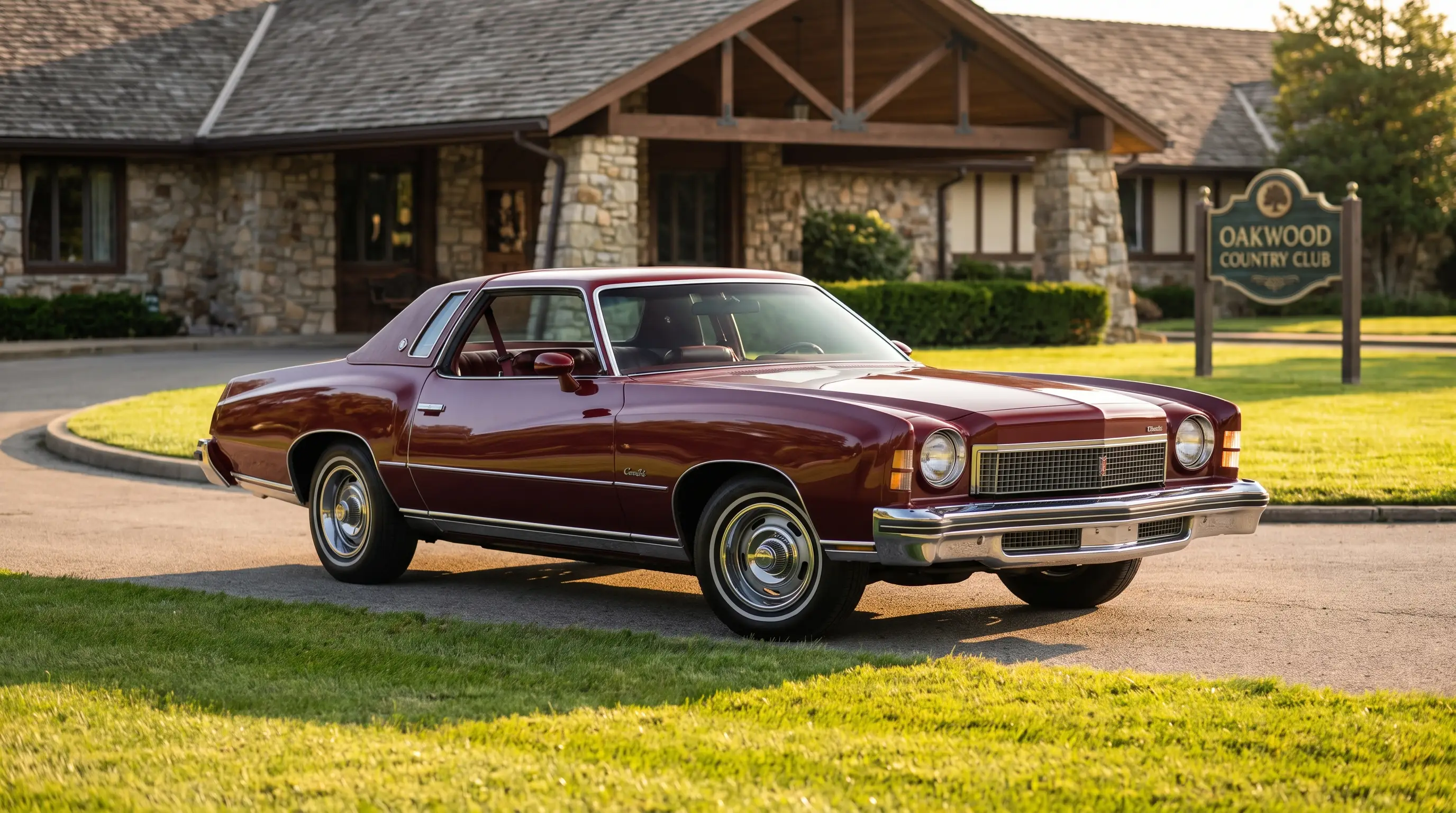
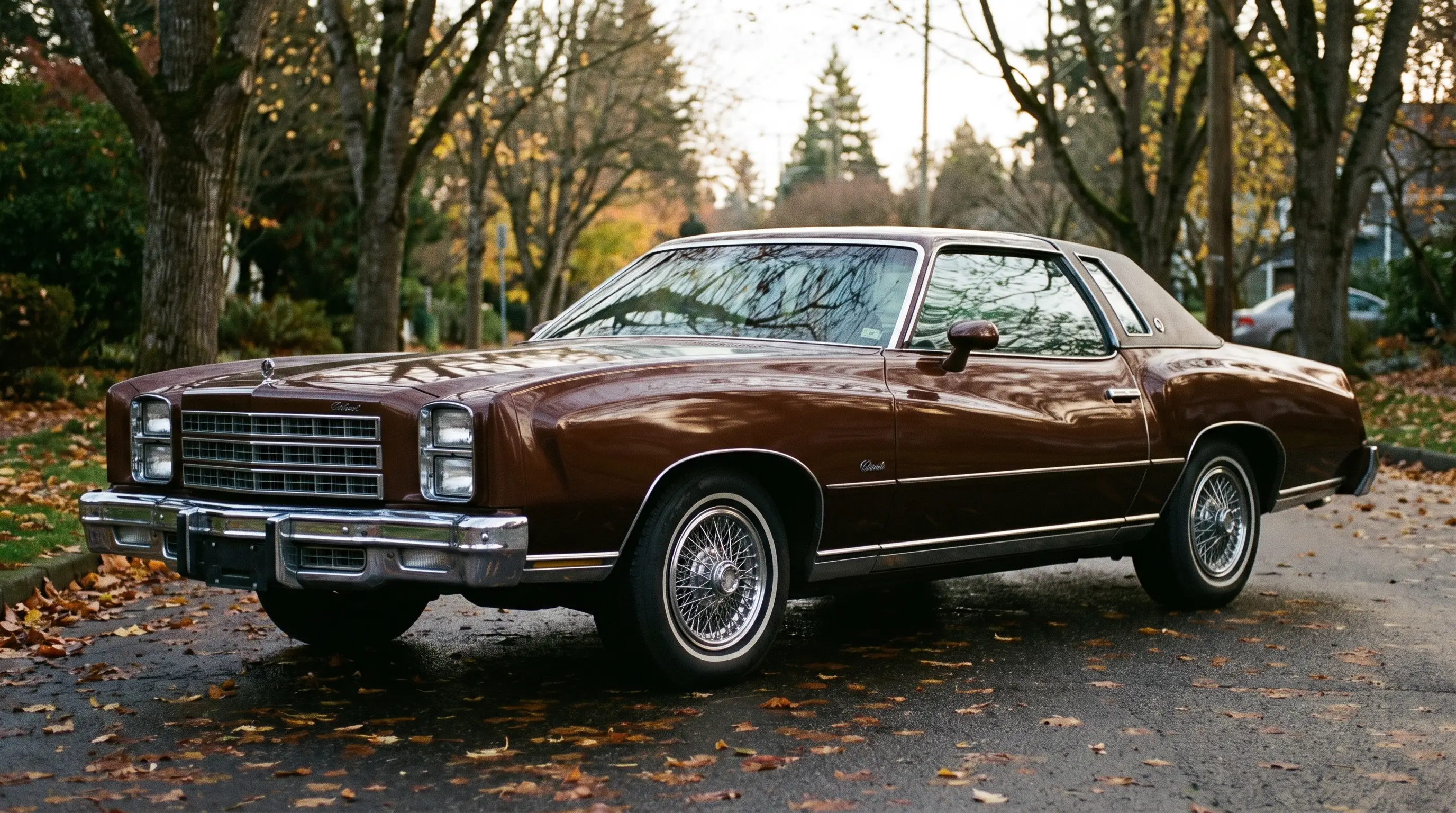
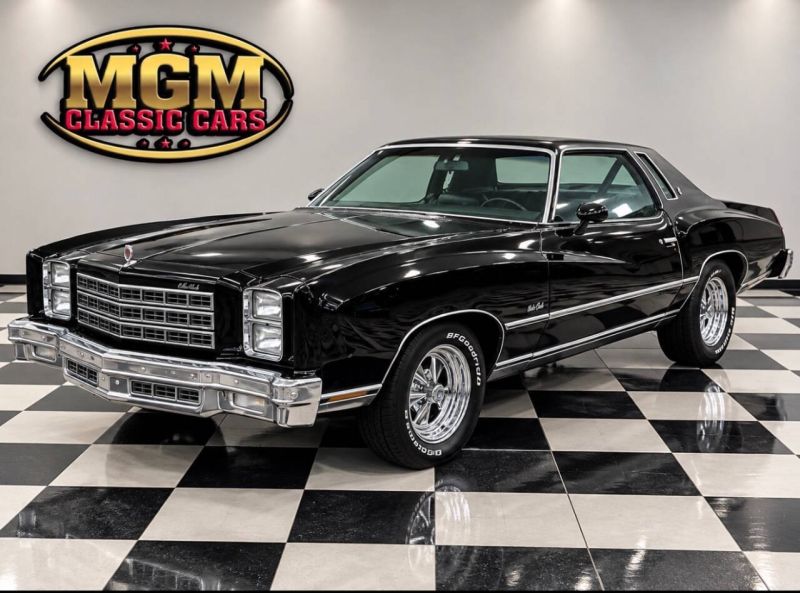
Some manufacturers handled the new bumper requirements poorly, bolting oversized chrome structures onto existing body designs that were clearly never meant to carry them, and the mismatch is obvious in period photographs of several competing nameplates. Chevrolet's design team took a different approach with the Monte Carlo, integrating the required bumper reinforcement into a revised front fascia that extended the car's existing formal, upright presence rather than fighting against it. The result reads less as a bolt-on compliance measure and more as a deliberate evolution of the original 1973 design language.
That does not mean the changes were invisible. Compare a 1973 Monte Carlo directly against a 1975 example and the added mass at both ends is unmistakable, along with a subtly different grille treatment that accommodated the reinforced structure underneath. Collectors and restorers who know the model year differences at a glance are usually reading exactly this detail first.
Weight, handling, and the tradeoffs nobody advertised
The added bumper structure came with a genuine weight penalty, and period specifications for 1974 and 1975 Monte Carlos reflect a measurable increase over the original 1973 curb weight, generally cited in the range of roughly 300 to 400 pounds depending on engine and options. Chevrolet did not advertise this tradeoff prominently in period marketing, understandably, since heavier bumpers were a regulatory obligation rather than a selling point. But the added mass had real consequences for acceleration and fuel economy at a moment when the industry was also facing its first serious fuel crisis, making the timing of these regulatory changes particularly difficult for manufacturers navigating multiple pressures at once.
For our 1973 Monte Carlo retrospective, understanding the original design intent makes the 1974 and 1975 revisions much easier to evaluate fairly. These were not stylistic missteps. They were compliance-driven adjustments layered onto a design that had not been built with these specific mandates in mind from day one.
"The factory drawings do not leave much room for debate here. Engineers were told to make the bumpers survive a five mile per hour hit, and everything downstream of that mandate followed from the same starting point."
- Tom Ramirez
Reading the two model years apart from each other
Even within this two-year window, 1974 and 1975 are not identical, and factory parts diagrams show incremental refinements to the bumper mounting hardware between the two model years as Chevrolet's engineers continued adjusting the shock-absorbing structure based on early field experience. A 1974 example and a 1975 example sitting side by side reveal small differences in bumper guard placement and rubber-faced trim inserts that most casual observers would never clock, but that a restorer working from factory parts books needs to get right to keep a car correct for its specific model year.
This kind of granular documentation matters more than it might seem for a car in this specific window of production. Reproduction bumper components on the market today are not always accurate to a specific model year, and a restoration built from the wrong year's parts catalog can leave a car looking almost right but subtly off to anyone who actually knows the difference between the two years' factory specifications.
Where the story goes next
The bumper story does not end with 1975. Chevrolet kept refining the approach through the final Colonnade years before the Monte Carlo's 1978 downsizing changed the equation entirely, and a related story covers how the last two Colonnade model years handled the same regulatory pressures with a further matured design. Collectors researching this specific window of the model's history should treat 1974 and 1975 as a documented transitional period, not a random styling drift, and shoppers looking at Monte Carlos for sale now from these model years should factor in that the added structure makes these cars slightly heavier and, in many enthusiasts' eyes, slightly more visually substantial than the original 1973 launch cars.
None of this should discourage anyone specifically hunting a 1974 or 1975 model over an earlier 1973 launch car. Plenty of collectors actually prefer the slightly heavier presence these bumpers gave the front and rear fascias, viewing the added mass as a natural maturation of the original design rather than a compromise forced by Washington. Whichever side of that preference a buyer falls on, understanding the regulatory history behind the change makes the whole model year's styling decisions make sense in a way that judging the car purely against the earlier launch year never quite explains on its own.
It is worth remembering that this same federal mandate reshaped nearly every American car sold in these two model years, not just the Monte Carlo, which makes the 1974-1975 window a genuinely useful reference point for understanding the wider industry's design language during this specific stretch of the decade. Manufacturers that handled the transition gracefully, and the Monte Carlo is a reasonable example of that, tend to be remembered more fondly today than nameplates whose bumper solutions look visibly bolted on in period photographs. That reputation, earned through careful integration rather than a rushed compliance fix, is part of why this specific two-year window still gets discussed by people who actually study the model's full production run rather than treating it as an undifferentiated middle chapter between 1973 and 1976.
Owners restoring one of these specific model years today are, in effect, preserving a documented piece of how the American auto industry adapted to a genuinely disruptive regulatory shift in real time. That context turns what could be dismissed as an awkward transitional design into something worth understanding on its own terms, distinct from both the original 1973 launch cars and the later Colonnade years that followed once the bumper mandate had fully settled into the industry's design language.