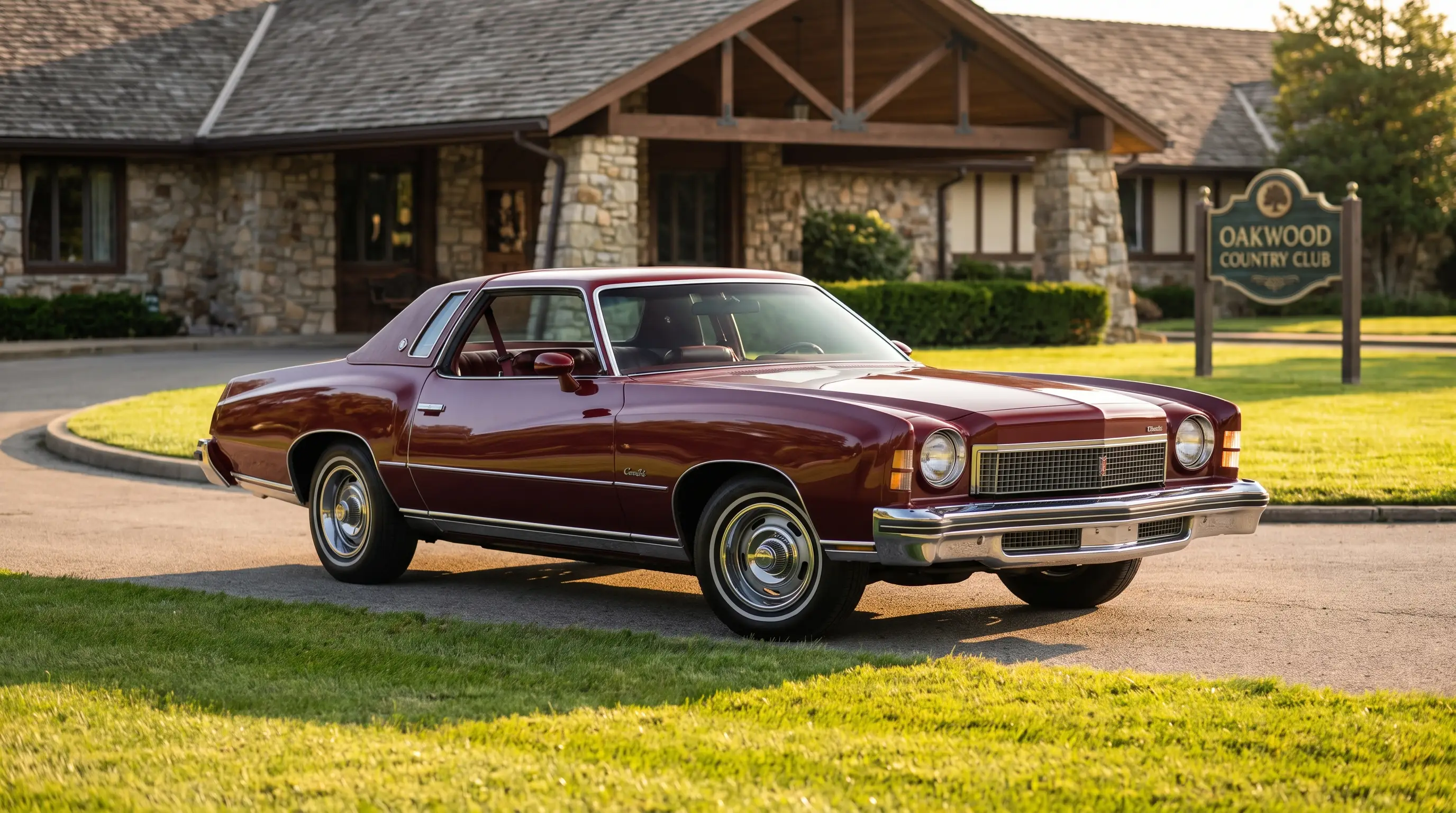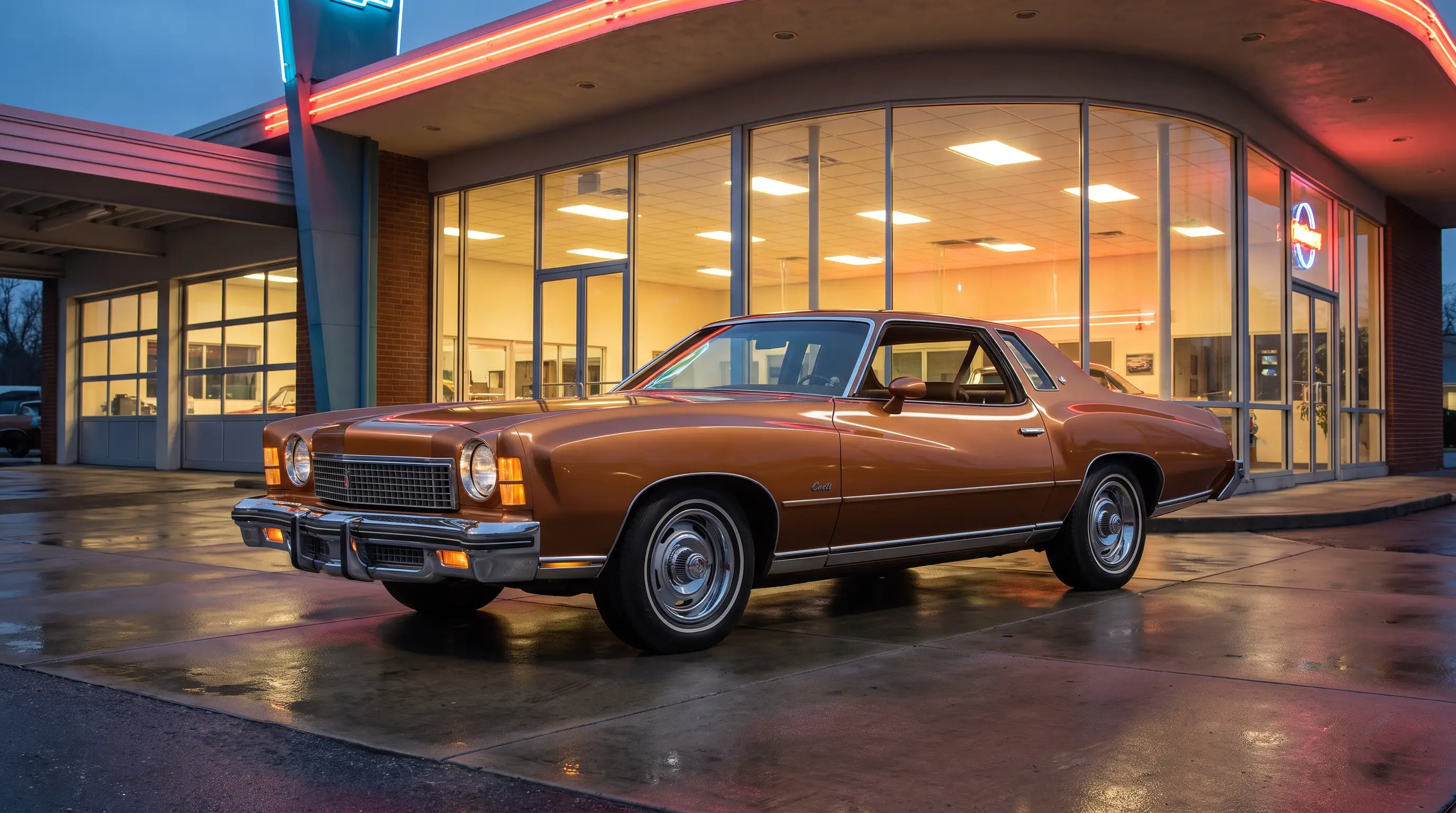
There is a fellow at our club's spring show who will not shut up about his Landau roof, and after enough years around this hobby I have come around to admitting he is right to brag. The Monte Carlo 1973 Landau luxury trim was not just a vinyl top option. It was Chevrolet's declaration that a Chevy could compete for the same buyer a Cadillac or a Lincoln was chasing, and the details back that up.
What Landau actually meant on the order sheet
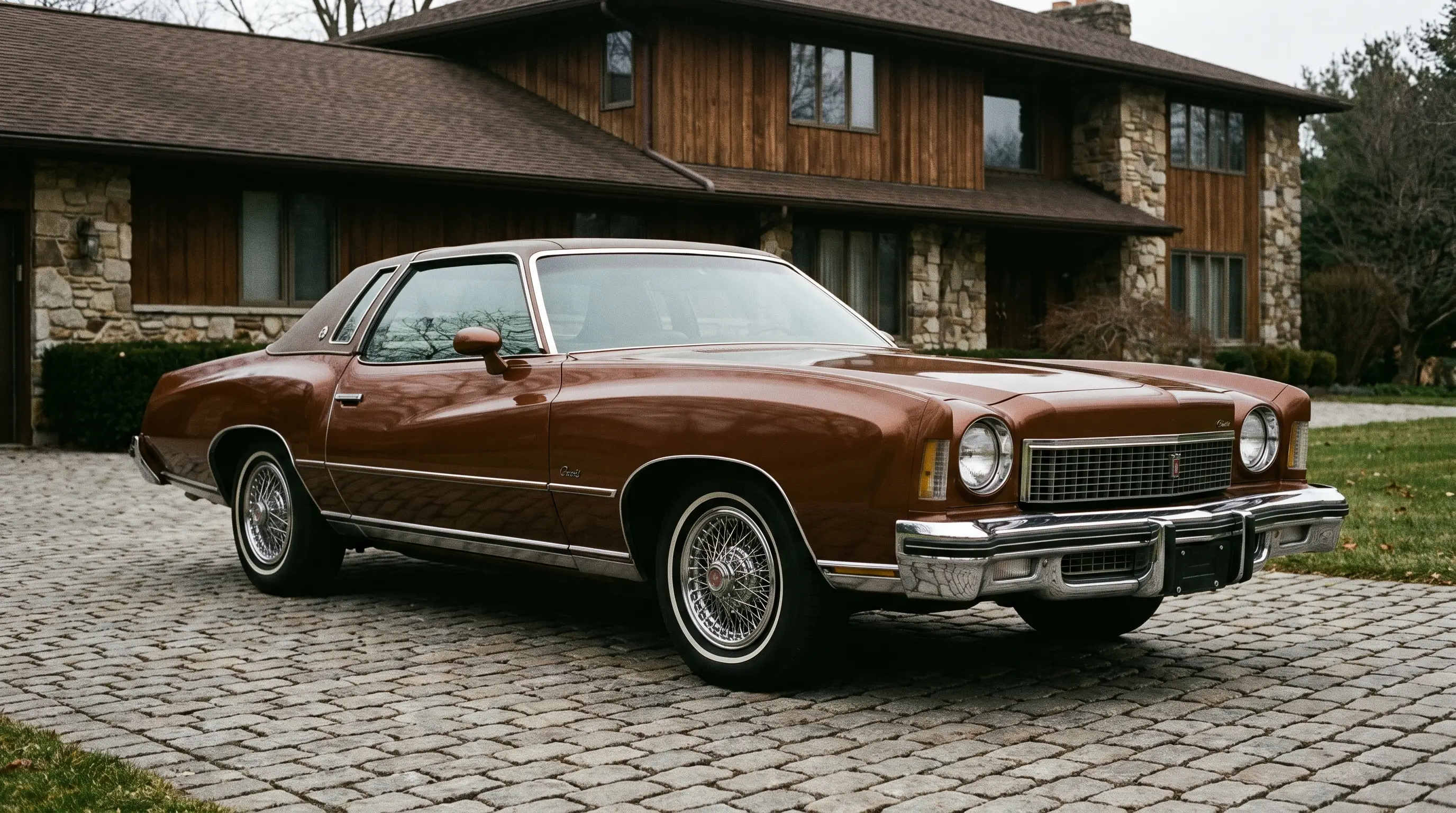
The Landau package on the 1973 Monte Carlo centered on a padded, textured vinyl roof covering with a distinct rear-quarter treatment, styled to echo the coachbuilt landau carriages the name originally referenced. That is not marketing fluff invented decades later; it is genuinely how the trim tier was positioned against rivals, and Chevrolet backed it with real content rather than just a vinyl top slapped on a base car. Interior appointments stepped up with the package too: richer upholstery choices, additional sound insulation, and trim details that separated a Landau car from a standard Monte Carlo the moment you opened a door.
I have heard newer folks in the hobby dismiss vinyl roofs as a period gimmick that has not aged well, and on plenty of other cars from the era that criticism is fair. On the 1973 Monte Carlo, the Landau roof was tied directly into the formal roofline the Colonnade redesign introduced, and the two elements were clearly designed together rather than one being bolted onto the other as an afterthought.
Peak personal luxury, and why 1973 was the moment
Personal luxury as a category hit a genuine cultural peak in the early-to-mid 1970s, and the Monte Carlo Landau sat right at the center of it. Buyers in this segment wanted a car that read as substantial and comfortable without the price tag or the ostentation of a full luxury brand, and Chevrolet built the Landau trim specifically to hit that note. Club members who grew up around these cars remember them less as transportation and more as a statement a family made about arriving somewhere financially comfortable, even if the underlying mechanicals were shared with far more modest Chevrolet products.
That duality, premium presentation over an accessible platform, is what made the segment so profitable for manufacturers and so appealing to buyers who wanted status without the full luxury car commitment. The Monte Carlo Landau captured that trade exactly.
The color and material choices that set the mood
Talk to enough long-time owners and the conversation about the Landau eventually turns to color, because the palette Chevrolet offered on this trim leaned deliberately warm and formal: deep burgundies, chocolate browns, and a forest green that hardly anyone specs on a modern vehicle now. Paired with a Landau roof in a complementary or contrasting texture, usually a subtle basketweave or pebble-grain vinyl, the overall effect was closer to a formal suit than a sport coat. That was entirely the point. Chevrolet was selling an idea of arrival and permanence, not speed, and the Landau's color program reinforced that at every touchpoint from the exterior paint down to the dash trim inserts.
Interior upholstery on Landau-equipped cars frequently stepped up to houndstooth or velour cloth options that were not available, or were far less common, on base trim Monte Carlos that same year. Members in our club who have restored these interiors from scratch will tell you sourcing period-correct material today is one of the harder parts of the job, since a lot of the specific weave patterns Chevrolet used were unique to this exact trim level and production run.
What survives, and what to look for
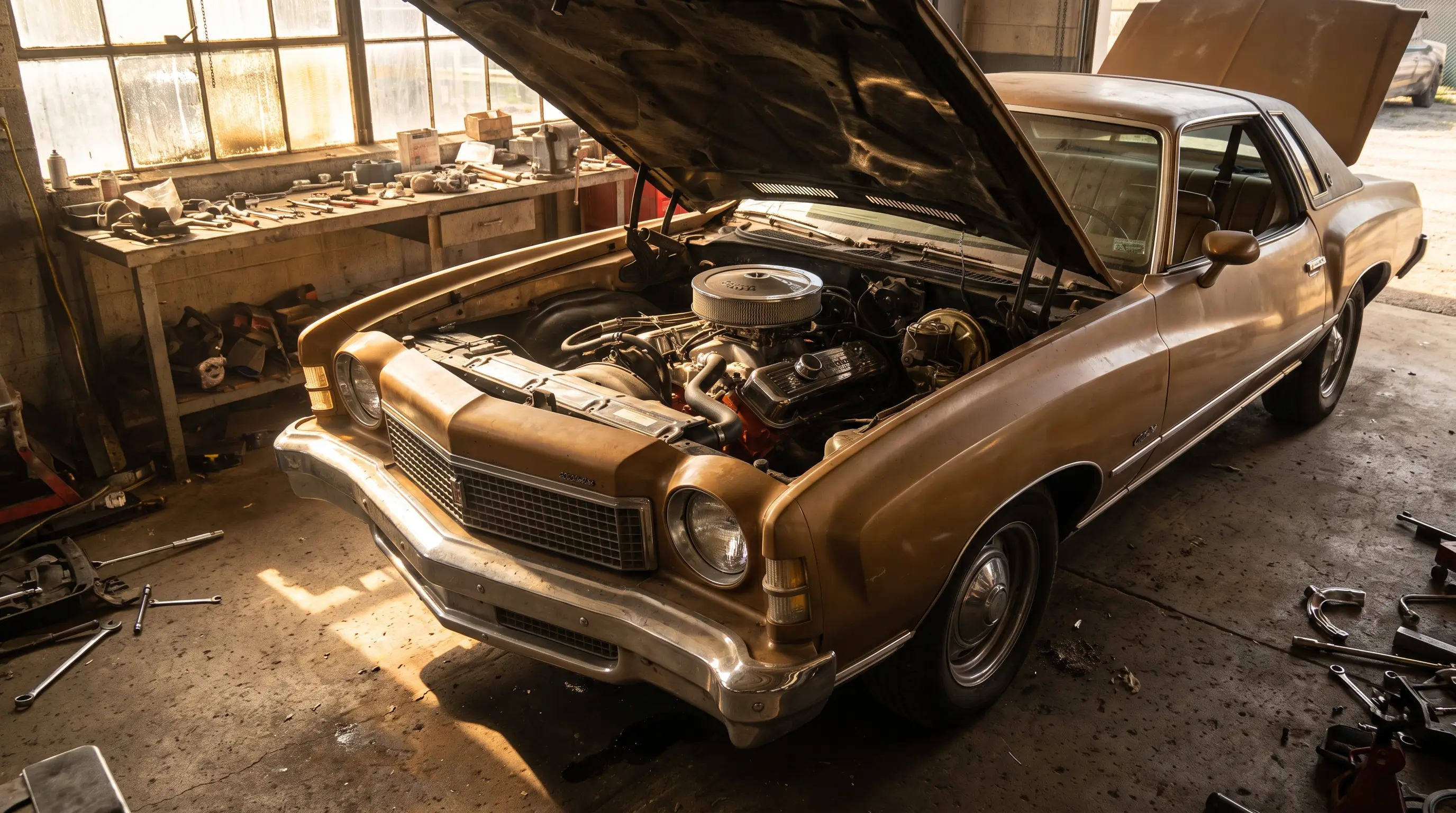
Original Landau roofs are one of the first things to go on a neglected 1973 Monte Carlo. Trapped moisture under aging vinyl rots the metal underneath if nobody catches it early, and a lot of cars in club circles carry hidden repairs under a fresh vinyl top that look fine until you know exactly where to press. Anyone shopping one of these cars should ask directly whether the roof structure underneath has ever been repaired, because that answer matters more than whether the vinyl itself looks new.
For the background on how the whole Colonnade redesign came together, the Landau trim makes a lot more sense once you understand what Chevrolet was trying to accomplish structurally that same year. It was not a styling exercise happening in isolation. It was one piece of a coordinated push to sell the same basic car to a much wider range of buyers.
"Every club has a guy with a Landau top who thinks he is driving a Cadillac. Half the time, for the price he paid, he practically is."
- Wayne Coburn
Why members still chase this exact trim
Ask around any Monte Carlo club gathering and the Landau cars draw a specific kind of attention, distinct from the SS or the big-block Colonnade cars that get the horsepower conversation started. These are the cars people bring their parents to see, because their parents remember exactly what one looked like parked in a driveway in 1974. That emotional pull has kept demand for clean, original Landau examples steady even as broader market attention drifts toward the performance variants.
If you are hunting for one of these yourself, there is also engine history worth understanding, and worth a look too is how the big-block option played into the same-year lineup. Or start simpler and shop classic Monte Carlo listings to see how many genuine Landau examples are actually still on the market compared to how many have lost their original roof entirely.
What keeps this specific trim relevant beyond one club's affection for it is that it represents a wider moment in American car culture that has genuinely passed. Buyers today are not going to see a mainstream domestic manufacturer build a mid-range coupe dressed up to feel this formal ever again, not with vinyl roofs, not with this particular blend of restraint and presentation. That makes an honest, well-kept 1973 Landau something closer to a preserved cultural artifact than a simple used car, and it is exactly why the members who show up to our meets with one still get the attention they do, year after year, long after the initial novelty of any single car in the parking lot would normally wear off.
I have watched younger visitors to our shows, people who never lived through the era, stop cold in front of a well-kept Landau and ask questions their grandparents could have answered without thinking twice. That generational gap in recognition is itself part of why the trim endures as a talking point. It is not just a car anymore. It is a physical explanation of a mindset, a moment when comfort and presentation genuinely mattered more to a huge swath of American buyers than raw performance did, and there are not many surviving objects that explain that mindset as clearly as a Landau-trimmed Monte Carlo parked in good light.