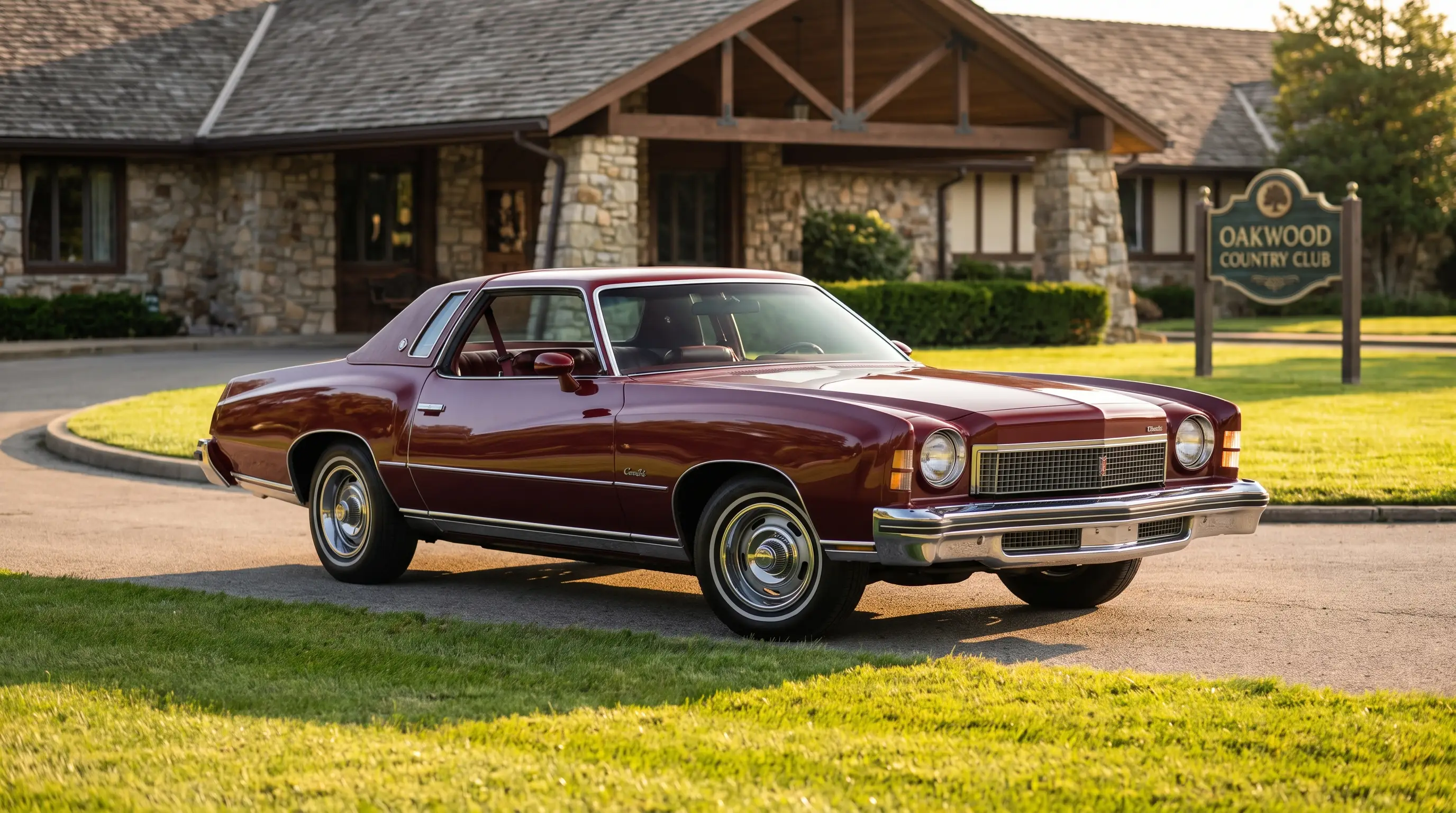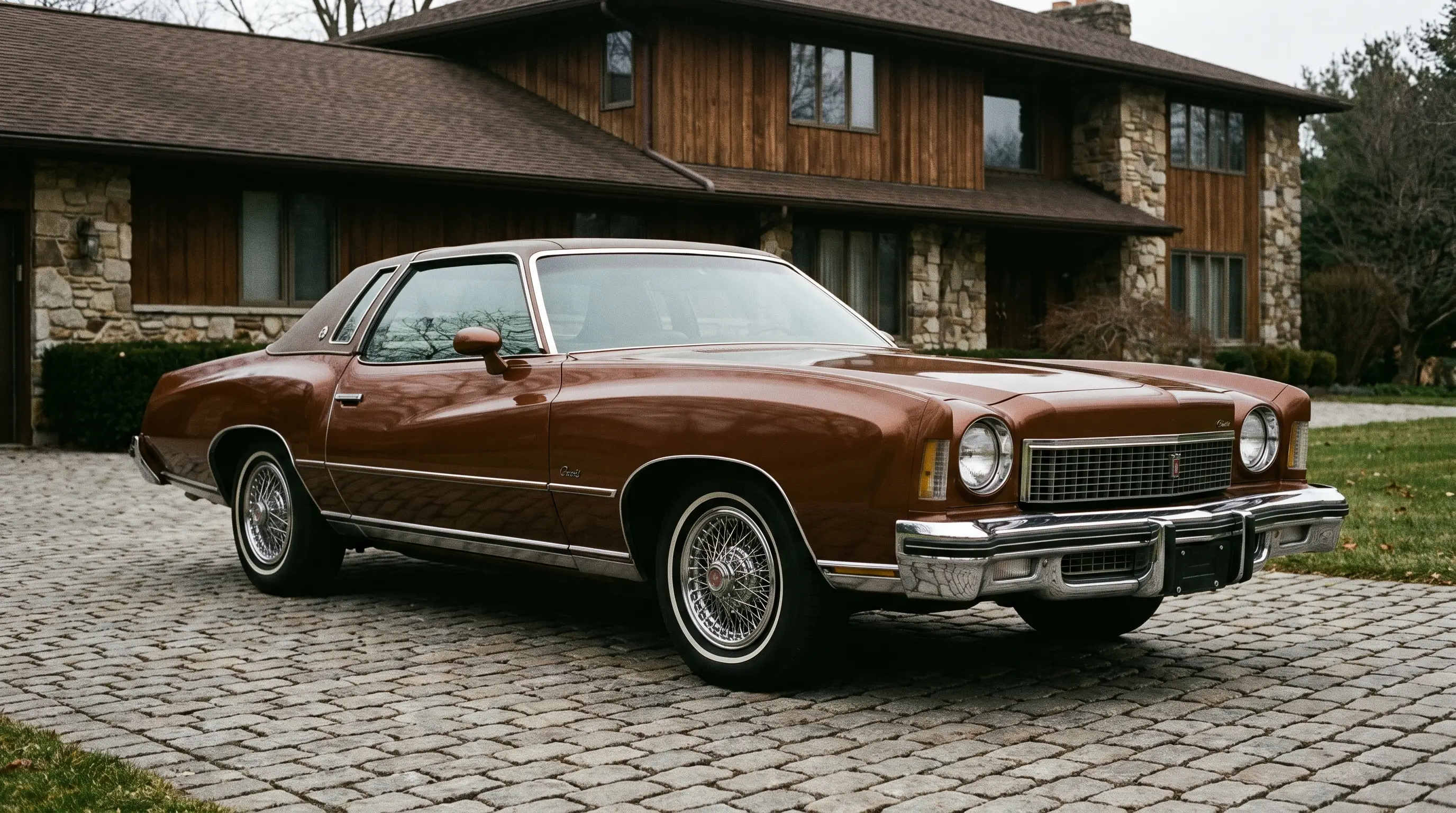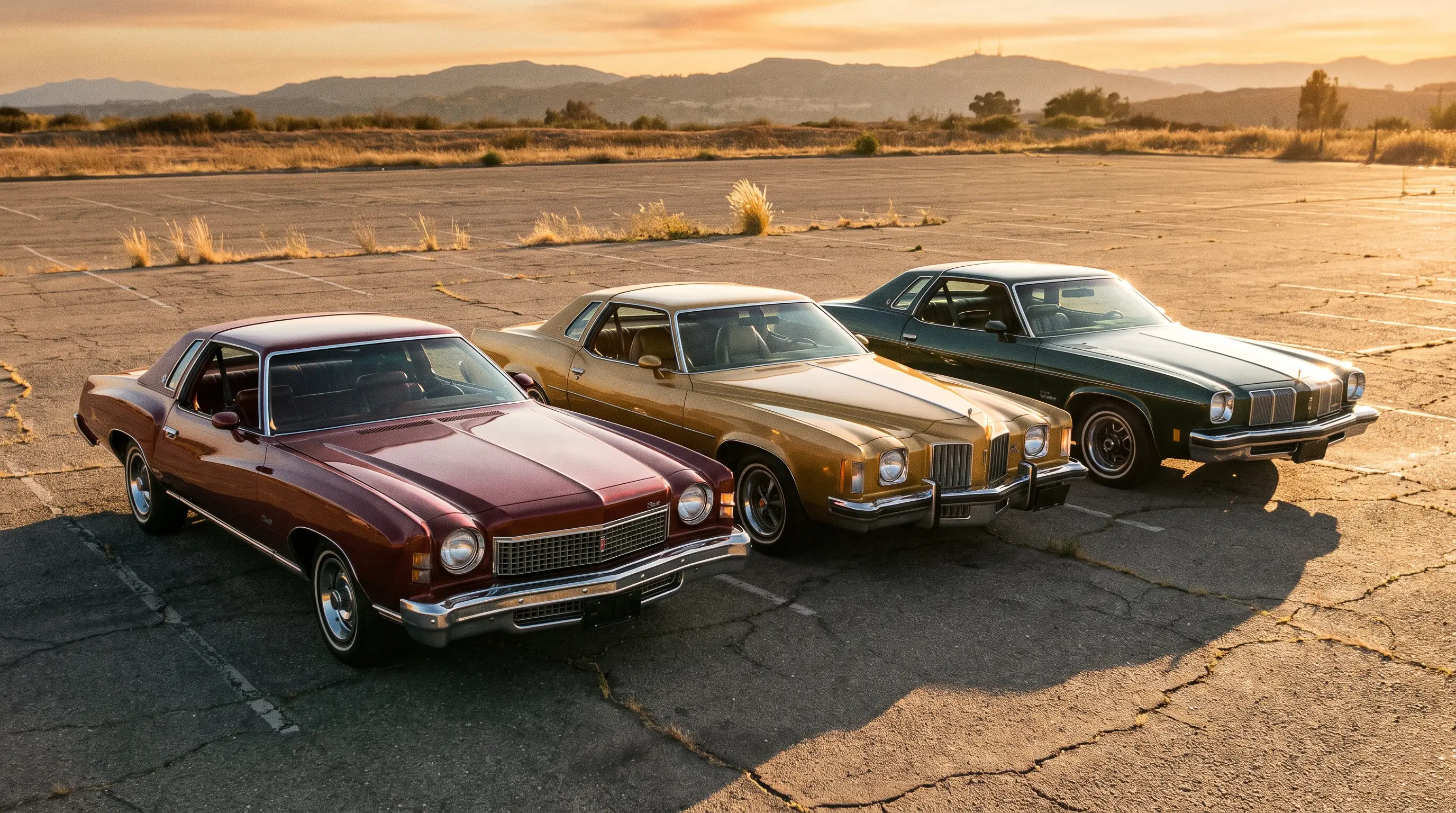
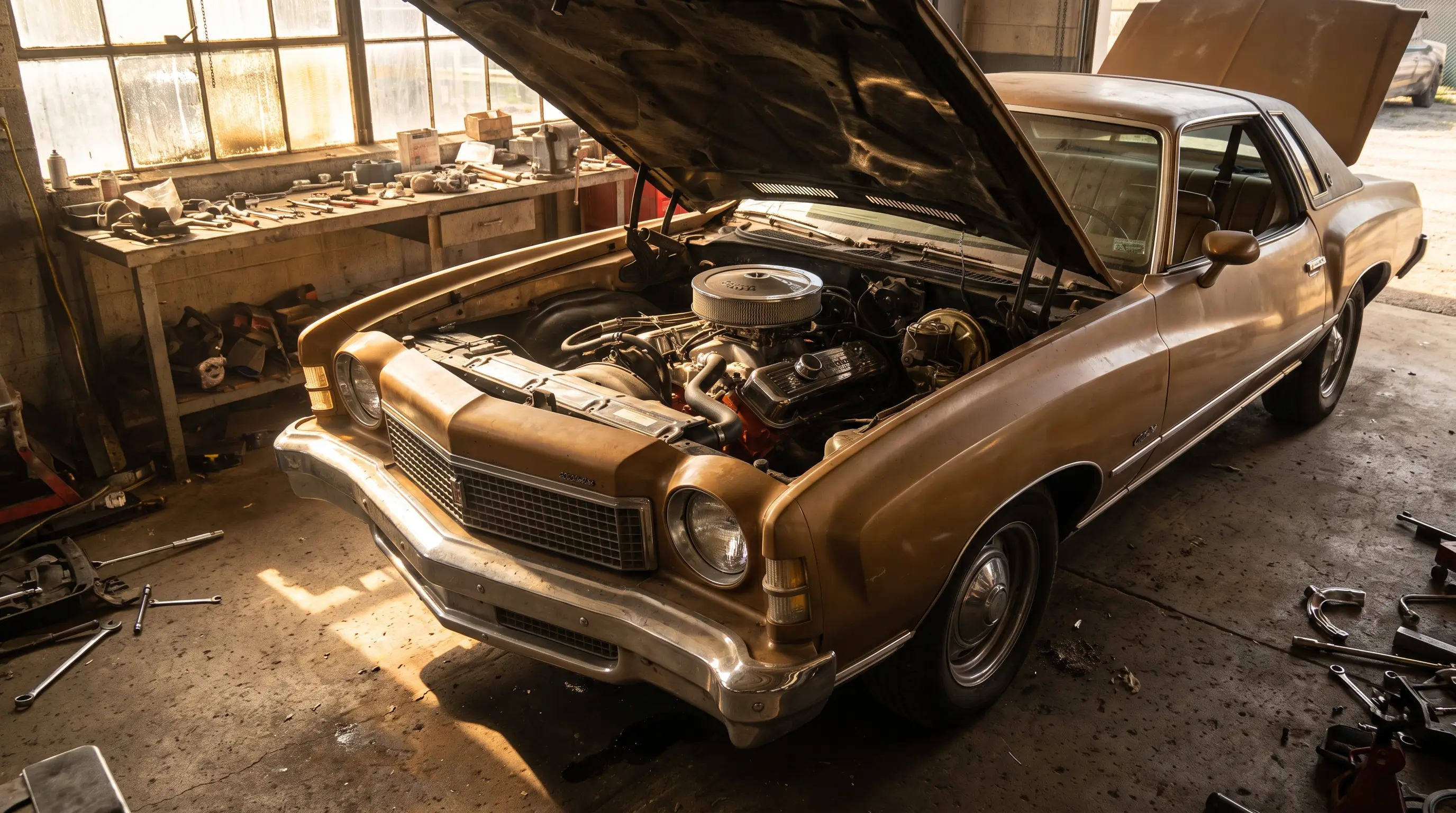
The numbers on a 1973 Monte Carlo 454 option sheet tell an uncomfortable story if you read them without context, and a genuinely interesting one if you do not skip the context. This is a case where the engine itself is honest about what era it was born into, and understanding that honestly is more useful than pretending the 454 was still a muscle car weapon in 1973.
What the 454 actually delivered by 1973
Chevrolet's big-block 454 remained available in the Monte Carlo lineup for 1973, but the compression ratios, emissions equipment, and fuel requirements that came with it were nothing like the same displacement engine's earlier high-output tunes from the late 1960s. Net horsepower ratings, the more honest SAE measurement system that replaced the old gross ratings industry-wide for 1972, put the 454 at 245 horsepower, a figure that looks unimpressive next to older gross-rated numbers from the same basic engine family but is actually a fair reflection of what the car produced at the rear wheels under real-world conditions.
That rating drop was not Chevrolet quietly detuning the engine behind buyers' backs. It was the industry switching to an honest measurement standard at the same moment emissions equipment was genuinely reducing output, and both factors landed on the Monte Carlo's spec sheet in the same model year. Reading the 1973 454 as evidence of decline requires ignoring that the earlier numbers were measured differently in the first place.
Torque, not horsepower, was the actual selling point
What the 454 still delivered in 1973, regardless of how the horsepower figure read on paper, was torque, and torque is what a heavy personal luxury coupe with power accessories and full sound insulation actually needs to move with authority off the line. A peak torque figure of 375 lb-ft meant a Monte Carlo equipped with the big block pulled with genuine confidence in daily driving conditions, even if a stoplight drag race against a period big-block muscle car would not have gone the Monte Carlo's way.
This is the part of the story that gets lost when people compare spec sheets in isolation. A personal luxury coupe buyer in 1973 was not cross-shopping a Road Runner. They wanted effortless highway passing power and confident low-end pull, and the 454 delivered exactly that, wrapped in a much quieter, more comfortable package than any dedicated muscle car offered.
Why this engine gets misjudged today
Modern enthusiasts who grew up on late-1960s muscle car horsepower figures tend to look at a 1973 big block spec sheet and assume the engine was gutted. The honest engineering answer is more nuanced. Compression ratios genuinely dropped to accommodate unleaded fuel compatibility and emissions requirements that were tightening year over year through the early 1970s, and that did cost real output. But the net-versus-gross measurement change accounts for a meaningful chunk of the apparent decline on paper, and separating those two effects is the difference between an accurate engineering assessment and a lazy one.
More on the 1973 Monte Carlo covers how the whole car, not just the engine, navigated this transitional period in American automotive engineering, where regulatory pressure and market expectations were pulling in different directions simultaneously.
"People see 245 horsepower on a 454 and assume something broke. Nothing broke. The measurement standard changed and the emissions requirements got real. Different problem entirely."
- Emily Chen
How the 454 compared to the small block alternatives
Buyers cross-shopping the 1973 Monte Carlo order sheet had a real decision to make between the base small block, the mid-range options, and the 454 big block, and the tradeoffs were not trivial. The smaller engines delivered noticeably better fuel economy and lower curb weight over the front axle, which measurably improved handling balance on a car that was already carrying significant added mass from the Colonnade structural changes. The 454, by contrast, added weight precisely where a personal luxury coupe least needed it for handling purposes, but it delivered the effortless torque and quiet confidence that buyers in this segment were actually paying for.
From a pure engineering standpoint, the 454 in this application was never about efficiency or balance. It was about presenting an owner with the sensation of substantial reserve power without requiring them to work the transmission or rev the engine to access it, and Chevrolet's engineers tuned the big block's power delivery specifically around that low-effort, low-rpm character rather than chasing a higher redline or a more aggressive cam profile that would have suited a dedicated performance car better.
The bigger picture for this generation
The 454's story in the 1973 Monte Carlo is really the broader story of where American engine engineering stood at that exact moment: caught between the tail end of genuine displacement-driven output and the beginning of a regulatory environment that would reshape the industry for the next decade. For where this started, the Monte Carlo nameplate itself launched only a few years before this transition hit, meaning the model's entire early history is bookended by shifting engineering priorities.
Buyers evaluating one of these cars today should judge the 454 on what it actually was built to do in 1973, quiet, torquey, comfortable highway power, rather than measuring it against an engine spec from a different regulatory era entirely. Anyone shopping should look at classic Monte Carlos on the market with documentation confirming original engine codes, since a numbers-matching 454 car commands a real premium over a car with a mismatched or swapped engine.
Verifying that documentation is not a formality. Casting numbers on the block, the correct carburetor and intake combination for the model year, and a build sheet that lists the RPO code for the 454 option together tell a much more complete story than a seller's word alone. Engines get swapped between similar-era GM products often enough, sometimes with good intentions and sometimes to dress up a lesser car, that a buyer who cares about originality has to verify rather than assume. A 454 that checks out on paper as well as under the hood is a genuinely different asset than one that merely looks the part.
There is also a broader lesson here for anyone evaluating engine specs across the muscle car and personal luxury eras generally. Spec sheets in isolation flatten a lot of nuance that only becomes visible once you understand the regulatory and testing context each number was produced under. The 1973 454 is a genuinely instructive case study precisely because it sits at the fault line between two measurement regimes and two very different sets of emissions requirements, and treating its numbers at face value without that context leads directly to the kind of mistaken conclusion that the engine was simply weaker than it actually was in practical, real-world terms.
Sources and notes
- Automobile Catalog: 1973 Chevrolet Monte Carlo Landau 454 specifications
- Automobile Catalog: 1973 Chevrolet Monte Carlo S 454 specifications
- Automobile Catalog: 1972 Chevrolet Monte Carlo 454 specifications (gross-rated comparison year)
- Wikipedia: Chevrolet Monte Carlo
- Carfolio: 1973 Chevrolet Monte Carlo detailed specifications