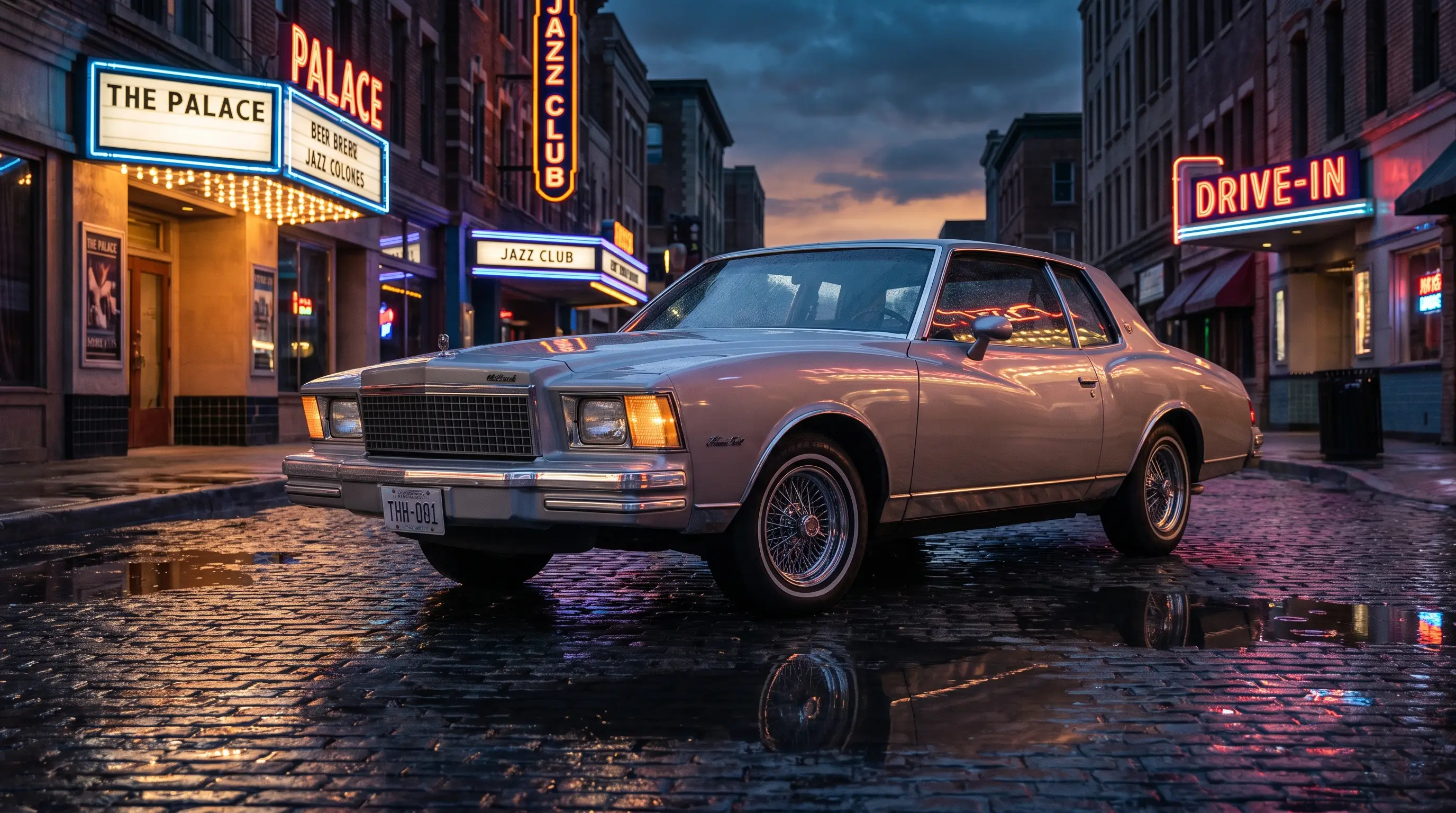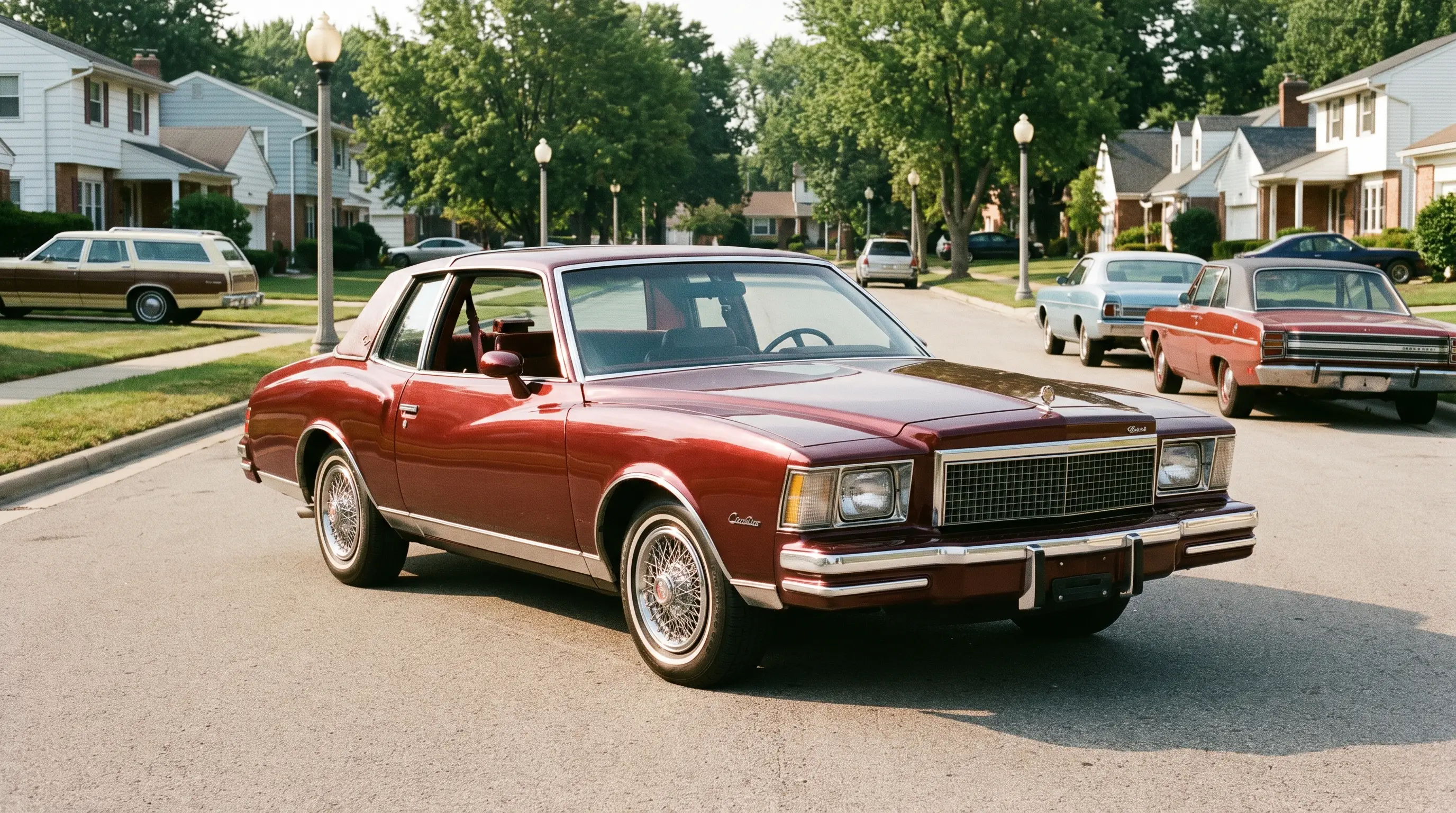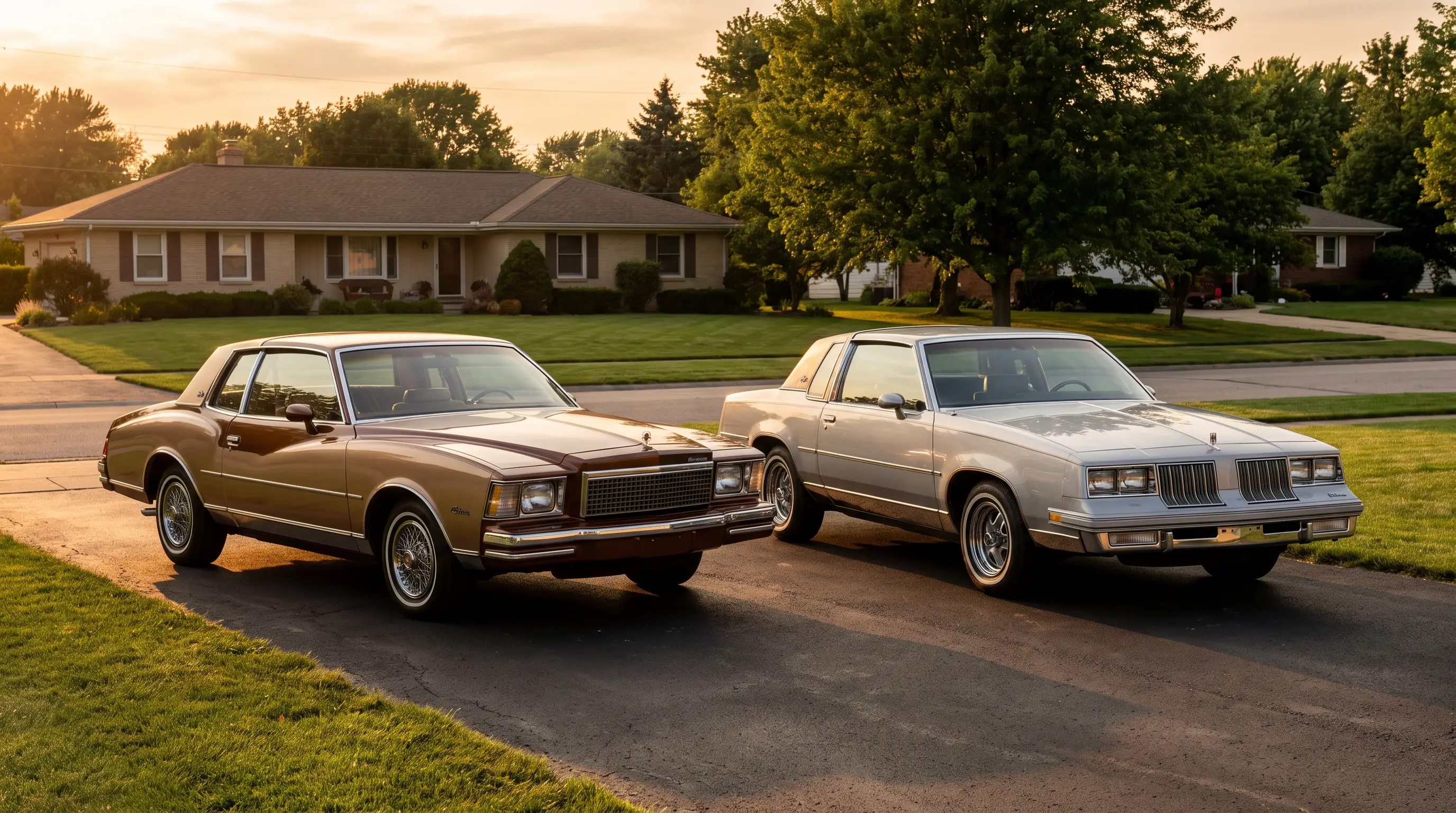
A woman in Toledo once told me she bought her 1978 Monte Carlo for the seats before she ever cared about the engine. She had sat in a friend's car, run her palm across the velour, and decided on the spot that this was the interior she wanted to spend her Sunday drives inside. That small, unglamorous moment says more about the monte carlo 1978 interior velour era than any spec sheet could, because Chevrolet built this cabin to be felt, not just described.
A softer kind of luxury
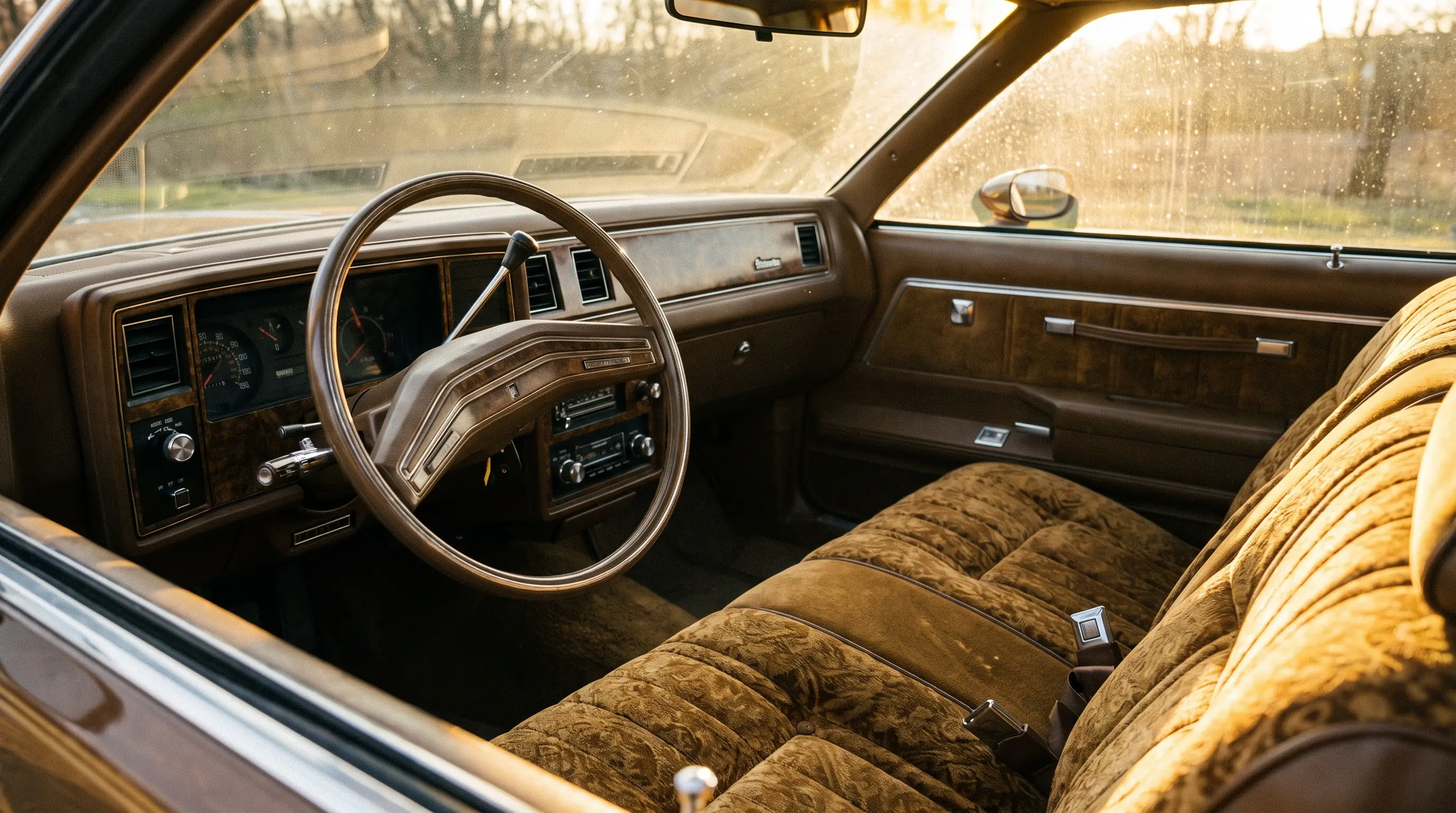
By 1978 the Monte Carlo had shrunk on the outside, but Chevrolet clearly understood that the interior could not shrink in ambition even as the car shrank in length. The result was a cabin dressed in deep velour cloth, offered in warm earth tones that matched the era's design instincts, paired with door panels and headliners that reinforced a sense of quiet enclosure rather than open-air sportiness. This was not a car built to feel fast from the driver's seat. It was built to feel like a room you wanted to sit in a little longer than necessary.
The dashboard carried a padded top and simple, legible gauges, a deliberate contrast to the increasingly cluttered switchgear showing up elsewhere in the industry. Chevrolet trusted the material quality to do the talking. Where competitors leaned on chrome accents and busy patterns, the Monte Carlo's cabin leaned on texture, and that texture aged into something people still reach out and touch on a used car lot today, half wondering if it can possibly be original.
Color as a personality test
Buyers in 1978 chose their velour the way people choose paint for a living room, which is to say emotionally and a little defensively. Camel and oyster tones sold to buyers who wanted the cabin to read bright and inviting. Deep burgundy and chocolate brown sold to buyers who wanted something that felt serious, almost formal, the interior equivalent of a wood-paneled study. Neither choice was wrong, and dealers rarely tried to steer customers away from either extreme, because both moods sold the car equally well.
What stands out looking back is how confident this all was. Nobody at Chevrolet seemed nervous about offering rich, saturated interior colors on a car that had just been downsized for fuel economy reasons. The engineering department worried about weight and mileage. The interior team worried about whether the velour draped correctly over the seat bolsters. Those were two entirely different conversations happening under one roof, and the 1978 Monte Carlo is proof that both conversations mattered equally to the final product.
Why the small details mattered so much
Ask an owner who still has their original interior and they will point to things nobody designs for anymore. The way the armrests were padded just enough to rest an elbow without sliding. The click of the glovebox latch. The particular give of a velour-wrapped seatback compared to the harder vinyl used in cheaper trims. These details were not accidents. Chevrolet's interior designers were competing directly against the Oldsmobile Cutlass Supreme and Buick Regal for the same customer, and on a shared G-body platform, interior feel became one of the only places left to differentiate the cars meaningfully.
That competitive pressure produced an interior that has aged into something people now specifically seek out. Restoration shops report that finding correct, unfaded velour in period colors has become one of the harder parts of a proper 1978 restoration, precisely because Chevrolet used so many color and pattern combinations that reproduction suppliers cannot always match exactly. If you want the fuller mechanical and design story behind this generation, you can read the background on how the downsizing decision shaped everything from wheelbase to cabin proportions.
"The velour was never decoration. It was the argument Chevrolet made for why a smaller car could still feel like an occasion."
- Nora Beckett
What it feels like decades later
Climb into a well-kept 1978 Monte Carlo today and the cabin still does its job. The velour, when it has survived sun and use with any care at all, holds a softness that vinyl never approximates. The dashboard still reads clean and uncomplicated. There is a hush to the interior that modern cars, with their glass and hard plastic surfaces, rarely bother to build anymore. People do not always remember the 1978 Monte Carlo for its horsepower, because it was never a horsepower story. They remember the seats, the color choices, the sense that Chevrolet wanted this smaller car to still feel like somewhere worth being.
That woman in Toledo still has her car. She replaced the carpet once and left everything else original, including velour that has gone slightly gold with age in the sunniest corner of the back seat. She says she is not selling it, but she understands why other people are looking, and for anyone who wants to see what else is out there wearing this same interior story, you can find a classic Monte Carlo and decide which color combination speaks to you the way it once spoke to her.
A quiet legacy
The monte carlo 1978 interior velour era does not get the attention that engine specs and production numbers receive, but it shaped how an entire generation of buyers remembered this car. Long after the fuel economy debates faded and the malaise-era anxieties settled into history, what people kept was the memory of a cabin that asked nothing of them except to sit down and stay a while. That is not a small achievement for a car built during one of the most compromised stretches in American automotive design, and it is worth remembering every time someone dismisses this generation as merely a smaller, lesser Monte Carlo.
What buyers actually optioned
The order sheets from 1978 tell their own quiet story about how seriously Chevrolet took this interior. Buyers could step up from cloth to a vinyl and velour combination, or choose an all-vinyl bench for a plainer, more utilitarian feel, but the majority of documented sales leaned toward the velour buckets or the velour bench, which suggests the softer material was the aspirational choice rather than a forced default. Dealers who ordered stock for their lots learned quickly which combinations moved off the floor fastest, and velour in the warmer earth tones consistently outsold the cooler options.
Options like a center console, a tilt steering wheel, and an AM/FM stereo with an eight track player rounded out a cabin that buyers could dress up considerably beyond the base configuration. None of these additions were unique to the Monte Carlo, but combined with the velour and the restrained dashboard design, they built an interior that felt considered rather than assembled. That distinction, more than any single option, is why people still talk about this cabin the way they talk about a favorite room in an old house rather than a feature list on a brochure.
Owners who kept their original build sheets have a genuine record of what their car looked like the day it left the factory, and those documents have become small treasures within the hobby precisely because they confirm which velour and color combination a given car wore originally, information that fades from memory long before the fabric itself does.