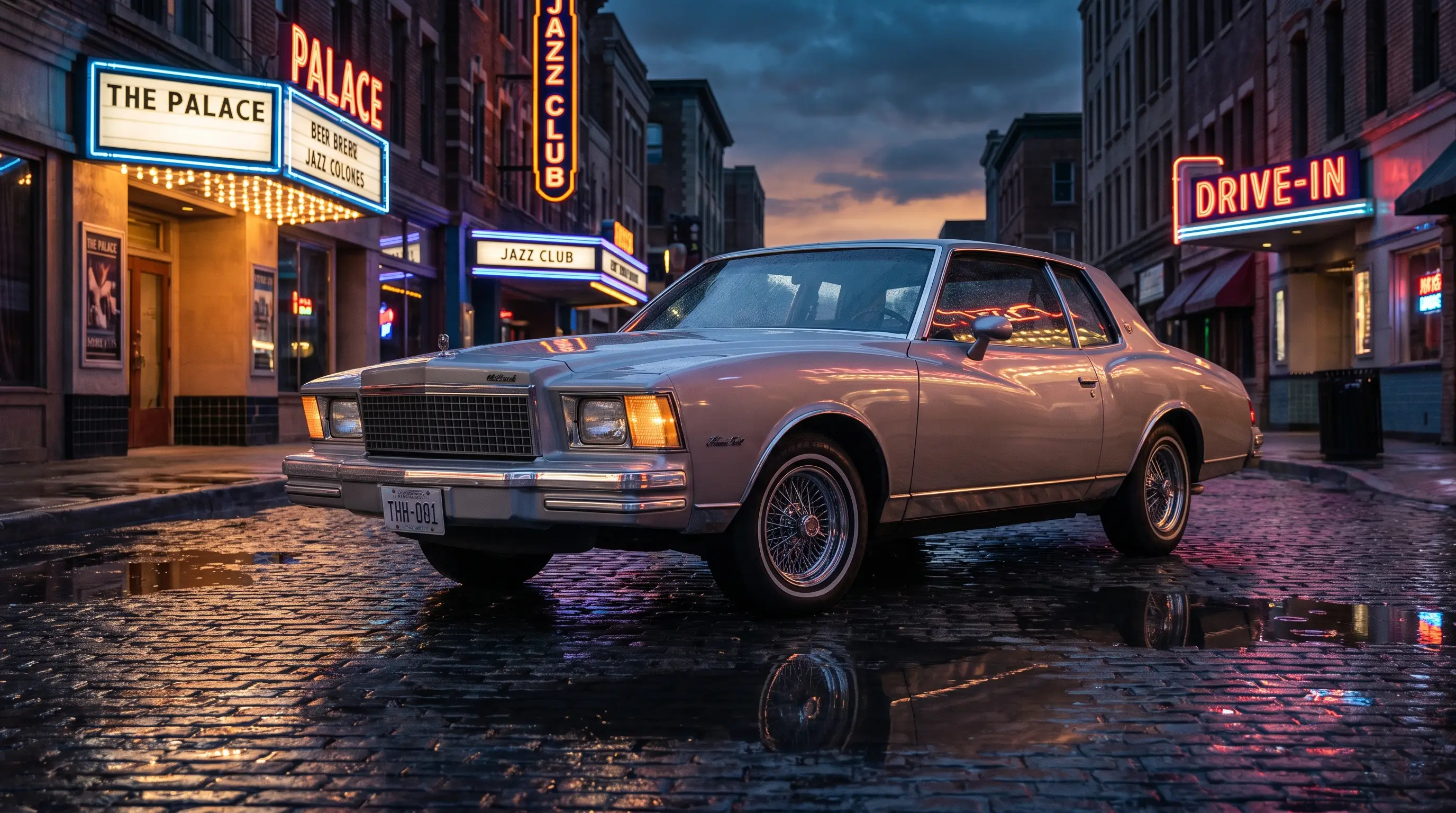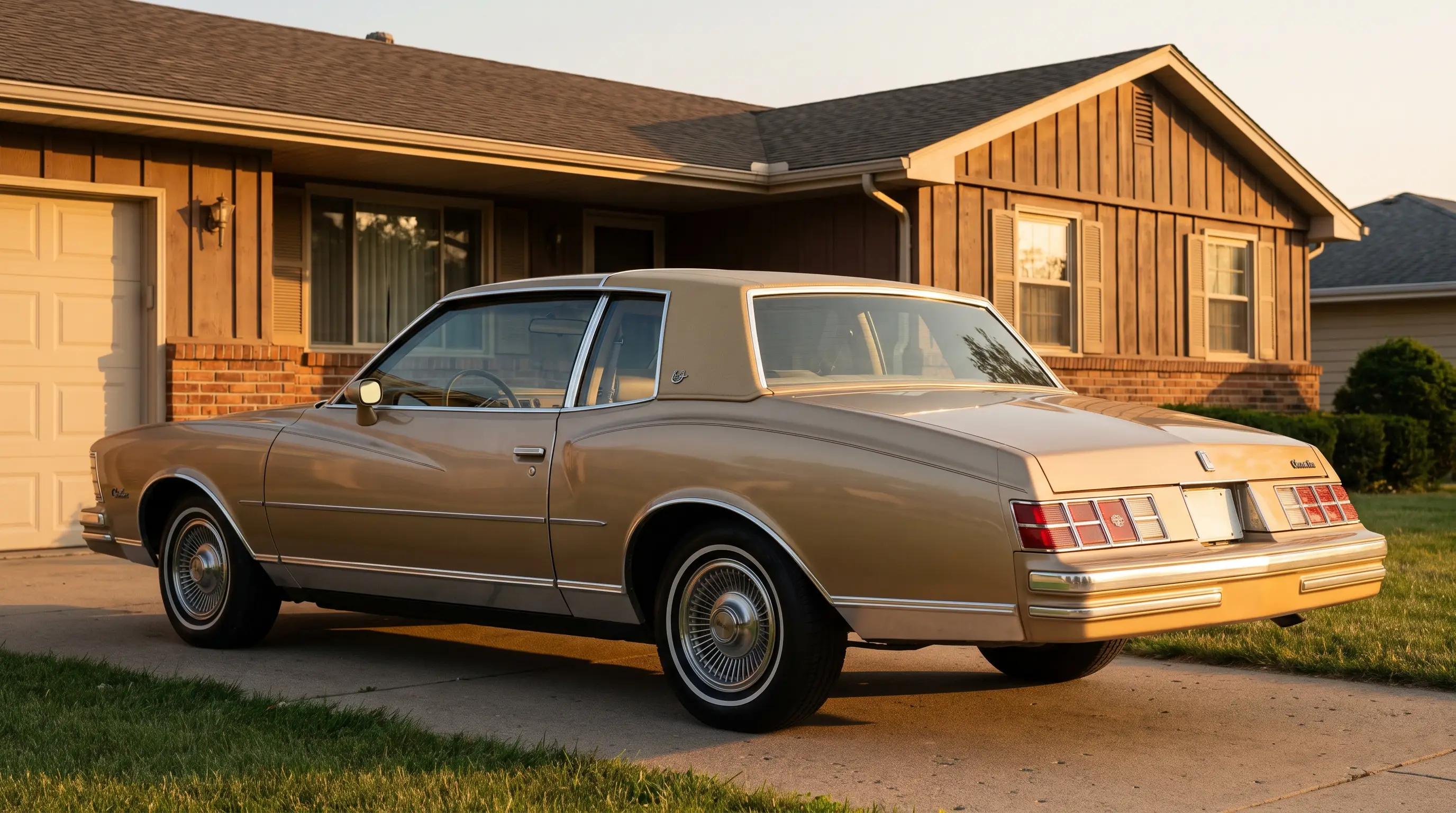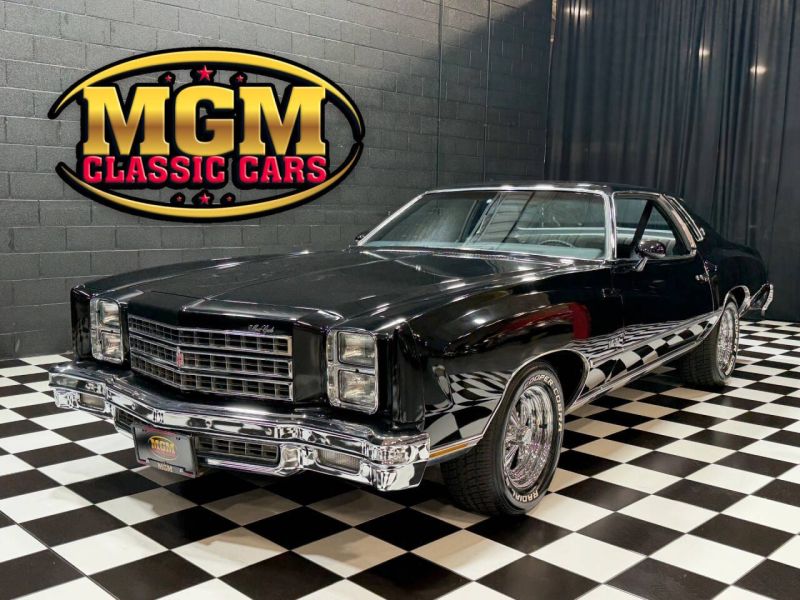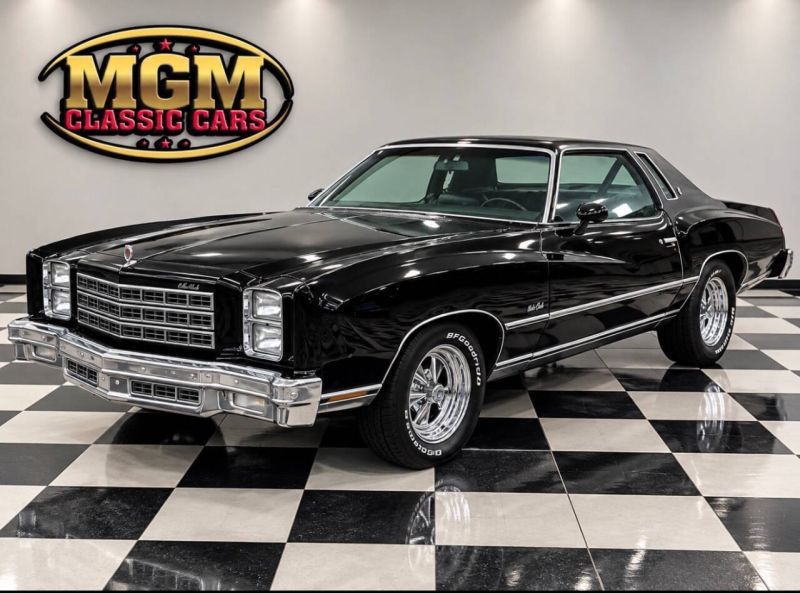
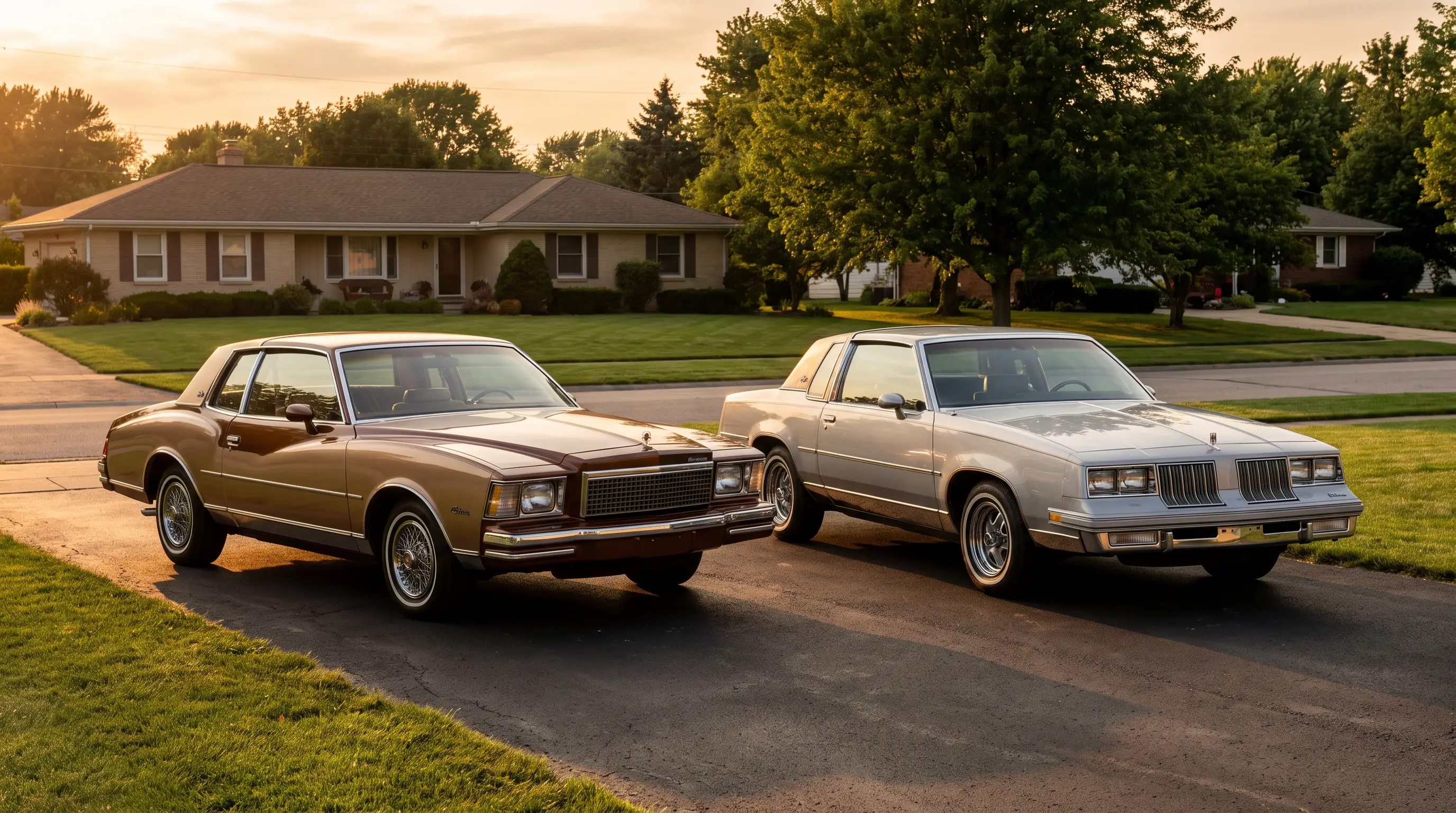
Put a 1978 Monte Carlo next to a 1978 Cutlass Supreme in a parking lot and most people would need a badge to tell the two apart at a glance. That is not an accident and it is not an insult to either car. Both rode on GM's new G-body platform, and the monte carlo 1978 vs cutlass supreme comparison is really a study in how two divisions took the same mechanical foundation and built two distinct sales pitches on top of it.
Shared bones, different arguments
Chevrolet and Oldsmobile were selling siblings in 1978, not rivals in any adversarial sense. The G-body platform underpinned the Monte Carlo, Cutlass Supreme, Buick Regal, and Pontiac Grand Prix, and GM's internal planning treated this as a deliberate strategy to capture the same broad personal-luxury coupe buyer across four price points and four brand identities. The Monte Carlo leaned on Chevrolet's reputation for value and its long nameplate history reaching back to 1970. The Cutlass Supreme leaned on Oldsmobile's slightly more upscale positioning within the GM ladder and a design language that had already proven itself wildly popular in the mid-1970s.
Where the two cars diverged most visibly was styling detail. The Monte Carlo kept a more formal, upright grille and a roofline that echoed its full-size predecessors. The Cutlass Supreme carried a sportier, slightly more aggressive front end and a roofline GM's designers had refined across several successful model years already. Neither approach was objectively better. Each simply spoke to a different version of the same customer, one who wanted Chevrolet's straightforward value story and one who wanted Oldsmobile's slightly more polished image.
The numbers tell an honest story
By most production accounts, the Cutlass Supreme narrowly outsold the Monte Carlo in 1978, and this is worth saying plainly rather than dancing around it. Chevrolet built roughly 358,000 Monte Carlos that year, while Oldsmobile's Cutlass Supreme and Cutlass Supreme Brougham combined for a broadly similar total, putting the two cars within a hair of each other rather than one decisively beating the other. Oldsmobile had built enormous momentum with the Cutlass line through the mid-1970s, and that momentum did not evaporate just because Chevrolet introduced a strong new Monte Carlo the same year. Still, the Monte Carlo held its own respectably, and the gap between the two cars was never a rout in either direction. Both models ranked among the best-selling personal-luxury coupes in the country, which tells you the segment itself was healthy even while other parts of the industry struggled through the malaise era.
What matters more than which car won by a few thousand units is that both cars proved GM's downsizing bet correct across two different brand identities simultaneously. That is a much stronger validation of the G-body strategy than either car succeeding alone would have been.
Interior and engine differences that actually mattered
Under the hood, the comparison gets more interesting. The Monte Carlo's volume engine was the 305 cubic inch V8, while the Cutlass Supreme offered its own Oldsmobile-built V8 options that buyers cross-shopped closely, particularly given the diesel controversy that would later complicate some Oldsmobile V8 offerings later in the G-body's run. In 1978 specifically, both cars offered comparable real-world performance, neither one a genuine quick car by earlier decade standards, both tuned for smoothness and economy over anything resembling stoplight bravado.
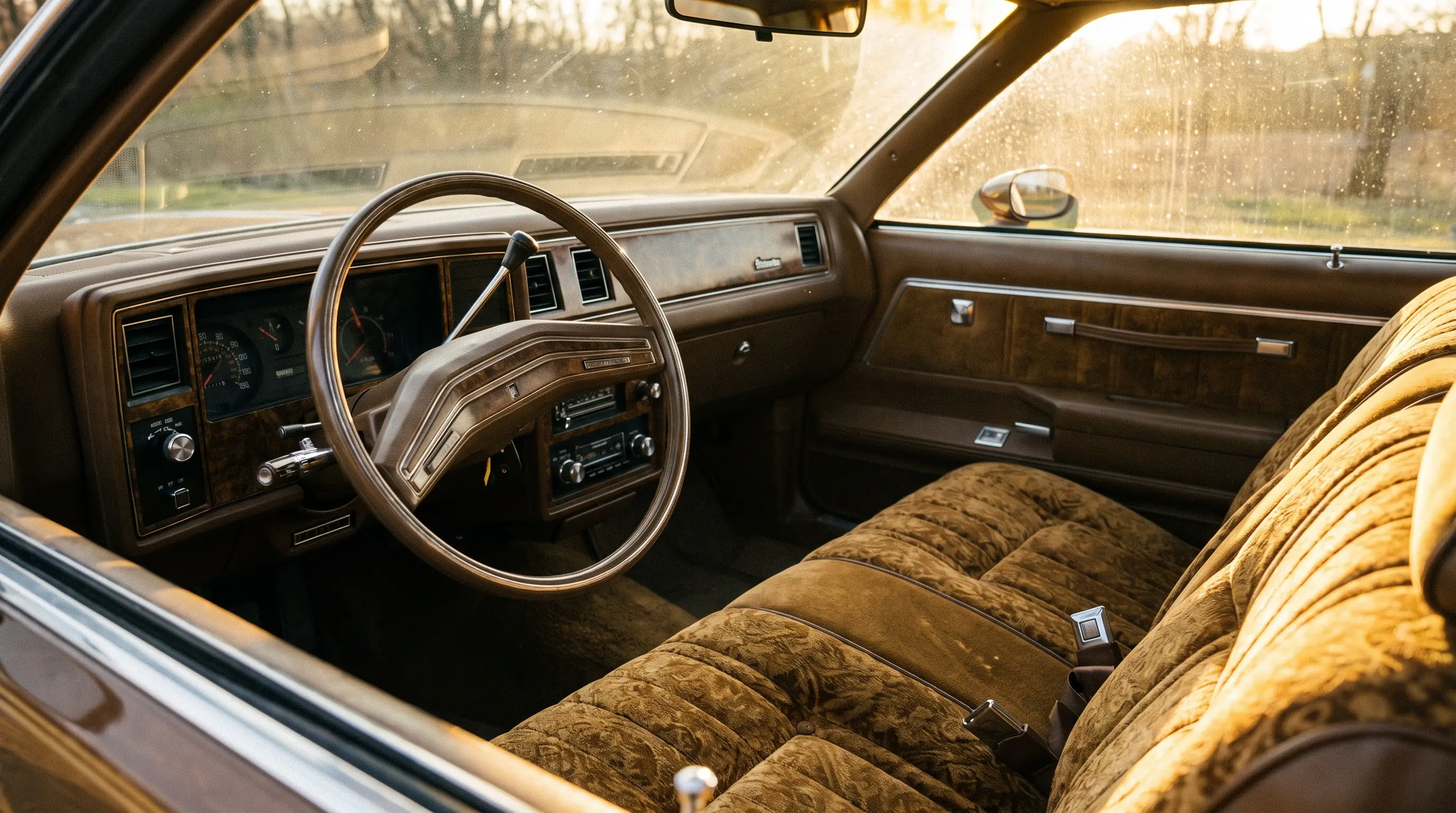
Inside, the Cutlass Supreme's interior carried Oldsmobile's own take on velour and trim detailing, generally perceived as slightly more upscale in fit and finish, while the Monte Carlo countered with its own strong interior execution and a lower price of entry that made the value argument easier to win with budget-conscious buyers. Neither interior was a letdown. The difference came down to a few dollars of trim and a lot of brand perception, which is exactly the kind of distinction GM's platform-sharing strategy was designed to create.
"The Monte Carlo and the Cutlass Supreme were never really fighting each other. They were fighting for the same customer's loyalty to a badge, and both cars won that fight often enough to justify the whole G-body strategy."
- Tom Ramirez
How this plays out in today's collector market
Decades later, the rivalry has softened into something closer to a friendly comparison at car shows, where G-body enthusiasts often own examples of both cars and argue amiably about which one aged better. The Monte Carlo tends to draw buyers loyal to Chevrolet's small-block heritage and the nameplate's NASCAR-adjacent history that would fully bloom in the following decade with the Aerocoupe. The Cutlass Supreme tends to draw buyers who remember Oldsmobile's peak sales era and want a piece of the best-selling nameplate of its time. Both communities respect the other car, largely because both understand how closely related the two machines actually are under the skin.
If you want the deeper background on how the Monte Carlo side of this story came together, including the downsizing decisions that shaped the whole G-body lineup, the whole picture lays out that engineering and sales history in full. For anyone weighing a purchase today, the practical advice stays consistent across both nameplates: condition and documentation matter more than which badge is on the grille, since both cars share enough mechanical DNA that maintenance knowledge often transfers between them.
Choosing between them today
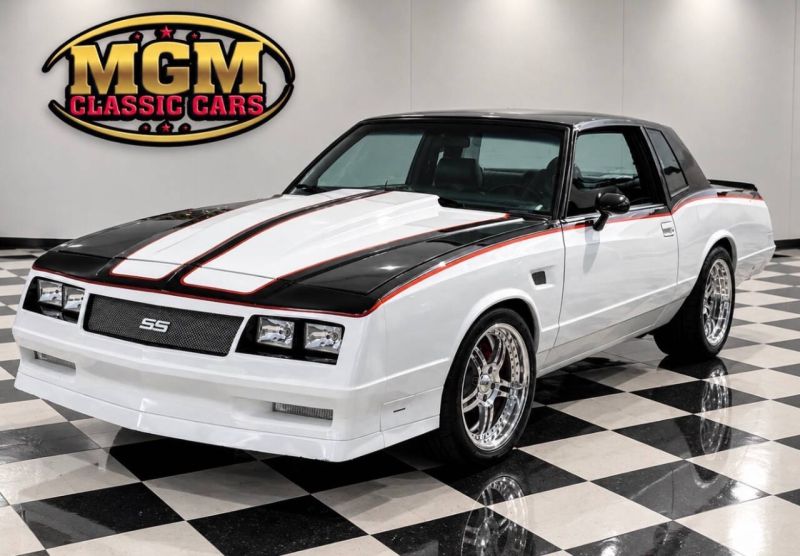
There is no wrong answer between a 1978 Monte Carlo and a 1978 Cutlass Supreme for a modern buyer, and that is precisely the point GM was making back in 1978. Both deliver the same era's smooth ride, similar V8 power, and comparable running costs, wrapped in styling that still reads as confidently of its time. The choice mostly comes down to which badge speaks to your own memory or your own family's history with these cars, and collectors on both sides of the debate tend to agree that is exactly how it should be decided. Anyone ready to compare the real thing in person can shop classic Monte Carlo listings and see how the Chevrolet side of this rivalry holds up today.
What the badge loyalty actually meant at the time
It is worth remembering that in 1978, badge loyalty was not a nostalgic idea. It was a lived habit for millions of American families who bought the same brand generation after generation, often at the same dealership, sometimes from the same salesman their parents had used. A Chevrolet family did not casually cross-shop an Oldsmobile showroom, and an Oldsmobile family rarely wandered into a Chevrolet lot on a whim. That habit did as much to determine sales outcomes as anything printed on either car's window sticker.
Chevrolet understood this dynamic and built its 1978 marketing around reinforcing existing loyalty rather than trying to poach Oldsmobile buyers outright. Advertising for the Monte Carlo emphasized continuity with the nameplate's history stretching back to 1970, appealing directly to owners of earlier Monte Carlos who were due for a trade-in. Oldsmobile ran a similar playbook for the Cutlass Supreme, and the result was two successful cars that mostly sold to two different, loyal customer pools rather than genuinely stealing sales from each other in large numbers.