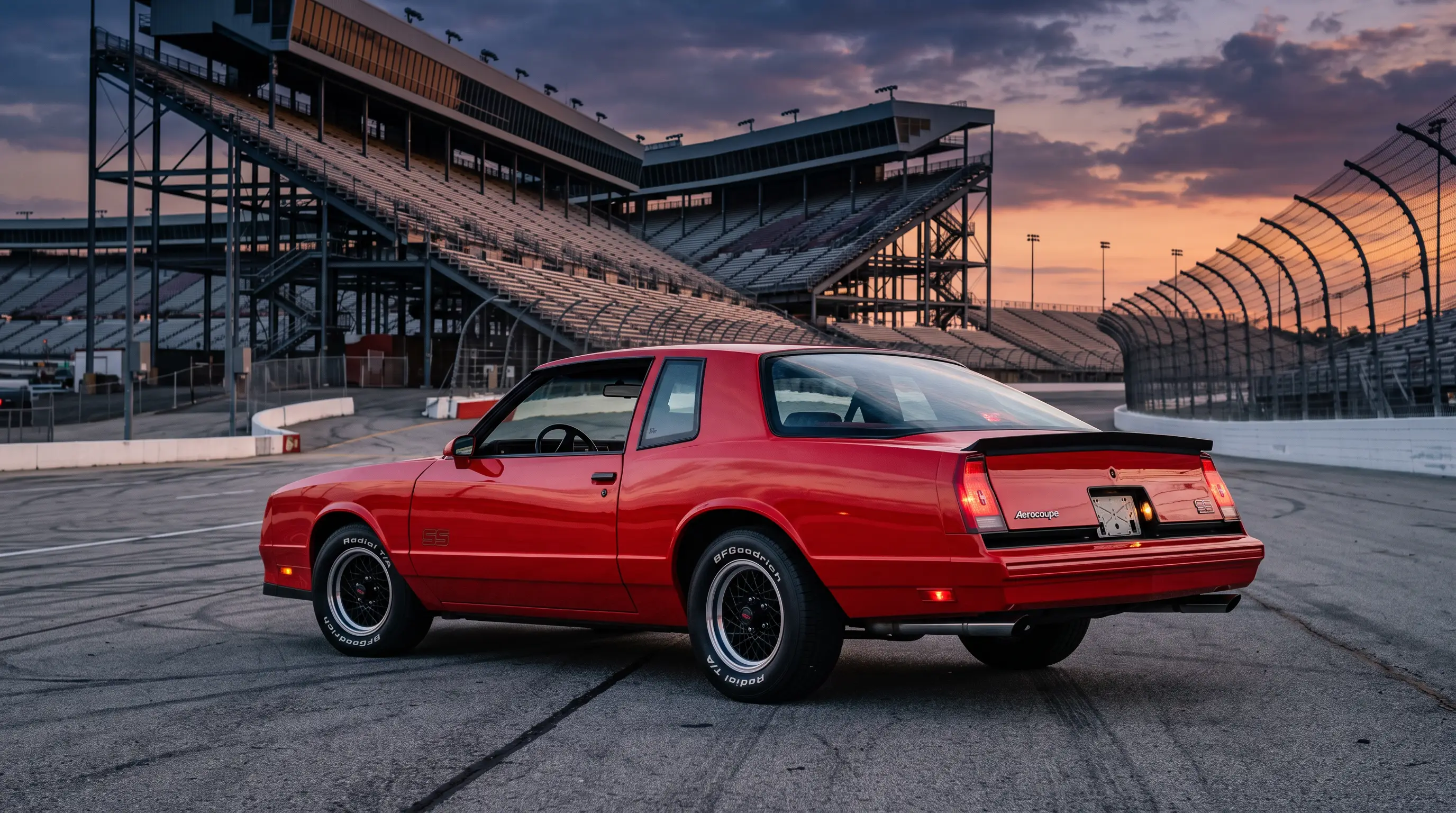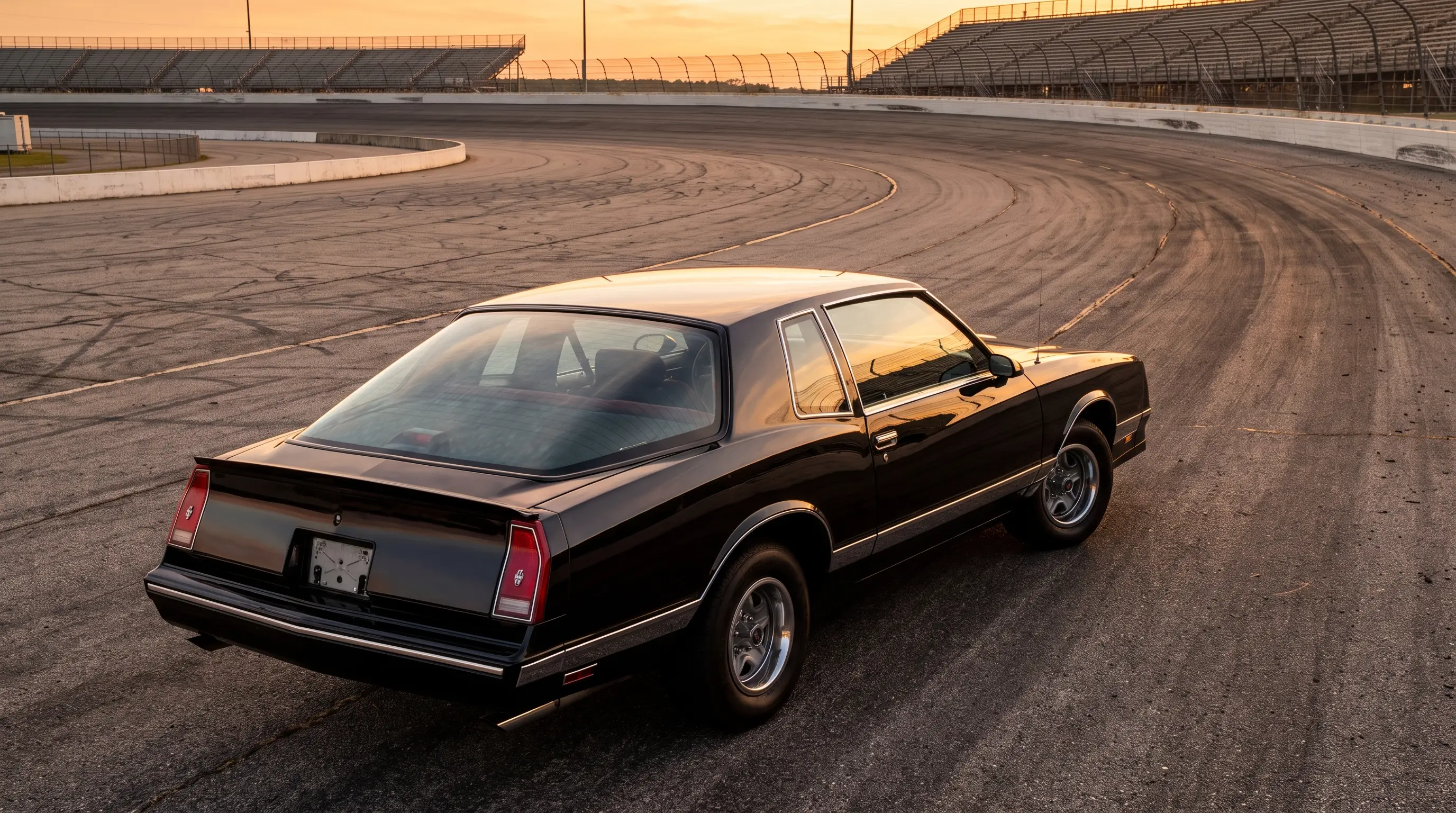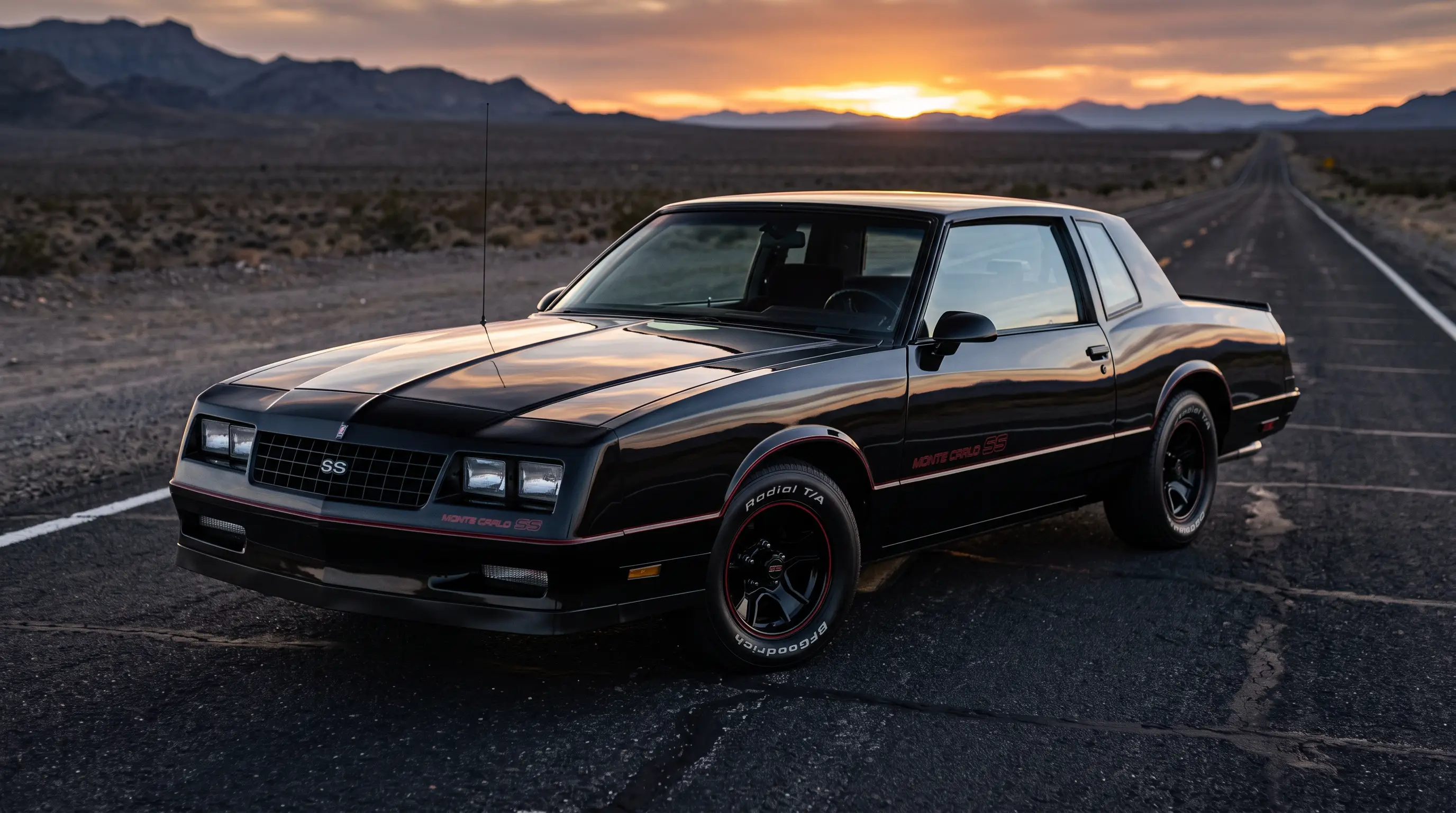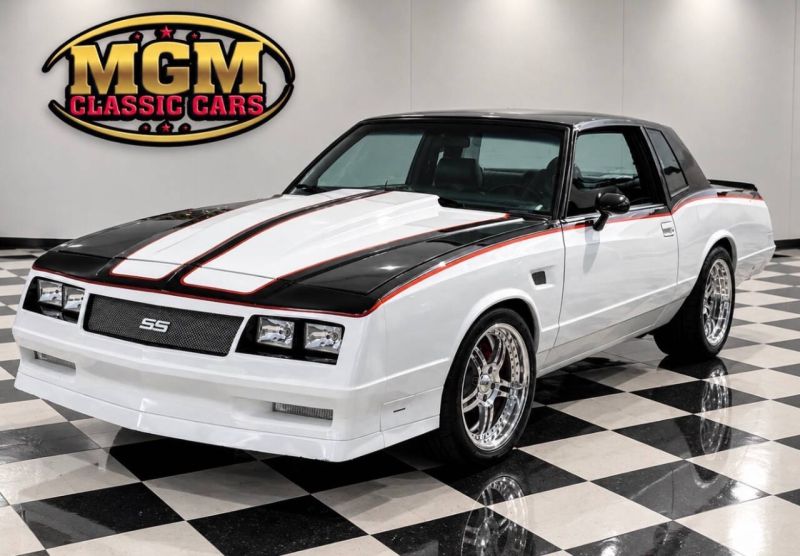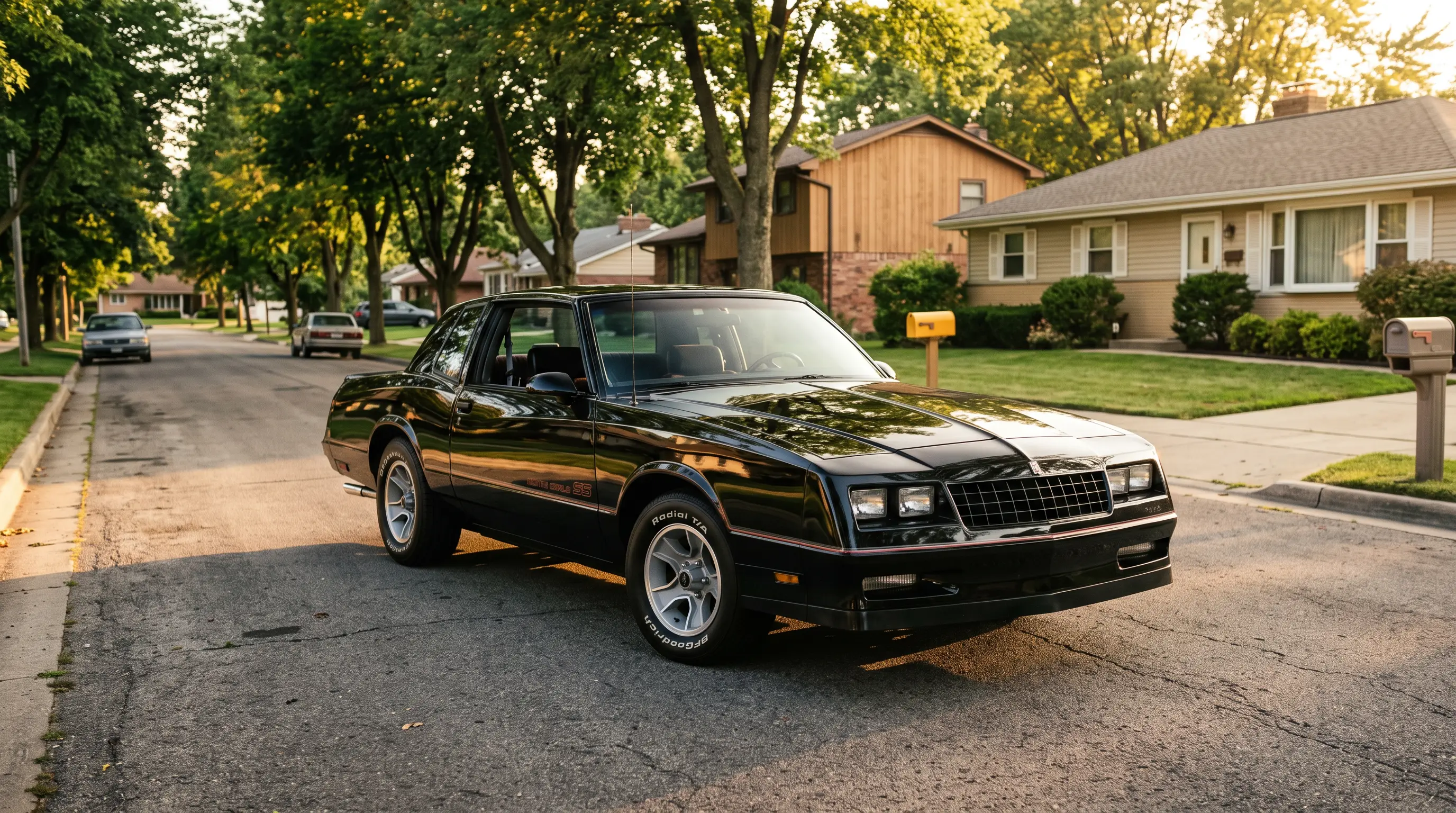
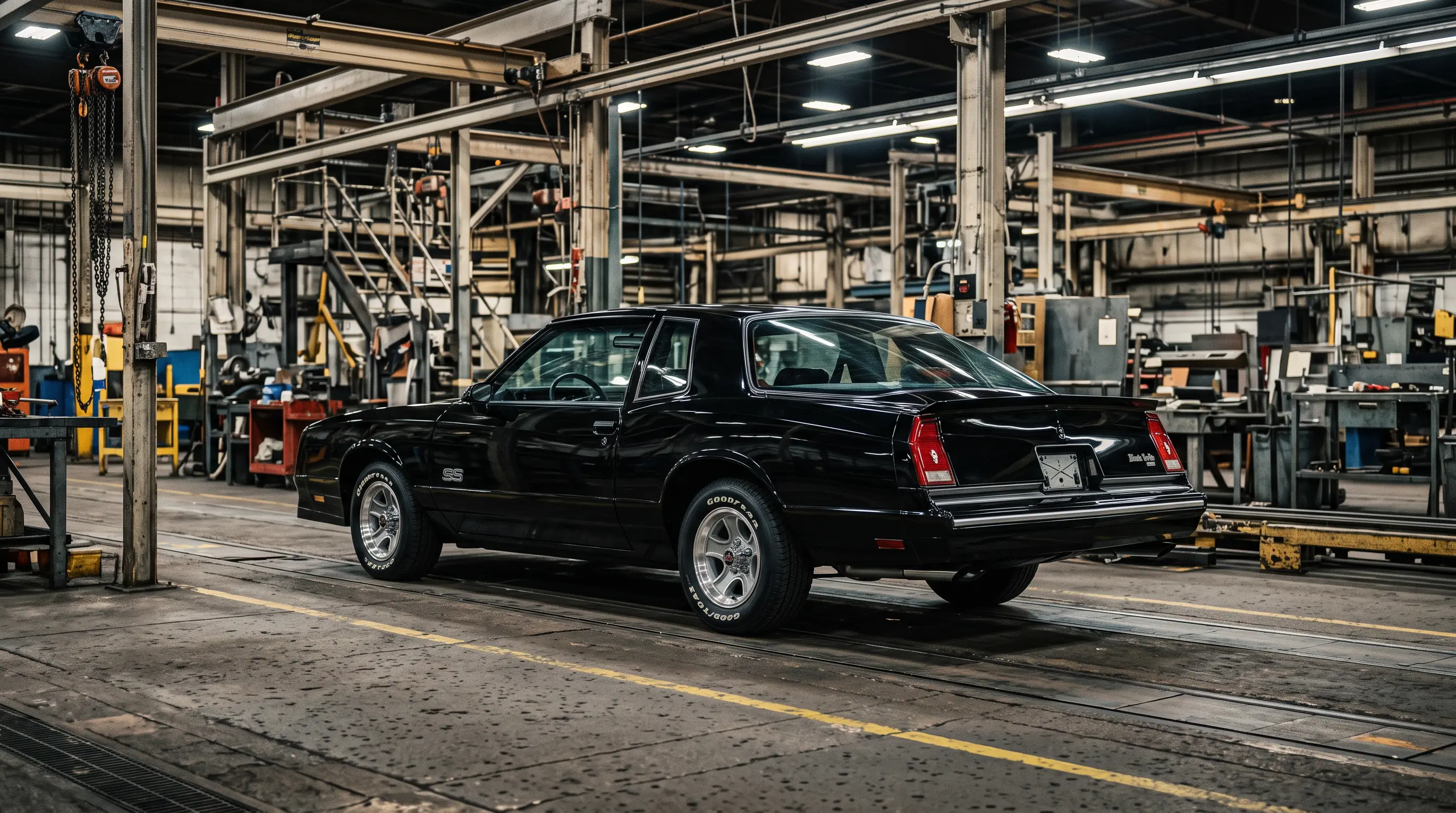
There is a guy at every Monte Carlo show who corners you by the coffee table and tells you the Aerocoupe story like he was standing in the pit lane in 1986. He usually gets it half right. The short version people repeat is that Chevrolet built a fastback Monte Carlo because it looked cool. The real story is that NASCAR forced Chevy's hand, and the monte carlo 1986 aerocoupe homologation rule is the reason that sloped rear glass exists at all.
By the mid-1980s, the notchback Monte Carlo SS had a problem it could not fix with a bigger engine. On the high-banked superspeedways at Daytona and Talladega, the standard SS body punched a hole in the air about as gracefully as a barn door. Ford's Thunderbird had a slicker rear window and was eating Chevrolet's lunch on the aero-sensitive tracks. Richard Childress and the engineers working with Dale Earnhardt's team knew exactly what the problem was. They just could not race a fix that Chevrolet had not built and sold to the public first.
The rule that made Chevy build a fastback
NASCAR's homologation requirement in that era was blunt and unsentimental. If a manufacturer wanted to race a body variant in Winston Cup competition, that variant had to exist as a production car available to ordinary buyers, and a minimum number of them had to be built. This was not a suggestion. It was the price of admission. Chevrolet could design the most aerodynamic rear window in Detroit, but until real customers could walk into a real dealership and drive one home, NASCAR would not let it near Daytona.
So Chevrolet Product Promotions Engineering, the same group that had massaged the Monte Carlo SS nose back in 1983 for similar reasons, went to work on the back half of the car. The result was RPO Z16, a fastback-style rear window that replaced the formal notchback glass with a steeply raked piece that flowed the roofline down into the decklid. It looked like nothing else in the Monte Carlo lineup, and it was never meant for anyone who did not already follow stock car racing closely.
Two hundred cars nobody was supposed to want
The number that gets repeated at every swap meet table is that Chevrolet built only 200 Aerocoupes for the 1986 model year, the bare minimum to satisfy NASCAR's homologation floor. That scarcity was not a marketing decision. It was Chevrolet doing exactly enough to legally race the body and not one car more. Dealers did not stock them in volume. Buyers who wanted one usually had to already know a Chevrolet product manager or a dealer principal with a direct line to Detroit.
What makes the story worth retelling at a club meeting is what happened next. NASCAR restricted the Aerocoupe's on-track advantage for the following season, and by then the public had seen enough of Earnhardt's black number 3 slicing through the draft to want the road car regardless of what happened at the racetrack. Chevrolet obliged with a much larger production run in 1987, proving that a car built for a rulebook loophole could still sell itself once people saw what it was for.
Racing pedigree that outlived the rule
Once the Aerocoupe hit the track, it did what it was built to do. Teams running the Z16 body picked up real straight-line stability in the draft, and the car became closely associated with Chevrolet's Winston Cup effort through the back half of the 1980s. Fans who could not tell you the rear differential ratio could tell you which Monte Carlo body style ran better at Daytona, because the television broadcasts made a point of it. That kind of exposure is worth more to a manufacturer than any brochure copy, and it is a big part of why the Aerocoupe still carries weight with collectors who were not even born when it raced.
The community around this car has done more to preserve that history than any factory archive. Owners clubs spent decades cross-referencing build sheets, dealer invoices, and window sticker photographs to nail down exactly how many Aerocoupes left the plant in each color and drivetrain combination. That kind of grassroots documentation is the only reason we can talk about this car with any confidence today, since Chevrolet's own paperwork from the period was never treated as anything special at the time.
"Every homologation special has the same story underneath it. Somebody in racing needed a part that did not exist yet, and somebody in engineering had to build just enough of it to make the rulebook happy. The Aerocoupe is that story with a rear window instead of a carburetor."
- Wayne Coburn
Why the story still gets told wrong
The most common mistake I hear repeated is that the Aerocoupe was a limited edition dressed up for prestige, the way a manufacturer might badge a special trim level today. That gets the motivation backward. Nobody at Chevrolet sat in a marketing meeting and decided fastback glass would move more units. The car exists because a sanctioning body's paperwork required it, and Chevrolet did the least expensive version of compliance it could manage. The prestige came later, built by racing results and by owners who kept the cars running long after anyone in Detroit stopped thinking about them.
That is worth remembering the next time somebody tells you the story at a car show. The Aerocoupe was never supposed to be special. It was supposed to be legal. It became special because it worked, on the track and eventually in driveways, and because a small number of owners refused to let the paperwork behind it disappear.
What the club archives actually settled
For years the Aerocoupe's production numbers floated around swap meets as rumor, repeated by whoever had the loudest voice at the table. It took real legwork by owners clubs, cross-checking dealer invoices against Chevrolet's own build sheets, to pin the story down with any confidence. That process mattered because a car built for a rulebook, not for a showroom, rarely gets the same paper trail as a mainstream model. Nobody at the factory was archiving press kits for a car built to satisfy a racing technicality. The people who preserved that history were regional car club newsletters and a handful of dedicated collectors who treated a stack of old invoices like it was worth something long before anyone else did.
That grassroots record keeping is also why the Aerocoupe survived as a coherent story instead of dissolving into contradictory rumor the way so many low-volume specials do. When a club historian can point to an actual invoice instead of a half-remembered conversation from a swap meet in 1994, the story holds up. That is the difference between a car with a documented history and a car with a legend, and the Aerocoupe earned the former through decades of unglamorous paperwork chasing.
For the full context of how the 1986 SS lineup fit together before the Aerocoupe split off on its own, our complete history covers the rest of that model year in depth. If the homologation story has you looking for one of your own, you can find a classic Monte Carlo and see what is currently available.