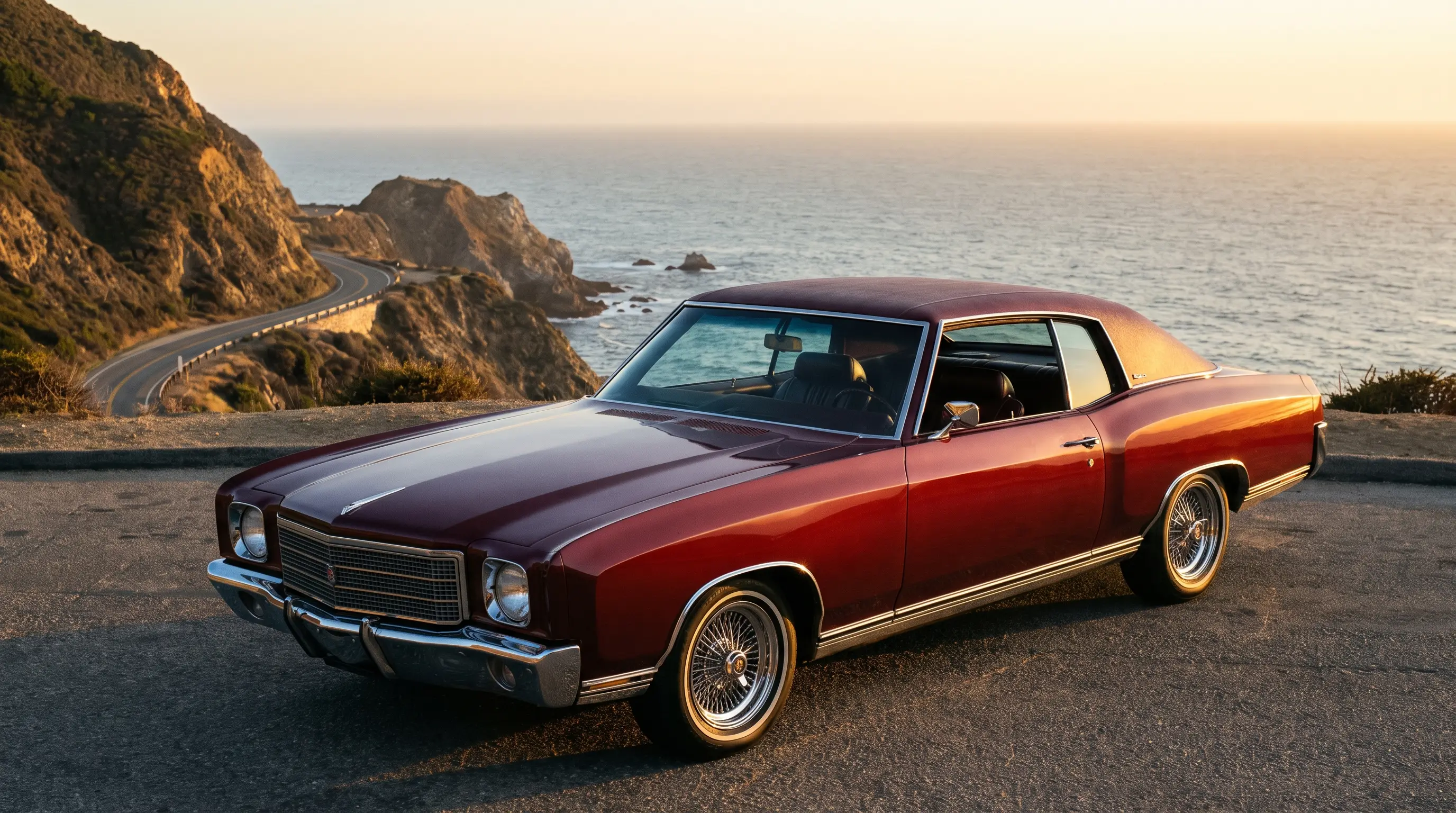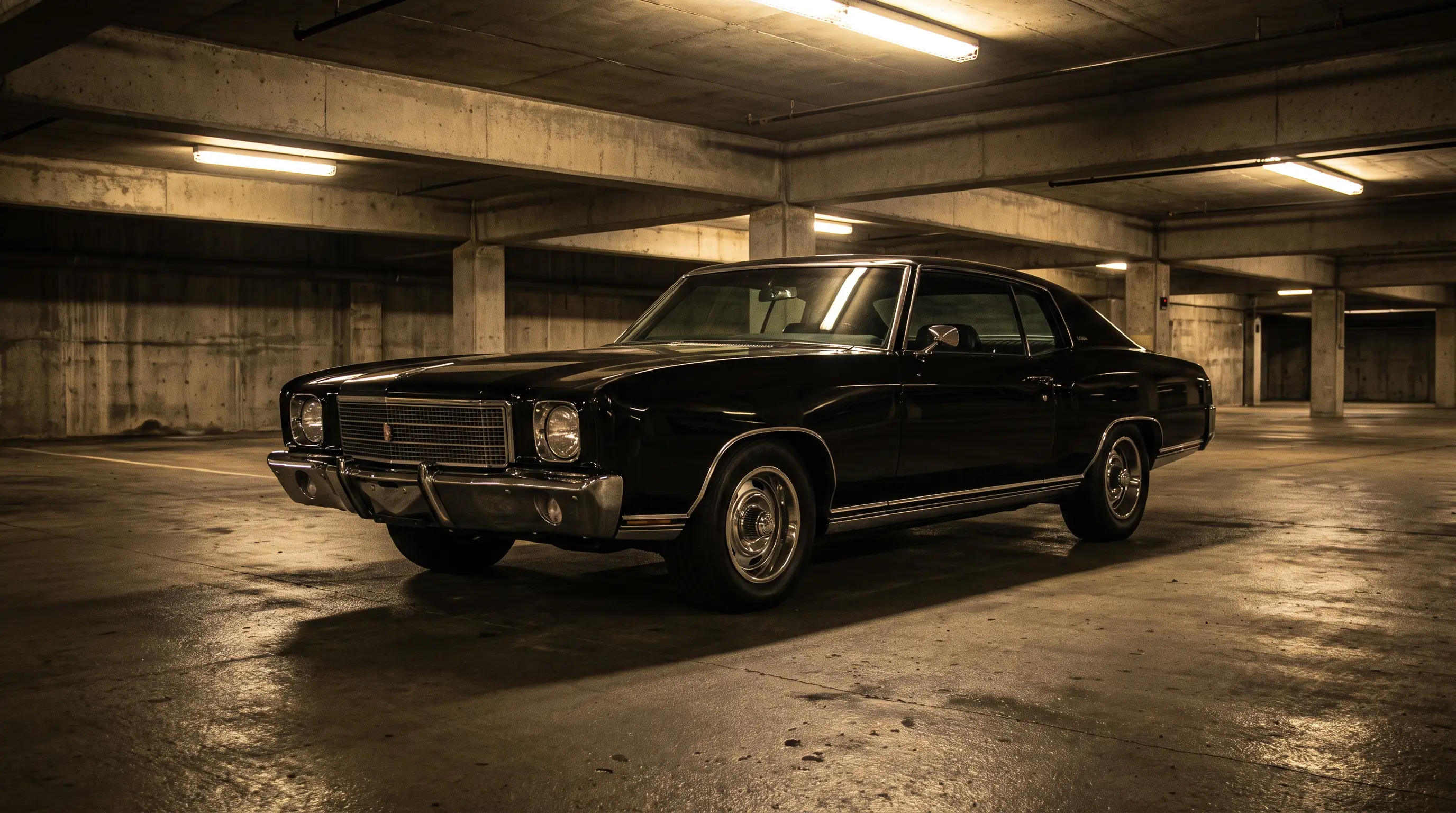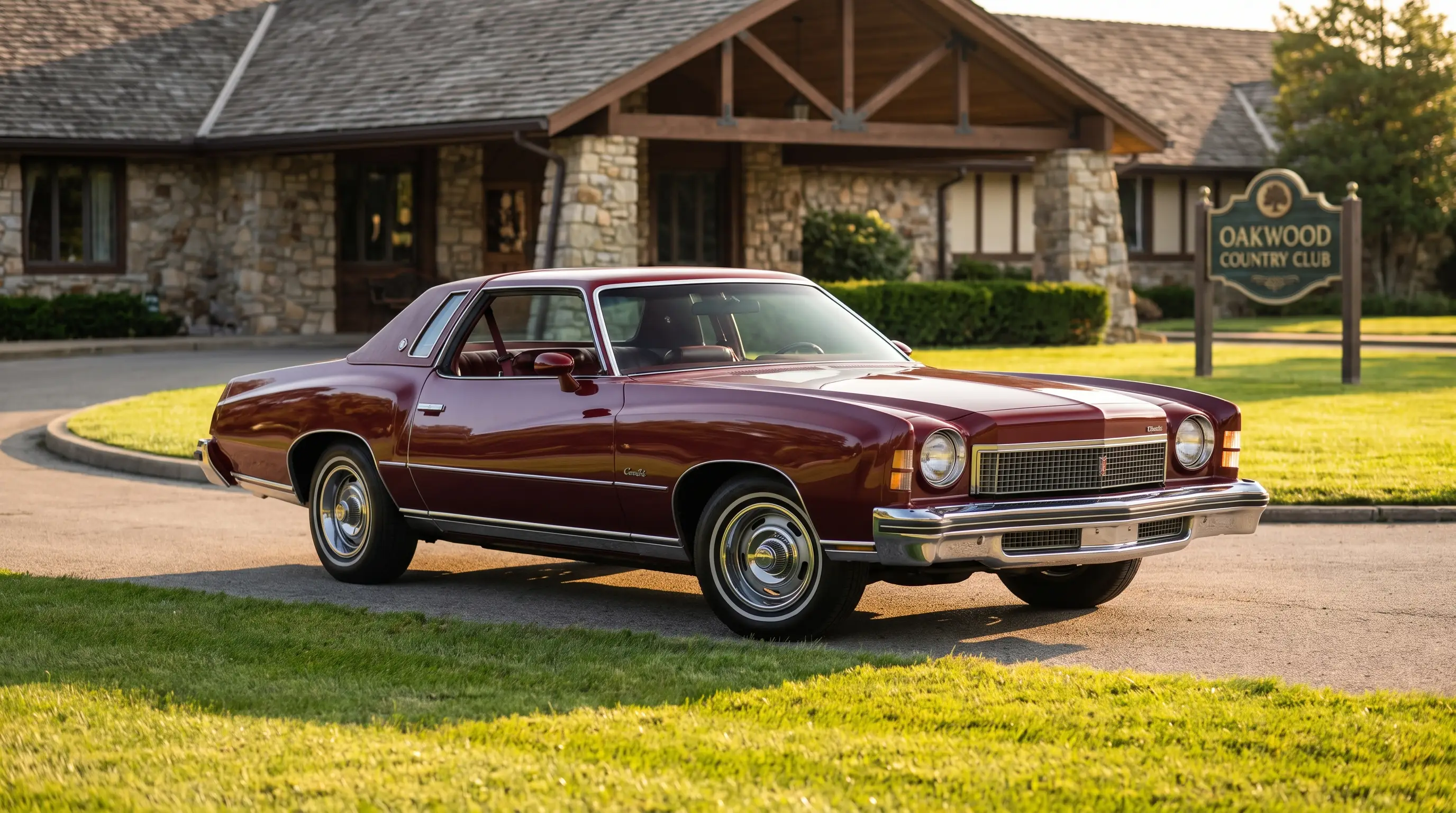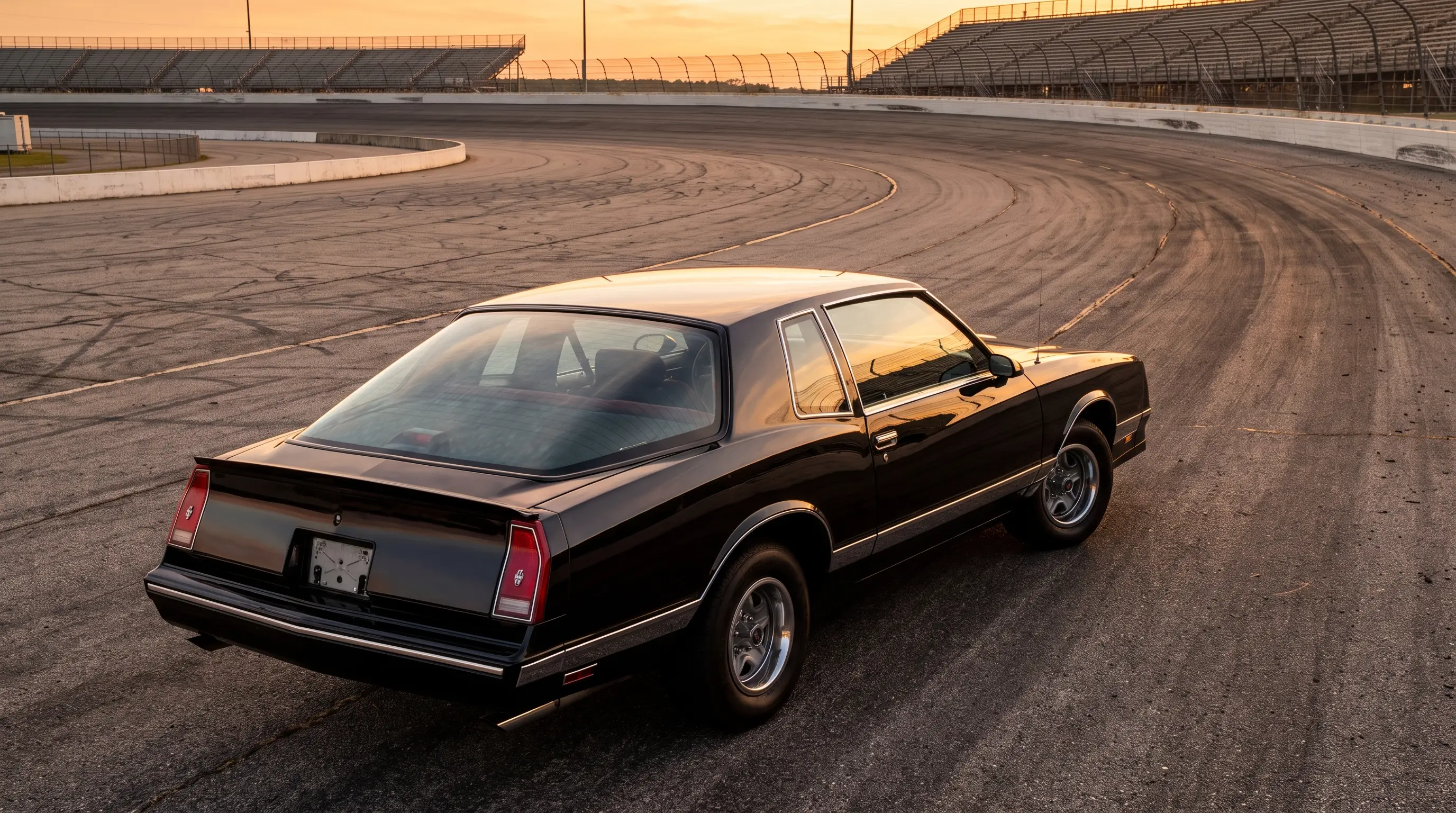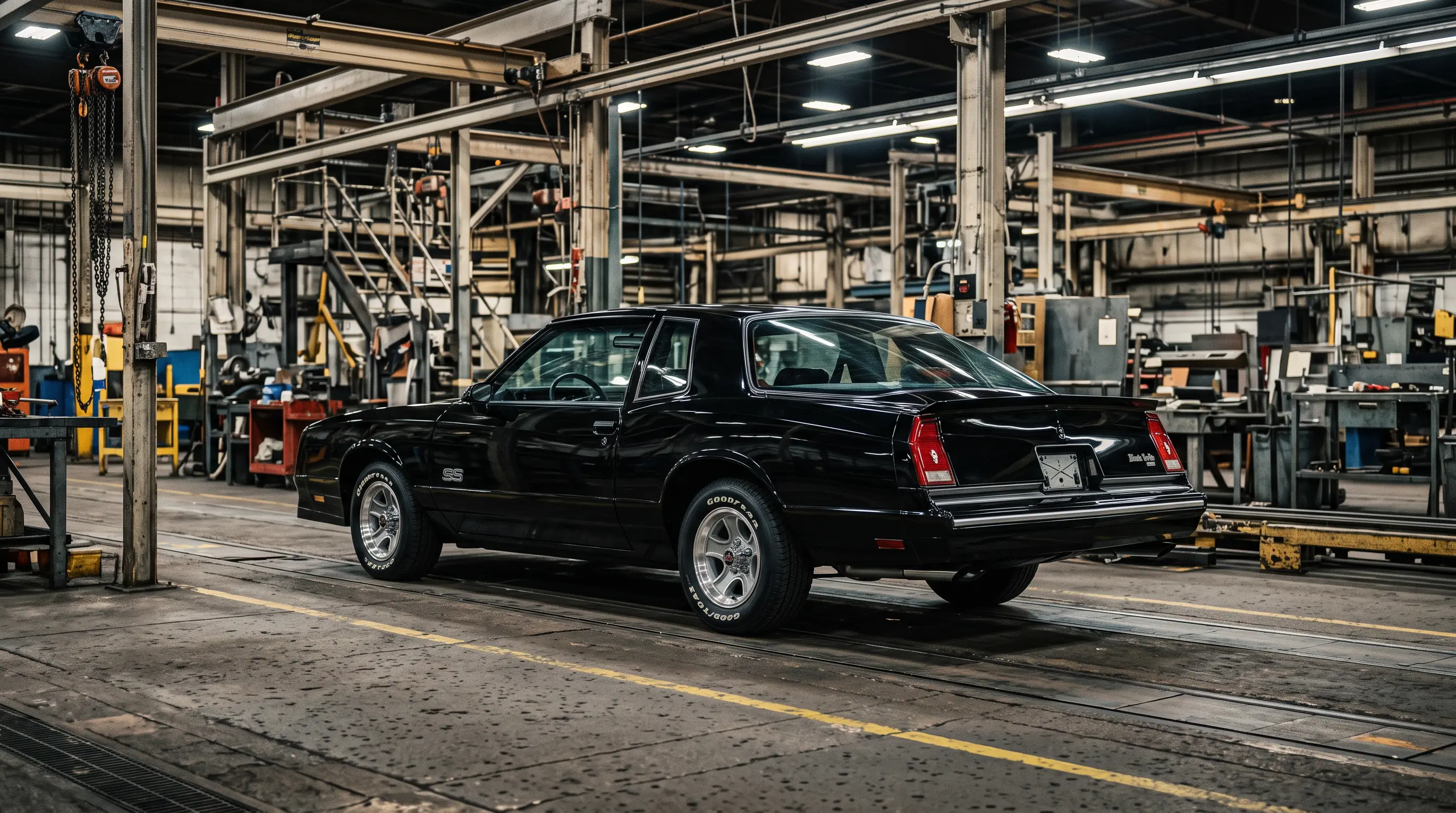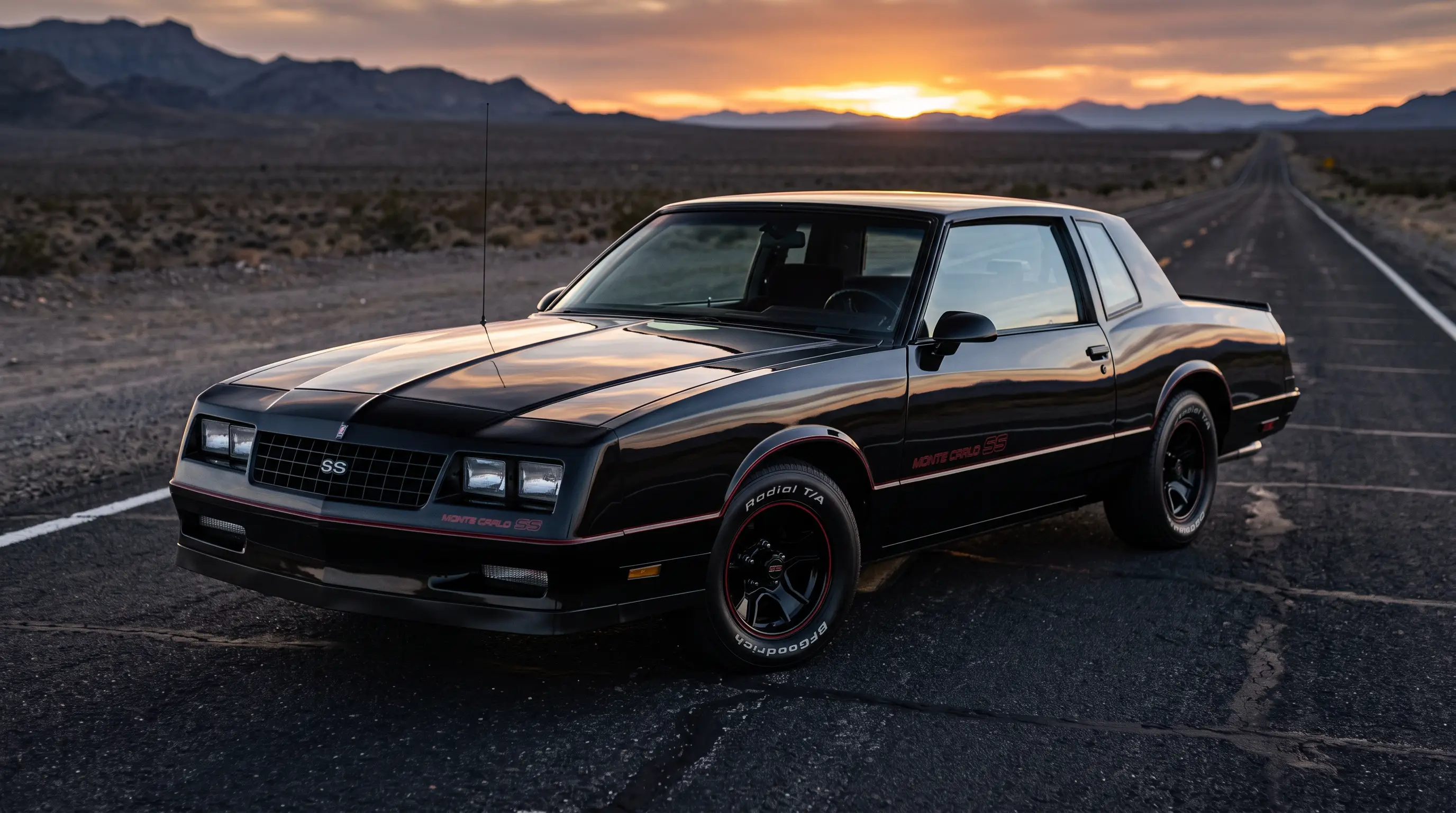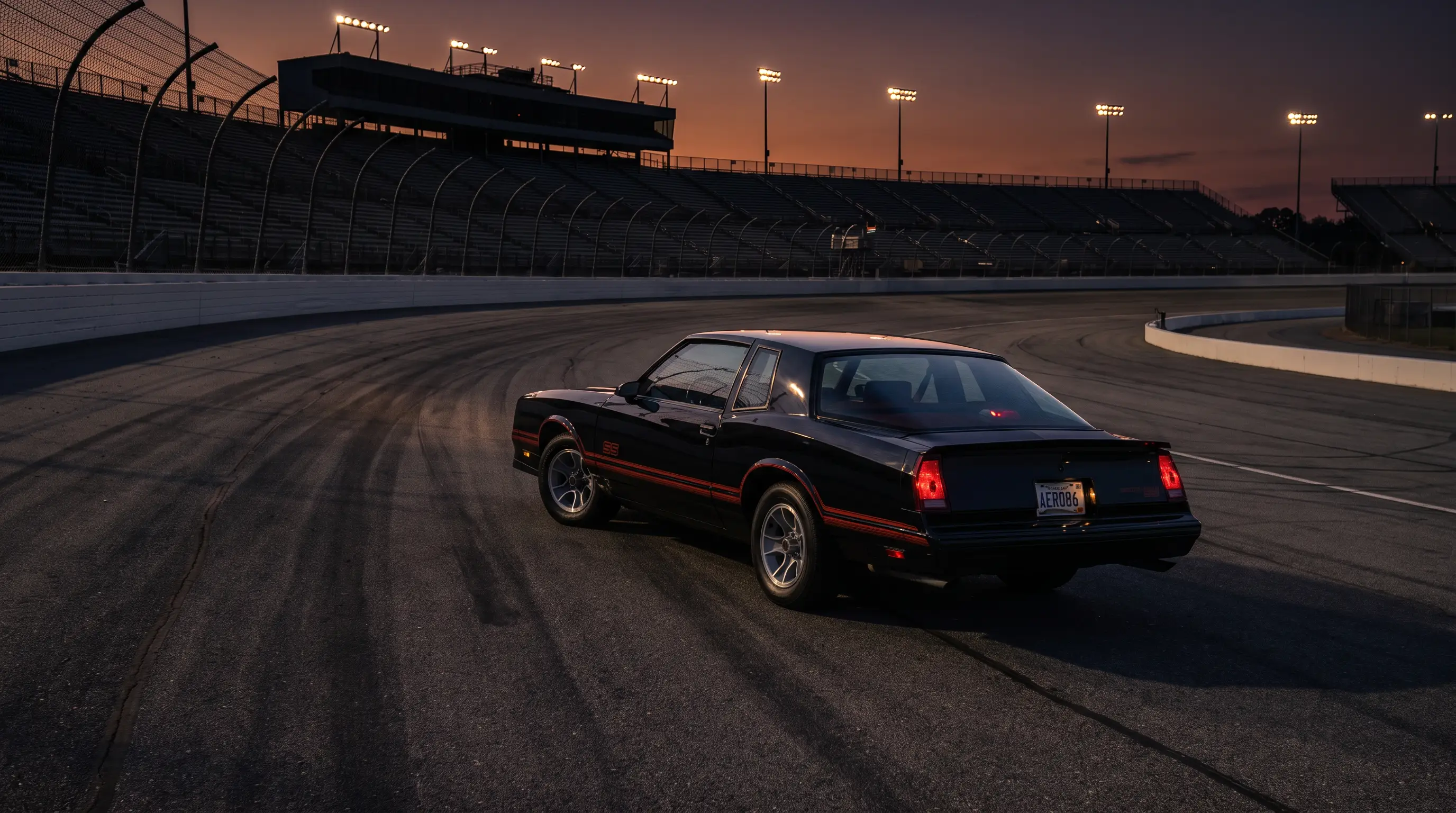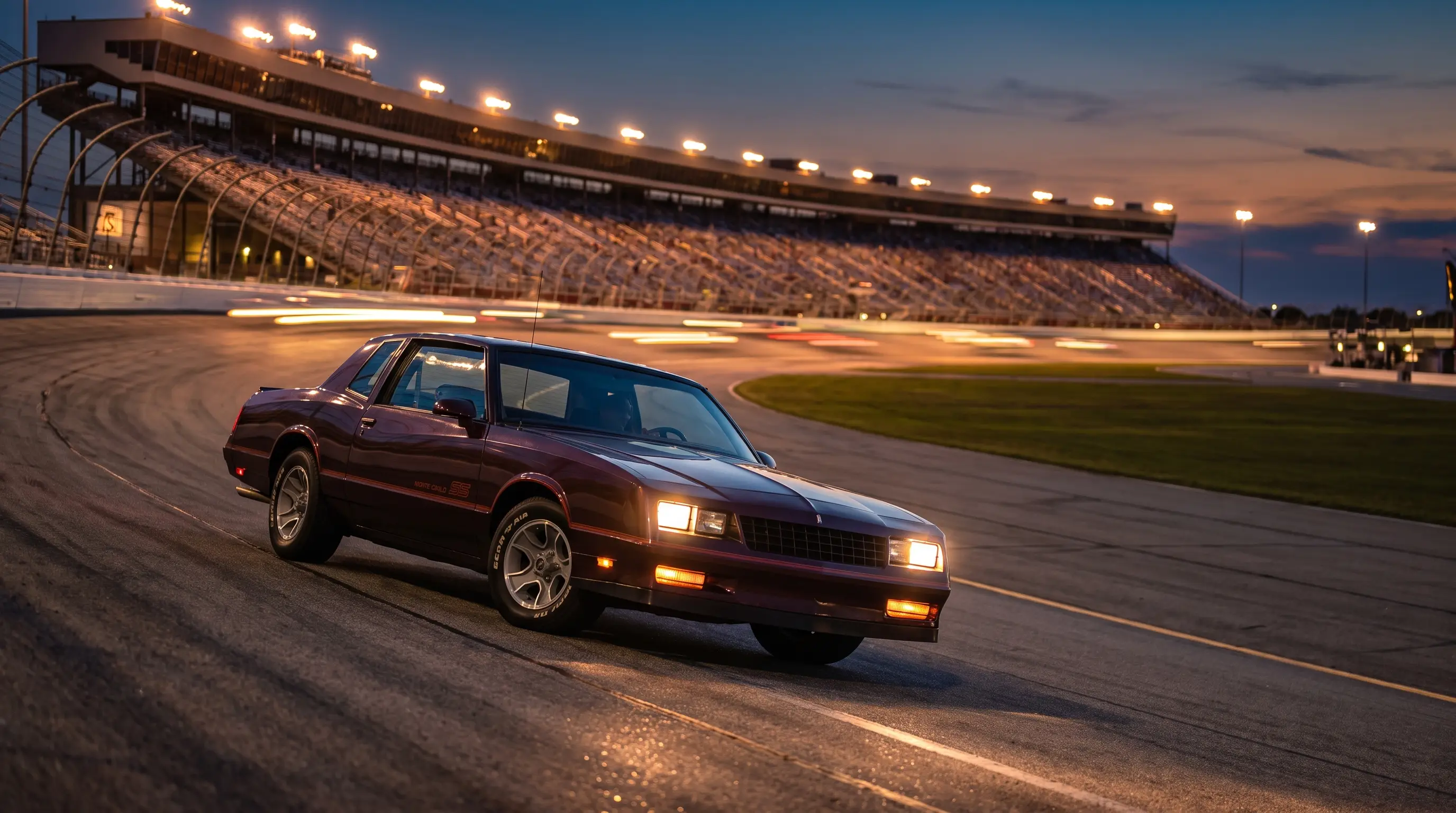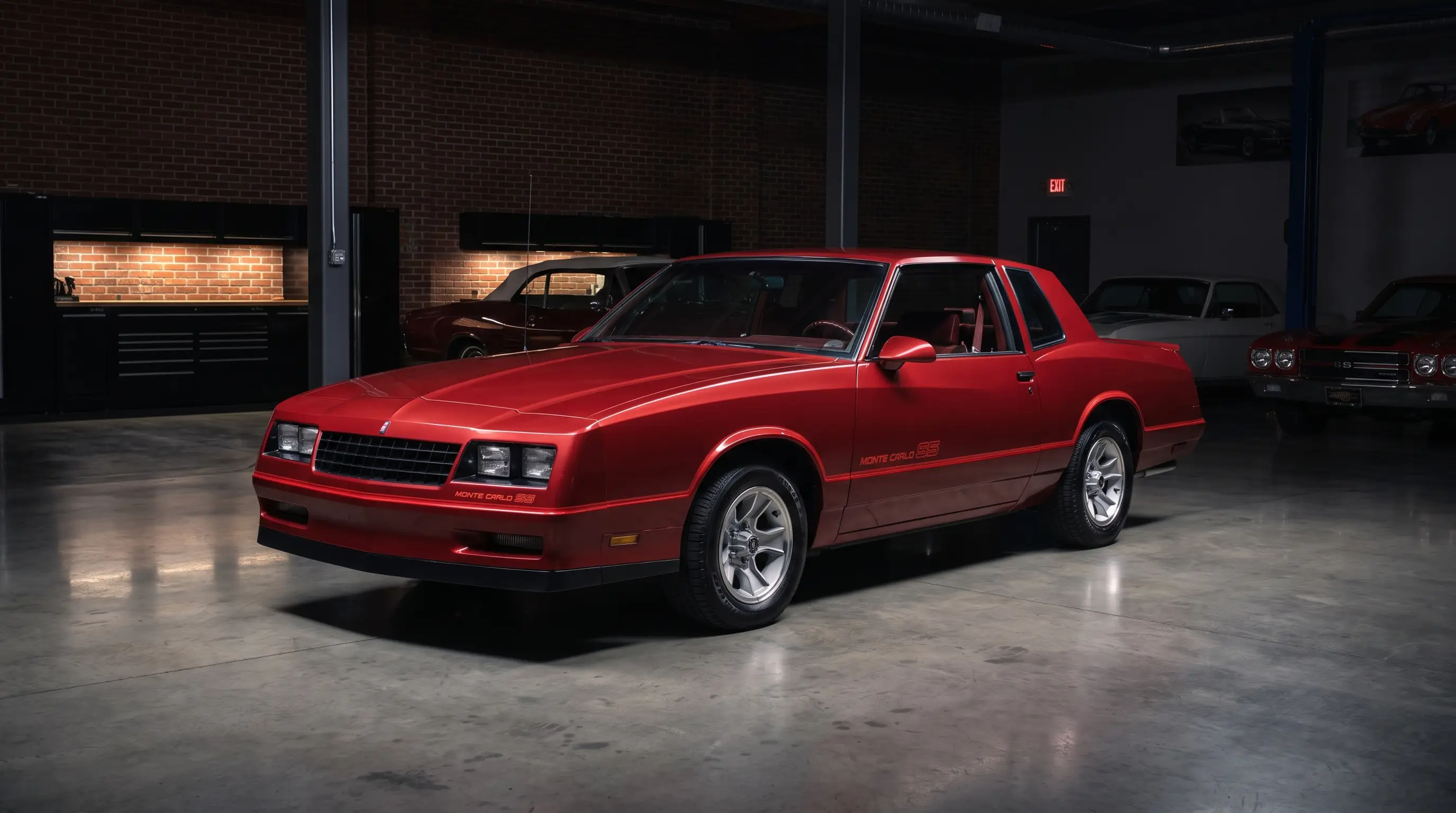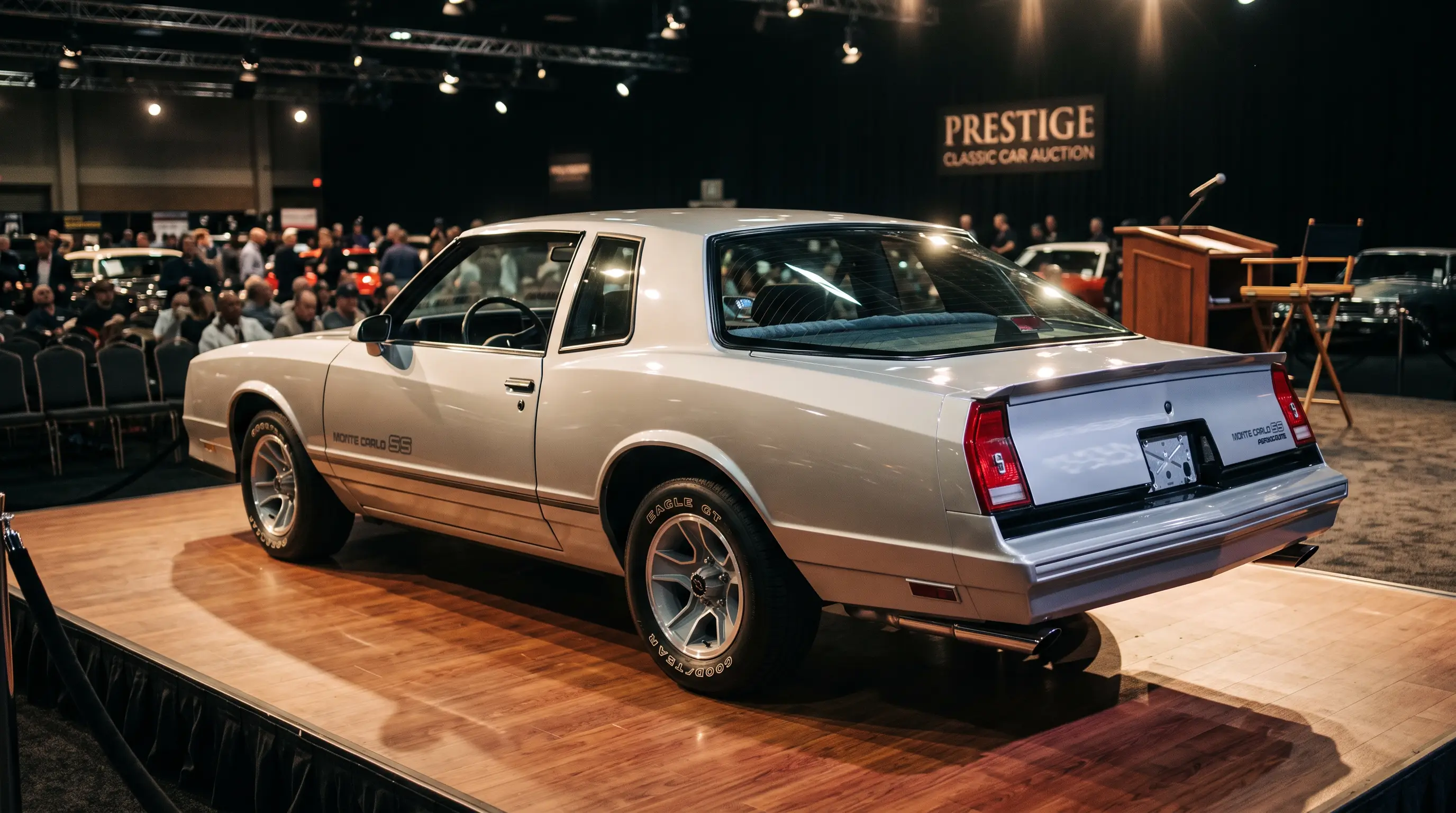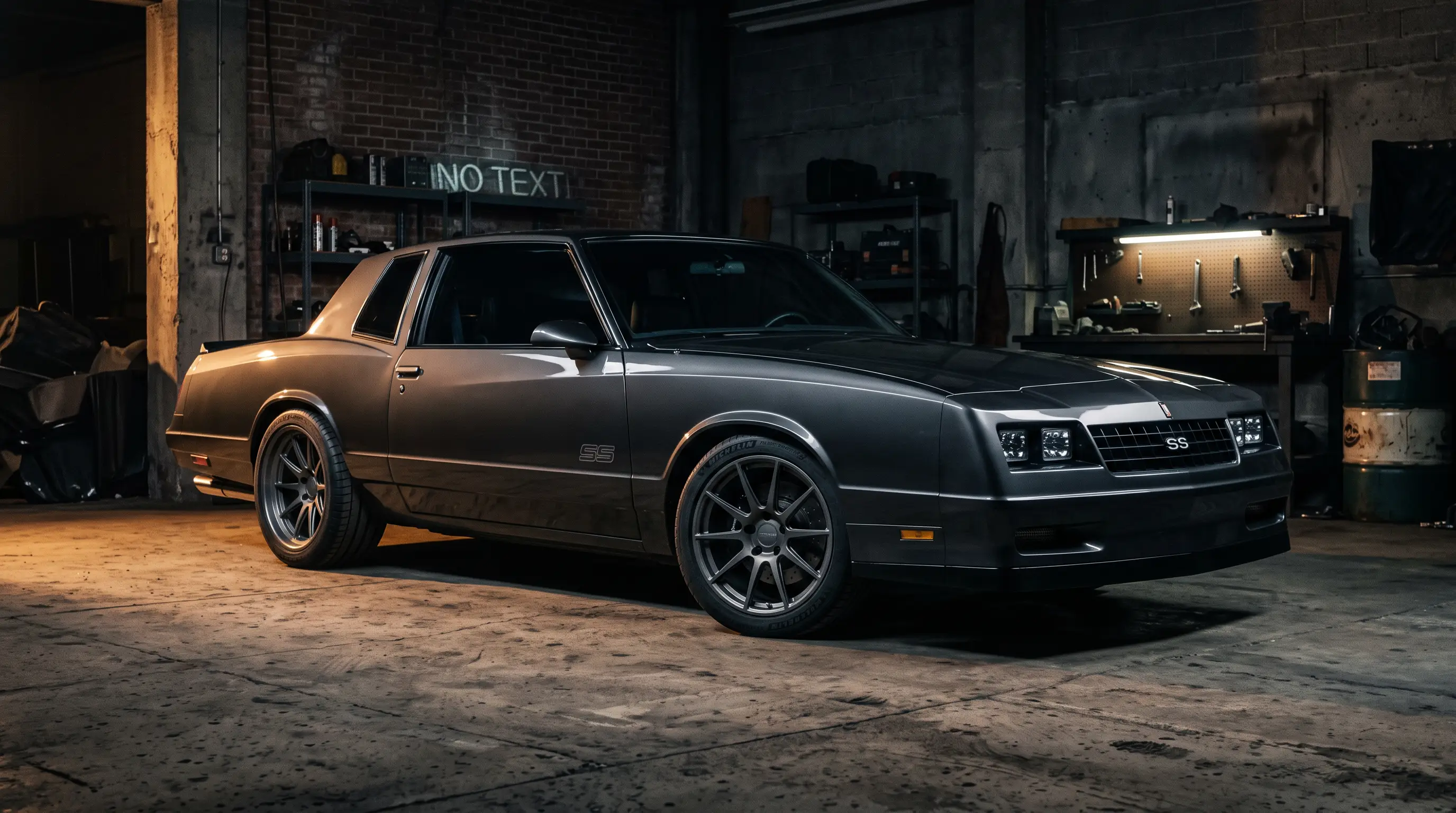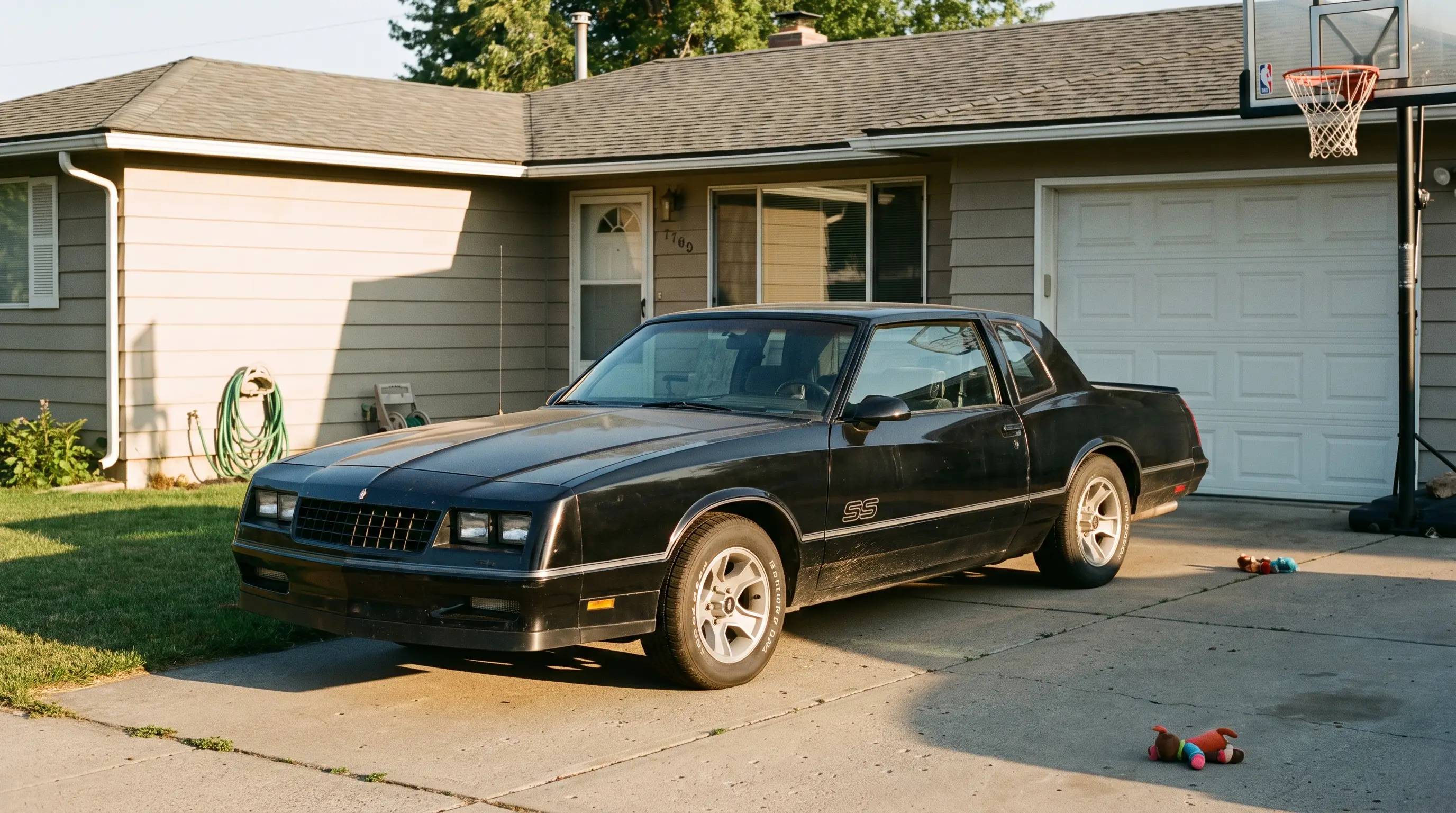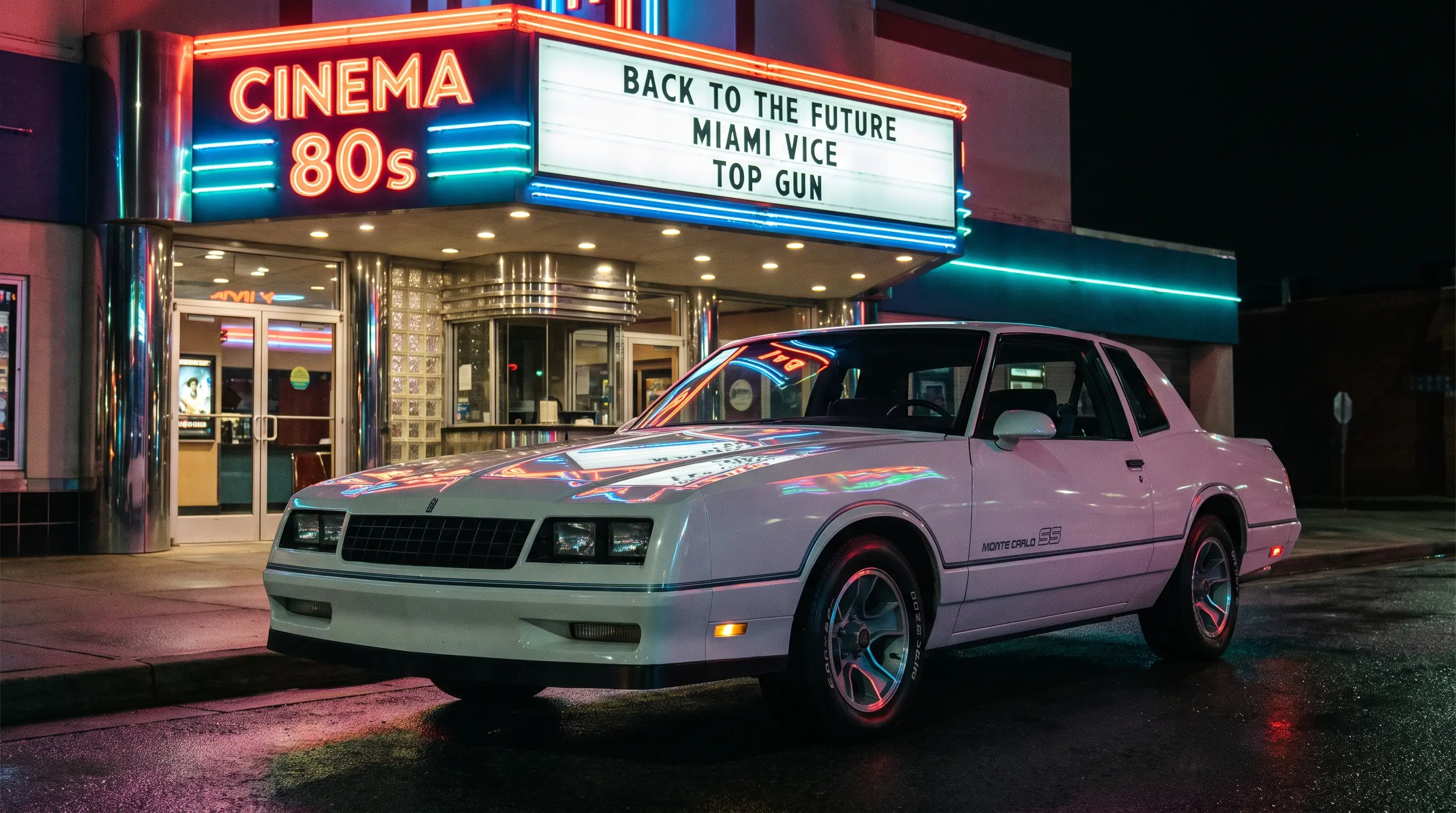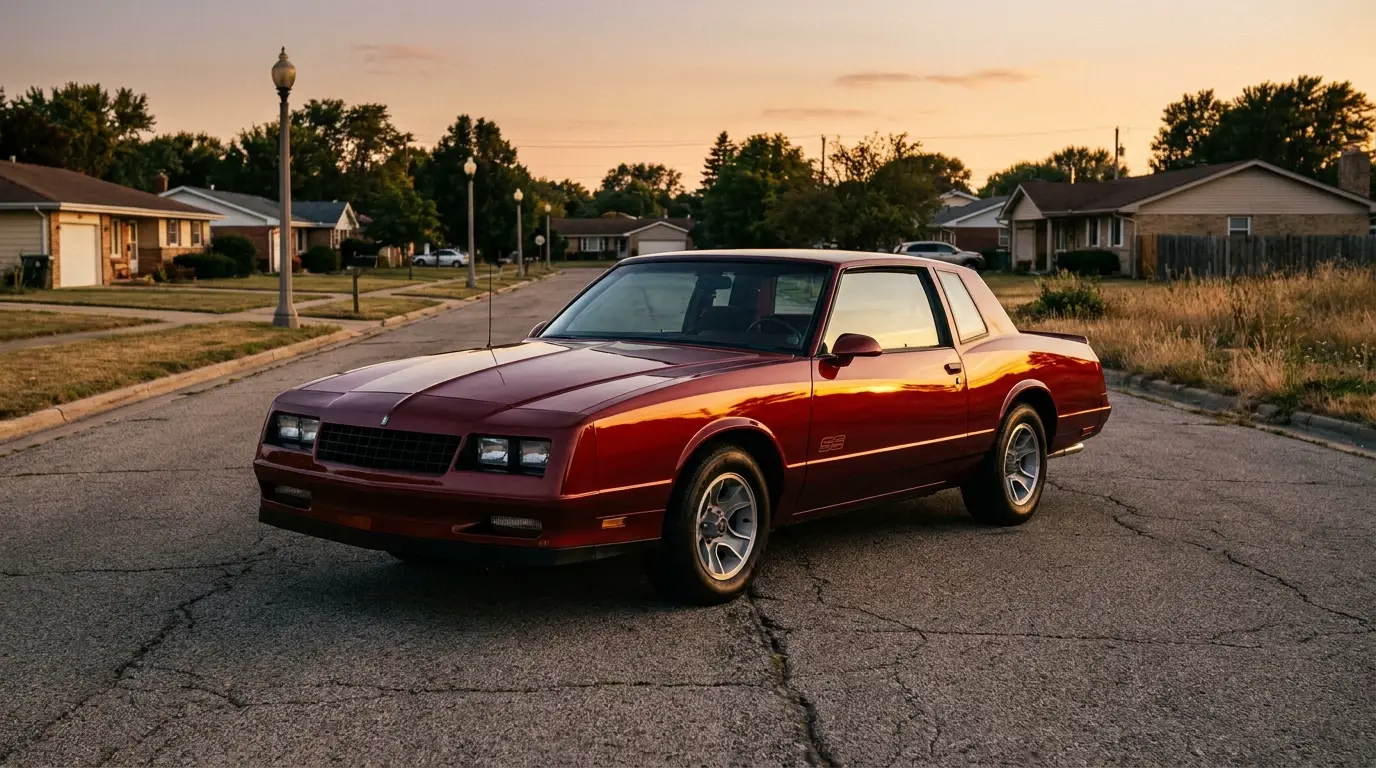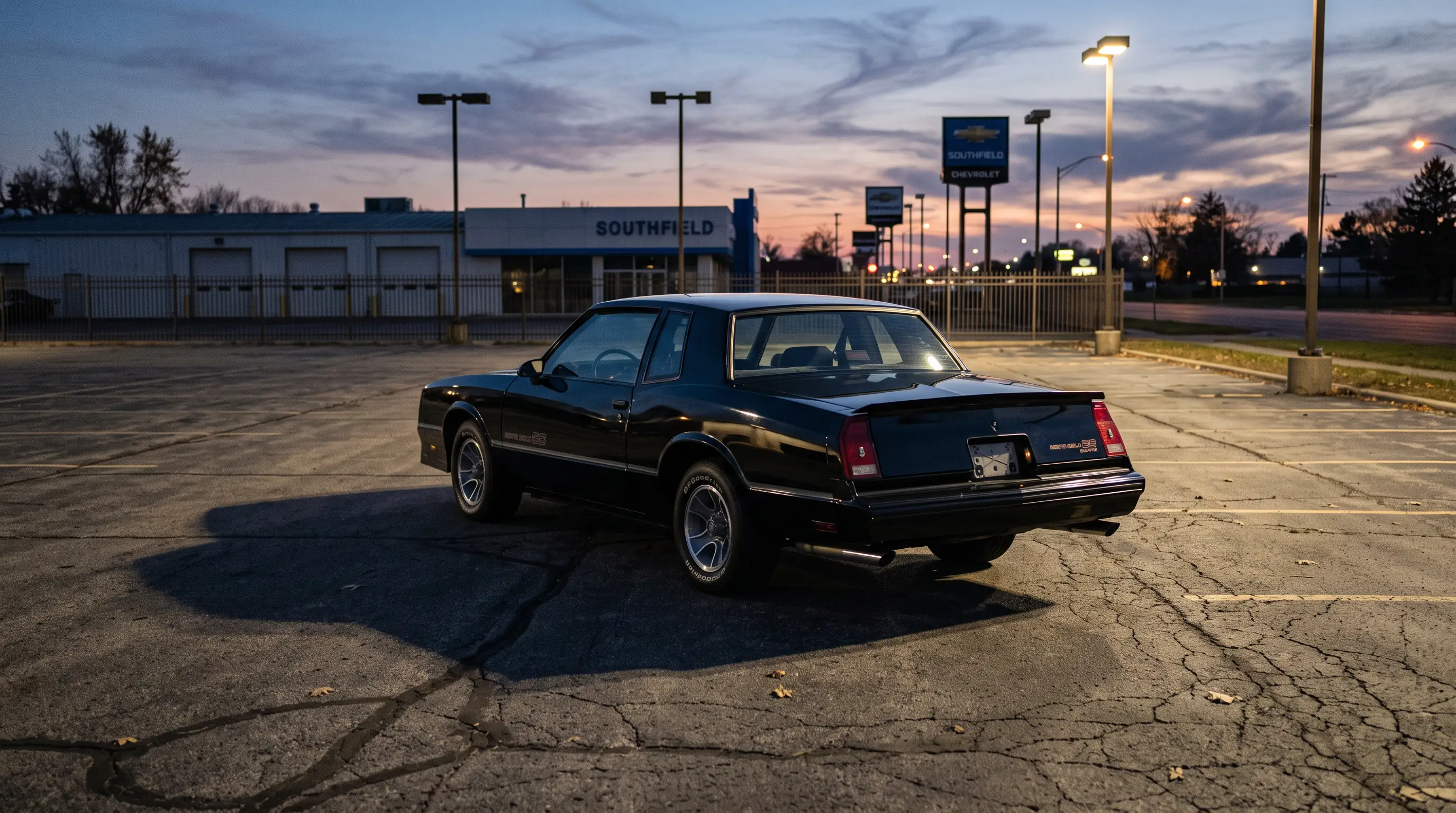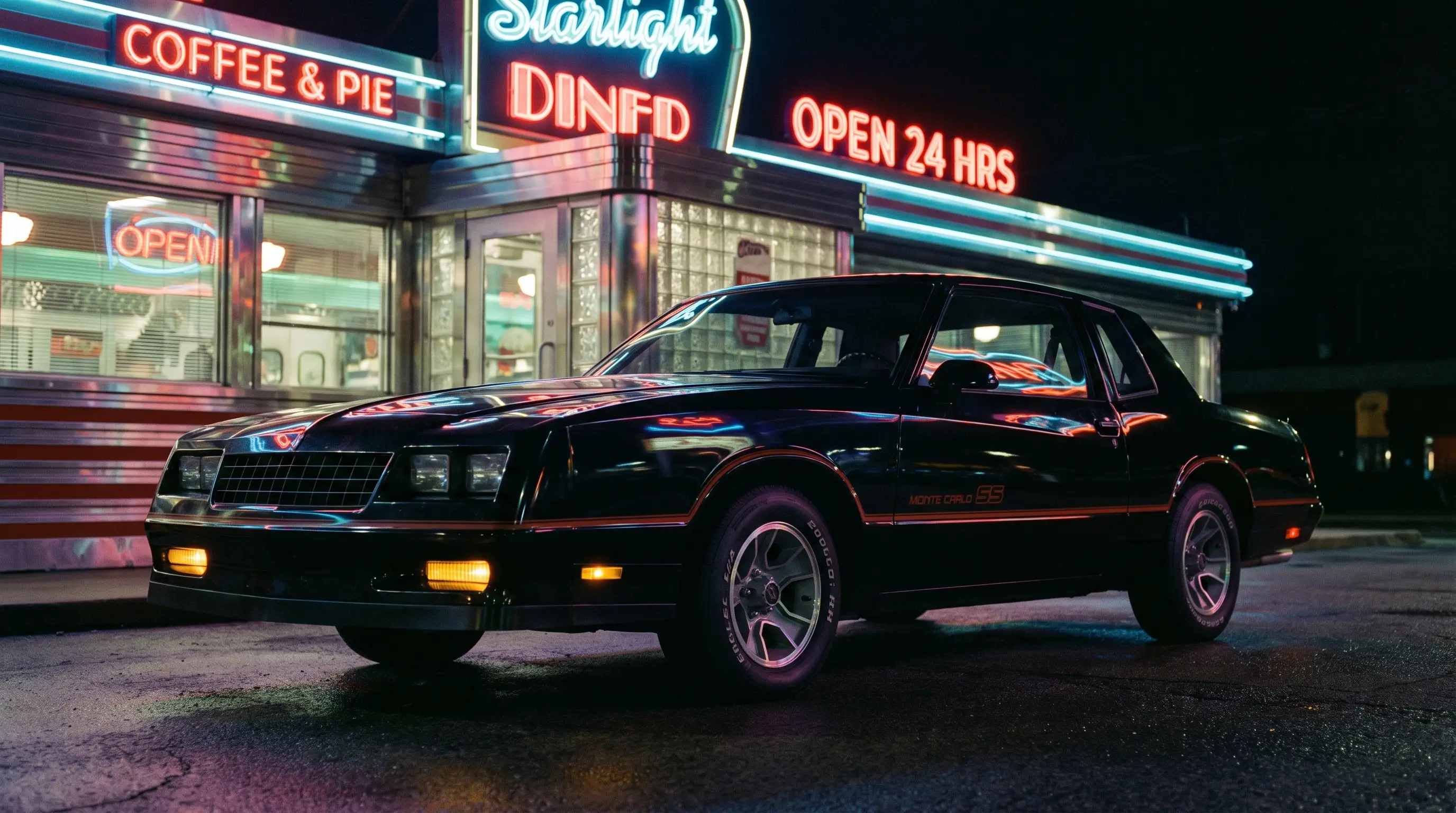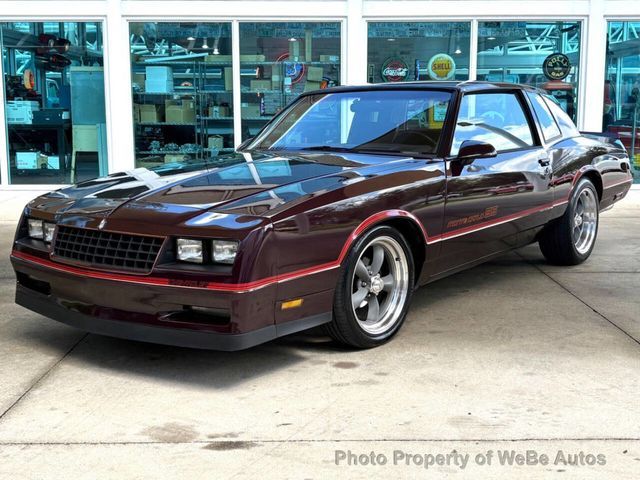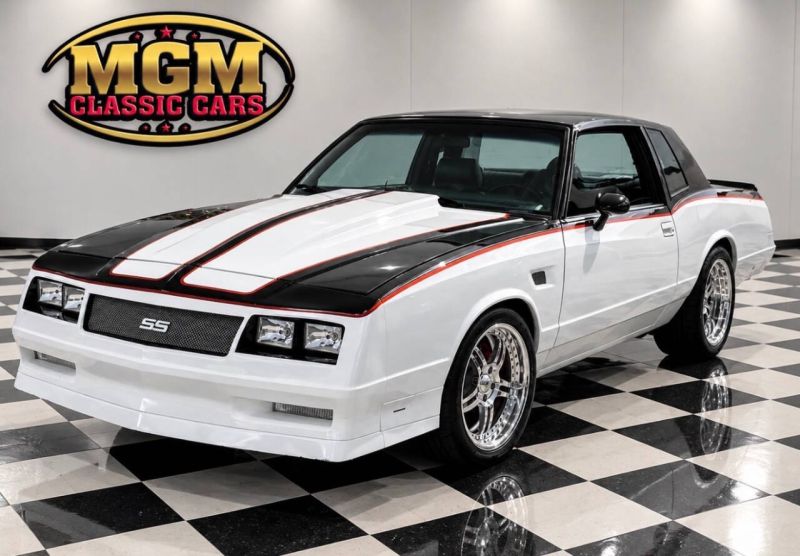
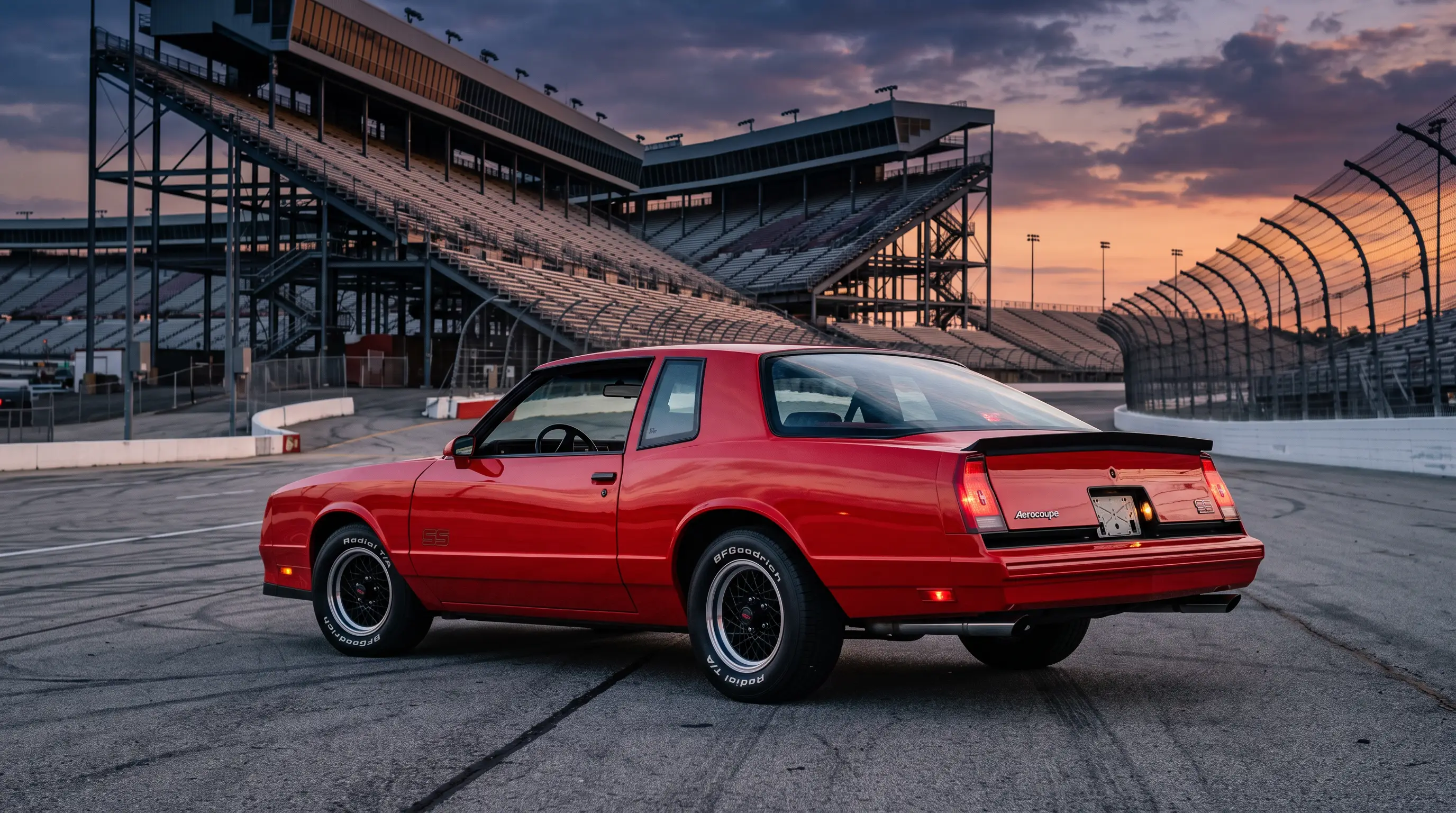
The numbers set the terms. Chevrolet built only 200 Monte Carlo SS Aerocoupes for 1986, and it built them for one narrow reason: to make a stock car legal on Sunday. Everything else about the car, the price, the interior, the color choices, was secondary to a rear window that sloped closer to horizontal. That is the honest version of the story, and it is more interesting than the myth. The 1986 Monte Carlo SS was the last real muscle car to wear the Monte Carlo name, and the Aerocoupe was its sharpest expression.
People remember the 1980s as a dead decade for American performance. Mostly true. The exception list is short, and the G-body Monte Carlo SS is on it. Not because it was quick by 1970 standards. It was not. It was quick by 1985 standards, which is the only measurement that counts here.
What Chevrolet actually sold you
The 1983 mid-year reboot brought back the SS badge on a personal-luxury coupe that had spent the late 1970s getting soft. Under the hood sat the L69 version of the 305 small-block, the 5.0-liter High Output. Chevrolet rated it at 180 horsepower and 225 pound-feet of torque. That is a modest figure now. In 1984 it was a headline, because most V8 coupes on the lot made less.
The drivetrain was plain and durable. A four-speed automatic, the 200-4R, sent power to a live rear axle. No manual was offered on the SS in any meaningful volume. The suspension got firmer springs, larger sway bars, and quicker steering. Nothing exotic. The point was not corner-carving. The point was a big front-engine, rear-drive coupe that looked the part and ran high-15-second quarter miles, which in the Reagan years qualified as fast.
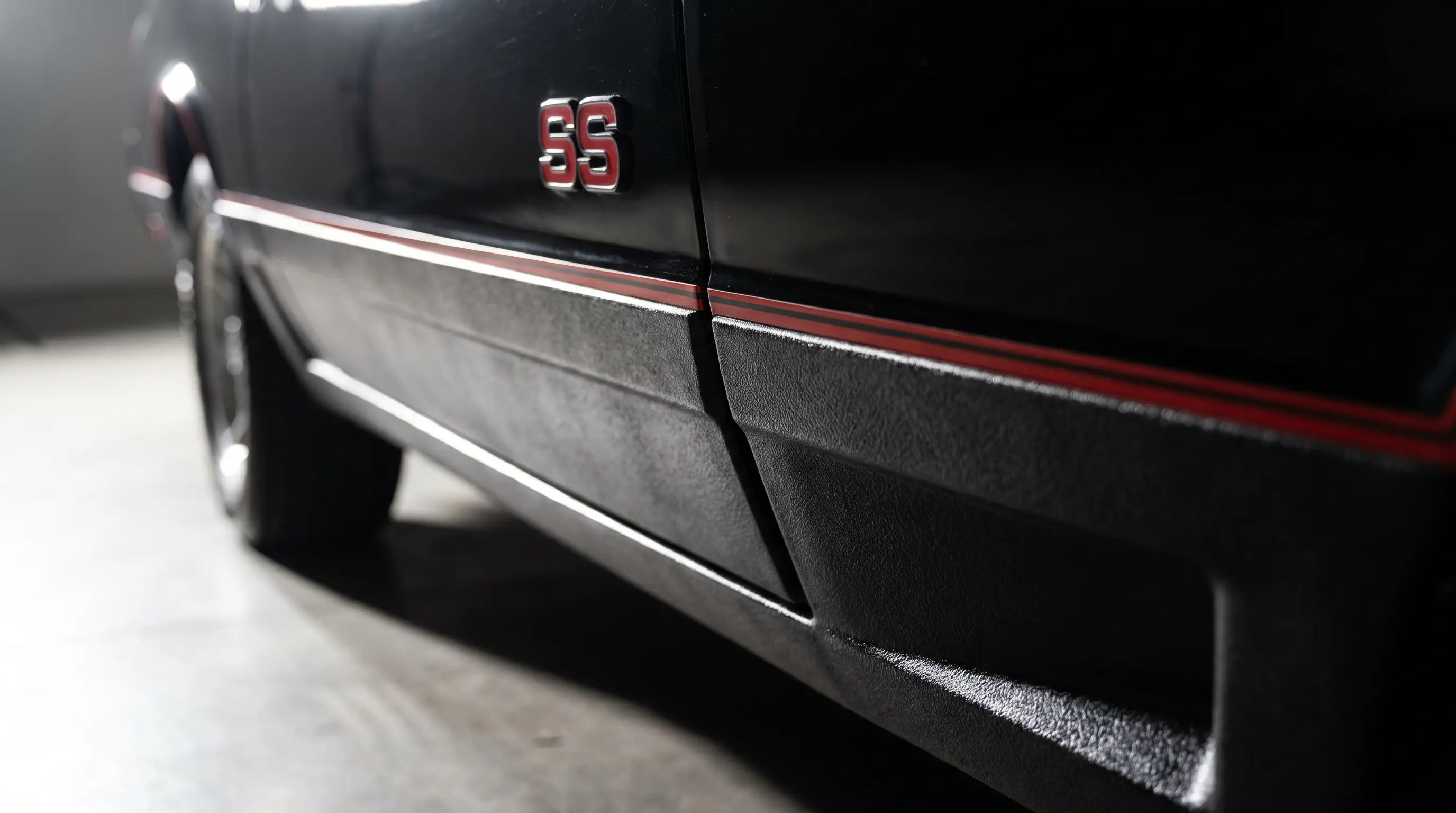
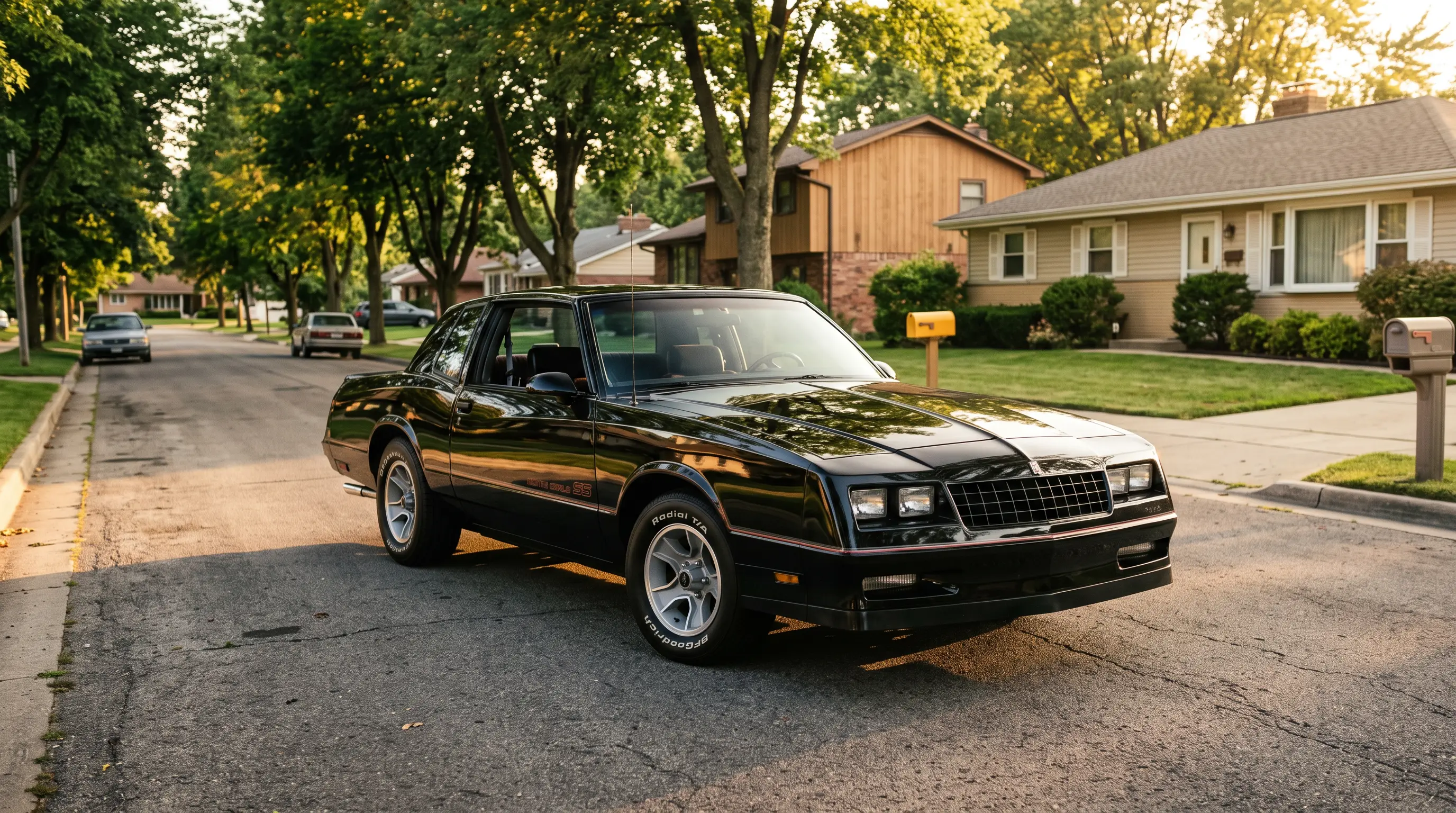
The look did most of the work. A sloped nose cap, a decklid spoiler, five-spoke aluminum wheels, and bold SS lettering separated it from the Landau grandpa-spec Monte Carlo sitting next to it in the showroom. Buyers understood the difference immediately. That clarity is part of why the car has aged well as a collectible. For the full arc of the model, our chevrolet monte carlo history covers the ground from 1970 to the end.
| Detail | Figure |
|---|---|
| Engine | 305 cu in (5.0L) L69 High Output V8 |
| Rated power | 180 hp |
| Rated torque | 225 lb-ft |
| Transmission | 200-4R four-speed automatic |
| Drive layout | Front engine, rear-wheel drive |
| SS production years | 1983 to 1988 |
| Aerocoupe years | 1986 and 1987 |
Where it landed in the 1980s pecking order
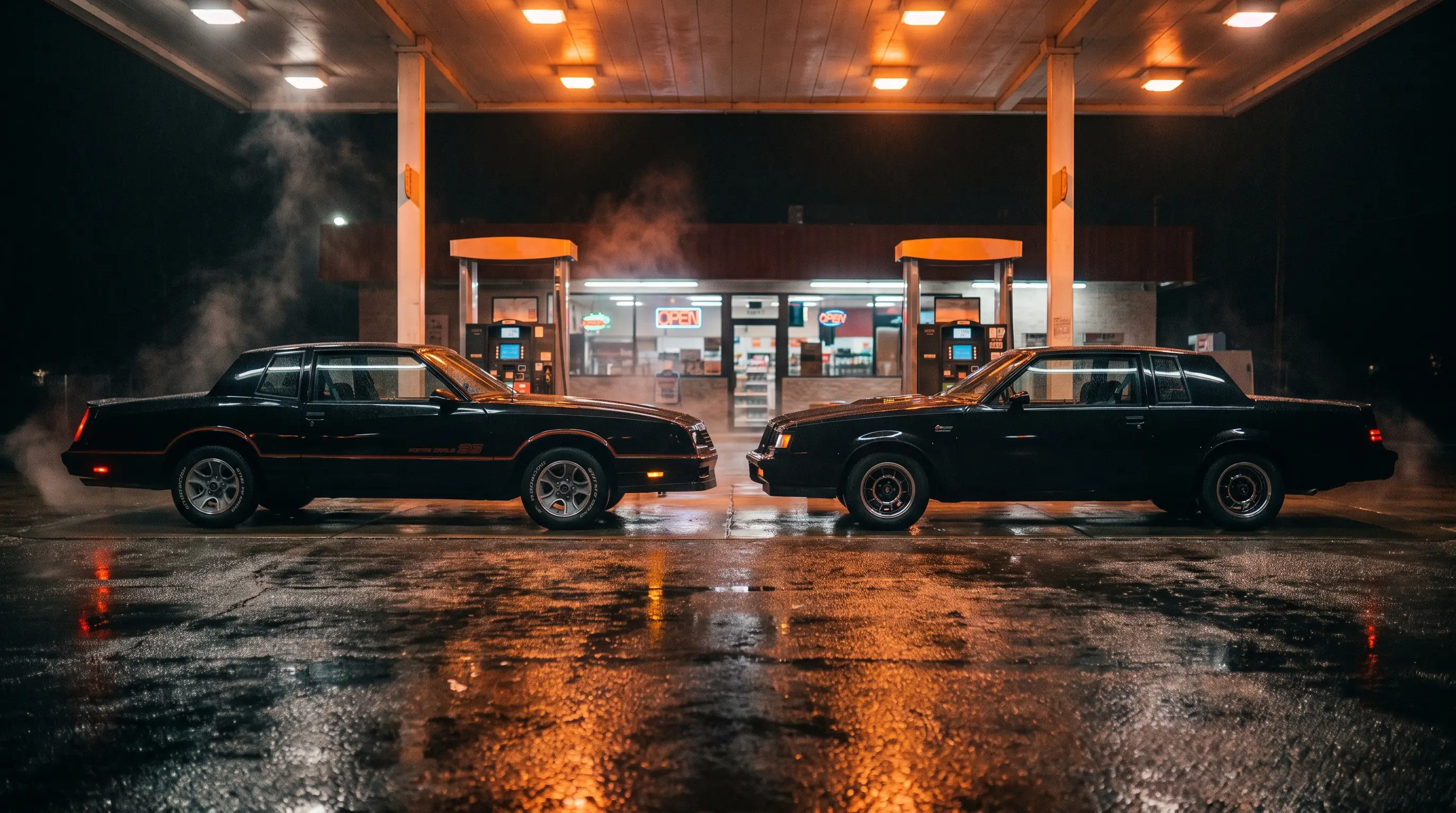
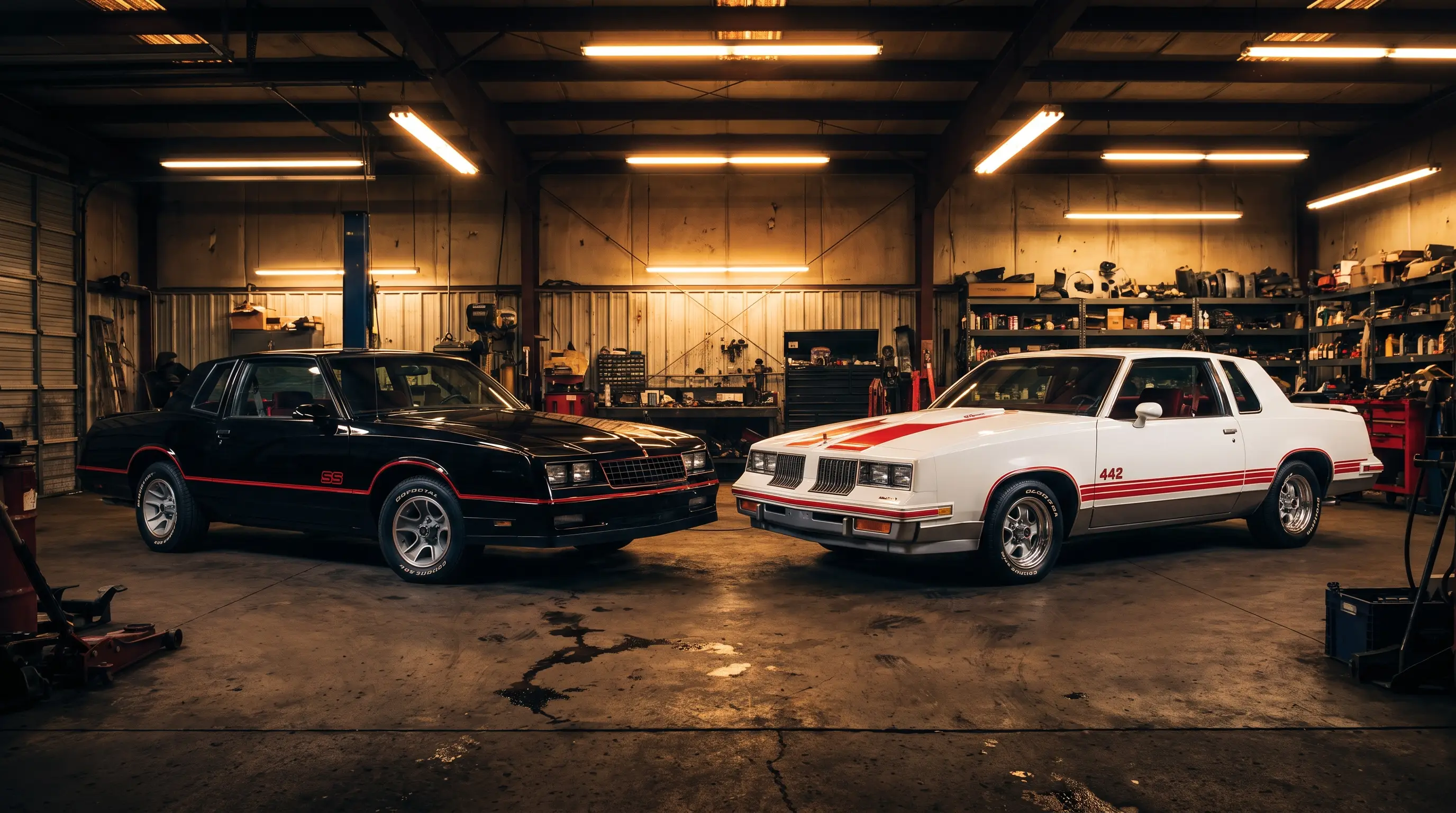
Context matters, so here is the honest ranking. In its own showroom era the Monte Carlo SS was not the quickest thing General Motors sold. That title belonged to a corporate cousin, the Buick Grand National, whose turbocharged V6 embarrassed a lot of V8s and eventually the SS itself. The Fox-body Mustang GT with its 5.0 was lighter and quicker in a straight line. On paper, a numbers guy has to admit the Monte Carlo gave up ground to both.
So why does the SS still matter. Because it offered something those cars did not: a big, rear-drive, personal-luxury body with genuine V8 character and a badge that carried real muscle-car lineage. The Grand National was a hot rod in a trench coat. The Mustang was a pony car. The Monte Carlo SS was a cruiser that could run, and it looked like a Sunday stock car while doing it. Different mission, different buyer, and the market has rewarded that distinction.
There is also the matter of size and presence. The SS sat on a 108-inch wheelbase and carried the long, formal nose that made it look substantial next to a compact Mustang. For a certain buyer that presence was the whole point. Straight-line numbers were never the only currency in the 1980s, and the Monte Carlo traded on image as much as output. Decades later, that image is exactly what collectors are paying for.
The Aerocoupe was a homologation trick, and it worked
Here is the part that matters. By the mid-1980s the NASCAR superspeedway game was an aerodynamics fight. Ford had the slick Thunderbird. Pontiac tried the 2+2. Chevrolet's notchback Monte Carlo SS pushed too much air at 190 miles per hour, and the drivers felt it at Daytona and Talladega. The fix was a fastback rear glass and a shorter decklid, cutting drag at the back of the car.
NASCAR rules said you could only race a body you also sold to the public. So Chevrolet sold it. The 1986 Monte Carlo SS Aerocoupe reached dealers in small numbers, built to satisfy the homologation minimum and little more. The compound-curved rear window was nearly flush, the trunklid was stubby, and the whole car looked like it was leaning into a corner while parked. It was not subtle. It was not meant to be.
Production climbed for 1987 when the homologation bar rose. Chevrolet built 6,052 Aerocoupes that year, which is why a 1987 is the one you actually find for sale and a 1986 is the one that empties a checking account. The 1988 model year brought no Aerocoupe. The standard SS notchback carried on for a final season, and then the classic rear-drive Monte Carlo was done.
Dale Earnhardt made the shape famous
The road cars exist because of the race cars, and the race cars exist in memory because of one driver. Dale Earnhardt won the 1986 and 1987 Winston Cup championships in Chevrolets, and the Aerocoupe body was the tool for the fast tracks during that run. The black number 3 came a little later in the story, but the Monte Carlo shape is welded to Earnhardt's rise for a whole generation of fans.
That connection does two things to values. It lifts them, because provenance and pop-culture weight always lift muscle-era prices. It also floods the market with tribute cars and clones, which is where a buyer has to keep his eyes open. A genuine Aerocoupe has documentation. A dressed-up notchback with a swapped rear window is not the same car and should not carry the same price.
The wider point is simple. Racing sold the shape, and the shape sold the road car. Fans who watched the Chevrolet win on Sunday wanted a piece of it on Monday, and Chevrolet gave them the closest thing the rules would allow. That feedback loop between the speedway and the showroom was the whole business model of American performance in the 1980s, and the Monte Carlo SS is one of its clearest surviving examples. Take away the racing and the SS is a nice coupe. Add it back and the SS is a piece of the sport's history you can park in a garage.
What these cars are worth now
Reality check. A clean, documented 1987 Aerocoupe trades in a range that would have shocked anyone who bought one new and watched it depreciate through the 1990s. The standard 1983 to 1988 SS notchback is more attainable and remains one of the better-value entries into 1980s American performance. The 1986 Aerocoupe, with its tiny build number, sits at the top and rarely comes up for public sale.
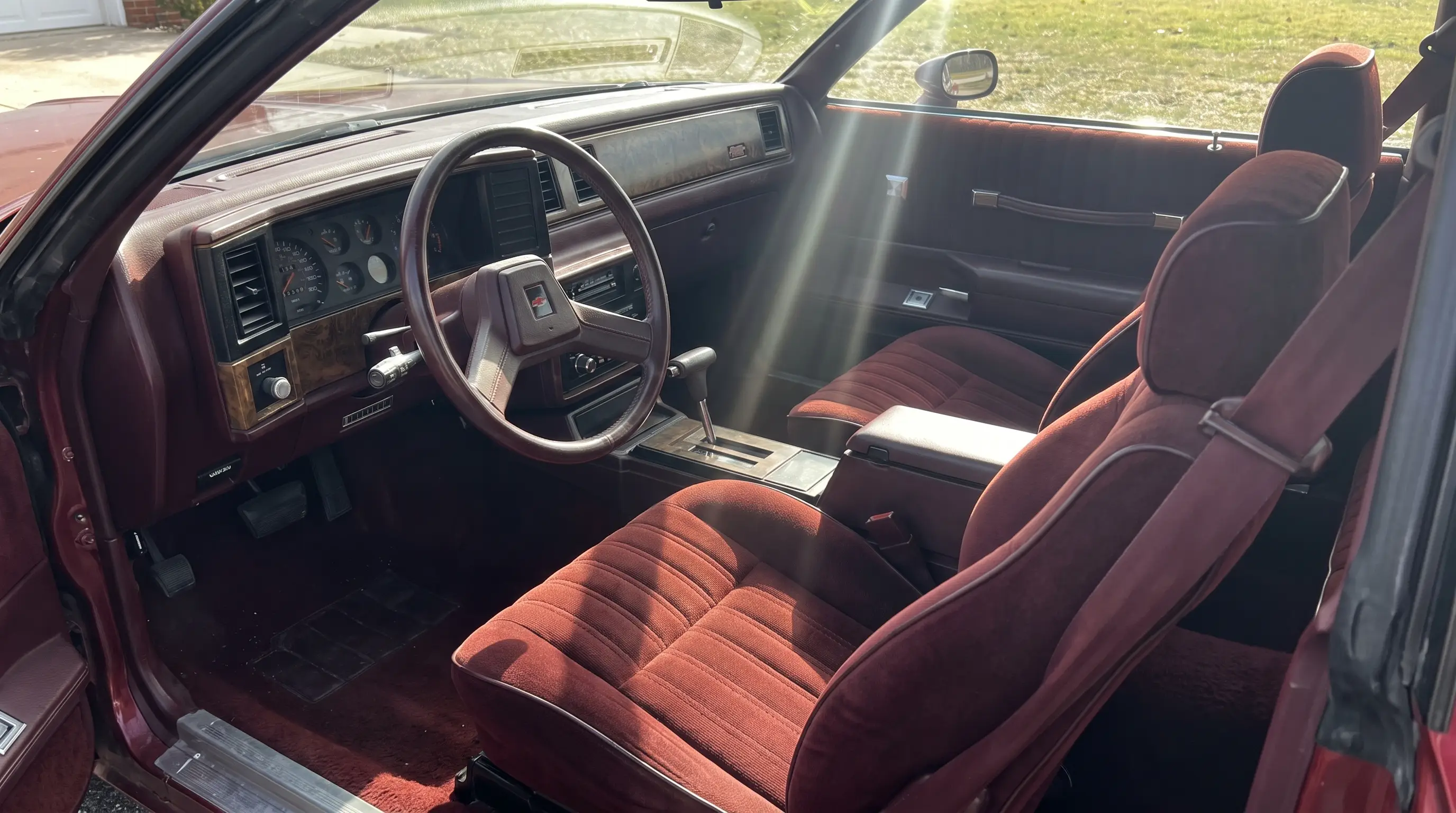
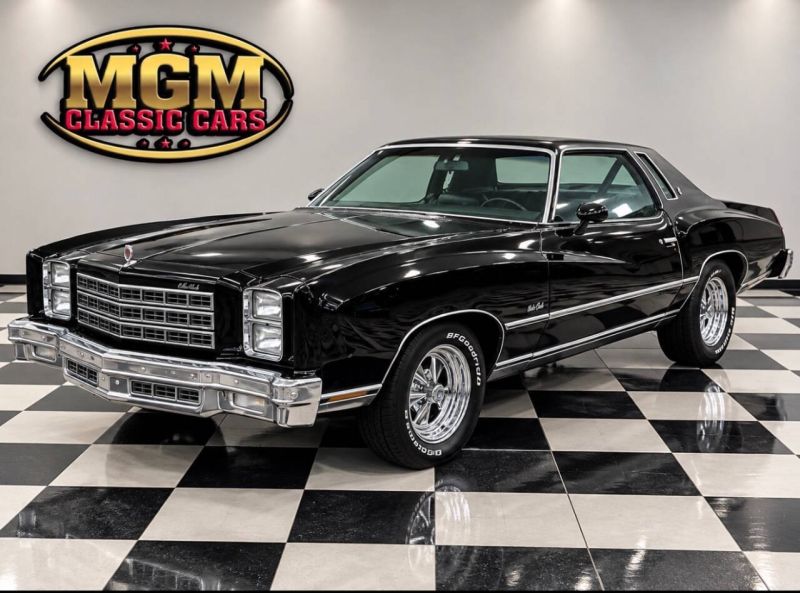
Condition drives everything. These were mass-market G-bodies with interiors that wore fast and paint that chalked. A car with a straight body, an unbutchered engine bay, and paperwork beats a shinier example with a cloudy history every time. If a first-generation Monte Carlo is more your speed, the worth a look too chapter on the Colonnade years is a different animal entirely, more cruiser than bruiser.
For anyone shopping right now, it pays to compare real cars against each other rather than against nostalgia. You can shop classic Monte Carlo listings and see how the SS and Aerocoupe pricing actually splits out once condition and documentation enter the picture.
One more market note, because it explains the trend. For years these cars were cheap. Through the 1990s a used Monte Carlo SS was a bargain-lot coupe, and plenty got thrashed, modified, or scrapped. That attrition did what attrition always does: it thinned the herd. The clean, unmodified, low-mileage survivors that once seemed ordinary are now the scarce ones, and scarcity plus nostalgia is the exact formula that moves a car from used to collectible. The people who kept theirs stock and stored them are the ones smiling now.
The demographic driving demand is worth naming too. The buyers pushing these prices are, in many cases, the people who wanted an SS as teenagers in the 1980s and could not afford one then. They can now, and they are buying the poster off the wall. That is a familiar pattern across the hobby, and it tends to be durable while that generation stays active in the market. The Monte Carlo SS is riding exactly that wave.
"Strip away the Earnhardt halo and you still have an honest fact: this was Detroit's last rear-drive Monte Carlo, and it left on a high note instead of a whimper. That alone earns the badge."
- Dan Reeves
Buying without getting burned
The market for these cars rewards patience and punishes impulse. A few plain rules keep a buyer out of trouble.
Why it earned the badge
Judge the 1986 Monte Carlo SS on its own decade and it holds up. It was rear-drive when almost nothing affordable was. It made real V8 noise. It carried a badge with a decade of muscle-car meaning behind it, and unlike a lot of 1980s revivals, it backed the badge with a genuine motorsport reason to exist. The Aerocoupe took that logic one step further and turned a rule book into a shape people still recognize across a parking lot.
There is a final reason it holds up, and it is a practical one. These cars are simple. A small-block V8, a proven automatic, a body-on-frame chassis with parts shared across a huge run of General Motors intermediates. That simplicity means a Monte Carlo SS can actually be lived with, driven, and kept on the road without exotic expertise, which is more than can be said for a lot of collectible cars from other decades. Usability is part of the value, and it is a big reason owners keep them rather than trailer them.
The car did not pretend to be a 1970 SS 454. Smart cars never pretend. It knew exactly what it was: a durable, straightforward, rear-drive coupe with just enough performance and a huge amount of racing story attached. That combination is why it stopped depreciating and started climbing. The badge was not marketing. For once, it was earned.